


Crofter
-
Posts
3484 -
Joined
-
Last visited
-
Days Won
11
Everything posted by Crofter
-
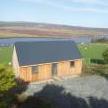
Just catching up with this thread, it's quite up my street as a similar sort of project. My own build was aimed at a similar market, although it's a somewhat smaller build (50m2/43m2 gross/net). It came in very close to my £40k budget, thanks to already owning the land, and doing 99% of the work myself. Rough costings, based on the categories in a previous post, are: £0 – Land £10,000.00 - Legals, electric connection, foul drainage design and installation, site scraping* £3,000.00 – Brick Piers, Landscaping & Driveway £22,000.00 – House Design, Supply & Build £1,000.00 – Water connection £1,200.00 – Internal Electrics £500.00 – Plumbing + Radiators £200.00 – Bedroom Furniture £800.00 – Bathroom £1,000.00 – Log Burner £300.00 – Curtains + Decorations £2,000.00 – Kitchen + Appliances** £0 – TV + Entertainment £150.00 – Dining Table + Sofa £250.00 – Cupboards and coffee tables etc £300.00 – Bedding & Towels & Accessories £200.00 – Decking Construction ============= £42,900 * I didn't have the option of a foul drain connection, and ended up spending £7k on a sewerage system. A big but unavoidable chunk of my small budget. ** Full size kitchen but I chose secondhand high quality appliances rather than cheap new ones. I feel justified in this decision, as we installed some cheap own-brand appliances in my own house and have had a lot of trouble with them. The 2nd hand Bosch stuff in the cottage has been faultless, and was so cheap it was almost free. Our furniture came in at about £700, because we were fortunately given a bed and sofa, and the rest of the furniture came, surprisingly, from the B&M discount store. It claims to be solid oak, and the only thing I would say against it that it is all quite small. But it's perfect for a holiday cottage where most people are only staying for three nights.
-
The way I designed the fascias etc left me with only a 5mm depth for the soffets. Not ideal but it's done now. I used bog standard plywood which has mostly stood up ok, however at the corners of the building its possible for swirling winds to drive rain on to the soffets, and in these places the thin plywood is delaminating. My big worry is that starlings will find a way inside and create a noise problem- they were a real nuisance during the build. What sort of materials should I be considering to replace the ply? I could obviously go with a better quality WBP or marine ply, but ideally I think a synthetic material that is zero maintenance would be better. I'm wondering about Foamex, or perhaps Dibond?
-
One other point about the Puraflo if going off grid- you can probably just gravity feed it and dispense with the pump, so there is no power consumption. The supplier I dealt with didn't recommend this as he felt there would be a better distribution of effluent through the module if it was pumped. He's probably correct, but if you are going off-grid cutting power consumption might be a higher priority, even if it shortens the lifespan of the (replaceable) peat fibre.
-
I used a 'Puraflo' system. These originate in Ireland and have been around for at least a couple of decades, so it's fairly well tested technology. You still have a conventional septic tank, but the outflow from this is pumped into one or more Puraflo 'modules', which are big plastic tanks full of peat fibre matting. This is an aerobic envoironment where bacteria can get to work breaking down the effluent, and what comes out the holes in the bottom of the tank is sufficiently treated that it can be disposed of into the ground. Essentially the Puraflo is doing the exact same job as a soakaway/leachfield, but in a much more compact space, and it does not require any particular ground conditions. My site actually had percolation rates that were too fast for a conventional system- under a thin layer of top soil I hit fractured rotten rock, and the water just disappeared into it. This risks the effluent popping up again somewhere else, and it isn't spending long enough in the aerated topsoil layer to be properly broken down. The big advantage of the Puraflo over a treatment plant is that it appears to be more resilient to periods of non use, or fluctuating usage. As I was building a holiday let this was quite an important consideration.
-
Hi @Angela Till sorry I never saw this until now. Fire away with any questions. It was a fun project, we're absolutely delighted with the end product and it all came in on budget and on spec- if a little late.
-
I would expect that it will be much easier to get planning for a temporary static caravan than for a more permanent building, as you would probably be required to remove the caravan after the build was completed, whereas the studio would presumably remain in use and potentially constitute a second, separate dwelling. Of course if you think you might get planning for the studio as a standalone dwelling anyway, then yes it would make sense to build that first. By the way, once a studio or garden room becomes habitable (i.e. it gets sanitary, cooking, and sleeping facilities) it crosses a line and becomes subject to building control (unless it is deemed a 'portable building').
-
Thanks. That's good news about DHW. I think certain rooms in the house will be OK with radiators, as there is sufficient wall space for them. The kitchen is a bit more of a concern, harder to find free space there. Does it complicate things to mix and match UFH and rads? A new tariff is definitely on the 'to do' list...
-
I'm finally starting to think about upgrading our laughably bad 1970s house, in order to reduce our bills and improve general comfort levels. We have (shock, horror) electric storage heaters and an electric immersion vented cylinder for DHW. It's horrible and it costs a fortune, especially as SSE have now put our tariff up to the point where even the cheap rate is something like 15p a unit. ASHP seems to be the most promising way to go for a system that will give a big (three fold?) reduction in running costs compared to direct electric, without all the worries and costs associated with ground works. I'm open to other ideas but my understanding is that for low initial cost, reasonable running costs, and general simplicity, ASHP has a lot going for it. Being a cheapskate I am quite happy to tackle the vast bulk of the install myself. We have a big underfloor space so running pipes will be no trouble at all. I also understand why you need to have oversized radiators, or preferably UFH, for any kind of heat pump to work well. I don't know much about getting DHW from one- is it worth doing, since it presumably still needs a boost from an immersion element to reach a usable temperature. The other unknown is whether there are aspects of the install that would be best left to a pro- e.g. anything involving refrigerant lines? So, for a 90m2, three bedroom, bungalow, should I be budgeting something like £2-£3k for this? Or am I way off the mark?
-
Hi @SteamyTea thanks for that, I will see what they say. I'm not needing the channel any time soon really, bit of a long term project. Thinking about a slight redesign as well which would reduce the amount I would need, so using heavier gauge material would be less of an issue.
-
Nail them. Nails for shear loads, screws for tensile. And dwangs/noggins should either be full depth or criss-crossed. But if you are gluing and screwing the flooring down, that will stiffen everything up a lot too.
-
Not strictly housing-related, but I'm trying to source some lightweight aluminium channel material. Ideally around 50x50mm. It's to form part of a solar panel support on a boat. I can readily enough obtain chunky 3mm thick material, but I don't need anything like that sort of strength, and I don't really want the extra weight. I know that much lighter extrusion and pressed channel is available for use in things like sliding doors, but despite extensive Googling I'm really struggling to find anything. If anybody has any ideas about where I might obtain something like this, that would be much appreciated.
-
Rough costs for installing a phone line?
Crofter replied to Crofter's topic in Networks, AV, Security & Automation
Thanks everyone. Not often things come up cheaper than you expect! I thought it would cost a few hundred. -
Our wee cottage has never had its own phone line- we just provide broadband via an extender from our own house. It's always been a temporary arrangement and I think it's about time we did something more robust. Does anybody know off hand what the basic cost of getting a phone line installed would be? There is a BT pole and junction box on our land about 30m from the cottage.
-
I just used the term 'one bedroom dwelling'. The notes that came back from the planners said that they were assuming that it was prefab, but they noted that this had not been specified either way. PP was granted with no conditions or objections.
-
Our Scottish larch was 75p/m at 100mm widths, direct from the sawmill. Substantially cheaper than any other option. If there are problems with it, I will just replace individual boards as necessary. If you want a painted finish, I would definitely consider a cement fibre board- no ongoing maintenance, and should last almost indefinitely.
-
I used screws for the battens, mainly because of the length involved. A 50mm batten on top of a 50mm counter batten, then through the osb sheathing, and finally into the stud- it's a long way. You can't get nails that long, and even if you could, you wouldn't know whether you had hit the stud or not. For the larch, I used stainless 70mm nails in a coil nailer. This has several advantages over a stick nailer: longer between refills, cheaper nails with no gas to buy, and most importantly nice full round heads on them. These look much better than the D-shaped clipped heads on a stick nailer, and you don't get the imprint of the hammer, because none of it protrudes past the egde of the nail head. I didn't pre-drill except for nails within say two inches of the end of a board- for these I pre-drilled and hand nailed.
-
Kevin McCloud 8% Investment Bond
Crofter replied to Ferdinand's topic in General Self Build & DIY Discussion
This made me chuckle: https://www.thedailymash.co.uk/news/celebrity/kevin-mccloud-over-budget-living-in-caravan-and-pregnant-20190823188449?fbclid=IwAR3osgx3IdXoPDJoniPIIfXa5V3xjXbMUsKhnaQtTtjkITzPbeWFPvzzBPg- 18 replies
-
- 2
-

-
- kevin mccloud
- hab uk
- (and 1 more)
-
Yup a vee belt. There is no way of adjusting tension, so I don't see how I could ever get a particularly tight fit, as it has to pass over the pulleys. The one that I'm using just now is such a loose fit- zero effort to force it over the pulleys- that I'm amazed it works at all!
-
I've been lent an old whacker plate. First time out, the belt spins off, stretched and frayed beyond use. No numbers or identifying marks on either the belt or the machine, so I measured up as best I could and bought a couple of belts cheaply off eBay. The smaller belt does fit, and the machine works, but it's pretty loose. So how much tension should there be?
-
Bathroom wall / floor checklist
Crofter replied to bissoejosh's topic in Bathrooms, Ensuites & Wetrooms
When I asked for cement fibre backer board (and gave a few brand names like Aquapanel, Hardie) the guys at the BMs just looked at me blankly. Eventually the manager was summoned, he scratched his head, and then went and found some in the racking at the back of the shop. So clearly the vast majority of builders aren't using the stuff, and must be using PB instead.- 9 replies
-
- 1
-

-
- ensuite
- shower tray
- (and 5 more)
-
Static caravans are temptingly cheap but they do not take well to being altered. A friend of mine tried to reconfigure the inside of his, and discovered that the bedside cabinets were actually vital structural stiffening elements! There's no way you could bank earth up against one, it would collapse. Also, burying your house into the ground doesn't really make it insulated. It might work for a rabbit, it doesn't work so well for humans who want their houses at 21 degrees. The cost of the retaining walls, tanking (a form of damp proofing) and the additional work required for an earth-covered roof, will make conventional insulation look so cheap that it's almost free. My 50m2 house is insulated to twice building regs requirements, and the total insulation cost was about £1k.
-
Timber Cladding: orientation - does it matter?
Crofter replied to ToughButterCup's topic in Building Materials
I'm sure that would depend on the individual planners, and the people who might wish to draw it to their attention. I've known people to get away with fairly significant alterations- e.g. a house where the builders omitted the dwarf walls from the founds, which meant that no internal walls could be load bearing, and subsequently the roof structure had to be altered, changing the house from one and a half storey to two storey. This raised the ridge line above what they had permission for, blocking sea views for the houses behind, and annoying the neighbours a fair deal. Not everyone really believed it was a mistake at all. But the house is still standing. Anyway, do you really want to go down the route of having diagonal cladding?? It's going to be more work and more wastage. -
Thanks all. I've delved into the datasheets for each of the suggestions, none of them list viscosity but some do have minimum joint sizes. So I think I'll rule out the Sika EBT, which states 10mm minimum. The others are all 5mm. CT1 don't give a figure, annoyingly.
-
Self build costs - those who used their own labour
Crofter replied to rh2205's topic in General Self Build & DIY Discussion
Yes plastering and rendering are more art than craft. I didn't even attempt to do either of them. It's funny though how most people instinctively want to use professionals for all the big 'scary' jobs like erecting the frame, and go DIY for the fiddly stuff at the end. Wrong way round in some respects! -
I'm normally a big fan of CT1 but does anybody have a suggestion for something of similar performance but a bit runnier? Something that will be easier to squeeze into a narrow gap. Has to be weatherproof/waterproof and preferably remain flexible. Primarily needed as a sealant rather than an adhesive.
