Iceverge
-
Posts
4485 -
Joined
-
Last visited
-
Days Won
32
Everything posted by Iceverge
-

Omnie Lowboard 2 insulate on non insulated ground floor
Iceverge replied to Griffithsg83's topic in Heat Insulation
Inflation adjustes 40mm of opium-r would be close to £200/M2. For context you would buy 1.6m of PIR for that. Bin the idea of UFH unless you want to dig out the floor I say.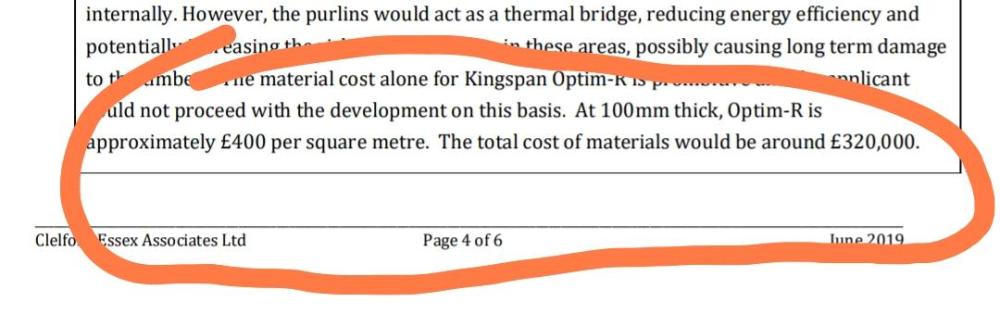
-
Tape the PIR together with foil tape and return it to the walls with tape or airtight sealant to ensure no vapour from the room can migrate into the roof. Then run 50*50mm battens at 90deg to the rafters for a service void. 400mm CC for 12.5mm plasterboard or 600mm CC for 15mm plasterboard Run your wires as necessary. (They may need to be uprated, consult your sparky) Infill with 50mm Rockwool batts. They will fit around the wires, provide better sound and fire protection and break the thermal bridge of the rafters. ( I would happily take this to 100mm Rockwool if you wanted to). It is important that you have a very comprehensive airtight layer returned without any holes to the internal walls though. Then 1 or 2 layers of plasterboard. Seal all penetrations and the perimeter with acoustic mastic for sound protection. Skim.
-
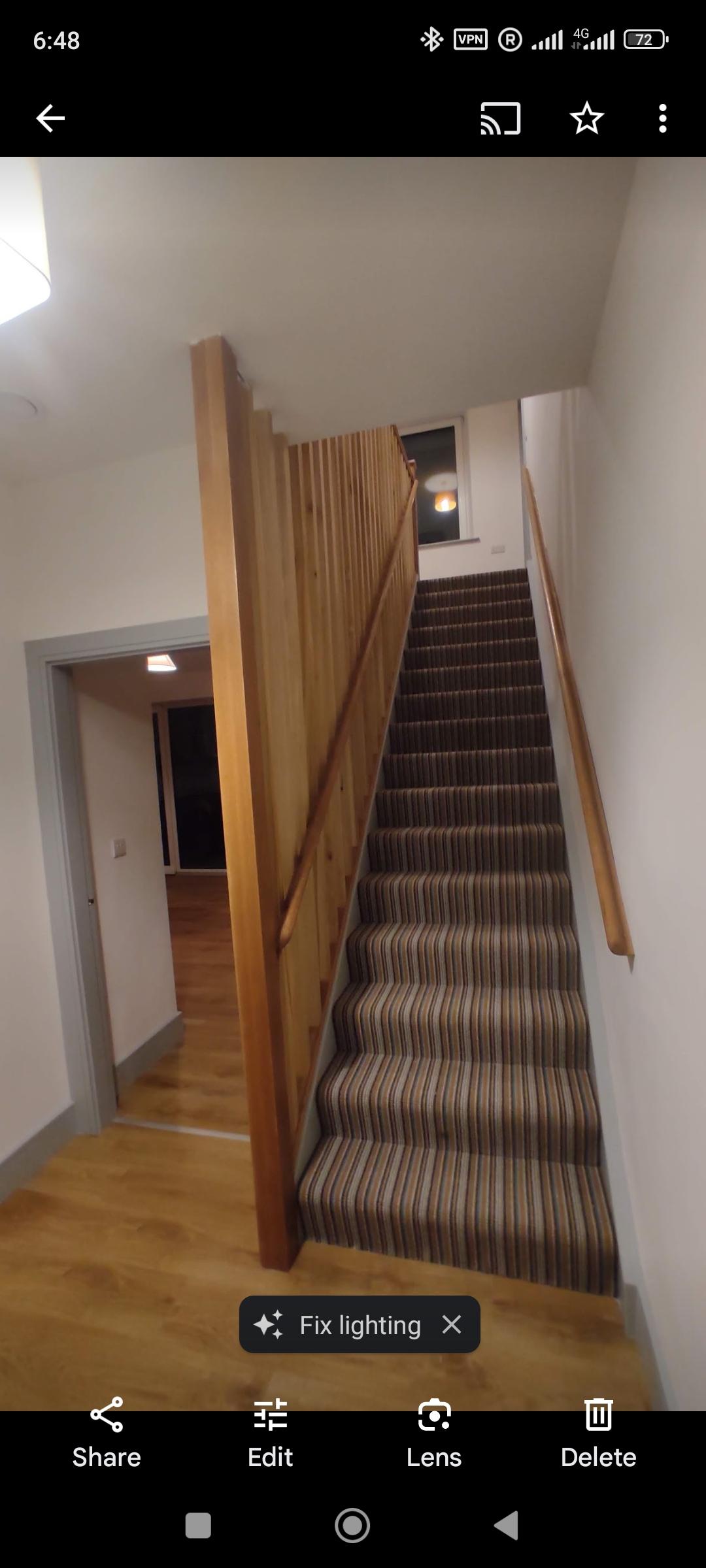
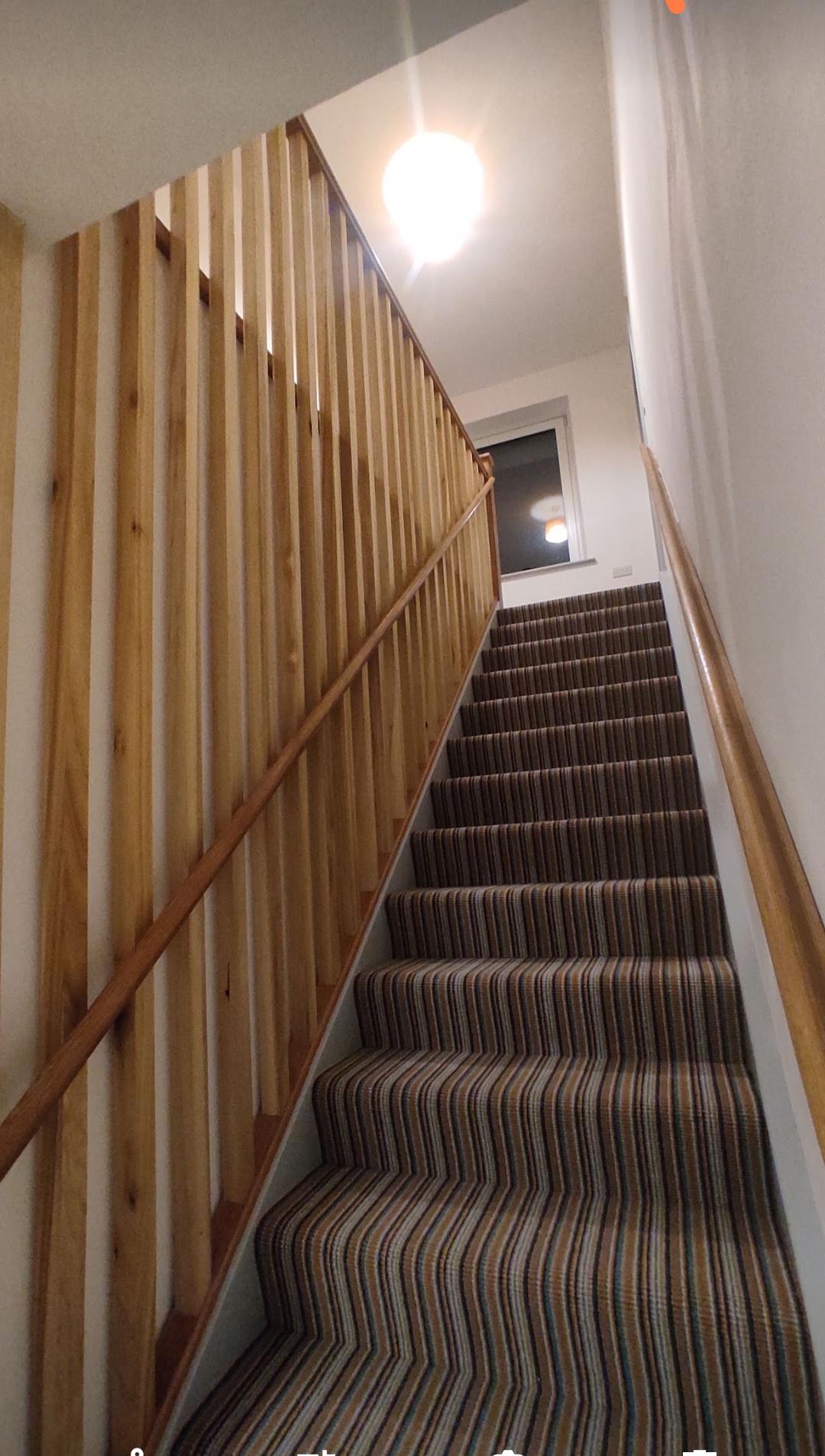
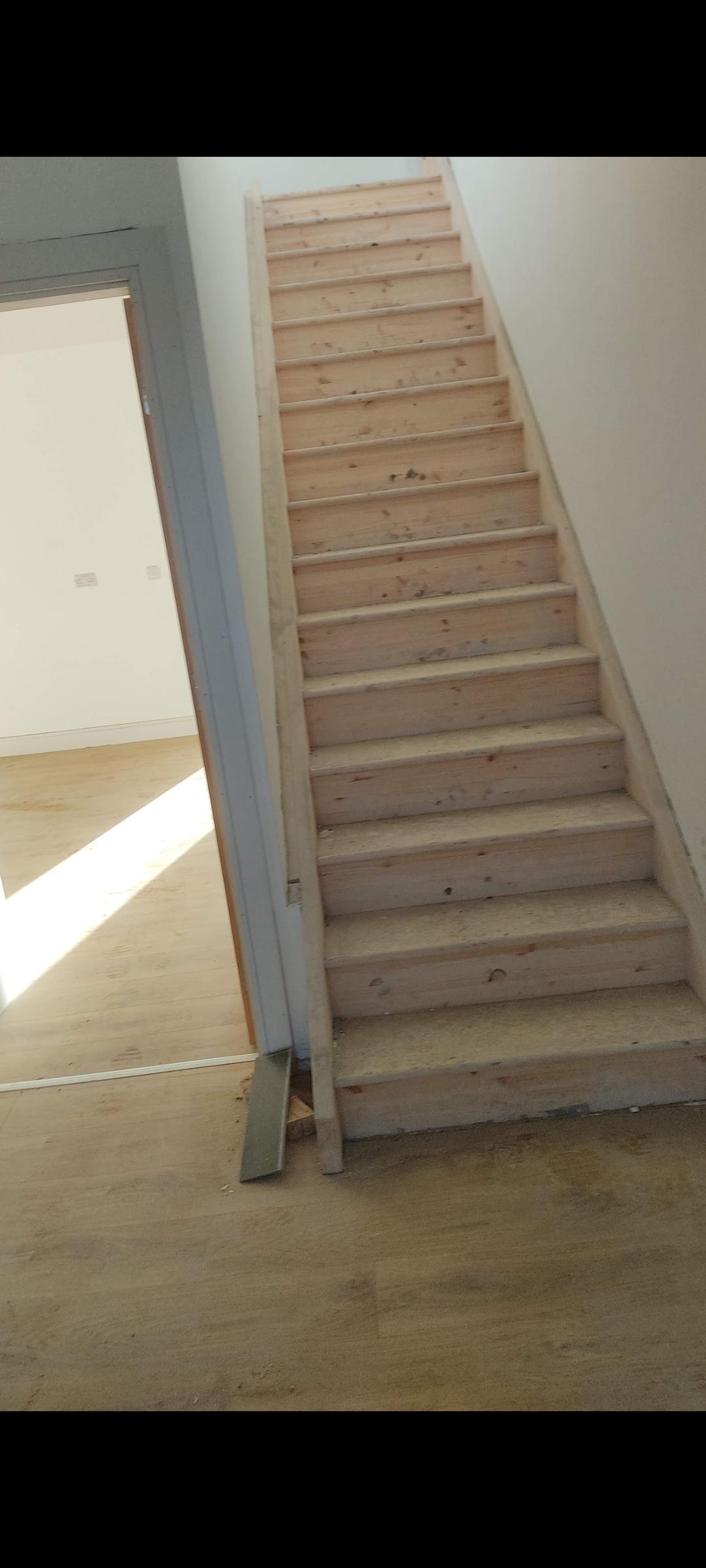
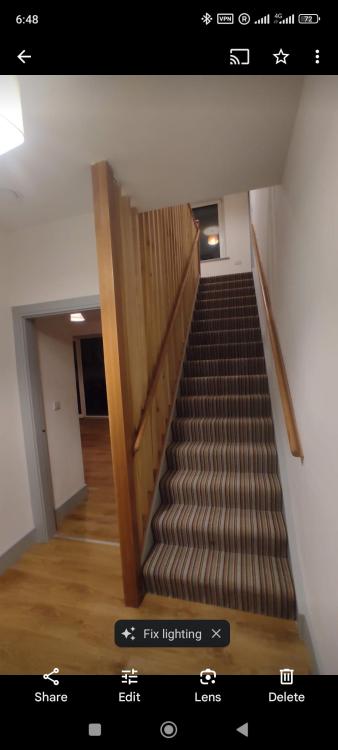
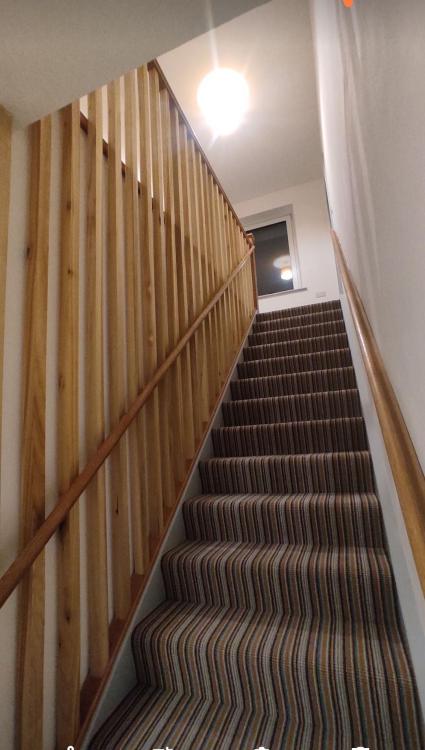
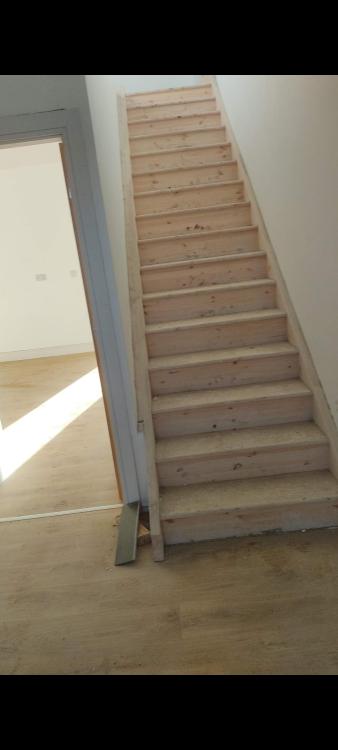
Pit ours in before spray painting. Bit of a PITA masking it. Pine and painted and carpeted. Oak handrails and popular spindles. Pleased with the carpet. Would do the same again. Oak is fine. Maybe a lighter wood would be nicer.
-
I didn't realise that was how they worked. Essentially on a dT basis. I'm very much a fan of letting physics do the controlling rather than anything active.
-
I have a thread somewhere where I've been monitoring our electricity usage. With the last 2 years. I'll have to update it again.
-
Theres many variables here. I'll try to list them, in no particular order 1. kWh price 2. TOU unit price 3. Annual Space Heating demand 4. Annual DHW demand 5. ASHP Capital cost. 6. ASHP lifespan 7. Future energy costs 8. Cost of credit 9. House occupation patterns 10. FIT rates 11. Battery costs The only one you can make a big difference to is #3. Get your demand as low as possible. Then even the worst case doesn't look too bad. We are heating the house and providing DHW for 5 people for about €1500 annually doing it the most expensive way possible. Resistive heating and DHW. A €1400 A2A would save €700/year (2 year payback) . €800 total bill A €1900 ESHP for DHW would save € 265/ year (7 year payback) €1235 total bill A €5500 A2W ASHP would save €950/year (5 year payback) . €550 total bill A €3750 of 4kW Solar PV would save €750/year. (5 year payback) €750 bill A €100 second hand storage heater would save €288/year €1212 total bill, For us I decided that an A2A HP and 4kW of PV would virtually eliminate bills. Time will tell. A2W ASHP and PV will be cheaper to run but cost much much more to install inc UFH etc.
-
Not having either an ASHP or PV I thought the conventional wisdom had become not to use the PV for ASHP due to he high start up loads and the extra wear on components when otherwise it could be rested for long periods of the year. Also take a situation on a winters day. Say an ASHP needs 800w minimum to run but you only have 400w of PV. You can run the ASHP for 1hr to top up the DHW but need to buy in 0.4kWH. If you had 8hrs of weak sunshine at 400w it would do the same thing but with no bought in electricity.
-
I did one......... Must modify it for the new electric rates. In short for a passive house long term there was almost no 25 year difference between. A2A + ESHP A2A + PV diverted into DHW ASHP ASHP+PV is dearer long term. Shorter term the lower capital cost of the A2A and PV wins. I think up to about year 10 or 15.
-
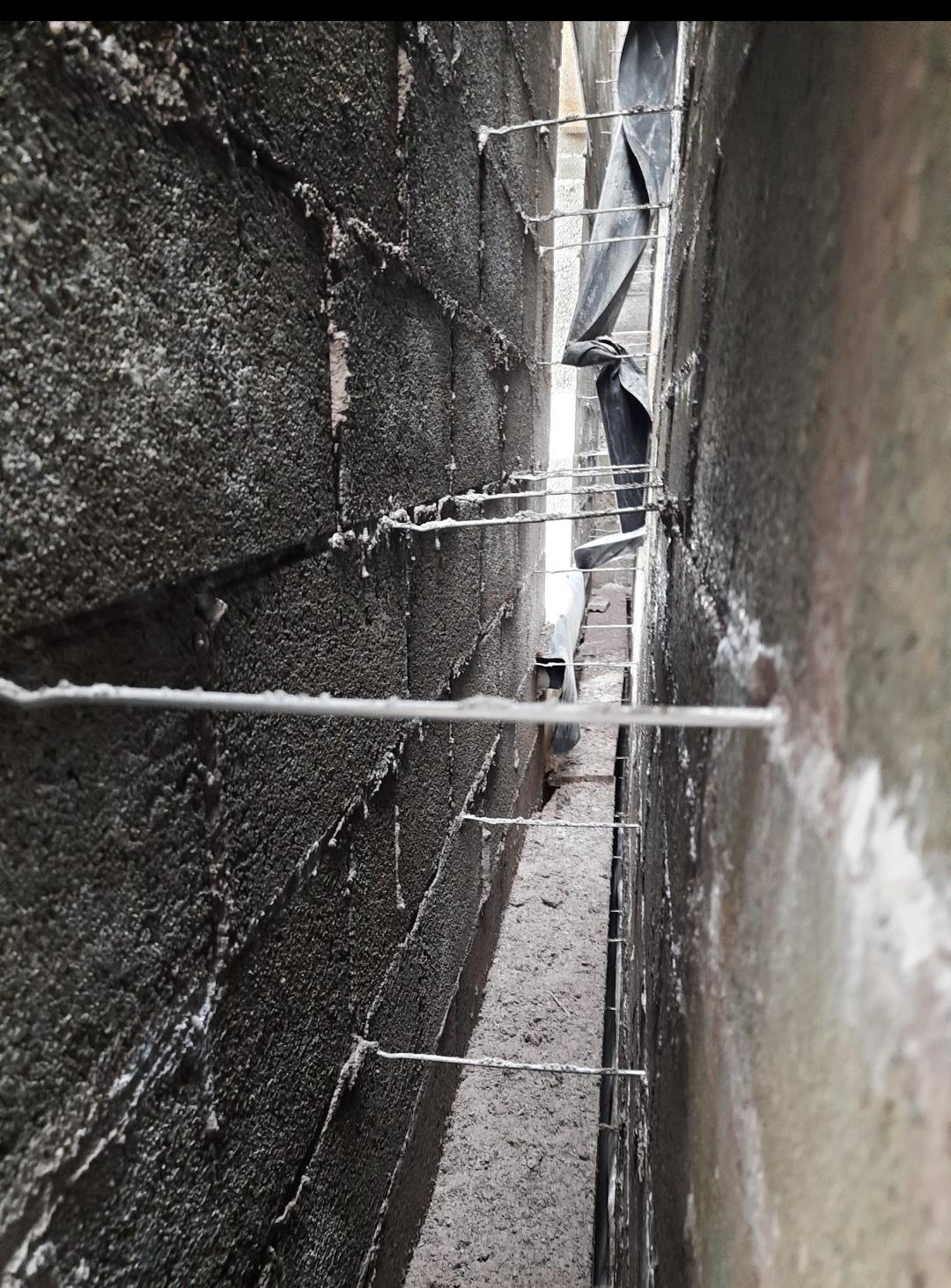
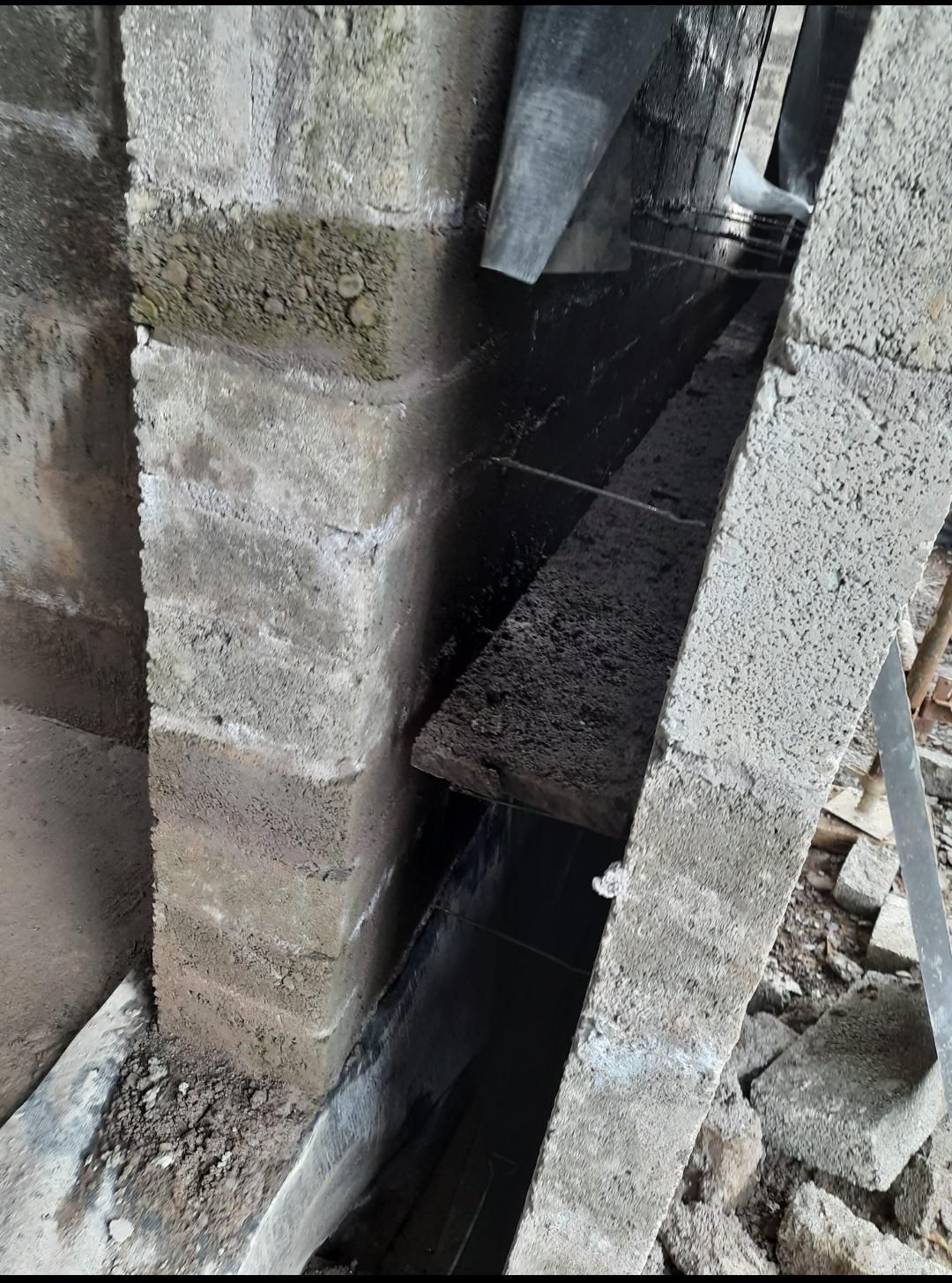
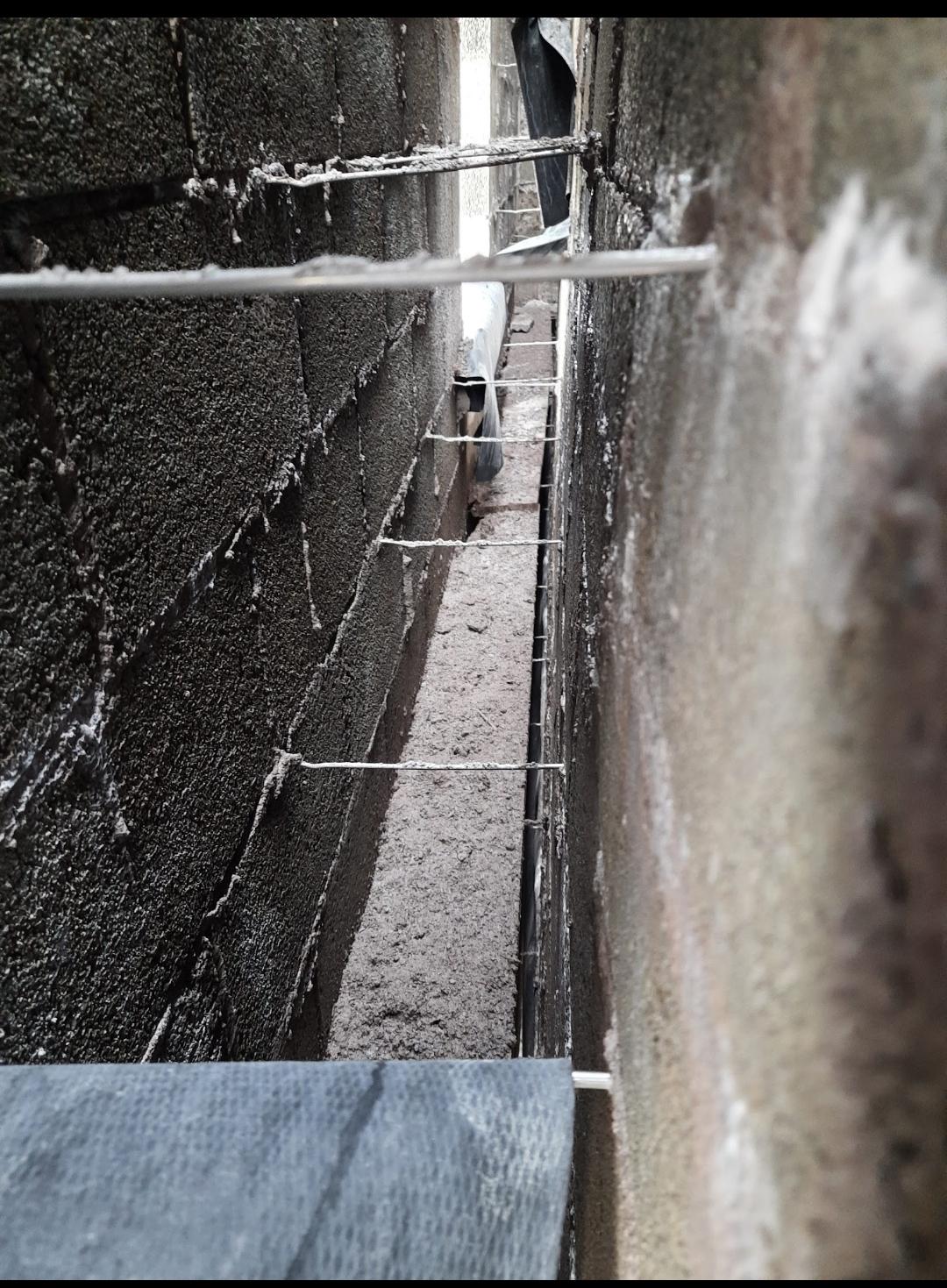
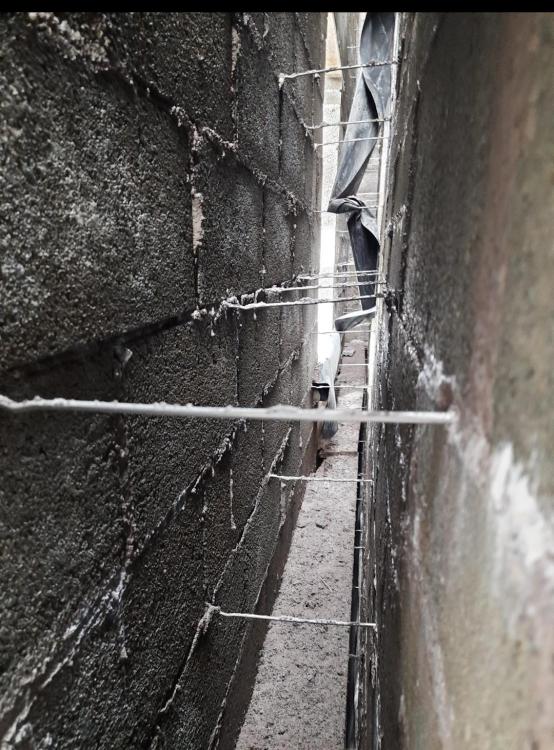
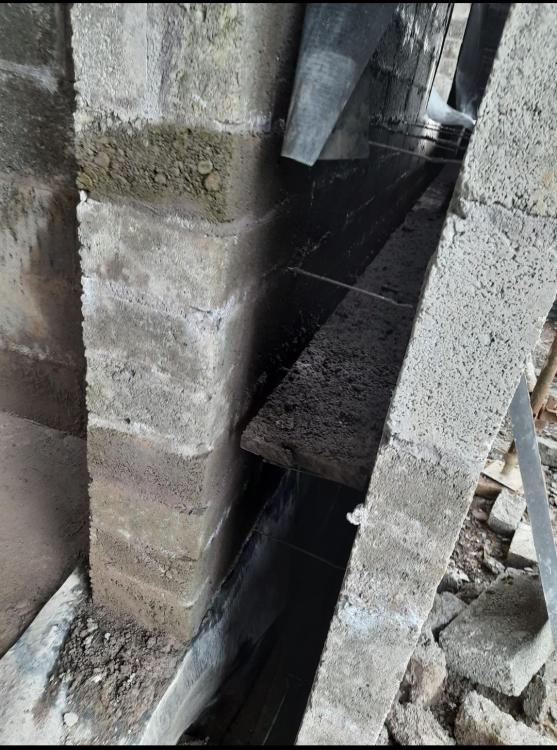
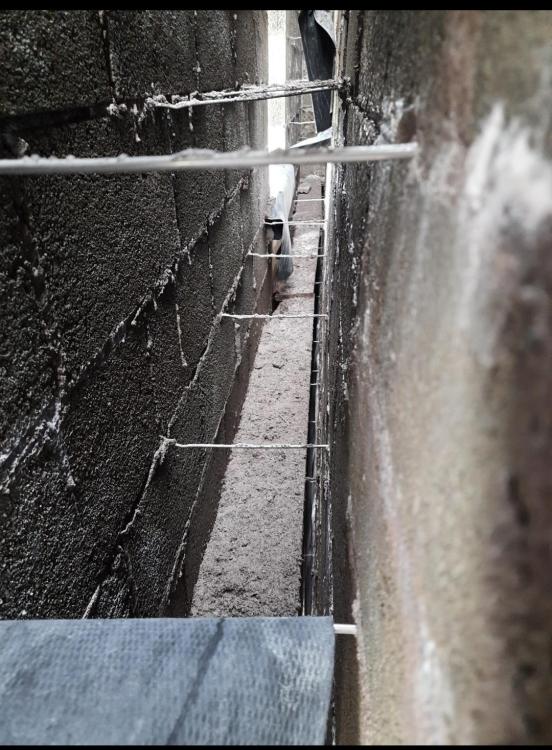
Agreed, I put in boards in the cavity at grounds floor window level that I removed after building via the windows that caught most of the mortar droppings.
-
DHW with an ASHP gets quite nuanced. The COP like @JohnMo says is closer to 2.5 Vs the 4+ you would expect for a well set up space heating. Then you are limited really to about 50⁰ storage temperature for efficiency so you can only store about half then energy that you can with an immersion driven UVC at 70⁰-80⁰. If you operate on a TOU tariff like we do the sums get interesting. We can heat all our 10kWh of DHW overnight in a 300L direct UVC for 18c/KWh or a cost of €1.80/day. I estimate that if we had an ASHP we would heat half per day and half at night. 5kWh* COP@2.5 * 18c/kWh = €0.225 5kWh * COP@2.5 * 36c/kWh = €0.45 Total €1.13/day savings. Assuming that an ASHP UVC would be €1000 more that a direct one and a heat pump would be €3000 and DHW was half the use load you could say €2000 was the extra spend on the DHW side. Payback 5 years. Pretty respectable. Unless you add solar PV. Take a 4kWp system and dump say 3MWh into the DHW/year. Then the averaged daily savings drop to €0.2. Payback for an ASHP becomes 27 years. TLDR A2W ASHP is probably worth it for DHW unless you plan for solar PV anyway.
-
The straps will be intermittent. You could also use angle brackets to bolt them to the outer leaf. The airtight membrane will be continuous around the perimeter of the window. If you have batts then these will be in before the windows. If you use EPS beads then these will be done after the windows and plasterboards.
-
Good progress. Nice tidy carpentry. A couple of suggestions if you like. Solitex is top stuff but at a top price. If you haven't bought it yet I would recommend something like Glidevale vp400 or Fakro S65. I used the VP400 on my garage and was very impressed, better than the Tyvek supro on the house. Look for a weight of 160g/m2 at least and a sd of less than 0.015 is my tip. Tape and seal all joints in the membrane, as fastidiously as you would a an airtight layer and return it to the external windtight layer around the rafter tails. I would bin the idea of Metac between the rafters. Its very expensive and itchy job to fit. Blown cellulose would be a much better option in my view. Much better for airtightness too. Ecocel in Cork did ours but there companies in Dublin too. For the airtight membrane I used prodomo extra membrane and tapes from Prodomo in tralee. The black tape is the best. There is some on Donedeal at the moment. I just picked up 3 boxes for a bit of a discount.
-
Passive houses do need some heating but not central heating. Ours settles at about 17deg in winter when unoccupied if you don't add any extra heat. I reckon it'd be about 19 Deg if occupied with the extra appliances usage and human heat. That would be ok for me but too cold for Mrs and kids. I couldn't make sense of an A2W ASHP. The capital cost would have never paid back. In the end we didn't put any heating in and have lived 3 years just on a plug in radiator, using about 16kWh/M2/annum. So long as it is used regularly it works just fine. I liken it to a tiny outboard motor on a barge. When up to speed it settles into a hassle free cruise. I have bought an A2A unit to reduce our bills from about €750 for heating to less than €200. Yet to be installed. I did also put some cheap patio heater style heaters in the bathrooms just to warm your skin when out of the shower. TLDR. (To Long Didn't Read) Central heating not needed. Some heating is though (depending on your comfort demands). A2W ASHP uneconomic unless cheaply bought and DIY installed.
-
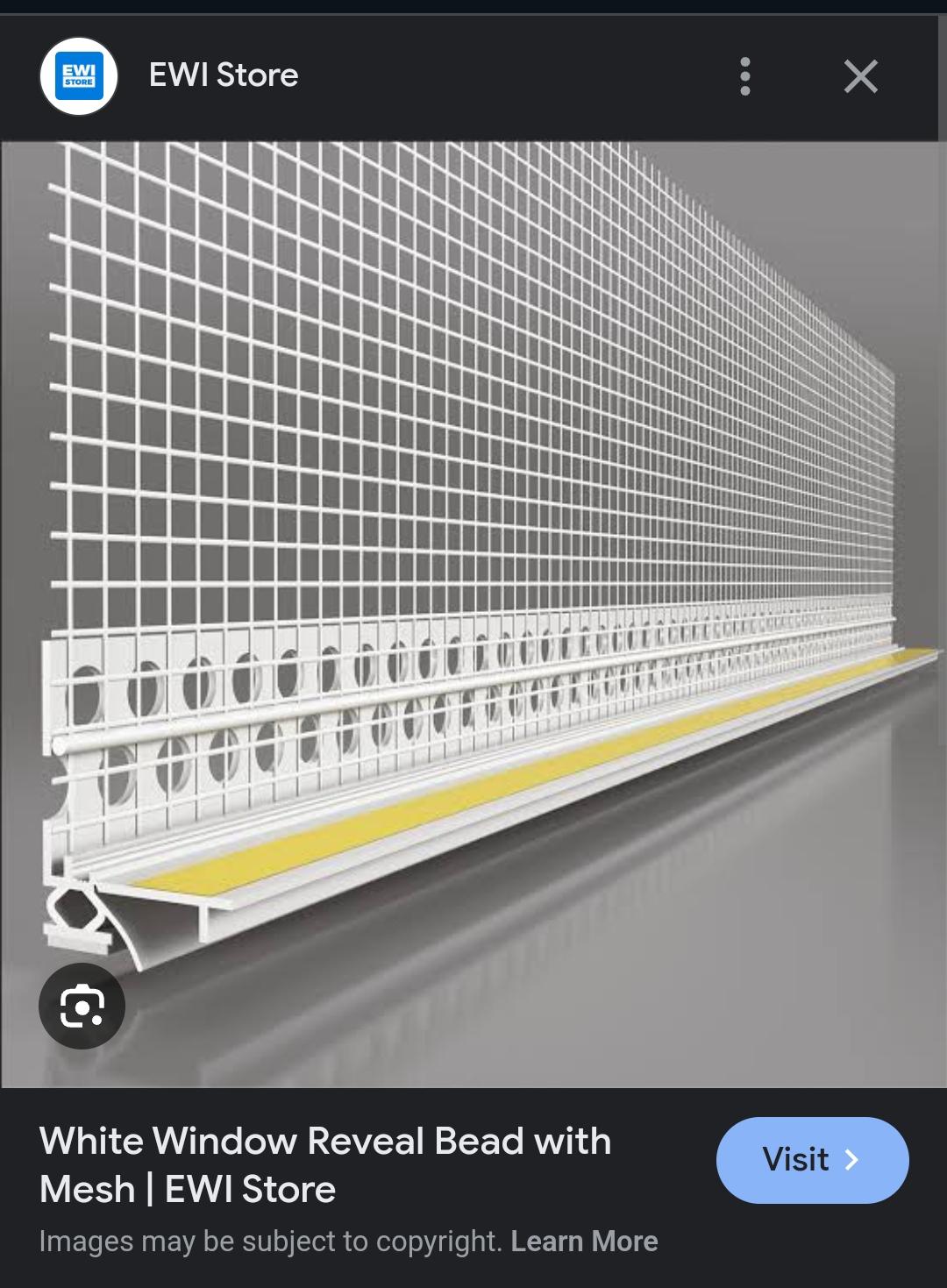
Put the compriband on and put the window in place. Yes it will push it a few mm inwards. Then stick one of these to the window frame externally and render to it. You'll get very tidy and equal reveal lines.
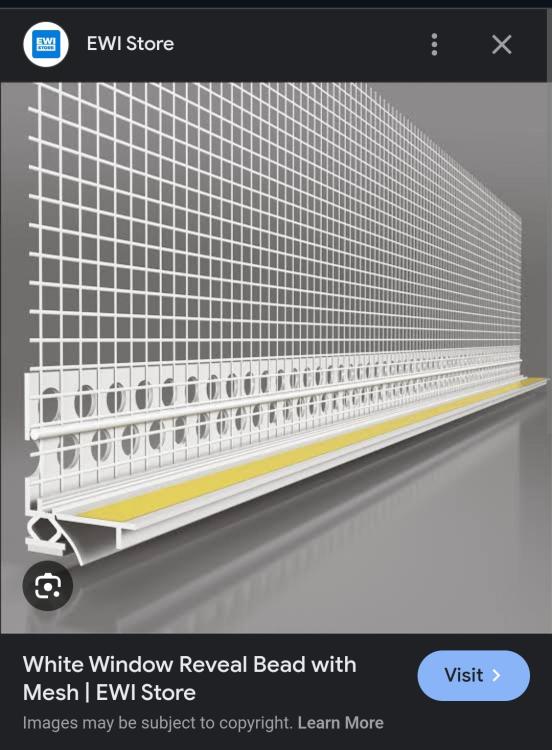
-
DPC.......I hate them. I cut our vertical ones out and threw them away. With UPVC windows nobody could explain what they were achieving. I kept the one at the window head. .....Sighs.... compriband is the solution here. The windows and wall are dissimilar materials and it's worthwhile having a material that will remain flexible to accommodate differential movement. Otherwise you'll soon have a crack where wind and rain can get in at the outside of the windows. Mastic should only be a final mainly aesthetic covering as it will fail at some stage. It's very important to have a good "windtight" layer as well as an "airtight" layer in all construction. Otherwise your insulation becomes like a wooly jumper on a windy day. Useless! Put a light anorak over the top and seal all penetrations. In this case the windtight layer is the external render. "Breathability" is a bit nebulous. Everything is breathable to a greater or lesser extent. Vapour permeability is a better term in my opinion. Concrete blocks and cement render are vapour permeable to some extent. Otherwise they'd never dry out. The important thing is that they can dry faster than they get wet. With a good internal airtight layer the amount of wetting will be absolutely minimal and there will be no moisture accumulation in the cavity. On our house I sealed all penetrations, windows and doors to the external render with airtight paint to this end.
-
This weeks Short Read: Population
Iceverge replied to SteamyTea's topic in Environmental Building Politics
In the West we'd want to get wise to the reality that children are now completely optional and considering the cost of them, quick becoming a luxury item. Unless we all want to work until we literally die we need young people to have children. This means proper wages for people in their twenties,cheaper houses and properly funded state childcare and kindergarden. -
Good good. Maybe you could update your blog. If you get a spare moment. I've been following with much interest. I love the nerdy details like floor/wall/roof insulation buildup and window specs etc....
- 5 replies
-
- 1
-

-
- the windy roost
- highlands
- (and 1 more)
-
This weeks Short Read: Population
Iceverge replied to SteamyTea's topic in Environmental Building Politics
-
This weeks Short Read: Population
Iceverge replied to SteamyTea's topic in Environmental Building Politics
I think it has dramatically improved productivity. EG getting the same job done with less time and less people. Take an average DIY project. We get inspiration from something like Pinterest or Instagram Vs trekking to a library to borrow a specific book. Then we research how it's done on youtube and Buildhub. Avoiding many of the pitfalls of doing it the wrong way and wasting loads of time through trial and error or asking our 1 mate who has tried it before. The I draw it up on my laptop in SketchUp, make a Google sheets doc for the quantities. Try calculating by hand the amount of OSB to sheath an awkward roof VS just clicking on the surfaces in 3d model and you'll soon see how much time it saves. We order materials from Screwfix and the merchants on our phones, pay with cards and they magically appear the follow day. No need to take time off out day job. Before we'd have needed to drive into town, go to the bank, withdraw cash, visit the BM, load it all into a trailer and haul it home. Then look at all the amazing things that weren't available to my grandfather at an affordable price that massively speed up building and often enable a job to be done safely by one person. Here's a few I use that springs to mind. 1. Cordless electric tools. Take on a 9*3 a few times with a hand saw and then tell me technology hasn't improved things. 2. Cable ties 3. My mobile phone. I use it for everything. From all the above bits up to "walkie talkie"ing my wife to flick a remote switch or valve while I investigate the other end. 4. Laser levels. 5. Modern adhesives, tapes and expanding foams. 6. Cheap safety equipment like gloves, disposable overalls, dust masks, goggles and hearing protection keep guys out of the sick bed and in work every day of the week. 7. Cherry pickers Vs ladders 8. Cement mixers. 9. Volumetric concrete lorrys. 10. Conputer designed roof trusses. 11. Cranes, including those wonderful truck mounted remote control ones. 12. eBay gumtree etc allow me to afford stuff like ASHPs at a cheap price. 13. Led Headtorches -
@Jenki Is it an ASHP you use?
-
All the more reason to use EPS beads too.

-
Don't bother with cavity closers. Fix some airtight membrane to the wall and window followed by a J bead screwed to the window and then some plasterboard.
-
Multifoil........ Might I suggest you do a quick search of it on the site as to the perception of many........
-
Consider good quality uPVC. My parents have some German sourced tilt and turn ones that have been in situ with 29 years and in that time have had 1 broken hinge and 1 failed double glazing unit and quite literally ZERO maintenance. edit: sorry now that I remember a second dg unit failed last year and has condensation in it.
-
https://www.justfans.co.uk/kitchen-fans-canopies-without-motors-c-26_52_59.html Although it might be cheaper to just buy a used hood and install your own fan remotely.