Iceverge
-
Posts
4485 -
Joined
-
Last visited
-
Days Won
32
Everything posted by Iceverge
-
DON'T DO IT!!!!!!!!!!!!!!!!!!!!!!!!!!!
-

Steico Flex / Pavaflex for sound insulation?
Iceverge replied to Sparrowhawk's topic in Sound Insulation
Have to you all the air paths well and truly sealed? This is the most important bit. Putting extra mass in a stud wall with lots of back to back sockets and a door is a bit of a waste of time for example. -
Oil and stone based materials are more often than not cheaper than "natural" materials if you want a label on them that a BCO or SE will be happy to sign off on. I think that's probably the real reason we don't see more of them. However I would be cautious of using a plant based materials without a good rain screen in the British isles. I have seen straw buildings directly lime rendered and the rain has ultimately caused a lot of damage. If you want an official label on straw product the Ecococon do a system. https://youtu.be/uFKUPEmzgT0?si=FbcBY7vVC-L3mnxh
-
Air tightness results are in…
Iceverge replied to Omnibuswoman's topic in Energy Efficient & Sustainable Design Concepts
Top class. I love cellulose. -
Air tightness results are in…
Iceverge replied to Omnibuswoman's topic in Energy Efficient & Sustainable Design Concepts
Well done great news. Blown cellulose? -
In John Cantors Heat pump videos he made a good point that as the monoblock is a factory sealed unit there's less risk of a refrigerant leak, which could wipe out any CO2 savings over the life of the heat pump. On manufacturers that insist on packaged tanks etc I'd be keen to avoid as it might mean it's impossible to repair when just one component breaks in future.
-
Solid wall Internal Wall Insulation (Warm Batten) design
Iceverge replied to Annker's topic in Heat Insulation
What standard of workmanship are you intending to employ?! Anything can work. You just need more "drying" than "wetting" The big one with internal insulation is airtighess, most moisture gets into a structure via airpaths from inside. Not diffusion through materials. You can do PIR internally and expertly isolated any part of the cold external structure from the moist warm internal air and you'll be fine. However do a slapdash job with insulated plasterboard and you're asking for trouble. -
Block and beam for timber frame aiming for passivhaus
Iceverge replied to Barny's topic in Timber Frame
@ProDave did a suspended I joist floor with a screed on top. Search his recent posts. Added to his external woodfiber layer it should have excellent thermal bridging characteristics. Or like @Thorfun says just shove lots of insulation on top of block and beam. Perimeter thermal bridges are pretty straightforward to deal with for timber frame anyway. What's your planned wall build up. -
Thinking about it some more and looking at some you tube videos cellulose is a different beast. It comes in fairly compacted bags and needs the agitation of the blower to fluff it up properly unlike EPS beads. I think the blower hire would be better for this .
-
Or to confuse things further how about an air to air heat pump. Or to really confuse things keep the oil boiler and plough all the money into extra insulation, air sealing and mechanical ventilation. Preferably with heat recovery. It might end up making more environmental and financial sense.
-
What's wrong with just back filling with soil and compacting it in? Otherwise maybe a "rice Krispie" concrete mix so that water isn't trapped by the post rotting it away.
-
The plastering isn't immaculate but without seeing it from different angles it's not too bad. The light oblique from the window is making it look it's worse. Open the curtains or take a picture from below and it'll look better. If you hold a torch along any of our walls they will often appear with ripples. As much from my spray painting as anything else. And we had really good plasterers. It's just a fact of any hand made product. Imperfections will be there. I have no idea about your other pipe issue or what even is wrong sorry.
-
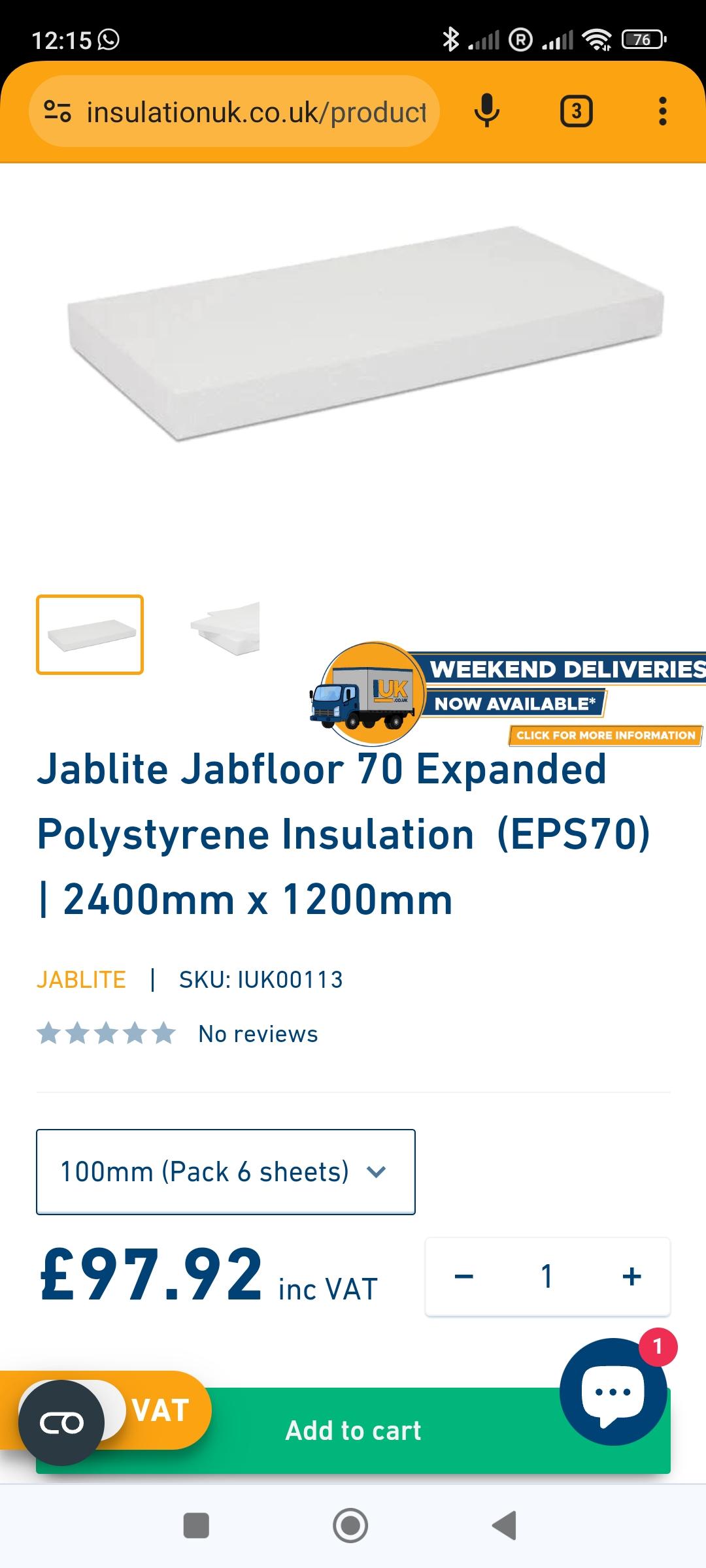
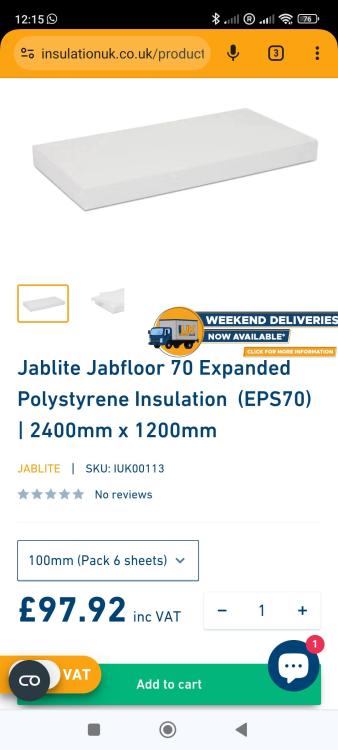
If you want to make up volume then 270mm isn't really that much. 200mm of EPS would do the trick nicely. From the top down. 70mm screed with UFH Pipes stapled into EPS with long staples. Slip membrane. 100mm EPS 70 DPM wrapped up the walls. 100mm EPS joints staggered to the top layer. Sand levelling layer £11.33/m² is the cheapest I found after a 2 minute Google for 200mm and a U-value of about 0.18 W/m²K You could go even thicker, say 225mm to save the screed depending on the minimum required thickness of that.
-
I love hammering nails. As I understand it they are less prone to sudden sheer failure than screws. You can get special screws now that are fit to replace nails in joist hangers for example. These might be the "high" quality space screws mentioned above. As for the BCO disregarding the SEs design, they will probably become believers after the screwed joint is still in place in 50 years. Frustrating for you but that's the way most knowledge on building seems to become accepted.
-
I have 2 preferred engineering methods. 1. Observe what has lasted and what has failed on the farm after 60+ years . 2. Jump on it and add more reinforcement until it feels strong enough. For connected members I would say a good dollop of glue and some nails would be more than adequate if the timber was to remain in a temperature stable environment. You would need to let the glue set before adding any load mind you.
-
Off topic but I know you have an ijoist suspended floor. What's the total build up just for my own interest?
-
The only way to get good quality work done is to get good quality people, give them a good brief, adequate supervision and treat and pay them properly. Bringing a complaint against his previous work, and then letting him loose on a bathroom to be expected to work for free was asking for trouble, I won't go so far as to suggest sabotage but I could understand his motivations if that was the case. Beware if you get a reputation for being an unfair customer it may be harder to get other people in time to come.
-
Pics please. I was all for multiple drawers everywhere. Then I saw the price.....
-
dMVHR air quality question
Iceverge replied to chromaticmind's topic in Mechanical Ventilation with Heat Recovery (MVHR)
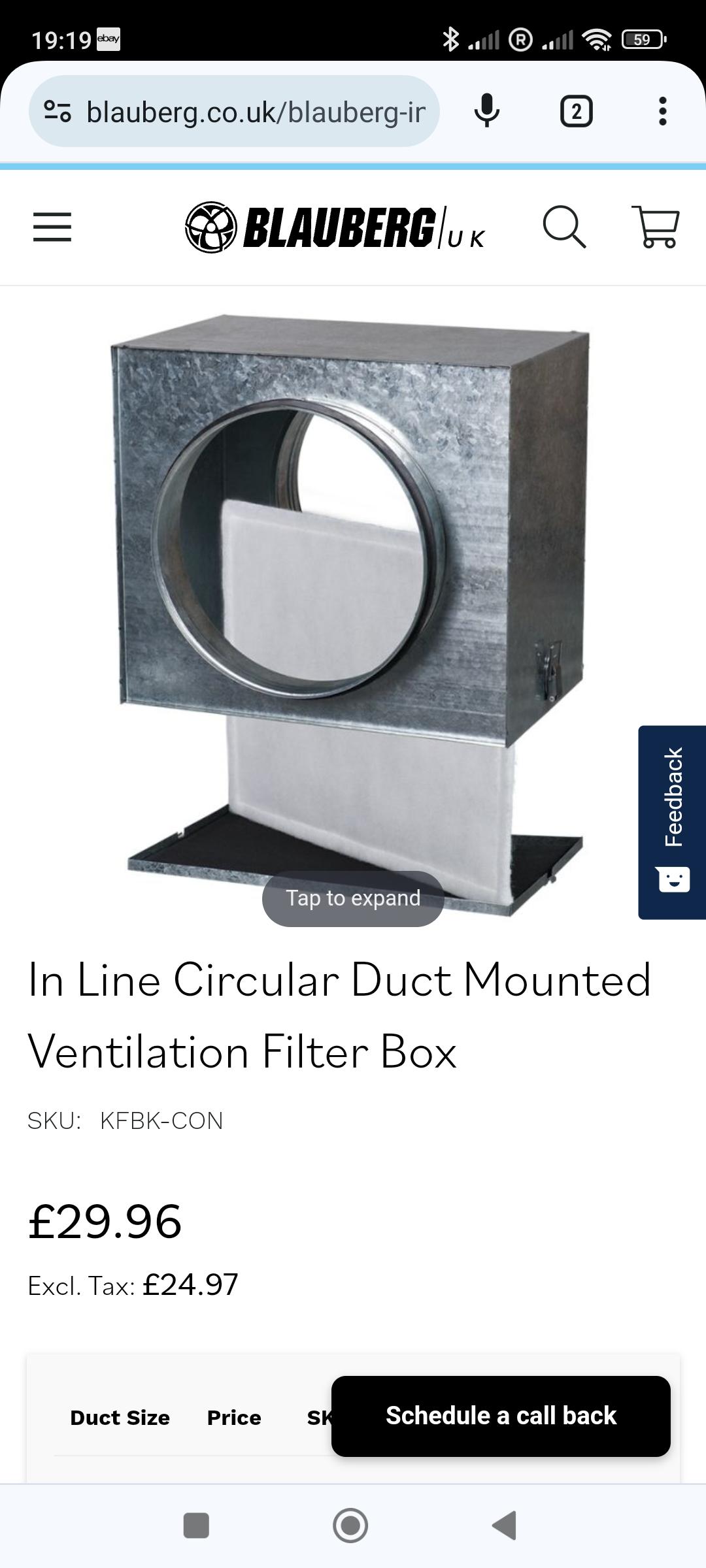
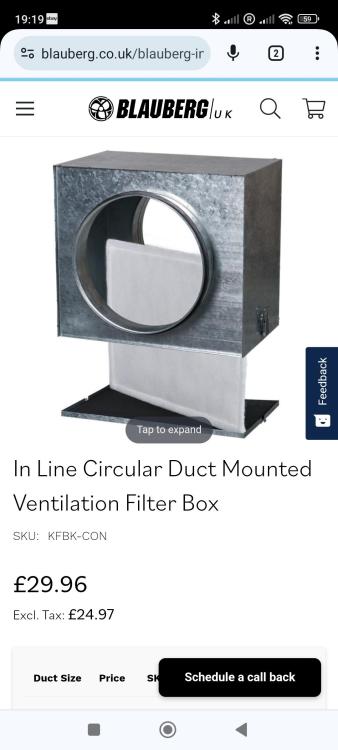
PIV with some good filters would work. You can make your own pretty cheaply. You'll need a few bits of ducting too. Suck in front the garden and allow the air to be expelled via the bedroom vents. No heat recovery but at least you'll have filtered fresh air.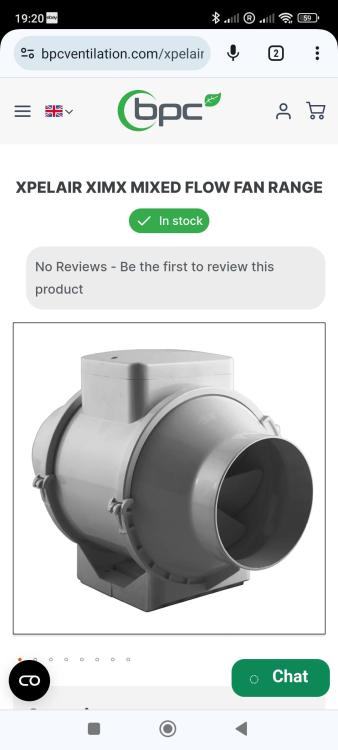
-
Steico Flex / Pavaflex for sound insulation?
Iceverge replied to Sparrowhawk's topic in Sound Insulation
It would be fine for a comparison I'm sure -
Steico Flex / Pavaflex for sound insulation?
Iceverge replied to Sparrowhawk's topic in Sound Insulation
Nice one. Can you do any kind of test before and afterwards to see the difference? -
I assume you want to isolate the noise from the floor below and have no access to the ceiling underneath you? How bad is the problem as is? Firstly seal all air paths with acoustic sealant. If it's a solid concrete floor you will have plenty of mass so mass loaded vinyl is a waste of cash. You then need to work on decoupling, specifically for impact noise. Doing this from above means some kind of squashy backing to the engineered flooring if you want to minimise height. However floating floors are pants. We have LVT floating and it feels loose. Carpet on your floor in higher traffic areas and a "no shoes" policy might be as effective as anything.
-
MVHR and windows open
Iceverge replied to Trw144's topic in Mechanical Ventilation with Heat Recovery (MVHR)
We leave the window in our bedroom for much of the summer. I support we could turn the MVHR off but it's so cheap to run and as it guarantees fresh air regardless we don't bother. Despite my statz-esque approach to kids leaving the entrance door open I try to remember a house is there entirely for our benefit and and enjoyment and not as a science project. -
Having tinkered with a little auto wiring I would say absolutely nothing about house wiring is nearly as involved. Can you put in a resistive heater as a stop gap and dedicate 2 days of your holidays to this later on. You'll be well able.
-
This post says a tremendous amount. Passive standard gives fairly random number. The complete purist who wants only to heat their house to exactly 20⁰ with a MVHR post heater doesn't exist in reality. Most of us are happier a little colder or warmer in reality. Passivhaus ignores this. Copying someone else who has done all the hard work and arrived at the best solution is a trait that should be applauded. It's a great use of brain power. Cheap ASHPs make perfect sense. A low cost insurance of UFH pipes for the "just in case" is well worth it. Also despite best planning and hopes life changes sometimes. It's only a house in the end, don't worry too much about it.