Iceverge
-
Posts
4485 -
Joined
-
Last visited
-
Days Won
32
Everything posted by Iceverge
-

Airtightness approach for suspended floor PIR insulation?
Iceverge replied to Sparrowhawk's topic in Heat Insulation
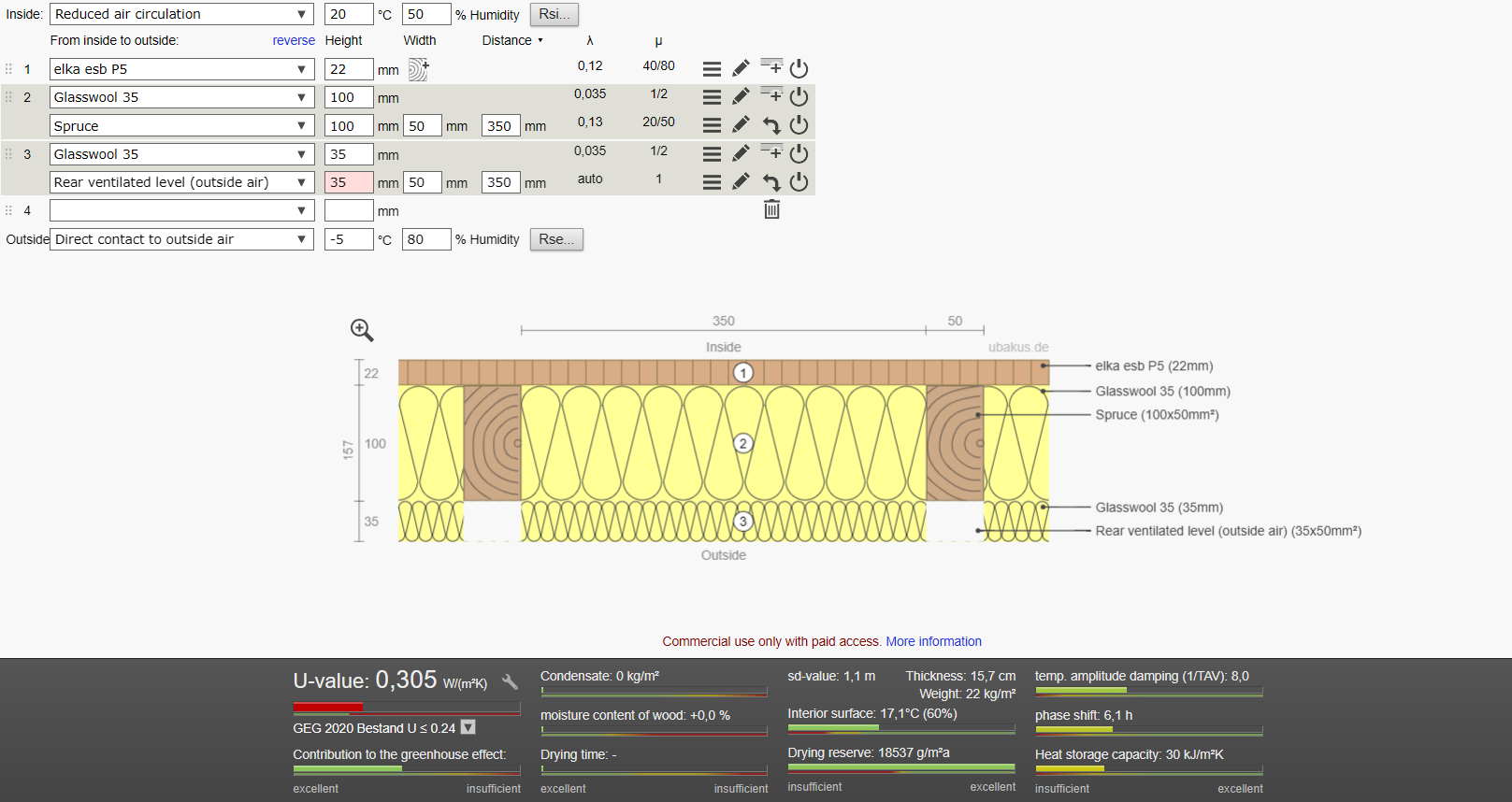
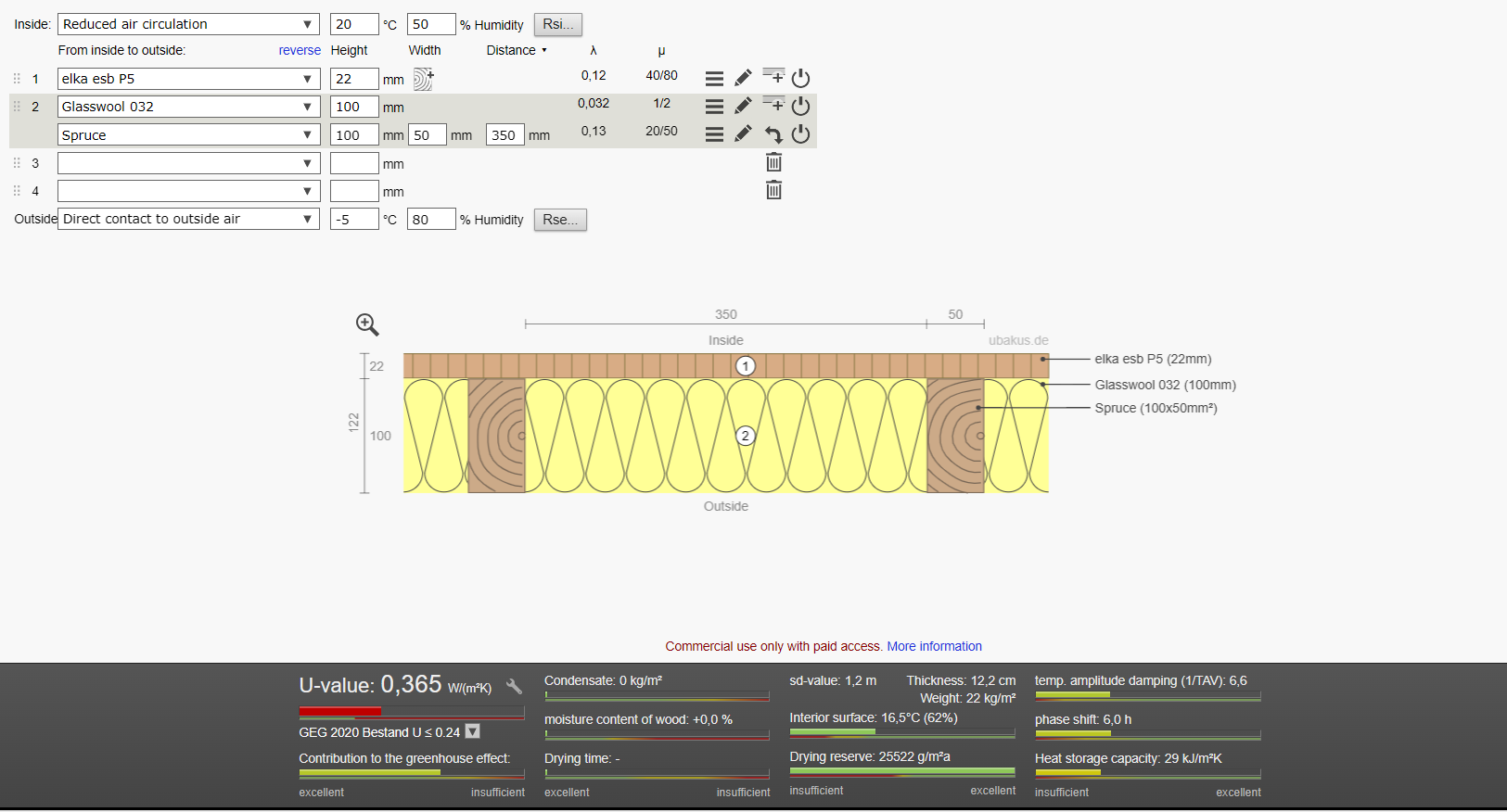
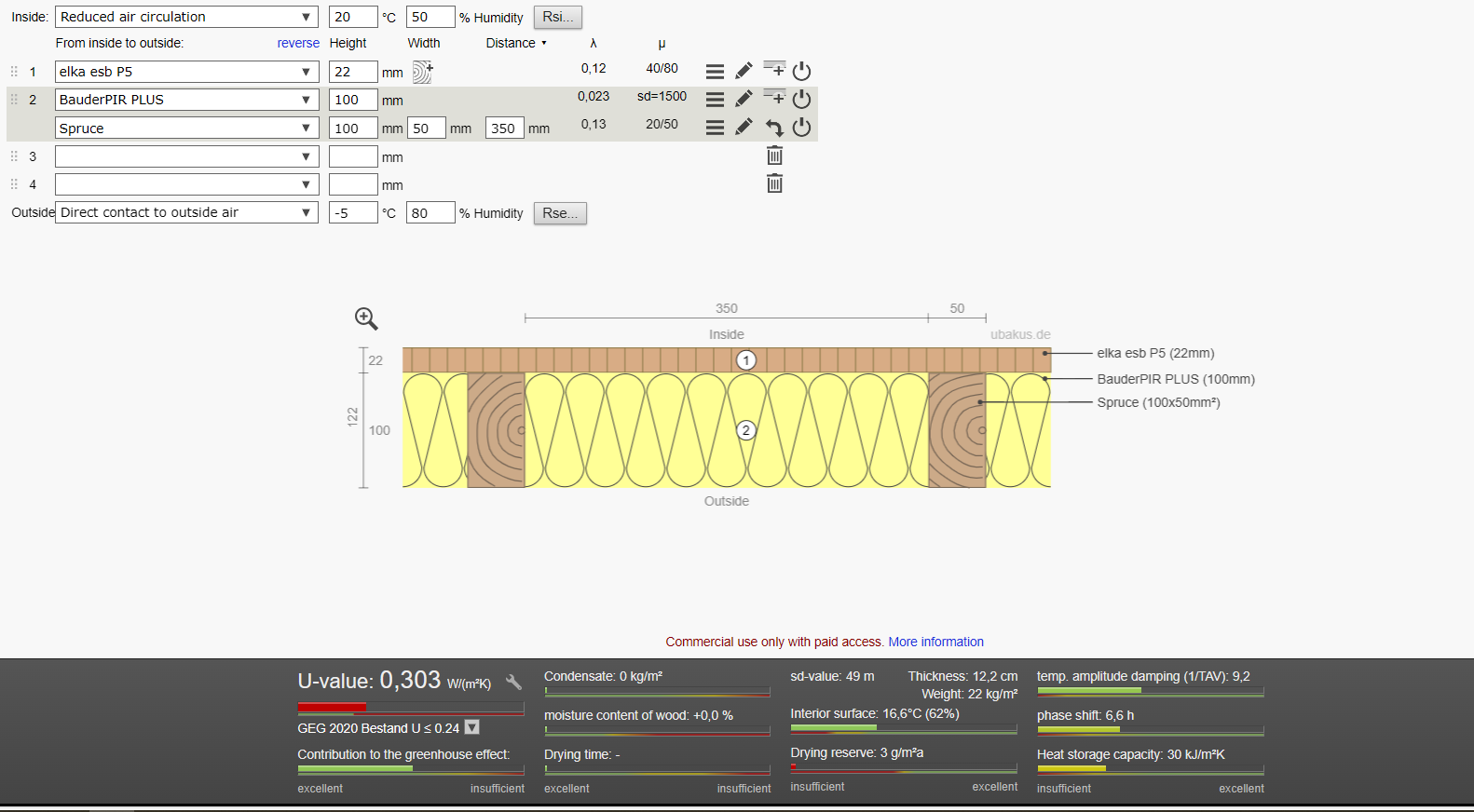
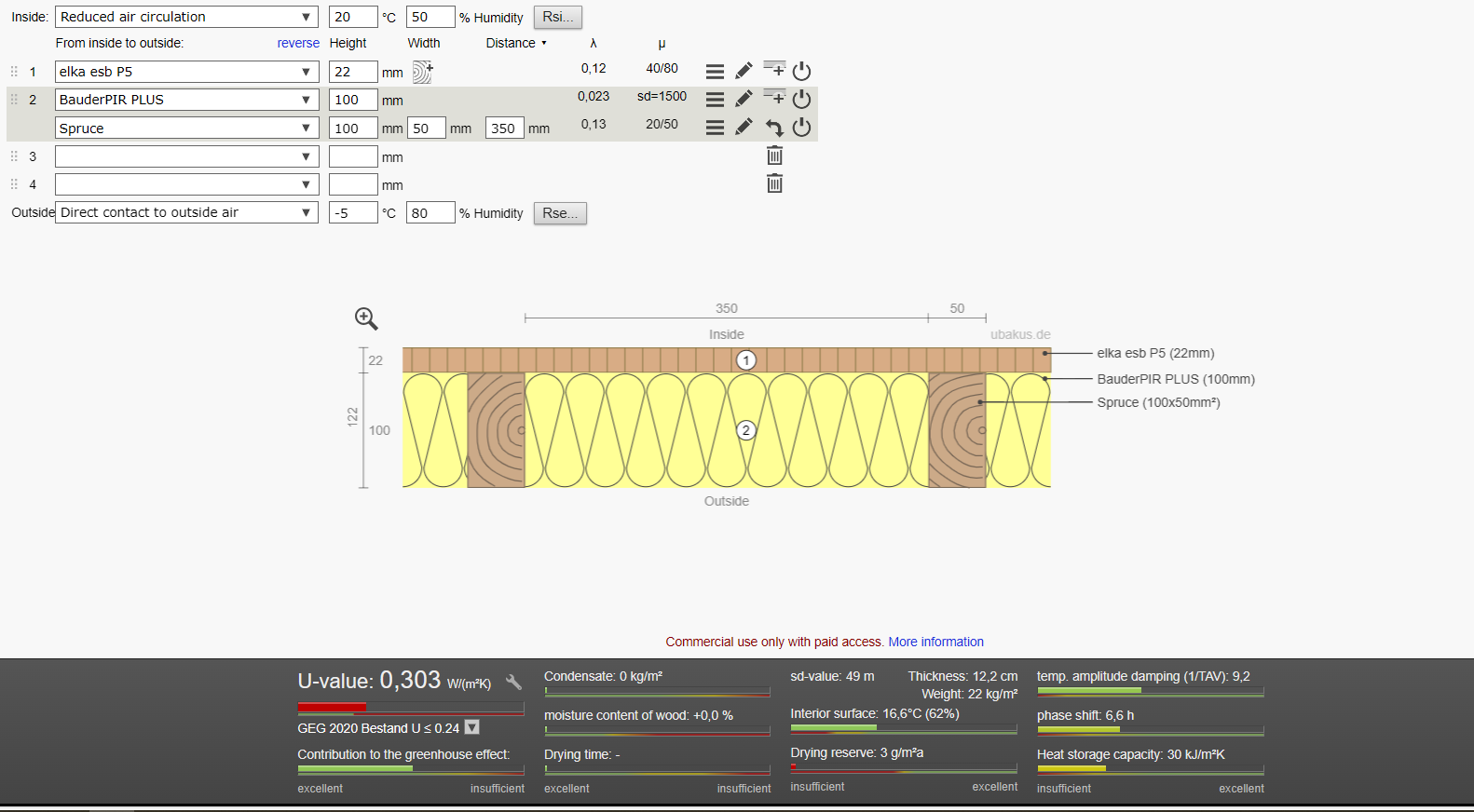
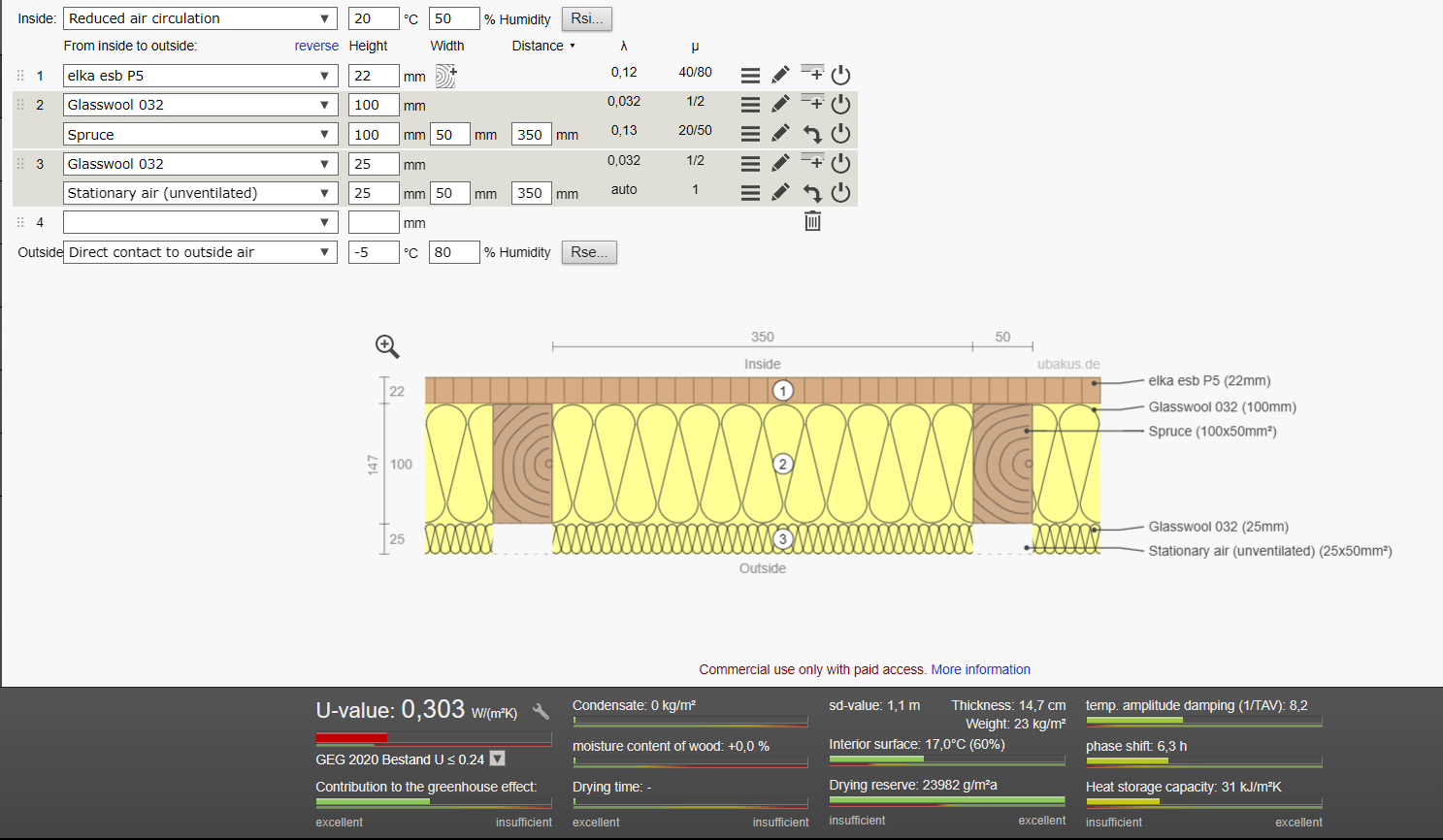
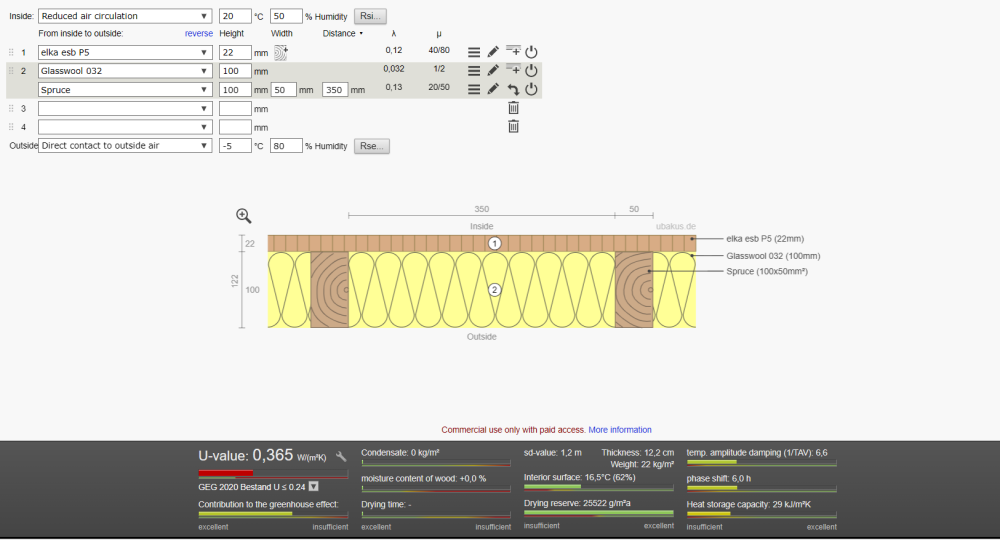
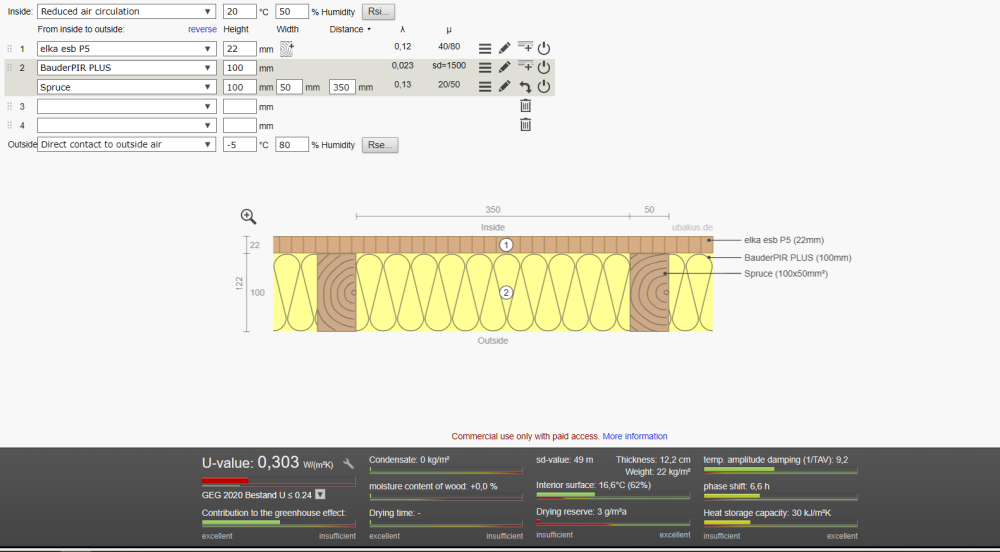
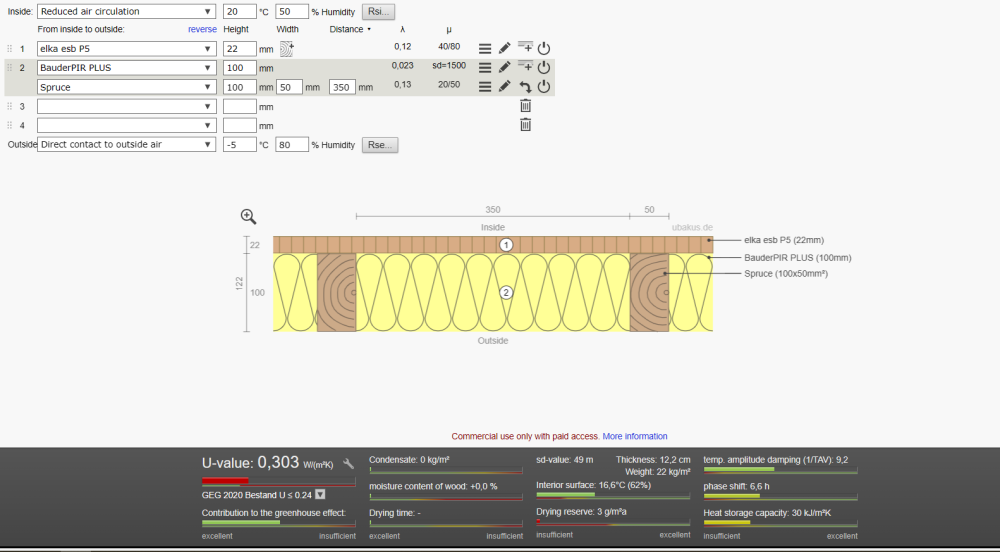
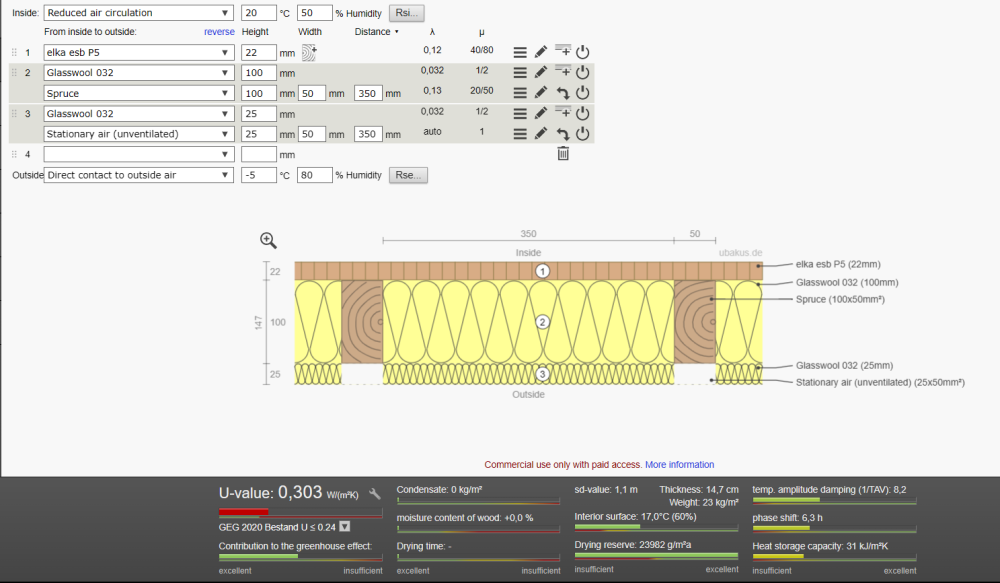
Don't get hung up on U values. There's really very little in it. The actual performance will be much more affected by the airtightness and wind tightness. Have a look at these examples. As the timber is such a large factor the type of insulation makes much less of a difference. If you were able to break the thermal bridge of the joists with a continuous layer you would fare much better but as you're limited with space no such luck.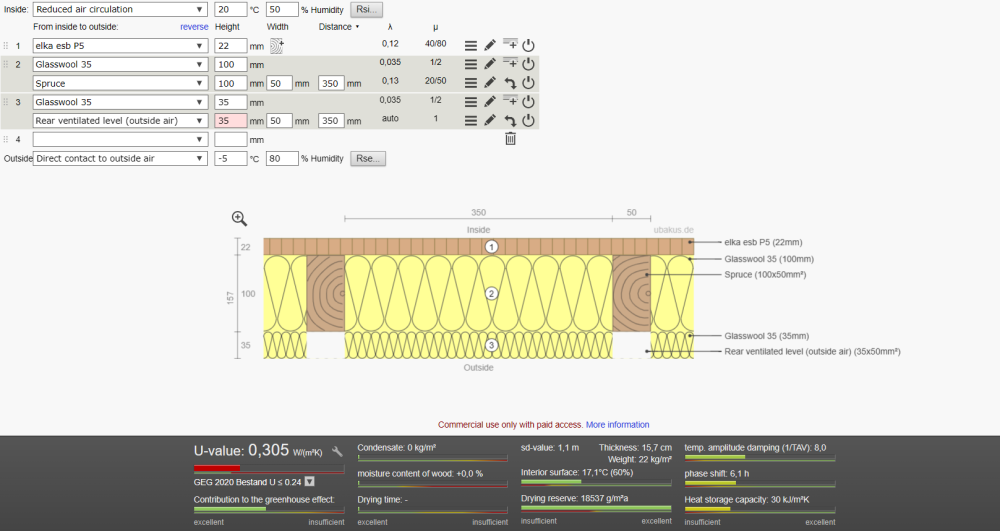
-
Airtightness approach for suspended floor PIR insulation?
Iceverge replied to Sparrowhawk's topic in Heat Insulation
Ah just saw this.... Will reread the problem shortly. -
Airtightness approach for suspended floor PIR insulation?
Iceverge replied to Sparrowhawk's topic in Heat Insulation
You get pretty good thermal bridging mitigation too.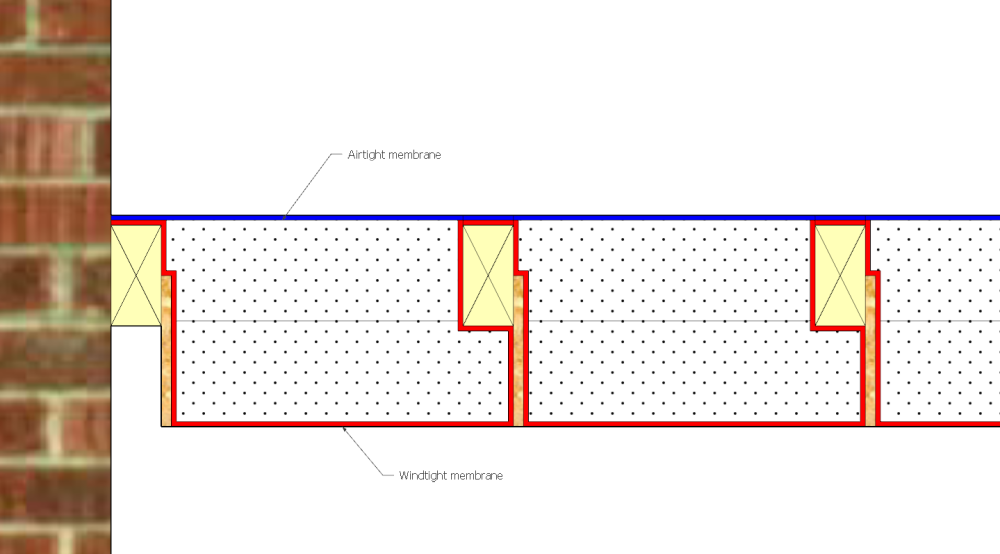
-
Airtightness approach for suspended floor PIR insulation?
Iceverge replied to Sparrowhawk's topic in Heat Insulation
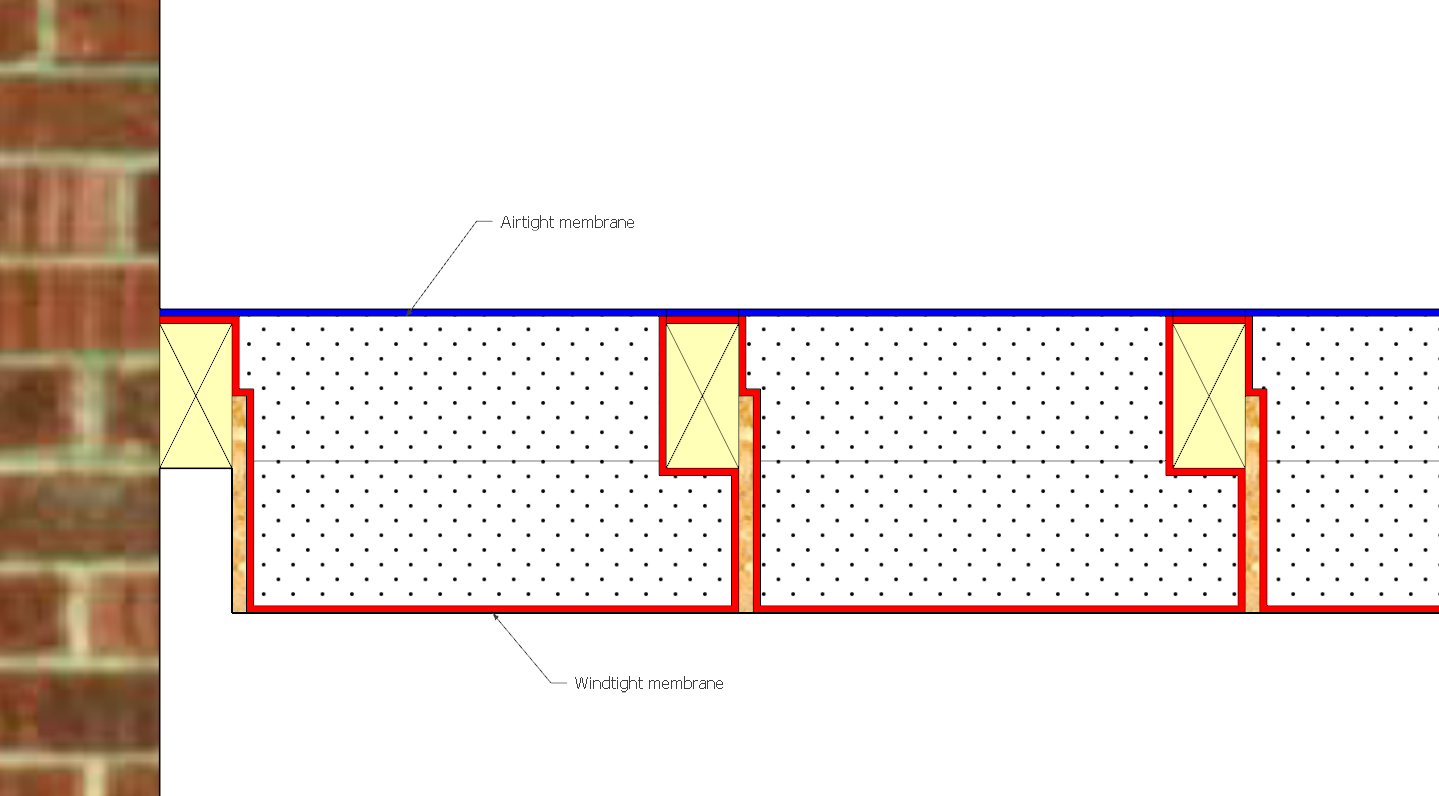
Can you not just allow the lower membrane to drape below the level of the floor boards to fit more mineral wool? You could add rips of ply or OSB to extend it as low as you like. I'll do a sketch -
There's something there for sure. Beware of lens distortion making the photo making it look worse than it is. Is there any damage to the walls?
-
I would bet they fell off the truck and fractured or someone accidentally ran a circular saw across the top chord or some other damage. They were then reinforced as shown. Perfectly sound I would say.
-
Which heating and hot water solution(s) in 2024?
Iceverge replied to Jane W's topic in Other Heating Systems
Regularly done in the bits of North America that are covered in snow for 6 months of the year. Think it is called forced air heating or something like that. -
Breathability in a conventional building; is it even worth it?
Iceverge replied to Adaman's topic in Heat Insulation
Design professionalls cannot specify this buildup however as they can't guarantee the workmanship. They will only specify extremely safe or moisture tolerant structural buildups. Like concrete walls, EWI and oil based insulants. However if I could over see the quality myself I would have no problem with it. -
Breathability in a conventional building; is it even worth it?
Iceverge replied to Adaman's topic in Heat Insulation
Similarly some theoretically "unsafe" buildups can be practically very sound. Take the example of a twinwall timber structure with no internal vapour layer but an extremely diligently tapped external OSB airtight layer. Then add dense pack cellulose with it's superb airtighess qualities. In theory you will get condensation on the inside of the cold OSB layer but practically this doesn't happen as the brilliant airtighess never allows moist internal air to get near the cold surface to condensate in the first place. Assuming the owner added MVHR and a good rain screen the DRYING well exceeds the WETTING so the wall will last forever. -
Breathability in a conventional building; is it even worth it?
Iceverge replied to Adaman's topic in Heat Insulation
Hurray!!! Someone agrees with me!!!! There's no black and white here, just shades of grey. There is no breathable or non breathable. Just degrees of vapour permeability. You could really dig into the weeds with the units but it's largely a futile exercise without understanding the BIG principal. The amount of "DRYING" needs to exceed the amount of "WETTING" for the materials used. EG if you have a mass concrete and EPS you can afford much higher moisture. EG the "WETTING" side of the equation can be huge with factors like: 1. Terrible airtighess carrying vapour laden internal air into the structure below the dew point. 2. Driving rain on an unrendered external skin. 3. Very high internal humidity. 4. Incomplete insulation installation causing internal cold spots On the other hand if you have a timber framed wall you will have a structure that can accept lower average moisture levels without damage. This leads to designs with more consideration than concrete walls. Really concentrating on the DRYING side of the equation. Things like. 1. Well ventilated external rain screens 2. External membranes lapped to drain rainwater safely away. 3. Tightly sealed airtighess layers. 4. Vapour control layers placed inside the dew point of the wall so they don't provide a location for condensation. HOWEVER. Much of this depends on workmanship. Take the poor but very common solution of internal insulation on a solid wall. PIR boards are mechanically fixed to the inside face followed by plasterboard. It is theoretically safe as all calculations consider the PIR boards as a vapour barrier and perfect airtight layer.. In reality poor airtighess allows drafts to blow behind the boards and electrical penetrations and vapour to condensate in the gap. The brick wall is now colder than before too so less of the moisture accumulated from inside and wind driven rain from outside will evaporate. Freeze thaw action may come into effect and the wall will degrade over time. There is too much WETTING and not enough DRYING. This is a delicate balance and a sunny South facing wall may survive while a shaded North facing one may not. You may be able to rectify it to your satisfaction by adding MVHR or external silicone brick cream or sealant to the skirting boards. Think added "DRYING" It's impossible to accurately calculate as workmanship is so variable. -
Which heating and hot water solution(s) in 2024?
Iceverge replied to Jane W's topic in Other Heating Systems
MVHR only heats a small volume of air. There is practical temperature limits. If for no other reason than the risk of melting elements of the ducting etc. Passivhaus set this at 50⁰ as mentioned above . This limits the energy that can be transferred to about 10W/m². As your house won't meet this figure you will need some other heating system like rads or UFH. These are all capable of delivering well above the required power for your house on their own so adding MVHR air warming when it's not required would be money spent for nothing. -
Our 250mm cavity is 0.13ish. Don't get carried away with teplo ties or lightweight inner blocks. Much cheaper and easier to just increase the cavity width by a few mm. Magic. Also I don't know. Some possibly theories. 1. The matrix is too dense to allow wind to blow the water through them. 2. The temperature gradient across the insulation encourages the water to go out rather than in. 3. The surface of the beads is too hydrophobic. 4. The outer side of the internal leaf is at room temperature and so is warm enough to evaporate the tiny amount of water that does make its way in there. 5. Assuming any water entering the cavity originates from the outer leaf the matrix of beads at worse can split half the water to go inwards or half to go outwards at any layer. If you keep halfing any drip from a layer of beads above and sending half inwards and half outwards only a tiny harmless amount makes to the inner leaf. 6. The matrix of beads is actually very open and most of the water flows straight down to the foundation or to a cavity tray. Nothing is idiot proof. You might outsmart them today and tomorrow and even the day after. However they'll be there, waiting in the long grass, ready to out-stupid you for the rest of time. They are remarkably persistent.
-
Which heating and hot water solution(s) in 2024?
Iceverge replied to Jane W's topic in Other Heating Systems
What kind of increased created costs have you been quoted? Often the uplift from 2g to 3g is bundled in with a different frame of much higher specs too so be wary of comparing apples to apples. My neighbour paid a premium of €800 for 3G over 2G in their house of 220m2. Same good performance frames, just different glazing units. -
Which heating and hot water solution(s) in 2024?
Iceverge replied to Jane W's topic in Other Heating Systems
What about thermal comfort and noise. -
Which heating and hot water solution(s) in 2024?
Iceverge replied to Jane W's topic in Other Heating Systems
The best bang for your buck in terms of energy saving + comfort is. 1. Airtighness 2. MVHR 3. Triple glazing Have you considered higher quality uPVC 3g windows. Something like Veka 82 or Kommerling 88 or Gealan S7000. They're both the cheaper and better performing than almost any aluminium or timber window. I'm going to pull a figure out of thin air here of a heating demand of 40kWh/m²/annum and a peak heating load of 20W/m². Say you're 200m² then that's 4kW. A 5 to 8kW heat pump would work well. My recommendation is a monoblock ASHP with single zone UFH on the ground floor only in 1 zone and a 300l UVC. Electric UFH just under the tiles in all bathrooms including those already with wet UFH. Maybe @Nickfromwales can disagree. -
Which heating and hot water solution(s) in 2024?
Iceverge replied to Jane W's topic in Other Heating Systems
Sorry, I've just skimmed the thread again and I didn't see any reference to your heating requirement in kW or your lightly usage of DHW/occupancy. How well insulated and airtight is the house? Do you have. Triple glazing or MVHR? -
Crash course in rendering a retaining wall.....
Iceverge replied to machtucker's topic in Plastering & Rendering
Go for it! It's only a wall and you can have the satisfaction of learning. What's the worst that can happen. I would mix 3:1 sand cement for a scud coat. Throw that on. 4:1 for a scratch coat. 5:1 for a finish coat. Sponge finish. You can put battens into the wall to get it level. And remove them once you're close enough and fill in the gaps they left. https://youtube.com/@macplastering?si=nnB3dXmray0UDeOa This lad is easy enough to understand. -
Holy smoking woodfiber Batman! That is one hell of an install. U Value about 0.1 on the wall. Top shelf products from all the premium players. Gutex, pro clima. For giggles I'm going to price it up without the cladding and plasterboard as you'll need them anyway. Solitex contega = £5.90/M2 120mm multitherm= £39.44 225mm thermoflex =£39.77. Studs £8/M2 Finsa board £12.51. 50mm Thermoflex £8.76 Tape £3/m2 Service cavity battens. £2 Total £119.38 plus vat and with zero waste. GULP. I do like this type of wall but it is unfortunately just so so dear. Amusingly every single product was available from this website. https://www.ecologicalbuildingsystems.com/ I wonder how much homework your architect actually did and how much they copied from elsewhere.....
-
How to raise 125mm SIP panels?
Iceverge replied to AwesomePete's topic in Structural Insulated Panels (SIPs)
Pour a concrete ring beam in lieu of blocks. Straightforward to shutter up. Infact you could use the PIR floor as your internal shutter if you wanted. Make sure the bottom of your sips are well above rain splash height. -
I would go with a version of #2. I assume you are doing something like timber frame with blown insulation? Those grommets are hella dear. Use an offcut square of plywood instead of the membrane where ever you need a penetration. Drill a hole in the interior and exterior and push through the conduit. Have a slight slope towards the outside for drainage. Seal the ends with some airtight sealant. More robust and cheaper than grommets.
-
Why would someone build this here?
Iceverge replied to Adsibob's topic in New House & Self Build Design
London soon cured me of my affection for car ownership. I'd imagine that most of the residents of the upper floors will be just as unpolluted on a breezy day as anywhere else. Besides, we need more homes. -
There is a lot to be said for this. It's one of the big draws I had towards getting a wood stove. Unfortunately the lack of required brainpower to operate also occured with the installers I encountered. They ultimately put me off the idea after I spent so much time and effort on airtighess. They were pretty ignorant of the realities of a good ACH number. In the end we have loads of insulation and plug in heaters. It's not particularly cheap at about 3200kWh/year but it is super simple. If I had to change anything I would just spend my effort on reducing our heat loss even further. There's nothing about extra insulation that breaks or fails over time or costs anything to run.
-
Floor plan feedback - London 30s semi
Iceverge replied to hdp's topic in New House & Self Build Design
Where's North on your plan? Don't forget you can change your house but you can't change the path of the sun. -
Minimum height of insulation build up on concrete slab
Iceverge replied to seano's topic in Barn Conversions
To feel any heat through the engineered wood flooring you're going to need very high flow temps. This will kill the efficiency of any heating system, espically an ASHP and will exacerbate any downwards heat losses. As its an old conversion it'll lightly have higher heat losses and an intermittent heating strategy is probably the most economical. In this case you need to concentrate on heating the internal air rather than the structure. Get rid of the UFH and use large radiators. From your other post you have 100mm plus 70mm screed and engineered flooring planned. Let's say 20mm for that. Total 190mm. Phenolic insulation is slightly better than PIR but almost never worth it in a financial sense. This is my recommended build up: 20mm engineered flooring glued down. 18mm T&G OSB layed at 45deg to the engineered flooring, glued together. 50mm PIR 100mm PIR with joints staggered to upper layer. Levelling compound over concrete slab. U value about 0.14W/m2K. The engineered wood will be warm underfoot in any case but I would consider adding electric UFH matt on any tiled areas just for the extra comfort. -
Spring has sprung, but still wet and cold, but some progress.
Iceverge commented on LSB's blog entry in Little Stud Barn
Love tidy insulation install with the full fill batts. Keep up the good work.