


Iceverge
-
Posts
4485 -
Joined
-
Last visited
-
Days Won
32
Everything posted by Iceverge
-
I would rather eat a breeze block than use rigid boards in a cavity wall.
-
It's an elegant structure that.
-
How about this.

-
With 100mm insulation and 150mm blocks you're at 250mm. Why not just build a full fill cavity wall with batt insulation? Alternatively a TF garage with an insulated inner stud and block external leaf.
-
You could easily get to 2-3 ACH50 with care. In any case airtighess makes no difference on a calm day. Without mechanical ventilation or a strong stack effect (heating on and windows open) your house will be stuffy. My advice is to stay away from ASHPs in your case. A gas boiler will fit your expectations much closer. Regarding the suspended floor insulation this is my preferred method. You can use cheaper mineral wool of course if woodfiber is out of your budget. https://www.ecologicalbuildingsystems.com/post/best-practice-approach-insulating-suspended-timber-floors
-
If you use hollowcore concrete planks blocks shouldn't be much of an issue.
-
What kind of FIT can you organise? Even if you can sell at half your buy in rate you might be better off than buying a battery. It just requires some sums.
-
A huge chunk of it I imagine. I suppose if you were able to install a subway train in your house that would account for a significant amount of the annual heat demand. It'd be irritating though.
-
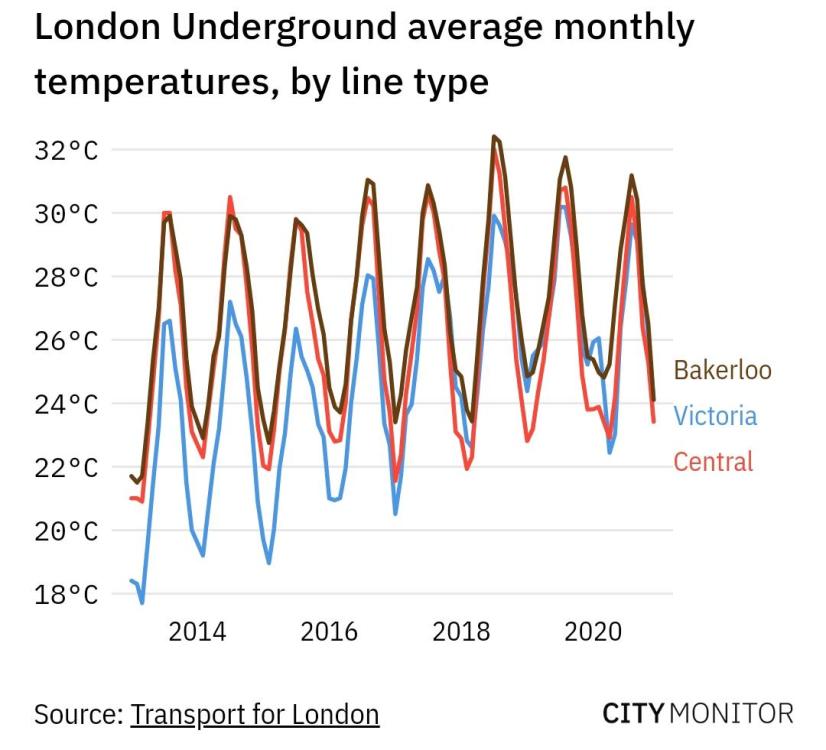
There was a project in Drakes Landing in Canada. https://www.dlsc.ca/ Scanhome did one in Galway with an EPS insulted water store. https://www.scanhome.ie/pdf/Storing-Sunshine.pdf I think there was one near the Watford gap of the M25 to defrost the road in winter. The deep tube lines in London are probably the only successful (if accidentally) examples. They're heating up every year. Moral of the story, Build your house 50m underground.
-
Maybe. Maybe not. https://www.visitnorway.com/listings/stålekleivloftet-one-of-the-oldest-wooden-buildings-in-the-world/207516/
-
 @MVHRDesigner Welcome to the forum. Always good to have more experience as most of us are self taught. Like mentioned above maybe you could do an introduction. I self installed our MVHR. It was making noise until I made a DIY silencer out of foam and MDF. I have a thread on it somewhere. (It's since fallen apart as I only used airtight tape to make and it only lasted 2 years or so, I must redo it soon, my laziness and corner cutting knows no bounds!) The semi rigid duct lengths didn't seem to make any difference to noise in my experience, if anything the shorter runs nearer to the unit were noiser. I appreciate that there is much work designing ventilation systems especially in large and complex buildings. However most sensitive sized houses can be designed with a few rules of thumb. I'm yet to be convinced that domestic MVHR is any different.
 -
Kingspan don't care. They just want to sell their extremely expensive insulation.
-
It depends. Assuming you're redecorating the inside too? Can you dig out the floors. It's very possible to get excellent airtighess on a room by room basis. For some reason everyone looks at MVHR only through the lens of money saving. This neglects the health and comfort benefits. Have a read of one of the many threads on here and you'll get a flavour of the benefits/drawbacks. Likewise with ASHPs in retrofits. There seems to be a new thread monthly where the whole thing gets thrashed out again.
-
Pics paint a thousand words thanks. The exterior looks pretty smart. There isn't much existing exterior overhangs so EWI would be more awkward. EPS beads and closed cell polyurethane foam are your choices for the cavity fill although the latter is 4 times the price. If you can I'd drill a hole now. It only needs to be 5mm though one leaf. You could patch it with a piece of chewing gum! It will inform your decisions early. Regardless of the insulation there are much bigger gains to be had form airtighness and MVHR/mechanics ventilation. Have you though about any tactica to deal with these?
-
That kind of cavity with EPS blown beads would be fine. Like muted above I'd be surprised if that was actually the case however. I suspect you'll get a 2" or 50mm cavity. It'd be still worth doing however. U value 0.66 W/m2K. Technically external wall insulation (EWI) is a great solution thermally. It keeps the whole structure warm. You have a really safe install in terms of moisture buildup and the associated problems. However the renders are expensive, you may need to alter the roof and it isn't as robust as a sand and cement finish. Couple of questions. 1. Do you have any pictures to share? 2. Are you redoing the interior anyway? 3. Will it require re wiring/plumbing etc? 4. Can you access an SDS drill and make a small hole to see how deep the cavity is?
-
Sorry rereading it again..... Can you do a sketch?
-
Rereading this I see you plan on a warm roof over the top of the entire arrangement. I assume you have 150mm+ of insulation up there running over the joists and the. I beam? If that is the case you don't need any insulation at all below the steel.
-
Or you could put something like EPS on top instead and have a flush ceiling.
-
Critique my MVHR plans - round 2
Iceverge replied to Sparrowhawk's topic in Mechanical Ventilation with Heat Recovery (MVHR)
Wowsers! You've put lots of work in here. My first question is ......and you're going to hate me........is it worth pulling your house apart instead of another system like dMVHR or dMEV? Secondly what is you airtighess like? I'll have a better gander at it later on in the week. -
I've been following this thread. I'm beginning to think you have a body buried in the existing foundations.
- 61 replies
-
- 1
-

-
- design
- grand design
- (and 4 more)
-
It's a real failure of the building industry, and the law system in general. If someone rich wants to stiff you they can afford to impoverish you through delaying and outspending you in the courts. Like you say the only way is to hold the keystone in your pocket until all the money is handed over.
-
It would be useful to see plans. I would say you should be ok with 2 X manifolds of 75mm x 6 at that floor area. Like @JohnMo says if air can move through a room then you won't need one in there, much like the hall and landing. Similarly a room what won't be occupied can make do with a vent in the wall to ensure no buildup of gasses.
-
I heard about a plastering contractor who wasn't getting paid for large housing estate. After much negotiation it was apparent the developer was going to leave him high and dry so his crew did one last days work. Shortly after the first house was sold the developer received a complaint that the house was making an intolerable beeping between 4-4:30am. Mystified, they eventually spent a night in the house and after much distruction they found a very annoying battery alarm clock inserted in a stud wall. Thinking he had won the petty battle the developer rang the plasterers to gloat. The plasterer apologized for forgetting the alarm and asked for his bill to be paid. The developer laughed at him. Soon the clients of the second house rang, and then the third. It turned out the plaster had "forgotten" several alarm clocks per house in the entire estate, all set for different days and times. When the second house was almost demolished to try to find the offending alarms the developer remorsefully called the plasterer. Paid him in full for his work and included a bonus in return for detailed map of the lost clocks.
-
To make sure the roof leaks in future I imagine. 😮💨
-
Yup over here.


