Iceverge
-
Posts
4383 -
Joined
-
Last visited
-
Days Won
31
Everything posted by Iceverge
-
blown bead?
-
Would you consider a floor drain with an airless trap under the kitchen sink and in all wet rooms and not bother with changing the Flexi tails? It'd cover all situations, leaking dishwashers, tap, pipe, UVC, Kids flooding the bathroom. Its one of those "I wish I had" items.
-
 Amen brother! We have literally zero penetrations throughout ours and it's still too much IMO!
 -
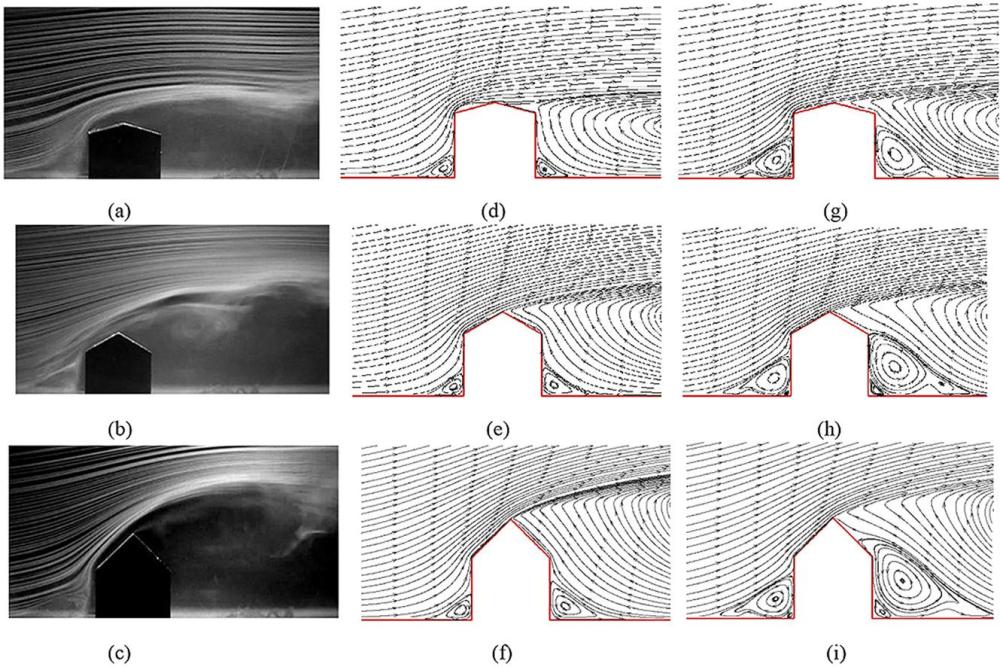
Wind flow over the low-rise building models with gabled roofs having different pitch angles - ScienceDirect I didn't look too much into it. It's just a pretty picture that represents the wind flow differences at both sides of a roof apex. Do you have any more details of your install? Plans etc. The more info you provide the more lightly someone will recognise and already have a solution to your problem. We used one of these. Paul make something similar.

-
It's almost guaranteed have a vastly different external pressures with any kind of wind as seen above. It might be a nightmare to balance.
-
What distances are your taps from the UVC? We have a 10mm Hep20 to the kitchen tap fed from a manifold preheated by convection. The pipe length is 13m from memory. Time to hot is 8-9 seconds and flow rate is 5l/min. About 2-3 seconds of this delay is the tap itself and the monobloc looses about 1l/min flow rate too. If you can position your UVC near the kitchen tap and toilet basins a circulation loop is unneeded IMO.
-
External Insualtion - How to calculate U-value for 1930's house
Iceverge replied to lstevensuk's topic in Heat Insulation
EWI pretty much guarantees no interstitial condensation however at 90mm of EPS you'll probably be about 0.35. The cost to increase external insulation thickness in minimal really. Almost all of the cost is the render, fixings etc. Can you do better than 90mm? -
Wrong insulation used, Small claims court or not ?
Iceverge replied to GaryM's topic in Party Wall & Property Legal Issues
Annoying yes, very but it's not the end of the world. I'm of the opinion PIR is a bad thing between timbers anyway and wouldn't have seen it as a good spec. Differential shrinkage between the foam and timber leaves gaps and you'll get thermal bypass. It's really tricky to fit well and most builders can't afford the time to do it well. Practically mineral wool will perform closer to the theoretical U value than PIR . Not to mention fire, sound, off gassing. I wouldn't panic about the lower U value. Installed value is lightly to be about 0.25 worst case. Cheapest mineral wool and solid joists. PIR theoretically might have been 0.16. This would translate into about £75 more in heating per year at the new gas price of 15p/unit on a 100m2 roof. Not a nice pill to swallow but hardly catastrophic. Overboarding with 50mm Pir would take you back to 0.16 assuming worse case for the existing roof. -
Building a Block Workshop - ADVICE NEEDED!
Iceverge replied to stunotch's topic in General Self Build & DIY Discussion
The minimum pitch will be normally supplied in manufacturers instructions for the roofing material. How do you plan on bringing in the concrete for the shed base? Wheelbarrowing it is a real pain and would require a team of workmen. This came to mind from the distant reaches of my noggin. It is an advertorial for a Bricky tool ( I have no experience of it ) but it details an entire build of a small workshop. The engineering is very much rule of thumb but to be honest but the finished building looks well. Probably 90% of houses still standing are built using rules of thumb. https://youtu.be/NJ4-cO8Uv0g -
Brick and inner skin block or brick and inner skin Timber frame
Iceverge replied to Aks's topic in Brick & Block
Plenty of info if you use the search function here. This is a good place to start. -
When clearing some abandoned farmyard about 7 years ago I found several Lumps of white EPS discarded , just thrown on the ground outside, covered in vegetation. They were lightly there since at least the 1970's if not earlier. Nothing had eaten them. They hadn't absorbed any moisture. No insects had made their home there. No plant roots had grown into them. It was pretty convincing. We put about 75m3 of EPS in our house subsequently.
-
Simple You get a long hacksaw blade and spend half an hour trying to cut the slate nails. Then carefully bend some old fragile slates out of the way whilst trying to prise the remains of the broken slate out. Despite your best try another 7 slates crack in the process. Whilst doing this you see the battens are completely rotten so you carefully start to cut out the damaged sections. Unfortunately this reveals the felt is in bad condition and full of holes. Cursing your luck you decide to decamp to the van to consider your options and avoid the unforecast downpour. Just then a gust whips yet more slates from the roof and blows one through the back window of a van marked "militant bat surveys". On que, perhaps disturbed by the din, an endangered " Green hairy bikini bat" emerges from a hole in the felt and lands on the windscreen wipers of said bat surveyors conveyance. Disheartened and defeated you go to turn the ignition key and retreat further to the pub. B*ollocks the van won't start. Walking home, you reach your house sometime in the dark only to be greated by the smoking remains of your torched semi-d and a note saying your Mrs has eloped with her yoga teacher. As the tears and snot drip from your nose you think back to where it all went wrong. Should have used slate hooks.
-
Decking paint failure, why and what to do about it?
Iceverge replied to ProDave's topic in Decorating
One trick I found with airtightness paint which when going in full strength first coat was that it was reluctant to stick to the substrate and peeled off in big wobbly strips. Cutting it with water was very effective in making a primer and it stuck well there after. Maybe make a very thin solution of your paint as a primer using a suitable solvent/water depending on its base. -
What energy rating is your HW cylinder?
Iceverge replied to Adsibob's topic in Boilers & Hot Water Tanks
I've re done my table with a 4.6kWh system (real prices from easyPV) and upped the amount of bought in electricity. PVGIS shows 4141kWh of production. With a large DHW tank it should be possible to use 3/4 of that I reckon. (Does anyone actually have any experience?) The ESHP wins out here although it's close. However, I'm unconvinced it will last as long as the PV which guarantees the panels to 25 years. If you had to replace the ESHP at any stage it'd be more expensive. Also the PV can be used to displace lots of peak electricity elsewhere in the house too which isn't in the above calcs. The simplicity of it and the lack of any moving parts get my juices going too!!!
-
What energy rating is your HW cylinder?
Iceverge replied to Adsibob's topic in Boilers & Hot Water Tanks
Would it be possible to get it to heat to 25 for the UFH and 48 for the DHW separately? I'd imagine you'd have a lower electricity bill? -
What energy rating is your HW cylinder?
Iceverge replied to Adsibob's topic in Boilers & Hot Water Tanks
https://www.researchgate.net/publication/276499152_The_Efficiency_Analysis_of_the_Exhaust_Air_Heat_Pump_System Reckons the winter COP will be about 3 and summer about 3.4 . Heating far superior. COP of 7!!!! The case for heat pumps for DHW isn't as clear as space heating. Quick googling shows a Dimplex Edel 270l for £2752 + ducting and a Telford 300l UVC for £599 and 3kW of Solar PV for about €3000. Assuming self install as in this case. I made a brief table for 3 electricity prices and 3 scenarios. UVC only, ESHP, UVC+3kW PV ( all self used on DHW) The numbers tell the story. Obviously it really depends on your DHW usage and electricity price.

-
What energy rating is your HW cylinder?
Iceverge replied to Adsibob's topic in Boilers & Hot Water Tanks
We're direct electric here for everything. From my calcs/experience any space heating is better off done by a heat pump unless your annual demand is less than about 1MWh. (Electricity price dependant) @Spacey73you are already there with your A2A units. DHW is much more marginal given the lower COP achieved once you get to tap water temps. If you've already got an ASHP for space heating it's the cheapest solution. However the ASHP capital for DHW alone will take decades to pay back. Then it's much of a muchness between adding PV and a divert to the UVC or an ESHP. It really depends on where you are beginning from. For us I plan to add PV at some stage to the garage as the UVC has years of life left hopefully. If we needed to replace the UVC anyway an ESHP would be best. The Sunamp argument is separate. They're good for high temp heat sources, if you're really tight on space and need to avoid G3 servicing requirements and need to minimise heat loss requirements. I think an ideal application may be as a replacement to an electrical boiler or conbi in a tight cupboard to self use PV. For most situations a Combi, or an UVC or thermal store will be cheaper. However, who really cares, it's your money after all. This perpetual accountancy would have us all taking cold showers and eating spam direct from the tin. -
Insulating window reveal timber frame new build
Iceverge replied to benben5555's topic in Heat Insulation
@ADLIan @benben5555 Looking back over those THERM drawings yesterday I had a completely b*llocks value for the thermal conductivity of the window. Almost an order or magnitude worse than reality. Cover as much of the frame with insulation as possible remains the mantra. I'll try to post a better drawing shortly. -
Insulating window reveal timber frame new build
Iceverge replied to benben5555's topic in Heat Insulation
Hi @ADLIan. I'm only trial and erroring here so don't take any of the above for gospel. What have I got wrong? The big numbers above are only U-values for the total 2m section of wall using a simple window. I used these as it's easy to read off the numbers from THERM. I didn't try to calculate any psi values but just the different overall U values between each buildup which should be representative of the different heat loss with and without insulation. -
How to fit flush shower tray level with concrete slab
Iceverge replied to markharro's topic in Bathrooms, Ensuites & Wetrooms
What is your final floor finish? Polished concrete? Tiles? -
Just a few bags of cement+lime from your local merchant and chuck in a mixer with some sand. It's cheap as chips. No need to buy anything more expensive. Trial and error will find a good consistently.
-
Yes you're right. Can you budget to create a bellcast in the roof to overhang the wall further?
-
If you have a cold attic bung it in there instead.
-
Welcome, what stage of the build are you at? Similar situation in Ireland. Labour is tight in construction. There's plenty of jobs in industry that are far safer, better paid etc.
-
Insulating window reveal timber frame new build
Iceverge replied to benben5555's topic in Heat Insulation
THERM. It's a PITA to setup and use but it is free for PC's. it gives a good idea graphically of what actually makes much difference if nothing else. From above from best to worse. 1. 150mm sock and pir cheek. 0.5946 2. 75mm sock and pir cheek. 0.6037 = best - 0.0091 3. pir cheek only 0.6285 = best -0.0292 4. 75mm sock only. 0.6275 = best -0.0329 5. Nothing. 0.6985 = best 0.0091 -0.1039 All figures in W/mK. So if you have 100m of window perimeter to consider on a cold day with temp outside of 0 and inside of 20 Your difference in heat loss will be 100m*20deg*0.1039W/mK = 208watts of extra heating. At a guesstimate using 100 heating days per year and an average outside temp of 9 deg and gas heating It'll equate to. 100days*24hrs*9deg*208*15p per unit *80 % boiler efficiency........ = £93.60 extra per year going from no insulation to best insulation.