


Iceverge
-
Posts
4487 -
Joined
-
Last visited
-
Days Won
32
Everything posted by Iceverge
-
 LVT here. Its relatively grippy, plates usually survive a fall, it's warm underfoot. Tiles are too hard, too slippery, too cold and too dangerous IMO.
 -
From memory 2.5m/s is the maximum recommended velocity for ducting for noise. With a 75/63mm internally this translates to 7.8l/min flow at the terminal per duct. A long duct run will have increased flow resistance but it really doesn't factor on practice once you throttle the flow at the terminals. We are single ducts everywhere except the kitchen is doubled. Longest run is about 15m. Any noise we had was because of the unit itself. Cured by a DIY silencer.
-
A ten minute electric shower might use 1.5kWh. A conventional mixer would use about double once you take into account the boiler inefficiencies, storage and transmission losses and higher flow rate. A much nicer experience however. @Marvin has a nice priority list for improving energy use and very importantly comfort. AIM APE Airtightness. Insulation. Mechanic ventilation with heat recovery. Air Source heat pump. PV solar EV. You seem to be starting at the end. If you get the first 3 sorted you'll be shocked how little of difference the last 3 make.
-
Unfinished Engineered flooring? The oak should be at least 10times as thick and if it's tough enough to walk on.....
-
@Radian beat me to it. Just hide them in the stud walls.
-
I don't see how it'd be different from the other system. Maybe I'm missing something?
-
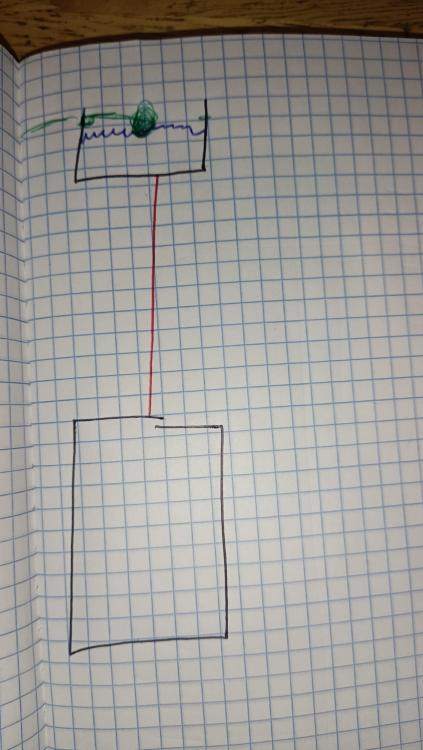
That mystery 1/2" pipe neither leaves the pump house nor gets teed off the mains pipe anywhere in the house. It simply emerges from the concrete producing water. I've decided to leave it but cap the basin and W/C and feed them from the mains as well as the new shower. I was wading through guano earlier in the attic shuffling the new F+E into place thinking about how to plumb it in. A typical cylinder is fed something like this AFAIK. With a thermal store can i plumb as below. as there is no direct hot water draw off. Allowing the F+E pipe to keep the cylinder topped up too?
.thumb.jpeg.5752b2d3c34d1d212e285c33dea4333b.jpeg)
-
Wall beds and other space saving ideas
Iceverge replied to Jilly's topic in New House & Self Build Design
Regular dumping of unused items. -
No need to remove the render. Just EWI over the top.
-
Cutting and fitting mineral wool insulation
Iceverge replied to SteamyTea's topic in Heat Insulation
What about the waste? Skips everywhere full of offcuts. Not everyone is a thrifty self builder. Also what about the waste of human time. A terrible issue in construction. Men (it's almost always men) putting hours and hours into silly tasks when there's a better way. Lugging mineral wool batts up stairs, climbing up and down ladders hundreds of times per day. Measuring and cutting dozens and dozens of individual stud bays. All blown insulation here. 58 m3 of EPS beads installed in a day by 2 men in a truck and some hoses. Zero waste and mess. The only human suffering was a couple of hours of drilling with an SDS drill for the injection holes. With our wide cavity and OSB window bucks this could have easily been done via drilling OSB rather than concrete blocks. Similarly 50 odd m3 of cellulose done in an afternoon by 2 men and a lorry for the attic. One of the main reasons I choose this was that's it's almost impossible to end up with voids which with a trusses roof would be plentiful with mineral wool. One man feeding cellulose bales to the blower and one sitting on the hose. -
Practically you could build the great pyramid of Giza on top of a 175mm joist spanning 2.1m. You might have to leave the top stone off considering you put some holes in it! I wouldn't give it another thought. If BC note it you could always screw some metal plates to the side of the joist to reinforce it.
-
Insulating ducting in the loft
Iceverge replied to ADringer's topic in Mechanical Ventilation with Heat Recovery (MVHR)
You could use a blown insulation like cellulose to bury it completely. -
How about TLA? @Conor used it in his build. Professional — Energystore (energystoreltd.com)
-
If you're putting stuff up there there'll need to be a supporting structure so not to compress the insulation. Yes. A good dust mask. Mineral wool is a nicer product than glass wool. This is a good price. Knauf Insulation Super Top Up 200mm Loft Roll - 5.61m² | Wickes.co.uk Cover all your skin (including clothed areas) with a thick layer of moisturising cream beforehand. It'll help stop the fibres getting in your pores. If you have them, wear old clothes and consider throwing them away later or washing twice. Don't put the insulation hard against the bottom of the felt in the roof at the eves. A 50mm gap is needed for ventilation. If you need to cut say a 500mm strip of insulation, it's much easier to do it when it's still packaged in the roll rather than when it's rolled out. I used a standard handsaw. Even a breadknife would work. It's no extra work to put in a 200mm roll vs a 100mm roll. Thicker is obviously better. If you're earning less than I think £31k or someone in the house is on benefits you may be eligible for free installation.
-
Designing an air tight roof - Truss, I Beam, ???????
Iceverge replied to Renegade105's topic in Roofing, Tiling & Slating
If making it airtight from the inside with trusses will mean an extraordinary amount of taping. Unlightly to be a good result. Some glulam ridge beams and a cut roof would be easier but still require diligent workmanship. Given the complexity of the design I'd be tempted to move the airtight outboard. A layer of OSB over the trusses. Taped at all joints and then the airtightness layer returned to the wall airtightness layer would work. You'd need a good layer of external insulation like woodfiber boards or PIR. You may run into issues of buildup thickness and long fixings through the insulation are not cheap. Taping the OSB would need dry weather. Alternatively a breathable but airtight woodfiber board outboard like @IanR and blown cellulose between a cut roof should produce a good result. -
Advice on gluing an external concrete sill
Iceverge replied to catrionag's topic in Doors & Door Frames
Can you just shutter them up and pour a sill in situ -
Hello! About to kick off an EnerPHit project!
Iceverge replied to DavidG's topic in Introduce Yourself
Welcome welcome, It sounds like an interesting project. Excellent to see someone using a scientific approach. As usual we're all hungry for more details! -
Yes this is what I was planning. A dedicated 10mm hot feed taken from as close to the TMV on the cylinder as practical - direct to the basins. Will a 1X15mm cold feed should be ok for a thermostatic mixer shared with an electric 8kw Shower? They're unlikely to be used together. At the moment when you flush the loo or run the basin cold tap the shower goes weak and scorching as the water flow in the electric shower drops to about 3l/min. I think this is because they are all sharing a 1/2" MDPE supply. A dedicated 15mm supply to electric shower should stop this I hope. The basin and WC will share another 15mm that splits into 2x10mm for the end of the run. 10mm as it is easier to conceal and will limit the draw of water. The thermostatic shower will get a 15mm hot too. Any other bear to traps I'm going to step into?
-
Best Place to Buy Plasterboards - Sound Proofing
Iceverge replied to Ambaz79's topic in Plastering & Rendering
Found it 😁 https://forum.buildhub.org.uk/topic/12210-double-board-or-layer-of-osb/?do=findComment&comment=206153 -
Best Place to Buy Plasterboards - Sound Proofing
Iceverge replied to Ambaz79's topic in Plastering & Rendering
There's no magic in soundproof boards AFAIK apart from their greater density, They absorb more sound energy per unit thickness. You would have greater density overall with a second layer of standard plasterboard, albeit with greater thickness and more labour cost. Theres a table here somewhere if I can find it. As @Conor says you'll need to decouple the two floors, dropped MF ceiling, resilient bars are common methods. Also taking care of reverberation. By including something like mineral wool in the void will stop sound bouncing around like a drum in your ceiling. Perhaps the most important however is fastidiously closing any air paths for sound to travel through. Poorly sealed holes in the floor above down lighters for instance can negate all the good efforts elsewhere. -
Right @ plumbing gurus. I need to run new hots and colds to a bathroom. It will supply. 1 X WC. 1 X Hot Basin 1. X Cold Basin 1 X Mixer thermostatic shower 1 X Electric shower. Unfortunately the routing of these requires pulling down lots of plasterboard and drilling joists. I would prefer a radial system of 15mm for the showers and 10mm for everything else but I think I'm stuck with a trunk and branch layout. What is the minimum amount of pipes recommended for this. I was thinking 1x 15mm hot. 1 X 15mm cold and 1x 10mm hot for the basin.
-
Drying = Reducing Relative Humidity = Heating and Airflow. I assume no more water is coming in? Do you have a fireplace? Alternatively a Gas powered heater. Make sure when you hear the air and it therefore soaks up all the moisture it can escape to the outside.
-
As you've deciphered sales men are full of sh*t. I got terminally confused by all the marketing nonsense so I sat down with a pen and paper and started to do some sums re heat loss and insulation ect It really isn't difficult and once you get a hang if it decisions make themselves. My original plan was a Z shaped house built to Breg insulation standards with demand controlled ventilation, a solid fuel cooker, a woodstove, solar thermal UFH, double glazing. Gradually everything got eliminated and changed. We built our third design we got planning for. It's a simple rectangular passive house with no solar panels, no central heating, MVHR , 3G, no stoves. Ultimately the numbers don't lie.
-
What about a phased array IR beam blaster combined with some cameras. images.mp4 It could sit above the TV. Targeting any exposed skin(s) of the slouch(s) on the couche(s) Further integration could be done with the audio visual system so you could "feel" the heat of your favourite movie.
-
Building a Block Workshop - ADVICE NEEDED!
Iceverge replied to stunotch's topic in General Self Build & DIY Discussion
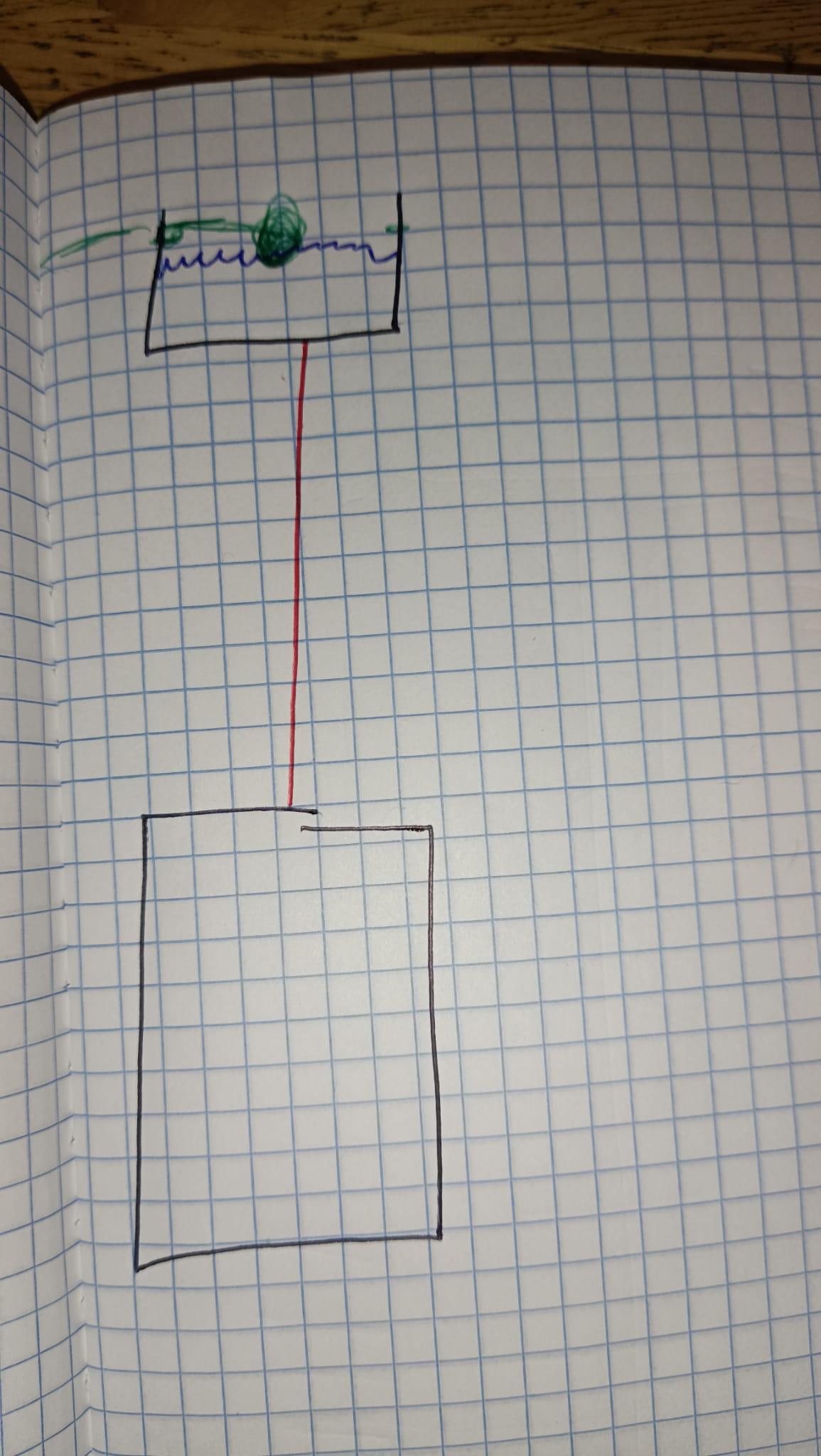
The roof will provide bracing if you tie the timbers in to all 4 walls. The corners will obviously be strong as they too are braced in 2 directions. It's the middle of the walls laterally and vertically that'll be weakest. It really is SE territory for an official answer but I guess you're not going down that route. Have you any dimensioned drawings/sketches of plans and elevations what you plan to end up with?

.jpeg.fc671339dd3f96595da5eb4078c7aed4.jpeg)

