Jeremy Harris
-
Posts
26430 -
Joined
-
Last visited
-
Days Won
360
Everything posted by Jeremy Harris
-
Yes, sort of, with an oxidiser present. The SRBs on the Shuttle used powered aluminium as a component of the fuel, and powdered aluminium is also used in some types of thermite. To get the aluminium to react there needs to be something present that will act as an oxidising agent. In the case of the Shuttle SRBs, the oxidising agent was ammonium perchlorate, and the reaction with the aluminium fuel generates a lot of heat, aluminium oxide, aluminium chloride, nitrogen and water vapour. The reaction occurs at around 3,200 deg C.
-
Just quoting the wording on the certification! The various test and certification bodies for building materials do seem to make distinctions between flammability, combustibility and fire resistance, and they seem to vary from one country to another, even within Europe. Ours are perhaps the weakest, as the main concern until now seems to have been the surface spread of fire rating, and that seems to be flawed when materials are combined in the way they were with the Grenfell Tower refurbishment. That's around the melting point (typically about 660 deg C - source Kaye and Laby), rather than the combustion temperature, and aluminium doesn't truly burn, as such. I believe the main aluminium risk may be from the combination of high temperature and water, or water vapour, which will cause an exothermic reaction and release hydrogen to fuel any fire. It may well be that the higher intensity fire just above the point where one of the platform firefighters is directing water is a consequence of this reaction (this is based on the video clip linked to earlier).
-
Getting in first, I'm sure. More of a political point than a measured response to the real risk, especially as their tower blocks have non-combustible rockwool insulation, AFAICS. Why didn't they take the more sensible option of appointing 24 hour fire wardens to reduce the risk to an acceptable level?
-

Fitting concealed shower valves and taps - tips?
Jeremy Harris replied to jamiehamy's topic in Bathrooms, Ensuites & Wetrooms
Yes, that works for a rear-entry outside tap fitting, but doesn't for the ones with the pipe coming in at the bottom. We have two like that, both with MDPE pipe coming up from underneath, and it's one application where the liquid PTFE is a godsend, as you can just apply the stuff, screw the tap on until it's near-enough tight, but straight, then leave it for a while for the sealant to cure. -
It's not clear what the tests were, but I'd guess that they were combustibility tests, not flammability or fire resistance tests. A significant part of this problem seems to be the way that fire resistant materials are classified and tested here. Building regs seem focussed on the surface spread of fire, with the intention being to limit how quickly a fire can spread from one dwelling to another. There's been a lot of focus on the aluminium composite cladding, but it has better German and French fire ratings than the underlying PIR foam. The PE core Reynobond has a German DIN 4102 rating of B2, and a French NF P 92-501 rating of M1, essentially it's rated as being combustible but non-inflammable. By contrast, PIR foam is combustible, and has a poorer fire rating than the aluminium composite cladding, so it seems most likely that the breakdown of the PIR was the major source of fuel for the fire, until it reached a high enough temperature to burn through the alloy skin of the cladding panels, allowing the PE core to burn as well. I strongly suspect that the temperatures inside the ventilation cavity were high enough to ignite the aluminium alloy of the cladding panels, too, as there seems to be less debris on the ground around the tower than might be expected if the aluminium cladding just fell off (it seems clear that there is no cladding left on the burned sections of the tower).
-
The Joy of a Brick Garden Wall
Jeremy Harris replied to Ferdinand's topic in Landscaping, Decking & Patios
I've no idea, looks like the bricks are different heights, more than the tiny difference between metric and imperial bricks. I thought that the standard brick height was 65mm (75mm course height), but that photo looks like the infill bricks are around 50mm high, at a guess. -
Why are my LED flood lights semi-illuminated when off?
Jeremy Harris replied to readiescards's topic in Lighting
I'm really glad you've found this out, before suffering an injury, or even death. The way that products like this can be openly sold here, with no effective safety regulation, is truly shocking, in every sense.- 29 replies
-
- 1
-

-
- led
- floodlight
- (and 5 more)
-
@NSS, many thanks for the detail, I think it may well be possible to retrofit this. Our frames have a deep timber internal bead, that covers the pins that secure the glazing units against the fixed external rubber seals. We had one defective glazing unit, and I watched as the chap replaced it, and there looks to be room to run cabling in there. It would also be pretty easy to drill through the frame for the cable, hiding it with the internal timber trim. The fiddly bit would be drilling a hole in the timber frame to line up with the hole in the window frame, but I'm sure that would be possible with a bit of patience.
-
Based on the (very extreme) test of several days of total immersion, I'd say that there's a good chance that the 14mm stuff would be OK if it just got soaked for a short period of time. The Sikabond that I used to stick ours down should seal the underside pretty well, and stop water getting underneath it, so the main issue would be water getting in via the joints. Before we fitted the bamboo, we were warned of a potential problem in wet areas from a friend. He'd laid it in their bathroom and found that the combination of splashes and bare feet polished the surface and made it quite slippery. Not enough to be a problem for adults, but he was concerned that his young children might slip on it. With luck that bit of bamboo will have dried out by early next week, so I'll try and take another photo to see how well it recovers.
-
The Joy of a Brick Garden Wall
Jeremy Harris replied to Ferdinand's topic in Landscaping, Decking & Patios
I like that brickwork, particularly the contrast between the two colours. Pity about the pavement, but then you could have had brickwork like this, to match it:- 25 replies
-
- 1
-
-
- garden wall
- brick wall
- (and 1 more)
-
Thanks @NSS. Do you know the detail of how the cables exit the frames? Presumably the frames must have hidden cable ducts. Adding additional wiring to the glazing that we'd be thinking of using this glass on would be easy enough, I think, as the upper side of the front gable are close to the under-eaves storage areas, and there is access from there to the service voids that run to the side of the glazing, plus there's power already available. It'd be a longer-term project, as for now the external film does a good job, I'm really thinking ahead to the time when the film may need replacing.
-
That looks brilliant, and not just the glazing. Do you know if it's possible to fit this glazing to a normal window? I'd guess that it's very expensive, but if it can be retrofitted then I think it's something we'd put on our list of things we'd like to change, one day (if it's affordable!).
-
Fitting concealed shower valves and taps - tips?
Jeremy Harris replied to jamiehamy's topic in Bathrooms, Ensuites & Wetrooms
Liquid PTFE: http://www.screwfix.com/p/flomasta-ptfe-liquid-50g/5321j?_requestid=340465 To undo joints sealed with this stuff, just warm them up a bit and they are easy to undo. -
Ours was the same, although this detail was buried in the small print. In the end I used a broker to put together a specialist policy that covered exactly what we needed for the second policy we took out, and that worked well. They basically took a renovation policy as a basis, then changed a few clauses to suit an almost completed self-build, where there was no requirement for cover for site-specific risks, because the site was by then no more hazardous than a garden.
-
I think that it's possible that a fire door may have been left open somehow, perhaps as people in a flat above the fire that initially spread up the corner of the building, evacuated, and that smoke may then have been drawn into the central stair well that way. There is good video of the fire up to around an hour after it started, and at that time the main entrance to the building and the ground floor is completely smoke free. Firefighters can be seen walking around in the lobby area in that video. This suggests that the smoke was being drawn in from either the top of the building, or from one of the flats that was burning in that corner. Here's the video: https://www.pscp.tv/w/1RDGlZqozBDxL The balance between smoke removal and spread of fire is, according to the fire officer that inspected the new building I was involved with, one of time. Apparently smoke kills far more people than fire, and small fires create enough smoke to kill lots of people. So, the emphasis is on getting rid of the smoke, even if that does make the fire spread faster, as clearing smoke saves more lives overall. I'll admit to finding this odd at first, but the argument presented by the fire officer for putting the priority on a good alarm system and an effective smoke removal system was compelling.
-
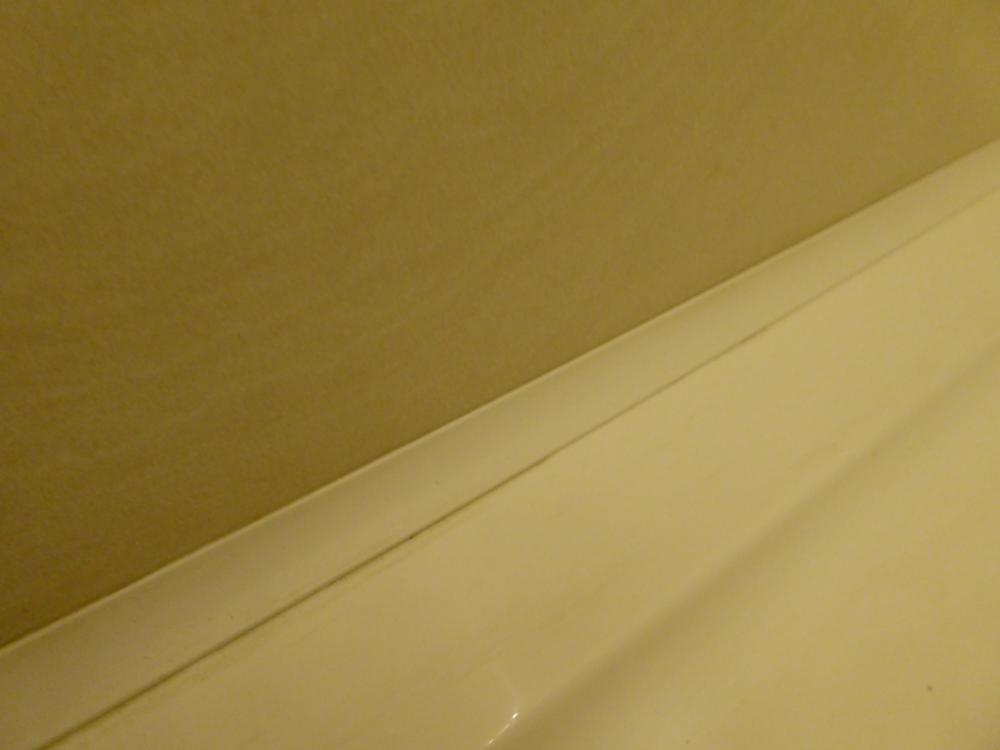
To some extent the use of that PVC trim was to get around my inexpert skills when it comes to making a neat bead of sealant! As a bonus, it also eliminates the possibility of any sealant going mouldy.
-
It seems likely that there would already have been an air handling unit in the roof top plant room, and that may have been modified as a part of the refurbishment, but with no indication of this on the planning drawings, as these only show the new ASHPs on the roof. The refurbishment wasn't carried out fully in accordance with the planning drawings, either, the cladding material was changed from zinc to aluminium and some minor details seem to have been changed, perhaps as non-material changes.
-
Sorry, I forgot all about this until taking some other photos today. Here's a photo showing how I fitted the small PVC coving to form a seal and hide the sealant at the wall panel to shower tray junction:
-
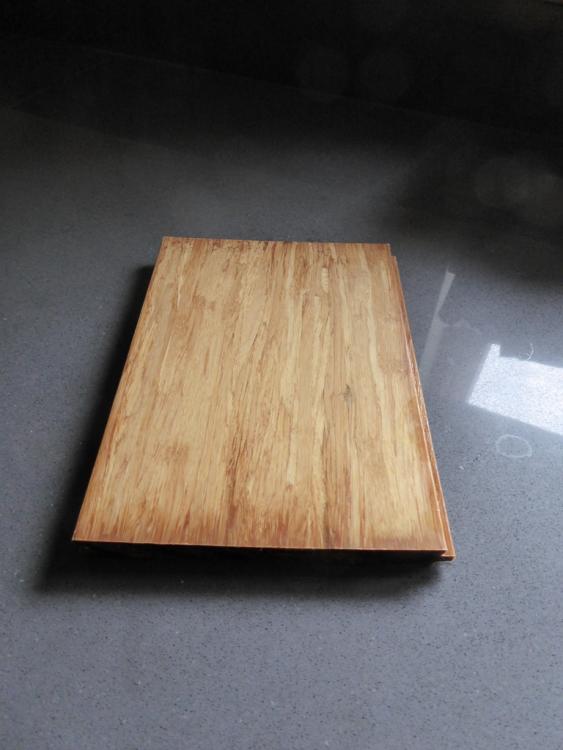
As promised, I put an offcut of strand woven bamboo in a bucket of water on Monday and have just taken it out to see how it's fared. The first thing I noticed is that the it sinks, so the density has to be a fair bit higher than uncompressed and treated bamboo. After nearly 5 days of immersion, water has soaked in at the cut edges, and discoloured it a bit, but there seems to be very little distortion. It's very slightly cupped, perhaps around 1mm in the centre. The lacquer doesn't seem to have been affected at all. I'm going to let it dry out for a few days, then I'll take another photo for comparison, to see if it regains its original colour.
-
I have copies of pretty much every document of web page that was in the public domain and has since been taken down. I doubt I'm alone, others will have done much the same, I'm sure. The web of responsibility looks to be so wide that I think there could potentially be dozens of prosecutions brought, as the failings range from misleading data used to obtain BBA certification (sadly something that's far from new) through to what seems to be a complete failure to undertake any form of coherent risk analysis. One telling point was a report on the news at lunchtime that reporters were unable to obtain any information from a few government departments about things from fire testing of products through to the numbers of fridge freezers that might be affected. The idiots haven't yet realised that government doesn't have this information - responsibility for testing, inspection and regulation have all been devolved away from government and placed with the manufacturers and construction industry, or private sector inspection companies. A consequence of that is that government has very little knowledge of what's been going on - they only find out where there's a tragic event like this.
-
The details specification for the new smoke clearance system doesn't seem to be easily available, or at least I've not yet been able to find it (I'll keep lokking). The system we had on the office and lab building that was a part of my last programme before I retired, didn't have an fans. There were smoke exit louvres on a structure a bit like a pyramid, on top of the roof, over the main atriums of the building. These louvres were automatically opened in the event of the fire alarm going off, and the ground floor fire exit doors also automatically opened. The natural internal chimney effect created a really powerful updraft in the building, drawing clear air in from ground level and letting the smoke escape from the top of the internal atriums. Thanks for the kind words, I've spent a few tens of hours over the past week trying to gather data on what most probably happened, using a causal analysis method that an acquaintance, Peter Ladkin ( https://causalis.com/10-about/20-people/), developed some years ago. We were both involved in looking at the cause of a fatal accident, and I thought his Why-Because methodology was pretty powerful. I've used it a few times since, when asked to look at accidents by insurance companies, but this tragic fire was a good excuse to apply it to a big accident, with lots of events, as it's a very powerful way of sifting out non-causal events, and weighting the probability of any event being in the primary causal chain.
-
That fits well with everything I've looked at and researched about this fire. There are many issues involved, each of which on its own may not have been a major hazard, but when combined they created what amounted to a "perfect storm". The insulation seems to be Class O rated for spread of fire, making it apparently suitable for use on an external wall of a building with multiple dwellings. The same goes for the aluminium composite panels, they also seem to have a Class O rating. The problems that I've found, just from a few hours of digging around, seem to be: - The insulation fire resistance rating doesn't seem to have taken into account the effect of the ventilation gap, and the consequent chimney created between the insulation and the outer rain screen cladding. - The openings in the building don't seem to have adequate, if any, fire stops, so a fire coming out of a window was able to set light to the material on the outside of the building. - The window surrounds and cills were made from PVC, which may have provided the initial fuel source outside the building that allowed the fire to penetrate to the insulation and cladding system. - The PIR RS5000 foam gives off flammable gases when heated, and when combined with a source of fire that was directed and funnelled up behind the rain screen cladding, this created what amounted to a large blow torch burning upwards, with a very strong updraft from the chimney effect. - Once the fire was established behind the rain screen cladding, the thin inner layer of the rain screen aluminium composite burned away, exposing the normally sealed-in polyethylene foam core. This then added further fuel to the fire, allowing the temperature to increase to the point where the aluminium itself started to burn. - At this point, the fire was probably incapable of being extinguished by any appliances that were available. The fire spread vertically at such a speed that it quickly got above the reach of any appliances. Additionally, once the aluminium was burning the fire would have been hard to suppress with water alone. - The high temperature on the outside of the building breached the windows to the other dwellings, allowing the fire to penetrate inside the building. Apart from the combination of design and material specification failings that created the fire risk, there also seems to have been major failings in the fire safety assessment and planning for the whole building. I can find no reference to any fire risk assessment made after the cladding was fitted (the last is dated 2015, before it was fitted). The building control register shows the status of the building as "Completed, Not Approved". There are several stories from residents of the fire alarms not working. The evidence from escaping residents also indicates that the supposed new smoke clearance system for the stair well failed to operate, as smoke in that area, and on the landings, seems to have been the major cause of loss of life, by stopping people from escaping. The fact that the management company still believed that the building was "fire proof", and that they were still giving advice to residents to stay in their flats, shows that there was a major failure to properly assess the changed fire risk. All told, there seems to have been criminal negligence, by several responsible parties, as this was far from being an unknown risk - there have been many facade fires over the past few years, enough for anyone undertaking a project like this to have had the external fire risk near the very top of their risk register.
-
Fitting concealed shower valves and taps - tips?
Jeremy Harris replied to jamiehamy's topic in Bathrooms, Ensuites & Wetrooms
I've used Screwfix Liquid PTFE a lot, and it's never yet failed. The dispenser bottle is a really bad design, making it frustrating to get the stuff out, but it works really well. If a joint needs to be undone, then gently warming it up will soften the sealant and allow it to unscrew fairly easily. -
Whole house water pressure boost
Jeremy Harris replied to iSelfBuild's topic in General Self Build & DIY Discussion
The system I've seen on a farm just used a NC pressure switch after the incoming NRV, and before the second NRV, to sense near enough the true pressure at the main. If this pressure dropped below a set figure, then that switch would open and stop the pressure set on the house side from operating. This positively prevents the pressure set from reducing the pressure in the main, keeping the water company happy. As soon as the temporary drop on the mains pressure stops, power is restored to the pressure set to charge the accumulator if it needs it. It complies with the regs and works OK when there is an intermittent mains pressure fluctuation on the supply side (in the case in question is was the milking shed that used to drop the mains pressure during wash down). -
A useful tip for chuck keys is to tie them to a bit of thin bungee cord, the stuff that's around 5mm diameter. That way you can still use them OK, but the bungee pulls the key out of the chuck as soon as you let go of it.