Jeremy Harris
-
Posts
26430 -
Joined
-
Last visited
-
Days Won
360
Everything posted by Jeremy Harris
-

How much should it cost to install windows?
Jeremy Harris replied to Triassic's topic in Windows & Glazing
Our 3G windows and doors (13 windows/fixed glazing panels, 2 doors, 1 set of French windows) cost ~£8.5k, including fitting. Three guys fitted all the doors/glazing in one day. That included fitting 5 fixed glazing panels and the front door into a 2m wide x 6m high gable. This didn't include sealing, I opted to do that myself, just to be sure it was as good as I could get it. -
Dispute with Mortgage Lender over project?
Jeremy Harris replied to John Cain's topic in Self Build Mortgages
The only way to know for sure what the part-completed house is worth is to get it valued, as-is, which is something a lender might ask for, perhaps. When we applied for a self-build mortgage we had the plot valued after we'd completed the ground works (which cost around £55k), so the services were in, the site had been levelled and boundaries were all fenced. The valuer gave two values, an initial plot valuation that set how much we could borrow based on just the current site value, plus a speculative value for the completed house, based on the plot value plus the house design drawings. The value of the plot was about 40% of the completed house value, and we live in an area where plots are pretty expensive. I'd suggest that a current value, as-is, might well be between 30% and 50% of the estimated value when the work is complete. -
You can do your own calculation using PVGIS if you wish. It's probably what some of the PV companies do anyway. PVGIS is here: http://re.jrc.ec.europa.eu/pvg_tools/en/tools.html#PVP You just enter your location, the pitch of your roof, the direction the roof faces and the installed peak power of the PV system and it will give you loads of pretty accurate data on performance. Remember that you'll probably struggle to use more than about half the annual output, as periods of high generation aren't likely to coincide with periods when you can use all that generation. Despite having an electric car, and an all-electric house, with electric hot water storage, I'm lucky if I can use even half our daily generation; much of the time I'm finding that the hot water system is fully charged, and my car is fully charged, by mid-morning, so excess generation is just being exported to the grid from then on.
-
I did mine with a multitool, as it will cut flush to a surface. I only have the relatively cheap Bosch one, but it seems to be OK (even if a Fein owning guy on site looked down his nose at it a bit).
-
The video is of RM Cylinders, and shows UVCs being manufactured AFAICS. No sign of any heat pump manufacture. Maybe they do design and manufacture these all-in-one heat pump/cylinders. Be interesting to see what's under the covers, especially the details of the heat pump assembly.
-
Yes, but that's where the export payment comes in, and why it's important that this be reinstated now that both FiT and deemed/metered export payments have been withdrawn. We still get paid for deemed export, at a rate that's pretty much around the average wholesale price that the supplier buys electricity in at. IIRC it's around 4.5p/kWh at the moment. That seems fair, as we're just like any other generator, so should expect to get paid more or less the same as other generators. The problem at the moment is a cock up by the government. Before we had the FiT there was a scheme in place to allow microgenerators to be paid for the energy they supplied, pretty much at the average wholesale price, IIRC. When the FiT was introduced, they did away with the old generation payment system and introduced two new payments, the FiT subsidy payment, to incentivise people to install microgeneration, and a deemed, or metered, export payment system, that paid microgenerators more or less the average wholesale price for the energy they exported. The latter is in the process of being put back in place, but until it is we have this very unfair state where microgenerators are not being paid for the energy they export. Hopefully this will be fixed soon, but the government seem a bit preoccupied with other things right now, so it doesn't seem to be being treated as a priority.
-
That's what happens now, in effect. Because of the way the grid works, and because electricity (literally) always takes the path of least resistance, excess microgeneration always flows first to the nearest consumers to the source. This means that when, say, 30% of the houses on a particular sub-station phase are exporting electricity, that electricity will preferentially flow to their nearest neighbours, on the same phase, who are consuming electricity at that time. Only when the local generation exceeds the local consumption will electricity start to flow back to the grid. I've not seen any data as to how often the load on local sub-stations drops to zero, or goes negative, as a consequence of this, but I suspect it's something that is probably pretty uncommon.
-
I do understand that you had problems with your doors/windows leaking badly, but as they were not a part of the TF companies airtightness responsibility, then it seems reasonable that the door/window companies poor workmanship shouldn't be allowed to compromise the sign off of the rest of the structure, especially as you wrote this about the cause of some of those leaks: Arguably you could have opted to get another air test done after the door/window remedial work had been completed. Might have been worthwhile in determining whether the later sealing work had been effective.
-
neighbour self notification, should I?
Jeremy Harris replied to Moonshine's topic in Planning Permission
My concern wasn't about valid objections, as I was pretty confident that there most probably wouldn't be any, but the objection trigger point bothered me. Here, if more than (I think) eight objections are filed the application automatically gets referred to the planning committee, and cannot be decided by the planning officer. That changes the game from being one where all you need to do is show that there's no valid planning policy reason to refuse to give consent, to a political game where you have virtually no way of being able to influence the outcome. -
neighbour self notification, should I?
Jeremy Harris replied to Moonshine's topic in Planning Permission
I wrote to all the neighbours who were listed from a previous planning applications on our plot, introduced ourselves, made it clear that we were planning to build a home for ourselves, explained what we wanted to build and invited them to contact me directly if they had any concerns. It worked pretty well in the main, and we had no official objections to our planning application. I did have quite a bit of correspondence with some of the neighbours, most of it relating to concerns that weren't real. Issues that were raised with me were things like overlooking, where a neighbour hadn't interpreted the elevations properly, concern over over-loading the sewer (we're no connected to it), problems with access in the narrow lane (addressed by making sure we kept people informed when big loads were arriving) etc. The only slight problem we had was with one neighbour who kept asking me to change things, or do things for him "as I had a chap there doing work anyway", and in the end I fell out with him, and told him that I'd had enough. To my surprise he grinned back at me and said something like "Well, it was good while it lasted". His partner later apologised to me for him being so awkward, and explained that it was "just his way". Not sure what she meant, really, but I did feel that I'd made a bit of a rod for my own back by trying to be so cooperative with him. -
I'm suspicious that the Joule Aero may really be from the same source as the Ecocent. These all in one heat pump water heaters are very common in China, and there are a large number of models available from there that look very similar: https://www.alibaba.com/showroom/all+in+one+heat+pump+water+heater.html?fsb=y&IndexArea=product_en&CatId=&SearchText=all+in+one+heat+pump+water+heater&isGalleryList=G The Ecocent was very definitely a Chinese import when I looked very closely at it a few years ago. Ecocent wouldn't admit that it was, but I found an absolutely identical model available on Alibaba, the only difference was the name on the front panel.
-
Currently we're paying 8.148p/kWh off-peak, 15.729p/kWh peak, and 20.44p/day standing charge. Last time I checked about 55% of our consumption was off-peak, it's probably a bit more than that now we're in the "PV season".
-
I can throw some numbers in from our in-roof installation, which was back in 2013, when the FiT was a lot higher. We have 25 panels, fitted to GSE in-roof trays, giving 6.25 kWp. The installed cost was about £9k, and we saved around £2k in roofing cost, so the net cost of the PV system was around £7k. We generate around 6 MWh/year, but are lucky if we can self-consume more than about 1/3 to 1/2 of that, so we always export more than half to the grid. This means that we can only gain a benefit (ignoring the FiT and deemed export payments) of around 2,000 to 3,000 kWh/year. At an energy price of 12p/kWh, that would mean that our system would save us between £240 and £360 a year. With no FiT or deemed export payment our 25 panel system would recover its installed cost, allowing for the saving in slates, in around 19 to 29 years. In reality, we get around £950 a year from combined FiT and deemed export payments, so with these added to the savings from self-consumption the pay back time is a lot less than this, less than 6 years (I need to do the sums, as it may be that it's now close to having paid for itself). As above, unless you can get an installed system for a great deal less than has been quoted (which sounds ludicrously expensive to me) then the payback period is likely to be way more than has been quoted.
-
Haven't we been here already and confirmed that your result was better than the 0.6 ACH guaranteed, and that you were under the misapprehension that a higher figure was better, and that your sub 0.6 ACH resut was really pretty damned good? It's normal to tape up apertures like the ducts, pipes and around the air test kit where it fits to the window/door.
-
The standard method requires both a pressurisation and depressurisation test, with the result being the average of the two. There will always be a difference, because outward opening windows and doors will seal better when depressurised, whereas inward opening doors will seal better when pressurised. A house with all inward opening doors and windows will often give a better result when the house is pressurised and vice versa, hence the need to do both tests and average the resuts.
-
I've heard a couple of cases where the tanks have corroded on the Ecocent. Seems to be caused by the need to regularly replace a sacrificial anode, IIRC. Both cases I've heard of were in Scotland, in soft water areas, so I have wondered if the faster than expected sacrificial anode depletion (if that was the cause) was due to the pH of the water. Whole house ventilation seems a better bet, as it may well be that the house isn't that well ventilated now. IIRC, the Ecocent had a pretty impressive airflow whilst it was heating the tank up, way more than a normal MVHR system.
-
Right now we're exporting about 3.5 kW, the dishwasher's on, the house cooling is running, the washing machine finished about an hour ago, the hot water systems fully charged and my car's fully charged. We'll be exporting for at least the next three hours or so, maybe more, and at a guess between one third and a half of today's generation will be exported to the grid. I could easily use another 10 kWh of storage, probably a lot more, as it's not unusual for us to generate around 30 kWh/day.
-
Query on how to fit mains water in floor
Jeremy Harris replied to gwebstech's topic in Brick & Block
Not sure why you want anything running along an outside wall? It's easier to just run services in underground, either directly or in ducts. For example, we have a duct for the power cable, another duct for the water pipe, yet another duct for the 'phone cable and the main soil pipe coming in deep under our slab, with slow/rest bends bringing them up to the vertical. I used flexible duct for the power and water pipe, the special rigid Duct 56 that OpenReach require for the 'phone cable (they can free issue it on request) and ran the soil pipes directly. The DPM is way above where these pipes/ducts run horizontally, in our case the pipes/ducts are more than half a metre below the DPM. -
Query on how to fit mains water in floor
Jeremy Harris replied to gwebstech's topic in Brick & Block
I just ran ducting in underground, in the sub-base below the insulation that's underneath the slab. This ducting came up inside the house where I wanted the various services to come in, just the same as the way the soil pipe(s) come up through the slab. The DPM is just sealed up around these ducts/pipes in the normal way, before the slab is poured. The DPM was sealed up around the pipes/ducts with the same butyl tape used to seal joints in the DPM, I think. -
A while ago I did some very quick and dirty sums that indicated we had about enough spare capacity to charge around 2.5 million EVs without doing anything about smart/sequenced charging. EV owners who charge at home already have a strong incentive to either charge at off-peak rates (easy, every EV I've seen includes an off-peak charge timer) or they may fit something like a Zappi EVSE and charge from excess PV generation if they have it. We have a fair bit of spare grid capacity to support off-peak charging, enough to not have to worry about the network infrastructure for a fair time.
-
The idea of being able to switch non-critical appliances on only where the demand is low is great in theory, but pretty useless in practice, at least until either "smart" appliances become available (i.e. ones that can be remotely switched on and off) or until we change the wiring systems in our homes to allow circuits to be individually controlled (not sure that's going to happen any time soon). Appliance manufacturers, as @jack says, aren't doing much. If anything they are going backwards. Years ago we had a washing machine that had a very simple mechanical delay timer, so that no matter what, it could be set to switch on at a set time (we always ran it during the E7 off-peak period). The last three washing machines we've had have timers that only work if the power is on; any glitch and they just shut down and don't come on at all (really, really infuriating if you live in a place where power cuts are commonplace). Won't make much difference, I think. I joked with our meter reader a year or so ago about smart meters doing him out of a job. Apparently they won't, as there's a statutory requirement for smart meters to be manually read at least as often as the standard meters we have now.
-
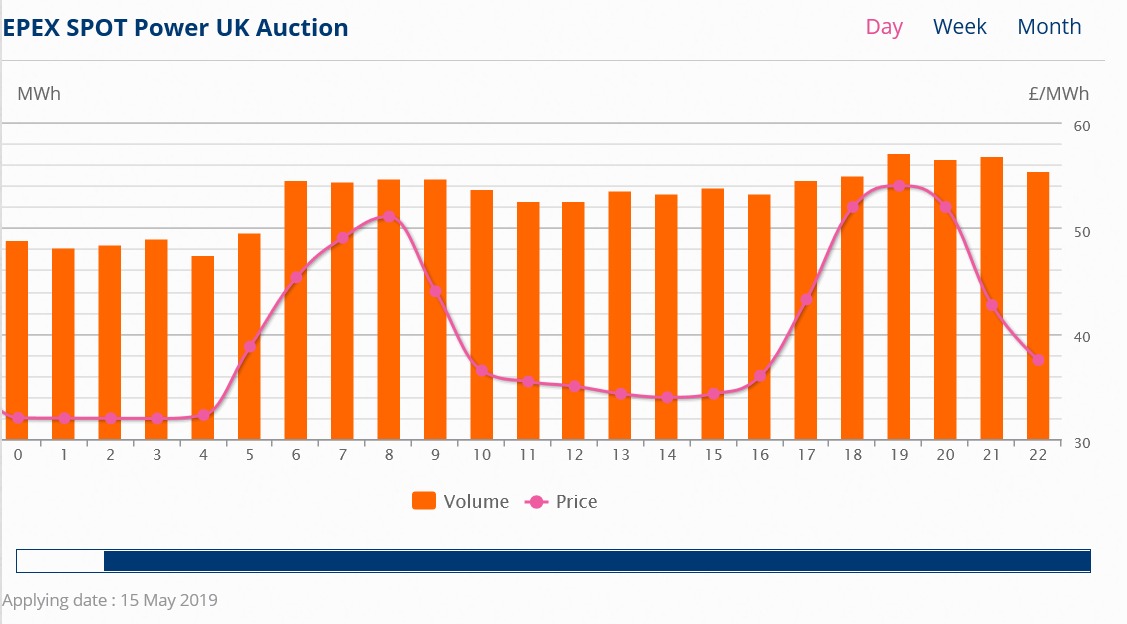
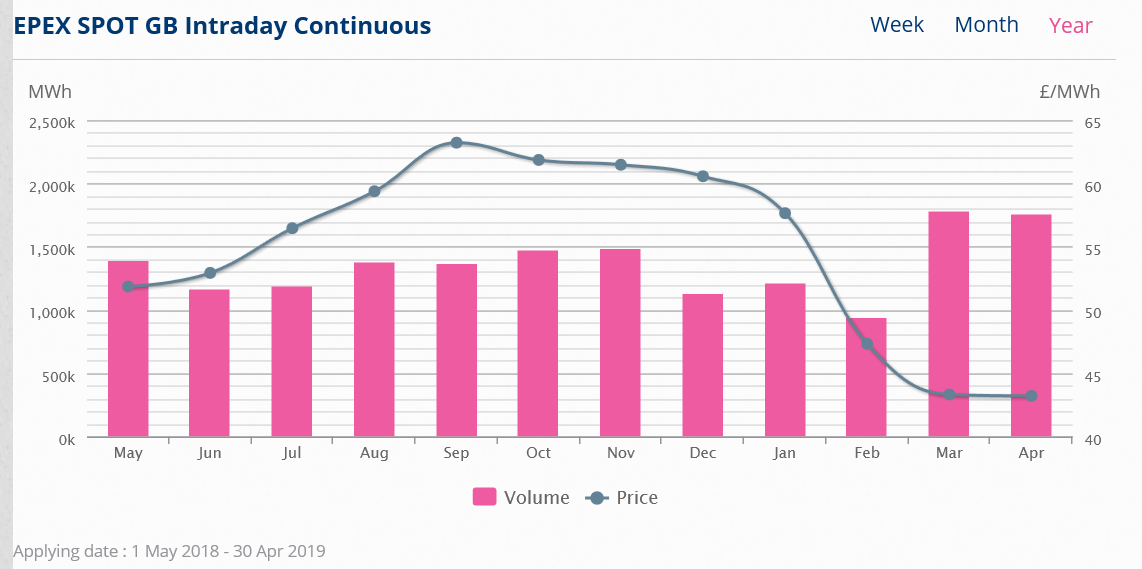
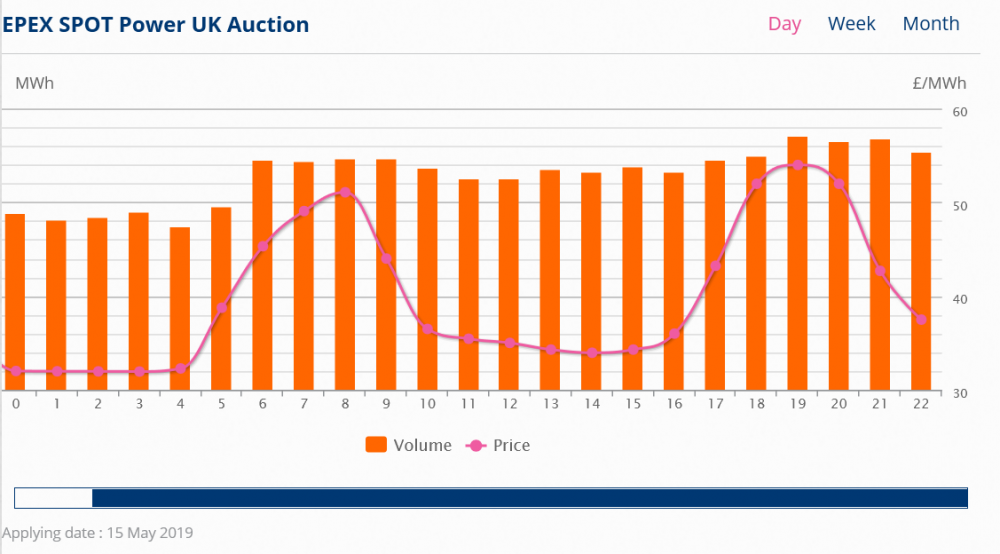
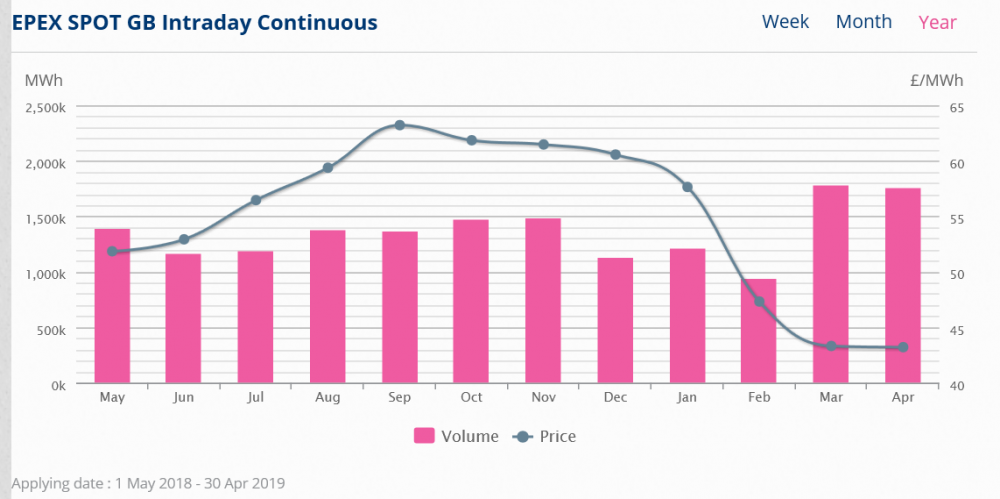
I just wish they'd be totally upfront and honest about the reasons for rolling out effective smart metering, rather than try to hide them behind a load of BS. There's nothing at all wrong with wanting to try to change the way energy is sold, as long as it's done in a transparent way that allows consumers to still make an informed choice as to which supplier to use. The problem that smart metering is intended to help solve is a real one, and it's closely linked to demand and supply management. It's not hard to grasp the fundamentals of this; a look at the wholesale price variation through any day will illustrate the problem pretty well. Wholesale energy is traded on a day-ahead, half-hourly, spot market auction. Suppliers (those who retail energy to end users) bid to buy energy at fixed prices for 48 half-hour slots the day before they sell it. The wholesale price variation is pretty large; it varies from rare periods when prices may be negative during low demand/high renewable generation periods (so suppliers get paid to take energy, rather than paying for it) to periods of high demand/near-maximum generation, when the wholesale price may exceed the retail price tariff (so suppliers lose money on every kWh they sell). There are two energy auctions in the UK, and both publish data on past prices: https://www.apxgroup.com/market-results/apx-power-uk/dashboard/ https://www.nordpoolgroup.com/ This is the data from APX for 15th May sold price and volume: Note that the price varies from a low of around £32/MWh to a high of about £54/MWh within the space of a single day. Converting these prices to "units" as retailed to customers gives a range of between 3.2p/kWh to 5.4p/kWh. Looking at the average price/volume over the past year illustrates the wide price variation from month to month through the year more clearly: The lowest price equates to around 4.3p/kWH, the highest around 6.3p/kWh, but there will have been daily wholesale price swings that are far in excess of these average figures. If you watch the daily figures each day you can spot periods with a negative wholesale price (happens when the baseload is too great for the demand, as some baseload generation can't be just turned off) and periods when the really expensive generation systems have to be fired up (coal, and even perhaps the fields of big diesel standby generators). The energy retailers currently set a tariff for a period of around a year, maybe longer for some fixed tariff options, in advance, so they are taking a risk that the prices they set will be high enough for them to make a profit, when they really don't know what the wholesale price will be. Right now customers have a relatively easy time, as they don't have to worry about whether there is enough generation, whether the network will be able to deal with the variations in demand etc. By enabling a metering system that can vary tariffs on the fly, as wholesale prices vary, consumers will take on the risk that the suppliers currently bear, and suppliers will be able to make a profit no matter what the wholesale market does. Whether this will change consumer behaviour or not I don't know. I do know that in some areas of France they have had variable rate tariffs for some time, and that does seem to change how people think about, and use, energy. Some friends who live there always watch the news every evening to find out the electricity price periods for the following day, and then plan to use things like the washing machine during that day's cheaper tariff period. Seems sensible and pretty simple, and doesn't need "smart" meters...
-
Interesting that these things are still being misrepresented as the way to reduce energy use, when that's not their purpose at all. If monitoring consumption was the way to reduce energy use then a much cheaper and simpler home energy monitor would do the job just as well, with none of the compatibility problems that are dogging "smart" meters. Years ago, British Gas were handing out free home energy monitors to new customers; we had one and it worked pretty well. Last time I had a call telling me (not asking...) to make an appointment for a "smart" meter install I asked what advantage it would give me over the existing energy monitoring and recording system we have. The SSE person couldn't answer that, so I just told them that when they could give me a convincing reason for having one I'd consider it. They've not contacted me since. When we had the meter changed to an E7 one in January the chap fitting it confirmed that a smart meter wouldn't work here, anyway, and that his head office should know that already.
-
How to keep birds off my camera?
Jeremy Harris replied to readiescards's topic in Networks, AV, Security & Automation
These look to be pretty cheap and will probably do the job if fixed with some cable ties: https://www.birdspikesonline.co.uk/Bird-Spikes/Defender8-Bird-Spikes-Steel -
It would drive me mad, too! It's why I put our meter box in a fence right at the start of the build, and fed the house via an 80 A fused isolater and a length of 25mm² 3 core SWA. You can buy stand-alone ground mounting meter kiosks if you don't want to build a wall for it, with the required approvals: https://www.meterboxesdirect.co.uk/commercial-meter-boxes-kiosks.html