
Nickfromwales
-
Posts
31362 -
Joined
-
Last visited
-
Days Won
345
Everything posted by Nickfromwales
-
400mm of blown cellulose in the roof, 300mm in the walls. Feckin graveyard silent. 1. Dogshit. 2. Slightly less dogshit. (by comparison). FYI, this isn't me just giving my opinion from AI ramblings, I have been in all types of new construction for various clients since around 2012, building with 'higher performance' offerings, and the cellulose is in an entirely different universe here. VERY good point, but a lot of the 'clack' from the tracks is much higher frequency; ask me how I know, as we used to live 150m from the track from the local colliery and I can still hear it sat here right now, engraved in my memory from my teens (I am now 52....). I doubt you'll hear much of the engine sounds, but the clack from the wheels hitting the joints is defo worse between slower and faster speed; slow as I remember was almost like a heartbeat type of pattern, for an age it seemed to take to pass. Freight can be twice the length of passenger too, or more, so choose once, choose well, or regret forever. I did one build in Dorset for 'a woman' and the plot wasn't far from Yeovil. It was an MBC TF PH offering with the aforementioned 400 + 300mm cellulose blown roof/frame. When the Chinook helicopters passed over the noise was incredible, and if we were outside talking you simply had to stop, wait 5 mins or more, then begin shouting again to be able to hold a conversation. However, if you simply stepped inside the house and shut the (Norrsken) front door, it was as if the chopper was another 15 mins away, and you could talk normally without hinderance. Choose well. Sleep better
-

Plywood or MR board on stud
Nickfromwales replied to Super_Paulie's topic in Bathrooms, Ensuites & Wetrooms
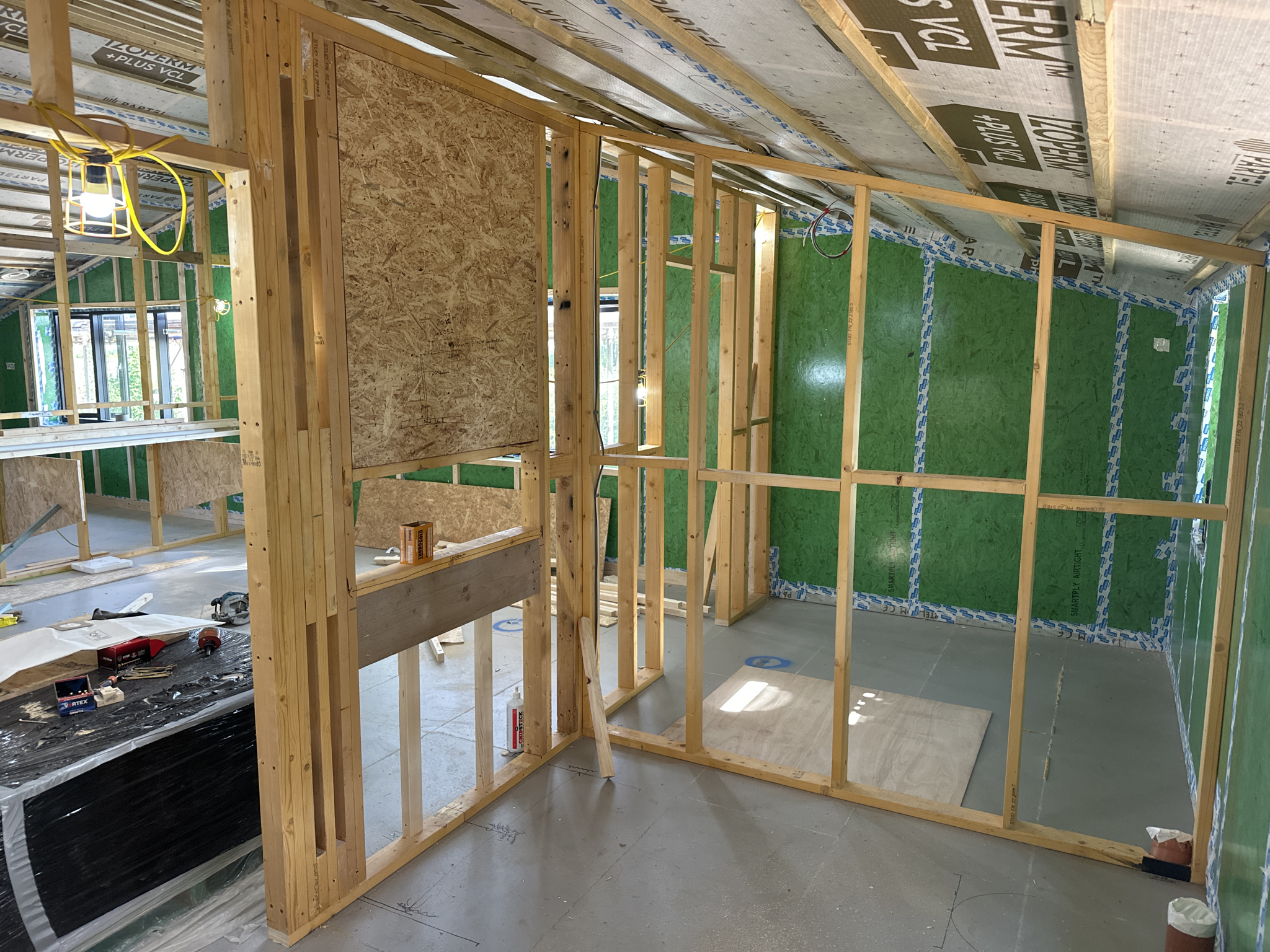
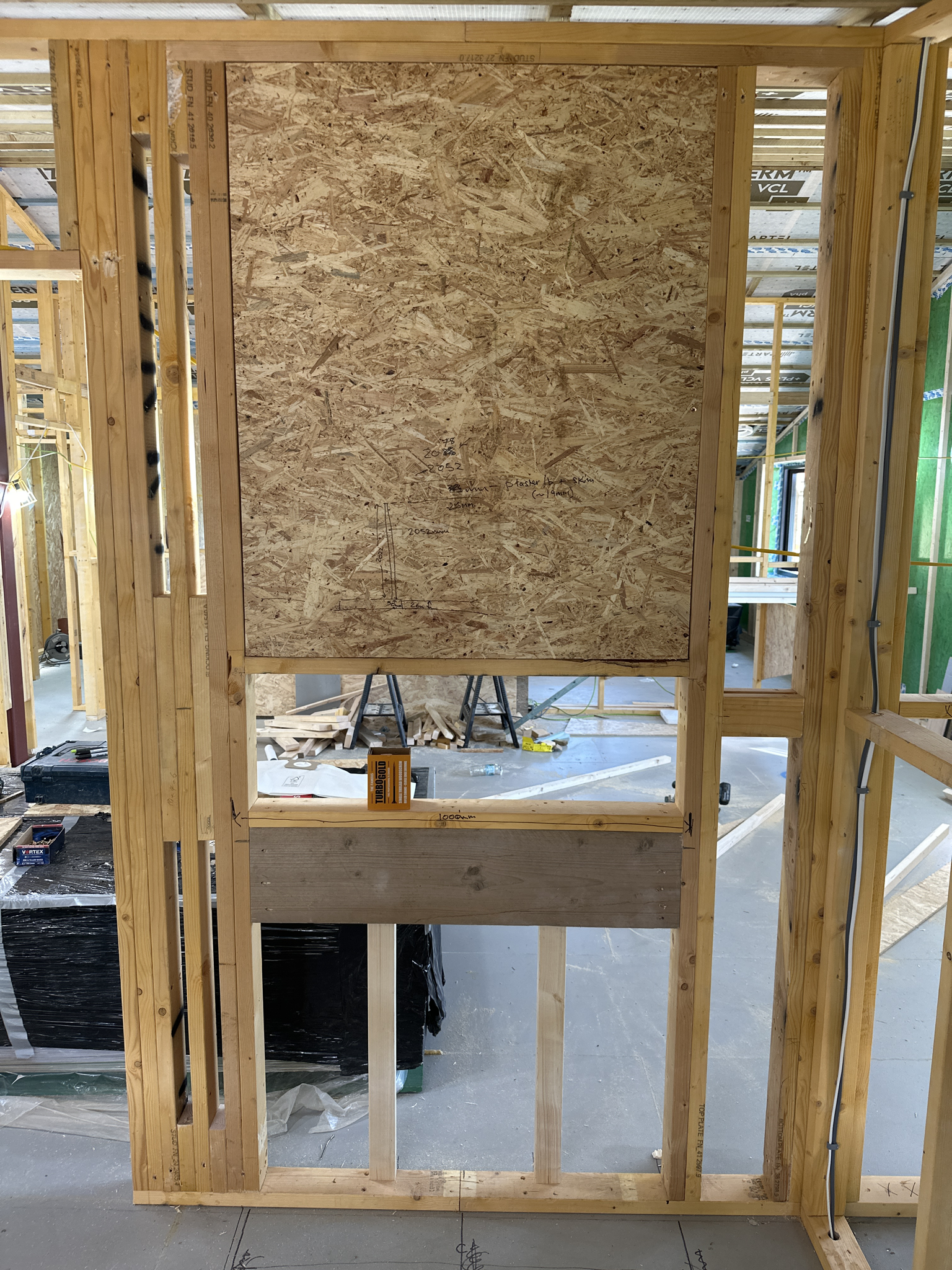
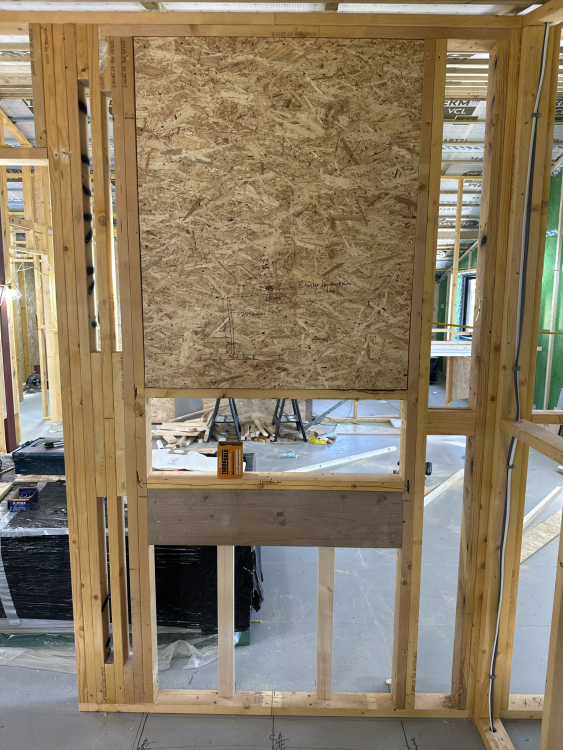
Just use plasterboard, and ONLY use ply if you are then going to plasterboard it. Current clients MBC TF project here: Doorway 'sides' beefed up as the wall is high (vaulted ceilings) and I dislike wobbly walls with doors slamming and tiles / grout having to cope. Where the box of screws is, is where the wall mounted basin tap will reside, hence the 'letterbox' opening. I remanufactured this wall (after it was delivered by the good peeps at MBC) to suit the intended bathroom layout / bespoke design, and the bit of 9" x 2" timber you see under that will catch the two brackets of the wall hung vanity unit (1000mm wide) so you can swing off it. I added a section of 18mm OSB where the vanity mirror and wall mounted lights will reside. @Super_Paulie, work out where the vanity brackets go and add timber there only, and you'll be fine.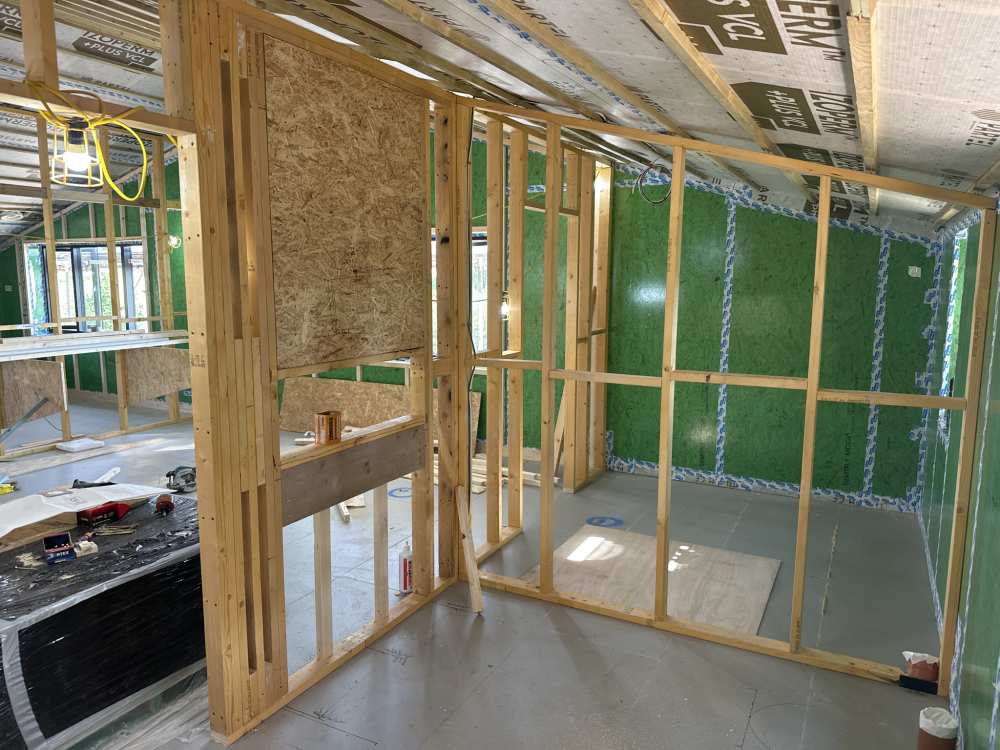
-
Sharp turn in to inspection chamber advise
Nickfromwales replied to PSC88's topic in Waste & Sewerage
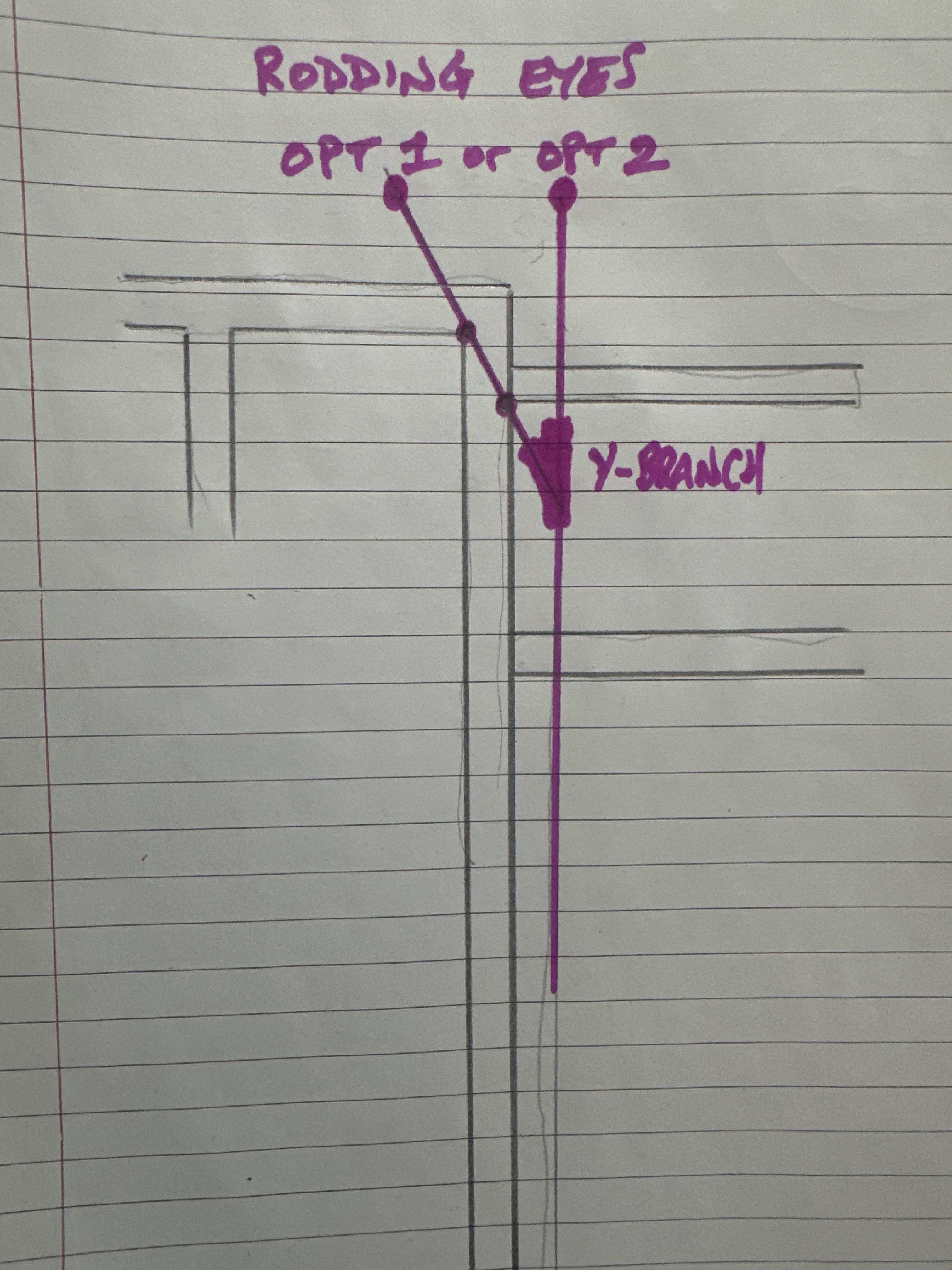
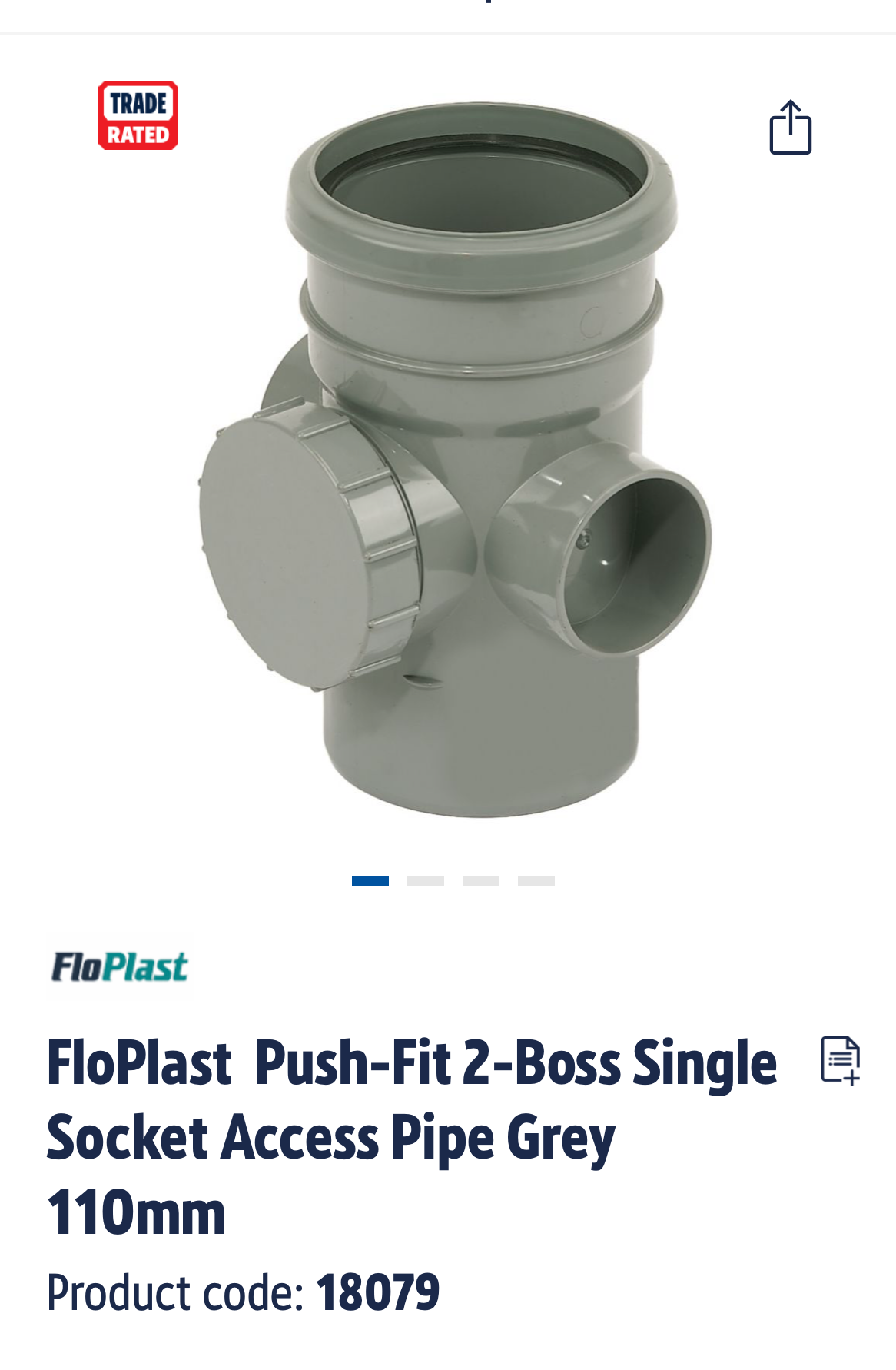
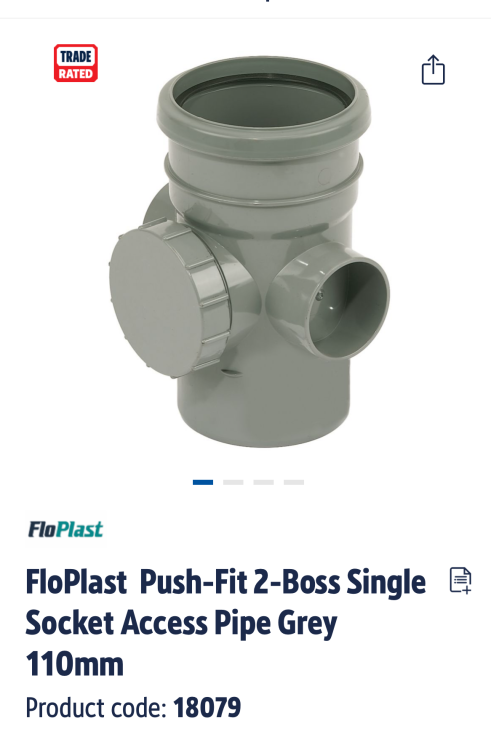
If you branch two pipes together underground then they need to be through-roddable, via rodding access at the ends of either one or both, but BCO would prob let you off if you can house inline (above ground) rodding points indoors (boxed in). Failing that, you'd need one at opt 1 or one at opt two, or if the most pedantic BCO then both. If you can add rodding access internally just above TOC internally then no need for either external rodding points.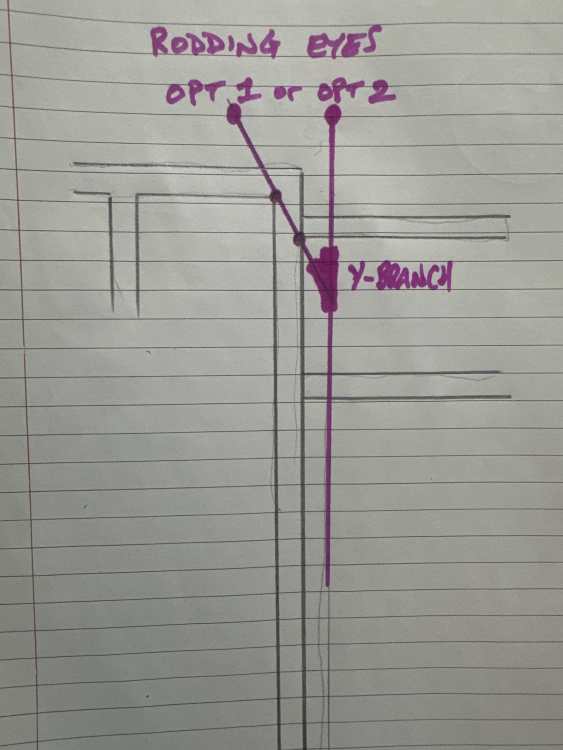
-
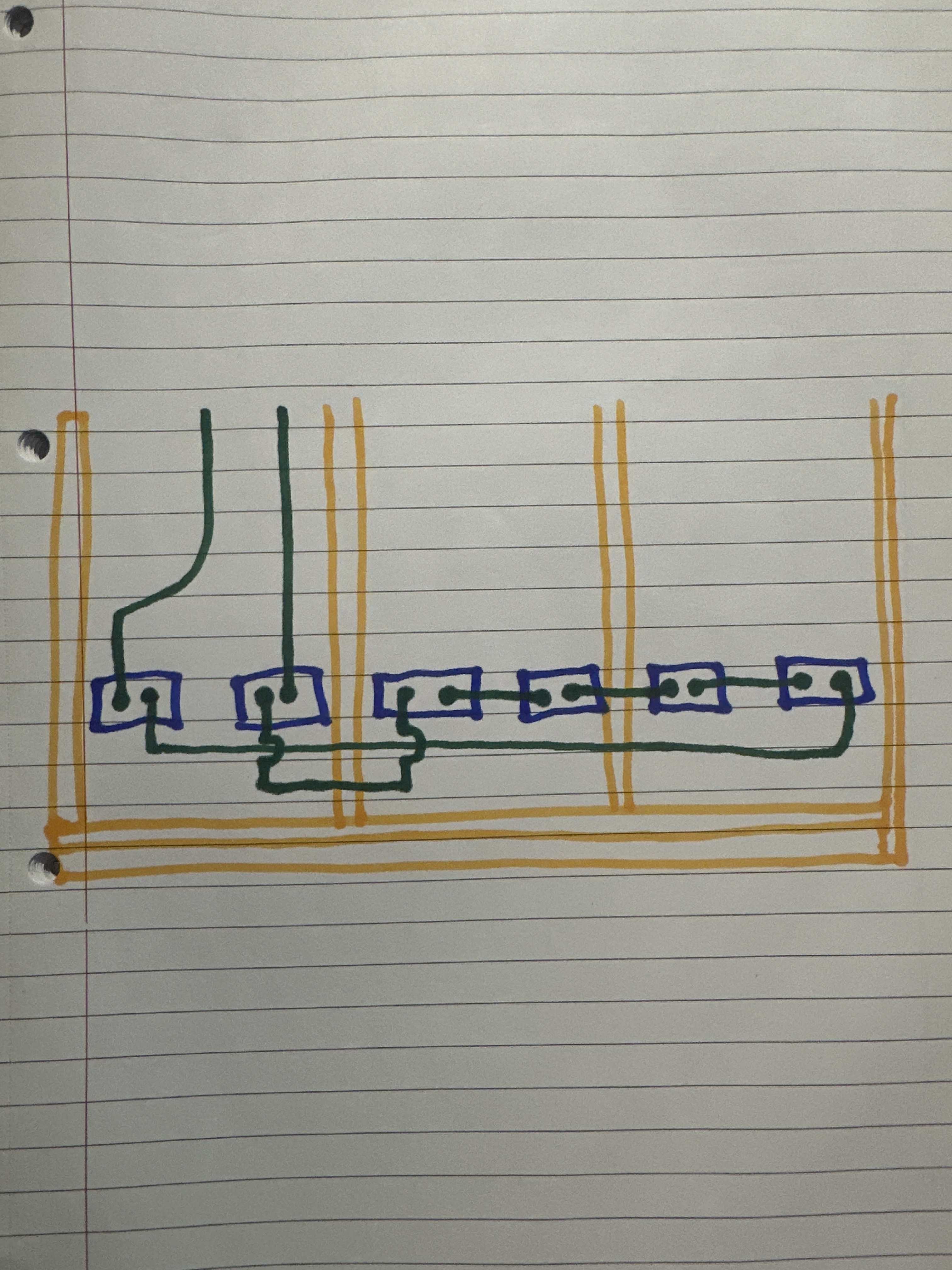
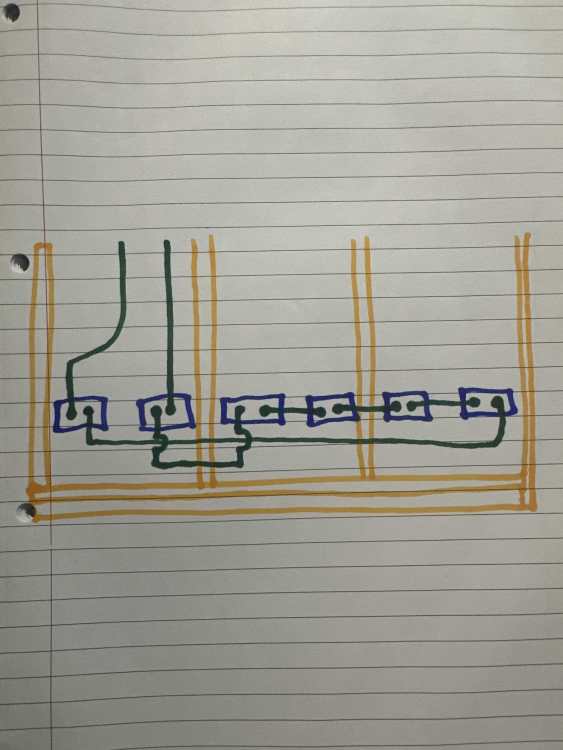
There's enough to do as many as you want here, perfectly compliantly . Cables would drop into any two of these 3 'sockets' boxes, and the link cables would daisy chain to all the others, forming a ring of x number of sockets instead of just linking 1 > 3. Cables all tight to boxes to stay in cable safe zones obvs, just drawn loosely here to show how this can be done.
-
Overlapping rebar mesh sheets
Nickfromwales replied to flanagaj's topic in General Self Build & DIY Discussion
My bad. 600mm sheets for stitching, so 300 a side. I’ll go and kneel on some pencils. Been a long week……. -
Joining kitchen units together
Nickfromwales replied to crispy_wafer's topic in Kitchen Units & Worktops
The wax sticks are good too. -
All that should be heavily insulated. It’s basically stagnating and then warming up to ambient.
-
Joining kitchen units together
Nickfromwales replied to crispy_wafer's topic in Kitchen Units & Worktops
Any decent carpenter / kitchen installer will take the hinges off, clamp the units together exactly aligned, and then screw through with 30mm countersunk wood-screws (not the thru-connectors) so the hinges hide the screws. Note: for 15mm carcasses use 25mm screws, and only use 30mm for 18mm. -
Ok. Plenty cold enough from source then. Where does this pipe first appear above ground?
-
Overlapping rebar mesh sheets
Nickfromwales replied to flanagaj's topic in General Self Build & DIY Discussion
600mm is the minimum overlap. Your BCO will fail if this is 300-400mm. They got a tape measure out and checked the one I’m on now, so beware! -
Cold mains “potable” or “wholesome” water needs protecting to prevent it being early to mid 20 degrees. It’s a major health and safety risk due to legionaries disease etc. Any volume of stored potable mains will inevitably acclimatise to the immediate local ambient temp, so this is a thing you can’t avoid, it can only be slowed by insulating the pipe as well as is practicable. If the temp of the plant room housing the accumulator can be insulated then this will pay huge dividends, plus the accumulator itself should be insulated also to maximise the time taken for the local ambient to affect it. What is the temp at the accumulator location? Length of pipe feeding the house?
-
In my daytime role I provoke discussion, rake over everything robustly, and most of the time this is done inoffensively, to get all the options and possibilities on the table. Some of my clients don’t know what they want because they don’t know their options; pros cons and caveats included. You’ve been a member since 2016, so are either benefitting or are suffering in silence here. 🤷♂️. Peoples hunger for inaccurate quick fixes (aka AI) is the sum of modern day society, and even when they see a statement saying the information may be inaccurate they still bank their life on it. After a decade on here, it’s a joy to hear you dismiss all the hard work, time, and effort that the volunteer staff have put in (for free) in some stupid attempt to help some folk out whom we’ll likely never meet or hear from again. 75mm of poor insulation over a cold ventilated block and beam substructure is crap, which is the truth. It is a part of an attempt to provide comprehensive feedback to allow you to amass these responses and form an opinion and take the project on admirably for the best outcome possible. If these digressions offend you so, then that’s an issue your side, as we don’t post here for popularity; facts are facts, take them or leave them, or ask AI which is the best, impartial website that is free to join is. Let me save you asking “it”. PS, thanks for the ridicule. Much appreciated.

-
I did one in Gravenhill and the B&B had regular blocks, and then we put 200mm of PIR and 100mm of concrete; reinforced by 2 layers of mesh. The design and storey rods help you to calculate how low the B&B needs to be set down to allow the extra insulation. 75mm of EPS is pretty crap.
-
Rubbish. Raft foundations are designed with the EPS basket extended to allow the pour of a second mini ring foundation to accept the masonry. Don’t take this the wrong way, but you’re entering an area of major misadventure here, and what you’ve arrived at independently is already falling on its ass. Stick with ‘tried & tested’ and an experienced contractor / SE to solve this correctly. It’s “kinda important”
-
Beamshield is the same, and also covers the underside. I would go for the system that keeps cold air from the ventilated cavity getting to the beams, for obvious reasons, and then use PIR over the top. I see a lot of developer sites using the cheaper / faster (poorer) version so there’s your answer , but it is good to see some at least trying. Using blocks is just neanderthal level building, with the cost and grunt of slinging lorryloads of them around site. Developers have gone with this to reduce costs, the extra insulation is just an accidental side effect of their bean-counting.
-
Thank you for posting with the outcome.
-
Very poor vs 300mm blown frame. Been in both offerings and it's quite a significant downturn. Do you really think you'll miss 6" of GIA? Home for life? Factor in all the hidden benefits with MBC, turnkey, SE included, slab & frame fully coordinated and project managed, with guarantees, guaranteed airtightness, fully service-battened interior, cheaper downstream 1st and 2nd fixes, list goes on. I had this very conversation with a clint who had almost instantly dismissed MBC as "too pricey", and they were the most expensive at a glance. After I broke down all the other quoted they'd had from the other big hitters, and realised the opportunities and hidden cost of others / reduced spec / poorer airtightness unless you want to buy some more bells & whistles, and so on, and on, and on. Needles to say, MBC ended up with the job and it's going very well, very VERY quickly, and is likely only a slight bit cheaper than the best of the others (who then didn't make grade). Concrete poured end of March '26, and I am pushing the project forward with some very good people so they can have xmas dinner there this year (less landscaping and 2 of the 4 bathrooms tiled etc). Needs an impartial perspective to show you who is cheaper, and for what (sometimes hidden or 'not immediately obvious) reason(s).
-
In a nutshell. A lot of mis-information and simply "bad" ideas here, with a significant price tag to boot. 400mm of EPS means a load more unnecessary excavation and muckaway......... Buildlite, erm, no thanks, I'll pass.
-
Plant room layout / utilities / ducts etc
Nickfromwales replied to JackOrion's topic in New House & Self Build Design
It's 'doable', but leaves very little headroom to stuff free or v cheap electricity into the UVC as an 'energy balloon'. The more free juice you can store = the longer before you need to lean on the heat source to replenish it. -
Plant room layout / utilities / ducts etc
Nickfromwales replied to JackOrion's topic in New House & Self Build Design
I’d go for a minimum of 250L for the UVC, possibly even 300L, so you can heat it far cooler (50-55°), so theres less latent losses snd more volume to store off peak energy or diverted PV etc. 200L is very small for an ASHP even if it’s just “the two of you”. You’ll need a second, smaller duct for the car charger for data / comms and to bring the CT clamps to the meter; if the meter is at the boundary then you need to work out where the CT clamps need to go and duct accordingly. Rigid BT56 duct is the only duct your’e allowed to use for telecom, which they usually supply you for free. Assuming the exported heating is for keeping you warm in the outbuilding, consider a large fan coil out there so it’ll cool and heat (remember that it’ll need a condensate drain); note: fan heaters give almost instant heat (and cool) vs a radiator. -
Instead of Uncle Nick..........methinks "Number 2" sounds good. And not the 'taking a shit' one btw.
-
Stainless steel flexipipe vs nylon braided
Nickfromwales replied to AliG's topic in General Plumbing
Does that convert you from cone to flat-faced? -
Stainless steel flexipipe vs nylon braided
Nickfromwales replied to AliG's topic in General Plumbing
I use these regularly, very reliable bits of kit for concealed toilets / showers / wall mounted basic taps etc. Did you swap the square edged rubber seal for the chamfered one? @S2D2, it doesn’t say it, but these come with a second loose rubber seal, and you simply switch to the one that matches the application; square for a traditional tap aka ‘flat-faced’, or chamfered if its a cone fitting (that takes an olive usually). Don’t use anything like lube or paste on these, just whack them in dry and you’ll be right for life. -
You’ll thank yourself later in honesty. The room should be good for at least 15-20 years, so best to cover yourself. 👍
-
Hhhhh Yup.