
Nickfromwales
-
Posts
31373 -
Joined
-
Last visited
-
Days Won
345
Everything posted by Nickfromwales
-

Vaulted ceiling pendant lighting conundrum
Nickfromwales replied to Lincolnshire Ian's topic in Lighting
Some are factory / moulded fixtures, so check before purchasing -
A laser with 2 beams will give you a perfect x & y, so you’ll need to set out from one straight line (with that as your x) and then you can reliably cast the 90° perps (y) off that. Then it’s just down to measuring everything twice. Do you have a grid plan you can post up?
-
Most of these are quick release as above. If you can identify the size of nut / thread then usually these are stainless steel (so a magnet won’t work) so don’t replace with mild steel.
-
Maybe they thought the same as I would, like “maybe I’ll say feck all and hide in there out of sight / mind”…. 🤐
-
360 degree laser level recommendations
Nickfromwales replied to flanagaj's topic in Tools & Equipment
A back-elbow sent my £400 Bosch down a flight of metal stairs. That provoked the purchase of my Milwaukee unit. Went from red to green line, green being MUCH better imho. I said the word (expletive deleted) a few times as I watched the Bosch going down the stairs and bouncing off a concrete floor like someone playing pinball…. -
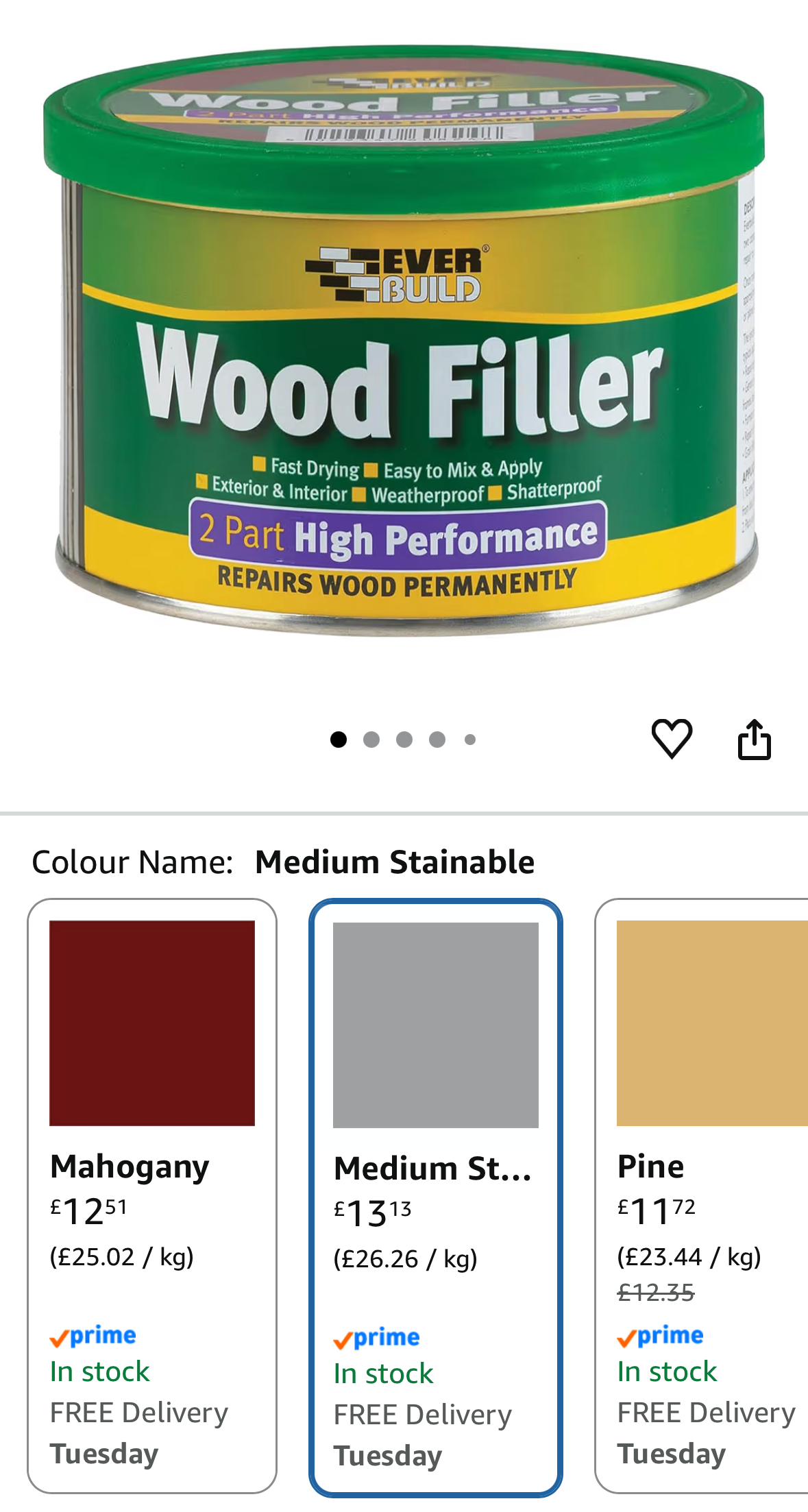
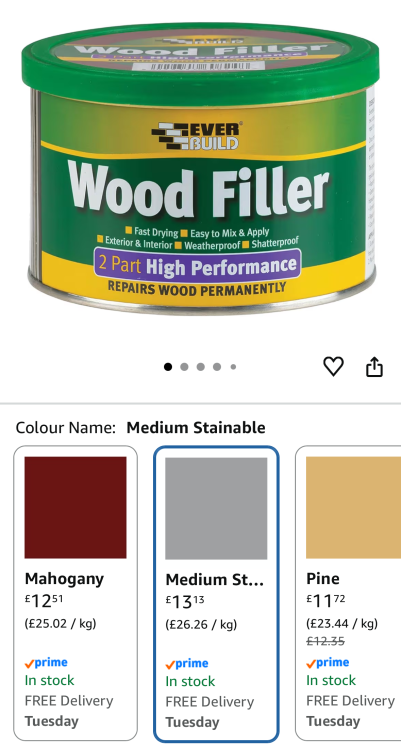
I’d use something 2-part, but in honesty I’ve not done much exterior filling. Scarfing new wood in is the no.1 best way to do wood repairs though.
-
Ah, sorry, read it as if the riser was outside. A is fine, and if you run the bath waste in 50mm and branch off in 40mm for the basin (reducing to 32mm at the trap) then you want even need an AAV at the bath; as per @Russell griffiths comment, if there’s room to fit an upstand and regular AAV behind the bath panel then it’s cheap insurance.
-
Yours is a bungalow lol, so near zero invert, but you do like your belts and braces 🙃. AAV’s are only really ever needed on a 1st floor, or where the invert (drop for flushed water from an WC) exceeds 1300mm.
-
A: You don’t need any further air admittance here as the ‘drop’ occurs under the T outside, therefore it can access air to alleviate the vacuum of the flush from the external AAV ‘stub-stack’ you are creating. B: Technically this will work perfectly well, but brings the AAV indoors meaning you need to be able to access it for maintenance and it need to be best part of 1100mm above indoor floor level.
-
Kitchen Grid/Isolation switches
Nickfromwales replied to Spinny's topic in Electrics - Kitchen & Bathroom
A lot of people turn the water off I’m learning, but after that there’s not much point imho. Gas @ProDave for you I assume LPG, so just a simple turn off at the regulator, but for domestic / natural gas installs I doubt it’s at all necessary. -
https://www.brwsh.co.uk/brwshes-blog/why-does-filler-flash-or-grin-through-paint/ The Toupret stuff is very very good filler. You can put a hairdryer on it and accelerate it drying, and then sand it straight away without any issues. Most would curdle or open up with a bunch of cracks. Sands down very easily too. Found this stuff a good 15 years ago, when I employed a fantastic painter and decorator for a knock through extension, and I’ve not used anything else since.
-
It’s called “decorators caulk”. More severe gaps should be filled and finished with Tupret filler.
-
You are a man of few words, I'll need you to use a lot more of them Damp proof membranes, any? Insulation, any? Thickness of these if present? Etc.
-
Kitchen Grid/Isolation switches
Nickfromwales replied to Spinny's topic in Electrics - Kitchen & Bathroom
The 10mm will be for just the hob, back to its own breaker. Other fixed appliances will each have their own cable, back to its own breaker. A fixed microwave needs its own cable and breaker, whereas a plug in 'loose' microwave just plugs into the kitchen ring, as does the warming draw. I think the sparky is going to have to question YOU . -
Kitchen Grid/Isolation switches
Nickfromwales replied to Spinny's topic in Electrics - Kitchen & Bathroom
I think it would be less relevant in a brand new house with brand new appliances, where these things are maintained / replaced accordingly. All hobs have standby buttons on them to switch them on / off tbh. That for me would be suffice. -
Lowest profile flat roof ballasted system
Nickfromwales replied to Mattg4321's topic in Photovoltaics (PV)
It’s at the 10° pitch that you can declare the panels to be “self cleaning”; you can lay them flat and they’ll produce power, but they’ll be very dirty and efficiency will suffer on both counts. Anything above lower and you need to mechanically clean them annually, possibly biannually if there’s a lot of ‘nature’. Anything above 15° and they’ll perform well, but the higher you get, to the point they’re staring at the sun down the barrel of a gun, the better. -
Worcester 24i Junior - PRV?
Nickfromwales replied to Mulberry View's topic in Boilers & Hot Water Tanks
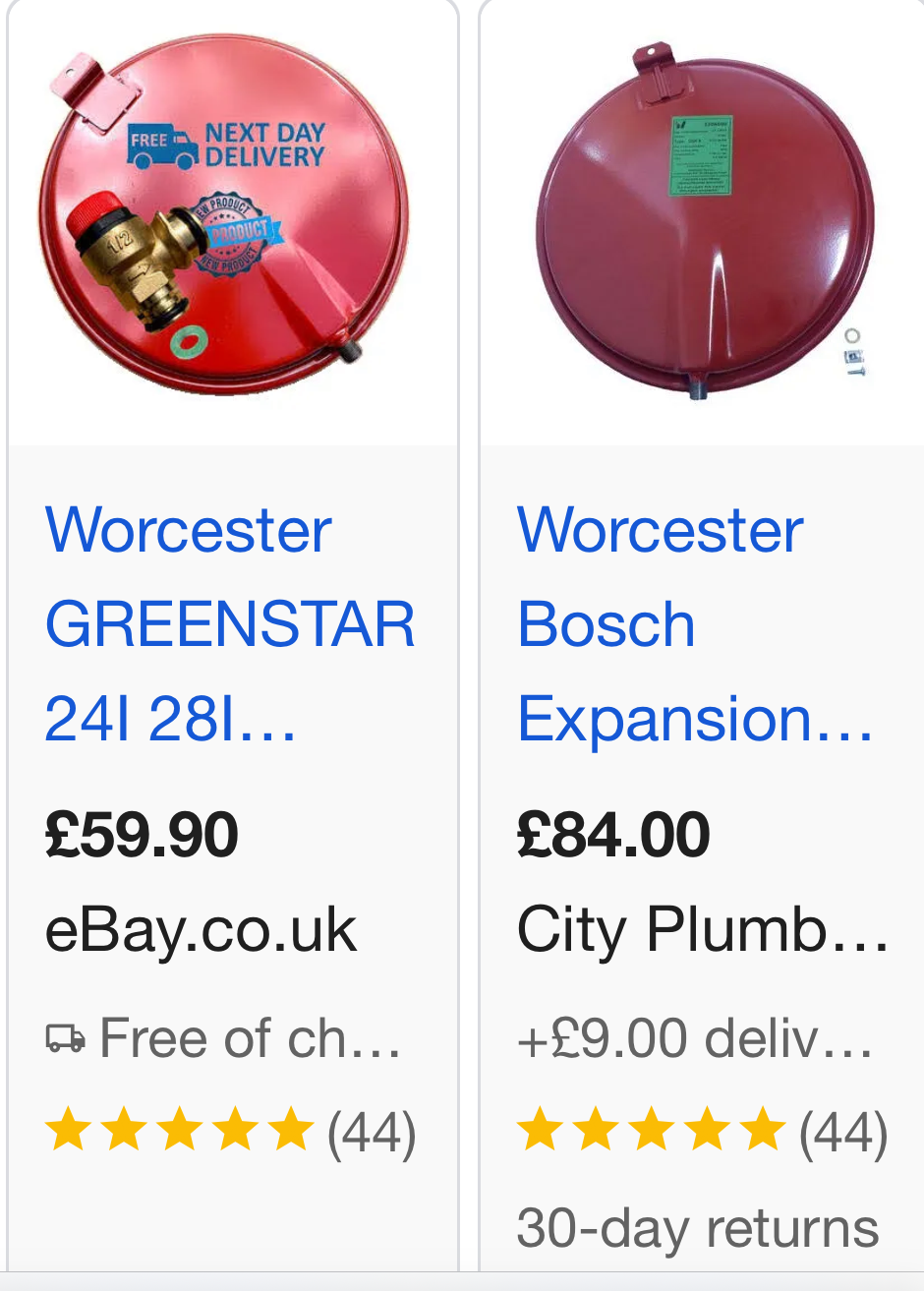
In the rear of the boiler casing is the EV (expansion vessel), usually painted red or silver, and round. On this you will find a Schrader valve (same as on a car tyre) where pressure is input. Use a matchstick or similar to depress the pin in that valve to see if any air comes out (or worst case the diaphragm has ruptured and water will then be ejected). If water comes out the EV is RIP. If air (or nothing) comes out, then proceed as follows. Blow off the pressure of the heating system off to relax the diaphragm inside the EV, you can use a drain off on the heating loop or use the PRV, and then put a digital tyre pressure gauge (or connect a pump with a gauge) on it and take the reading. It should have minimum 1bar pressure but the boiler manual will tell you what it should be (I’d set this up to be the same as your cold fill pressure so about 1.5bar). If it’s at any less than 1bar you need to top it up. If you find no pressure then you need to top it up and see if it’s retaining the input pressure. It’ll top up PDQ so expect to see a result within 30 seconds or so, eg the pressure gauge on the pump starting to rise. If this is successful then you replace the cap on the valve and wipe your brow. If it is taking much longer to get pressure on the gauge then it is possible the diaphragm has ruptured and you’re now back pressurising the entire heating circuit with air, which will eventually give you a reading on the gauge on the boiler as well as the gauge on the pump. This is the final test and indicator that the EV is RIP. Then you need a new EV and PRV. Or, if you want to stick a band aid on this vs strip the boiler down, just buy a 3rd party EV and tee it anywhere into the heating pipework, preferably on the return side, and that’ll give you 6 months or more (until the boiler EV rusts out and eventually starts leaking).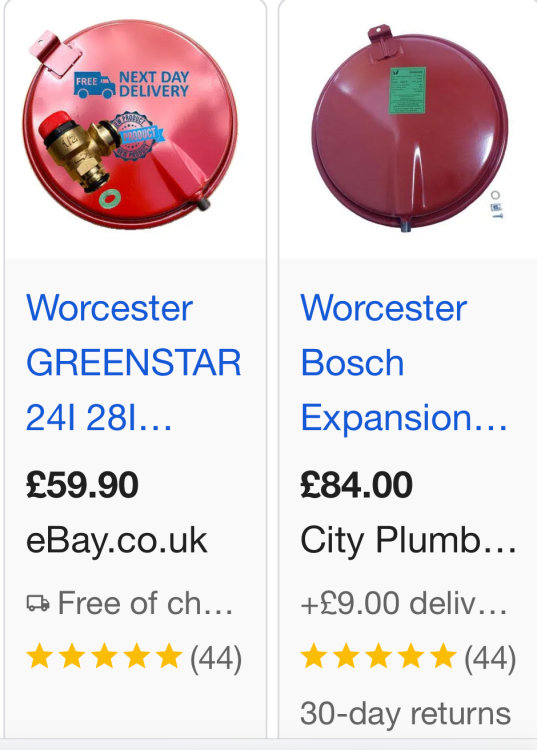
-
You need a wife mate. Get on Tinder asap. We’ll provide character references.
-
It’s just about when 2 pipes need to converge, where you’ll need IC’s at each instance or any time there’s a change in direction. You can run one pipe from A>B for some distance, but getting most BCO’s to agree to it is another thing. IIRC the last one wouldn’t let us go more than 8m (in a perfectly straight line)….. so ended up with 3 IC’s between the house and the road.
-
Kitchen Grid/Isolation switches
Nickfromwales replied to Spinny's topic in Electrics - Kitchen & Bathroom
You'll need 47mm for the cooker / hob cable -
New build waste drainage, durgos and the regs.
Nickfromwales replied to jimseng's topic in Waste & Sewerage
Indeed. The Durgo (AAV) needs to be above any 1st floor WC, and needs to be accessible; eg if it fails and starts letting any stink out. Ground floor WC's don't need an AAV if the 'drop' (invert) is less than 1300mm. -
Floor Joist Insulation. Is this the right approach
Nickfromwales replied to NBW's topic in Sound Insulation
If you have the height, you could install resilient bars and then a layer of 15mm sound block plasterboard onto those. The RB's deal with foot traffic and impact etc. The builders wouldn't normally install insulation in a makeover / refurb unless building control had stipulated it, and it really should have been part of the spec that they tendered to so not really anyone's fault. Reality is that the void there is within the heated envelope, so insulation in that void would add nothing re thermal performance anyways, but you'd obvs have preferred it for acoustics. Avoid penetrating the PB for spotlights, or go for a very good quality unit which is sound rated (as well as fire). If this is life or death, you could drill the existing plasterboard and pump the voids with cellulose (Warmcell from PYC), then over-board and skim. -
You'll need to work out if there's need for moisture control and where you're integrating that. For the timber floors I doubt you'll need any underlay, but some insulation may be of benefit. Can you provide some more details of what's there / what you propose?
-
So...I'm about to do Rainwater Harvesting
Nickfromwales replied to mike2016's topic in Rainwater, Guttering & SuDS
What capacity tank are you thinking of using? At 5000L or under I'd really not bother. -
If it's a good quality unit and is set to run at low speed / duty, then you shouldn't be able to hear it (if it's a unit that will be accepted by PH standards), and I've never had any issue with these being on a stud wall of a TF (mostly MBC or English Bro's). Most of my clients have said how quiet my installs are, but if you're at 75% duty on trickle vs my remit of 40-45% on trickle then this may be an issue. You don't need instructions, it's just a metal strip with a few holes in it. Then the unit hangs on it like a picture. You can fit qty 4 or qty 6 x 2" squares of 10mm thick neoprene on the rear of the unit which is likely more than suffice. Offer the bracket up and mark the holes, then see what you're screwing into there, beefing up according to what you need. Manufacturers and suppliers will just give you a generic reply re fitting, as you're not getting them to do it. Or you'll just get no reply at all.