

Nickfromwales
-
Posts
30340 -
Joined
-
Last visited
-
Days Won
297
Everything posted by Nickfromwales
-
Nope. Not considered ground mount unless it is literally, on the deck. 👌👍 Fill your boots basically.
-
Array was 6m x 3.7m. Panels were 990x1780 ish, 360w iirc. Slept a few times since knocking that up in one of my ( very kind ) clients living room lol.
-
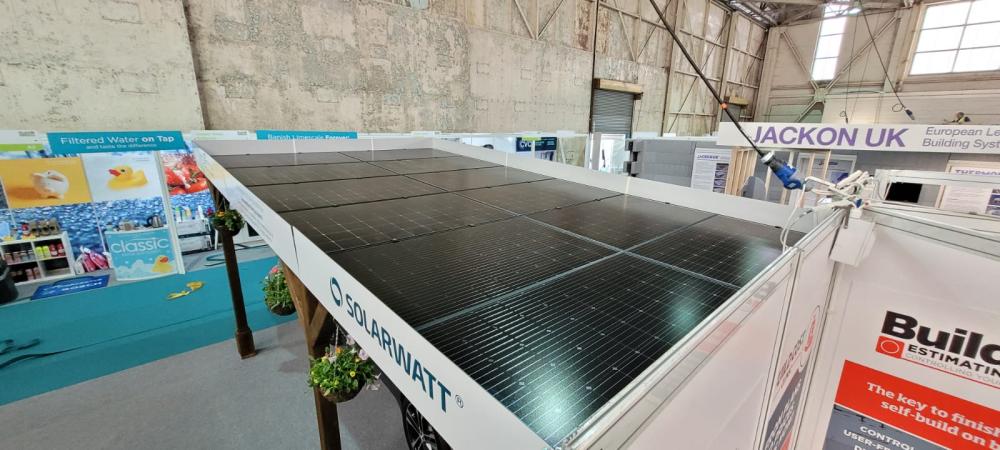
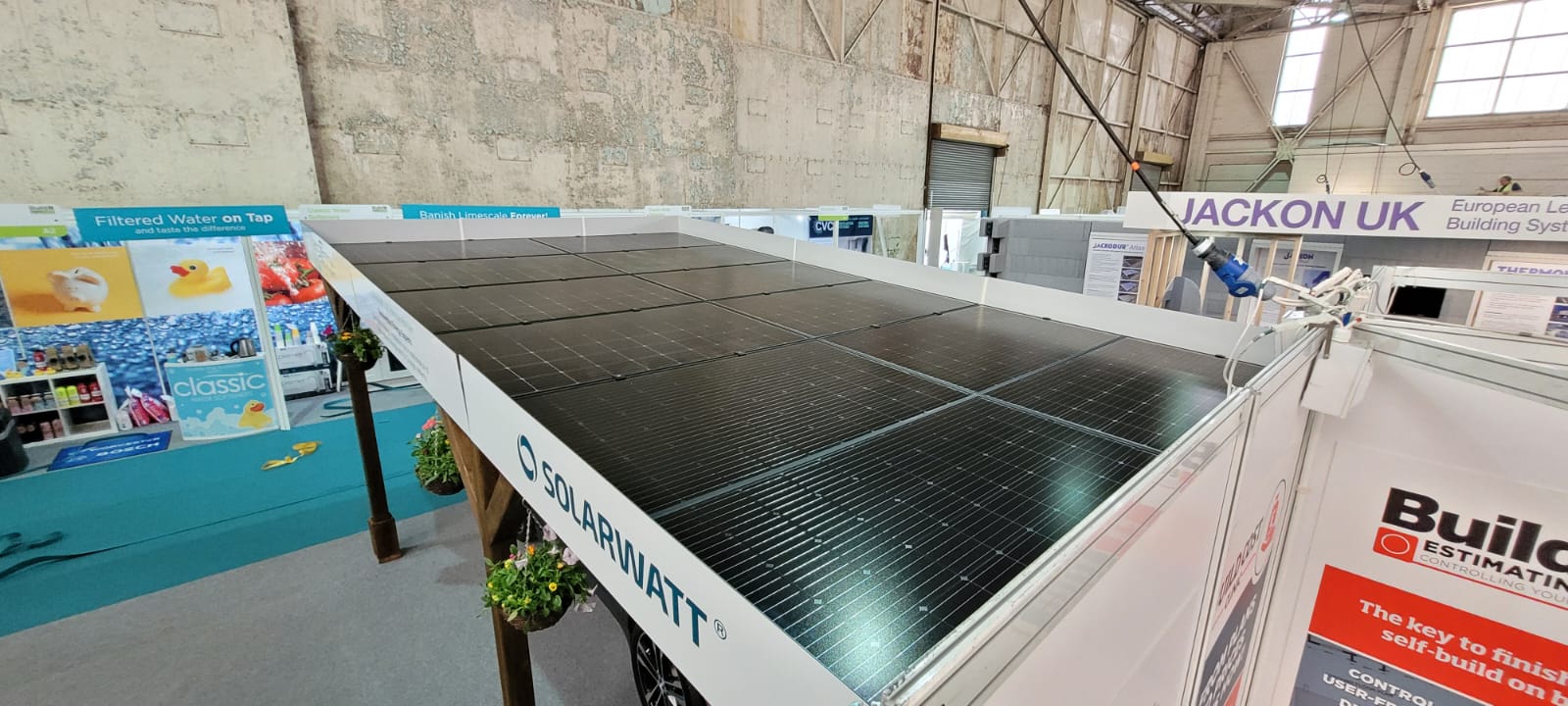
I made just this type of structure for my colleague as a mobile demonstrator. Joins up the thinking, between outbuildings / structures satellite to the main residence and grabbing a cheeky extra few m2 of solar revenue. It has a sniff over 4.3kWp on the roof. Loads of interest when we put this up at Bicester, and a few strange looks when I simply stated that wood has been around for a “few centuries” and solar panels a few decades……….just screwed one to t’other lol. Some random woman asked “what time is the car being raffled off?” Doubt that the BMW garage who loaned us the car would have been too chuffed with that lol. I’m ( before I die hopefully ) putting 18 panels at the top of my garden ( East facing ) and another 12 on my ( re-roofed to comply ) gazebo for West. Both elevations get smothered morning and afternoon so fingers crossed, and I should get good returns from both.

-
Indeed, and close to my thoughts tbh. With those numbers I'd happily throw the money at it, not just to have self-sustainability but to also shove 2 fat fingers up, directly into the face of the grid. I'm thinking longer term of complementing this type of capacity ( 48kWh of battery for the get-go ) with a water-cooled self-start genny which I can bury underground, running on LPG. The waste heat from running the genny ( inevitable in winter vs pulling from grid ) would be directed to a big TS and then used as a pre-heat to space heating. I'd retain the gas combi, but convert to LPG for the times where I need high grade heat. No matter who turns what off, or when, I will be warm and well lit. After a couple of years of measuring reliance, I would then look to yanking the meters and going fully off-grid.
-
Is everyone factoring in the ( replacement ) cost over useful lifespan of the battery system?
-
I think the black vessel is the expansion for the DHW ( domestic hot water ) coil inside the thermal store. If all taps are closed and you heat that from cold, the water held within the DHW coil needs to expand somewhere, and that is where it goes. Very difficult to comment without seeing where every pipe goes to / from in detail of course. I think the same. The static head ( gravity pressure ) is displayed on the gauges and then that value rises when the pumps force water into the manifold rails. As there are differing values of resistance, with x number of actuators open / closed, those values will be variable but will reflect the pump creating pressure between itself and the available runoff into the loops of UFH. Rolling back down to zero / near zero says this is indeed likely to be a gravity based heating system vs sealed and pressurised. I assume you have not had to top up via a filling loop and have a gauge and ( typically ) red heating expansion vessel ( as Dave asks )? A sealed and pressurised system kit would look like this ( LINK ) so if this is not present you are on gravity, also if you've been venting a lot you would have run out of stored pressure by now and would have had to 'top-up' via the flexible silver hose ( as seen in the image ) so this further reinforces the gravity assumption here. The big blue rocket is a cold mains accumulator ( a 1/2" thick rubber balloon inside a pressurised can which the borehole pump 'inflates' each time it runs. This prevents erratic unmanageable water delivery to the taps etc and smooths things out. It also prevents the pump kicking in frequently for small take-offs of water, thus extending the longevity of the borehole pump. Air in the system is a killer of UFH as the flow rates around the loops are sub 5l/p/m, so they are just not flowing fast enough to 'blow' the air out by the force of circulation. I would recommend getting these all purged properly, and having the automatic air vents replaced without hesitation. The items circled in yellow here; These automatic air vents simply unscrew from a 1/2" BSP thread and can be bought from most local plumbers merchants, albeit they will likely come in brass then and not chrome. The ones you have may well have a black rubber o-ring for hand tight installation so you may want to order the same again, or the brass ones will work with a few turns of PTFE tape on them. Here's a link to suitable replacements if you want to order online ( LINK ) vs the "buy local and PTFE them" option This fix will allow the air to be expelled without you constantly monitoring / babysitting them, and work automatically to release the air whenever it presents itself. Without these functioning properly it is likely you are missing air which then gets sent back around the loops, infinitely. The purging I refer to above is carried out thus; ( this is based on the manifold being on the 1st floor and the ground floor loops being 'below' it? If this is on the ground floor and there are loops above it, you will need to tackle this differently ). Turn off the red and blue manifold isolation valves after the pumps to isolate the manifolds and loops of pipe. Remove the old ( knackered ) air vents, catching a couple of litres of water with some old towels. With the air vents all removed, using the empty port for access, you use a 1/2" connector to link a hose running to a drain to the lower manifold rail. You connect another hose from the outside tap to the other manifold rail ( or if cold mains water is available locally within the plumbing tap into that ) likewise. You then remove one actuator and open the outside tap. Cold mains water will then blast through the one loop, and out to the drain, taking any air / crud with it. Once satisfied this is running freely without spluts of air, you refit the actuator and move to the next actuator, and repeat the purge cycle for each loop, one at a time. Keep going until all loops are purged on both manifolds, then remove the hoses / connectors and fit the new air vents in their place. Open the blue vales slowly to allow air in the manifolds ( not loops ) to rise to the air vent at the higher manifold rail and then reopen the red valve. Remember that the thumb cap on top of the new vents stays OPEN, and do NOT shut them after installing them. These are designed to be left open for life, so venting air in your absence. Maybe get a plumber out and offer to assist with this process if you are not confident with this. Start there, and I think you'll be back running smoothly in no time, or we will soon know the next fault! Enjoy.
.thumb.png.7b19d1e75867aaf520d2a51b59d09051.png)
-

Anyone got a FLIR camera....
Nickfromwales replied to NSS's topic in General Self Build & DIY Discussion
I'm doing around £7-£8 a day in a leaky granite cave in Wales. That cost vs result is disgraceful, but not at all a shock to hear. These mass-building cocks are the worst of the worst as a lot of their victims are first time buyers who know no different. I'm looking to purchase a FLIR camera ( decent one ) if anyone's got one for sale. PM if so please. -
It would be fine, but a little OTT IMHO. Do you mean moisture-resistant not water-resistant? If so, then green PB would more than suffice; which I use in wet room showers with a layer of tanking solution on top of to create water-resistant shower cubicles ( on 1st floors as well as ground floors ) without issue.
-
I quite like this tbh, but indeed it's "bespoke" to the extreme. I would have said a bigger UVC would have been advantageous, but you state no issues ( running out of DHW I assume? ) to date, so if the shoe fits....it seems to be a beautiful mistake in fairness!!
-
Ventilation in insulated outdoor office / shed
Nickfromwales replied to pstunt's topic in Ventilation
Just use a fan heater then, also, for instant heat when needed. No wait time, just got air there and then. 👍 -
Ventilation in insulated outdoor office / shed
Nickfromwales replied to pstunt's topic in Ventilation
They over-ventilate in such a small single space. https://www.preservationshop.co.uk/product/vent-axia-piv-lo-carbon-pozidry-compact-pro-with-heater-479188/?gclid=Cj0KCQiA14WdBhD8ARIsANao07iFhNCXUdn03SlialqG7Ml6wfv2Ngh9XKrFsq4b2ImAj5cqrhzg9n4aAtVrEALw_wcB -
Yup, flux residue ( likely they used PowerFlux or Laco ) from acidic "self-cleaning" fluxes. The others are leaks which look to have sealed themselves as @Kelvin said. Clean all these joints up so you can be sure they've cured, but this is typically what you see under a combi boiler where it's leaked a little but then sealed itself up, eg very minor weeping joints.
-
Connecting soil stack to the existing sewer
Nickfromwales replied to pilgrim's topic in Waste & Sewerage
Happy days. -
-
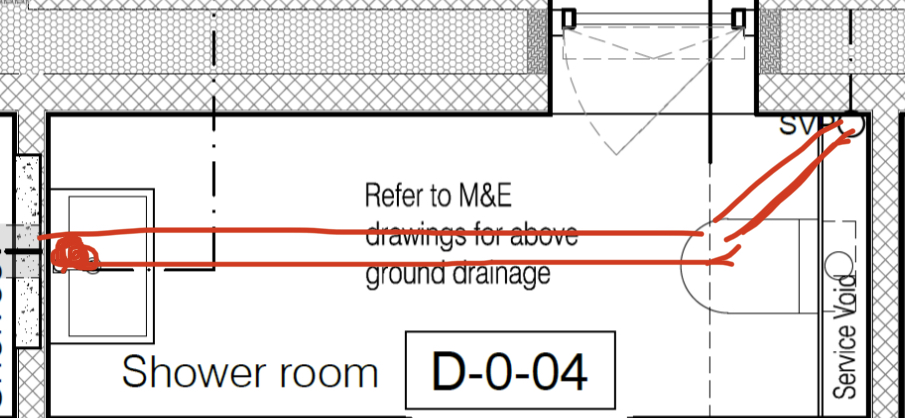
Nope. As per the man above, a rising 110mm for every item, but you can connect to the foul at the WC for the basin as you’re allowed a change of direction if it’s not foul / solids. Prob easier to connect to one incoming underground pipe vs bringing 2 in to the same IC. It’s just a basin so very little duty and clear running water.
-
Big, not huge imo, especially if it were in a 'low temp' dwelling. A 100L buffer gets sucked bone dry ( of heat ) incredibly quickly, as I'm finding on my current project where we've been firing up the het pump in this cold snap. I'm designing one system atm which will utilise either a 200L or 250L buffer + 9kW HP, but this is to cope with 1) a passive setting with very low heat output, which is also married to a detached annex likely to be heated in the future by FCU's that 2) will consume most of what the system has to offer when all is at 'full chat'. It'll be getting 2 lots of foam spray ( 100-110mm ) to keep standing losses at an absolute minimum. A bigger buffer should give a faster response / recovery time here vs being reliant on the HP alone. If the OP has a buffer which is known to be sitting at >40oC, and that is not arriving at / being delivered to the manifolds, then the issue may simply be that it is not being ( getting ) circulated between the two. If the heated water is there, then there it should be getting delivered into the floors. Controls / sensor issues seem to be at play here.
-
Connecting soil stack to the existing sewer
Nickfromwales replied to pilgrim's topic in Waste & Sewerage
Lol. Glad you spotted the standing water in there. @pilgrim, did you see this? -
Query - Gap in garage wall by steel
Nickfromwales replied to JosieC's topic in Bricklaying, Blockwork & Mortar
Assume those are dense concrete blocks, ergo no need for a padstone under the ends of the steel? If block on flat for those walls, where is the cavity or insulation to be placed? At the very least you'd expect to see those to have been made good with a brick and mortar infill? The drafts will be a bit of a problem if not dealt with prior to facias going on. -
Not on a system that has actuators and rooms stats. That can run down to just one active loop, so would need the equivalent capacity in the buffer as 'run-off' when the heat demand is down to the minimum / house near to set temp. Nope, do NOT do that!! The mixing valves take cool water from the loops, where the water in the loops gets recirculated until cool enough to be reheated by being blended with the incoming ( available ) heated water. These are there to protect the flooring / occupants against damage / injury. If you open these manifold mixing valves to their max setting, and the 1st floor heating is not getting the house up to temp, the issue is with the design and spec / execution of install, and nothing to do with the system not working properly ( functioning at its max potential ). You can create a furnace of heat, but if the emitters cannot convey that heat to the air space in the rooms then it's a paperweight. The 6mm screed is a concern, but essentially not much difference to that vs the Wunda overlay system with a tile bonded atop so the question needs to be, what is below it? What is the floor covering upstairs? Have you opened the mixing valves to max setting ( what does the valve say that is? 1-6 etc or oC? ) and did action then show on the manifold thermometer?
-
PICS?
-
It may be best to upload some images of the manifold(s) and controllers etc, so members can correlate what they see to what they know / can find for you . That will be a much shorter route to getting some replies.
-
Google some images online of cables which have started fires and come back to me! None in places where they're 'moving' or 'moved frequently'.........why the hell would they be!?!? The only cables I've seen affected by this have been stitched into the fabric of a building, ergo NOT subject to mechanical manipulation in any way, shape or form. EPS manufacturer saving their products ass here IMHO. http://enviro-therm.co.uk/wp-content/uploads/2016/07/Polystyrene-melting-to-cables-e1468939790162.jpg Just a pic off the 'net, but pretty much what I discovered in my place when I boarded out the attic. Some genius had crumpled up polystyrene ceiling tiles and had filled every bloody gap in the 1st floor ceiling void with the damn stuff as insulation, encapsulating all the lighting and power cables. The state of the insulation was shocking ( no pun intended ) with the EPS and PVC seemingly becoming 'one'. This thread is an opportunity to avoid even the possibility of this happening, where is the argument to not follow such advice? Case dismissed, and fill your boots if you know better AFAIC.
-
It's been set up sympathetically, to stop the boiler short cycling perhaps? If you split this to run the UFH independently then the boiler will have to modulate a lot to match the lower heat demand. It's a double-edged sword, so consider if you actually need to create this divisibility before you open a can of worms.
-
Installing oil central heating after ASHP
Nickfromwales replied to Chickyd's topic in Other Heating Systems
Hi. Rads will be fine, and the cylinder similar, just the controls may need a re-work. In terms of the running the UFH, particularly if you want to do this independently, you may need a buffer tank, or you could switch the unvented cylinder to a thermal store which will give you stonking hot water plus offer up hydraulic separation between the oil ( non modulating output ) and the low heat demand of the UFH. Other than those considerations it's essentially an S-plan system boiler arrangement, so quite simple / straightforward tbh. -
North of £6k for gas points to a poorly insulated home, and an in efficient system. Nothing wrong with the boiler choice here, and assume radiators are modern convector radiators? Trickle vents on windows open? What insulation is in upper floors?


.png.07ac7d3fde675f8efbf901122dc3d5ce.png)
