
Nickfromwales
-
Posts
31384 -
Joined
-
Last visited
-
Days Won
346
Everything posted by Nickfromwales
-
Tosser. They're #1 suprimo tools. You're just not using them badly enough if you don't rate them.
-

DHW manifold arrangement - options?
Nickfromwales replied to Super_Paulie's topic in General Plumbing
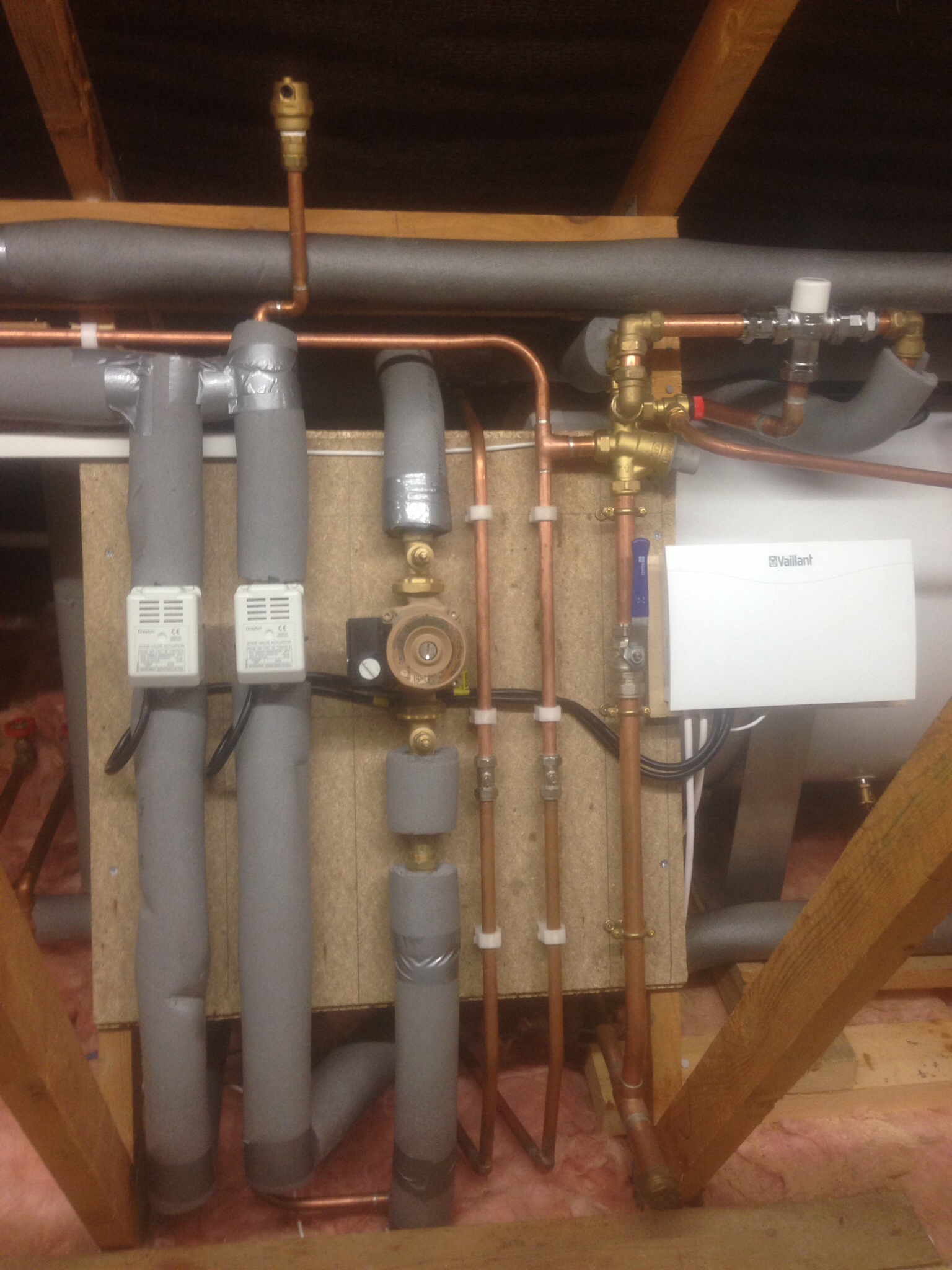
Condensation will only be an issue if the surface vs ambient temps are a way apart. Maybe try it without lagging for a season, and lag if absolutely necessary? I too consider it a crime to hide all my lovely plumbing, but it's a cross we each have to bear! -
The little heater at the bottom with the wire going into it. Isolate the supply at the CU, remove the nut and cover, post a pic of the guts.
-
For those who don't know, the Swindon National Self Build & Renovation Centre is hosting its second public exhibition of the year in one weeks time. The exhibition is repeated again in September for any who may miss this event. For more details: https://www.nsbrc.co.uk/ J16 - M4.

-
Insulated Concrete Slab Garden Office - Questions
Nickfromwales replied to Ticky's topic in Garages & Workshops
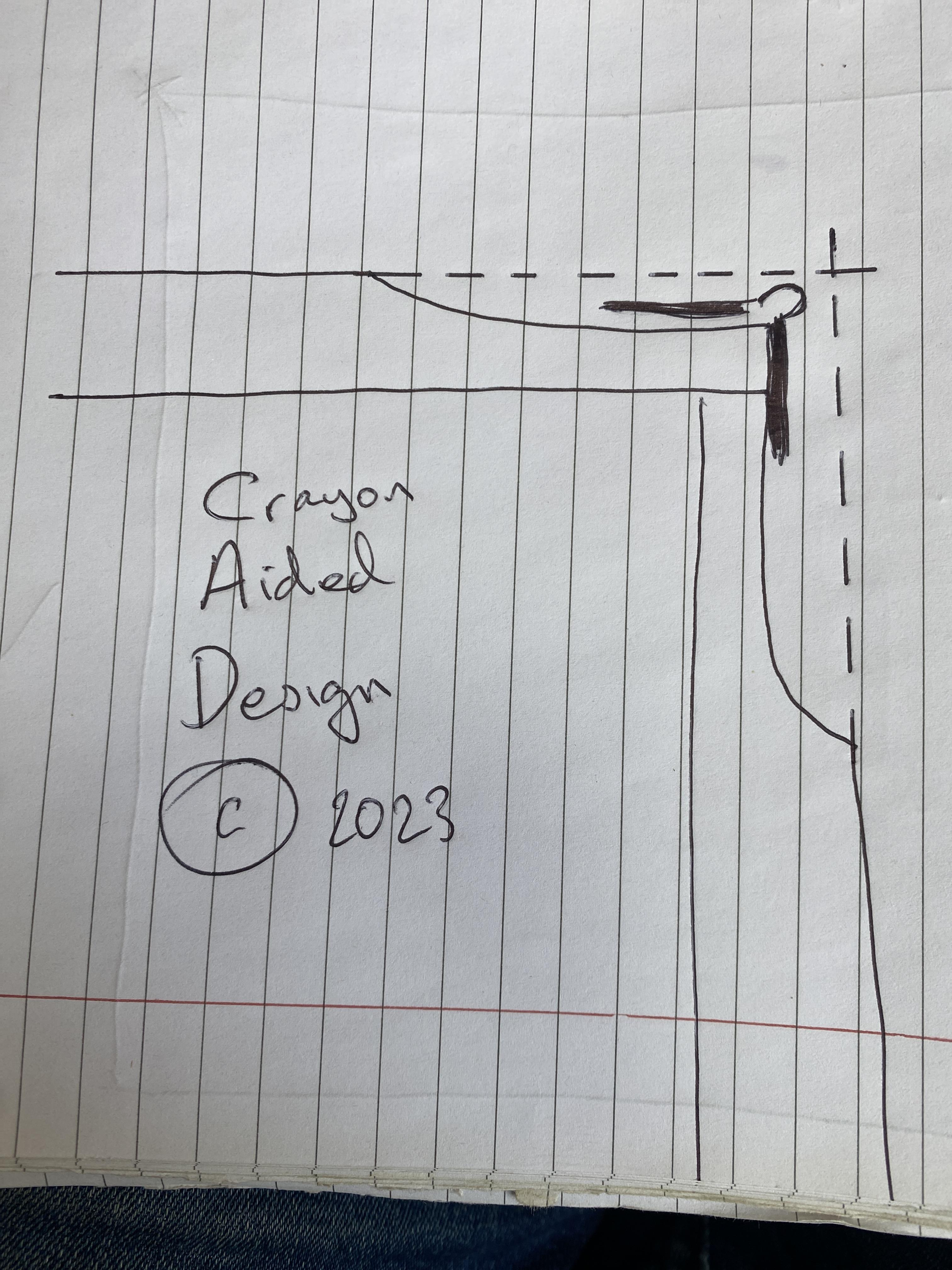
12mm / 14mm max at 450 o/c.. You can add the extra after the slab has cured. Just use Illbruck 330 foam or some EPS adhesive, bonding to both the existing insulation and the side of the 100mm soleplate. May be a good idea to incorporate one linear run of 1/2" rebar right around the perimeter. Steel is cheap enough. It's enough to drive you mad when you stare at these drawings for long enough! -
Insulated Concrete Slab Garden Office - Questions
Nickfromwales replied to Ticky's topic in Garages & Workshops
@Ticky Why the 25mm anchors? Do you live in a hurricane zone? 🤔 -
Yes, disciple boy, it's the dogs bollocks.........🙄 You go slip into your white, full-length gown and go read from the owners manual. Apparently, if you read it backwards it, it'll tell you which car to buy.
-
It's called the Blue Oyster now. Oh yea, I forgot those stupid T PW's are only A/C coupled. He must be chuffed that he has such a blinded army of faithful followers ( aka disciples lol ). I'll be hybrid with oodles of juice to do what I want with, whenever I choose to. You'll be able to use all of what you generate, up to the point where the batteries are both full as an egg, and up to your base load, and only then will the rest go to the grid. "Chill, Winston".
-
Insulated Concrete Slab Garden Office - Questions
Nickfromwales replied to Ticky's topic in Garages & Workshops
Just put the 100mm soleplate down, then lay the 150mm soleplate for the footer of the stud framing onto that. Carry the upstand insulation up another 44mm ( or whatever the thickness of the soleplate is ) and for 50mm of overhang the OSB will be as happy as Larry. -
Why didn't you just add the second T PW?I can't remember what convoluted reason you gave previously
-
In work you pen15!!! This is simple. The export is ascertained by the use of CT clamps, so, if you're using all the juice up then the exported power will be low to zero. The second you stop self-consuming, the export will start to run away to the grid. Beyond (x) value of runaway and the CT clamps will provoke export limitation.
-
I dislike the JG Speedfit stuff, and it was only last week where I was discussing them with a plumber and we both remarked that no merchants stock the collets which stop the fitting unscrewing itself and blowing apart! The chap behind the counter quizzed me then, as he had no idea what I was talking about...... Hep20 = push in > forget > go to pub. 👍 The kitchen will also have reduced m2 real estate, due to it being populated with units etc. I'd rather be looking AT pipe than looking FOR it ;). The cost is pennies difference, in the grand scheme, and I'd just go at 100mm c's and away to go.
-
After 3m you need to double the pipe diameter. 50mm minimum standard here.
-
@Dee You can get much longer lengths in by removing one noggin and lowering a length of pipe down, then under, then rotate it 90o to bring it perpendicular to the joists? Only a couple of connectors required then. DO NOT use solvent weld The snots of glue will cause havoc!
-
Single storey or 2 storey house? Can you take a pic standing back showing the whole wall?
-
Insulated Concrete Slab Garden Office - Questions
Nickfromwales replied to Ticky's topic in Garages & Workshops
Yup, I think I'll do it properly, in my instance, and just bite the bullet. Prob an extra 1 day of machine and muckaway, plus another one day for importing all materials to the top of the garden. Powered barrow and micro is around £700 p/w so I'll just accept that, and then use the spare day to dig a soil pipe in down to the house and drop a couple of ducts and a SWA in there at the same time. Nowt worse than regret, and I've done a few jobs here when tired / short of time, and they piss me off to this day when I look at them. Mechanical pencil is coming out. I'm going to print! 200mm EPS with 100mm concrete raft / slab with anti-crack mesh for reinforcement. Final answer. -
-
It doesn't make it harder, just there is not much meat left between the coat on the thicker ( main ) part of the board vs where the edge of the skim bead lives.
-
Insulated Concrete Slab Garden Office - Questions
Nickfromwales replied to Ticky's topic in Garages & Workshops
Mine will be an office ( and defo NOT a cheeky guest bedroom c/w en-suite ) so will defo need heat vs 'a heater'. A portable fan heater or oil-filled rad would of course suffice, but I want A/C in the summer for sure, so will get heating from the same unit in with the price. I will add an in-screed heater wire even if I only use it one or two months of the year for space heating, but the main reason for the UFH is for when I have long conversations with clients / Zoom meetings etc and I don't want any noise whatsoever in the office. One half of me thinks to do away with the insulated raft idea altogether and just go for an insulated timber structure over 5" of reinforced concrete, then 2x 22mm deck for 44mm of total floor thickness > under laminate Warmup / similar heat mat. My head is hurting from thinking instead of doing. -
Stuck mains stopcock / mains pipe questions
Nickfromwales replied to oldkettle's topic in General Plumbing
I don't know unless I'm actually there scraping at it, tbh. Like I said, I've seen all sorts over the years, and everything in between!! -
DHW manifold arrangement - options?
Nickfromwales replied to Super_Paulie's topic in General Plumbing
Good idea with the fish top-up feed. Filling mine manually is a PITA ! -
DHW manifold arrangement - options?
Nickfromwales replied to Super_Paulie's topic in General Plumbing
The flow rate at the combi boiler cold inlet is what pushes hot water out of the taps. As you are "stealing" from the rising cold supply to it, multiple times before it gets to the combi, you will likely see a significant loss in performance for the DHW output. If you run 22mm all the way ( to the last T-off ) and then drop to 15mm > combi, then effectively you have enough capacity in the 22mm pipe to service the "theft" as well as still having sufficient residual capacity to provide adequate cold mains 'potential' at the combi. Any instant water heater should have "cold mains priority" which is either achieved by running a dedicated feed from the stopcock to the appliance, or by doubling the capacity of the single supply pipe. -
Insulated Concrete Slab Garden Office - Questions
Nickfromwales replied to Ticky's topic in Garages & Workshops
Yup, but they are a huge leap towards killing interstitial condensation issues ( which you'll otherwise get for sure the second you heat this somehow and it's cold / freezing outside ). Got the uninsulated ones on my workshop-manshed-office and the moisture on the inside of the breather membrane is a major piss-me-off. It'll become workshop / shed soon, so won't be heated anywhere near as much after the new outbuilding goes up. -
Insulated Concrete Slab Garden Office - Questions
Nickfromwales replied to Ticky's topic in Garages & Workshops
I think I'll start by making the roof rafters up whilst I'm waiting for diggy-boy to get his skates on. Prob going to be 4x2's with OSB plates at the ridge; a) for simplicity and pre-manufacture, but also b) to get a ready made flattened apex which I can then board to and recess spots into plus it'll form a cable way for the various drops to the power points / switches etc. Ventilation remains a bone of contention. Single room MVHR are reported to be "crap", so I may just fit a small MVHR. TBH it is likely a WC / WHB / Wetroom shower pod will make it's way into what was going to be the PV / solar plant space, as a loo will be nice up there. I'll tank it 360o round so it can be a guest suite with shower too, for overspill. When not occupied I will pulse the MVHR on / off ( 15mins on / 2hr off or something ) with a Shelly or get one where the trickle rate can be dropped to an absolute snail pace. My dear boy, it'll have a full on AT membrane from the slab to the ridge, 4 sides around, installed directly to the internal studs, then a service batten ( 25mm ) for cables and back boxes, then 15mm OSB, then 9mm PB + skim. OSB for racking mostly, but nice for hanging anything anywhere too. AT is where it's all at, and detailing this meticulously stops a lot more problems than people appreciate. -
Insulated Concrete Slab Garden Office - Questions
Nickfromwales replied to Ticky's topic in Garages & Workshops
I've never built anything wonky or flimsy in my life, as I am an OCD freak of many belts, and a comprehensive selection of braces to boot. The 3x2's will feel solid and I'll get a great result from them, sister-ing up the internal 3x2's will pay big dividends and it's only an extra 4 dozen lengths, not exactly bank busting and prob £150-200 worth at most. With those being more solid than a single 4x2, and the single external studs being tied at the half height marker to these sistered pairs of 3x2, accompanied by lashings of glue and gas nails, and more gas nails, followed by more gas nails.... I'll be happy to proclaim; "She'll bee reet, laaaaad"