


Temp
-
Posts
10690 -
Joined
-
Last visited
-
Days Won
43
Everything posted by Temp
-
Presumably he's not going to fully fill the foundations. Most likely he will pour a slab over the whole bottom of the pit or dig deeper trenches around the edges. Then build up in blockwork and install a suspended floor. You might prefer a Beam & Block suspended floor with insulation and screed on top rather than a timber floor, especially if tiling any of it. Ask him what his plans are.
-
Insulated Concrete Slab Garden Office - Questions
Temp replied to Ticky's topic in Garages & Workshops
Whats what I did. To stop them falling over before the concrete set you can fix them into some wood beforehand and just push them in until the wood is on the surface of the concrete. Put scrap waste pipe over them once set to avoid impaling yourself if you trip over. My bolts were long enough to go up through two courses of brickwork and the wall plates. I made them from threaded rod and nuts. Don't leave it too late to install them as I found the concrete set up faster than expected. -
There must be some calculators online.
-
I think the membrane approach is best. If it had to be PIR I wondered if you could shoot long nails right through joists and into the side of a PIR block to holding up. Then foam any gaps. Might need a slightly different solution for the edges of the room. I can think of a few ways to fix battens under existing joists without needing to fix up from below.
-
I wondered if it was possible to make your own insulated "blocks" from thick sheet insulation.
-
I can't quite remember the spacing but it was a match for the width of the UFH panels. Eg we fitted one batten then one ufh panel then the next batten so they were no real gaps or over tight panels. Yes feels pretty solid.
-
We fixed down 80mm deep battens to our B&B floor. Then between theses battens we fitted insulation and the UFH in its foiled insulation which also totalled 80mm deep. Then the Engineered Oak was secret nailed and glued to the battens. Use lots of glue in the T&G. ,I believe wood flooring should be at least 18mm thick to meet building regs. We went for a 21mm thick 200mm wide board. PS In the past I have heard of problems with thin chipboard over regular EPS without battens. Under load the boards bend and compress the EPS eventually leading to the EPS crumbling. Some manufacturers recommend battens in high traffic areas like doorways. Not sure how real this problem is these days.
-
Google found.. https://www.finance-ni.gov.uk/publications/technical-booklet-n Diagram 2.1 says large rad bend should be used at bottom of stacks. Same diagram as in English regs I think.
-
We have a system that is similar but we put it on top of an extra layer of insulation making 80mm in total. On top of that we have 21mm Engineered Oak. Works OK but only if we have a flow temperature of 50-55C. Would be no good for an ASHP system. I can't imagine what 18mm chipboard and carpet would be like on top of this system. We only have carpet in areas with ufh in screed. If building again I would fit even more insulation under the UFH.
-
Workshop build using shipping containers - Electrical Advice
Temp replied to Walrus's topic in Introduce Yourself
I think you mean mobile unit. I think temporary structures are only allowed for less than 28 days a year. The planners can decide its not mobile and request a planning application if they think it needs one. I'm not sure what the criteria is. If they do that you could fight it by proving it is capable of being lifted onto a transporter. -
Difficult planning application for loft conversion
Temp replied to Ernie's topic in Planning Permission
It doesn't look too bad. Especially for city setting with lot of others around. -
I think toolstation threaded rod us probably cheaper but these aren't a lot more... M10 x 300 and nuts pack of 10 for £11.62 https://tradefixdirect.com/coach-bolts/zinc-plated-coach-bolts-and-nuts-m10-x-300mm
-
If you have to keep putting air into the expansion vessel then it's faulty. I wonder if the air you are putting into the expansion vessel is escaping into the system.
-
https://www.simmons-simmons.com/en/publications/ck0a8ceh1n3th0b36ja0dc7c9/270418-building-control-and-duty-of-care-murphy-v-brentwood-revisited
-
It the case everyone cites to say BCO aren't liable for mistakes they make.
-
Ask chatgpi about the House of Lords’ decision in Murphy v Brentwood 🙂
-
Snips if you have them. Otherwise I'd put a cutting diskc in my small dremmel. If you have to hand saw it you need a really fine tooth blade and plenty of support. I would find a block of wood to fit in the U channel and wrap it up in tape to stop bits vibrating.
-
When did the BCO approve the drawings? Was it before or after end of June 22? It appears Section 38 of the Building Control Act 1984 _may_ make BCO liable but it only came into force on about 28th June 22 with the Building Safety Act. https://www.mishcon.com/news/introduction-of-section-38-building-act-1984
-
Google suggests case law means council BCO are not liable but a private BCO might be.
-
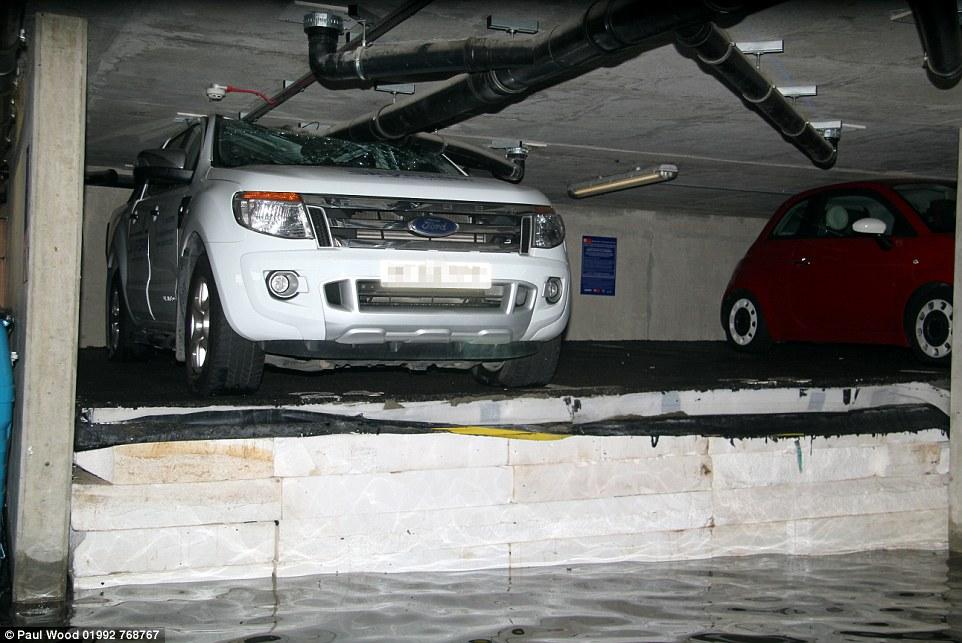
Insulation can be pretty strong.... https://www.dailymail.co.uk/news/article-3829379/Vehicles-CRUSHED-against-roof-burst-water-main-causes-polystyrene-insulation-beneath-car-park-float-raises-floor-four-feet.html
-
Gosh that's a pretty obvious mistake. Its something a BCO should check on every loft conversion for example. Before rushing ahead with changes to the ground floor it might be possible to make another change because the Approved Documents represent only one way of complying with the Building Regulations. That might still be the best/option but the BCO might allow open plan if you improve fire doors on other floors or provide another means of escape from the top floor or install a sprinkler. Would have to discuss it with him. Might have a case against the plan drawer but I guess it depends on the contract.
-
Bond It Brick Acid says its 16% Hydrochloric acid. https://www.mgnbm.co.uk/bond-it-brick-acid-5-litres-bdh085/?srsltid=AfAwrE7vK1Ef8OIpidl1uLMnnFYdlaTwQGXqZfWfrOBEV9fPgfHS_PCgL8E
-
That can depend on the quality of the tiles or stone and its not always the same way around. I couldn't use a levelling system on cheap stone that is varying thickness. Don't need it on good quality tiles that are uniform thickness and flat. I prefer to use a rubber faced block I call a blat but I had to make my own last time as I couldn't find one to buy.
-
Perhaps do the test in the video I posted. The one around 13:40 to 13:55 where he uses a levelling system on a few spare tiles then shows the tiles have been flattened.

