


Temp
-
Posts
10690 -
Joined
-
Last visited
-
Days Won
43
Everything posted by Temp
-
I wonder if the correct/any flashing has been used? What does it look like on the outside?
-
That's pretty much the starting point for 95% of plots. There are a few places where they have deliberately allowed a mixture of modern styles but a log cabin might even look out of place there. The normal advice is to find a plot and then see what you can build rather than setting out with any particular style of house in mind. Otherwise you will likely spend a long time looking for plots.
-
Brings a whole new meaning to the slicer setting "wall thickness".
-
Leaking boiler left to deal with it myself
Temp replied to Niall Patrick's topic in Boilers & Hot Water Tanks
Unfortunately these companies either have their own staff or contracts with specific local "preferred trades". My guess is the regular heating enginer isnt on their list. It might be worth pretending you don't know how to isolate the boiler and water is still leaking. I'd email the landlords office, not to complain but to let them know you are worried about the water leak damaging their house/kitchen etc Mention you called the new maintenance company yesterday but they still haven't sent anyone yet. At least then you have something in writing. -
Rear wall removed before foundations
Temp replied to greenbanana's topic in General Construction Issues
It could be the right way to go if you need a machine to lift a big steel beam into place. The foundation trenches would get in the way if done first. -
We have 80mm of PIR then UFH in screed and a mix of stone, wood and tiles on top. If building again I would try for more like 120mm of insulation. More if height isn't an issue.
-
The only other issue I can think of is that the land in the visibility splay must normally be under your control or public land. Under your control means you either own it or there is an agreement in place that the owner will keep it clear.
-
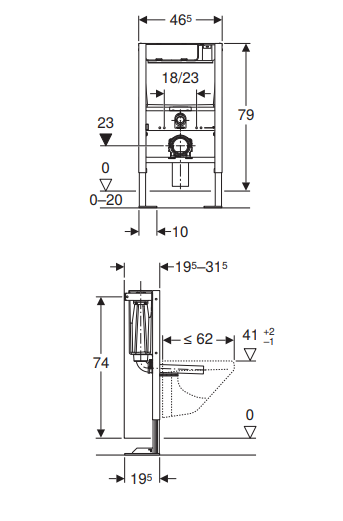
Where is the cistern going? The geberit frame with cistern need more than 4" depth. Looks like min 195mm but check the model you are using. Drilling 40-50mm holes in say 205mm studs no problem. Even in 100mm would probably be ok. You could always double up the thickness. There are typically two long bolts/threaded rods that fix the top of the frame to the wall. Ideally these should fix to the blockwork (or a substantial bit of timber fixed to the blockwork) as they carry some load. There are adjustable feet at the bottom that you need to set to the right height and fix securely. Height not too critical for a wall hung but more so for floor mounted back to the wall type pan.
-
You said there is no ditch by the road but are there any surface water drains along/in the edge of the road? Frequently in the past old ditches had pipes dropped in them and filled in when the road was widened (so called piped ditch). I think time to discuss your rights with your solicitor or a firm that specialises in drainage rights. Does he own the land all the way to the river? If you can prove to him you have a right to discharge he might be more amenable to allowing the pipe to be extended to the river.
-
I think the amount you can discharge increases from 2m^2 to 5m^2 when you replace a septic tank with a treatment plant. Edit: Ah sorry that's only if you can discharge to a water course not a soakaway... https://www.charlesrussellspeechlys.com/en/news-and-insights/insights/private-client/2022/buying-or-selling-a-house-with-a-septic-tank-what-you-need-to-know/
-
Make sure you understand the VAT rules before accepting any quotes. It's likely you should be charged 5% by builders and reclaim this after completion with form VAT431C. Make sure quotes spell out VAT at 5% or it can cause grief later. Any problems getting a trade to requote correctly refer them to VAT708.
-
I suspect you have a right to discharge into the existing pipe but you should probably replace the septic tank with a package treatment plant.. https://www.hcrlaw.com/blog/drainage-discharge-and-riparian-rights/ I believe treatment plants became mandatory on 1st Jan 2020 where the discharge is to a water course or ditch but its not clear where yours was going so this may not have applied... https://www.draindoctor.co.uk/about-us/hints-and-tips/item/2020-septic-tank-law-changes-what-you-need-to-know#:~:text=However%2C the new regulations released,directly into a local watercourse. So if it was to a ditch the previous owner of your house might have some liability. Otherwise my thinking is you can probably replace the tank with a treatment plant and assert your right to discharge to the existing pipe. It then becomes the other land owners problem to disperse the discharge. I'm no legal expert though. Given there are several houses involved you probably need to join forces. If one of them won't engage you may have to leave the septic tank in the ground for them to continue using. Again as several houses are involved it might be possible to persuade the water co to provide a first sewerage connection. Sometimes they do this by installing their own small plant shared by a hamlet/village.
-
Company 3D printing 100 houses in USA..
-
Typically they require nothing over 1m high in a triangle who's dimensions depend on the speed limit.
-
I've had good response times on the forum but check replies are HMRC staff. Typically had answers in a day or two.
-
+1 There must be dozens of different solutions. Oak posts and rail with glass panel. Ditto but metal posts and rail. All glass, no posts or rail Numerous styles of wooden bannisters and railings. Wrought iron. Curved brickwork with holes in Glass bricks to the ceiling. Hugely expensive curved polished copper panel 🙂
-
Building Control Inspector Changes Previously Approved Inspections
Temp replied to Dabooj80's topic in Building Regulations
BCO almost never do their own structural calculations or similar design checks, they ask you to get an SE to validate the design. Then all they have to do is check you have built it as specified. (Grenfell tower). -
The only time I can think continuous mode might work is when you have a rad system with a TRV on every rad? and a bypass to shut the boiler off when they are all closed. Will be interesting to hear what the answer is.
-
Manual also has this.. Not sure it make things any clearer.
-
That's what I would expect in Room Temperature mode but it doesn't mention being controlled by room stats (directly or indirectly via a wiring centre) in the paragraph describing continuous mode.
-
Building Control Inspector Changes Previously Approved Inspections
Temp replied to Dabooj80's topic in Building Regulations
Possibly too late now but for others i recommend writing down what the BCO has approved verbally and any changes or issues raised at every visit. Before he leaves ask him when you should call him back. Then that evening send him an email or letter to confirm what was agreed. You know something like.. Thank you for the visit today which we found very helpful.. Just to confirm you were happy with abcd but require us to address efgh by doing xyz. and would like us to call you back for the next site visit when we have done pqrs but before tuvw. Keep the subject field the same (use your site address?) so its all one thread in his email system. -
I'm wondering if the installer wasn't familiar with UFH and someone told him that the best way to run UFH was "continuously" so that's the boiler mode he selected ! Presumably when none of your UFH manifolds or towel rads are calling for heat a bypass opens, the return temperature rises and that shuts off the burner?
-
I think it's something like this you need but not 100% sure.. https://www.bathroomspareparts.co.uk/grohe-90mm-x-3x22-straight-union-pipe-42766000-10056-p.asp?gclid=Cj0KCQjw2v-gBhC1ARIsAOQdKY1aisc1rZhBeK-rogfTvHe9EwjPeHY9Jr3ylCKkZeYDWm-ux35zhp4aApstEALw_wcB
-
I'm afraid I agree. I recall a case where PP for a granny annex was granted. VAT on materials for this cannot be reclaimed as its not considered a seperate dwelling. Work started. Then the planning condition precluding separate occupation was removed meaning the annex could now be sold as a seperate house. HMRC argued that only materials purchased after the planning condition was removed could be reclaimed.



