


Temp
-
Posts
10641 -
Joined
-
Last visited
-
Days Won
43
Everything posted by Temp
-
New home insurance without build warranty
Temp replied to magutosh's topic in New House & Structural Warranties
We originally insured through Halifax. I don't think they asked us anything about a 10 year warranty. I recall questions asking if construction was complete. -
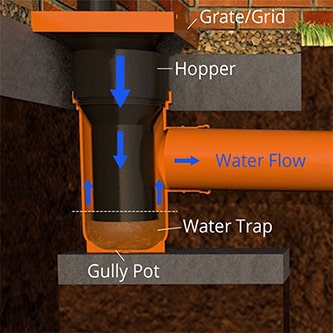
+1 Unless they specified a particular Inspection chamber you might be able to combine the two into one unit. May also depend on the depth of the red pipe. Google Bottle Trap Gully.. https://www.jdpipes.co.uk/knowledge/underground-sewer/what-are-gullies-and-where-do-you-need-them.html
-
. If you haven't already done so see pages 26-27 for Permitted Development rules on wrap around extensions.. https://www.gov.uk/government/publications/permitted-development-rights-for-householders-technical-guidance If you are applying for planning permission then yes in theory you can ignore the permitted development rules. The planners should judge your proposal on its merits not compare them with the PDR rules. However the planners do sometimes use the PDR rules as a guide if they think the end result will be too big/over bearing/over development/just plain ugly. In general its always best to go apply (or pay for pre application advice) for what you want or even a bit more and be prepared to compromise if necessary.
-
Indeed, he popped uo in news feeds only last year working on solid state battery tech at age 98... https://www.prnewswire.com/news-releases/nobel-prize-winning-inventor-of-the-lithium-ion-battery-has-his-eyes-set-on-the-next-big-breakthrough-in-energy-storage-301132645.html
-
Well the crack was expanding:-)
-
We have a mix of stone and tile over UFH in screed. Used flexible adhesive without a decoupling mat. Only issue we had was where we screeded and tiled through a doorway from one room into the next. The two areas of screed shrank towards their centres causing a curved crack at the doorway. This propagated through the tiles. Should have made a deliberate straight crack in the screed (aka expansion gap) and arranged for it to be under a sill or on a grout line. Or perhaps used decoupling mat in that area.
-
You will need to talk to the supplier. Some recommend using dittra mat. Guide here on what trowel to use to end up with good % coverage and required thickness. Eg 6mm x 6mm square notch or 10mm U notch should end up with a 3mm bed when properly compressed. They say the U notch is easier to compress.. https://www.rubi.com/en/blog/how-to-choose-the-right-tile-trowel-size-step-by-step/ PS I'm not contradicting @nod. Thicker adhesive is normally used on floors.
-
I doubt you would notice an extra 0.5mm from the ground.
-
getting initial concept ideas from architect
Temp replied to shetland's topic in Surveyors & Architects
Best thing our architect did was show me his barn conversion and propose a slightly unusual layout. Our front door opens into a small square hallway but to get to the living room and kitchen you through a door and across the end of the dining room which has the stairs in it and a full height window/gallery landing. On the negative side our house had to be a 1.5 storey with quite a few triangular dormers/gables which added complexity and cost to the roof. -
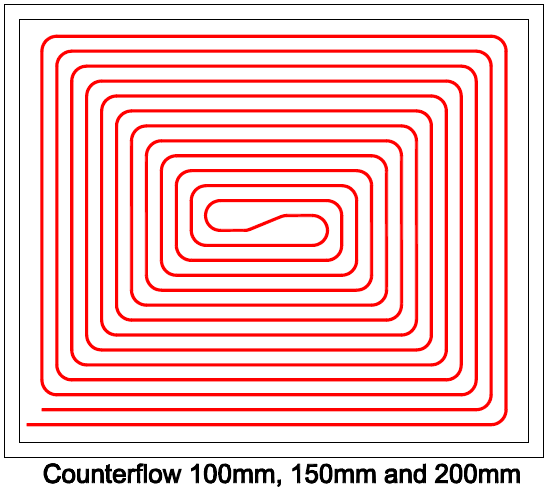
Think ours are like this.In theory whole floor is same temperature..
-
getting initial concept ideas from architect
Temp replied to shetland's topic in Surveyors & Architects
I wrote to three with details of our plot and what we were looking to build (eg 5 bed with double garage) asking for quotes. One of them went to the trouble of going to the plot and sent us some pen and water colour sketches of his thoughts on the house. He got the job. -
Trench pipe layout verses slinky trench design
Temp replied to Marvin's topic in Air Source Heat Pumps (ASHP)
My inclination would be to go with the larger collector to give the thing access to as much heat as possible. -
"Premium" vs "standard" loft conversions
Temp replied to Adsibob's topic in Lofts, Dormers & Loft Conversions
Concealed gutters can work fine, however they do require good design and construction. If not then leaks tend to be into the house/roof rather than just down onto the ground as with conventional gutters. Snow and ice can also be more problematic. What's the headroom like and is this being built under PDR or a Planning Application? I ask because in many cases headroom in a loft conversion is at a premium. I suspect concealed gutters and parapet walls are more wasteful of available headroom than conventional gutters but perhaps discuss with the architect. One thing to watch with the dormer is the level of insulation in the roof and walls. The designs you show are good because the windows aren't full width. Many people want a full width window which doesn't leave much room in the side walls for insulation. I think Planning Permission is required if the dormer extends down to the gutter of the existing roof. To come under PDR I think you have to retain a strip of the existing roof. -
Is there anything to stop a house having two electricity supplies/meters from different companies and switching between them ? One supply on E7 only used at night. One with cheap daytime rate only used in the daytime. Two standing charges and problems with your address on the databases? Switching needs to be synchronised to a zero crossing (or use a UPS?) to avoid loss of power during changeover? I'm guessing there are regulatory problems?
-
Internal flue pipework route? Exposed or buried?
Temp replied to ashthekid's topic in Stoves, Fires & Fireplaces
I think they recommend bends are limited to 45/135 degrees so the flow is always within 45 degrees of vertical. That's not a lot of room. Most hot flue pipes are 150mm diameter and combustible materials need to be three diameters away... Diagrams here are from Approved Doc J.. https://www.stovefitterswarehouse.co.uk/pages/rules-for-wood-burning-stoves#:~:text=The key rule for all,from combustibles in any direction. So some sort of twin wall insulated flue will have to be used. Others are more familiar with the rules for those. @pocster perhaps. -
Tile vent for external ductwork
Temp replied to David Lam's topic in Mechanical Ventilation with Heat Recovery (MVHR)
+1 Ours are also through the soffit. In my case the soffit are ground floor level. -
Are structural calcs required to produce building reg drawings?
Temp replied to 3smees23's topic in Surveyors & Architects
The Architect can't finish and submit the drawing pack but he can certainly send the SE a draft set. The SE can't do anything until he has at least some idea of whats being proposed. -
The thermal mass would be very high (slow response time) but opinions differ on that.
-
Wash hand space saver with self-closing waste valve 32 X 32MM
Temp replied to Adsibob's topic in General Plumbing
I'm not aware of any issues with AAV and MVHR. I think that's fine. -
So "your" 160m sewer will be going past other houses currently not on mains sewerage? Perhaps see if other people in the road can be persuaded to write asking there are any plans to provide "first time mains sewerage connections" in the road? Edit to add: https://www.southwestwater.co.uk/developer-services/sewer-services-and-connections/first-time-sewerage/
-
Wash hand space saver with self-closing waste valve 32 X 32MM
Temp replied to Adsibob's topic in General Plumbing
The main issue with very shallow traps is that it's easier for the water to be siphoned out by water flowing elsewhere (eg when you flush the loo). An AAV can stop that if it's a problem. -
Wash hand space saver with self-closing waste valve 32 X 32MM
Temp replied to Adsibob's topic in General Plumbing
Yes if its not too deep. -
Wash hand space saver with self-closing waste valve 32 X 32MM
Temp replied to Adsibob's topic in General Plumbing
Cheaper source for the metal one.. https://www.victorianplumbing.co.uk/exposed-bath-trap-low-level-chrome-201911 And an ultra shallow.. https://www.ukbathrooms.com/products/clearwater-ultra-shallow-seal-p-trap.html -
Wash hand space saver with self-closing waste valve 32 X 32MM
Temp replied to Adsibob's topic in General Plumbing
I'm not sure how reliable those are. Think they have a valve rather than a water trap. There are more conventional shallow traps like this one but check thread sizes match your waste etc https://www.amazon.co.uk/Wirquin-31000006-Siphon-Space-Basin/dp/B00JISJZOC/ref=asc_df_B00JISJZOC/?tag=googshopuk-21&linkCode=df0&hvadid=310135442117&hvpos=&hvnetw=g&hvrand=15151511845223287408&hvpone=&hvptwo=&hvqmt=&hvdev=t&hvdvcmdl=&hvlocint=&hvlocphy=1006818&hvtargid=pla-523958478630&psc=1&th=1&psc=1 Also some metal are pretty shallow... price not so.. https://www.marflow.co.uk/product/basin-trap-shallow-p/ -
See if he can remember which yard in Kent it was.. https://uknamedbricks.blogspot.com/p/blog-page.html


