AliG
-
Posts
3211 -
Joined
-
Last visited
-
Days Won
11
Everything posted by AliG
-
Thanks, already checked that. They are configured for the UK, which is a maximum 253V. It seems like over high voltage is not an unusual problem so I will give it a couple of days to check then speak to the DNO. They are Solis inverters, no idea why one seems to be broken again, will wait to get an idea of the voltage issue before pursuing this. My parents will be at the other end of the street. As well as my issues they have a flat roof, so whilst I saved money on tiles the architect wanted to specify a specific flat roof system for PV. This increased the cost of the roof making what I think would be a 3kW system uneconomical. I also couldn't get away from a niggling feeling that drilling holes through your flat roof to mount PV is a recipe for leaks at some point in the future. The electrician felt that generation meters might be lower quality.
-
I created a thread asking about this the other day. My entire ground floor is at ground level. The DPC rises above the ground in a similar way to that shown above. It must be possible, think of all the Grand Designs type houses where they have seamless movement onto terraces level with the inside floors.
-
In my last houe we had solar panels installed under the old high FIT rate. After around 18 months the generation meter broke. I didn't notice for 6 months as I was not regularly checking it. So I lost around £600 of FIT payments and had to pay a couple of hundred for a new generation meter to be installed. It was also a hassle requiring considerable paperwork to get the FIT transferred over when I moved. It took months after we moved. A few months ago we had a massive lightning storm in Edinburgh. Apparently PV systems are not normally protected from lightning. 2 of our 3 inverters broke. Luckily the manufacturer agreed to replace them under warranty. So again after £300 of bills to figure out what was wrong with the system and replace the inverters we were back up and running. That's probably about the value of one year's electricity savings as we aren't on a FIT now. We also cannot get paid for export electricity as we are on three phase and it is still almost impossible to get a three phase smart meter. I did ask the electricians if they regularly have to fix systems and they said yes and that the generation meter was the thing most likely to break. Anyway over Christmas it seemed like we were generating very little PV. I thought it was just the weather, but now it is sunnier I checked it out today. One of the three inverters seems to be broken. it trips the RCD or sends the AC voltage up over 350V when it is on. The other two are not able to generate much electricity as the local grid voltage, which has always been high, keeps drifting over 253V, the point at which they stop exporting and reset. I have two of them running again current voltage is around 245V. I will see what happens at lunchtime tomorrow when everybody is generating. I suspect they will trip out again as the voltage rises with more PV hitting the network. If so I will have to contact the DNO re reducing the voltage. The result of this is I cancelled any plans to put PV on my parents' house as it simply isn't worth the hassle especially when they don't have room for as many panels. I thought it would be pretty much a fit and forget system!
-
I would get the deeds/titles first and check what they say. I wouldn't be surprised if the say something along the lines of "the fence is the boundary" as that would have been the intention of the original owner. They would also likely give measurements to break up the plot. Looking at the plan I would also note that the fence on the other side seems to be about 1M inside the boundaries as if the whole plan is off to one side. If it cannot be simply sorted by checking the deeds then you are going to have to argue about it which is a waste of everyone's money. If you go down this route you have a good chance of success I would say, but it will be stressful and expensive. Does it matter which position the boundary is in as to whether or not you build the house you have permission for? If not I would just get building and see if they actually are willing to start proceedings and waste money once it is too late to stop you anyway.
-
Do you have a copy of your deeds, if not get one and get a copy of your neighbour's too. Certainly up here, they often have a precise description of the position of boundaries versus a fixed point. I believe our land is described as being an exact number of metres wide from an exact point on the ground. This would trump fat lines on a map where there is some argument. Is this 2.35/2.02M the width of the line shown on the map. I would guess that at best he could claim half of that and that precedent might suggest that your established fence trumps the uncertainty of a wide line. There is some good advice here, map boundaries are not considered accurate and you could apply to have the boundary "determined". I suspect a 20 year fence would have you winning that case, but better to ask a lawyer who knows a lot more about it than me. Indeed everything I read suggests that the line on the map is considered of little use in establishing exact boundaries. https://www.gov.uk/your-property-boundaries
-
Bad Airtightness Test Result
AliG replied to AliG's topic in Mechanical Ventilation with Heat Recovery (MVHR)
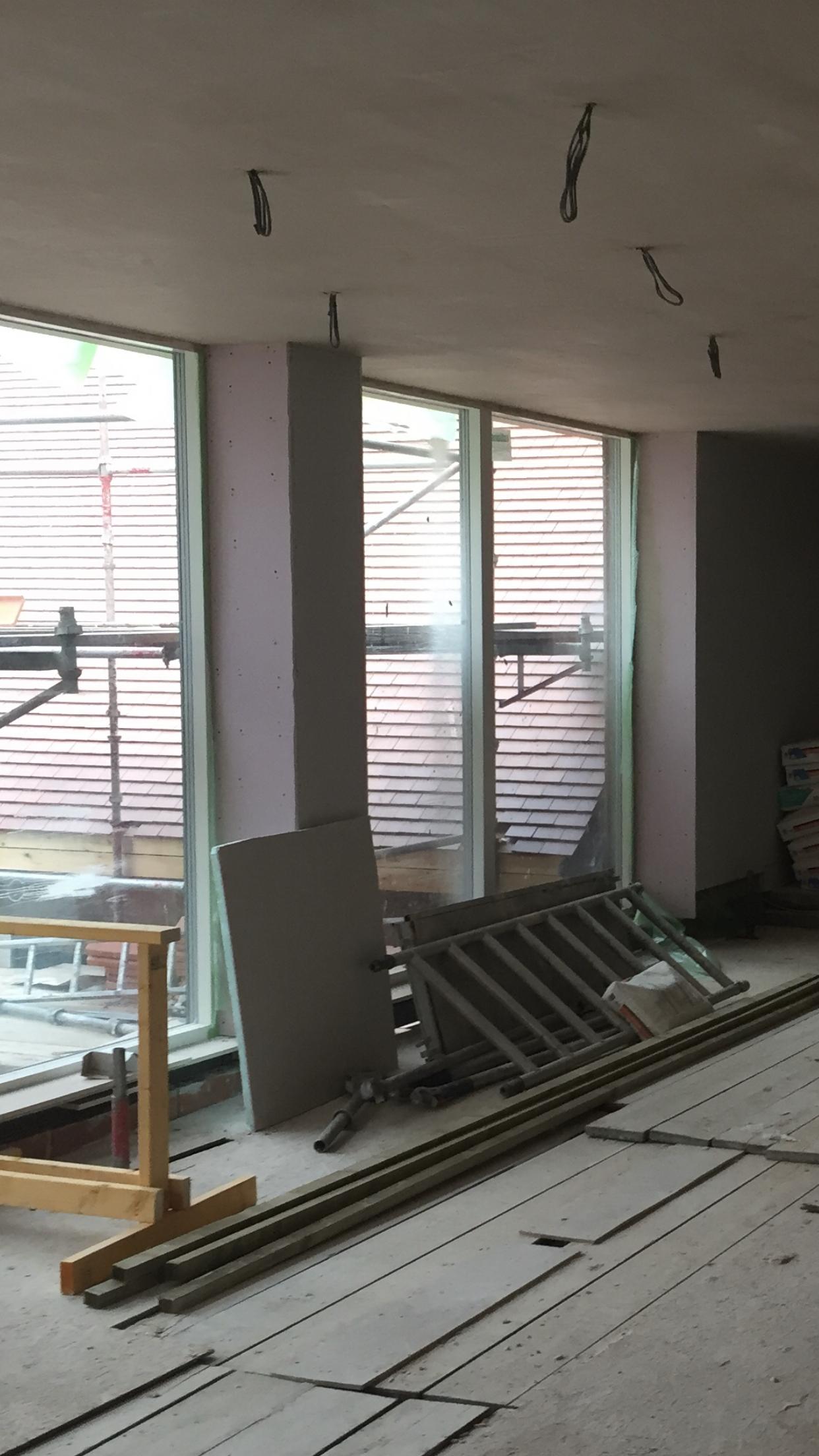
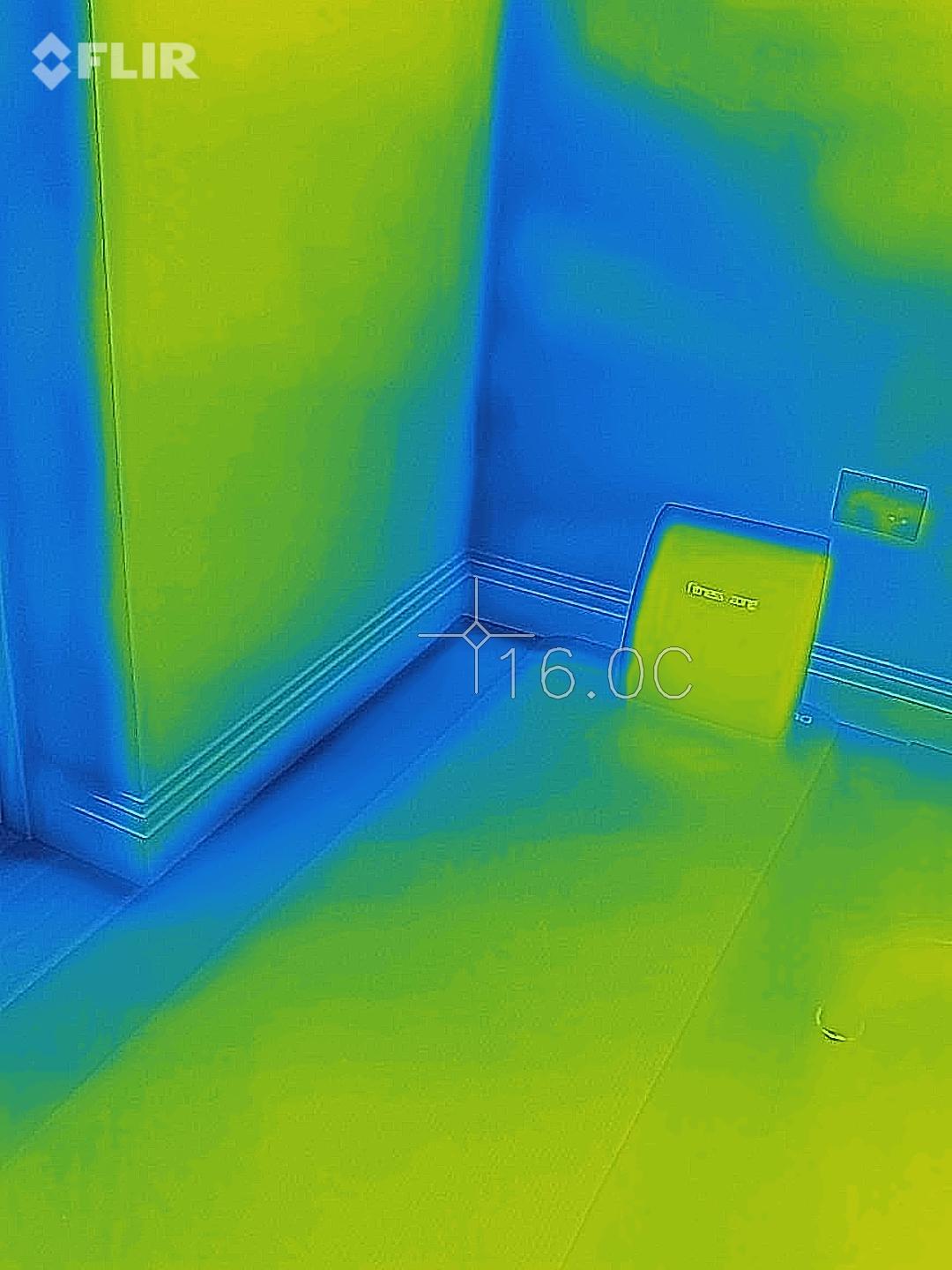
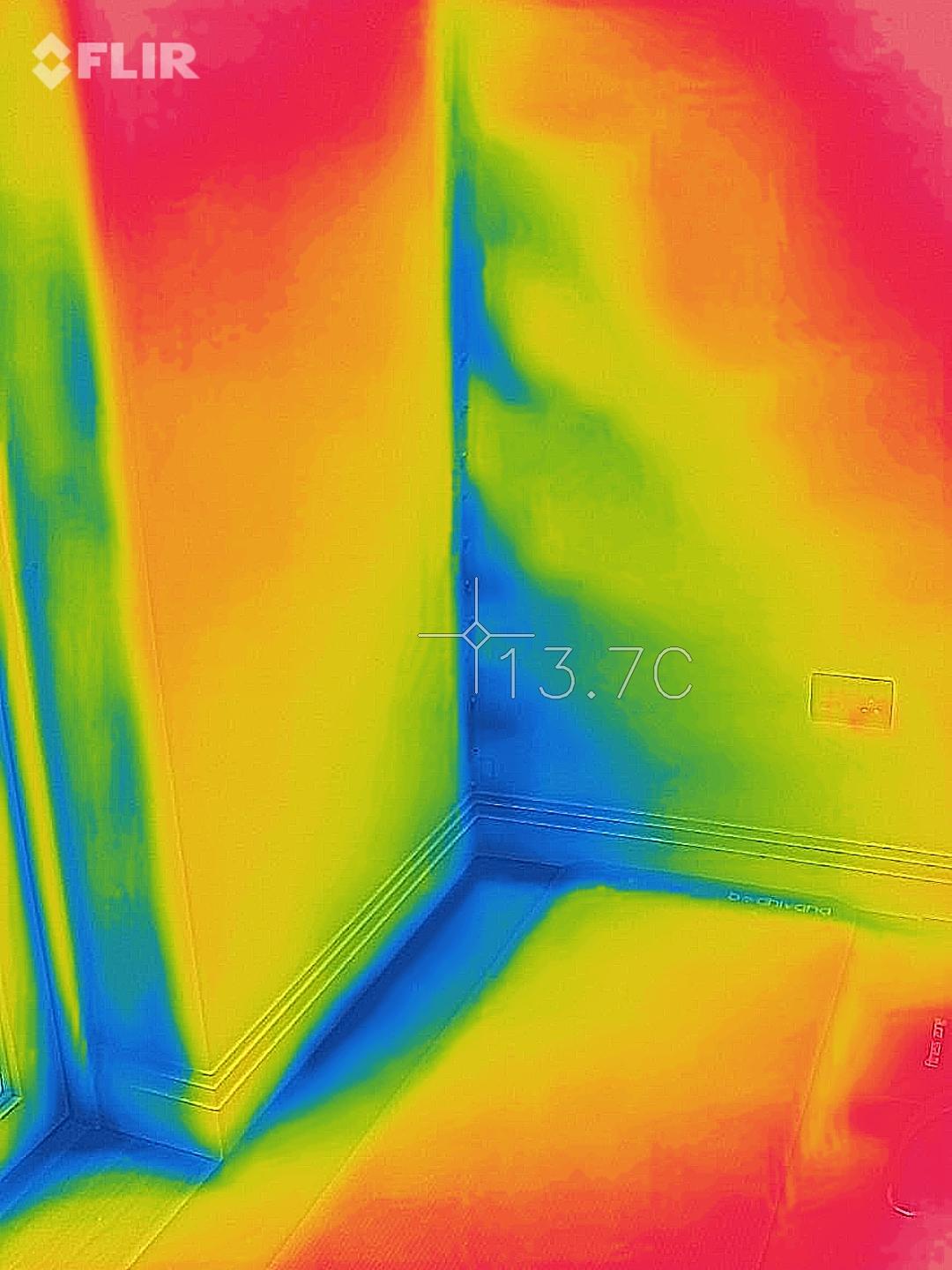
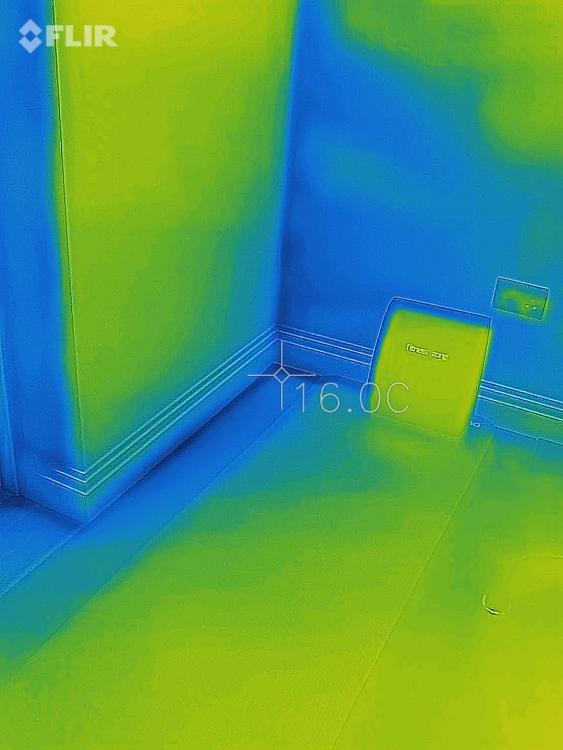
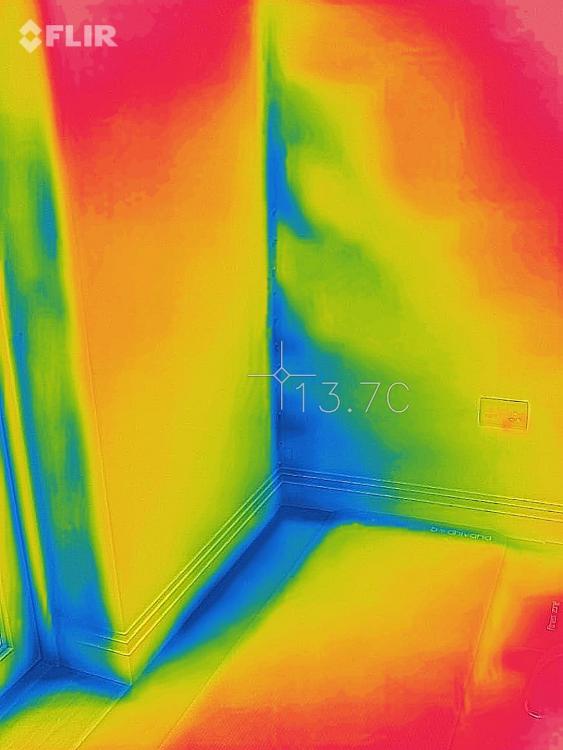
Further update today. The area around the WC is much improved, so much that I had to turn up the thermostat there. Historically I ran it 2-3C lower than the rest of the house as it was so much colder in that area that if I ran the thermostat at 21C the heating would hardly ever turn off. What is weird is even once all sealed up I could still feel a slight draught in the roof cavity. This got me thinking to the windows and is air coming in around the windows. Now my windows are sealed to the render on the outside, but thinking about it, they are still attached to the cavity behind that, so air can still get in from the cavity. Watching the windows being installed, I was going to ask for them to be taped up, but the builders put plastic sheeting around the frames and taped that up, so I thought they had air tightness sorted. I cannot remember exactly what the detailing was. You can see the plastic poking out in the picture below. Looking at it, I think the plastic is designed stop air getting into the rooms. And indeed we have no draughts anywhere. But what it does not stop is air betting behind the plasterboard. I have been investigating in the gym, as the wall is getting beaten up by gym equipment anyway. If you look at the first IR picture taken on a very cold day, you can see the window reveal is cold, the outside wall which has insulated plasterboard is warmer and then the partition wall which has plasterboard on dabs on a block wall seems have cold air getting behind it. At first I tried sealing up the corner there by pumping foam into the small cavity. This improved but did not fix things. Any I keep thinking where is the air coming from. I pulled out a spotlight and I could feel the air was moving above the ceiling. So as I am already suspicious that there is an issue around the window, I cut a hole in the window reveal What I found was immediately behind the wall I hit the green plastic sheet. This was doing its job of stopping air getting into the room. But immediately I punctured the sheet, I could feel the cold air behind it. The problem is that I think the sheet is sealed to the plasterboard in the reveal not to the block wall. Thus it lets cold air get behind the insulated plasterboard. This air can make its way up into the ceiling void and along behind the insulated board coming out behind the skirting and round the corner behind the non insulated board. I have pumped the area behind the plastic sheet with foam. If this works to stop air getting behind the plasterboard, I will have the simple but laborious job of drilling holes in the window reveals and filling them with foam. I suspect that this has a larger impact on the air tightness test than heating costs. There are no draughts anywhere from behind the plasterboard into rooms that I can feel, other than occasionally at the bottom of the skirting board. Thus the amount cold air getting into rooms under normal circumstances is small. But I am probably heating the air in the cavities constant which will be increasing my costs. When you run the air tightness test the higher pressure involved starts to draw air out under skirting and in other places that are tightly enough fitted to stop normal draughts. As an example of the lack of actual impact on heating costs, the heating has never been on in the gym shown with the cold air behind the plasterboard. There is a UFH manifold in the wardrobe and the heat it generates seems to be more than enough to keep the room warm. Indeed we usually have to open the door when we exercise. Even below 0C outside the temperature in that room stays above 20C.
-
I looked at the JS Harris heatless spreadsheet with similar U-Values to quoted and changed the internal temp from 21-23C. If you think about it, the average outside temp in the UK might be around 10C, so you have changed the temperature differential from 11C to 13C, which is an 18% increase in the differential. However, you don't have your heating on all year round. I assume that there are 7 heating months with an average outside temperature of between 5 and 6C(using Edinburgh where I am). Thus you are increasing the differential from 15C to 17C which is a 13% increase and pretty much where the calculation came out. I certainly find that I only have the heating on around 7 months of the year. Solar gain provides enough heat the rest of the year. Indeed one issue with heating to 23C is that it might increase how many days of the year you need to run the heating and I did not take that into consideration. That could add another 5-10% to the heating bill, although as discussed on other threads ASHP would be much more efficient on those days with higher outside temps. If you look at JS Harris spreadsheet, and this is somewhat design dependent, heat losses tend to largest to smallest - windows, ventilation, walls, roof floor. The sample house I have in the spreadsheet is my parents' which has a lot of glass, otherwise ventilation would probably be first. Changing the wall U-Value from 0.18 to 0.12 reduces heating requirements by less than 5% and I wouldn't get hung up about it. I would be much more concerned re air tightness in a block built house with dot and dab plasterboard. It is or certainly can be. I deliberately run the flow temps hotter than they need to be to make the system more responsive. Using a gas boiler this does not have the issues of reducing the COP that would happen with an ASHP All kinds of things go into the responsiveness of UFH - Slab thickness, flow temp, floor covering and so on. Rooms in my house with wooden floors take hours longer to warm up than tiled rooms. We have 75m screed with warms up faster than having UFH in 150mm of concrete slab. However, now that I have been in the house for a long time and experimented a lot with the heating, what I find is that the heat loss of the house is the main determinant of my gas bills. Thus I just run the heating at 21-22C all the time. It costs maybe 5% more than sometimes letting it cool down and then warm it back up again (you would sometimes benefit from a smaller temperature differential as discussed above, but the house doesn't cool down enough really to benefit from that which is what happens in an older less well insulated house), but with an offsetting gain in comfort with never having to wait for it to warm up. Thus in @Matt60's case I would probably run it at 22C all the time and it wouldn't take long to get to 23C if required. I also suspect that in real life a new better insulated house might feel warmer at 22C than an older house at 23C.
-
This seems very overthought. Most of the cost of heating a house is due to heat loss. The heat loss is driven by the temperature differential between inside and outside and the amount of insulation. Keeping a house at a constant 23C does not use much more energy than 21C, around 15%. Thus an ASHP will be more than capable of doing this. You could set the thermostat at 22C and kick it up to 23C if you wanted to warm it up. Also a house with UFH generally feels warmer at a lower air temperature than a house without it as the heat is closer to the floor than the ceiling. The only time you might worry about it being slow to warm up is if you have been away on holiday and the whole house has cooled down. Then you need to warm up the fabric of the house as well as the air inside it. We have a gas boiler, but only run the UFH flow at 38-42C and I can actually watch a room heating up on the Heatmiser charts when the heating kicks in. Actually the thing that has most impact on the speed of a room heating up is the floor covering. Tiled rooms heat up in a fraction of the time fo the rooms with wooden floors where I need to run the flow at a higher temp. Using PV for heating is a non starter as stated and an ASHP is going to be a lot cheaper to run than direct electrical heating. You will also get RHI payments if it is a new build, although time is running out for these.
-
The interior area of that house is around 135 sq metres. Once something has been approved it should be easier to get something else approved especially if it is smaller. There may be more of an issue if they care about specifically how it looks and not just the size, siting etc. I know there are a few people saying they have build costs under £1000 a square metre, but generally they are people with some kind of trade experience, willing to do lots of work themselves, willing to project manage and willing to take a very long time to build their houses because of that. If you just paid a contractor to build the house you'd spend between £1500 and £2000 a square metre. If you project manage and take out the contractor's margin and spend more time looking for the best quote on everything you could probably save around 15%. Call it £1250 to £1700 a square metre. Then you can probably save 2-4% (very rough numbers dependent on all kinds of factors) for each interior trade you can do yourself, so decorating, plumbing, electrics, joinery etc. Also tiling and kitchen fitting can be pretty expensive. If you did all of them you could get down towards £1000 a square metre, but your house is going to take a lot longer to build. I get the impression that you are in the less experienced camp where costs would be at the higher end.
-
This does sound similar to what I had and changing the mixer valve fixed it. They didn't see how it could be the mixer valve which was only a year old and checked pressure etc but eventually they just replaced the valve. Some days the water would flow correctly or at some settings on the mixer valve or simply by changing the setting on the mixer valve then it would stop flowing again a little later. This is exactly how mine acted, changing the temperature on the mixer valve should have no impact on the flow and make no noise unless some issue with the valve is stopping the water flowing correctly. By turning the pump up to maximum you could force some water through the loops and get a little heat. I have 4 manifolds and all the other flow at 3lmin immediately on opening. Changing the mixer valve is a quick and relatively cheap job. As well to do this as pay for hours messing around. They go on the last spare port at the end of the manifold usually. You don't have a spare but I think they can fit one on the end.
-
Just found this thread. I had an issue 2 years ago on one of my manifolds. Some rooms weren't getting warm and it wasn't obvious why. There was a problem with the mixer valve where water only flowed properly when it was set to a very specific temperature. As you turned the mixer valve up and down the pipes would make hissing and gurgling noises and the flow would start again. Then it might stop randomly. Then installers said it was very unusual for a mixer valve to fail, but just replaced it and it has been fine since then. The fact you said that the flow varies may mean it is something similar. It may of course be something else entirely. It is easy to check, when the heating is calling for heat and the pump is running, turn the mixer valve up and down and see if the flow changes depending on the setting on the valve. My flow gauges would bounce up and down when I did this on the broken mixer.
-
Cars have been getting heavier, faster, more powerful and slightly more economical for a long time. Loads of relatively normal cars do 0-60 in under 6 seconds now. I remember lusting over the crazy performance of the Lotus Carlton as a teenager. My electric SUV now has similar performance despite being almost 50% heavier. It also does the equivalent of roughly 90MPG compared to low 20s.
-
I think a lot of people with high specs and doing no work themselves are coming in at around £2000 a square metre. However, looking at cost estimators and knowing that people don't need the highest spec possible £1750 might be a reasonable figure to use nowadays. It also depends what you are including in that figure. You can easily spend 5% of the build cost on landscaping. A big driveway alone can be very expensive. Architects and other professional fees can run as high as 10% of the cost. Plumbing and electrics labour won't be that big a part of the build costs, I'd guess around 3-4% but every saving helps. Joinery would be more if they could put in the plasterboard etc, but that's a lot of work to be doing unpaid. If they simply gave you a good price again you are maybe looking at a couple of percent saving. This would also depend a bit on your build method.
-
That’s the kind of car where you think you’d probably just be able to drive right over it.
-
You can probably add around 200kg to a similar sized ICE car for the batteries. My Model X weighs in at around 2400KG. However, because the batteries are so low down, it handles quite similarly to something like a Q7 even though that is 3-400KG lighter. I used to have a Range Rover Sport, officially they are around 2150kg, but people take them to weigh bridges and they seem to be much heavier. Land Rovers are the only cars I have seen that consistently accelerate much more slowly than their quoted performance figures. Model 3s are relatively light for an electric car which considerably helps their performance and range.
-
underfloor heating Underfloor heating installation opinions on work quality
AliG replied to Pbb's topic in Introduce Yourself
I had exactly this done and it was still poor. I had to turn the flow up to 60C to heat the room (not a such problem when you have radiators running that hot anyway)and loads of the tiles cracked. Personally I think the problem is that suspended timber floors with air blowing under them are not a great starting point for a UFH system. -
We are going to have an aluminium band around the bottom of the house with the render/renderboard above it So no render at ground level. Our house is the same, the slab is at ground level, but we have a stone base course then the render above it.
-
Sounds like nonsense to me. It doesn't get much heavier than my Tesla and it has absolutely no impact on the driveway. Mine still looks almost as good as new. I have found some small tufts of grass where seeds must've fallen into it, but other than that it looks clean.
-
Yes, I just found this standard detail from the Kore website, it wasn't shown on our plans. The house will differ in being at ground level, not 150mm above and we aren't sure if that causes an issue as normally a DPC would wrap over a brick in the external skin raising it off the ground, but we don't have a brick course.
-
Thanks @jack for some reason it wasn't shown on the foundation drawings and it might all be sorted once we speak to them. Are your upstands above ground level? We have basically this build, but our footpath level is level with the slab.

-
Hi, We are waiting to hear back from MBC, but thought I would enquire to see if anyone has this foundation build up. We are using the MBC/Kore passive foundation. But we want the slab level to be at ground level which makes access much easier. The drawings we have at the moment do not show a DPC and there is no standard drawing from Kore for this. Does anyone have a ground level EPS slab with timber frame and if so what detail was used for the DPC?
-
I think some people have done this but sounds like hard work to me. Here are various formers that are 1800mm, a lot less choices if you insist on a linear drain. I think that may be too constraining. https://www.wetrooms-online.com/results/?custom_f_138[0]=313830306d6d&custom_f_138[1]=313835306d6d Most say they need support so you couldn't put them on the joists, I think one of them says support not needed. I guess you could support them between the joists?
-
We usually stick to Siemens appliances which have been quite reliable and aren’t crazy expensive. No scale in our water! Why integrated washer/dryer? Free standing ones tend to be better and better value. I would avoid them unless you absolutely have to have them. In our laundry room they made us 670mm cabinets and the free standing washer and dryer just sit inside them. But tbh the doors are a nuisance and if they weren’t already there I wouldn’t have them. If you have a heat pump dryer it normally has an air intake so you can’t shut the door when it is running.
-
We used to have a car and when we parked it close to a supermarket the remote control to unlock it would not work. The only thing I could see that might affect it was a light tube along the edge of the store, but I don''t know why it would affect the remote which worked on radio. Maybe the car passing by has night vision and this could affect the PIR if it sends out infra red? As we are talking about weird light behaviour, we haven PIR light near to the boiler flue and the steam sets it off all the time. I am about to replace it with a microwave one.
-
You just clip the connector shown to the end of the strip and then the two wires connect to the power supply. It seems to have a plug on the other end that would fit a specific (syndeo) power supply, but you can cut that off and connect to any power supply with the right specs.