AliG
-
Posts
3211 -
Joined
-
Last visited
-
Days Won
11
Everything posted by AliG
-
We had 30mm granite before and now we have 20mm granite. Pricing up the new place 20mm Silestone is around 20% cheaper. I think it looks sleeker and more modern also so it is a win win. Another good way to say is eliminate the drainage grooves. We have them today and they just get full of dirt and need to be constantly cleaned. Most stuff goes in the dishwasher and you can always get a rack or lay down a dishtowel if you are drying something. Again it looks a lot neater. You could save £200.
-
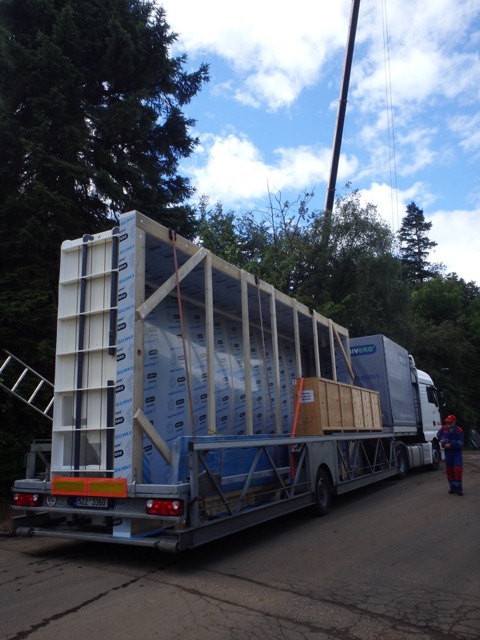
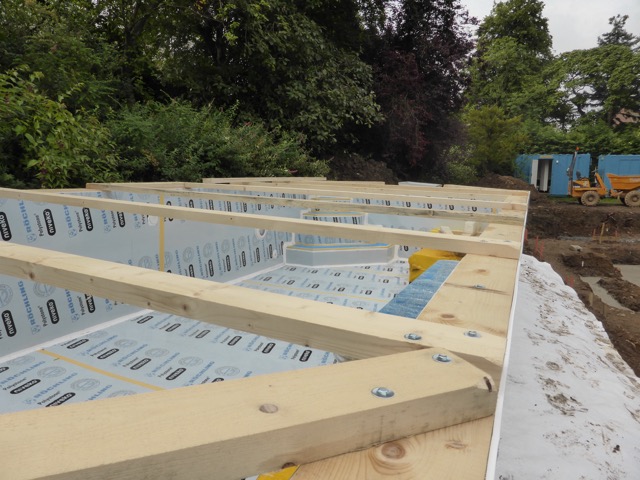
The pool was delivered this week. We have to store it on site for a few weeks until the slab is ready for it.

-
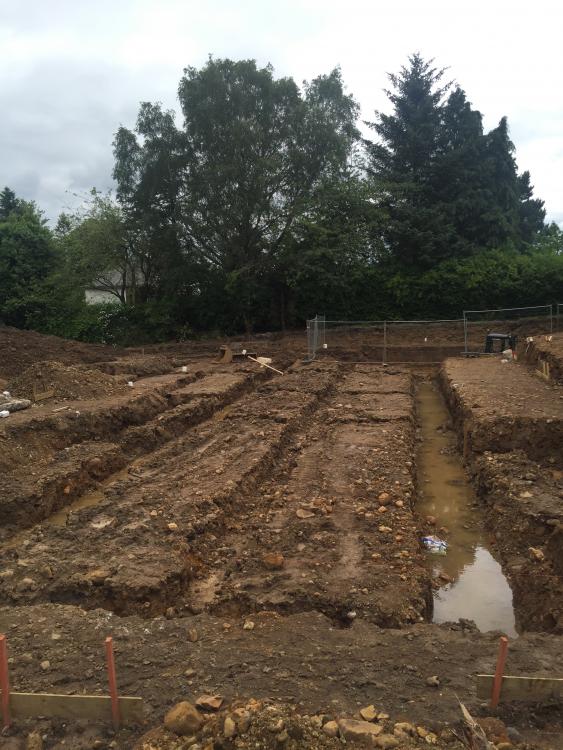
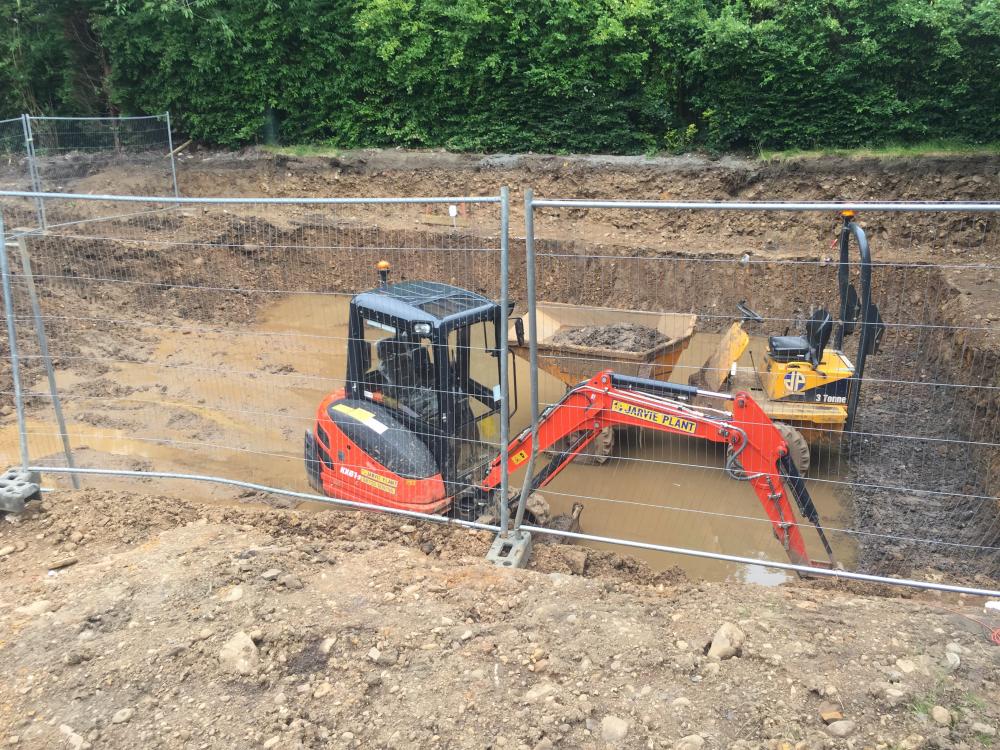
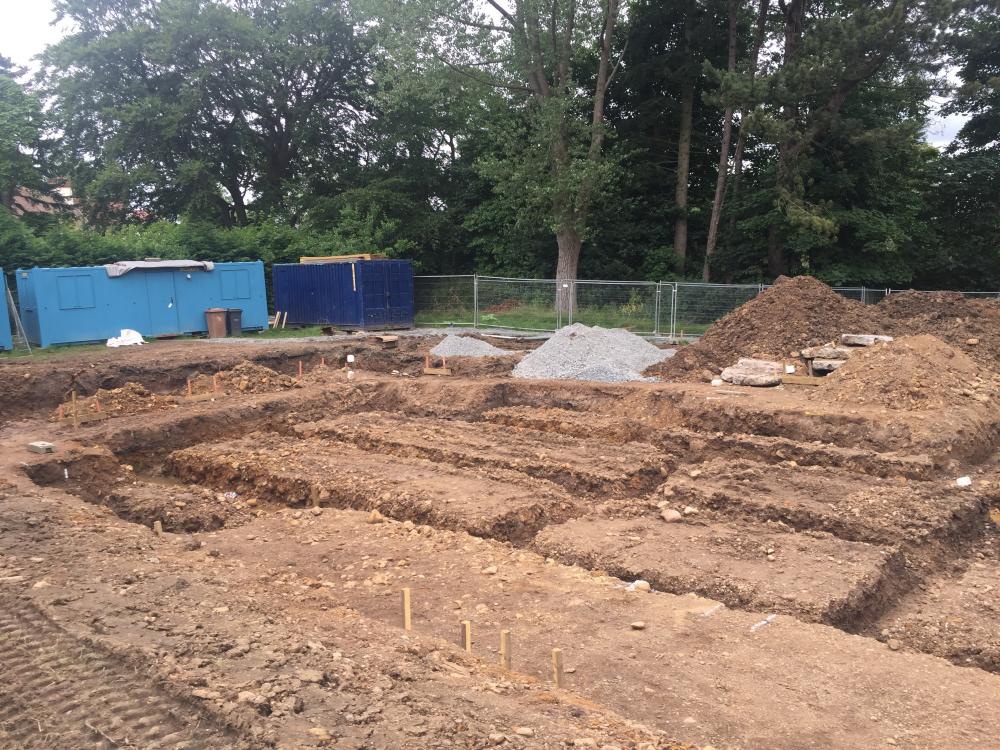
Work is finally progressing. The building warrant was only finalised a couple of weeks ago. Between that and the builder massively underestimating the amount of earth to be removed we are 5 weeks behind. Strip foundations are dug and area of the house has been flattened.
-
My wife waxes and wanes on whether she likes polished concrete or porcelain tiles. Ignoring that for a second, what is the best kind of floor for a polished finish? Our current spec is a concrete slab, 100mm celotex, 80mm sand and cement screed allowing 25mm for floor finishes above. There is UFH in the screed. My calculation is that I am looking a roughly £120 a square meters for the screed, tiling and fitting, each is around £40 a square metre. Presumably I could get a polished concrete floor for a similar price and I like the idea of no grout to catch dirt. But I see so many ways of making a polished concrete floor. What would you recommend? 100mm of concrete that is polished, or can you polish a screed or a screed floor with a polished surface. There seem to be so many ways to do it? We aren't going for a liquid screed as the architect and builder feel sand/cement is easier to manage when there are showers etc to work around. Also there is a swimming pool. I don't think these issues exist with concrete rather than screed but there seem almost too many options to look at.
-
Just today I noticed that my architect had specified Celotex FF4000 floor insulation instead of GA4000. The U-Value is the same, the FF4000 has slightly better compressive strength than GA4000 and supposedly a different structure to make UFH clips stick into it better. However, the GA4000 can be used just fine for UFH. I thought I had already changed it to GA4000 and had missed it. Across my 500sq metre ground floor the price difference is close to £4000. In the initial costings for my house, Kingspan insulation was the most expensive component of the entire build! By changing to Celotex, PIR vs PUR etc I have cut the cost by tens of thousands of pounds, whilst the insulation levels are barely changed. CC, two layers of PIR is fine, however, if you are paying a builder to do the job they will charge you twice for labour. In fairness the labour to lay floor insulation is pretty low , but still you'd get much better value for money using a single layer solution.
-
Unless there is a specific reason for it, it seems like an unnecessarily expensive solution. You may be stuck with it now though as it would alter the levels. I told my architect that i wanted a well insulated house and he specified the most expensive insulation solutions. I then went through and changed many of them as often reducing the U-Value by 0.01 or 0.02 resulted in a saving of thousands of pounds and the specification was not cost effective. For example he had specified Kingspan K8 which is almost twice the price of Celotex CW4000 for roughly 5% better U-Value.
-
Hi Vijay, The Celotex U-Value calculator gives 0.09 U-Value for 200mm of XR4000. Using 2 layers of insulation will considerably increase the cost due to extra labour for little benefit. Are you using 2 layers as FF4000 is the insulation that Celotex recommend for UFH? As I understand it, it is fine to put UFH on the XR4000 insulation. The FF4000 is harder so it is easier to install the UFH but I don't think it is necessary.
-
A question about describing triple glazed units
AliG replied to ProDave's topic in Windows & Glazing
That's the glass I have ordered up Dave, it is 6.4mm laminated glass which is exactly as John describes it. Some manufacturers use 6.8mm laminated glass which has a thicker layer of plastic in the middle. I would expect a triple glazed stained glass window to have 4mm toughened either side of the stained panel, although this may only be strictly necessary if the window needs to be safety glass for building regs, this is the normal make up for a triple glazed window. The 6.4mm laminated glass is a lot harder for burglars to get through. It also improves sound transmission as the different thicknesses of glass have different resonance properties. -
Googling this suggests that type 1 will compact down around 20-25% from the original depth. I don't think you could get 150-160mm down to 100m. People suggested to lay 130mm if you wanted to compact down to 100mm.
-
Heat loss and running cost
AliG replied to Jeremy Harris's topic in Energy Efficient & Sustainable Design Concepts
Hi Jeremy, I hate disagreeing on line but I wanted to bring some other points to bear. No one would disagree that more insulation will save money and the savings are not linear due to the incidental heating of electrical items and occupants as well as solar gain. There is a particularly large saving right at the more extreme point if you can avoid installing heating systems at all. However, I think it is better to think in terms of cost effectiveness or the return on the investment in extra insulation , thus there is a point where the costs of more insulation outweigh the benefits. A few things effect this. 1. A quick look on Uswitch gave me a lowest cost for electricity of 8p/kwh and for gas of 2.4p per kWh. Most people use gas to heat their homes. Assuming even 4p per kWh to take into account VAT, boiler efficiency and longer term gas price volatility, in your example the heating cost would fall from 56p a day to 12p a day. Now the ratio is still the same, the more insulated house only has circa 22% of the heating cost of the less insulated house, but the heating cost per year of the less well insulated house would be circa £200 if the temperature was 5C all year round. The heating would not be needed for half the year so the heating cost would be somewhat lower. The other house may have a cost of only a few pounds as it will have lower costs and less days of heating, but the £100-200 saving may not be great relative to the cost of the extra insulation. It should be noted, however, that if you can get the heating requirement down to the point where you need no gas at all and no heating system then you could save thousands of pounds in capital costs and gas standing charges which may run to around £100 per year. 2. The 100 square metre floor area you have used is roughly the UK average house size, but this includes flats etc. The average detached house is roughly 150 square metres and the average self build is probably larger, say 200 square metres. Thus incidental heating is likely to account for a lower percentage of the heating costs than you have allowed. 3. When the discussion comes up on the site it usually centres around changing one element of the build such as the walls or roof. If I look at the calculation for my house, the walls only account for 20% of the heat loss, this could vary considerably house by house. I have to note that I have used Jeremy's heat loss calculator to figure this out, so thanks for that Jeremy. The triple glazed windows, which are not excessively large in area by self build standards and have around a 0.8 U value account for around 40% of the heat loss, the roof another 20%, then floor and ventilation around 10% each. I would say it is more appropriate to look at individual elements and the cost benefit of improving each. Moving from double glazed to triple glazed windows may save more than moving from 0.2 U value to 0.1 U value walls and may cost less. A lot depends on the design of a house, the materials it is constructed from etc. In the example of a gas heated house of 100 square metres floor area, the saving of changing the wall U-Value from 0.2 to 0.1 would probably be less than £50 a year. The point I wanted to make is yes, more insulation saves money and yes it is non linear. But, if people are simply looking at cost effectiveness, and many people are budget constrained, then the costs may still outweigh the savings. There may of course be other benefits in terms of the comfort of the house and some people may be more worried about the environmental impact of their house than costs. -
Xtwostore.com for European plumbing pricing
AliG replied to AliG's topic in Bathrooms, Ensuites & Wetrooms
Thanks, was thinking of using them but the reviews suggest that they maybe should be avoided. I will edit the first post. -
Edit: Fallingditch has helpfully found some reviews. If you Google "xTWO, Gießener Str. 42, 35410 Hungen, Germany" you will see a lot of complaints re non delivery of items and never answering phone calls. Whilst researching plumbing as I was commenting on the concealed cistern site I came across this site- http://www.xtwostore.com They seem to be a German retailer set up to sell in GBP and deliver here with the site in English. Some of the prices are fantastic. Would be good to know if anyone has used them.
-
Toilet all installed with no access through the tiles. I will post pics next weekend when I get home. I noticed that with use the mastic around the toilet has split as it has moved slightly. I suspect that you should maybe mastic it with someone sitting on it. I noticed on the pics you posted Nick that there isn't any mastic around the toilets, had it just not been done yet. The suppliers catalogue has a piece that fits between the toilet and the tiles (called an accoustic/isolation shield) the salesperson said not to bother with it and the fitters would just use mastic, but I wonder if it is actually needed to get a better fit.
-
I really wouldn't single out road tax specifically when looking at the running costs of a vehicle. Unless you buy a very cheap vehicle and drive a very low mileage it will only be a modest percentage of the running costs other than maybe the L and M bands at £500+ If you spend £25,000 second hand you are likely looking at around £3-4000 a year in depreciation, £1500 a year for fuel assuming 15,000 miles at 30MPG, £500 for servicing and warranty/repair. Call it £5000 a year. A couple of hundred extra road tax may well be offset by lower other figures. I think you'd be better to look at the total cost. Admittedly, if the figures are honest, higher road tax may suggest higher fuel consumption also so it may suggest higher costs in total. Unless you drive a very high mileage, however, depreciation might well be the highest cost. Again though there can be an association between running costs and depreciation. If you keep a car until it is 10+ years old though it will lose almost all of its value, you can almost assume that the whole cost will be depreciation. If you buy a sub £10000 car and drive low miles then it will be fair to say that car tax would be a higher percentage of running costs, but I would still look at them as a whole. Vehicle A - Nissan leaf seems the obvious choice for a used ZEV vehicle at reasonable cost. Vehicle B - Towing isn't my forte but knowing the budget would probably help people. To tow over 2000kg at reasonable cost your 4x4 choices are probably Kia Sorento or Hyundai Santa Fe. The other choice is the various Japanese pick ups. Unless you really need two cars it would be likely cheaper to just buy vehicle B and pay the fuel costs but reduce the outlay on depreciation and maintenance.
-
600mm is probably fine for an occasional use door as seen above. Alternatively you could turn then into triple panels of 3x800mm with a single panel door which may be cheaper? You'd maybe want to adjust other windows to match.
-
I let some friends who are hard up stay in the house I am knocking down for a year as it helped them out and they paid the council tax and utility bills. One thing that isn't clear is how long does a house have to be occupied before the clock resets for paying double council tax. The Highland Council website says that a marketed property gets a 10% discount for two years and this can be extended to three years if you can persuade them to do so. If you rent it out for six months so that someone is paying council tax, does the two/three year period reset. It may be worth renting it out cheaply to someone you know so that they cover council tax, standing charges, keeps the heating on in winter etc. The whole difficulty to sell large houses is becoming bizarre. In Edinburgh new 3 bedroom flats are approaching the price of new 5 bed houses. Large houses are becoming very cheap. Worries about independence, higher rate tax, local income tax, the new stamp duty rules etc are all having an effect. In particular the new stamp duty rules are ridiculously punitive for larger houses.
-
Such a tough one Dave. By the time you pay tax, agents fees and costs you'll be lucky to clear 5,000 a year on renting out the house. It won't make much of a dent in finishing the new place. The two advatanges are, as suggested, you could lever up the rent and then use that to finish the new house. But that is risky if you couldn't cover the mortgage during a void period. The other advantage is I think it would restart the clock for the place being empty and having to pay council tax. If I was you I would look into it, but wait until after the Brexit vote. I can see in Edinburgh it is killing the market. As long as the Nats say that they might use an out vote to hold a second referendum it creates massive uncertainty. If there is no out vote and my suspicion is that people are scared of change so there won't be, then I think the Scottish market will pick up, but it require an end to referendum talk. I really think that many people have no idea of the effects of uncertainty in the economy. After the recession, I coined a term at work, "it was bad, but at least it was clearly bad". People are more able to deal with a recession when they know what is going on than the uncertainty leading up to it. This uncertainty really has to be put to bed one way or another. It hurts real people with real jobs. You could look into what you have to do to rent out as regards registering etc in the meantime. Could you look into Airbnb in the meantime. I am not sure whether the regs would be more relaxed on renting it on a casual basis and as has been stated you might make almost as much money in the holiday season as you would through a long term rental.
-
I believe you Nick! They had me wavering by constantly asking. I will tell them tomorrow, definitely no access.
-
I feel a lot better hearing from someone with real life experience. Easy for the supplier to say not to worry. We currently have really cheap concealed cisterns boxed in in formica cabinets. They have leaked numerous times requiring me to get inside the cabinet and fix them. Three or four times they have leaked from washers where the ball(isolator) valve is connected. I don't know if the ball valves have been incorrectly fitted. As far as I can see these new ones have the isolator inside the cistern. The weak point seems to be the connection of the metal isolator valve to the plastic tail on the cistern which requires a washer. Sorry, I think I asked about this before, but I had the tiler ask me yesterday and the joiner ask me today if I was sure I didn't want access.
-
On the topic of concealed cisterns, I am just having one put in this week and the new house will have seven. The suppliers (Porcelanosa) are adamant that you don't have to worry about just building the cistern into the bulkhead with the only access through the flush plate. My current bathroom fitter is very nervous of this and wants to create an access. Looking around, it does seem that these are often built into walls with no access, do people think this is a wise decision?
-
That site is a great find. Try as I might though, they don't seem to have the 8cm deep cistern, only the standard 12cm. Depends on the depth of your walls. The 8cm is quite a bit more expensive on the UK site I looked at. I am a bit limited in my ability to price compare as I am on Virgineastcoast wifi at the moment!
-
That cistern is for attaching to a solid wall. When you say the frame adds extra width, do you mean width across the cistern or depth? The frames are designed to fit between 600mm stud work. This is the one for a stud wall, unfortunately they are more expensive. It is still only 8cm deep. There are cheaper makes available but most people on here would probably recommend paying for a higher quality product like this. http://www.victorianplumbing.co.uk/geberit-slimline-114cm-wall-hung-wc-frame-with-sigma-8cm-cistern.aspx?campaign=googlebase&gclid=CJzoqMSpgc0CFRITGwodCEkE5Q
-
The tank in store one or two and the boiler in the boiler room doesn't look disastrous. One issue I would watch is noise, maybe someone with more plumbing expertise can help on this. In my current house when the boiler fires up I am never quite sure if I am just hearing the boiler or if I am hearing the water flowing in the ceiling between the boiler on the ground floor and the tank upstairs. No doubt the developers who built my current house never thought to try and sound proof the pipework. So having the boiler in the boiler room would mean you can't hear it running but perhaps you would have to make sure you couldn't hear the water above you running to the tank. Maybe it's more just a matter of detailing and if done properly you don't have to worry. I should add I am very sensitive to this kind of noise, other people might not notice it.
-
18kVA is an 80 amp supply. 80 amps x 230V = 18kVA. It is actually a standard 100A supply with an 80A fuse I believe. If you think that you won't ever use more than 80A at one time then that will be fine.
-
I initially told my builder just to apply for a standard one phase (100A) supply. Then it dawned on me that with all the electrics in the house and the likelihood that I will have an electric car at some point in the future it probably wasn't enough. It all depends on the electrical devices you will have in the house and the likelihood of them all running at the same time. One of the big theoretical draws is an induction hob. They can require a 50A fuse although to use this much power they would need to be running 5 rings on boost simultaneously which would seem extremely unlikely. An oven can need up to 30A Then you have an ASHP, that might be 10KW so need a 40A supply. Then what would really push you over the edge is charging an electric car which would need 40A also. Now it might be that you can manage these things so that you don't run them all together, but it doesn't seem that unlikely a scenario. The standard 100A supply came along before induction hobs, ASHPs and electric cars would have been considered mainstream items. I'd be interested in other people's views. Once i realised how likely it was that I might be charging a car up within the next 10 years then a three phase (300A) supply seemed the way to go. I know you can charge them up at night when you aren't using anything else but there are always unexpected situations. By the looks of things, a new three phase supply might cost around 2000 versus 1000 for a single phase supply. However, Dave correctly points out there is a risk that you get the bill for increasing the size of the local transformer which could add considerably to the cost. A lot depends on your individual use.