AliG
-
Posts
3211 -
Joined
-
Last visited
-
Days Won
11
Everything posted by AliG
-
The upper floors are suspended concrete so no joists. I assume they are mortared onto the blockwork and the large coat also goes across the joint, but I will be checking! I was up asking the supervisor about the insulation this morning. He said that it is held pretty tight by the ties. I think I will see how it starts to go up and then see if they need to do any more than their standard job. At least there is no hiding it if they build the inner leaf first.
-
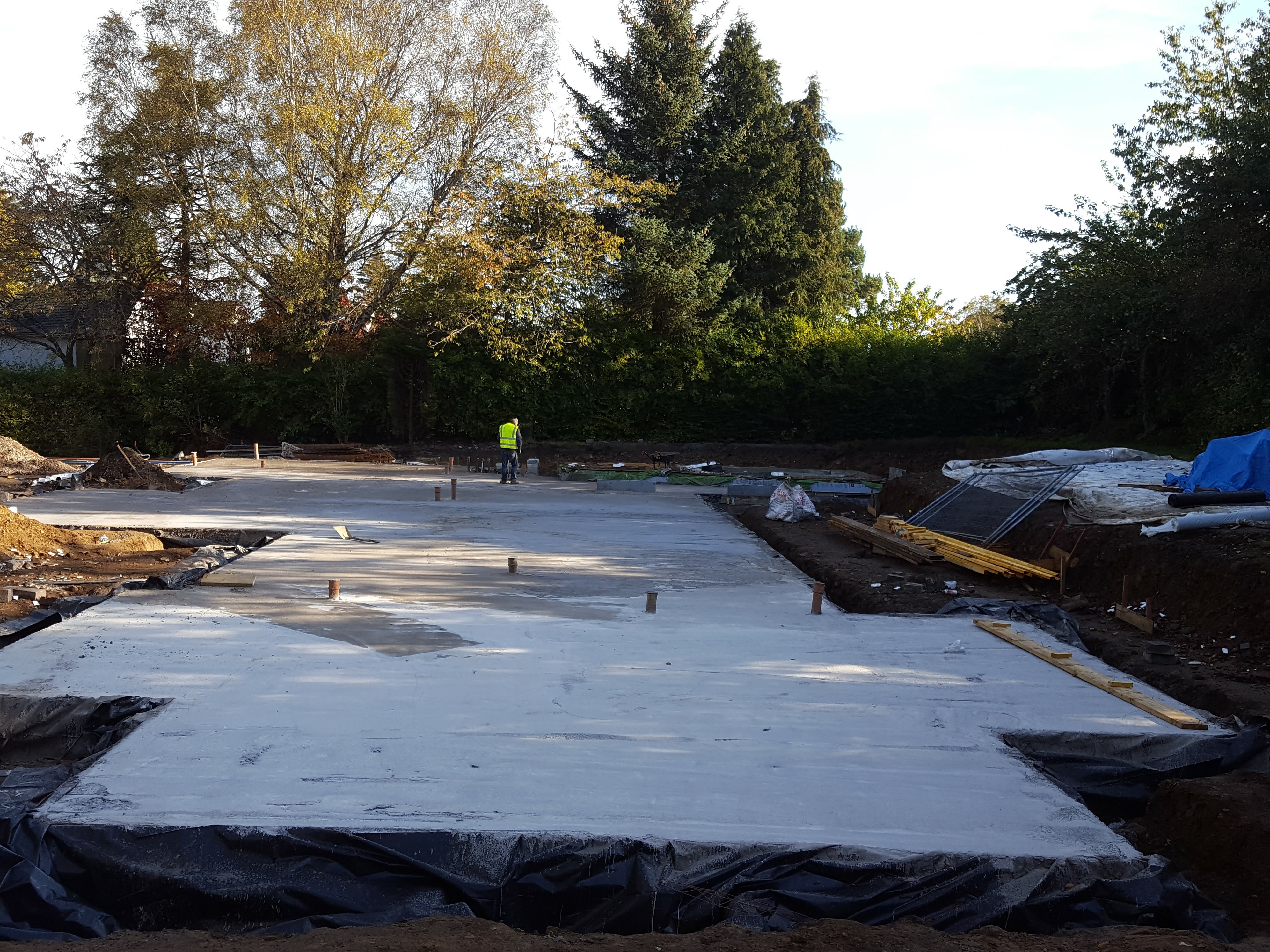
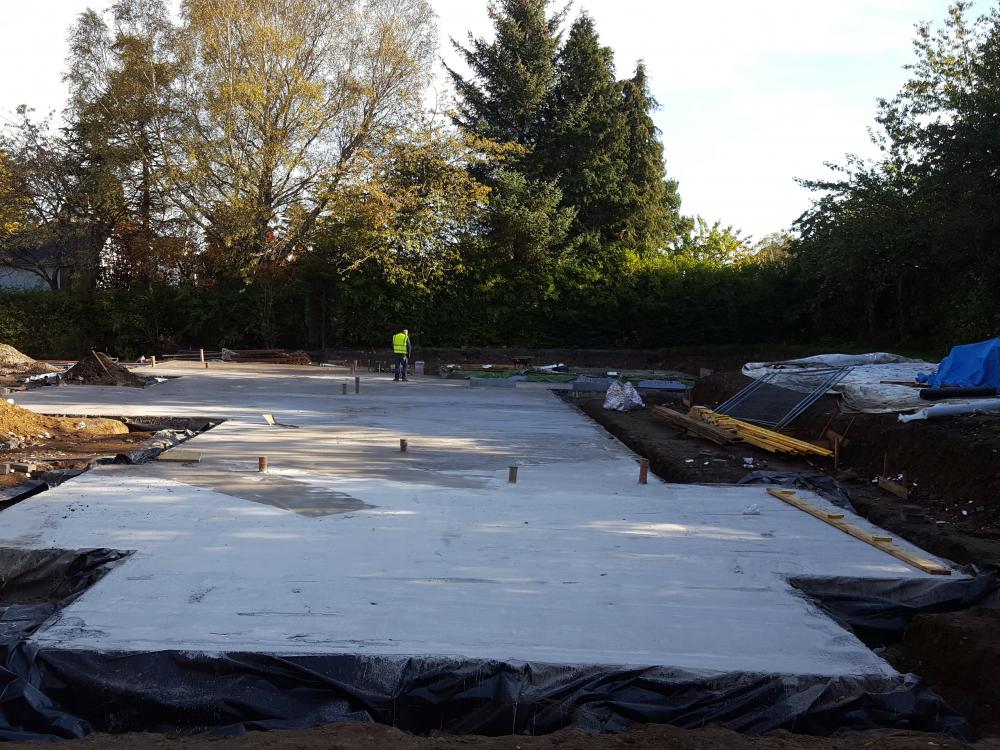
The ground floor covers 504 square metres! We were insistent on having all the most frequently used rooms downstairs, plus a bedroom just in case for when we get older. The last 70 square metres for the garage isn't down in that pic, it goes at the top left. The Porotherm guys have been up to demonstrate and the architect said it flew up and it was so easy to get it perfectly straight. I am excited to be seeing some walls in a couple of weeks.
-
White goods manufacturers are going mad for internet connected devices. I really can't see the point. Siemens(Bosch really)make ovens, a dishwasher and washing machines that connect to the internet. No doubt fridges will be along soon. I really a struggle to see any useful applications for this meanwhile they add to the cost and complication of the devices. Yes you can heat up the oven on your way home, but it only takes 5 minutes to heat up anyway. As for the dishwasher and washing machine I guess they can send you a message that they are done, but they tell you how long they will run for and how often do you need to know exactly when they are finished. You could turn them on remotely, but that's a pointless feature. Why would I fill up the dishwasher and put in the detergent, but not turn it on while I was there. Some things benefit from remote connections. The house takes a lot longer to heat up than the oven so remote heating controls make sense, or remote security controls so you can check the house while you are away. But sometimes it just seems like pointless technology for the sake of it. Cars suffer from the same thing too now, like Tesla's electric front doors on the Model X, a feature that creates more problems than it solves.
-
The slab is down (apart from the garage). Now we can start on the walls. I will be on site tomorrow. I feel I should lay a few blocks myself. Then as I do when I help my wife cook, I can claim I made it myself
-
I just came across this, it was posted on the other forum 5 years ago. Very interesting report on actual performance of walls and roofs versus specified performance. Many discrepancies although most of the largest discrepancies were due to outrageously bad workmanship such as not putting any insulation in or putting it in after the wall was completed. I notice they mention a sheltered housing project that was specified with 40mm of PUR but built with 20mm of EPS. When they examined the wall they also found there were no wall ties. Perhaps it was built by the same people who built PFI schools in Scotland. http://projects.bre.co.uk/uvalues/U-values.pdf I was looking at it as my walls are about to go up. They are partial fill with 100mm of Celotex. Plus 37.5mm insulated plasterboard on the inside. They will build the internal leaf first which should make installation of the Celotex in the cavity easier. I was trying to think if there was anything I could do to ensure it performs as expected other than telling them to be tidy and make sure it is hard against the inner leaf. I was thinking of taping the joints, but as there will be no ventilation into the cavity I don't really see wind washing being a big issue. The outside face will be rendered and the inside face will have a parge coat so air tightness should be pretty good. As the walls are Porotherm which has only 1mm of mortar and a much lower tolerance in block sizes (+/- 0.5mm) it should be easier to fit the Celotex neatly and tightly to the blockwork.
-
Same here, my builder priced up FF instead of XR due to UFH. It is way more expensive and unnecessary. Just reread your post, your Xtratherm prices are v low. I think that's your best bet.
-
Similar to my roof. It seems one of the easier places to achieve a good U-Value without it affecting the design. Using the roof space shouldn't be an issue, indeed insulation between rafters lends itself much more easily to using the space.
-
The roof was one one of the things that made my ICF quote really expensive. I just got it out again. The quote was £150k for just EPS panels, no steel, battens etc. It is more than 50% more than the roof I am building which has a better U-Value. Actually looking back at the ICF quote, the roof, foundations and walls all cost around 50% more than what I am doing now. They also had very poor U-Values. The EPS used inICF systems has a lot worse R-Value than PIR insulation and the walls have to be very thick to get a 0.15 U-Value, probably similar to my 420mm thick walls.
-
The concrete upper floors haven't come in with final quotes yet but are looking around £50 a square metre, hopefully less once the quotes are in. But then you have the extra costs as the ceiling below has to be put on straps, the extra height meant I had more spoil removal from the site etc. I didn't ever price up a posi-joist floor but it is possibly around half the price. Also I wanted under floor heating up the stairs, I am told this is still possible posi-joists, but it is a lot simpler on the concrete floor. I believe that SIP roofs are expensive. My roof is made of small trusses and some straight rafters. The big cost is the PIR insulation. The original quote was astronomical using Kingspan. I changed to Celotex as they make 200mm insulation in one piece which can be cut between rafters. However, I am hoping to use 220mm Knauf Omnifit Stud plus insulated plasterboard underneath. It does not give quite as good a U-Value as Celotex, but is easier to fit and better from a noise and air tightness point of view, plus around a third cheaper again. I can't guarantee I am using it as so far it has proven almost impossible to buy in the UK despite being heavily advertised by Knauf.
-
I have Bison hollowcore floors in my current house and believe that I will be using the same ones in the new house. They haven't been ordered yet. You give them the plans and the come precut to size and just sit on top of the blockwork. They are absolutely fantastic, the kids can run around upstairs and you can't hear or feel anything. The downsides are they are more expensive and they are a lot thicker as you cannot run services inside them. I have over 400mm between the ground and first floor. 200mm slabs, plus 100mm below and 110mm of insulation and screed above. Partly that is due to some 7m spans. If the max span was 6m they would use 150mm. Also I have ended up with a very thick foundation slab due to the weight, at least that is what the SE said, I didn't go into the details. The internal ground and many of the first floor walls are blockwork as I have a second floor which is also concrete. The SE ended up specifying a 200mm thick floorslab. 150mm of full fill polystyrene beads is only going to give a U-Value of around 0.2. It would maybe fall to around 0.17 with aerated blocks. You would then need internal insulation to get down to 0.15. I am using 100mm of Celotex CW4000 in a 150mm cavity and 25mm of internal insulation to get to 0.15 U-Value with Porotherm walls. The U-Value could be similar or better with lightweight blocks. You can also make the internal insulation thicker if you want a better U-Value. I did briefly look into full fill with polystyrene beads. It wasn't clear if building control would allow it in Scotland. Full fill cavities are generally not allowed up here due to driving rain, you would probably have to persuade them it was not an issue, but it would probably be fine in England. I guess the point is that you can achieve the kind of 0.15 U-Value you are looking for with a blockwork cavity wall and insulation and it is probably the cheapest and most substantial feeling building method. When looking at insulation the walls sometimes don't make up that high a percentage of the outside envelope of the house. You should balance it with the roof, windows and floor. Personally I felt at 0.15 U-Value on the walls I could get better bang for my buck elsewhere. The roof is often the easiest place to gain insulation as unless you have a height restriction you can get a lot of insulation in there and achieve low U-Values relatively cheaply. Air tightness also often benefits heating costs more than U-Value especially in a larger house as you plan.
-
I think a lot depends on who you are using to do the build both architect and builder and what they are used to working with. I really wanted to do ICF, my architect had never used it but I persuaded him to try it. But then I couldn't find a reasonable quote to build it. It is advertised as a cheaper build but that wasn't the case when I looked into it. In Scotland most self builds today seem to be SIPs, in England I am not so sure, maybe they are still mainly brick and block and as has been said that is probably the cheapest method. The design of the house also comes into it. I was going to use SIPs after the ICF quote but the SE said that the spans were large and it would end up being full of steelwork so we went with Porotherm blocks. These are a thin joint block system which offers modestly better insulation, lightweight aircrete blocks are similar. In terms of insulation, you can get a good wall U-Value with any method. Historically blockwork tended to have a 100mm cavity so only room for 50mm of insulation. I am having a 150mm cavity and 100mm of insulation as well as insulated plasterboard on the inside. You can get a good U-Value with any method it is usually just a matter of making the walls thicker. Similarly airtightness can be achieved via different methods for different builds. It is probably harder to fit insulation tightly in a cavity so it may not be as effective as it should be, full fill beads work well from that point of view but as they are EPS you need a large amount to get a good U-Value. I believe that they work out quite expensive. I think the MBC twin wall timber frame a lot of people on here use looks very attractive from an insulation and value point of view. Personally I wanted concrete upper floors for a more solid feeling house so went with blocks. I just checked, the actual outside walls are less than 5% of the build cost of my house. Especially on a larger build where the outside wall to volume ratio is low they won't move the needle much.
-
Nick, Well I did say to ask a real plumber! I had always assumed the red tank was part of the hot water system. Quite a few times we have had worked done on the house and ended up with a leak which took the pressure down to zero. I hadn't realised, but they had always been in the heating system. I think we probably then had hot water issues because the lack of pressure stopped the boiler working. I stand well corrected. Probably shouldn't have replied as I was uncertain about it.
-
I think it is highly unlikely you will be able to find a builder who knows how to work with ICF who is interested in such a small job and very few builders know ICF at all. It will be a lot easier to find a brickie. It won't take long to build such a small area however it is built. Assuming that the bungalow is brick/block built with a cavity wall, I would be tempted to build out the ground floor in the same way then have a timber frame built that sits on top of it for the upper floor. That would probably have the least issues with the weight you are putting on the downstairs walls and foundations. I believe there are a lot of issues with adding EWI to a house that wasn't designed for it. I think people might recommend adding polystyrene bead insulation to the cavity which if it works would be a much easier and probably cheaper job as you won't need to recover the outside walls. But there are a lot of issues with this kind of job in terms of damp and it might be an idea to try and figure it out, even if you don't actually do it, before you extend upstairs.
-
It's going to cost no more to extend the downstairs floor than build a cantilevered upper floor. Hard to say exactly, a few thousand pounds. The cantilever will have to hold up the whole wall and roof weight above. Often the cost of extending out the ground floor is steel support for the upper floor. In this case you are avoiding that. You are also fixing a problem that you have with shading. If anything you might want to extend that area to stick out past the rest of the house and then put in a window that faces south. If they are in good condition there is no reason that you can't reuse the door and window, although it will require taking them out carefully! Why would you want to build in ICF for such a small area? It will likely be more expensive than traditional methods and you won't gain any benefit from insulation or air tightness and it will only be a tiny percentage of the house.
-
An actual plumber should be able to tell you better than me, and I don't really understand why your plumber can't tell you what is wrong. There is a minimum required pressure for an unvented system, if you don't have that you need an accumulator tank. A pressurised system should have a pressure vessel, often a small red tank next to the hot water tank. This should have a pressure gauge and allow you to top up the system. See if you can find it and look at the guage. It should be at about 2 bar. Whenever our system has poor hot water pressure it is because there is a leak somewhere in the hot water system that has allowed the pressure to drop in the system. But like I say, surely this would be obvious to a plumber. Nick is right, maybe people can help if they can see what you have.
-
We use a steam mop to clean the hard floors. Works really well as they don't get as wet as with a mop and it evaporates almost immediately. I wouldn't worry about different shades, if anything I think you would benefit from a little bit of contrast. Its the great thing about real wood. We have oak doors and walnut in the kitchen, it works really well. I do think oiled looks better on doors, but lacquered is maybe more hard wearing on floors. Especially if they are likely to get wet. I wouldn't put wooden floors in a kitchen unless you are very careful and tidy. PS on our walnut kitchen table I often just put whatever comes to hand on it, olive or vegetable oil. Oops!
-
I found a couple, they aren't cheap. Looks like it is called a twilight sensor - http://www.thelightingsuperstore.co.uk/products/steinel-isnm360-black-pir-sensor https://www.lightingstyles.co.uk/twilight-sensor-with-timer-and-pir?gclid=CKe_k8Kfq88CFeMy0wod8GAJ2Q I have a PIR ceiling light in the porch which comes on when you open the front door or if someone comes up in the dark, I find it extremely cool.
-
All interior door handles should have quite a long lifespan so I would probably tell you just to buy what you prefer the look of. Some handles will look worse than others after 10 years of use, but I am not sure the difference is that large that I wouldn't get the ones I most like the look of. Generally stainless steel handles will be solid alloy whereas chrome and nickel handles will be made from brass which is then plated and a lacquer is applied. Heavily used plated door handles especially on a bathroom door can see the lacquer come off eventually and start to look untidy. In my current 12 year old house which has polished brass handles I have had this the downstairs WC handle after 7 or 8 years and most of the outside door brass handles. Also some of the window handles I can literally peel the lacquer from . The other handles you look fine, although there is a kind of patination on them. I would expect this to happen on any plated handle eventually. Polished handles will be harder to keep clean. Stainless steel is harder wearing although it can show little spots of corrosion as you might see on cutlery, but again probably only if it consistently gets wet. Polished stainless steel would be better for this.
-
Is any form of "rent to buy" legally possible?
AliG replied to ProDave's topic in Party Wall & Property Legal Issues
I just spoke to someone I know who did this. She said there was no way to avoid the income tax that she knew of. What you are talking about is rent with an option to buy. You would set a point in time in the future where the renter could buy the property at a previously agreed price. Normally you would not take all the rent off the future price which will cover you for the tax that the rent would incur. She also said exactly what Crofter said, it is very limiting if the market changes and you find you could sell the house in the meantime, although knowing your situation you probably aren't too worried about this. The person I know, the renters started to use it as their own house and did work on the house even though they did not own it. They also turned out to be the local drug dealers, she only found out after throwing them out. A somewhat surprised tiler working at the house couldn't believe who she was having a go at and told her who it was! -
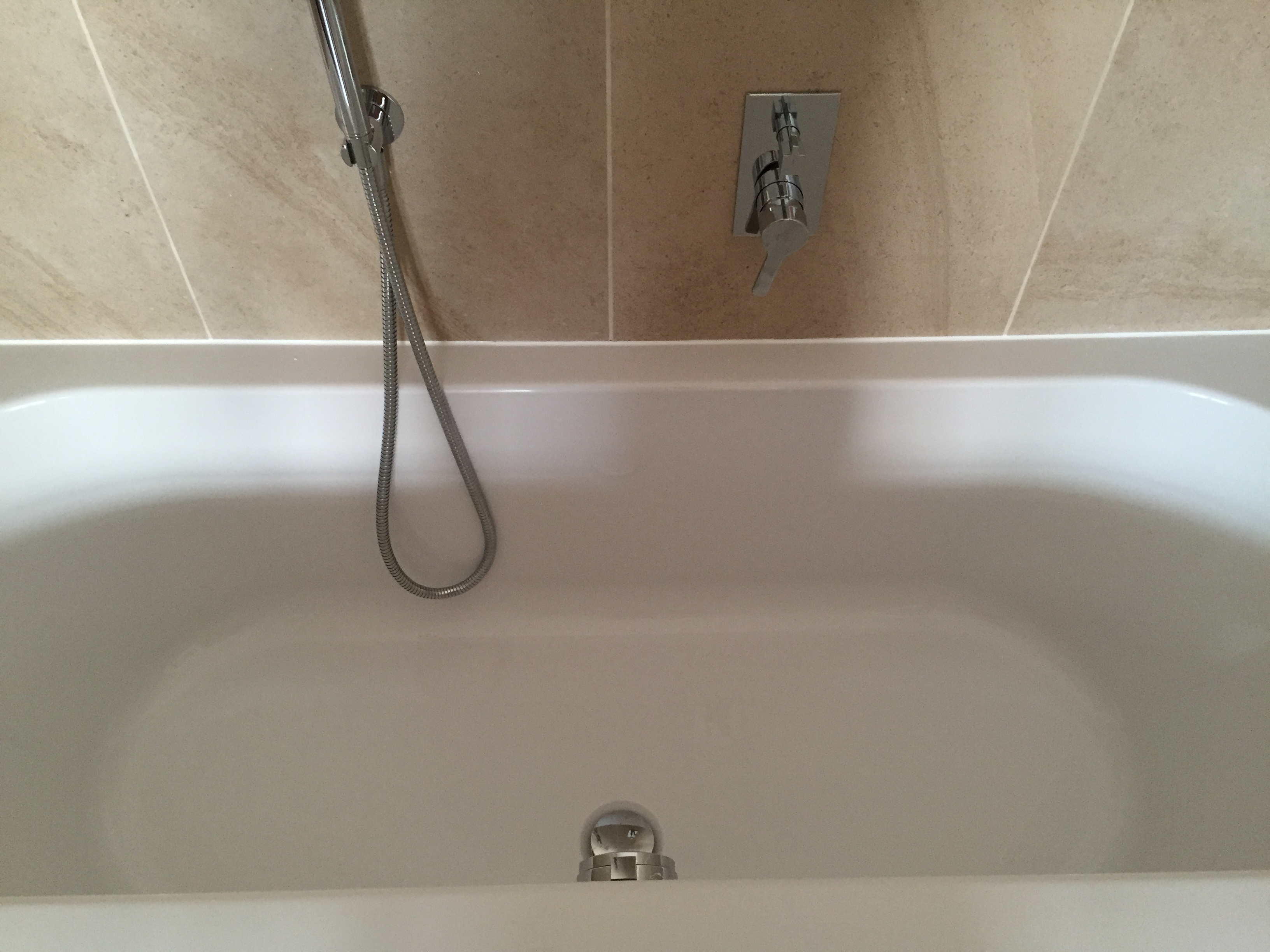
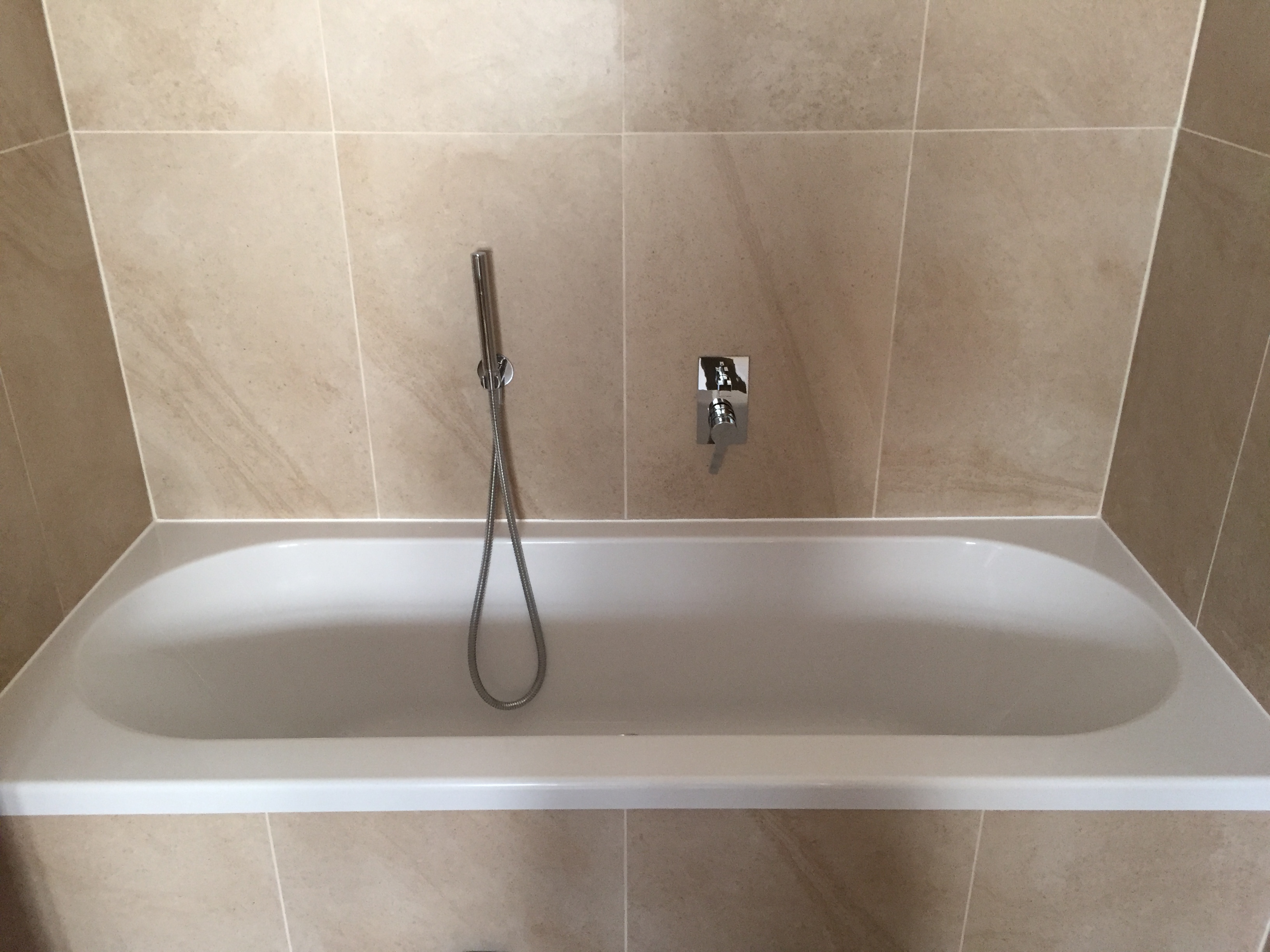
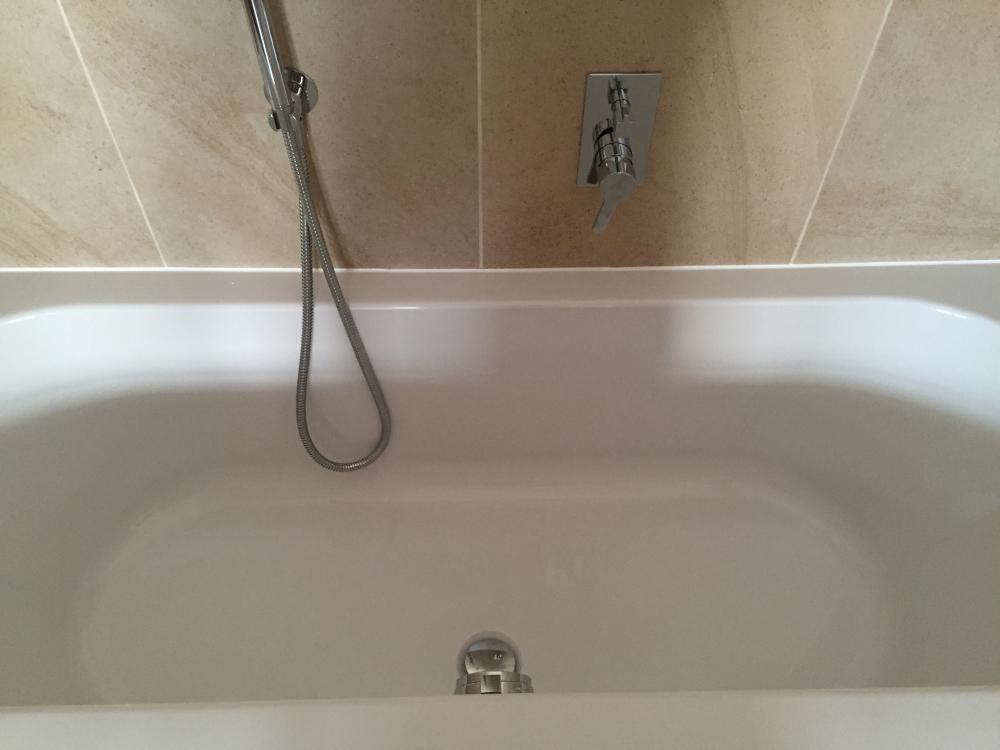
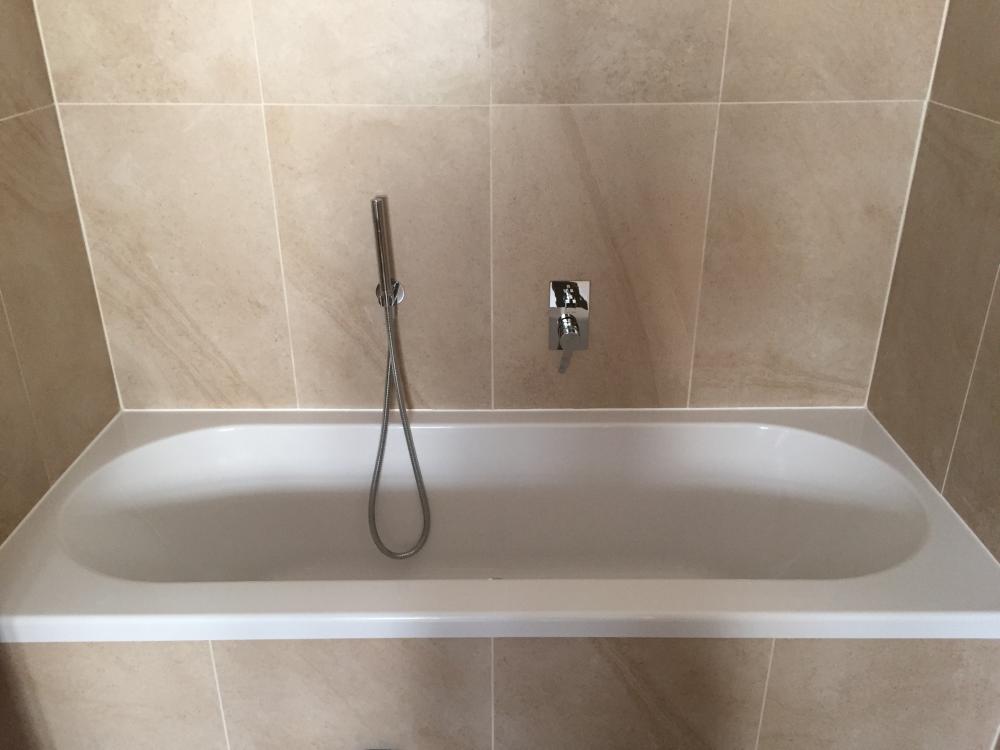
Finally took a pic of new bath we just put in with overflow filler and wall mounted and help spray plus controls. The stud was right in the centre hence the control and spray are a little further apart than I planned, but I think it is so much neater than what we had before which was a set of the telephone style taps.
-
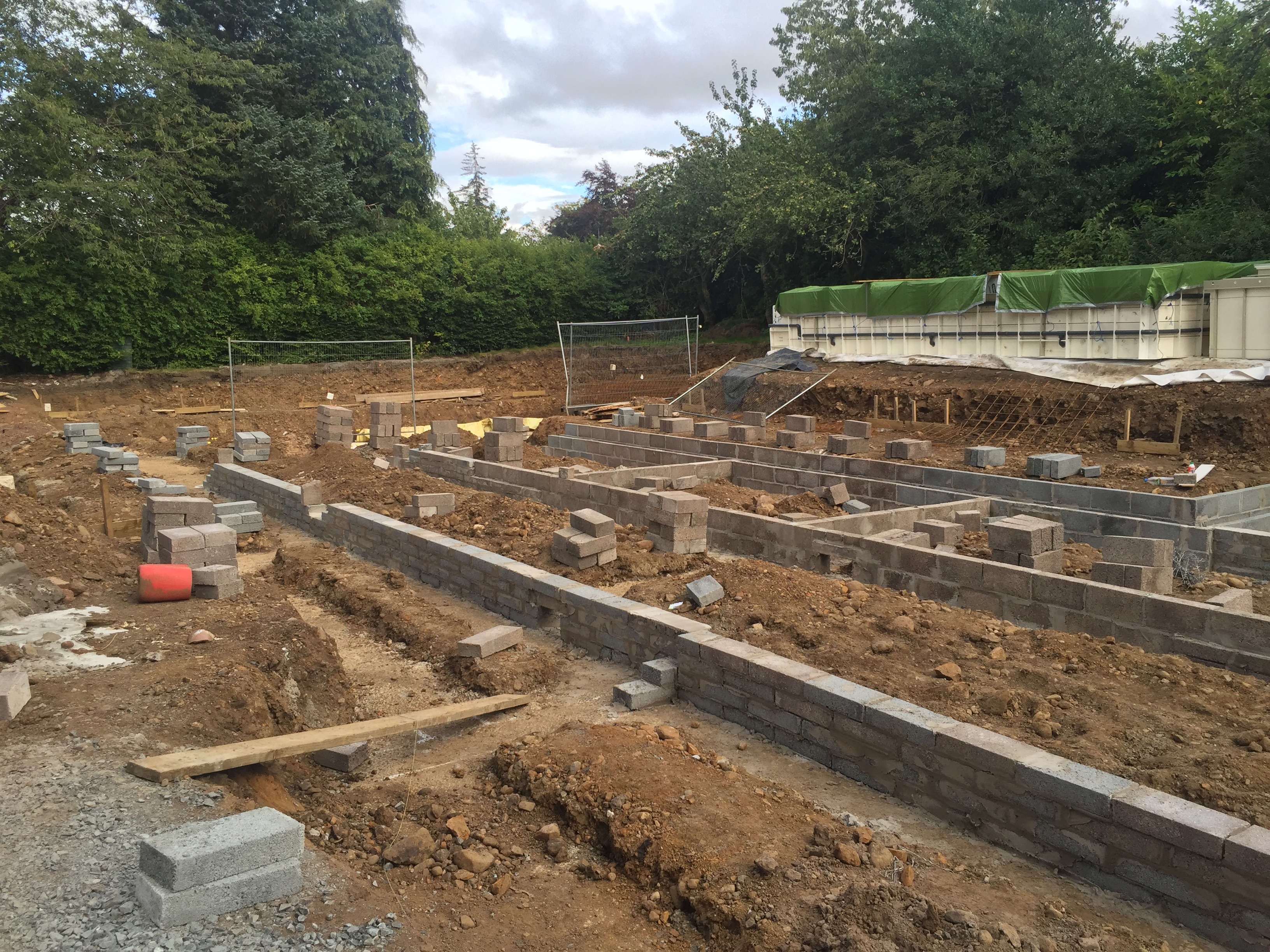
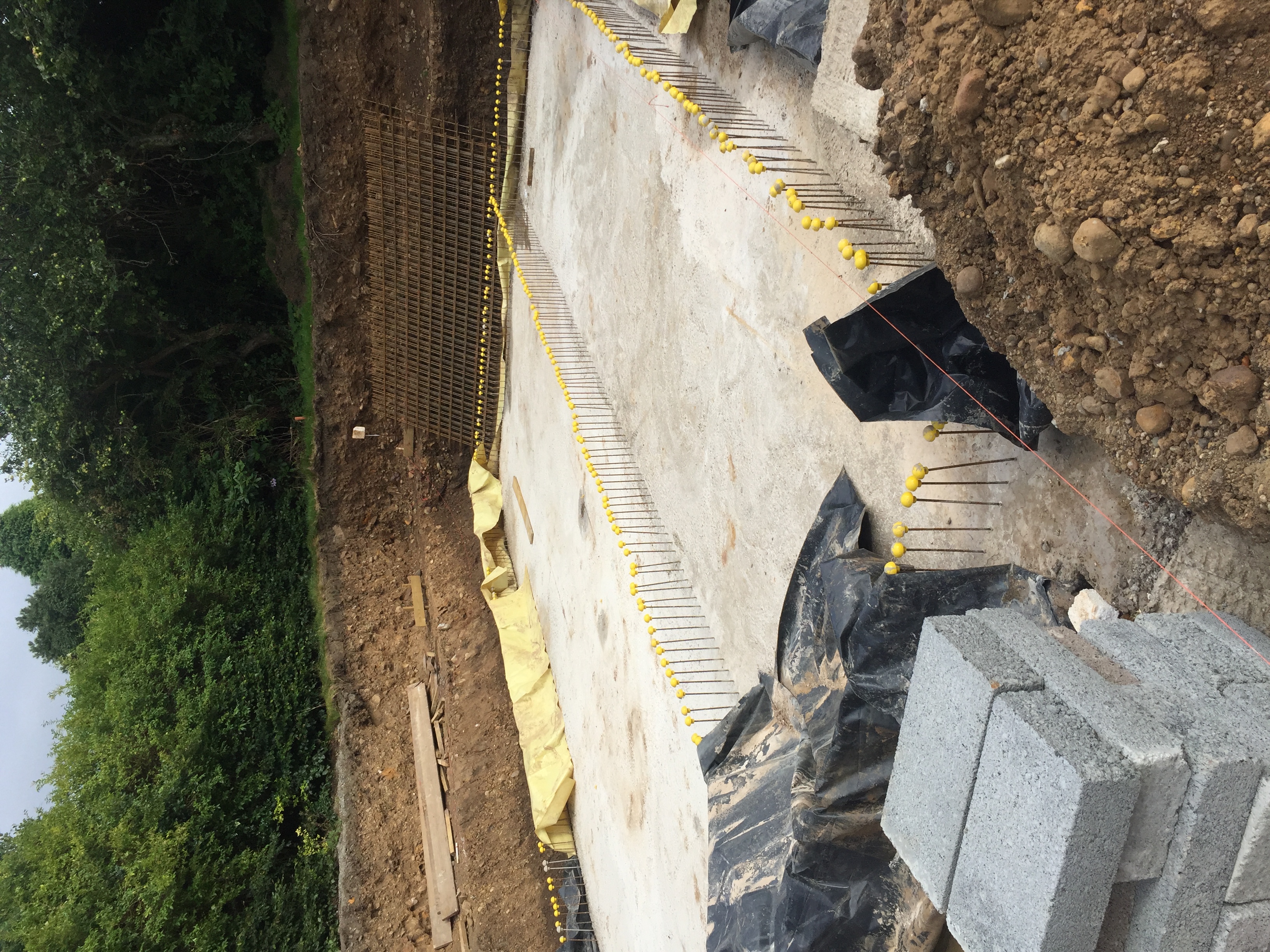
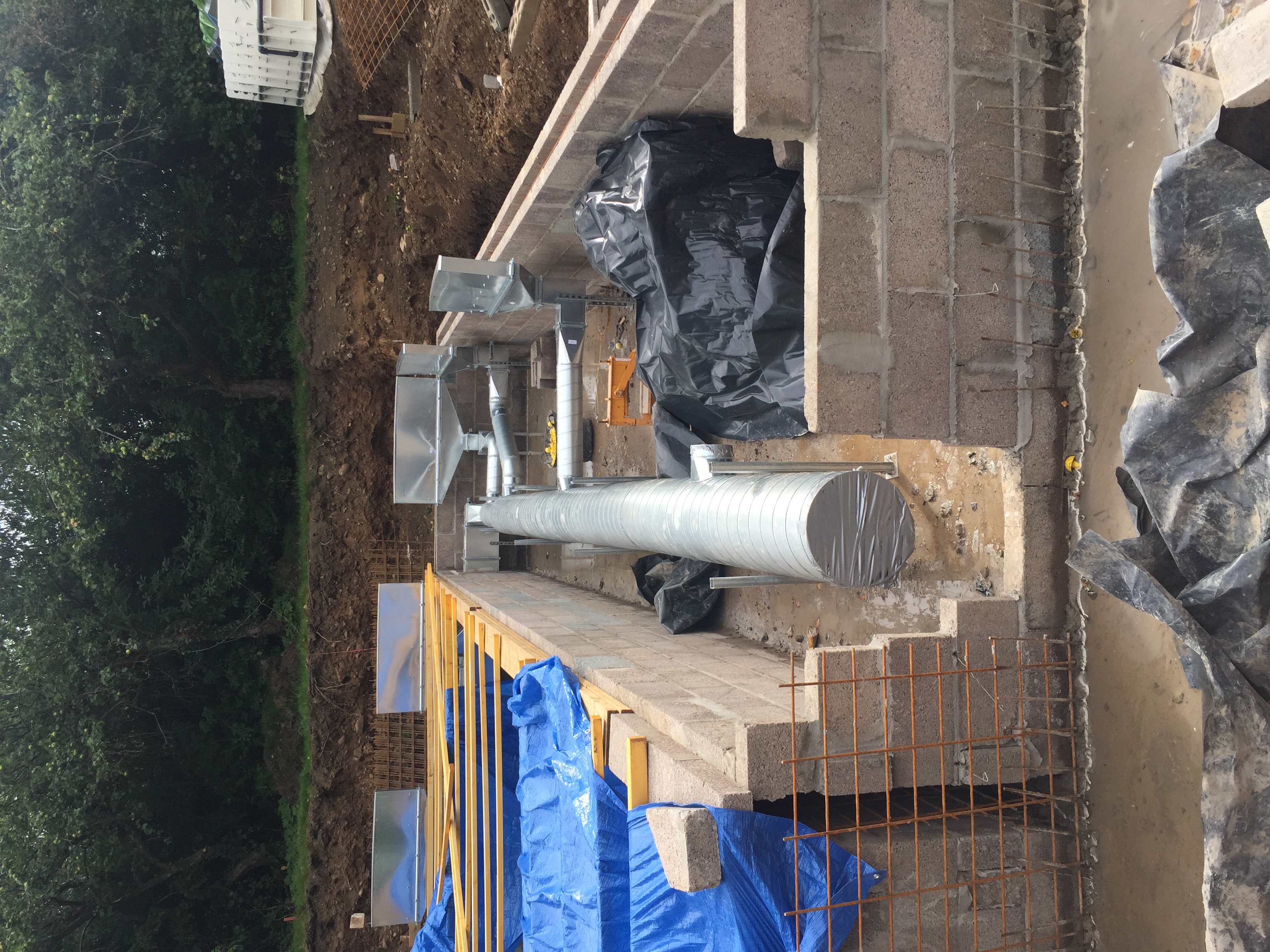
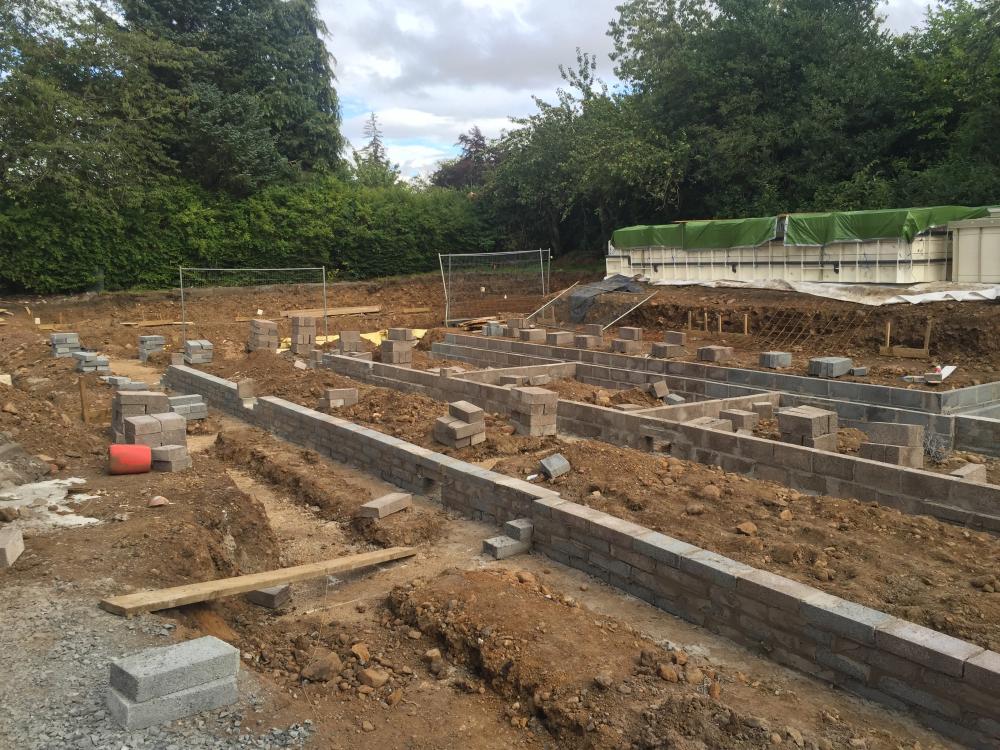
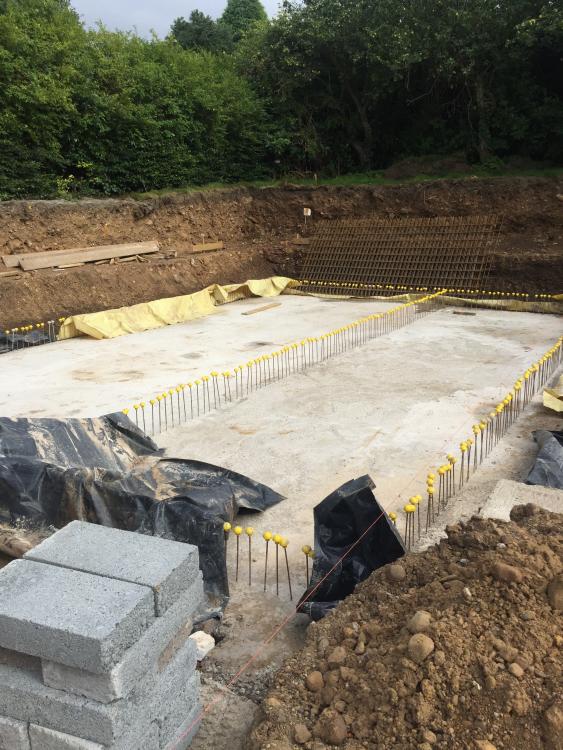
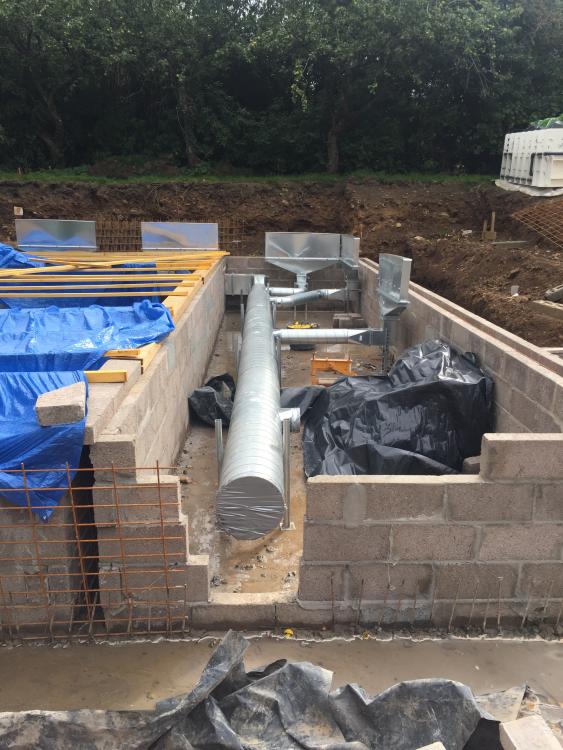
Finally they are getting out of the ground and work is now proceeding pretty much to the schedule. The strip foundations and pool slab went in a few weeks ago. The foundation walls are going in now and the pool ventilation in the last week.
-
Sorry guys, I missed your comments. There was me all sad that no one cared It is actually polycarbonate. I did look at fibreglass pools but I believe the polycarbonate is stronger and longer lasting. It is indeed a single piece, any larger and they have to weld it on site. It is made by a company called Niveko and shipped from the Czech republic. I spent a lot of time investigating pools before choosing this. There are lots of options such as tiled concrete, liner pools, fibreglass etc. As ever with a bespoke product it is very hard to get information to compare the products and to get pricing. Some price quotes were laughable, some were cheaper than what I finally chose. One thing I was very concerned about was running costs. I have mentioned a few times that historically houses with pools were almost impossible to sell due to the heating bills, not that I plan to ever sell. The pool will come with 50mm of XPS insulation around the sides and bottom. It will be mounted on 120mm of Celotex underneath. This will reasonably insulate the pool shell. Because of the pipework I couldn't get more insulation at the sides, but as it isn't very deep the area of the base is almost the same as the sides. However, the real cost of running a pool is actually evaporation from the pool and heat loss from the pool room as the room has to be kept at around 29c. The large temperature delta to the exterior creates a large amount of heat loss. Once I understood this I could see why pools built in the 70s and 80s cost so much to run. Invariably they are in cheap extensions or garden rooms often with little insulation and single glazed windows. I can see how this kept down build costs for what was often an expensive add on, but you are basically heating the outside. The pool room will have a floor with a U-Value of around 0.14 like the rest of the house, wall with 0.15 U-Value and triple glazed windows with around 0.7 U-Value. The pool will have an automatic cover to reduce evaporation. There will be a dehumidifier and heat recovery system that recovers heat back to the pool. What I didn't realise is that this costs almost half what the pool costs, it is serious kit. According to Jeremy's calculator, heating costs should be around £500 a year, then there will be the cost of running the dehumidifier, chemicals etc, I reckon I will be around £1000-1500.
-
Scottish parliament Committee 'expert' opinion
AliG replied to jamiehamy's topic in Environmental Building Politics
Staying a bit more on the topic- Fabric quality is reasonably foolproof. If you build a well insulated, airtight house then it will cost less to heat pretty much irrespective of whether or not the owners know what is going on. Not PH standards, but say low B on the EPC. However, MVHR needs a reasonable bit of understanding. It also needs servicing and could break down eventually. So would it be worthwhile building a house to these standards then having drip vents or some other natural ventilation system? Would they actually provide enough ventilation or do current standards depend on leakage providing accidental ventilation. Or is it just not possible to build a house that eliminates most of the costs of air leakage without resorting to MVHR? -
Scottish parliament Committee 'expert' opinion
AliG replied to jamiehamy's topic in Environmental Building Politics
I think it is a really serious problem. The education system spends very little time teaching practical every day life skills. Arguably this is the job of parents, but perhaps knowing how to work a computer or the workings of compound interest would be more useful to people than being able to identify an ox bow lake or a cumulonimbus cloud! Last week my wife called me to say that the car was giving a warning that a tyre was flat. I took her and my 9 yr old daughter and showed them how to blow up the tyres, where the sticker with the pressures was etc. Pointed out my father in law should have taught my wife. I also try and persuade them to watch me fixing things like washers. Sadly I can't guarantee being around forever to do it for them. It never ceases to amaze me how people use smart phones constantly and have no idea how they work or the fact that via Google they have almost every piece of information in the world available. My niece a couple of years ago marvelled as I fixed her iPhone by resetting it, like I was a technical genius. She used to spend most days asking stupid questions that could be answered by Googling. She is basically stupid, although she still should have been able to use Google. This is partly driving the issue of inequality. As time moves on, education and intelligence have ever greater value relative to physical strength. I'd have frankly been useless a couple of hundred years ago! I'm not sure if everyone can actually keep up with the rate at which technology is advancing. -
Scottish parliament Committee 'expert' opinion
AliG replied to jamiehamy's topic in Environmental Building Politics
My brother has been having awful condensation problems creating mould in a 13 year old flat. When I visited I found that they had all the air vents in the windows closed and the en suite fan timer didn't keep it running after you switched the light off. He had no idea what the vents were for. I can imagine if you gave my mum a house with MVHR the notion that it shouldn't be switched off would wind her up, she is always trying to turn off the extractor fans. This has made me think that there is no consistent way to pass on instructions for how everything works in a house. You might get some from the builder, but they rarely get passed on to subsequent owners. Even then the percentage of people who actually read instructions appears to be negligible anyway. This is increasingly a problem as technology moves forward. Technology can do more and more for us, whether it is drive a car or ventilate a house. But often it is the case that people either don't care or can't understand how to use it, thus a lot of money is spent on technology to no benefit or even that makes things worse if used incorrectly. Unfortunately everything has to be pretty much automatic and foolproof if possible. Look at the poor guy who died in the Tesla. I would be terrified letting my wife or my dad try to use an autopilot system, it would be an accident waiting to happen.