


SteamyTea
-
Posts
23836 -
Joined
-
Days Won
200
Everything posted by SteamyTea
-
 I only have radios in the house. Have joined the 21st Century by getting DAB ones. The pictures are better on radio.
 -
It will be a Points Based system, like they have in Australia. Or was that his policy on something else in the past, Public Health, or Education maybe. Or was it gun licences. Don't think that John Major was a right winger, Keith Clarke wasn't. 30 years ago was very middle of the road politics, hardly changed in '97. The past is a foreign country.
-
Got to be better than the alternative. High prices, low quality, limited supply and many small developers going bankrupt.
-
Traditionally sauna floors are timber planks. This is quite useful as it makes hosing down easy.
-
Public and private sector inefficiencies and mismanagement. Take an imaginary scenario. Central Government tells Local Government they must produce a plan that reaches the set targets. That plan may not take into account the practicalities of actually building the houses i.e. are they in the right place, at the right price, for the right people etc. We are still a hierarchy society, i.e. some people are taught to start at the base and work up, others can join halfway up and move on, others start at the top. The higher up the social ladder you are, the less people their are like you i.e. the demographics diminish.
-
ONS has lots of data. About 36% are owned without a mortgage, 28% with mortgage, 19% privately rented (which may have loans attached) and 17% social housing. In numbers, that is 8.8m, 6.8m, 4.8m and 4.2m. I think we forget, as a forum, just how privileged we are.
-
Not necessarily. New builds may be cash (or mostly cash) buyers. From the banking perspective, it has been a long time since the banks lend at a rate a little higher than they borrow money at. The business plans are very different from the 1920s. These 'modern' practices caused the global financial crisis in 2008. Much if that was nothing to do with lending to people that could not pay, or overpricing assets, it was more to do with cash flowing around the globe (M, for money supply, numbers in the UK). If the flow of cash dries up, banking has to stop. It is like having a reservoir that is full of water, but a blocked pipe, you can't use what is there.
-
Help needed on where to put insulation
SteamyTea replied to tommyleestaples's topic in Heat Insulation
And for temperature control i.e. keeping bedrooms a bit cooler. Most unmodified, older, houses could save 30% of the space heating usage with better thermal control. It is a hard sell to most of the public that like to think that heating is either fully on, or fully off, with nothing in-between. -
Maybe any changes to these sort of building just need to be easily reversible i.e. put in newer double glass for windows, but keep the frames the same, allow more efficient heating systems, but make sure it is removable.
-
I seem to remember, that the Cameron cabinet said the there would be a presumption that planning applications would be approved, rather than refused. And local people would have more say in the matter. That was just before they put a moratorium on onshore wind turbines. Really is a (expletive deleted)ing nonsense our planning system and all the petty rules. An example being that planning has nothing much to say about energy efficiency (that is building regs), but has things to say about sustainability, which in reality means nothing.
-
20kw system Some help for the uninformed
SteamyTea replied to bjhmilla's topic in Photovoltaics (PV)
Probably from the slab/foundation in reality and that can probably be insulated, or replaced. Uncontrolled air leakage is probably high up the list. Just getting the walls back to brick and replastering could make a huge difference. North and east facing walls, are the ones to insulate if you can as the have the least incidental light on them, so are generally always colder. -
As I parked up just now (17:02 8/7/24), the news mentioned that the planning laws are to be reformed. How would that work then? You can privatise the admin easily enough, but there has to be accountability and transparency on the decision making. If not, you end up with a system like car parking, with the only right to appeal is after you have paid the fine, and no compensation for wrong desions.
-
Now some old timers on here my recognise that title from 'the other place'. I should have published it over a decade ago. Making roofs white or reflective is the best way to keep a city cool So-called “cool roofs” would bring down the average air temperature in cities like London during a heatwave more than green roofs, trees or solar panels do By Madeleine Cuff 4 July 2024 If London’s roofs were white, it would help keep the city cool in a heatwave NagyxMe/Imago/Alamy Painting rooftops white or covering them with a reflective coating is the best way to reduce air temperature in a city like London during a heatwave. These “cool roofs” should perform better than solar panels, green roofs or adding more trees at ground level. Oscar Brousse at University College London and his colleagues ran climate simulations to see how London’s temperature during the two hottest days of summer in 2018 would have changed if the city had made widespread use of cooling measures, from cool roofs to air conditioning, along with solar panels, which have a cooling effect. Temperatures that summer peaked at 35.6°C (96.1°F). Cool roofs outperformed all other interventions, the team found, lowering average outdoor temperatures in the city over the two-day period by 1.2°C, and by as much as 2°C in certain locations. By comparison, additional tree cover only curbed air temperatures by about 0.3°C, while solar panels lowered temperatures by 0.5°C. The study also found that widespread use of air conditioning might keep internal temperatures cool, but would boost outdoor air temperatures by up to 1°C in parts of central London. “For London, what worked the most for reducing outdoor temperatures at a pedestrian level was the cool roofs,” says Brousse. Although the study uses only two days of data for the simulations, Brousse says it is broadly in line with similar published research. Installing reflective coatings, or lightening roof surfaces across the city, would be a relatively easy and low-cost climate adaptation, says Brousse. “I think, actually, this is probably the most easily deployed intervention of all,” he says. “I see barely any reason not to start doing it widely.” There are reasons beyond cooling to deploy other technologies too, he says. Trees and green roofs can boost biodiversity and resident well-being, for example, while solar panels provide clean power. The uncomfortable reality of life on Earth after we breach 1.5°C Passing 1.5°C of global warming isn't just a political disaster, it will have dire consequences for us all, as those living on the front line already know A 2023 report by the Greater London Authority suggested that cool roofs may become an increasing policy focus for city officials as summer temperatures rise under climate change. “With temperatures in London projected to increase, and with more occurrences of heatwaves, reflective roofs are likely to be a key component of climate adaptation strategy,” the report says. Journal reference Geophysical Research Letters DOI: 10.1029/2024GL109634
-
Making the most of excess solar with a 3-phase supply
SteamyTea replied to Tom's topic in Photovoltaics (PV)
If you get 12p for generation, and half of 5p deemed export on top that is 17.5p/kWh. You can buy in lower than that on a ToU tariff. -
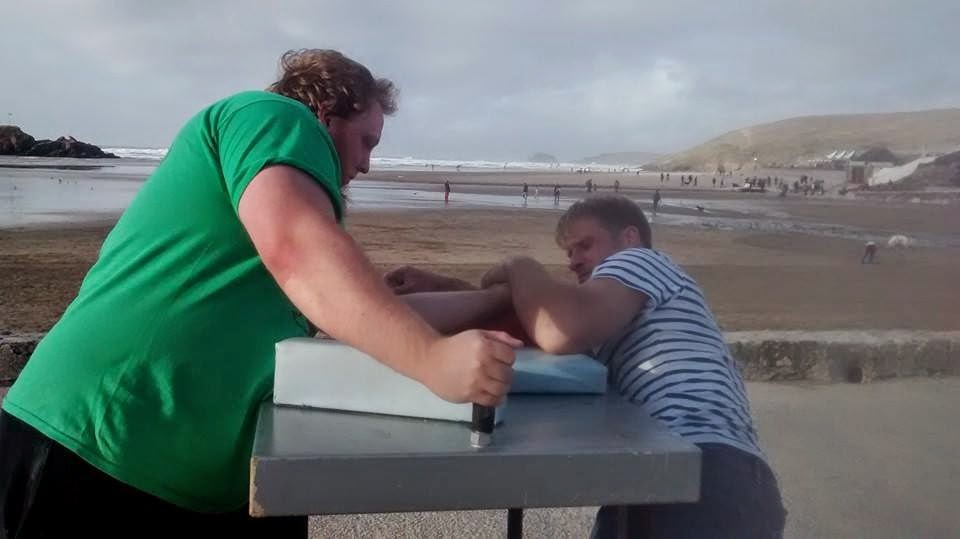
Whacked through tarmac and concrete carpark. No wonder he is so strong. He is the little fellow on the right.
-
Via radiators. There is some difference with form factor, but that is true for any heating system. Only a proper heat loss calculation with show the differences. They should be done anyway.
-
Our old mate Jeremy worked out it was 8% more. The best bit about UFH is that it is hidden.
-
I do. It will be made to the specified standard requested. An old college mate of mine was a rigger for Moscow State Circus. He put lots of tent pegs in. He was also, at the same time, an arm wrestling champion (75kg).
-
Generally used more energy over a year as a proportion of the heat goes into the ground.
-
Read about a third of it. Good feeling getting things published isn't it.
-
20kw system Some help for the uninformed
SteamyTea replied to bjhmilla's topic in Photovoltaics (PV)
Heat loss is what ever it is and is totally independent of the heating source. That is why you have a power rating on heating systems, and not a radiator surface area rating. You may be better off getting a diesel CHP unit to help cover the winter. Just for a laugh, measure how much energy, and the time it takes to raise your pool up by 3°C and how long it takes to drop back down again. -
Cant get insurance for timber frame / Metal Roof !
SteamyTea replied to bob the builder 2's topic in Self Build Insurance
https://www.bbc.co.uk/programmes/b007vq04 -
Mate of mine is at Harwell, doing the admin for pulling the place apart.
-
Build a small house on a driveway....possible?
SteamyTea replied to Tokyorob77's topic in New House & Self Build Design
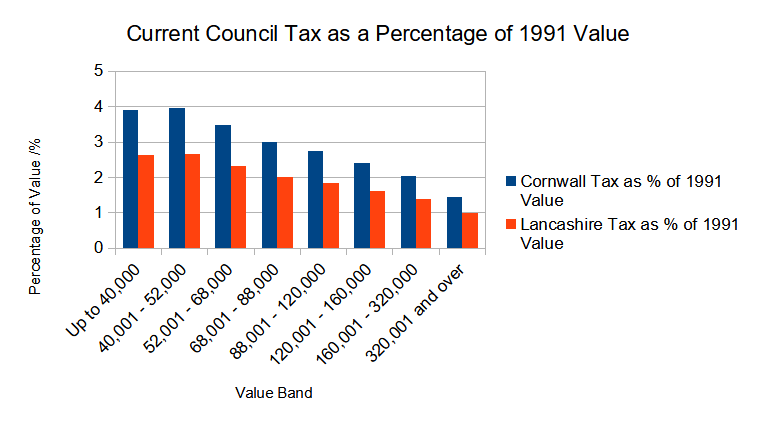
This is part of the problem with banding in general. There is an arbitrary cut off point. The banding, in itself, does not really matter two hoots, it is how much the council charge that is important. Your council tax is 33% cheaper than mine.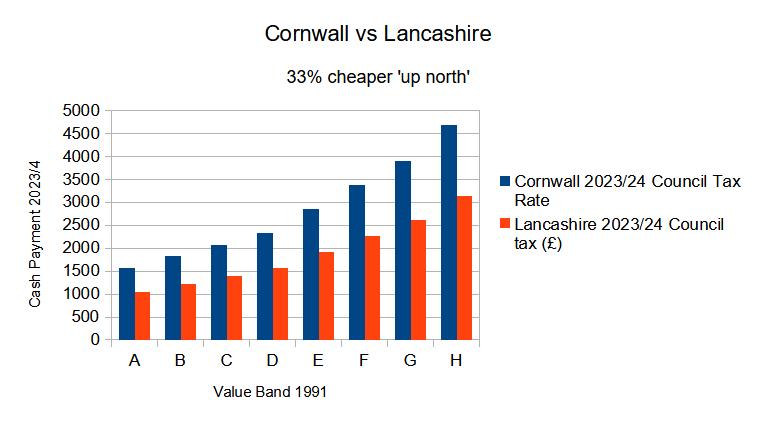
-
Build a small house on a driveway....possible?
SteamyTea replied to Tokyorob77's topic in New House & Self Build Design
Depends what it was worth on 1st April 1991. But you can easily find out. https://www.tax.service.gov.uk/check-council-tax-band/search

