


Mr Blobby
-
Posts
616 -
Joined
-
Last visited
Everything posted by Mr Blobby
-
A whole year has past, sto rend has gone bust and we still haven't had the house rendered. After talking to the builder's regular renderer we have a choice of either a 2-coat solution of Parex acrylic with a very thin coat on top, or a single coat of KRend silicone based render. Render guy says the acrylic is the best product in terms of colour and robustness, but he would say that, as it's twice the cost. KRend is about £35 sq/m, acrylic 75 ish. Do those numbers seem reasonable? Builder thinks I'm bonkers to spend more than Krend. All his other builds are rendered with Krend silicone and he seems to think the KRend great. Our house is block build. With external area of abour 300 m2 then its about 10k more for the acrylic. Is the renderer correct, is the acrylic a better product, is there anything I should look out for?
-
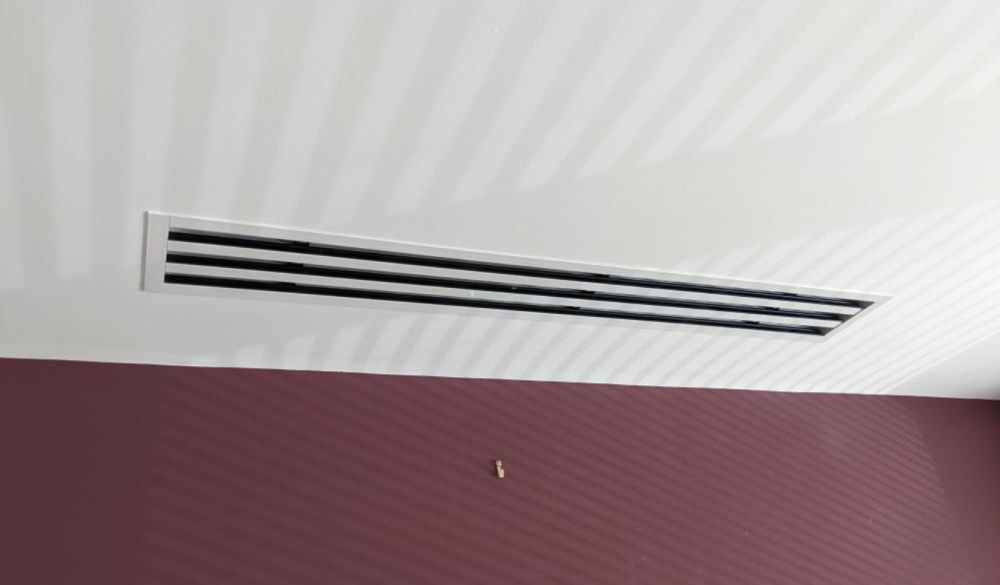
Your pic above is very neat. Two of these (intake and exhaust) in each room would be great as an alternative to a pelmet, but how did you connect this grill(s) to the plenum? Do you have any pics of the ducting in the loft? Did you buy all the ducting and grills from ductstore.co.uk?
-
I think that's actually the right way up, the intake sucks air in at the bottom and spits it out the front. Not much, but hopefully better than just slab cooling, esp in bedrooms with solar gain and carpets on the floor. And we are in Northern Ireland where it rarely gets above 23C on a summers day. I'm getting the impression that pelmet is the way to go here 🤪
-
Yes, warm airtight loft. Plenty of room to install a pair of these in the eaves, one over each SW facing bedroom that are most likely to overheat. I think taking the intake air from the loft will be ok, as it would mean only one grill in the ceiling, and easy access to change filters. The supplier tells me the FCU in the above image can only be installed horizontally because of condensate tray (although I would be running above dew point). I don't really want to build a bulkhead like a premier inn bedroom. I would prefer a single exhaust grill in the ceiling facing downwards. This would leave the FCU higher in the loft which would also make for an easy connection from FCU condensate drain to the pipe connected to the condensate drain in the MVHR, leaving the option to run below dew point, should I ever wish to do so. This is a good point, the air in the loft being potentially warmer than the target bedroom. This is not really to cool the whole house as we have cooling in the slabs and some external blind and solar glazing. But I am concerned about two SW bedrooms that may be at risk of solar gain overheating. Maybe building a bulkhead is easiest. Otherwise the challenge is connecting ducting from hotizontal FCU in loft to a single grill in the ceiling. It would be a 90 degree angle and about less than 1 metre length. Has anyone done this or similar?
-
Has anyone on here actually installed an FCU like this (or similar unit) in the loft, for cooling, connected to an ASHP and with the exhaust grill in the ceiling? If so then please tell me more about the install and what is needed. How is the FCU ducted to the exhaust vent? Did you install it vertically? Did you use ducting from the FCU to the grill in the ceiling? Some pictures would be lovely.

-

Seamed Roof - what to have Zinc/Aluminum/Greencoat
Mr Blobby replied to Caroline's topic in Roofing, Tiling & Slating
One more thing to consider is the width between seams. Standard is 600, but we chose to have 400 centres. Looks better and possibly less canning with 400 centres because we have only one panel with signs of canning. More expensive of course, but not a massive difference. -
Seamed Roof - what to have Zinc/Aluminum/Greencoat
Mr Blobby replied to Caroline's topic in Roofing, Tiling & Slating
We have prefa aluminium, which is ok, but the ridge detail could have been better, something I didn't think about at the time. Confirm the details like this before install. Roof buildup is also important. There are standard guidelines for metal roofing with vented timber under the standing seam. We used sarking board instead of ply, and I think it's better for not much extra cost. -
German kitchen brands - Nobilia, Bauformat or Leicht?
Mr Blobby replied to Indy's topic in Kitchen Units & Worktops
I like the German kitchens. Another German brand, brigitte, is the cheapest I think. That's what we are getting. German kickboards are smaller, which look a bit nicer. That's probably the main difference 🫤 -
It looks like Sto Limited, the UK and Ireland distributors for Sto rend, and owned and controlled by Sto Germany, have gone bust. Which is not good. I tried to contact their support people today but have been informed that Sto Ltd is no longer answering support questions and the insolvency practitioners have installed new managers. Sounds like its not a happy arrangement 😕 and the workers have downed tools. It looks like other Sto resellers all go through Sto Ltd, so this is likely going to impact supply and support. Does anyone have any further info on this? Is this the end for Sto, or just the UK operation? If not Sto, then what other product should I use? KRend or Weber?
-
Rendering over timber section in block wall
Mr Blobby replied to Mr Blobby's topic in Plastering & Rendering
The problem is the windows are actually in place so cutting the outer leaf risks damaging the windows. I reckon I could cut a hole carefully with a grinder but perhaps the builder knows the bricklayer won't have my patience and will hack it with a stihl saw without much care for my windows. Also the windows are on first floor with rubber roofed porch underneath so more scope for damage from falling masonry. (I know, its a crap place to end up in but I can't turn the clock back😕) I'm also told that if we did insert a lintel and a course of block then the render would still be at risk of cracking anyway because its new block against old block (although I'm pretty sure this would be more stable than a timber stud bolted into the hole). Thank you @nod for your sage advice. So for a silicone based breathable waterproof render like sto, we should cover the front and underside of the timber stud with render board. Then do block wall render buildup as below, with reinforcement mesh across the join from timber to blockwork. Should I do anything else with the timber stud, like bitumin paint, or wrap in breather membrane? Would I need to leave a ventilation gap underneath like a timber frame build?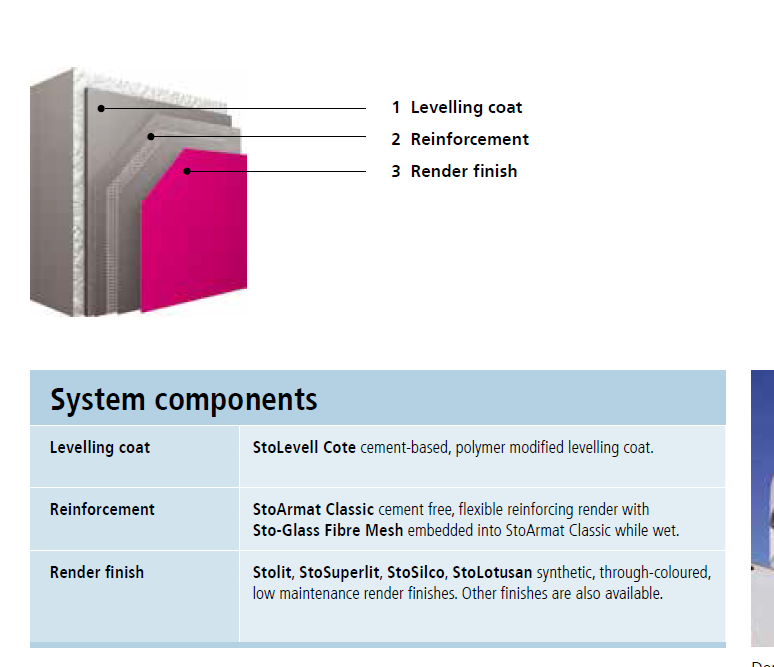
-
For reasons that make me use bad language, our block build house has a couple of window openings that need to be made smaller, but only on the outer leaf of a block cavity build. Window height must be reduced by about 300mm. The obvious thing to do is to insert a intel and a course of blocks, but that may be a little too destructive. Builder and joiners are suggesting a timber stud, to be built with ply across the face and then steel mesh across the front to render the timber stud to the blockwork. My concern here is the timber getting wet and rotting/warping and then render cracking. Breather membrane and bitumin paint on the ply has been suggested. What's the best approach here? Does the timber need to be ventilated? Would render board at the front be better than ply? Can mesh be nailed to render board?
-
I don't want to close the hole complete, there are cables to run through it. But if i chased the cables into the wall instead of coming all the way out, could I then cap the end of the hole somehow? I can see I'm not explaining this very well 🤦
-
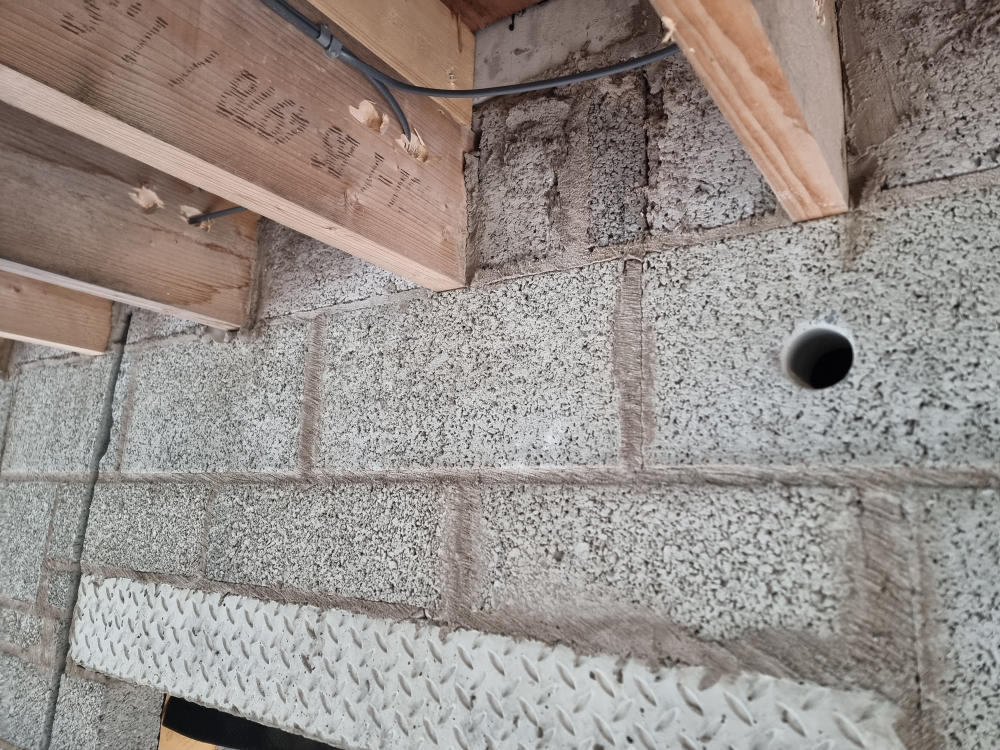
We have a 2-inch pipe and a 4-inch pipe being used as conduit to run cables from house to attached garage. The cables emerge below the ceiling on the garage side, like this, the 2-inch pipe: We'll be putting scratch-coat onto the walls of the garage and all the cables are chased into the walls as on the picture. How do I finsh the open end of the pipe here? Do I stops the conduit 20mm below the blockwork and then exit cables out the side of the hole and chase into the wall up to the ceiling void? If so then how do I plaster over the hole? Some mesh over the end of the hole and then plaster over?
-
If you mean make it one big window and no opener (I don't think you do, but just in case), don't forget you need an opener for building regs requirement for fire escape.
-
Yes. Do the pour yourself, that is with good local groundworkers/builder. Don't rely on subcontractors to do it. Take great care with the door thresholds. Ours is a block cavity build. It may be different for timber frame, but our thresholds are recessed with, in theory, structural insulation under the door/window spanning the cavity, like this: This detail is great in theory but almost unworkable in practice. The issue is with the recess in the internal slab. Our contractor dismissed my suggestion to install timber during the pour at the recessed thresholds. He insisted the correct approach is to scrape away the concrete after the pour to create the recess. The result is a complete nightmare. We also have a 15mm height difference from one side of the kitchen to the other. 😕 The expert installers also joined the EPS blocks with clips on the top, under the DPC. This means that it is impossible to get the threshold level without cuttig the DPC and pulling out the clip. 🤷♂️ If I was doing it again I would avoid recessed thresholds altogether (they are probably inescapable if you have a slider) to be like this: Window fitters will completely ignore everything you say about this threshold detail. Full height windows are not worth the hassle. Ignore your architect.


-
Here's our big window with the joined frames as your image. Sorry abot the scaffold in the way, this is the best picture I have, but you can see the join and the fuill height opener, just about. The window is so big that you don't notice the join. One final comment on the windows, and not specific to internorm. Our fitters measured our windows with 10 mm clearance either side of the opening. They proceeded to fit the windows tight to the right hand reveal. Zero gap on the right and 20mm gap between window and left reveal. I think all the windows are the same. None are centered. I did not, in my wildest dreams, expect the windows to all be fitted off centre. It is extremely annoying because we now need to build out the LHS reveal for plastering. WTF would the fitters off-centre all the window? In the kitchen we have carefuly positioned the window so that full-height kitchen units will be installed tight to the reveal with worktop underneath. We can't build out that reveal so the off centre window here may need to be refitted in the centre. Do not leave window fitters unsupervised. One final, final point. If I was doing it again I probably wouldn't have full height windows. We have a poorly-poured kore slab and the thresholds are a nightmare. Much easier to install and functionally superior to have a few courses of block to lift the window off the floor.

-
If you are worried about frame width, then why the horizontal mullion? Get rid of it. Many suppliers don't do a full height opening window, hence the horizontal in your image. Did this come from another supplier? Internorm are one of the few supliers that can do a full height opener, thats what we have and one of the reasons for using internorm. Looks much cleaner. I'll try and post a picture later.
-
We have internorm KF410 windows with one large window in two sections, one fixed and one opening. This coupling is actually very good. It is invisible from the front of the window and our fitters actually fitted it correctly (although I am a little concerned it sticks out at the top) unlike our very expensive internorm entrance door to sidelights junction that is a very different design and fitted very badly. You big windows will be supplied without the glazing units installed. For the installation of the glazing units into the frame Internom supply a sealant type stuff, fix-o-round to be applied around the perimeter to supposedly improve stability and sound reduction/airtightness. Our fitters didn't use it (they used packers) hence we have a box of fix-o-round on site. Fitters claim the fix-o-round isnt necessary but I suspect they just couldn't be arsed.


-
.. but there is no mould on the treated grade 3 ply. Only the cheap substitute sheets. Which are not to the listed spec. I just find it intensely frustrating when trades substitute specified materials for cheaper alternatives to make a few quid at my expense.
-
Phantom braking, insurance : Agree with both of these, although I don't do long long motorway drives very often so the phantom braking is not a big deal for me. The rest are all things I like. I like the app-service-system, and the suspension feels just right, and I like no-buttons. I hired a Mercedes eq recently and hated the sea of buttons. I'm on my second model 3 and very happy. Although with Musk turning to the dark side this may be my last.
-
I've just done some basic maths from the builder's invoice for the ply and there is no way that he ordered enough Grade-3 ply to cover the whole roof. I am quite certain that there has been, for whatever reason, a bit of substition here. 🙄
-
Exactly this. If I was ordering windows again I would get supply only. Then get a few joiners to take several days to install them slowly and properly how you want them fitted.
-
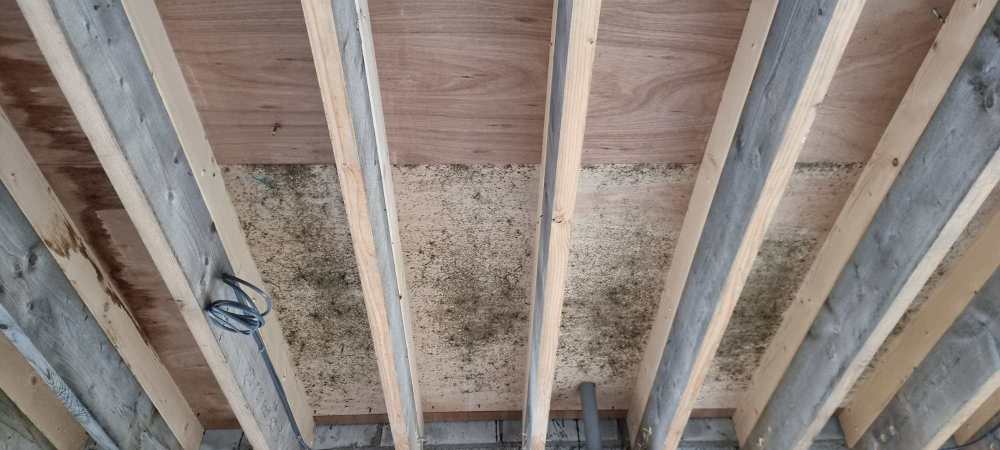
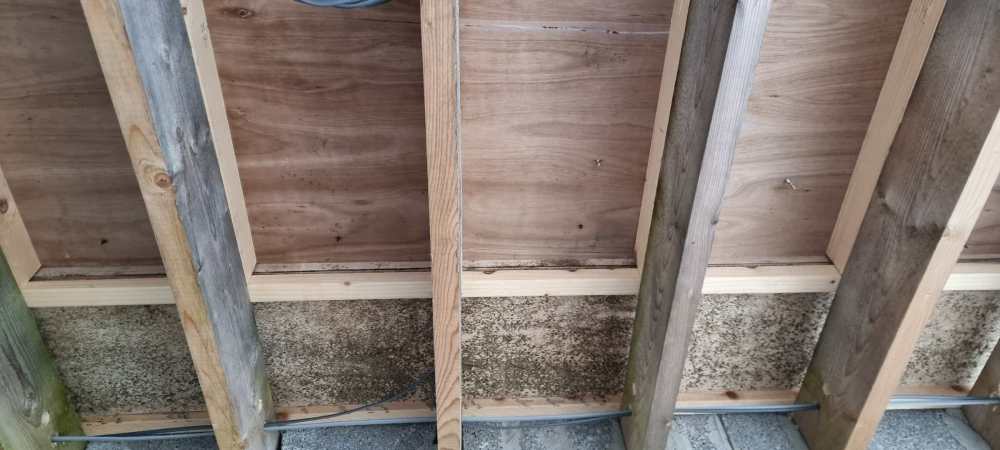
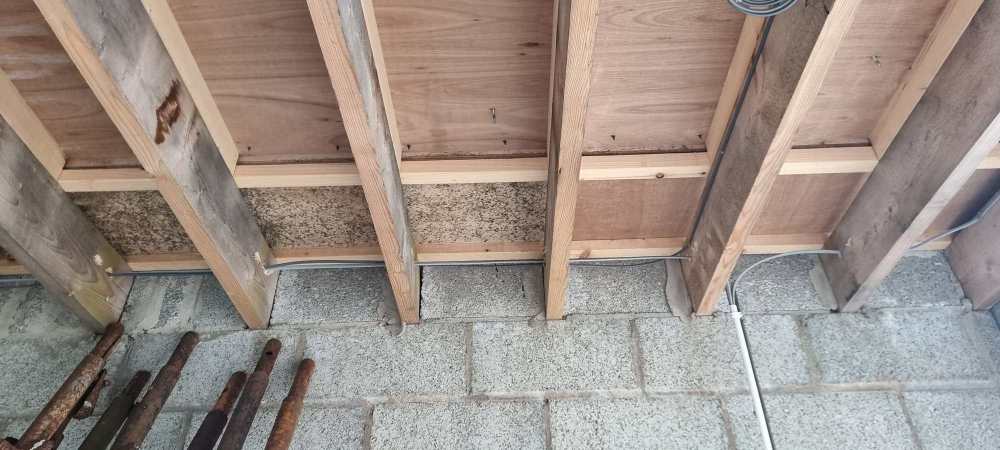
Yes it is. I should add some context here. The builder ordered the ply and subbied the roofers. My guess is that the builder, as usual, ordered the absolute minimum amount of ply to try and maximise profit. I suspect he didn't order enough so the roofers ran out of material and, to get the job finished on the same day, got a couple of extra sheets from the local builders merchant. Which is less than a mile away. The pictures show just a small section. Only about 10-15% of the sheets look different. Oops, I just noticed the two pictures in my original post are actually the same affected area, so here is the other affected area on the other side of the garage. The mouldy sheets are much lighter in colour (where they are not mouldy!) Is this a big deal? The roof is watertight and so replacing the ply is not easy.
-
Another day another issue on site. So on our garage flat roof drawings WBP ply is specifed. I checked with the builder and, sure enough, the invoice lists "MALAYSIAN 8 x 4 x 18mm Complies with EN13986 EN636-3 Structural use" Which I think is ok and meets the WBP spec, right? So far so good. However.... Not all sheets are the same colour. Some are lighter in colour and are affected by mould, where the darker sheets appear mould resistant. Some questions: 1. Am I right to suspect that the mopuldy sheets are not the same as the other sheets and not to the required specification? 2. If the answer to (1) is yes, then apart from being really annoying, how bad is this? 3. If this is a problem, then what should I do about it?
-
For our connection application the DNO wanted to know the big appliances, so car chargers, ASHP, oven, and list the kVA for each. For us the 3-phase cost was almost the same as single phase but that is because of our location I think, with three phases running down the street outside. Out primary reason for 3-phase was to get more solar PV on the roof and the 3-phase car charging. We have, I think 80A per phase (still to a temoprary cabinet) which is more than we need, but the DNO has a fixed price for up to 80A per phase and is quite happy to connect at that level almost as standard practice. The DNO was more concerned about startup current for the (7KW!) heat pump, so I had to send them the technical specifcation. If you do get a 3-phase connection, remeber you need a bigger permali box and hockey stick. Our DNO is a PITA about this stuff.








