


Mr Blobby
-
Posts
616 -
Joined
-
Last visited
Everything posted by Mr Blobby
-
Spraying krend is fast, one day of spraying covers two walls, then the naxt day scraping and spraying. With this weather, my nerves are left in tatters 😬
-
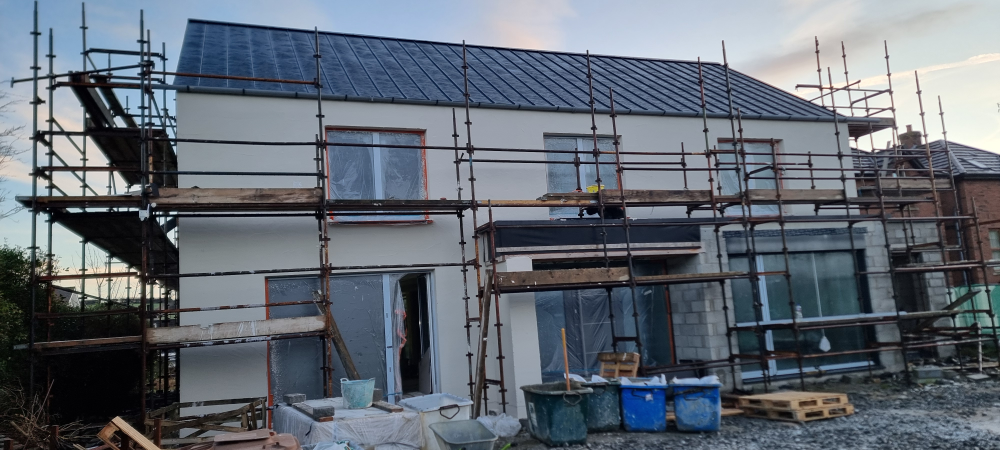
No, no cover. Rain and frost at night. Renderer seems unphased while I would have put it off until wamer drier weather. But that would have been April 🤔 and renderer wants to work. Checked on site this norning and everything looks good, but I wouldn't know bad render from good if it looks the same. Thick frost on the roof, renderers scraping below 🤞
-
yes, smooth I asked the renderer about the bald white patches at lunch time and he said it had not yet set and so they hadn't finished scraping it. He told me it wasn't water damaged and will be fine. I was rather skeptical about all this, but, to my amazement I went back to check the same wall a few hours later and all the marks have gone. In fairness it was about 4 pm and light was fading so I will take another look tomorrow, but it seems like all the smooth white patches have, to my amazement, all dissapeared. I will ask the renderer if he patched it up to fix it. Not that he would tell me of course. Now my concern is that after today's spraying the temps have dropped to zero. Hopefully todays render doesnt get frost damage 🤞
-
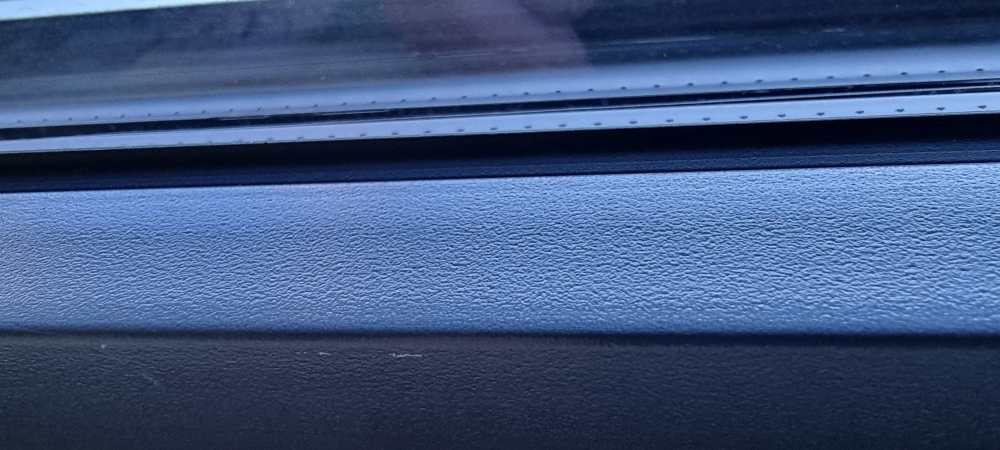
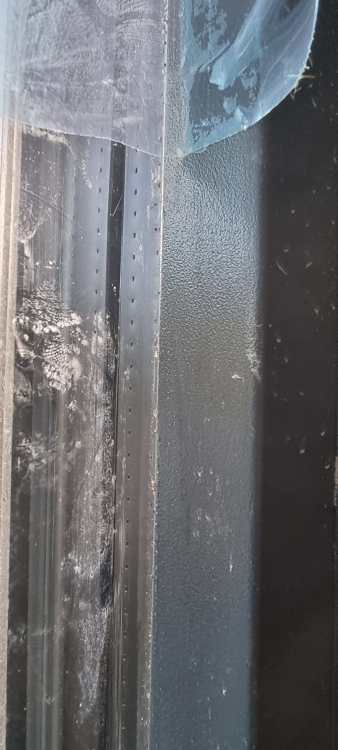
Another thing that's weird, is all our internorm fixed pane windows have a gasket between bead and glass, like this But one window has no gasket, which doesn't seem to cause any problems but seems a bit odd. Like this... I'll ask the window fitter when he arrives if this is by design 🤷 Anyone else have this feature?
-
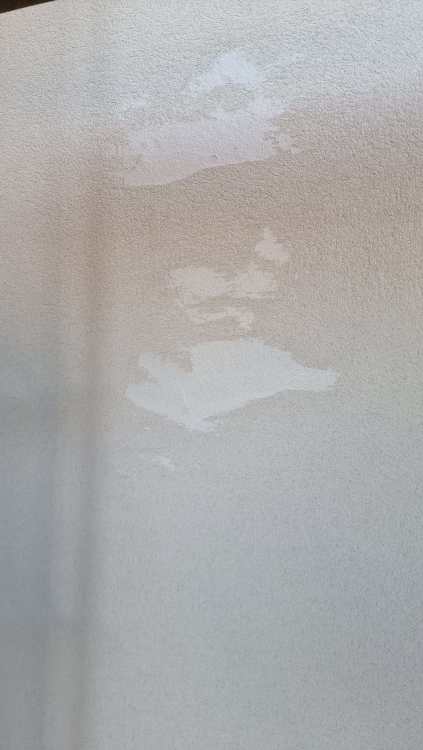
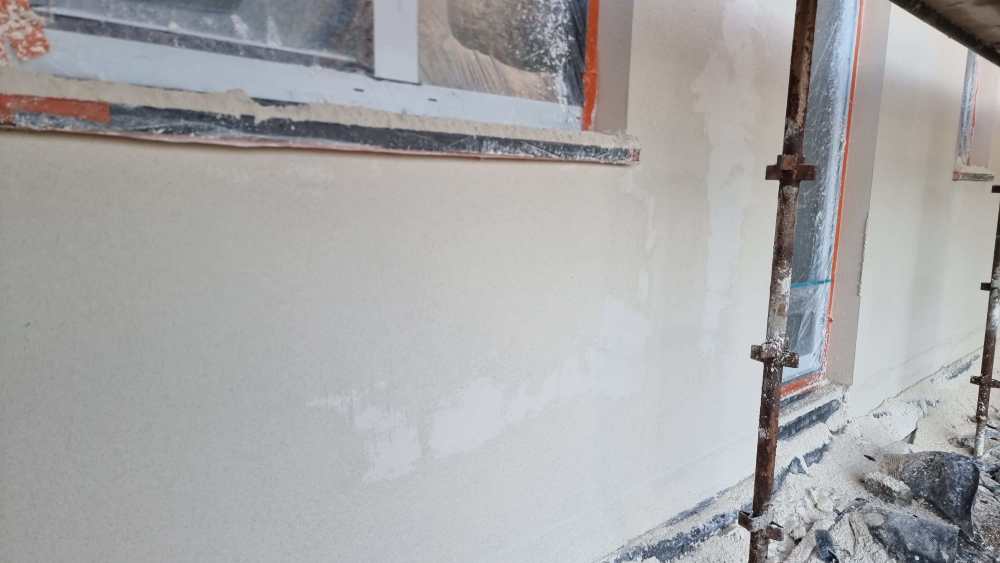
I was surprised when the krend installer sprayed the walls yesterday when rain was forecast. Two hours after spraying it rained fairly hard for a few hours. Which is a shame because no rain is forecast today and its no colder. Render team back on site rubbing down and the back wall is like this in a few places. ... Is this just part of the normal drying process and to be expected or is it more serious rain damage and should I be concerned? Thought I'd ask here before I ask the render guy.
-
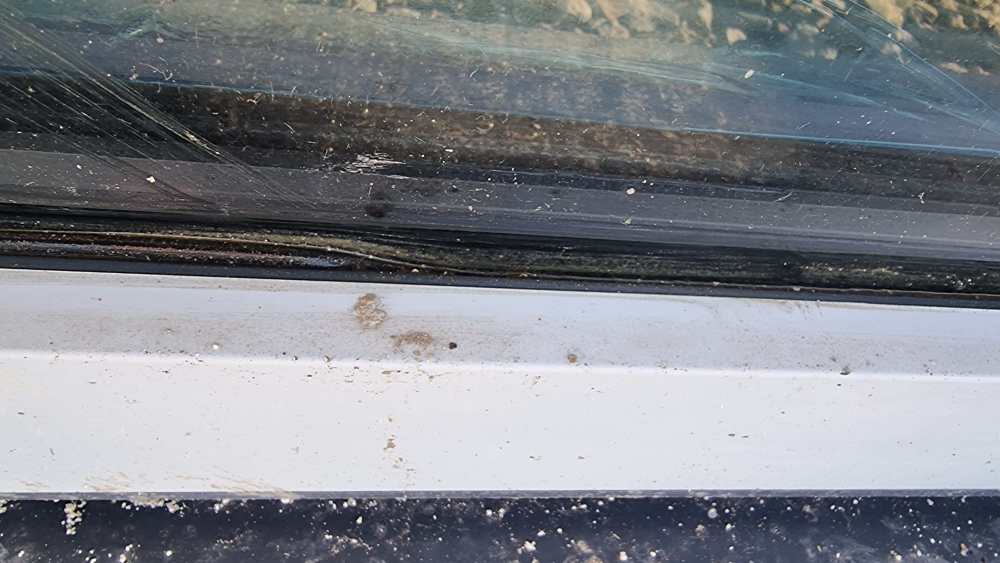
In a few places on the large windows glazed on site, the external gaskets are below the beads. Like this: These little ponds are usually full of dirt and water. Window fitters here lunchtime to run through my snagging list. Should i add this to the list and insist the gaskets are properly seated? Fitters are going to be reluctant because it will take a team of weightlifters to lift the glass.
-
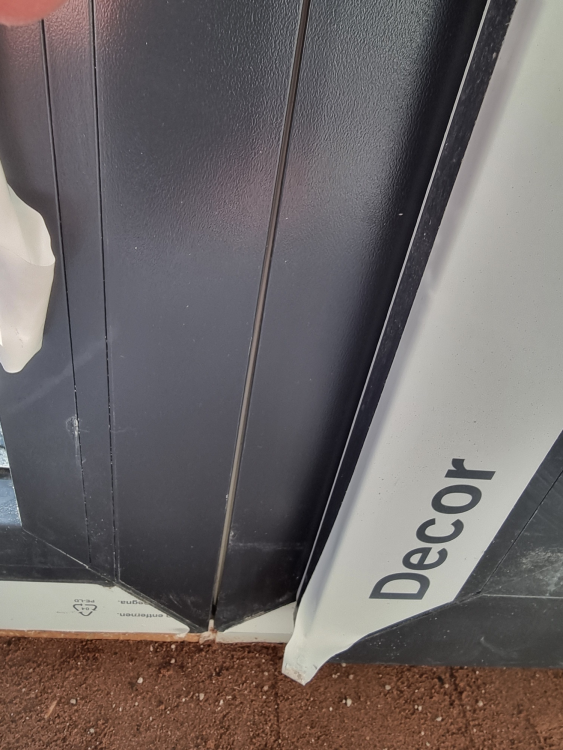
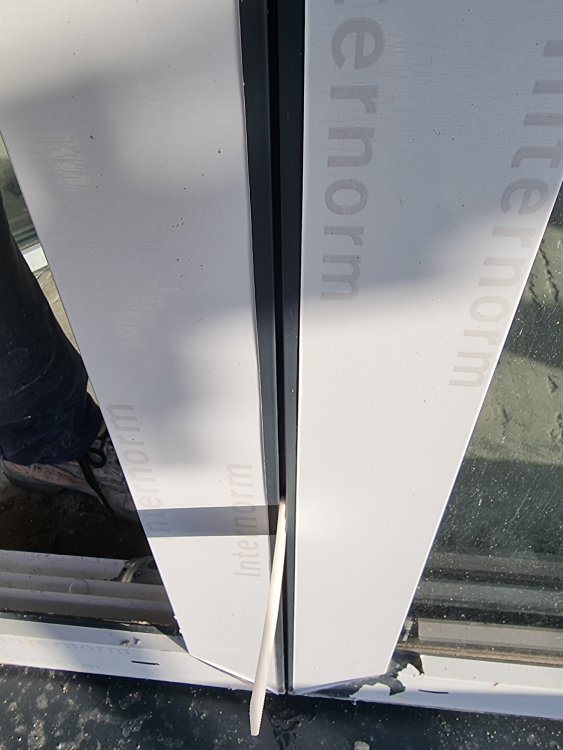
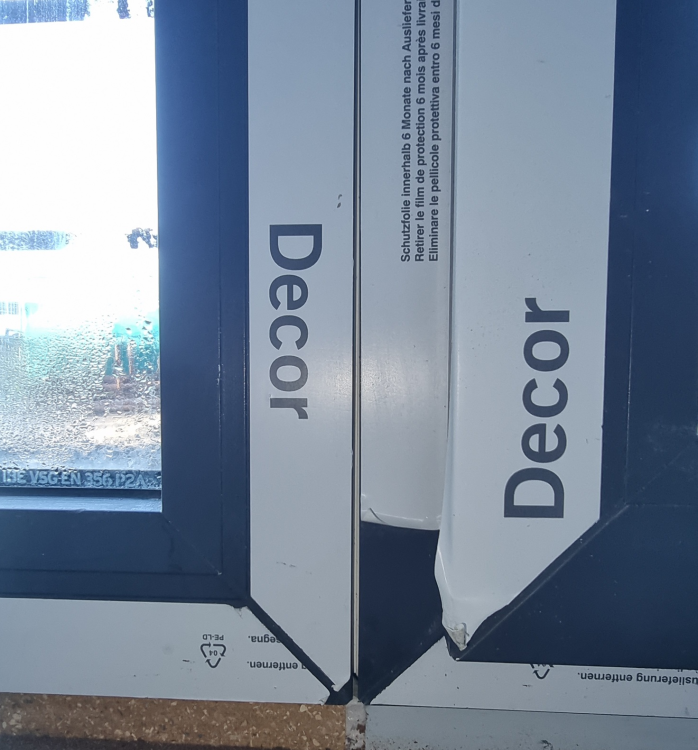
Its hard to see with the white protective stuff, thats kind of why I missed it until recently 🙄 Heres a better picture, from the inside above, with white stuff removed. The gap on the inside is only on the bottom 50 cm. From there up the inside is tight together. I can see daylight through the window at the very bottom, but only a few mm square. Its easy to find from all the condensation around it 😂 There is something white in the middle of the frames in the gap, which may be the coupler, but I would have thought that the coupler would have held the frames tight together and prevented a gap like this. Unless, perhaps, some bending motion is introduced 🤔 On the outside, there is a 3mm gap running down the lower 75% of the join, but not all the way through. About 15 mm deep.
-
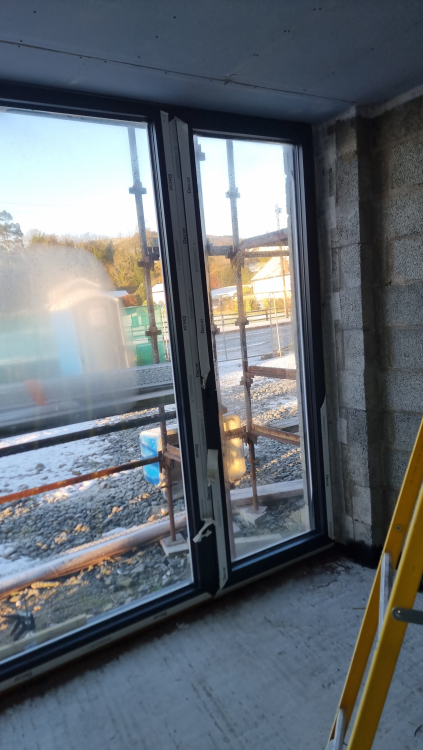
I did write in another thread some time ago about how the coupling on the internorm windows was rather neat. .. oh dear, I should have looked a bit closer. From the top it could be seen that the coupling unit had been propery installed and the window was tight together. All good then, I thought. Except no, just because the top 75% of the window was ok, I should not have assumed that the window fitters coupled the windows tightly together all the way to the bottom. I have recently discovered a gap between the windows that starts at about 50cm from the bottom. Such a gap seems strange, as I imagine the frame must be bent for this gap to be only at the bottom. Like this: I am fairly cross with myself that I did not see this earlier, before recent construction around the window. This is a full height window with plasterboard installed at the top and it will be a major headache to remove and refit the window. The window has an opening pane on the right which hinges on the right, so that it closes against the secion that may be bent. It opens and closes ok, I think, but I need to get my laser on it to see if and where there is a bend in the frame. There is a lesson here for anyone reading this at the planning stage.... do not have big windows that need to be glazed or coupled on site, it introduces risk of the fitters totally cocking it up. One of the fitters will be visiting in the next week to run through the long list of issues. The question is, what do I do about this? Do I insist the window is fixed, which would mean deconstructing the surroundings and, potentially delay the build, or, as our builder would prefer, throw some CT1 in the gap, or glue a panel over the gap, and press on.
-

Internorm KS430 sliding door seals question
Mr Blobby replied to Mr Blobby's topic in Windows & Glazing
Yes, I think the fixed section only hence the isssue. Currently being plasterd so humidity is in the 90s hence the condensation, but there is more on the fixed pane that was glazed on site. For reference, all five of the other windows that were glazed on site have broken or porrly fitted trims with air coming through the holes in the trims on at least three of the windows. So glazing on site was rubbish. The fitters also left behind as box of internorm fix-o-round sealant that internorm supply to be applied round the glazing units. The missing sealant is probably why the air is coming trough the broken trims, around the glaxzing units. I did ask the fitters about the sealant at the time and they poo-poowd me, saying it isnt necessary. That isnt what internorm would say though, so they will be refitting all the glazing with the sealant applied. Although the box I have on site is out of date now. Thank you for this. So, your seals are the same on both fixed and slider section? That is very useful information. I'm compiling my list today. -
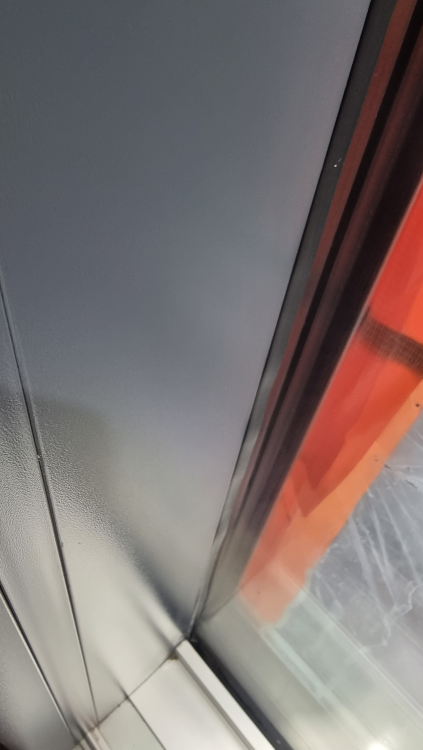
I'm in the process of compiling a long list of issues for my internorm installers. Widnows are fine, but the fitters were appalling. I can't decide if the internal seals between glazing and frame on the slider is going to make the list and require some help please. The sliding door seals are fine. Very neat, very tight, very uniform. In sharp contrast the seals on the fixed section look, well, rubbish. The fixed section seals are a much softer rubber, all bumpy and judging by the condensation, not thermally terrific. Here is the seal I mean, sorry about the picture, but it is very hard to capture the problem in a photo: I am concerned that the seal may have been substituted, it is a bit crap compared to the other seals. Can someone with an internorm KS430 please put me out of my misery. Please check your door and tell me, are the internal glazing seals on the sliding section completely different to the seals on the fixed section? Thanks....
-
The first floor ceilings were plasterboarded a few weeks ago and then, of course, the dust generator went into overdrive covering the joists and plaster board with a mega layer of dust. I now have this terrible urge to go into the loft (before its partially boarded) and set about the impossible task of hoovering up the dust. I really don't like dust. Builder thinks I'm mad. Am I?
-
That's what I thought. Left open, our builder tells me the renderer will fill them in next month. Just seems odd the installer didn't close them. I could go do it myself but then the builder will laugh at me.
-
About the width of my fat fingers
-
Beads have been blown into the cavity, leaving me with a house that looks like a colander, inside and out. Can I leave the holes open until rendering at the end of next month? Or is it better to mix up.some mortar and fill them?
-
I have been assuming for the last year that the gutters are not installed (brackets are in place) because the render needs to go behind the gutter at the top and gutters would cause an obstruction. And so I have never questioned it. I will ask the builder tomorrow why the gutters are not installed tomorrow and suggest that gutters need to be in place to protect wet render. Are gutters normally installed before rendering?
-
I agree. I wish gutters had been installed, even temporarily, a year ago. Walls are green at the valleys so I recently put temporary guttering up at the valleys. Our builder doesnt seem to care about this. Down to me to clean the green off before the rendering is done.
-
So, after frustrating delays all summer, the only option I now have for rendering this year is the last week of November. Which in Northern Ireland means its cold, dark and wet. Do I reject the builders optimism and assurances and hold off until April/May? Or chance it with the weather? This is so damn annoying. Block house. KRend HP12 base coat + K1 silicone. No gutters up so walls are usually nice and wet.
-
Accepted practice is to install perimeter insulation around screed, which makes a lot of sense in a traditional build on the ground floor where the UFH would otherwise be heating cold walls. But does the screed need to be insulated in a well insulated floor? Our 100mm screed will be going over first floor hollow core slabs. Block walls have 250 cavity and no thermal bridges anywhere as far as I know. Foundation is Kore slab. We will have some UFH loops in the FF screed, but this is hopefully not required for heating, but is there just in case. We may need it for cooling. Do we really need to insulate the screen from a very will insulated perimiter? Is the insulation still required to prevent cracking in the screed? Our builder also wants to insulate below FF screed by first pouring 50mm insulated screed and then 50mm flow screed on top. I would be quite happy for the UFH heat/cool to pass to the hollow core slabs rather than have quick response times. Is that mad? UFH flow temps will of course be much closer to ambient temps than a "normal" house. In a well insulated passive house then, is there any need to insulate the screed... 1. Do I need 50mm insulated screed below 50mm flow screed to insulate the FF Screed from the hollow core slabs below? 2. Is there any point in installing perimeter insulation when the walls will hopefully not be "cold"?
-
Thanks all. Stop beads look neater and make sense to me. This afternoon the joiners on site gave me that look (the rolling eyes shaky head look) when I asked about using a stop bead at the window frame/reveal junction. Said they'd never seen anything like it and the vertical DPC is there to keep it weatherproof and nothing else is needed. I can see this is going to be an impossible task to convince anyone that there is a another way of finshing the render at the reveal 🙄 Just to be clear, our windows are aluclad upvc, not aluclad timber. Our walls are block cavity, to be rendered, no EWI. Is stop bead still relevant? On line examples look to be for EWI.
-
I'll check with the render guy but talking to trades on site the only way it's done here is to render up to the vertical dpc against the window frame and then trim the dpc after rendering. No bead at the window frame. Silicon in the crack later if you want. The vertical dpc, I'm told, will stop water ingress so why would I want to change it? No concern for wind blowing into the cavity because air tight tape inside 🤷
-
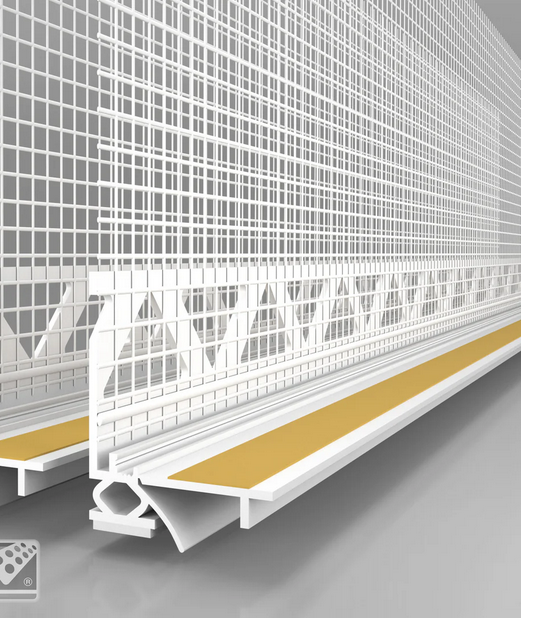
Finally, finally we will be getting the house rendered in the next few weeks. If it stops raining before we run out of time this year. Build is block cavity, alu-clad windows in check reveals. In the reveal between window and check is the vertical DPC. Most windows are tight at the front against the check reveal but some have up to 5mm gap. I am told by the builder that reveals will be rendered to window frame and hence this gap will be fixed. Which leaves me naturally concerned that this is crap weatherproofing as render and frame will obviously crack. When I asked about using a bead against the window he said its not needed. A very long time ago @Iceverge helpfully suggested a window reveal bead to provide a more durable seal between render and window frame. Like this: .. which I like the look of very much. My builder is, however, going to roll his eyes when I suggest this. Why on earth would I need to use a bead here anyway, when there's vertical DPC, right? So, just to confirm, can a stop bead like this be used at the window/reveal junction and is it a good idea? This product seems to be marketed at EWI applications, which my house is not. If this is the best way to do it (my builder prefers to do things the quickest and cheapest way unless I intervene) then is the image above of the right product? And what about the vertical dpc in the way? What colour bead? White to match the render I guess. Or grey to match the window frames?
-
Alterative option to 150mm celotex + 50mm celotex?
Mr Blobby replied to flanagaj's topic in Heat Insulation
Do you have a Garage? -
Alterative option to 150mm celotex + 50mm celotex?
Mr Blobby replied to flanagaj's topic in Heat Insulation
Our original design was to put the insulation on top and have a warm roof but it proved problematic. I forget the detials but I think the SE didnt like it. Something to do with screw length to fix PIR and sarking. -
Alterative option to 150mm celotex + 50mm celotex?
Mr Blobby replied to flanagaj's topic in Heat Insulation
We have a similar roof construction to your design. Cold roof, warm loft, standing seam on top. It works well giving us a warm space in the loft and plenty of space for the MVHR in a warm space, but is not the cheapest option. As others have said, use wool between the rafters and PIR under. No way you will cut the PIR to fit snugly. Fix and tape membrane under the PIR with battens. If you want to plasterbard then fix the plasterboard to the battens, thus keeping the membrane intact. We attached our cieling joists to a timber fastened to the wall under the joists so that we could run the airtight membrane behind it without being penetrated by joists. Like this: Frget about GSE inset panels on a standing seam roof. Use S5 clamps instread. And Standing seam is too nice for panels so install them at the back only. You will understand as soon as the roof is on. I'm assuming you have a timber on top of a steel ridge beam. Its not clear from your drawings. You need to keep the steel on the warm side, not in the middle of the insulation. Assuming you have gable ends then build the inner leaf lower than the outer so that you can pack some insulation between the top of the wall and the timber directly under the standing seam. We used sarking instead of ply or osb. More time and cost but the roofers loved it. In retrospect I would have rn the airtight membrane vertically instead of horizaontally. I think it would have been easier to install crease free. And better if the roofers had cut battens to install the membrane in sections but, for whtever reason, my roofers hate cutting battens.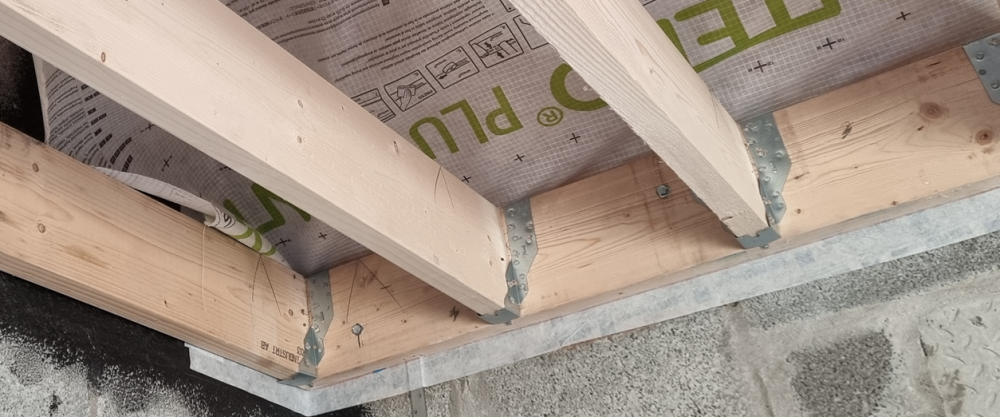
-
Thanks for the advice. I visited the other house my builder was working on about a month ago when the renderer was on site. He had a sprayer and a couple of helpers feeding the mixer, so to a layperson like myself, it looked like they knew what they were doing. Final numbers from the renderer are just in: Parex BL10 white: £12,200. Which I did not ask for (I asked for krend silicone K quote) because AFAICS the BL10 is not silicone based and crack resistance is important. Parex acrylic: £24,000. I'll look again at the KRend reference house down the road, and probably end up with that as the safe and cheaper option.




