Moonshine
-
Posts
2094 -
Joined
-
Last visited
-
Days Won
6
Everything posted by Moonshine
-
none, the mass of the acoustic vinyl would not significantly increase the mass of the brick wall. You need a cavity of some type, filled with insulation, and minimal / no rigid contact with the existing wall, then the extra mass after the cavity.
-
No as the battens create a rigid connection from the wall to the plasterboard
-
O.k i am going to resurface this thread. My gut is saying that its easier (cheaper) for the screeders to work on larger areas with minimal amount of corners, so its my plan to lay the insulation and UFH pipes then screed without putting up stud work. Before the screed goes down, i will have marked on the masonry external walls where the free areas are for the partitions, so i can use this as a marker plus measurements and plans to situate the sole plates Once the screed has cured, bolt / screw down a sole plate timber to the screed in the free partition areas, using bolts that are limited to 40mm in a 75mm deep screed, maybe glue the sole plate to the insulation for good measure! What could go wrong ?
-
opps! so i presume once the UFH pipes are laid (even before the screed goes down) get the ends capped off and sealed
-
Just one thing to consider, subjectivity does the noise come from the centre of the wall, or the edges of the wall? Do you know if it's a brick cavity wall or solid brick wall? Though to be honest the remedial works would be similar. The more space you loose typically the better the result. My recommendation would be to put in a metal frame system that is independent of the wall or resliently mounted to the wall. Insulation in the cavity lined with 2 layers of 15mm acoustic/ higher density plaster board. However I understand this comes at a space premium. There is some information on this type of system below, though you are going to loose approximately 90mm of room space for and independent stud (min gap to the wall 10mm) https://www.british-gypsum.com/~/media/Files/British-Gypsum/White-Book/White-Book-C07-S05-Linings-GypLyner-IWL.pdf If you want to loose less space at the cost of acoustics you could use a product like genie clip fixed directly to the wall, with top hat sections / furring channels. The cavity created is filled with insulation and lined as above. This option would loose you 65-70mm A way to loose less space is a product like gyproc tri liner (now discontinued I think) which is 52mm thick. It is a mineral will batt backed platerboard which is fixed to the wall.
-
 I have knocked blown render off with a sds drill and chisel attachment, easy where the render is blown, hard when it's firmly attached, though you probably don't need to take that stuff off.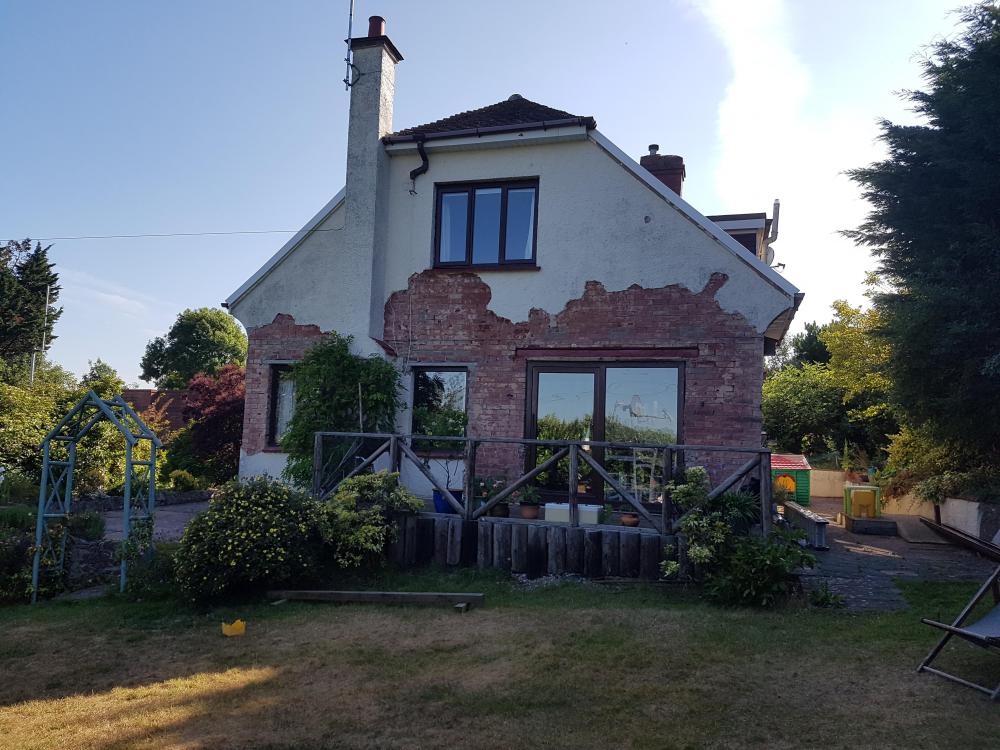
-
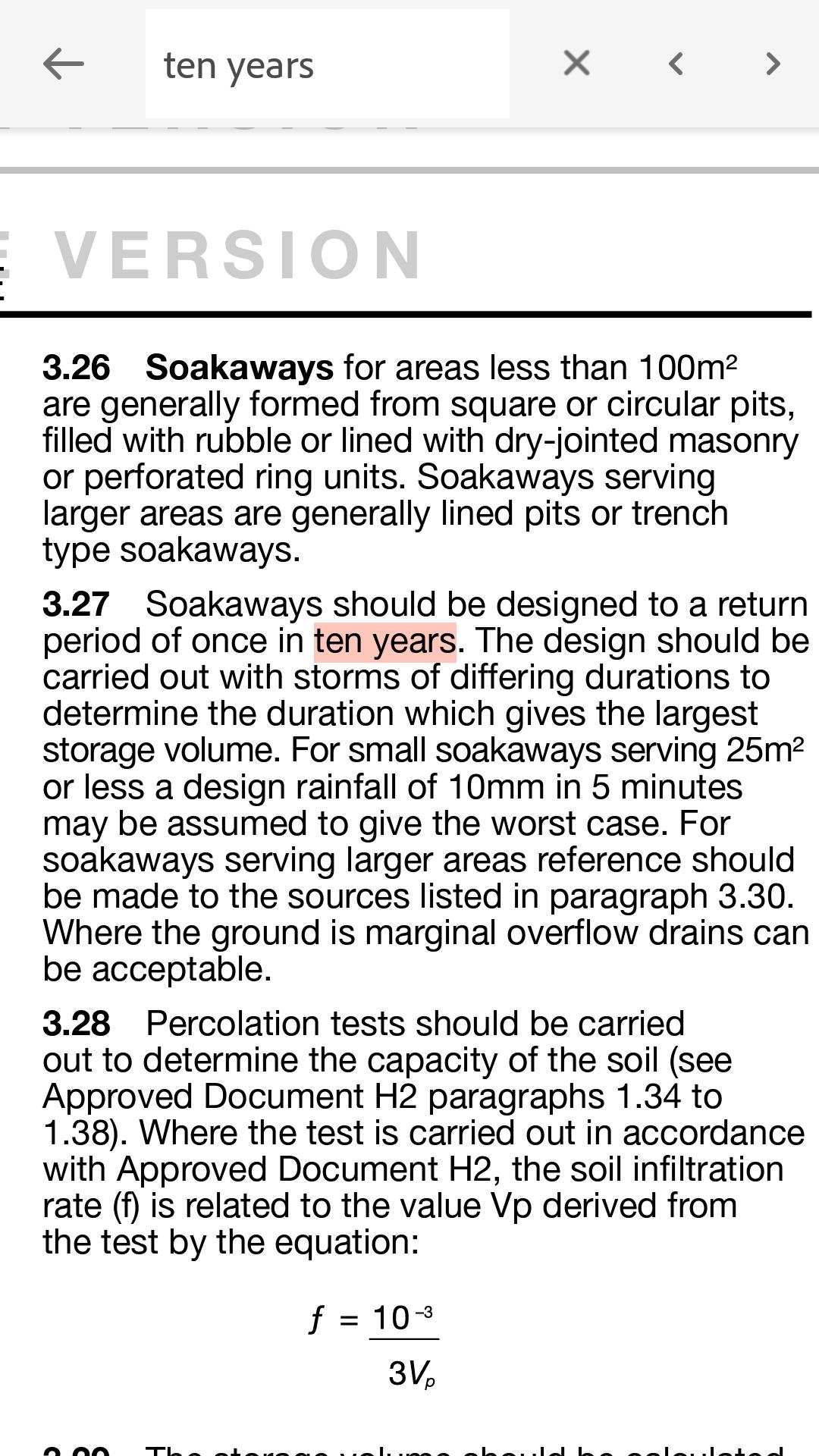
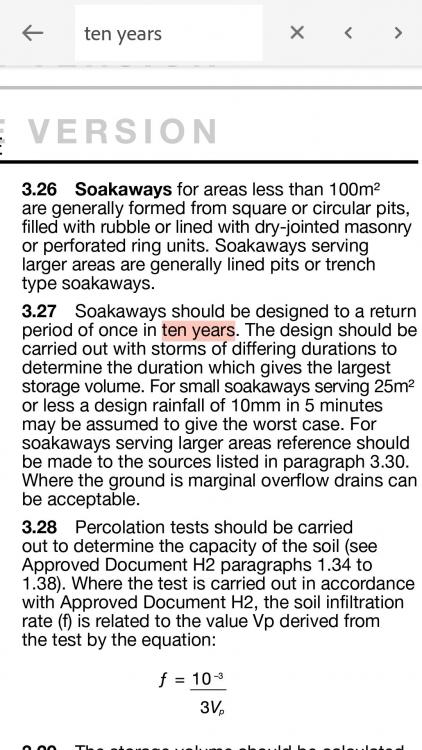
I have just had a closer look at approved document H (I obviously didn't read it properly) which states ten years. I wonder if build control may ever ask for more than that.
-
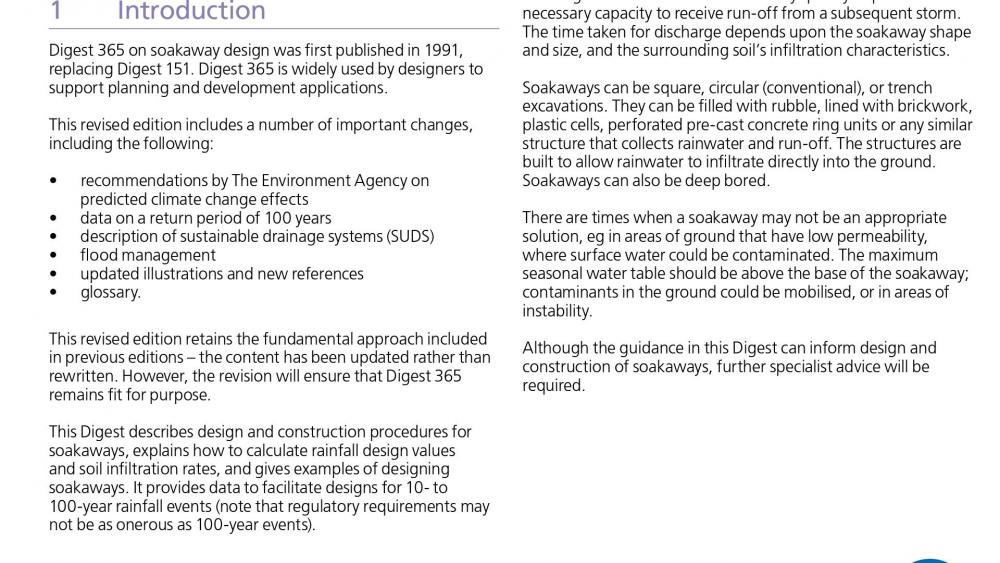
Thanks, but I think that is older version, where as the 2016 version isn't as clear cut as that.
-
Thanks, have you got a source for that? Based on 10 year, the soak away size could be accommodated, and maybe better to work with two, one to the front of the house, one to the rear, rather one big one to the front.
-
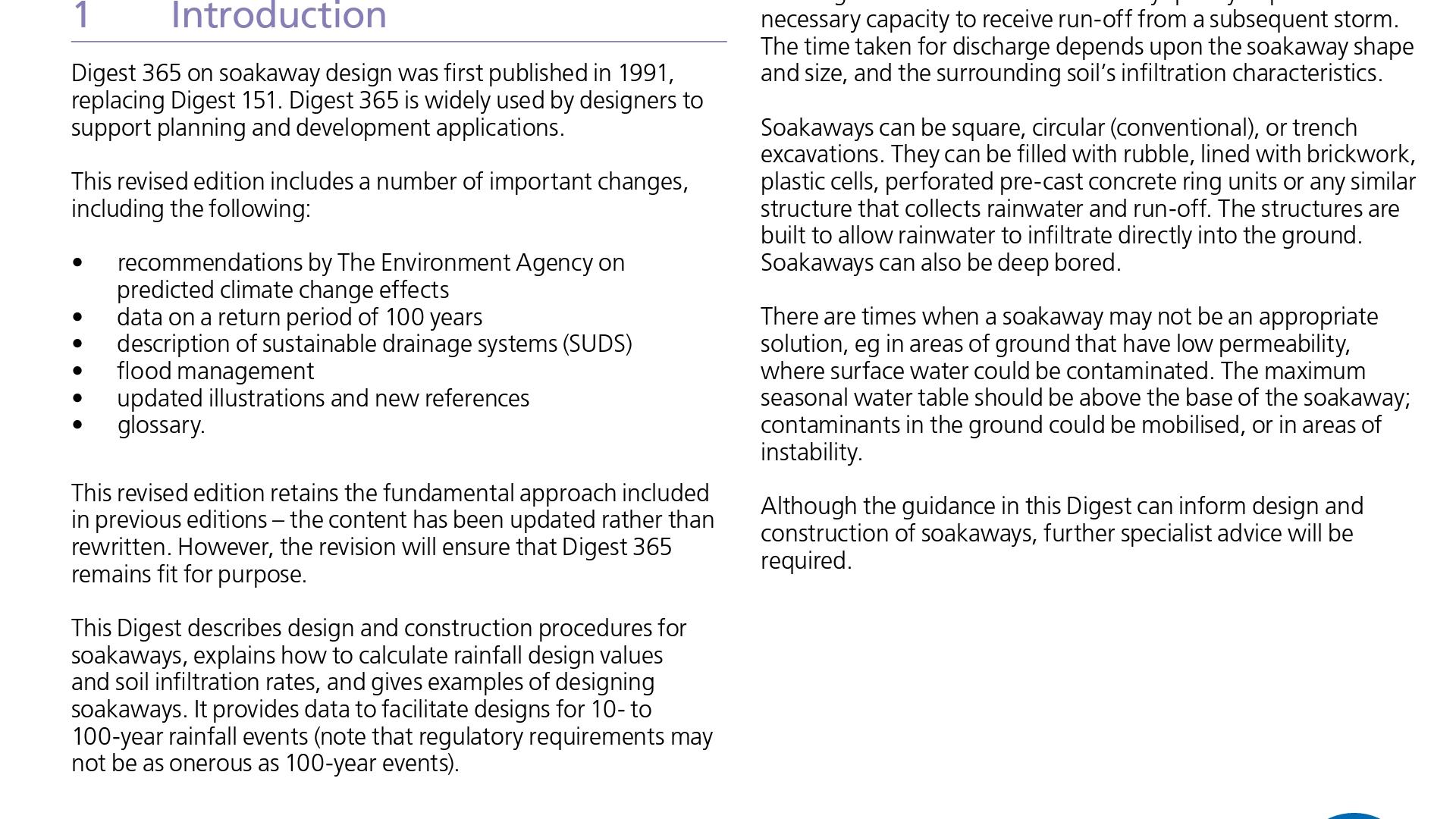
There is, but trying to get my head round sizing of a soak away, I have been using bre365 but not sure of what rainfall rate to use 10 year, 30 year or 100 year return.
-
Thanks all, simple calc then. Though for surface water it will be for all impermeable surfaces.
-
Looking at a new sewage connection, and may want to put my surface water down the main sewer to save doing a soak away. The application form is a asking for surface water discharge rates based on 50mm/hr rain fall. How do I do about calculating it?
-
Good to know , I was a bit worried about having to get bang on measurements but cutting on site may be more time consuming but means a good fit can be achieved
-
@PeterW that is some good advice, and I can see myself going round and putting wedges in. You mention that joists are cut to size. Is it normal to order just over size length and cut down on site?
-
I am looking to use I joists if it makes any difference
-
@PeterW i think i am going to have to ask you similar questions when i get that my information together! ?
-
That is expensive, i was looking at the Armatherm 500 product for the thermal break in a concrete block wall, and got a direct quote from Armadillo (01274 591115) yesterday for 100m length total. 2000mm x 100mm x 50mm Blanks of 500-160 - £20 per unit + VAT 2000mm x 100mm x 50mm Blanks of 500-250 - £30 per unit + VAT I can't see how 50mm FRR pads is that much more expensive, i would contact Armadillo directly
-
You can’t build here. There are no shops nearby.
Moonshine replied to Jaqueslecont's topic in Planning Permission
its a valid reason for refusal, and not having access via footpaths, bus services, facilities all add to the weight against something being sustainable. -
@Oz07 but would this not be the case if it was going into a standard joist at 90 degrees? Is the standard way to fit the ledger board to the wall (as per the video) drilling a load of holes into the block work (~75mm deep) and then set the threads in expoxy resin, wait for that to go off then bolt it? Any idea on what thickness of thread and spacing's, would it need to be signed off / designed by a structural engineer? The thought of how to practically fix the ledge board, while at a height trying to keep it level and drilling a load of holes in it doesn't sound like great fun, and insight in how to make the installation easier?
-
I have not heard of this scheme, is it applicable to new builds? Edit, it looks as though new builds are eligible if they are custom built, i better start looking into this scheme, anyone able to give me a quick overview of the application / design process?
-
How well insulated do you think you need to be to not require radiators upstairs?
-
Looking at the options and my build I think that I am going to use a ledger board with top fix hangers with I joists. The air tightness is a factor but also the build progress. My house has a split level so the height of joists on ground floor aren't consistent so less head scratching for the brickies / error trying to build in the joists. My thoughts are that the hangers could be pre fixed at the required centres on the ground then lifted and fixed into place. The question I have is when do the ledger board get fitted? Surely the blocks need to be a certain height above and mortar set before drilling into wall? Or could a 2 storey external masonry wall be built without the joist being fitted?
-
I haven't but the wall u value goes from 0.17 to 0.18 and I am more concerned with the overall SAP score
-
Please review my foundation/floor/wall junction detailing
Moonshine replied to Hilldes's topic in Foundations
When i looked at it i could get 0.12 W/m2K with a standard block and beam floor with 150mm PIR (0.022W/mK), this seemed to me to be more cost effective. FLOORS EXTERNAL BLOCK AND BEAM OVERALL STRUCTURAL DEPTH tbc U-VALUE 0.12 W/m2K Floor deck: 75mm structural screed with embedded Under Floor Heating (UFH) piping Insulation: 150mm rigid insulation boards (max thermal conductivity of 0.022W/mK). Floor substructure: 150mm deep beams with 100mm blocks laid out to structural engineer specifications, over min 150mm ventilated floor void. -
you get a better U-value performance from them, which drew me to wanting to use them, though i may ditch them for a standard lightweight block for a 0.01 increase in U-value