Ferdinand
-
Posts
12213 -
Joined
-
Last visited
-
Days Won
41
Everything posted by Ferdinand
-
@LadyBuilder Since you seem to know pretty well how to go about it, just a check are you on top of the self-build CiL exemption? In London there is a lot of CiL. Ferdinand
-
There was recently a Grand Designs in East London where they had a disastrous contractor for their basement, who they then replaced with somebody competent. Perhaps you could find the competent replacement. Episode here with link to supplier list: https://www.granddesigns.tv/east-london/ Since that whole site was 38sqm, presumably they would find yours spacious.
-
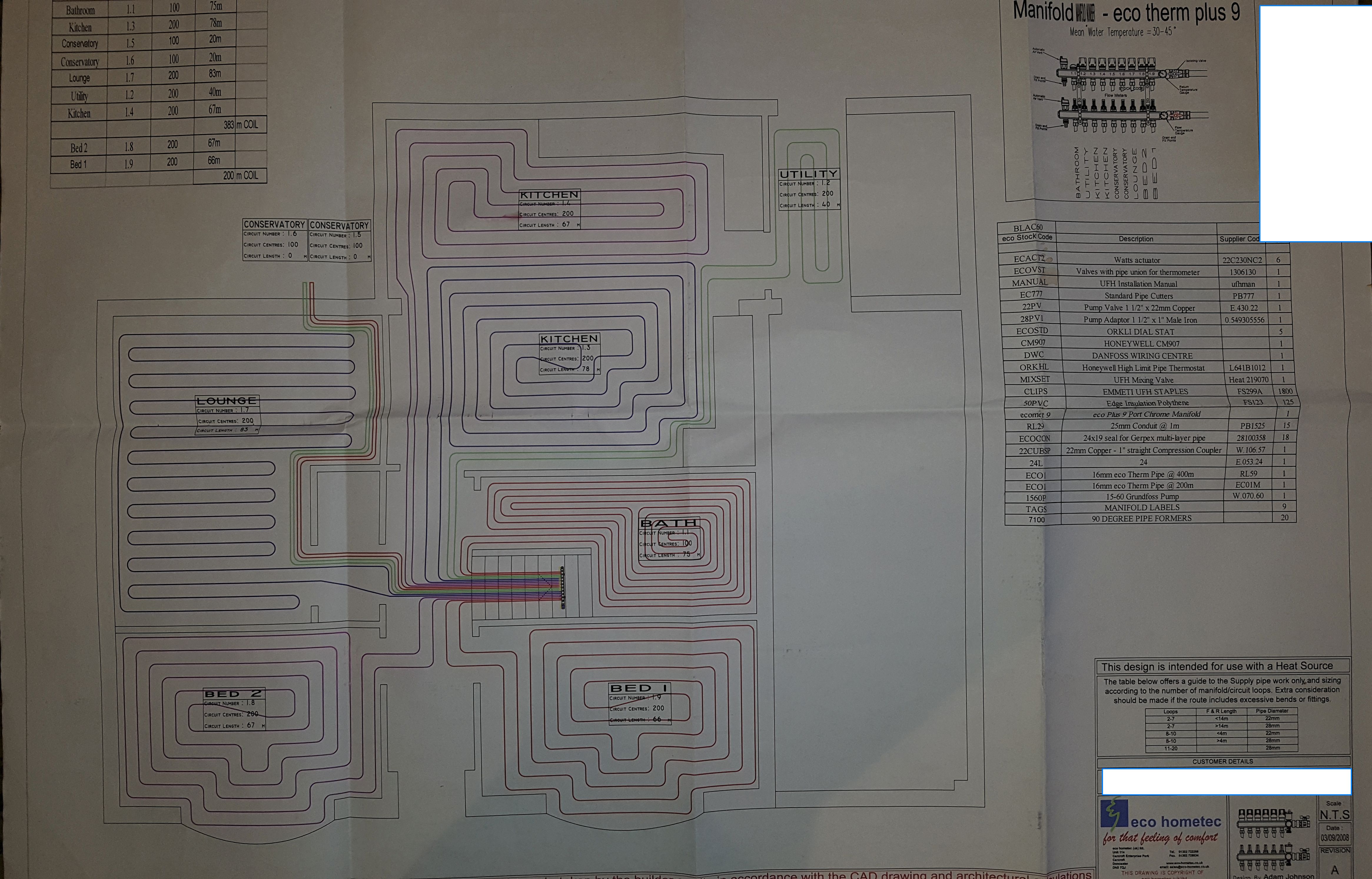
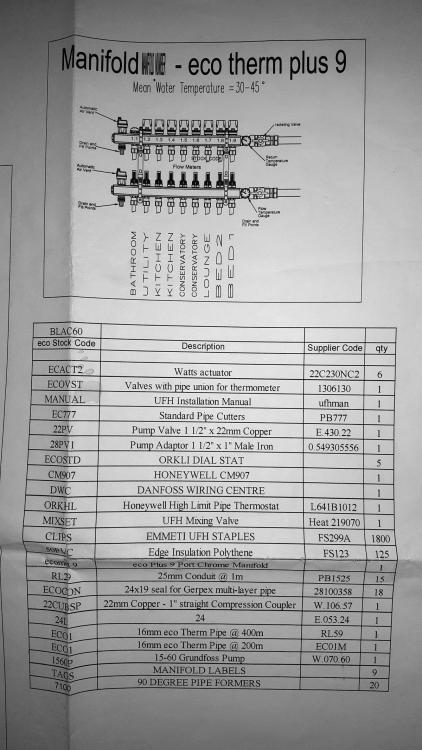
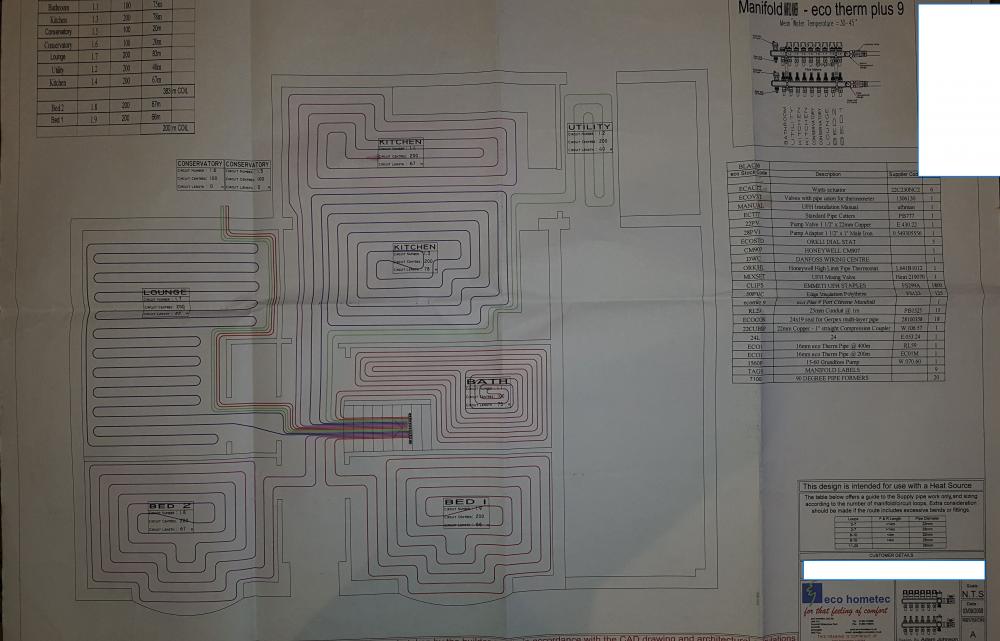
What does a bypass valve do in a ufh system? This pic at the end is the list of components from the ufh specification drawing. Also a pic of the full drawing. Won't that slow down the flow, which (I thought) was supposed to run at between 1 and 2 on the telltale indicators on the ufh circuits? I hid this in the previous post, which should do that. Should I put the rest of the system (my office plus a study bedroom plus the utility) on the flow adjusters, which will kick in another 240+m of pipe-run in on 3 lobes on top of the probable 350m I currently have running ie do I need it all on for this exercise? Cheers Ferdinand
-
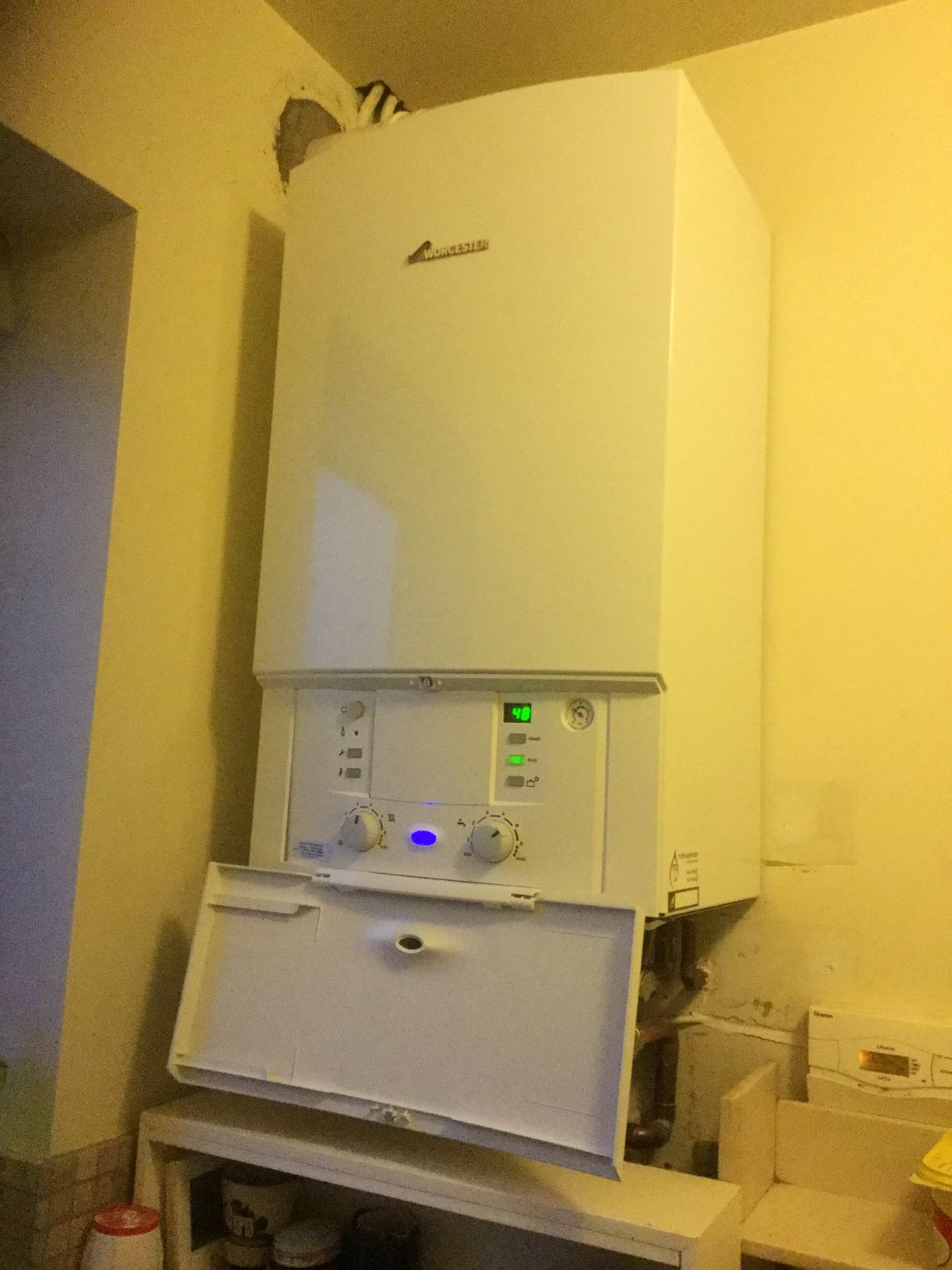
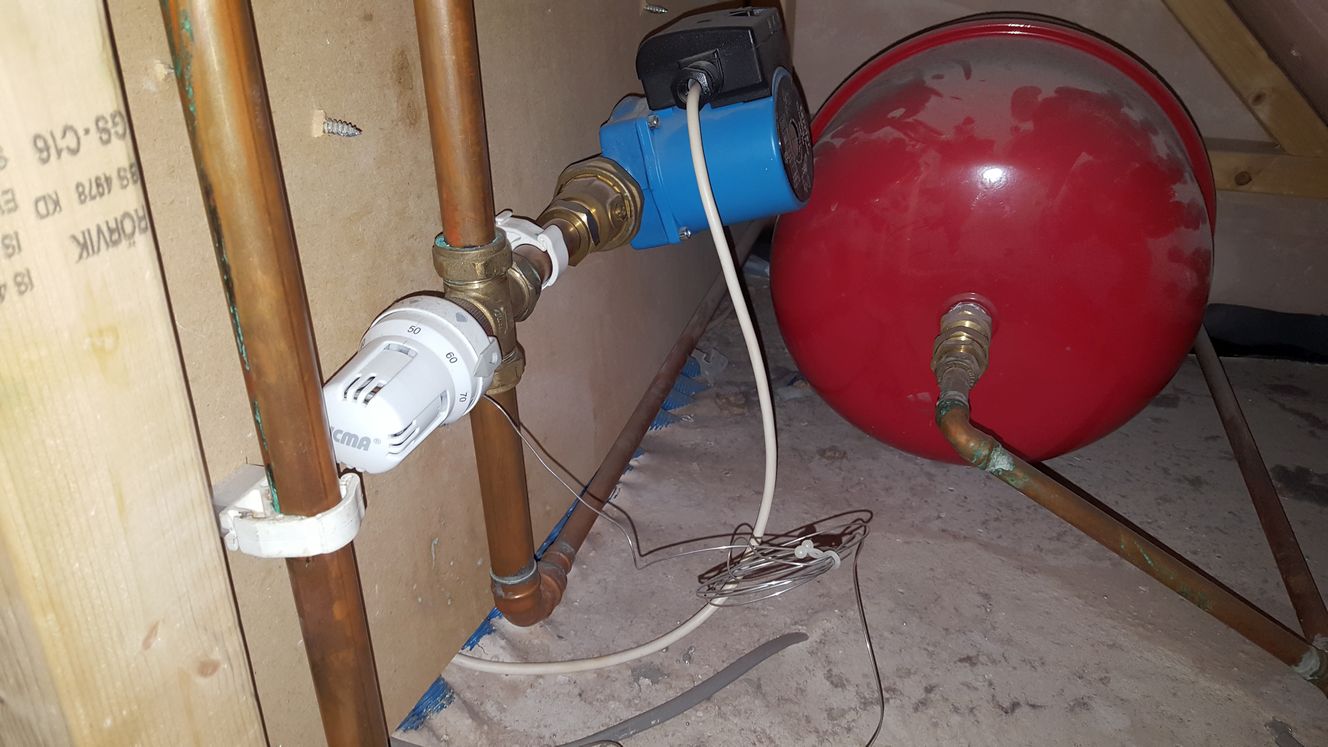
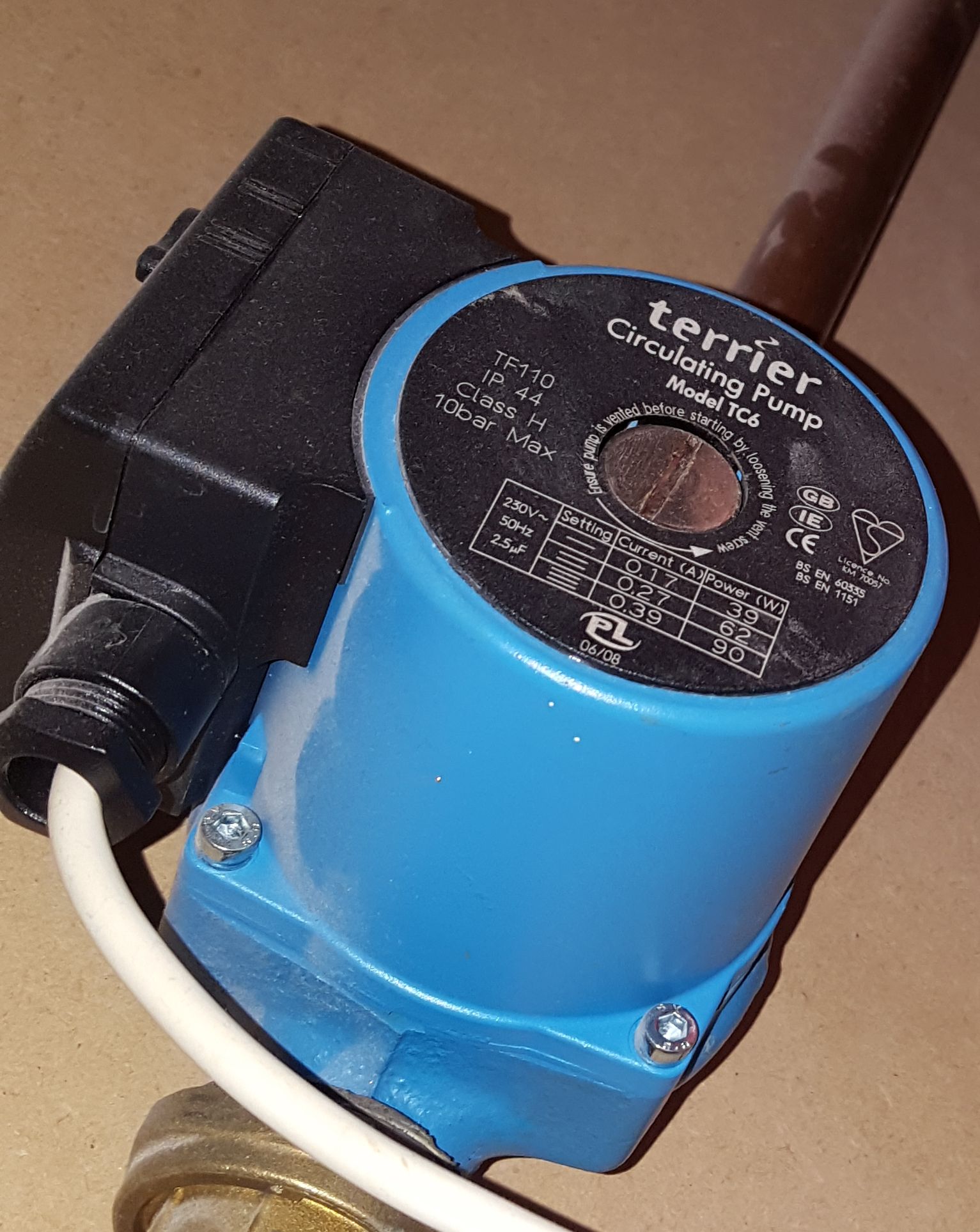
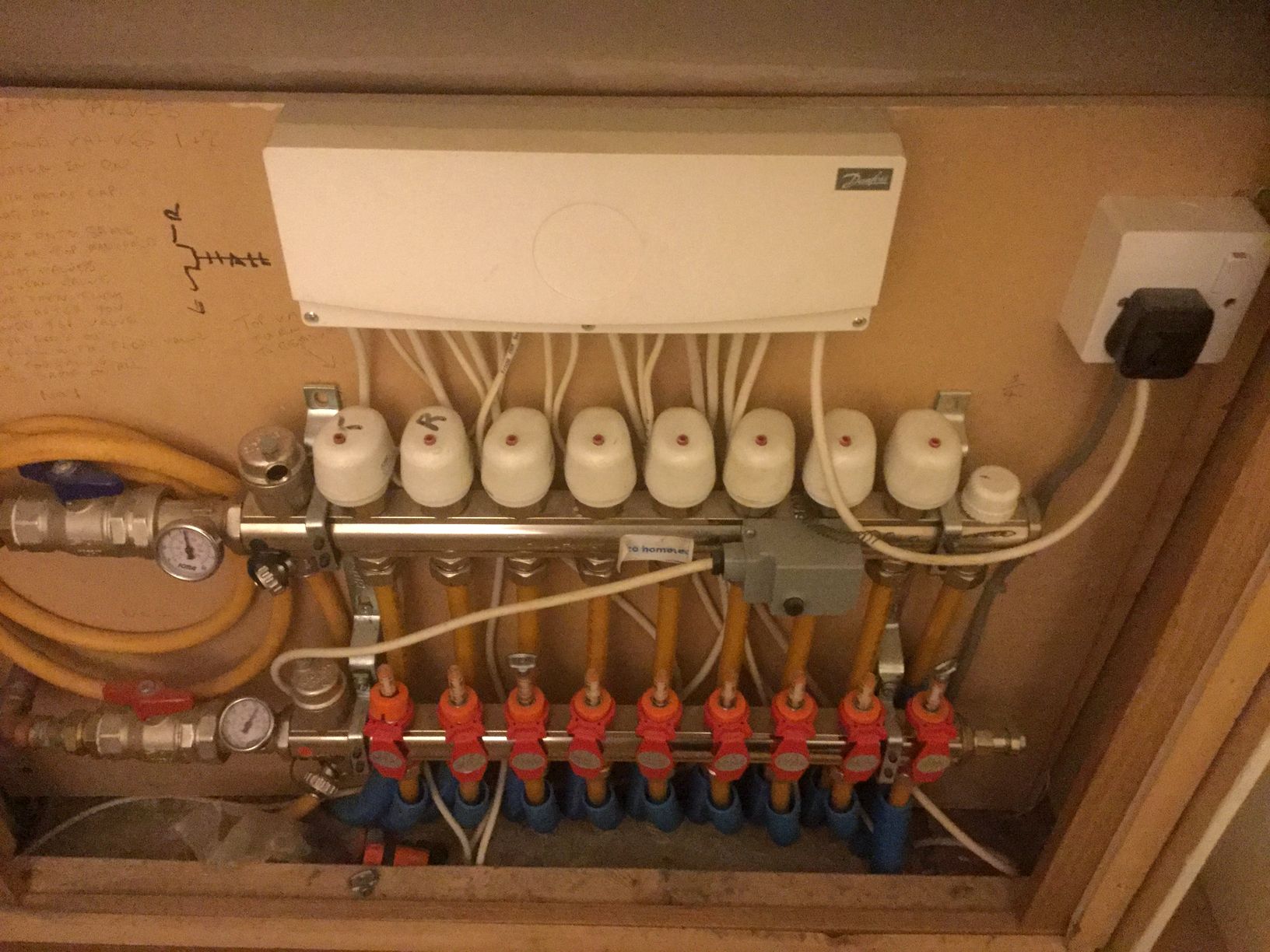
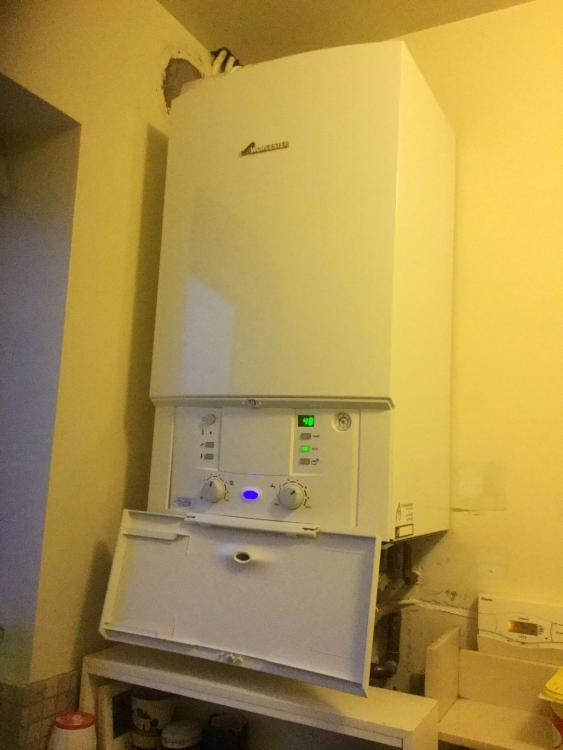
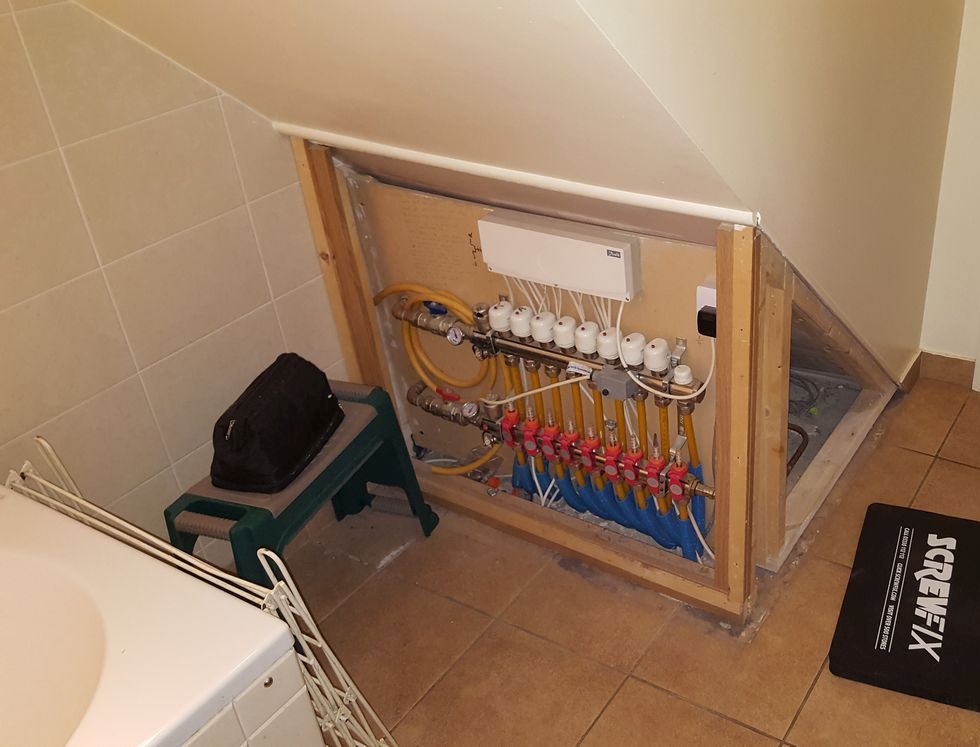
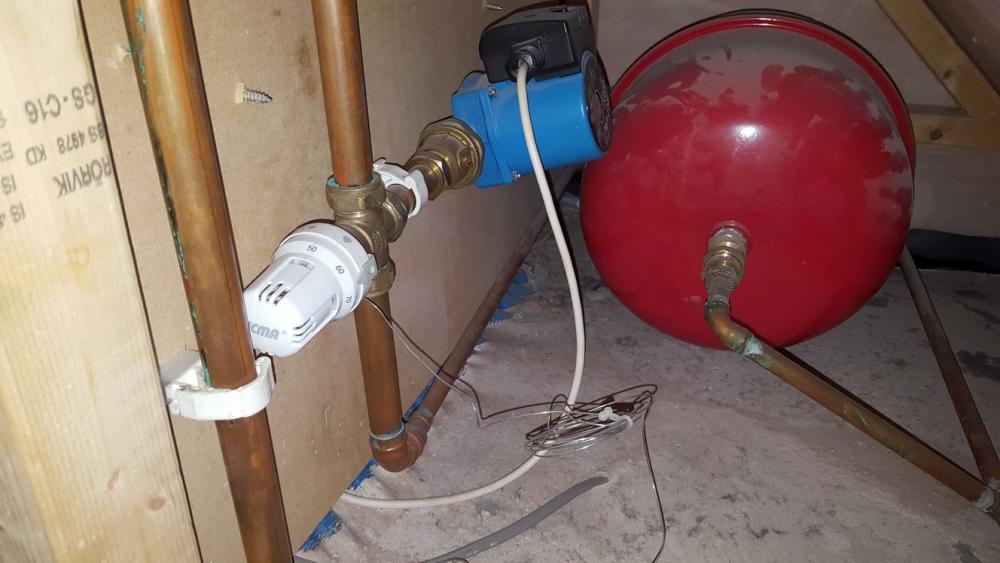
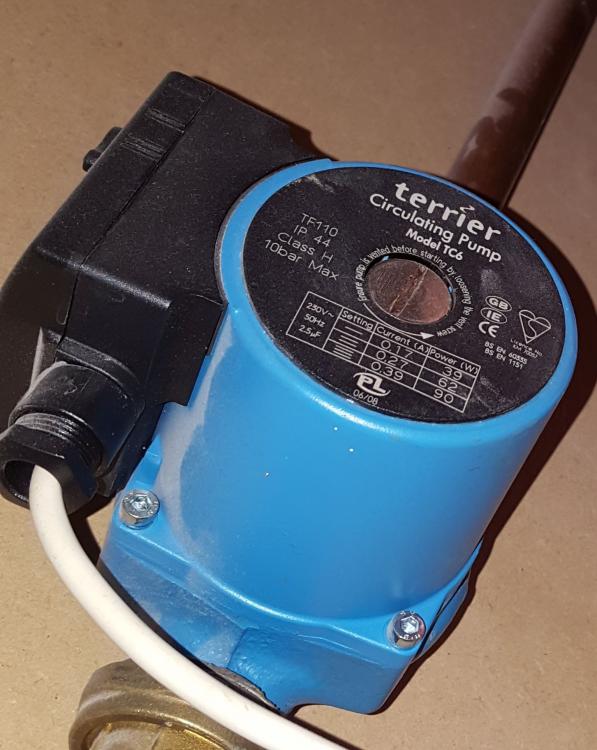
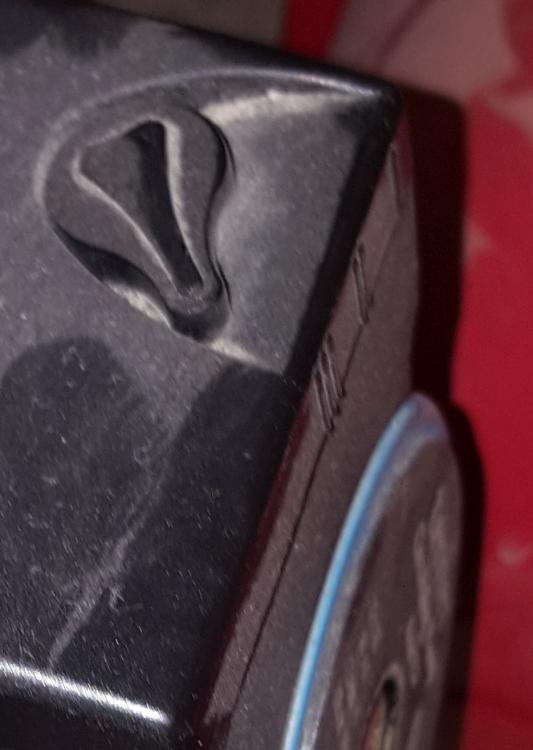
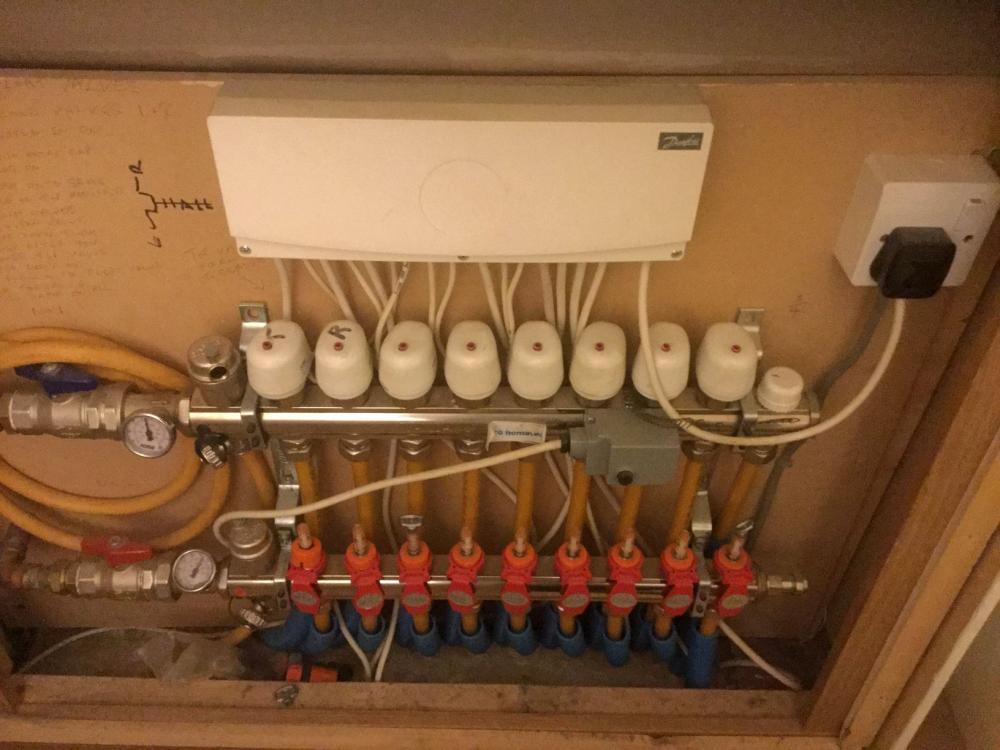
I have excavated in the filing cabinet, and behind the manifold and - ai caramba! - there exists a pump and even a pressure vessel (so why is it short cycling !), The building spec does not look very impressive by BH standards (conversion was done to 2009 planning permission by previous owners). Floors are 75mm screed containing ufh over 85mm of polyurethane insulation and a slab (membrane somewhere). Walls are (outside-in) Facing brick, 100mm rockwool, 100mm thermalite blocks, and (I am assuming) service cavity then plasterboard. That is the specification on the drawings. Floor area covered by ufh is probably roughly 105 sqm. The approved ufh drawing contains the statement "Mean Water Temperature 30-45 degrees. I make that a wall U-value of 0.26m, and a floor u-value of 0.26. The ufh system is Eco Therm Plus 9, There is 600m of 16mm pipe - I have a total of a little under 400m currently turned on in the flow controllers. At 200mm centres except in the bathroom, where it is at 100mm centres. Out and return temperatures on the manifold thermometers are now 42C and 28C. Presumably if I add in the rooms currently shut off that will narrow a little more. Piccies. The boiler is an 18 month old Bosch Greenstar 42CDi Classic ErP, which should be capable of dealing with anything I can throw at it. Wider view View of pump and tank. Mixing Valve (?) set to 50 (degrees C?) Top of the Pump, was specified as a GrundFoss 15-60. ] This one looks to be up to 90W, and to be set to High. Ferdinand
-
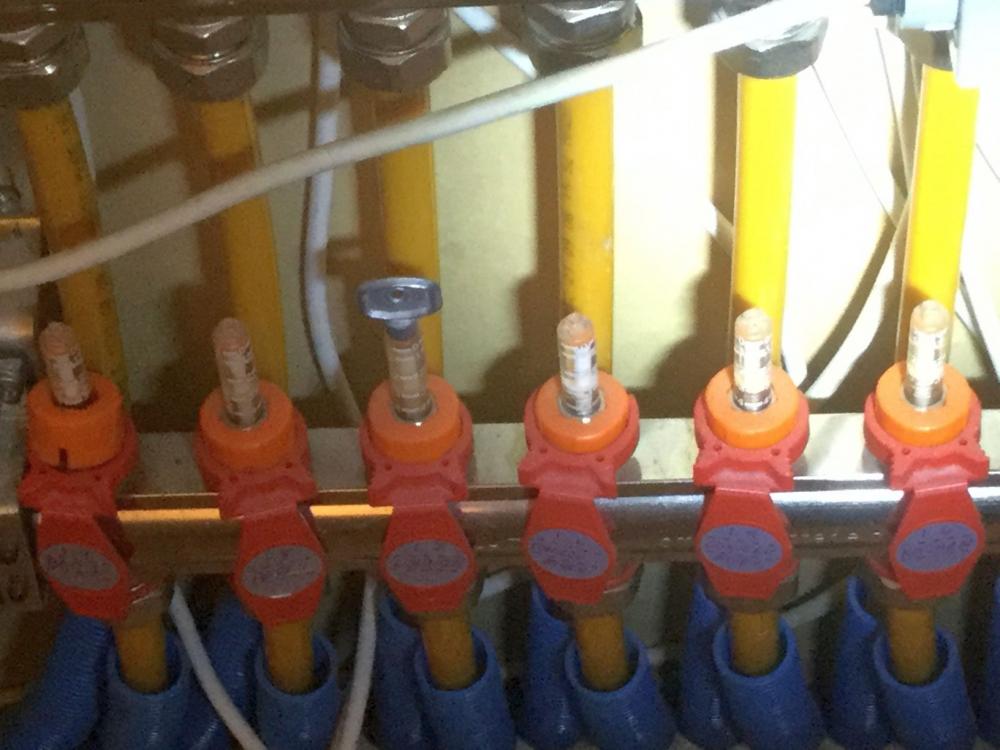
Flow temp dialed back to 40C via the boiler control, now reflected on the input side temp guage, and I have opened the controls on the circuits to rooms currently in use - lounge, 2 x in kitchen, bathroom, utility. We also have 2 bedroom circuits which I have left closed for now. Each is now showing flow of around 1 (litre per minute?). I have also set the indiivdual room stats (mechanical dial) high, and the programmer to "Manual" to stop them interfering. Is the pump the grey box in the first pic? Do I need to look for a switch to set it to fast? Cheers F
-
Do those white boxes contain any auto-balancing gubbins, or is it just room-stat connections to the actuators? I am trying to get to grips with mine for the first time and all of my flow meters show zero. Does that mean that autobalancing is happening, or that the system is in some kind of lockdown, or that they are stuck, or that someone set them to zero before we bought the house ? We certainly get heat through it, but the flow and return temps are 20C different (50 vs 30 with the boiler at current setup) - which seems high. This is my install:
-
Is there a thread for questions about the @JSHarris heat loss spreadsheet? Might be useful to collect answers in one place, so that Jeremy does not have to comment umpteen times. I have decided to get to grips with my UFH, which feels as if it needs rebalancing and is definitely short-cycling though the boiler is proeprly condensing, and may be about to do a similar exercise by putting my house (and the LBB) into the ss, and I can ask lots and lots of questions.
-
That is actually a persuasive argument for a service cupboard where there is no room to stuff anything else. Glad you caught it.
-
I can't call this. I think I might make sure they are easy to installed make sure the roof structure is exactly ready etc, then do it afterwards if I knew I would have PD rights. The easy way to eat an elephant is one piece at a time. But your circs may suggest otherwise.
-
eg eg from about £6 https://www.ebay.co.uk/sch/i.html?_from=R40&_trksid=p2047675.m570.l1313.TR12.TRC2.A0.H0.Xlaser+thermometer.TRS0&_nkw=laser+thermometer&_sacat=0
-
Cheers. I think the case for the fan ones is perhaps if it needs to be directed - eg to a wet spot on the plaster while dehumidifying. Ferdinand
-

Discount Offers of the Week
Ferdinand replied to Ferdinand's topic in General Self Build & DIY Discussion
Alternatibely, convector heaters for £12 recommended by @ProDave I bought 3 convector heaters from CPC for not a lot http://cpc.farnell.com/pro-elec/pel00022/convector-heater/dp/HG0091607?ost=hg0091607&iscrfnonsku=false&ddkey=http%3Aen-CPC%2FCPC_United_Kingdom%2Fsearch I don't like fan heaters for unattended use. It's not pretty if the fan fails. -
Discount Offers of the Week
Ferdinand replied to Ferdinand's topic in General Self Build & DIY Discussion
Screwfix thermostatic fan heater £12.00. 40% off. Screwfix have a couple of OK inpexensive compact fan heaters, with thermostats, if you are after one This fixed one for £11.99, reduced from £20. I paid £20 as a drying heater and it was fine. This one is "Trade Rated". I will pick up a couple of these for future needs I think at that price: https://www.screwfix.com/p/portable-fan-heater-2000w/2963P And this oscillating one at £20. https://www.screwfix.com/p/portable-oscillating-fan-heater-2000w/2147P -
@CC45 Best of luck with all this. Screwfix have a couple of OK inpexensive compact fan heaters, with thermostats, if you are after one This fixed one for £11.99, reduced from £20. I paid £20 as a drying heater and it was fine. This one is "Trade Rated". I will pick up a coupel of these for future needs I think at that price: https://www.screwfix.com/p/portable-fan-heater-2000w/2963P This oscillating one at £20: https://www.screwfix.com/p/portable-oscillating-fan-heater-2000w/2147P I think we all know the answer to that one. If you had been fully prepared now, it would have waited until you had stepped the prep back down :-o . Ferdinand
-
Anyone know how much sway Parish Council has?
Ferdinand replied to nubbins's topic in Planning Permission
One thing you can do is to get an informed opinion quickly (you, architect, possibly Planning Officer) as to whether the objections are 'material planning considerations', then make a response as a comment on the Planning App, with legal / policy references from National Planning policy / local policy, Local Plan, evidence etc. ("This is b*ll*cks because it is in keeping with these 6 houses across the road and that amount of overlooking is to be expected in a village centre" etc, phrased more neutrally.) There is much to be said for going in and inspecting all the objections, and try and get the PO to be the one to show you file, and mention it all face to face. You may need to frame your comments as innocent questions about the Council policies. You could also do that as a phone call. Then you know it will all be considered in the Planning Officer's Report. Who knows, you may find things the P/O has missed. Ferdinand -
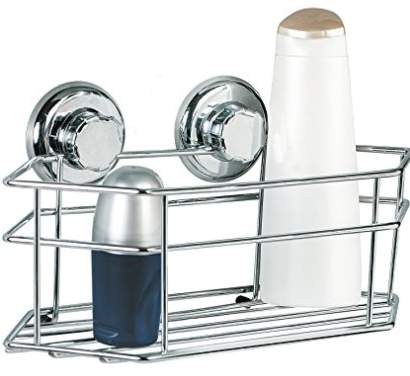
Quick recommendation - I have just bought various suction + screw applied bathroom fitments in the Tatkraft Megalock brand via Amazon, and they seem to be good and inexpensive. I have successfully applied these to smooth tiles and Multipanels, and the loo roll holder (ie a lightweight one) to the underside of a stainless steel cabinet. I have not had them long, but they seem to be very well attached. Glass should also be OK. I cannot comment on whether it will rust or not, or longer term use. The obtangular (they call it rhombic iirc) caddy below us now in my bathroom, so I have bought another for the rental. it says this one is tested to 8 kg. The caddy below is about 30cm by 15cm made from 5mm wire / rod, and is about £16. I also have the soap dish / loo roll holder / towel hook set for about £17. (Do we need an Amazon affiliate link for Buildhub?) Ferdinand
-
Dunelm Mills - mainly furnishings and fit out. I note that Dunelm Mills seem to deliver to the 'extremities' at no extra cost. They are my go to supplier for a small number of things such as curtains and curtain tracks. They do, however, reserve the right to take an extra couple of days, and do not do express delivery. That includes free delivery over the same threshold as everywhere else. It seems to be orders of £50 or more that are free delivery, but the categories and thresholds are moderately complex, so read the policy. http://www.dunelm.com/info/help/delivery Ferdinand
-
@AliG Do take a serious look at the costs of buy/sell too. I only ever did one serious "hire-dehumidifiers" exercise, when a T went on holiday in winter and the water froze in the roof leaked. That ended up with an 8k insurance claim, the T back with his dad for 8 weeks, and the house taking several weeks to dry. It was within spitting distance of the new cost of the dehumidifiers used in hire charges. As I put on here this summer, I have now bought a couple of heavy-duty ones. Ferdinand
-
Thanks for clarifying, @TerryE. TBH I wasn't sure - I have never thought about the CoP of dehumidifiers. Usually there are other criteria that dwarf the importance of the cost of running dehumidifiers (eg on my only serious rental water leak the tenant had to move out for 2 months, and the Dehumidifier hire cost would be 10+ times the running cost). My evaluation of DHs has revolved around reservoir capacity, the ability to put it on a box and have a hose into a big bucket or drain so I can leave it safely overnight, the existence of a humidistat, and - as usual for me - a slightly anal focus on price when the essentials are met. It was only talking to professional building-dryers that made me internalise the huge benefit of also running extra heaters, even at ££ per hour. Hence the fan heaters while drying the Little Brown Bungalow plaster skim for the sparky who was due 4 days later. In this case, the figures for that DH are: Based on your number of 4.1 at 100%RH and 35C, that suggests that the CoP at 70%RH and 20C is around 1.2. That highlights how quickly the performance rolls off with lower temp / humidity. Ferdinand
-
So have I perhaps calculated incorrectly? It has been a busy day. I know it is good and that the chap closing down his drying business recommended those out if all the types he had. Have I misunderstood what they mean by Nominal Current? Spec: http://www.equiplogistics.com/buy/broughton-cr40-heavy-duty-dehumidifier-dual-voltage.html?gclid=EAIaIQobChMIir7HmMn91wIVipTtCh1HsQWoEAQYAiABEgLjpfD_BwE
-
The 40l per day (at 35C 100% rh) commercial dehumidifier I mentioned says it uses 1.3A at 220/240v or approx 350W. Surprisingly low. Your fan heaters to get it warm will be the main issue. Good job it s well insulated :-).
-
With the husk off, then, @SteamyTea, rather than an attempt at an amusing diversion. It is a bit long - sorry. I think this piece was an exercise in churnalism - the only difference being that the Press Release was perhaps especially written for the BBC to swallow. It was the kind of spacefiller / clickbait listicle I would expect in say the Independent or the Huffington Post, or perhaps on Buzzfeed on a really bad day. If it was a data journalism article written in an environment with either a competent journalist or a competent editor, one or the other would have made sure that the article should have: 1 - Identified its purpose and the questions to be answered, and *why* these are important questions. 2 - Profiled the source. Discussed Data sources and the relationship. Was this specified by the BBC, or data that just happened to be around in the media department etc? Why was *this* data selected? Why is "maximum distance possible" a good statistics to choose (suspect median distance to the 60 minute the perimeter would be better rather than a masimum)? Why is 3 times on a Friday a meaningful investigation? 3 - Explained the method used for deriving the claim. I think it was probably a Monte Carlo Method or similar simulation based on the company's routing software. We just have "x provided the data". 4 - Provided the context so that we can relate the data / claims to our experience. Is this real-world data? It is presented as representing such, and you interpreted it as such. But the BBC have not even told us what "typical" means - eg what about roadworks that are normally present at some time of the route, or school holidays when traffic is lower etc. As we all know, that makes a massive difference. 5 - Provided some analysis and produced some conclusions as to the implications. 6 - Given that it is the BBC, I would expect Cardiff or Swansea, and perhaps Belfast, to be in there. 7 - As an absolute minimum included a sanity check to match the data to reality, so they don't end up looking like right Charlies when/if it doesn't match. Dead easy to do; all they have to do is to get some staff going home at these times to measure their journey length. A couple of dozen would show whether the simulated data fits reality. As it is I can do my own personal factcheck. I have done the journey from Central Nottingham north up the M1 half a dozen times in the last 2 years after lunch with a friend or visiting my letting agent. The claim for Nottingham is that at 4pm on a normal Friday you can travel by road North as far as Barlborough or beyond. I know that if I am not away by about 3.15pm, then nothing like the claim is possible, and I come from a mile my side of the centre. They are probably about 50% out imo. As it is, I think there is probably a systematic error in the data wrt the real world. Comparisons are perhaps meaningful - absolute claims with no context except "typical" are not. What I have seen of their "data news" stuff really is of very poor quality - a comment I would also make for much of the contemporary Online and News 24 output. I have no idea what they are playing at, but I can see the raw simulated numbers being picked up by some of the more stupid of the highly intelligent people who write for our newspapers, and quoted as 'established fact' to support their view of whatever issue they wish to harangue us about this week. I could see Zoe Williams, Polly Toynbee, or perhaps even Monbiot, or any number of data-illiterate millenials using this as fuel for a trip on the outrage bus. and a demand that therefore investment must not be made in road transport. My view. Ferdinand
-
You mean these for your feet?

-
TAking figures which are the max. Much less may make adequate comfort, or close off half the house behind polythene drapes for now. A stonking transportable industrial dehumidifier in ideal conditions (eg temperature of 35c) might pull out 100l a day. If you have 100 tons of water to remove, that would take 1000 dehumidifier-days in theory. Such a beast will cost about 750 a 1000 ukp to buy new, and well over £100 a week tor rent, ish. IF you are serious then I can recommend the smaller Broughton CR40 models as compact for their performance. I bought one secondhand and it is a heavy duty but small 40l/d machine. That and a 60l/day machine dried out the plasterwork skim in the LBB in 2-3 days to a point acceptable to paint, running at a high 20s C temperature. THe LBB is 64 sqm, and all ceilings are 2.4m, 85% was skimmed. New they are about 350-400 and you would need enough for a bulk discount, but there is the prospect of selling them on here. It might make sense to buy 5-6 and 3-4 fan heaters (Screwfix?) and employ a man to sit there all day as security with windows and doors open. Then run dehumidifiers and heaters overnight. If any of your guests have asthma they could be very uncomfortable above say 70% RH. Best of luck.
-
Having thermally renovated a smaller detached cottage (4m x 8m outside dimensions, the roof has 7 rows of pantiles on each side) with half brick and 9" solid walls over a period with a tenant in situ, the biggest differences were (no particular order). 1 - Lots of loft insulation. 2 - Decent double glazing and doors. 3 - Cumulative effect of boarding out most walls / insulating floors as much as practical. A little difficult with semi-rooms in the roof. We have managed to reduce energy bills by something over half from what they were (still £100 a month, though) despite a 40% increase in floor area, but the interesting thing is that the T's perception has changed from "warm upstairs, cold downstairs" to the opposite - even though it is all warmer. Can I suggest a very careful look at EWI, even if DIY and just for the walls, and a also for underfloor insulation - even if it means a floating floor and a small step. Ferdinand