


Marvin
-
Posts
2389 -
Joined
-
Last visited
-
Days Won
3
Everything posted by Marvin
-
As long as they take the metal bits out before using the microwave. (Assuming metal racking etc is still used)
-
Hi @Trillip If I was renting a building out I would not supply a combi microwave/oven. I think people could not be bothered to take on board how to use it properly. Yes we've had one a few years ago and it all seemed like to much messing about, which is why we ended up rearly using it as an oven. Perhaps things have changed. I would want to read the instruction manual before buying.... M
-

Tile Edging Options - Metro Sage Tiles
Marvin replied to canalsiderenovation's topic in Floor Tiles & Tiling
I would suggest going for large tiles with dirt coloured grout.... If you stick with the sage green, I would go with the same colour grout and spray with grout protector. There are many edge choices. Go to any tile shop and they will show you all sorts of colours, shapes and materials. -
1930s Bungalow part-reno / loft / extension in Twickenham!
Marvin replied to -crashd's topic in Introduce Yourself
And anything going through the floor. The amount of soil stacks I have seen with a big hole through the floor and the wind blowing through..... -
Yes. What, about 150mm joists at the loft floor and 170mm insulation and plasterboard at the top? Not enough height in my opinion. And to agree with @joe90 the W frames use thiner wood but every piece counts like one of those bridges. Also, I don't think the dormer roof can be higher than the original roof without planning... Good luck M
-
1930s Bungalow part-reno / loft / extension in Twickenham!
Marvin replied to -crashd's topic in Introduce Yourself
Hi @-crashd Remember to decide if you are going the MVHR route to not install trickle vents in the windows. Our main air leakage was at the wall floor join. Seal around the inside and outside of anything going through the external walls BEFORE covering with insulation or plaster or anything. I cannot speak about budgets as I did all the work myself. Good luck M -
1930s Bungalow part-reno / loft / extension in Twickenham!
Marvin replied to -crashd's topic in Introduce Yourself
Hi @-crashd The full EPC says that the building has solid external walls and suspended floors with no insulation to both. As a basic, it's worth considering all the AIM APE elements at this stage, before making decisions. That is Airtightness, Insulation, Mechanical Ventilation with Heat Recovery, and Air Source Heat Pump, Photovoltaics and Electric Vehicle. You may not consider all of these, but when talking about saving energy on heating the first three make good long term choices. However as @Nickfromwales pointed out the AIM works will only be successful if applied to the whole building ( not just to an extension for example) Some of these will not work properly without the others: A MVHR will not work properly without good Airtightness. An Air Source Heat Pump will have to compensate for the lack of Airtightness and Insulation to the degree that the benefits become questionable, especially during winter, without them. Some work very well with others: The first 3 together make an impressive difference! An ASHP uses electricity and Photovoltaics can supply a little during winter and a lot during summer when cooling can be a problem and an ASHP can supply cooling. PV can supply a little to an Electric Vehicle during winter and plenty during summer if your vehicle is at home during sunny days. So if finances cause you to have to consider only a few in my humble opinion AIM first and go APE later. I think you can sensibly work on airtightness, insulation, and mechanical ventilation with heat recovery on the existing building to great benefit. We insulated our suspended timber floor to our bungalow successfully. We extended ours to 100m2 floor but with no upstairs. We have timber frame with block work exterior. We have gone past AIM and gone to the APE stage. Our ASHP uses about 10kWh of electricity a day (Including any from PV) at the moment for all our heating and hot water. Now we are starting to see the hot water heated via the PV during the day. The actual truth about ASHP is that installed in an inefficient way, in a poorly insulated building with poor airtightness, trickle vents, open fires, extractor fans no MVHR and so on, it is a poor choice. If the entire system is sized big enough to take all this into consideration it WILL heat up the building but the running costs would shock you. An ASHP is promoted by its efficency: The Co-efficient of performance (COP) is an expression of the efficiency of a heat pump. Not by how much it costs to run or by how suitable your property is for an ASHP or how efficiently a full system installed in a property works. Because of the different experiences of people with ASHPs there are many views. Ours is, we love it. I wish you luck. Marvin -
Can I just fit heat alarms instead of smoke alarms
Marvin replied to Adsibob's topic in Building Regulations
Perhaps there's a market for smoke detecting cherubs. -
Can I just fit heat alarms instead of smoke alarms
Marvin replied to Adsibob's topic in Building Regulations
Ah! The old function versus form dilemma! -
Welcome @Victor
-
You own the survey and it is confidential and you should keep it that way unless it acts as a lever to reduce the price. If the sellers get wind that it's all OK, they may change their mind on price or purchaser.
-
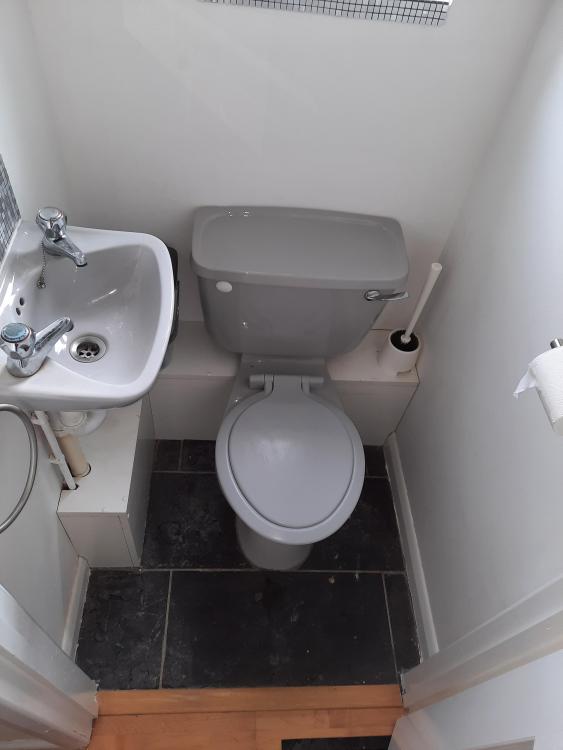
Er... don't fall anywhere and the basin is chin height in case your too far gone and want to speak to God on the big white (grey in this case) phone.
-
Don't worry it's going to go and become a plant pot of a different nature.. .
-
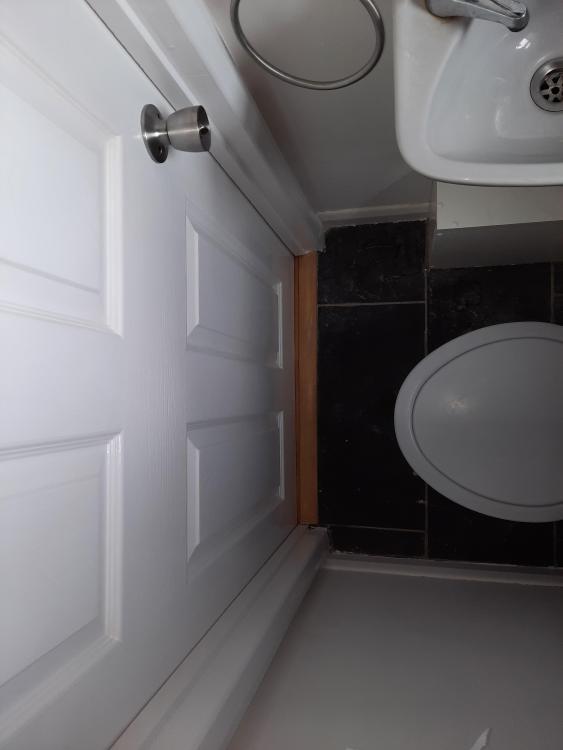
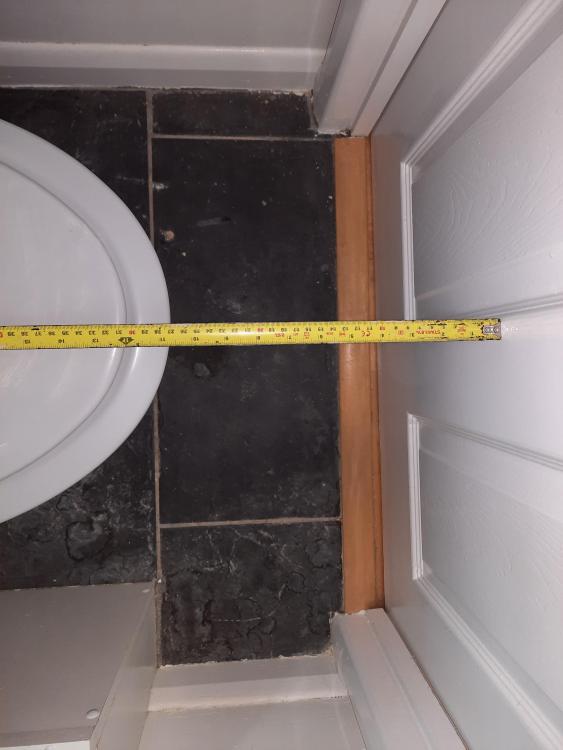
Regardless of any regulations, there's not enough room for a normal reach-around without wiping your nose on the door. Hence the high gloss door finish.
-
Yes not quite upto less-abled access requirements
-
Looks OK but Shut the door. WTF!
-
Hi @Buzz11 You are doing so well, and the info @MikeSharp01 and @JohnMohas just supplied is so good, that I have little to add except about the builder adding Pex pipes during the slab construction, and that is you were really lucky! I would be very interested, once you control the temp a little better, to know how the slab temperarure feels from place to place as the pipes are alot further apart than a lot of designs. I wonder if the closeness of the pipes relates more to the speed of temperature rise rather than overall slab temperature. I wonder what floor coverings you have as well. Perhaps you will update further down the line. Marvin
-
I can't say what other people would do but I wouldn't agree to sell a property with the condition that I pay some time in the future the cost of unknown works to the property I now don't own. Will the bill be 10k or 100k? You want the property, you take the risk, and that is basically what the other lower bids are about.
-
You assume the vendors have the money sitting around in order to do the work. In my humble opinion, there is little attractive appeal with the existing building. Either buy it to live in, demolish it and start again or don't buy it would be my choices. Best of luck Marvin.
-
ASHP SCOP=3 in uninsulated 1960s house!
Marvin replied to richi's topic in Air Source Heat Pumps (ASHP)
Hi @richi A little confused. At about 57 seconds in to the video an Air to Air pump is mentioned. I have been assessing our ASHP, and recognise there are many, many factors that effect it's energy use. All the obivious and then how much additional energy is used in the building on everything electrical. Even our WiFi runs at 45 centigrade. Our fridge freezer basically turns 360kWh a year into heat. How many people, doors opening or closing, solar gain, the list goes on and on. I'm not sure, in the video, consideration has been made for all these items. However if your AIM has been achieved (airtightness, insulation, MVHR) its always good to go APE (ASHP, PV,EV). At present one of the best combos. Another ASHP supporter Marvin -
I think you have to have a double check valve ( non return valve) to an outside tap. Some taps have them fitted: Then again, I think that if you have a water meter, it may have a non-return valve in it https://www.toolstation.com/made4trade-dzr-hose-union-outside-tap-with-double-check-valve/p84080 I would want a stop tap inside. I am not saying that there is anything wrong with the pipe and fittings used but again I would prefer soldered or one of these: https://www.toolstation.com/made4trade-wallplate-tube/p10508 Good luck Marvin
-
Recently I've been installing extractor fans and a lot of them say "duct run no more than 3 meters." Some extractors can be set up with back draft shutters to use the same duct. Personally I would not want to do it. Too many ways it can go wrong... Good luck Marvin
-
Hi @Merv and welcome. Looking on line,the difference between the cost of 50m of 25mm or 32mm is about a tenner. I would think digging the trench will cost a bit more! I think your better off with 32mm, but the boffins here will correct me if I'm wrong, and I for one would spend a little more and put the 32mm in. Good luck with your project Marvin
-
Would the meter also take over 100amps?
-
As @Ajn was pointing out RCBOs are different. And their ability to sense a leakage from the neutral to earth is probably a life saver.




