saveasteading
-
Posts
10887 -
Joined
-
Last visited
-
Days Won
93
Everything posted by saveasteading
-
You can but you really shouldn't. You should cover it with plastic sheeting to keep the water IN for a few days. This allows the chemistry to take place. If you mix with water quantities according to the instructions then most is taken up in the chemical reaction. The rest will evaporate in 2 weeks of normal spring temperatures. If you speed the water evaporation it will weaken the screed.
-
There's nothing wrong with timber if the detailing is good. Have you experience of problems or is this a perception?
-
 Agreed number 2. So much easier to build and also means that the slab can poured last, and in the dry. You need a stone sub base beneath the eps. Again that is a good working surface while you build it. I'd use "stick build", esp with your skills. You should line the walls internally to be fire resistant, being on the boundary. Is the neighbour OK that you will be working in their garden?
 -
I asked here on purpose as I might understand the reply... And I do, thanks. Re mice and rats. There is a regular visitor to the greenhouse which snipped the head off my one courgette seedling, and dug up ( but didn't eat) the beans planted 2 days ago. This has never happened before so it is a new skill or piece of knowledge, and so poss a small rat. Special food there now as a reward.
-
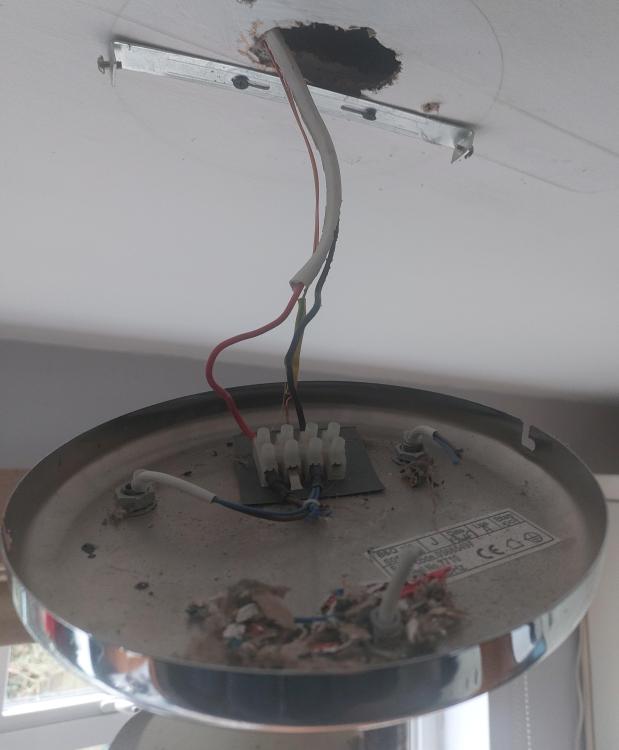
Something small did this.
-
TIMBER/BLOCK/SIPS DOUBLE GARAGE INSANE £££
saveasteading replied to Saul's topic in Garages & Workshops
Well worth knowing. -
Not just that but the joists and rafters will be taking double the load and need duplicating. That's all I'm saying, as you now need a formal design and you will need building regulation approval.
-
So am I to surmise that when a light bulb filament fails, it is less like a fuse melting and more like a dramatic spark? In this case the surge of that has also caused the 3A spur fuse to fail, but the filament then fell apart, and that has made the mcb trip becsuse it senses a problem.....somehow. 3 links in a chain breaking at the same time. I'm trying for an analogy in chain terms but can't think of one. This because I don't understand electricity, though do believe in it.
-
It's an mcb.
-
That looks like the answer.
-
That's right. the roof is supported on these vertical timbers. There are probably ways to not start again by reinforcing the rafters, but its not easy or cheap. This all looks like new work, and nicely done too. No insulation? can you explain the background to this ambition? is there a kitchen beneath or is it a shell?
-
Using a diamond core drill. any advice?
saveasteading replied to saveasteading's topic in Tools & Equipment
A very simple one. How thick is it? It's me at present, doing a feasibility. It takes forklifts and lorries and is visibly sound. Also, i have the construction drawing but want to check it's as thick as drawn, and is visibly proper concrete without voids or junk in it. Then I'll also see if the hardcore is a pile of loose bricks or properly compacted. Just duty of care stuff really. -
TIMBER/BLOCK/SIPS DOUBLE GARAGE INSANE £££
saveasteading replied to Saul's topic in Garages & Workshops
It doesn't say that you need an upstand, only that any upstand you have sbould be 150mm min. -
Mice one day. Rats a week. I justify the killing on the basis of the following generations avoided that I don't have to poison. They all go outdoors again about now. They are eating bulbs and seedlings now!
-
Using a diamond core drill. any advice?
saveasteading replied to saveasteading's topic in Tools & Equipment
That's good info thanks. Heart's will follow. I'm thinking of 100mm cores to get a decent lump to examine and keep as samples. Thus the torque will be a thing and the rig will keep it nicely in control for line and depth. I've seen this done by ' expert' survey companies before where there have been completely erroneous reports. So I'd want to be there, and then might as well diy it. I'm wondering if the hardcore will be dense enough to come out in a core. Probably not so l'll maybe use a normal sds below the concrete just to see how thick it is. I'll see if i can get a second bit on a use or return basis. The best price so far is for a husqvarna rig which looks much the same as the hilti. Decent brand so should be OK. My main concern is think is burning up bits. I've seen grinders go blunt very quickly. Also that bits and blades used to be charged per mm worn out. As above, perhaps that has been sorted technologically. -
Yes it's a filament bulb. Cooker bulbs all still seem to be, presumably because of heat that would melt an led.
-
I've never met or spoken to a sepa person. I have often dealt with the EA though and have assumed they are similarly set up and empowered. They have all been knowledgable and professional. But EA are hugely under- resourced. Also they are civil servants and cannot comment personally. Hence the EA spokesperson on thd news asked to comment on flooding or pollution cannot say that its obviously due to building on flood plains/ government policy, the private water companies or whatever.
-
I am looking to take some core samples to see how thick a slab is . Then through the hardcore if it does that. Planning to use a diamond core drill like this. Has anybody used one and can advise if it is straight forward or any tips? The hire company doesn't seem to know how many holes a bit could manage. They are £30 each which sounds like a fairly ordinary bit. It is £360 for a week, so it should be good.
-
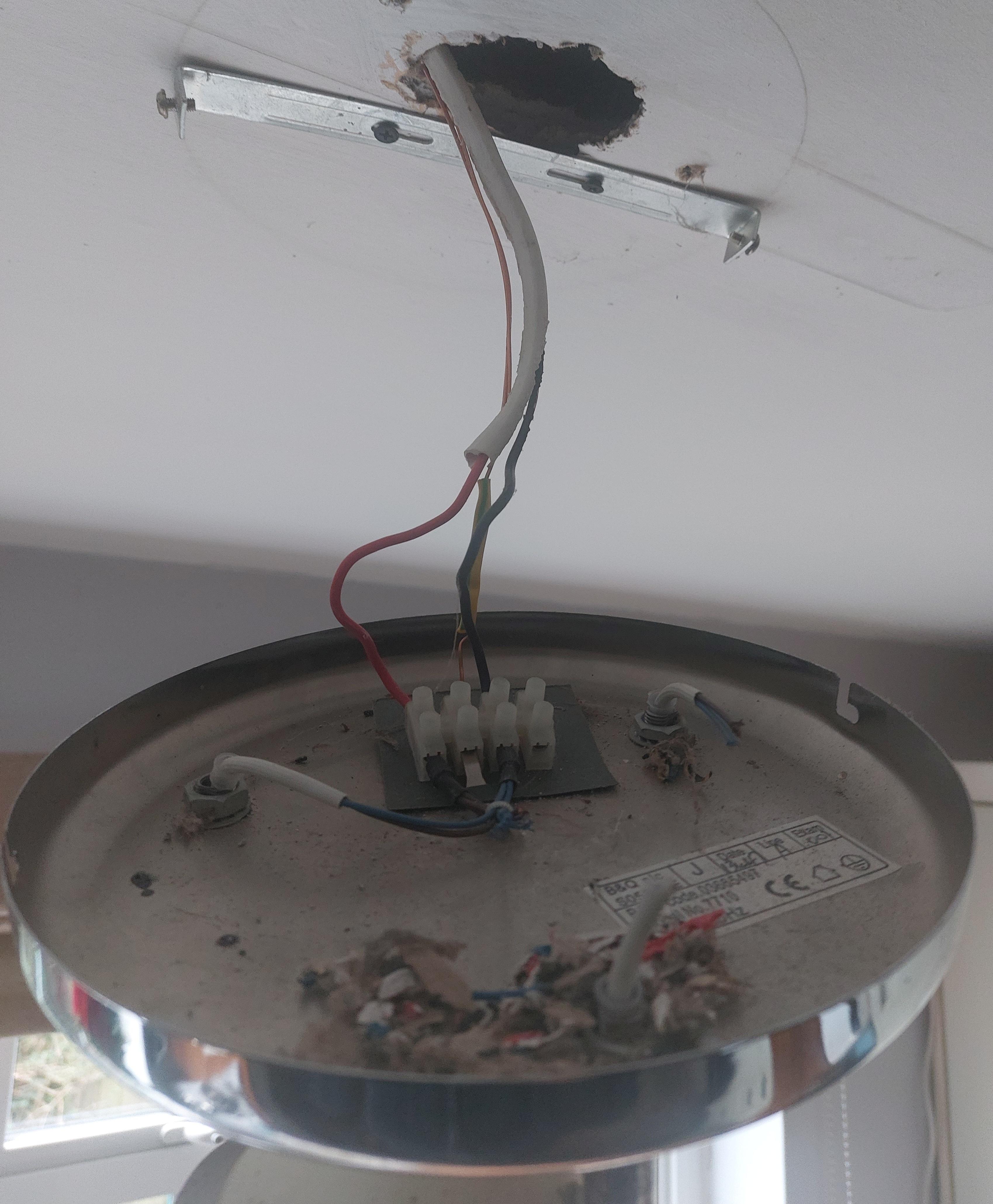
The kitchen lights went off. so I went to the CU and reset the fuse. Usually that means a cooker hood light has failed. The lights went back on but the fan and other bulb still didn't work. On the basis that a chain doesn't break in 2 places I assumed the worst, that the fan had a major fault and the local spur fuse had failed when it was turned back on. (We hear mice crawling thereabouts.) New fan assembly needed? As a matter of course I checked the local spur fuse, which I found was was blown, and changed it, and expected it to immediately fail. But it didn't and it's all working with a replacement bulb. Hoorah. How can a light bulb fail and cause the spur fuse and the CU to ping at the same time? One must fail first and open the circuit. Fundamentally I don't know why a bulb failing (a fuse wire in itself) causes a trip at the fuse box anyway, let alone a ceramic fuse as well.
-
We didn't get any response to our drainage proposals. Maybe they looked, saw it appeared to be calculated and considered, and went off to prosecute polluters rather than do a detailed assessment.. Or maybe they didn't and we are theoretically at risk. The fire brigade didn't respond either so our 10m3 water tank is also at our risk.
-
TIMBER/BLOCK/SIPS DOUBLE GARAGE INSANE £££
saveasteading replied to Saul's topic in Garages & Workshops
Why ever not? I hadn't heard of this and planning is usually about the external dimensions. I don't think you answered why you need the upstand. -
Would the bco be involved? The Scottish rules still require a stupidly large drainage field even once treated. But anecdotally they accept a soakaway. When I started using these 20+ years ago they said you could drink the discharge. It is not so, but it is pretty clean. I've got a leaky brick one in a 1920s house. They can't make me change it. What goes off to soakaway isn't nice, but it works.
-
In my experience the hse inspectors were always sensible and pragmatic about safe access, but private company safety officers were not. The latter were justifying their existences, watching their own backs that they couldn't be blamed, and in some cases it was just power. I'm sure one was waiting for a backhander to look the other way.
-
Gravel grid will reduce the migration about 90% and is much more secure to walk on. It really needs to be crushed stone rather than beach gravel.
-
It would be pragmatic for all parties to agree to a treatment plant in place of the old leaky thing. The discharge will be vastly cleaner than currently. Can it be in the same location?