
ETC
-
Posts
1673 -
Joined
-
Last visited
-
Days Won
9
Everything posted by ETC
-
In the sketch any water hitting the house wrap will come into the extension.
-
The sketch doesn’t seem to tie up with the photograph. The battens in the photograph project over the blockwork below. Or have I missed something?
-
The 100mm floor difference is to stop liquid fuel entering the house from the garage. If you haven’t got the height either put a concrete lintel at the door or an ACO drain.
-
While there may be thermal bridging issues trickle vents should have been installed for background ventilation and may have helped with reducing mould build up.
-
What’s your problems? Sounds like you have it figured out. Door needs to be 1/2HRFR with a self closer and can open into the garage. If you’ve got 100mm floor difference you’re home in a boat. I wouldn’t be to too worried about the door width either tbh. Speak to your local BCO - you might be surprised.
-
Insulating our attic trusses
ETC replied to Barryscotland's topic in Lofts, Dormers & Loft Conversions
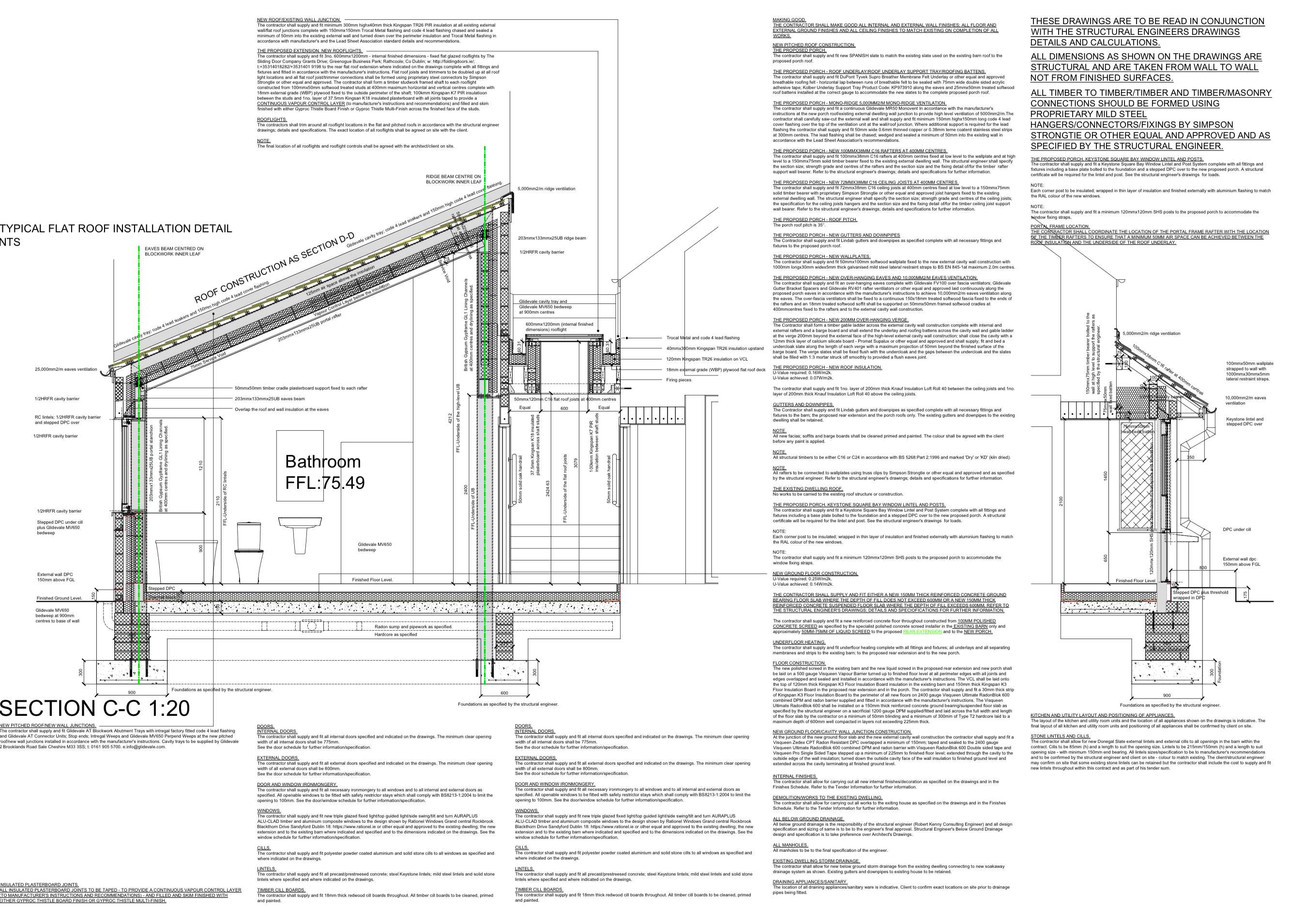
I’d normally expect to see a minimum of 100mm PIR between the rafters an a minimum of 62.5mm insulated plasterboard under the rafters. I’d forget about the “walls” and insulate right down to the eaves and overlap with the wall insulation. Don’t forget you will need 25mm eaves ventilation (Glidevale FV250 or other equal) and 5mm ridge ventilation. If you intend to make the first floor habitable don’t forget about FR and sound resistance to the intermediate floor. You will also need 22mm plywood flooring (which should extend to the eaves) and 10kg/m2 plasterboard to the ground floor ceiling as well as 100mm of sound insulation - 10kgm3 - between the floor joists. 450mm mineral wool insulation above the flat ceiling will be fine - I normally see 300mm. Looking at your photograph I’d also expect to see diagonal bracing to the roof and chevron bracing rather than diagonal bracing to the uprights as well as a bit more longitudinal bracing. Perhaps this was taken before the trusses were complete? Are your trusses cut in the middle? Looks strange. -
Not a great detail. Tricky to get right on site especially if you need radon protection. There are other simpler ways of doing this. Visqueen do a set of details which uses a combined DPM/radon barrier.
-
What are your thoughts on this project estimate?
ETC replied to James Frome's topic in Costing & Estimating
I think you need to get a handle on what professional services you are being provided with for the fee you are paying/have paid if you haven’t already done so. I presume you have a contract for services and an itemised cost of the professional services provided? Apologies - I am presuming the cost estimate was prepared by your design team? Your letter looks good and I think it lays out your total final budget that you have and are prepared to put to this project. Again - I presume the design team (architect, QS and SE etc) are taking this project to completion and hand-over with a full professional service including contract administration and inspections? While I appreciate that the cost estimate is not firmed up I think you are on the right track with your letter and it should concentrate their minds going forward. I would suggest that the cost estimate is revised on a regular basis as the production information is put together so that you get an as accurate as possible cost estimate before you tender your project. You mention an extension - get that element costed separately in your cost estimate documents so that you can easily extract it from the cost estimate either before you tender or a bill of reductions exercise. Don’t forget CDM any any costs associated with that. Good luck. -
https://99percentinvisible.org/article/one-one-full-scale-floor-plans-help-architects-walk-clients-designs/
-
What are your thoughts on this project estimate?
ETC replied to James Frome's topic in Costing & Estimating
Having looked at the floor plans and for that size of a building and making a stab at the extent of the works required I still think the fees were far too high. While I appreciate that restoration works tend to be more labour intensive for everyone including your architect I would have expected 10% to include a complete design team (if one was needed) including a QS for the complete duration of the project. Having looked at the cost breakdown there are quite a few Provisional Sums which make me wonder how detailed the drawings are and how much information the materials specifications actually have. I would love to see the drawings if you are minded to post them - I’d love to see what a set of drawings that cost £50k actually look like. As an architect I pride myself in making sure everything is specified to within an inch of its life before a QS gets anywhere near it. I really think that having so many Provisional Sums in a cost estimate is really a cop out and looks like someone throwing costs at a project and covering their back side. For what it’s worth I would take a deep breath, circle the wagons and look at getting some advice from another architect and/or QS. A second opinion as it were. -
What are your thoughts on this project estimate?
ETC replied to James Frome's topic in Costing & Estimating
I think your architects fees are way over the top. -
'False ceiling' at roof apex/ridge for ventilation?
ETC replied to GlanMenai's topic in Heat Insulation
Read the BBA Certificate. -
'False ceiling' at roof apex/ridge for ventilation?
ETC replied to GlanMenai's topic in Heat Insulation
https://www.dupont.co.uk/content/dam/dupont/amer/us/en/performance-building-solutions/public/documents/en/BBA-DuPont-Tyvek-Supro-Roof-underlay-Warm-non-ventilated-roofs.pdf -
Do extension foundations need to go to house foundation?
ETC replied to m13eys's topic in House Extensions & Conservatories
Strip foundations for an extension should - in most if not all case - go to the bottom of the foundations of the dwelling. If you think about it logically - if the foundations of a house are taken to a certain depth to get good ground why wouldn’t the extension foundations go to the same depth? I’m sure a structural engineer would be able to justify an alternative option. -
How to detail PIR at the wall cavity / wall plate in this situation?
ETC replied to Oxbow16's topic in Heat Insulation
Insulated plasterboard? -
Getting my head around Part B and K for our windows
ETC replied to MikeSharp01's topic in Windows & Glazing
I wouldn’t like to test the legislation in court. BC would lose. -
Getting my head around Part B and K for our windows
ETC replied to MikeSharp01's topic in Windows & Glazing
I agree - a lockable EEW is a death trap. Unfortunately BC cannot reject an EEW if it has a lock on it. Presumably it’s more important to keep a burglar out than to let someone escape in an emergency. I have had this conversation many times with my colleagues in BC and although we cannot reject a lockable window we sometimes ask the applicant to think seriously about putting a lock on a window. If they want a lock we would suggest one that you can push and turn a handle on the inside. -
Are eco joists the same as posi joists
ETC replied to CalvinHobbes's topic in General Construction Issues
Footpath and sidewalk. Same thing different manufacturers. -
Getting my head around Part B and K for our windows
ETC replied to MikeSharp01's topic in Windows & Glazing
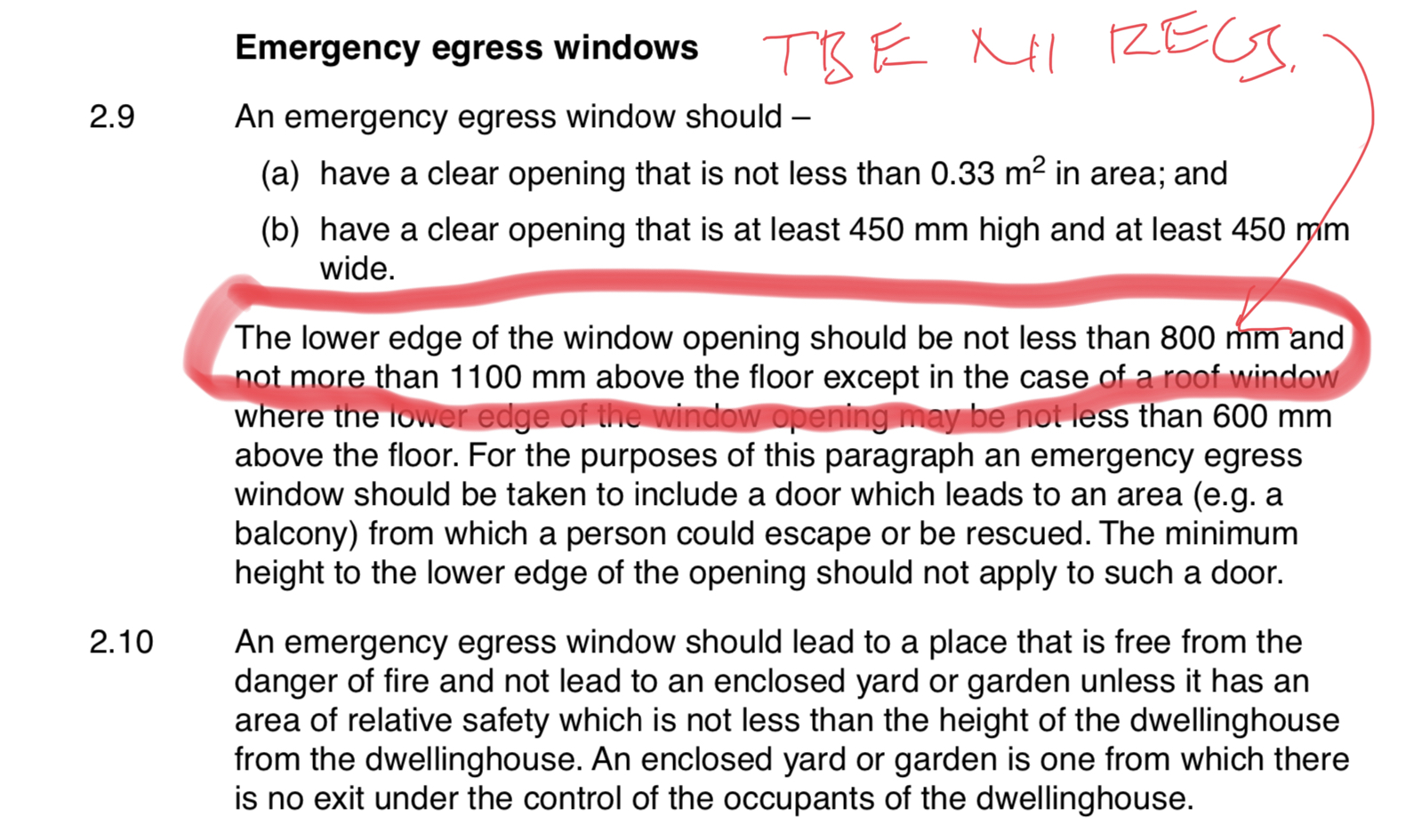
The NI Guidance shows a minimum height of 800mm above FFL for an EEW. Rarely enforced as long as guarding or a restrictor stay is fitted to the EEW.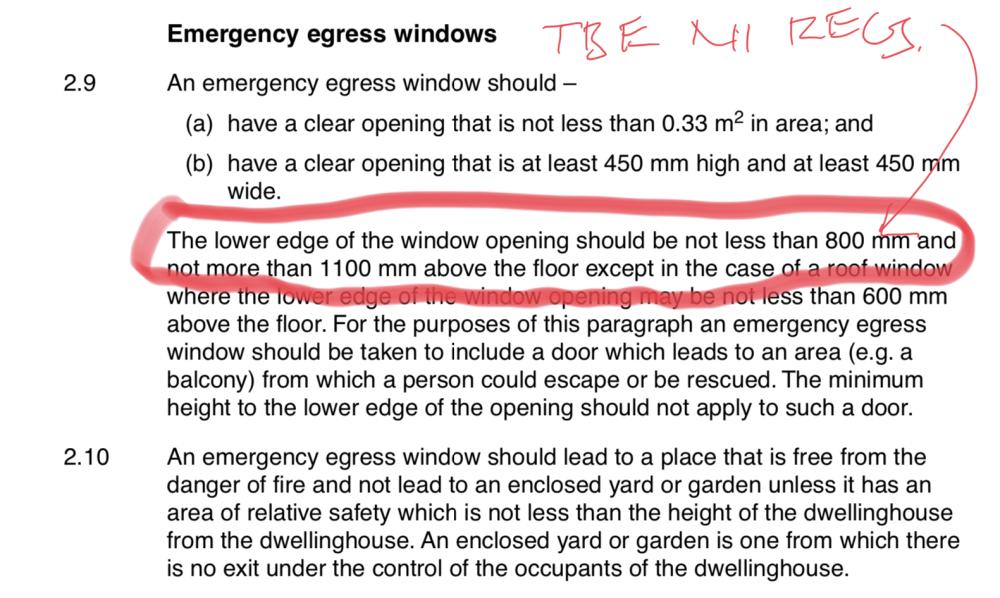
-
Getting my head around Part B and K for our windows
ETC replied to MikeSharp01's topic in Windows & Glazing
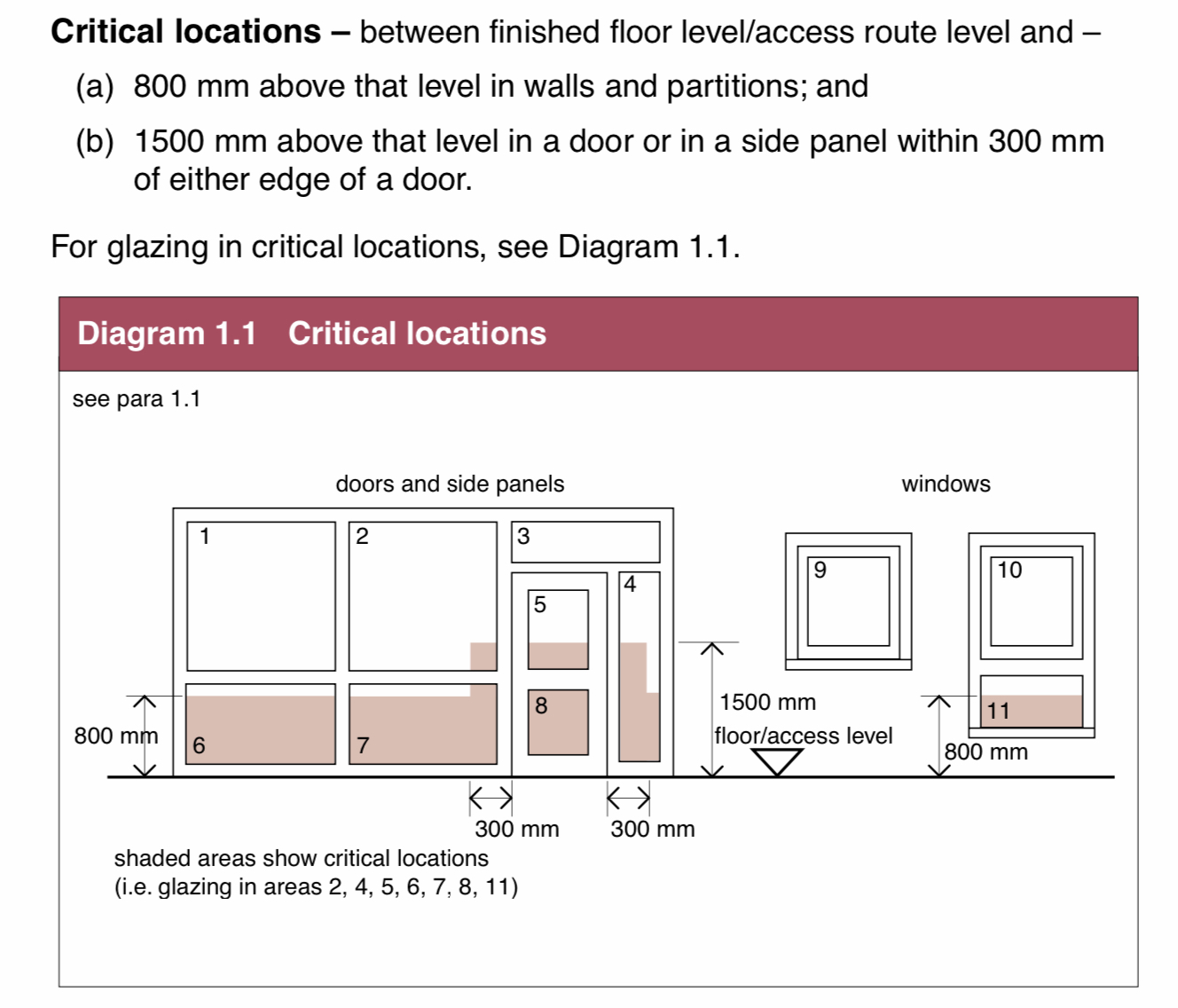
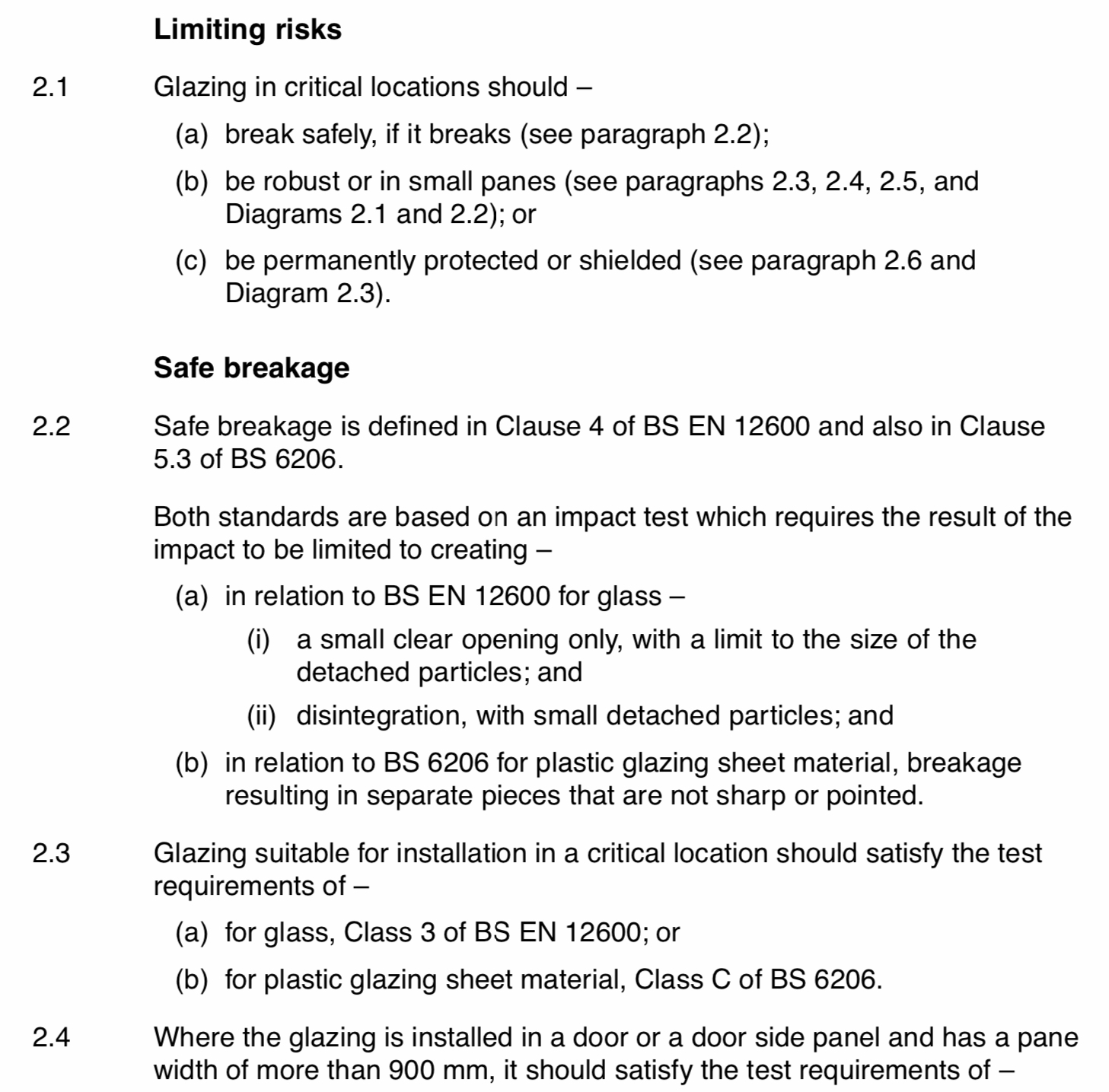
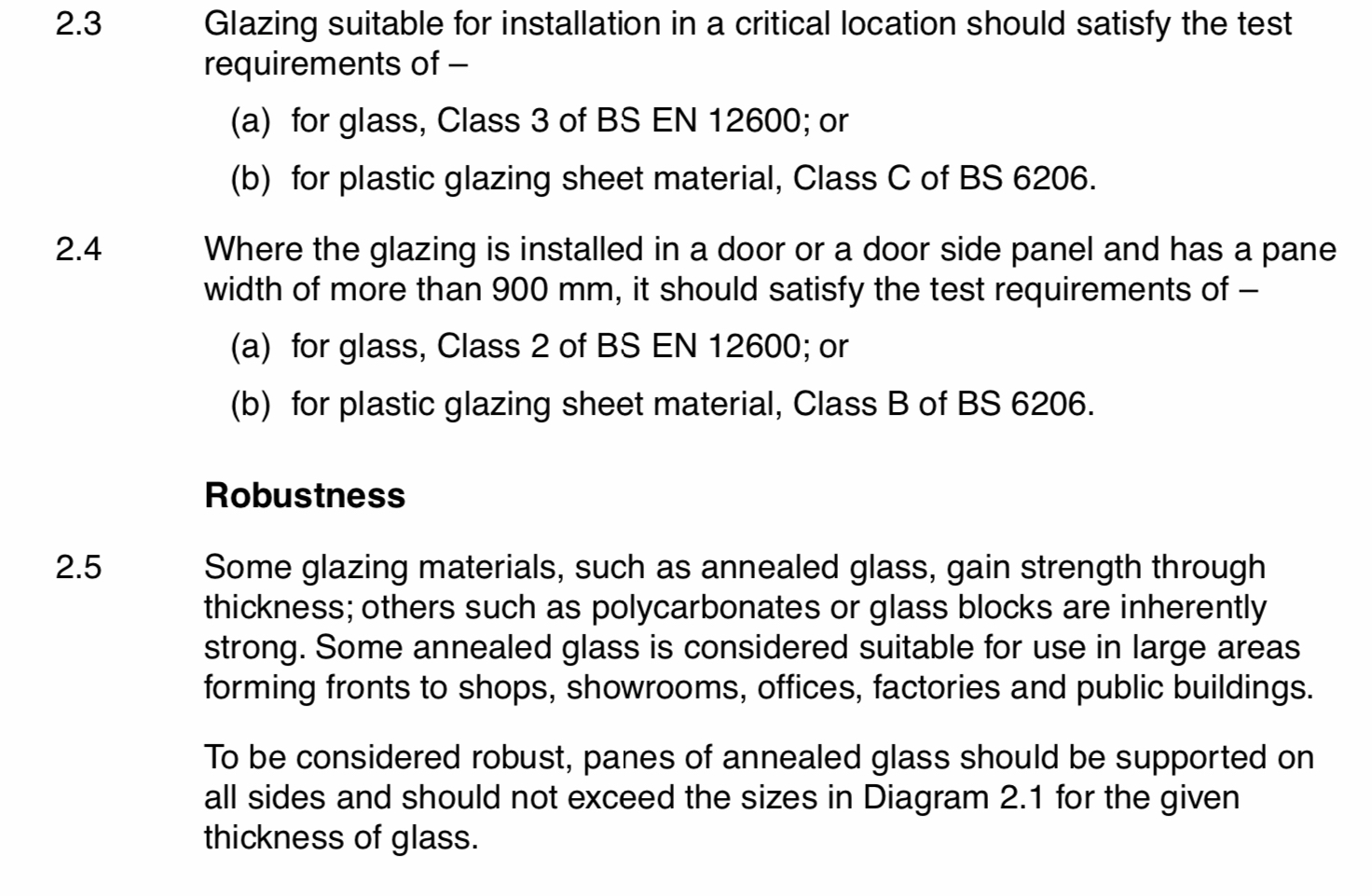
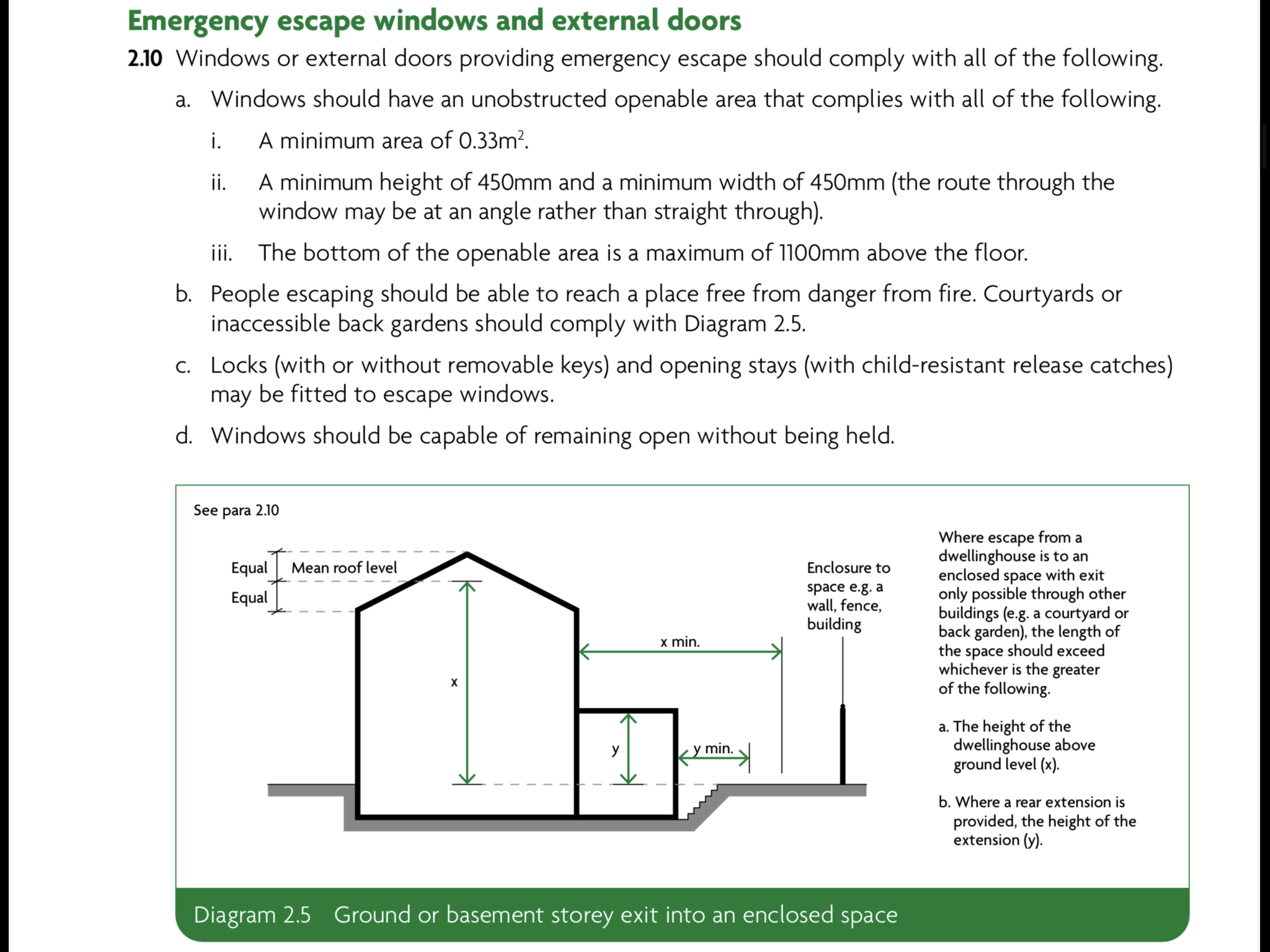
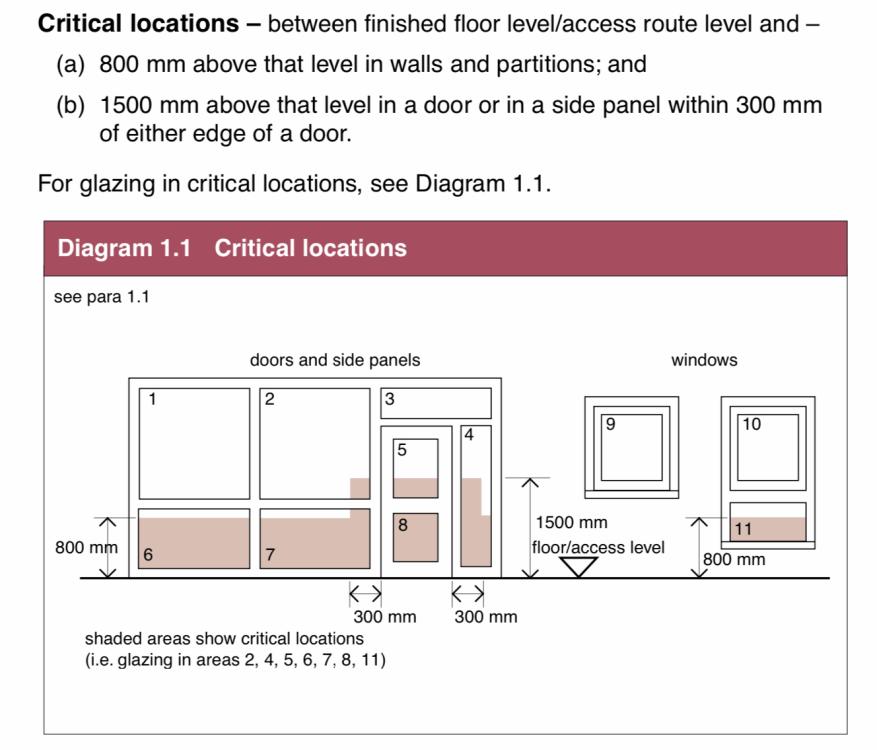
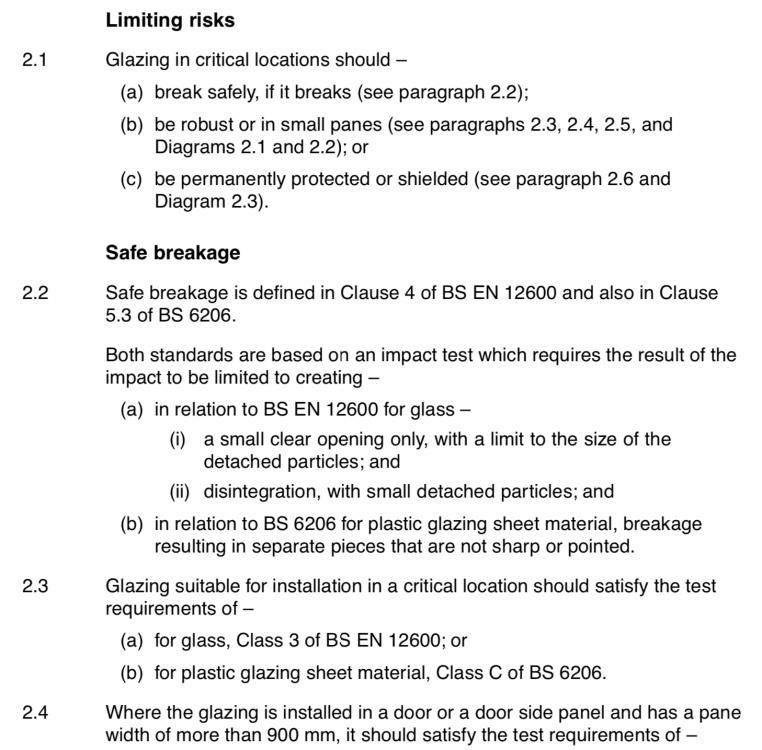
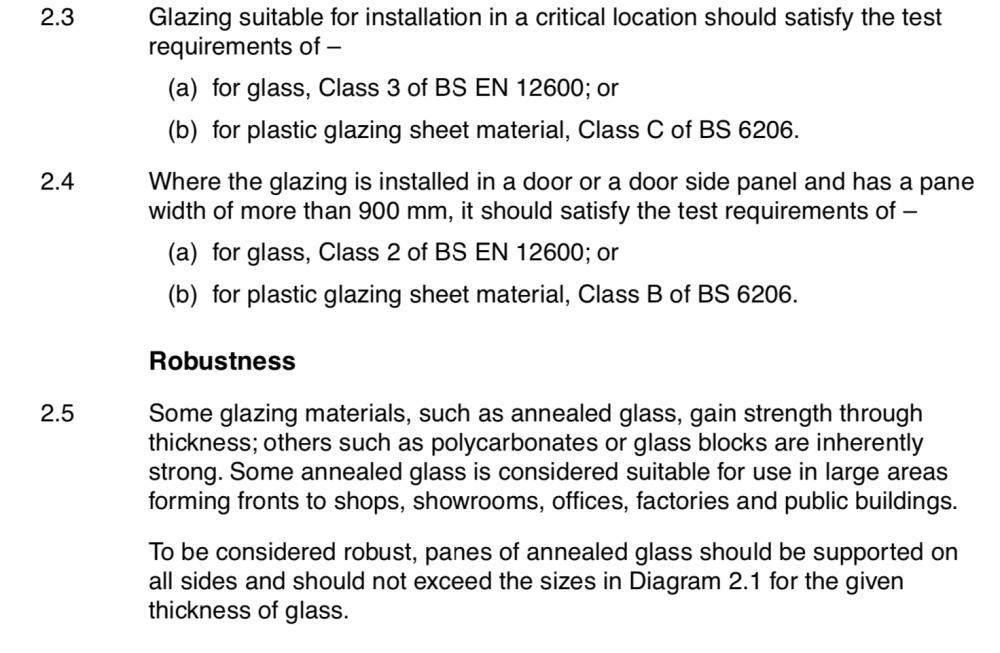
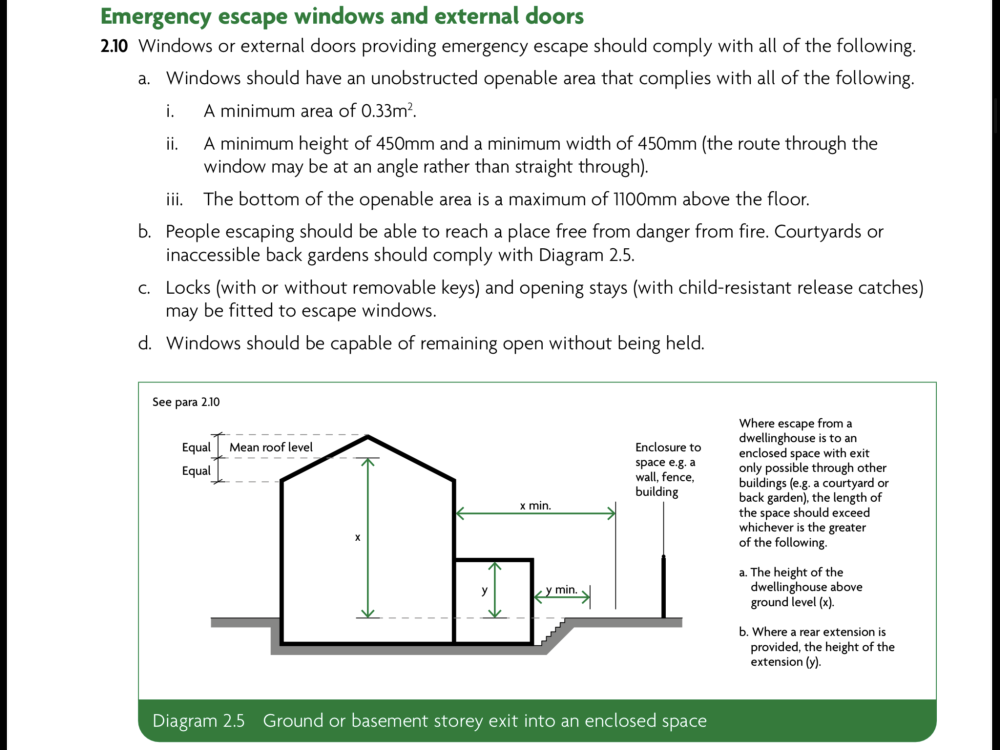
From what I can understand: EEWs. There does not appear to be a minimum height for the bottom of the opening of an EEW in ADB1. The maximum height for the bottom of the EEW is 1100mm above FFL. Guarding. Any window which has an opening sash less than 800mm above FFL needs guarding. Where it is a EEW a non-lockable and re-engageable restrictor stay is acceptable. Picture attached. Just check with your BCO what kind of restrictor stay is acceptable. Safety Glass. Any window sash (fixed or openable) that is below 800mm above FFL (at any floor level) is deemed to be in a “Critical Location” the glass in these windows needs to be safety glass. See pictures attached. Why do you have an EEW on the ground floor? Your window supplier should be aware of all this.
-
Basic building regs question...
ETC replied to Beanyboy2802's topic in New House & Self Build Design
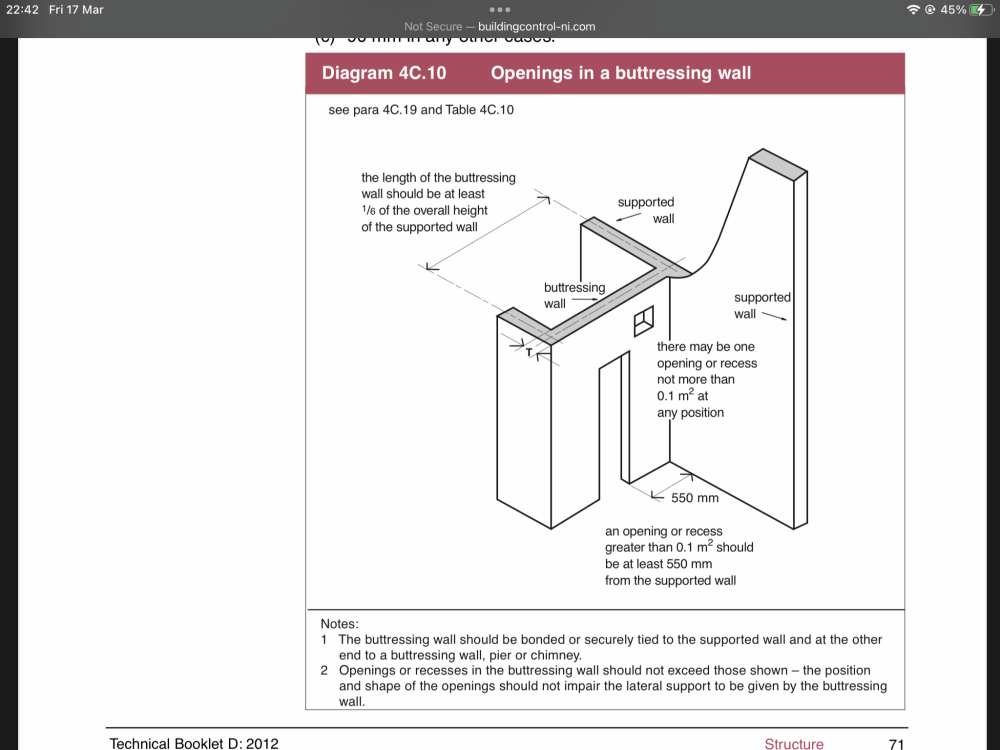
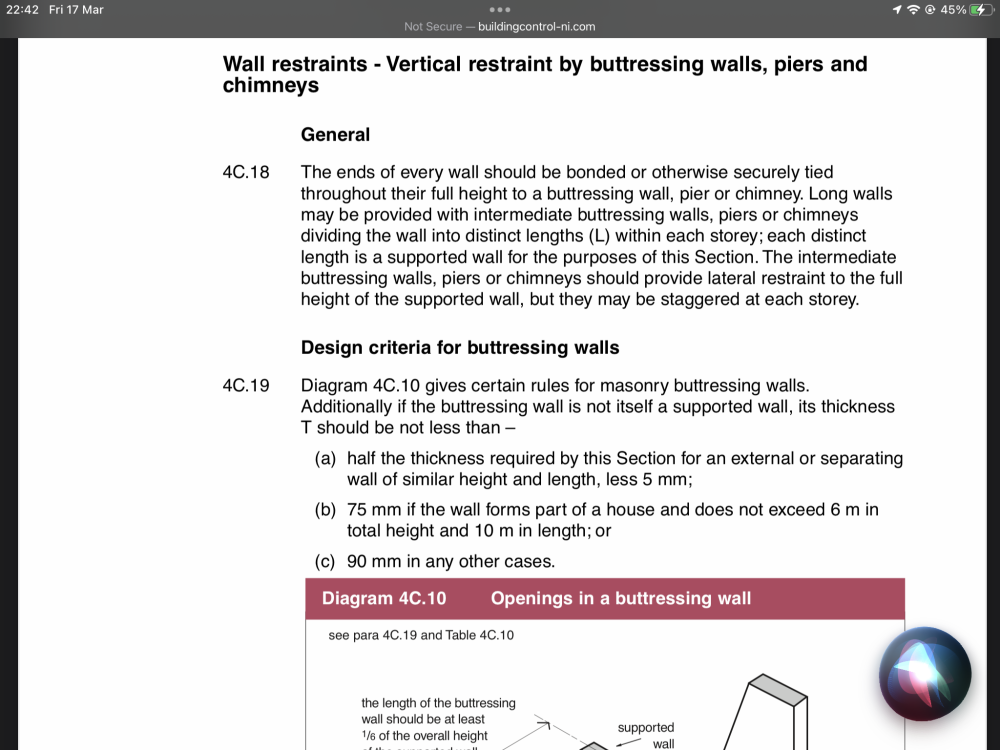
-
Getting my head around Part B and K for our windows
ETC replied to MikeSharp01's topic in Windows & Glazing
@craig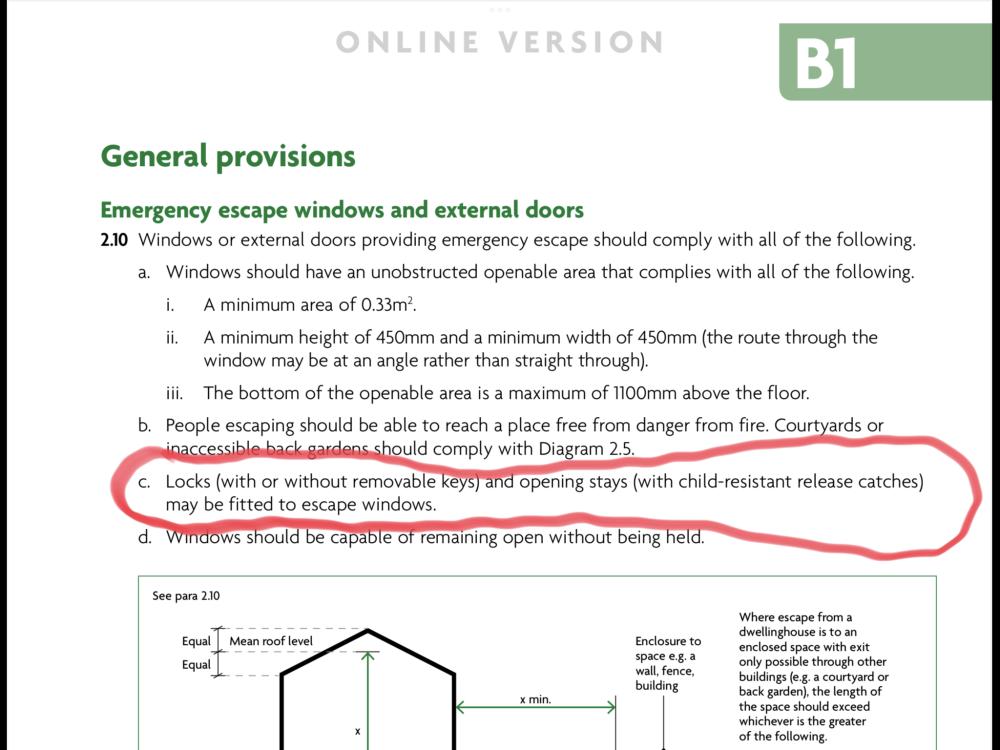
-
How to detail PIR at the wall cavity / wall plate in this situation?
ETC replied to Oxbow16's topic in Heat Insulation
You could always insulate the inside of the wall! -
Getting my head around Part B and K for our windows
ETC replied to MikeSharp01's topic in Windows & Glazing
There isn’t a minimum height requirement for an EEW (in England) otherwise a door at first floor wouldn’t comply. In NI the bottom of the EEW should be between 800mm and 1100mm above FFL (except where it is a roof window and the lowest height is 600mm above FFL). Also guarding a floor inside a dwelling only required 0.36kN/m. Locks and restrictor stays are acceptable on EEWs. @craig @MikeSharp01 -
Cold bridge between aluminium frame and steel beam?
ETC replied to thefoxesmaltings's topic in Steel Frame
Why don’t you just install the ceiling once the glazing panel is in? Alternatively either drop or raise a section of the ceiling to the edge of the glazing panel.