ProDave
-
Posts
30678 -
Joined
-
Last visited
-
Days Won
424
Everything posted by ProDave
-
Hi and welcome. A plan in your position may be to get a builder to complete to "wind and water tight" and complete yourself from there, a very common approach for first time self builders.
-
Things that seem a good idea
ProDave replied to Pocster's topic in General Self Build & DIY Discussion
Sharp point of a stanley knife usually pops them out. But personally I think they look tacky and cheap so I rarely fit them. -
I assume, as is usually the case you need to remove the old fitting. If so you need to replicate EXACTLY what is there now with connector blocks. So MAKE SURE you keep a track of which is which BEFORE you disconnect anything. You will end up with the 3 lives currently in the LOOP terminal, all joining in a connector block and going nowhere else. The blue with a black sleeve on it goes to the brown of your light. If you can, change that for a brown sleeve or at least a wrap of brown tape. The two blues in the neutral terminal go to your light fitting blue. All earth cables must terminate together in a terminal block. It is IMPORTANT you isolate this circuit at the consumer unit. If this is beyond your comfort zone, call an electrician.
-
Neighbour’s ‘Temp’ building maybe ignoring building regs.
ProDave replied to G and J's topic in Building Regulations
You need full plans to get a building warrant in Scotland as well. -
Coldwells Passivhaus Turnkey Houses.
ProDave replied to TheMitchells's topic in New House & Self Build Design
Good to see someone offering this, but I don't find their designs inspiring, I looked at the floorplan of one claiming to be space efficient use, but it is nowhere near as good as my own house that I designed (but I am biased of course) Re no plant room. I don't believe they are really needed as a separate space. My "stuff" is all distributed and placed where best for use, I see no need to put it all together in one place. -
Exporting to a second distribution board
ProDave replied to jpadie's topic in Consumer Units, RCDs, MCBOs
The issue you are facing is you don't have a standard, as supplied from the manufacturer, consumer unit. As soon as you (you being anyone other than the manufacturer) alter the configuration of the consumer unit, it's manufacturers certification is void. You would make your life a whole lot simpler if you put the CU back to standard configuration for the house, and added a completely new mini consumer unit for the sub main, teed off the meter tails with Henley blocks. Why is the BI showing an interest in this? Is he certifying it rather than a Part P electrician? -
I think it is very much dependant on the specific stove, so have you chosen it yet? If so look at the install manual
-
This is of course the marmite subject on the forum. On a cold day, and particularly on a cold, wet dreary day, we like to indulge and fire up the stove, it heats the whole house hotter than we normally have the main heating set for, and we like to indulge in a bit of free extra heat. And then it is some time before the heating comes on again as the house cools down so a saving on electricity.
-
Orkney long house - concept drawings
ProDave replied to westbound's topic in New House & Self Build Design
Yes we have an 11 metre long ridge beam, too long to be self supporting over that length, but supported by the 2 walls either side of the stairwell, making the longest span between supports 5 metres. And exactly like the sketch above, that load is split either side of a doorway with a lintel. All specified by the SE. The SE also specified how it all fits together including some fancy metal straps to attach the rafters to the ridge beam and specifying what fixings to use. -
Orkney long house - concept drawings
ProDave replied to westbound's topic in New House & Self Build Design
This is Scotland, 45 degree is normal, and there are very many constructional reasons why 45 degrees is so much easier than anything else. Agree 2300 ceiling height is too low. "normal" 2400 at least. -
Against popular current trends, we have a room thermostat in the 2 main downstairs rooms, so when you light the stove, if that room is not already up to temperature, it's thermostat will soon turn it off as the stove heats. We also have a conventional boiler time clock as a master control, if I am lighting the stove, I go and turn the heating off at that. Surely even the fans of pure WC operation must have some kind of master controls so your system is not running all the time in the shoulder seasons pumping water 1 degree warmer than the target temperature around the pipes?
-
Neighbour’s ‘Temp’ building maybe ignoring building regs.
ProDave replied to G and J's topic in Building Regulations
They probably would not need planning or even a lawful development certificate for a "caravan" and that would be legal if the occupants at least used some of the services in the house. To legally qualify as a "caravan" it needs to be within certain size limits which does allow a building of about 100 square metres. And it needs to me moveable as a unit. It does NOT have to be on wheels. Lifting by crane onto a low loader would qualify. So the test would be is it build on a strong frame or would it collapse like a pack of cards if you tried lifting it. The "caravan" is exempt from building control but BC would be needed for any connection to a drainage system. -
Need pictures of what you have, manifolds, pumps, valves etc
-
I am confused. your other posts about issues with the builder showed snippets of drawings showing how it was supposed to be done compared to pictures of how the builder did it. From that I assumed you had full drawings and the builder was not building to the drawings. Are you now saying a full set of detailed drawings does not exist? That would certainly put a different perspective on the issue?
-
On a copper pipe? How much iron is in your water?
-
What price would the kitchen supplier charge for the correct clour standard sized shelves (too big)? then cut them yourself or get a local joiner to cut them.
-
When I did mine, I literally added ALL the costs of buying the plot, legal fees, planning and design fees, build costs etc etc to get the total price I had paid. I was never asked to justify it, but I worked on the basis if questioned that was a verifiable amount and telling the truth. If you get a surveyors figure, then that may be more, or less, than what it actually cost you.
-
Orkney long house - concept drawings
ProDave replied to westbound's topic in New House & Self Build Design
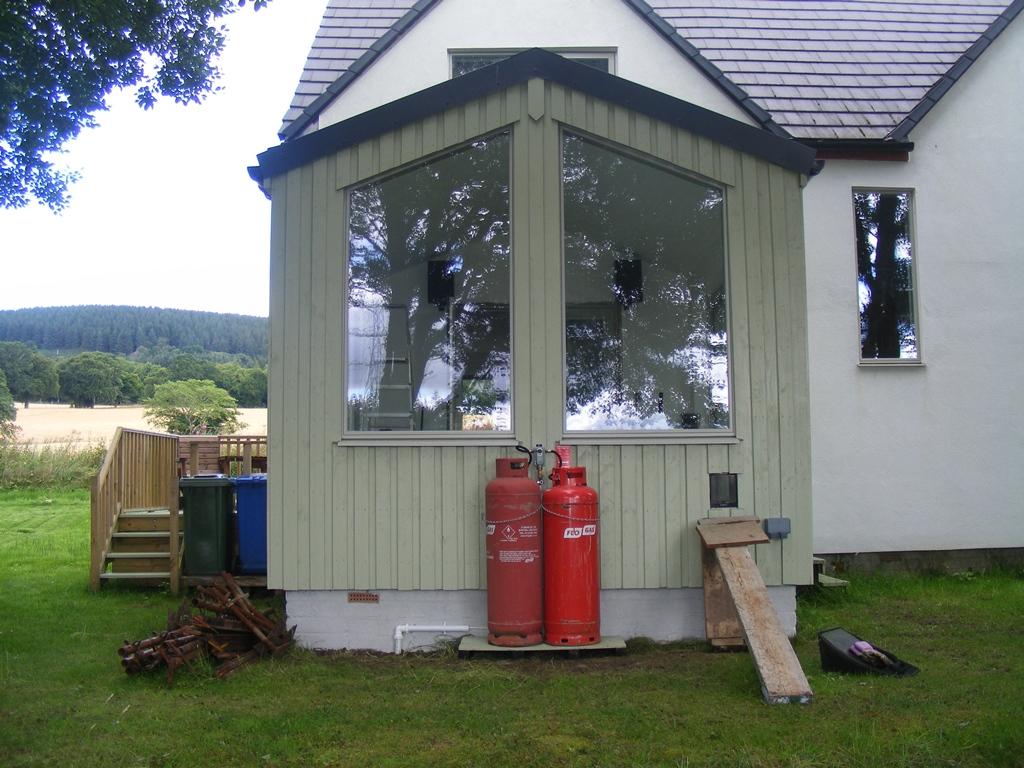
That was a temporary ramp to keep the cat happy. I later added a platform outside the flap, and then a step lower down. The cat loved it. and BCO at completion thought it was a nice touch and commented on it. Sadly I don't have a picture of it yet. -
I struggle with the concept of this hybrid arrangement. The basic reason for wanting a hybrid appears to be you have small high temperature radiators and a heat pump can't heat the water hot enough for them. So you add a heat pump to a system with a boiler. I can see in the shoulder months you might be able to run it heat pump only and have lower temperature in the radiators that would work at a time of low heat demand, and add the boiler to the mix when it gets colder. I could see that working with a changeover either / or situation. But that scheme above with the heat pump pre heating the return to the boiler, assumes the return temperature is low enough for the heat pump to add any meaningful heat to it. Most boiler fuelled central heating I see the radiators are run too hot to touch, and I very much doubt the return temperature to the boiler is less than 50 degrees. I just can't see this working in a completely automated fashion to add anything of value to the customer. I doubt the heat pump will ever produce heat cheaper than the boiler. Why would a customer want something expensive and complicated that saves no or little money? It really sounds like a "box ticking" exercise to get more heat pumps in use, but in a way that is almost guaranteed to get them a bad reputation.
-
Orkney long house - concept drawings
ProDave replied to westbound's topic in New House & Self Build Design
Re the big gable end glass wall. That is where you will probably need steels. But all can be avoided if you compromise a little. This is our "gable end glass" wall in our sun room. By breaking it down into 2 windows with a central support, that supports the ridge beam and it is all done in timber.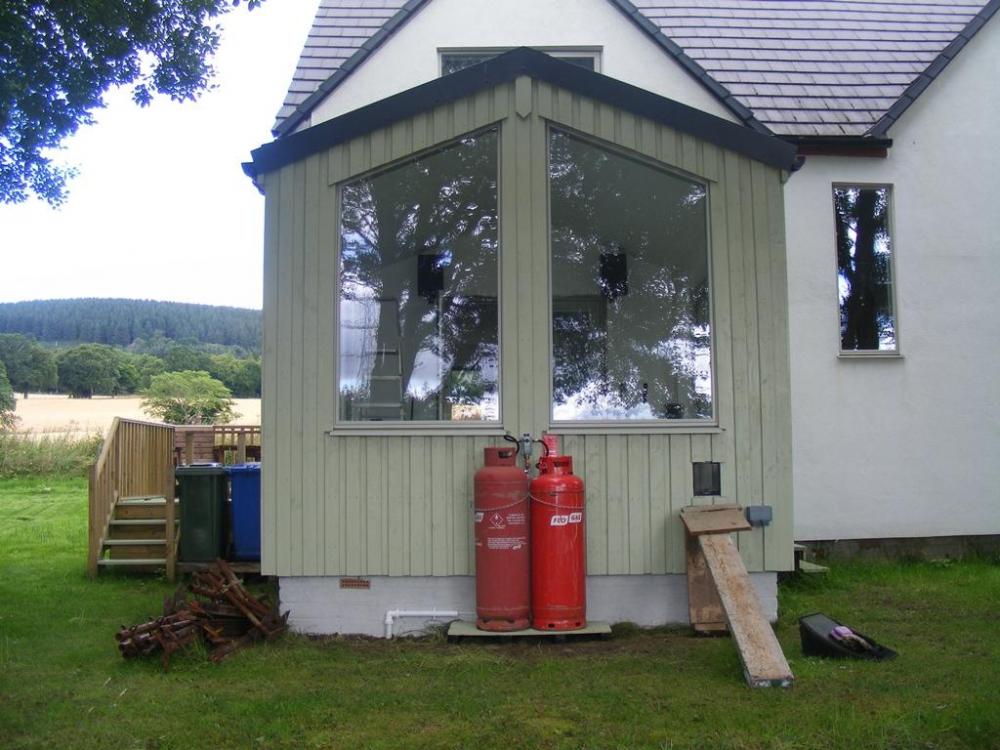
-
Orkney long house - concept drawings
ProDave replied to westbound's topic in New House & Self Build Design
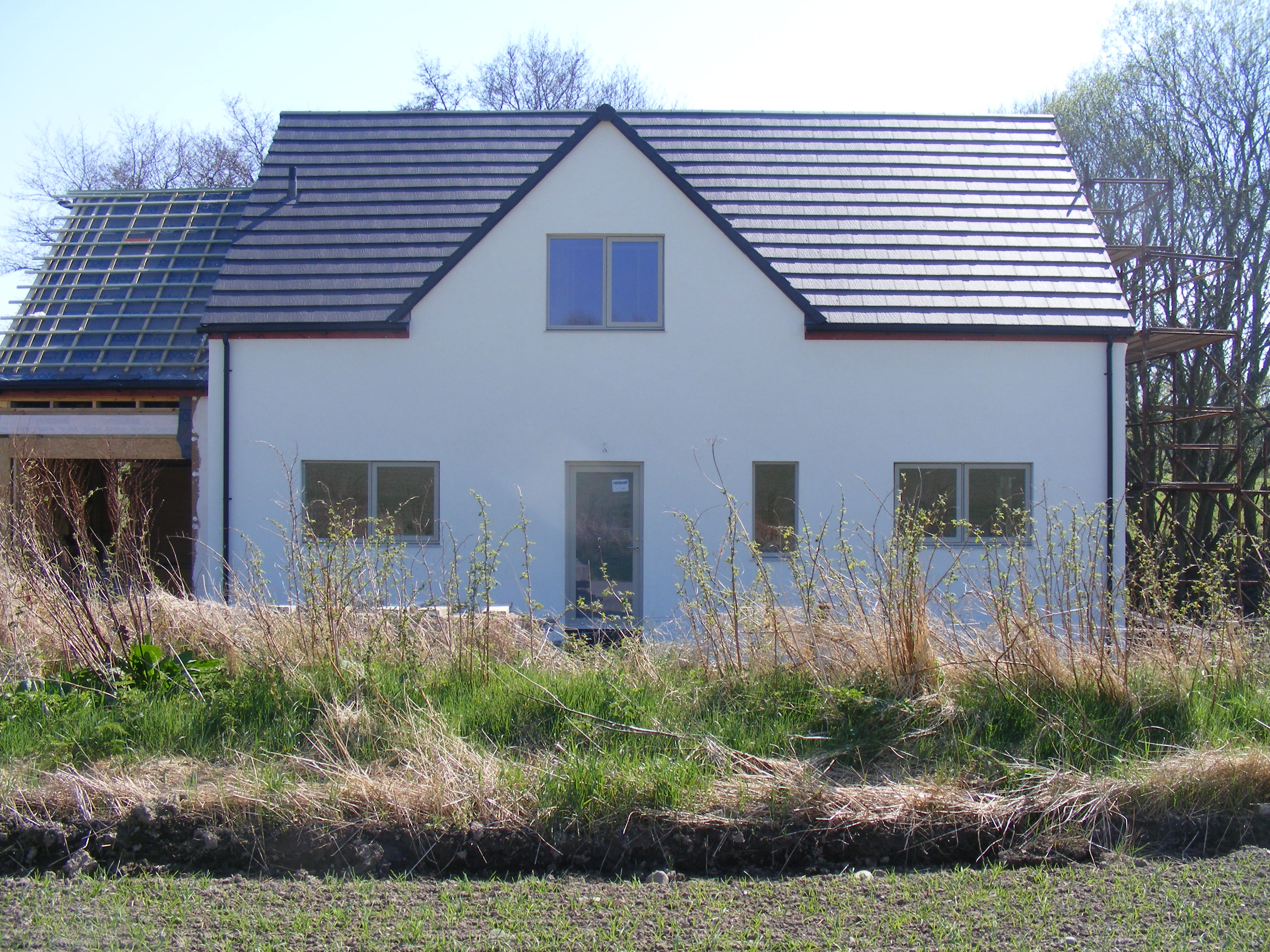
Cut roof does not mean steels. Ours used Kerto beams for the ridge, less bulky that Glulam for a given strength. That also shows the "gable end" type of dormer we used.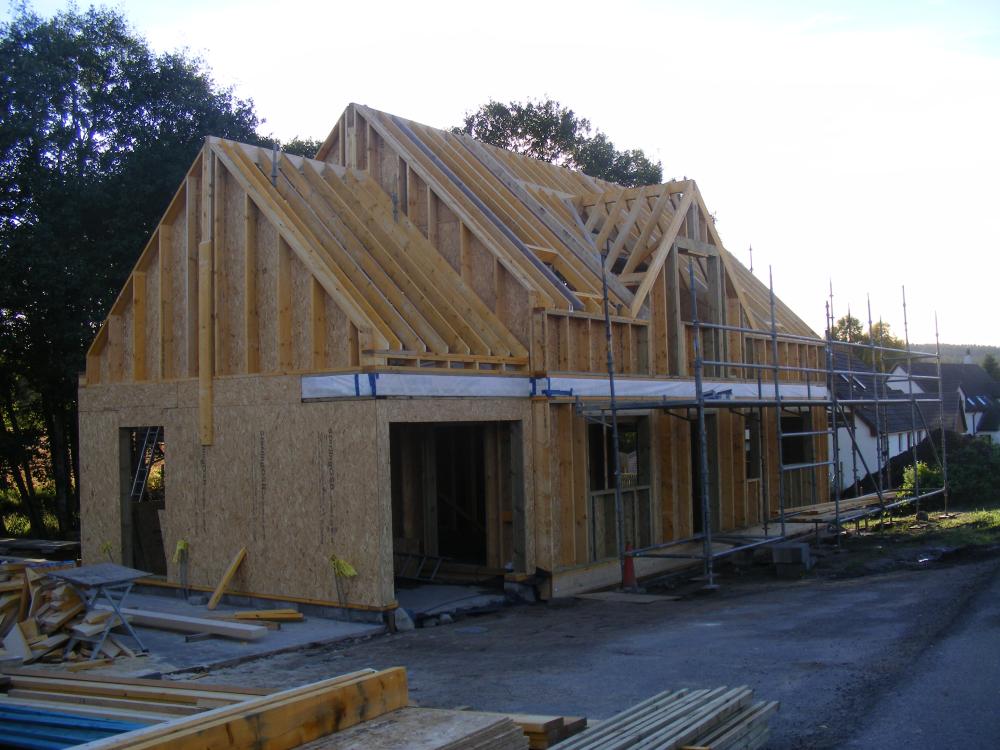
-
As per the other thread (broken blocks) it is time to have a chat with the builders, to build up under these piers that are there for a reason, and replace the broken blocks. It is a good job you are keeping an eye on them, though a shame they are not doing it right without you prompting them.
-
No, get those broken blocks swapped, while it is easy to do so.
-
What is the heat source? Boiler or heat pump? Is it new, or old? Has it ever worked properly? So flow and return from heat source go direct to manifold via that 2 port valve. So I can see without the manifold pump running, the system pump will push water through the UFH pipes. There is a TRV that appears to open / close to regulate UFH temperature. That pump would indeed appear to bypass the UFH loops. I think that is a thermostat top right grey box? What does that turn on and off? Who configured the manifold like that and why? The wiring suggests whoever did it may not be the best and may not know what he is doing?
-
Orkney long house - concept drawings
ProDave replied to westbound's topic in New House & Self Build Design
I see one upstairs bedroom is proposed with a balcony overlooking the full height living room. I feel fairly certain that Scottish regs require all bedrooms to have a means of escape window, and I doubt that includes climbing off a balcony to a downstairs room. So you will probably have to re think that. A dormer or gable end as I did will solve that.