ProDave
-
Posts
30861 -
Joined
-
Last visited
-
Days Won
427
Everything posted by ProDave
-
Are we targeting ASHP's at the wrong market?
ProDave replied to ProDave's topic in Air Source Heat Pumps (ASHP)
I find it absurd that they exclude heat pumps that "can be used for cooling" for being eligible for any grant. The objective is to get people to reduce fossil fuel usage. Someone with a gas boiler has the incentive "it might be very slightly cheaper to run if the install is perfect" but even with the grant it will cost you a big wad of £££. That is it. No wonder they are not queuing up. If they were offered a system that not only would cut your fossil fuel use, might be a bit cheaper to run, AND could cool your house in a heatwave, they might be a little more interested? -
Plasterboarding a hip
ProDave replied to MortarThePoint's topic in Lofts, Dormers & Loft Conversions
Is that a warm roof, or do you have insulation to go in first? -
Plasterboarding a hip
ProDave replied to MortarThePoint's topic in Lofts, Dormers & Loft Conversions
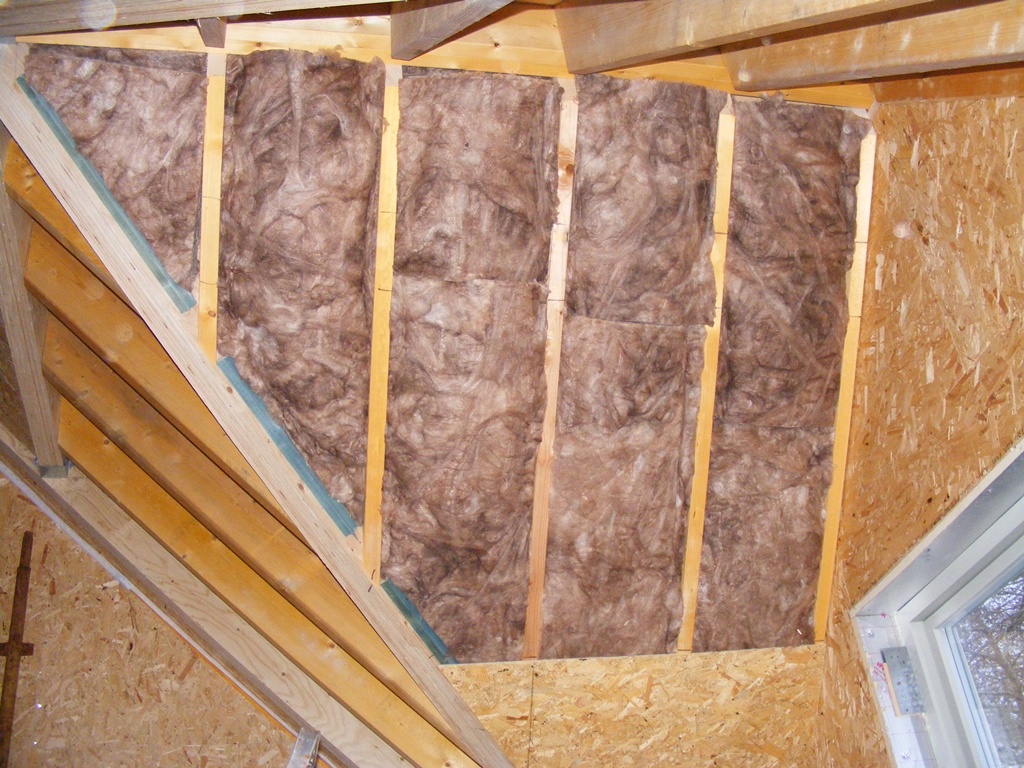
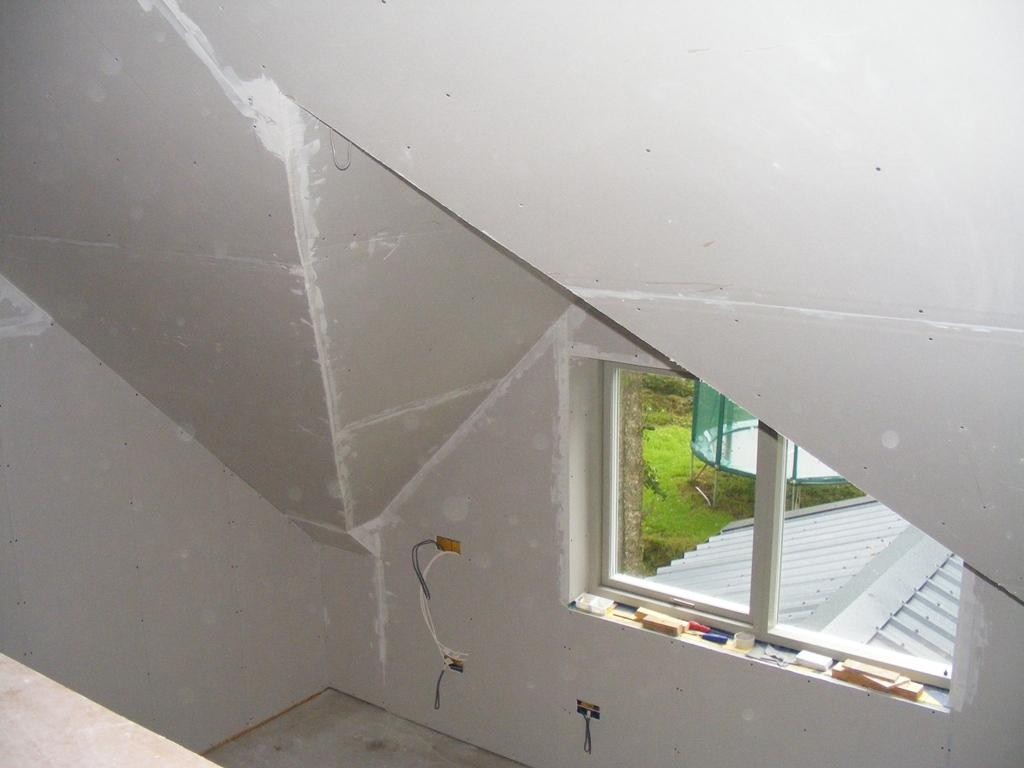
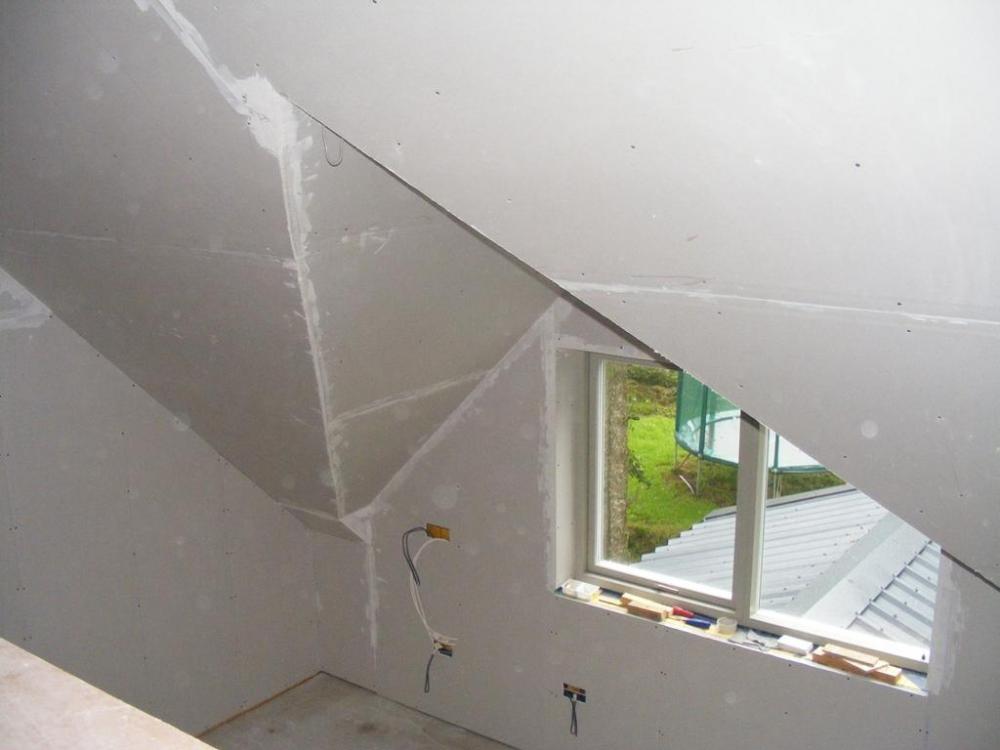
Yes picture of what you are trying to board onto. It does not matter if the last support of the PB is not right at the edge, it is not that bendy. One of our gable ends (closest we have to a hip) before the counter battens went on And after plasterboarding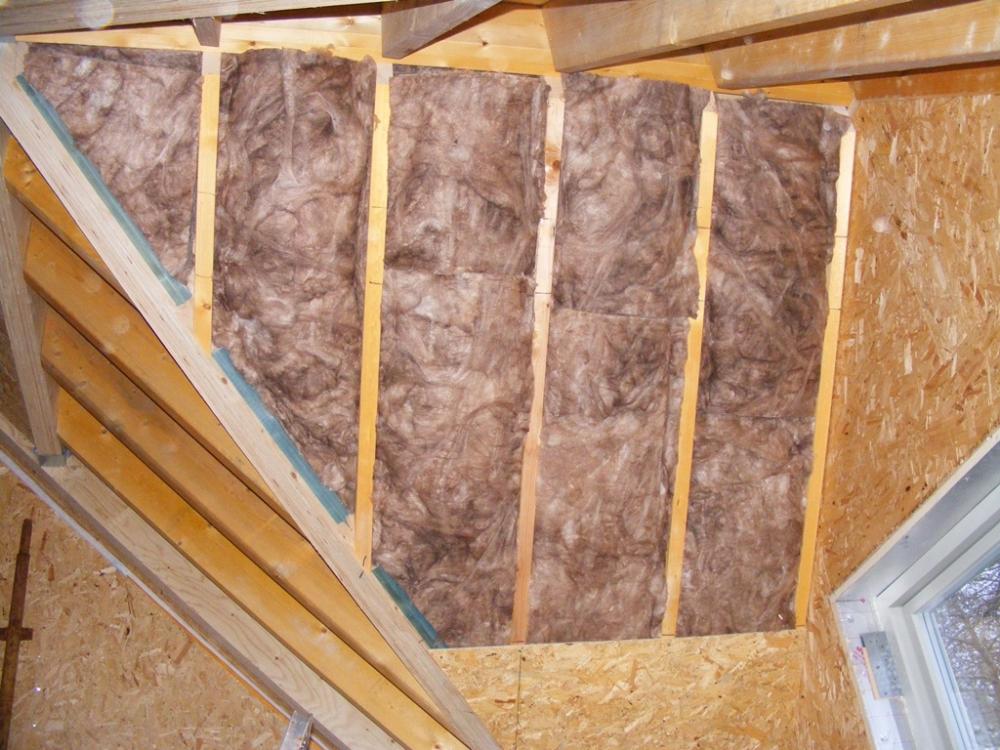
-
Hot having seen all the floor plans, if you went got 5 bedrooms all en-suite, would there be any shower or toilet that was NOT accessed through a bedroom?
-
Are we targeting ASHP's at the wrong market?
ProDave replied to ProDave's topic in Air Source Heat Pumps (ASHP)
Just to avoid thread drift, if we want to discuss failed government projects, perhaps someone could start a separate thread for that. -
I would say build for your expected occupancy and use, not resale value.
-
Are we targeting ASHP's at the wrong market?
ProDave replied to ProDave's topic in Air Source Heat Pumps (ASHP)
Remarkably yes. Now compare that with trying to procure a couple of ferries. -
Pictures of this "door with no sill" would aid understanding of the situation.
-
The guys that did our driveway, heated the pitch in a metal watering can using a blowlamp, and poured it out of the spout of the can (no rose fitted to the can) You need a well insulated glove to hold the can. Probably a more accurate pour than a saucepan.
-
Which way does the fan on your ASHP face?
ProDave replied to low_and_there's topic in Air Source Heat Pumps (ASHP)
The noise will obviously be more if standing in the air flow, and of course you will be blown by cold air. It is a theoretical question really. The ASHP won't be on doing heating when you are trying to sit in your garden, and if it happens to come on to heat the hot water while we are in the garden, I go and turn it off, the hot water can wait. -
Good news about the replacement and good service by SA. Hopefully the changes to the start up sequence mean they have learned from failures and it will be more reliable, but the only real solution to prevent failure of the PCM vessel is a stronger PCM vessel. Is there any kind of vent on the actual PCM containment vessel, something to vent pressure if by chance some of it did reach it's boiling point?
-
My first boat was a "Frolic 18" a boat only made in small numbers by a small boat builder in Poole. Searching for "Frolic 18" got some unexpected search results.
-
Where is the boundary? I would have thought the middle of the grass strip? If so build it you the wall is just your side of the middle. Or with agreement from the neighbour buils it exactly in the middle as a party wall.
-
Did the plumber make any changes to the plumbing like different or extra expansion vessels, pressure reducing valves, over pressure valves etc?
-
Future Homes Standard building reg changes
ProDave replied to flanagaj's topic in Building Regulations
This bit requires some joined up thinking. For my house max overall energy would be limited to 6000kWh pa. To match that with solar PV would require probably 8kWp of solar PV. While I would have no objection to installing that much, the DNO may have other ideas. I already know for just 1W over the 3.68kW allowed by default, there would be a network upgrade charge, and there is no guarantee that they would even allow 8kWp of solar PV. So if that sort of requirement is going to become normal, then it also needs to become normal that DNO's will accept that much without punitive upgrade charges. -
I thought stone chippings were used on mineral felt roofs as a way of protecting them from UV. Do modern roof coverings need that protection?
-
About 6 years.
-
The 2 pack vsarnish had some odd restrictions on application, something like each coat must be applied no more than an hour after the last coat otherwise you then had to wait 25 hours? We gave the underside 2 coats, then next day turned it the right way up and gave the top 3 coats. And spilled red wine does not bother it either.
-
I will have to look that up. It's a pair of contacts on the main ASHP not the controller, and you have to enable that with one of the DIP switches in the control board. Do you have the installation manual for the HP itself, it should be there, if not I can photograph the relevant pages of my manual.
-
I have a 5kW version of the same era with that same controller. I concluded very early on that the controller was the most illogical thing known to man and there was no way the average "man in the street" could program that and set heating schedules etc. So mine is controlled from the "room thermostat" input and that connects to the UFH controllers and a perfectly normal central heating time clock that everyone understands. So I don't even bother to set the time on mine, let alone anything else. So I honestly can't say if forgetting the time and mode is normal or not. The main thing for me is, do any parameters that you have customised remain after a power cycle? THAT would be a right royal PITA if they all needed resetting after a power cycle.
-
I am the same. I like to be doing things. The only difference with retiring is you are doing things that you want to do when you want to do them rather than what someone else wants on their schedule. The problem comes when we get a cold snap like the one that has just finished. There is not much inviting about going outside to do anything and I quickly run out of things that need doing inside. Now it has warmed up I have no shortage of things to do. As for multiple builds, 2 is enough I have no plan for another one. I still have the car port and the posh shed to build to "finish" this one.
-
Are we targeting ASHP's at the wrong market?
ProDave replied to ProDave's topic in Air Source Heat Pumps (ASHP)
It IS possible for us all to be warm BUT the capital cost required to do so means it is not going to happen. Even with the high electricity cost at present, my house in the Highlands uses not much over £300 per year to heat it. I can only speculate how low that would be if I had built the identical house in a less cold part of the UK. If every house was that efficient, then most people could afford to be warm. But there is no way many houses will get anywhere near that any time soon. But what angers me is there is no reason why ALL new build houses are not that good already as built. Honestly the cost of doing so in a new build is not much and build time is the optimum time to insulate it properly and make the right choices like low temperature UFH etc. -
Help! Cowboy contractors have not insulated cavity walls or roof
ProDave replied to Farah Jones's topic in Heat Insulation
If I am understanding that correctly YOU paid a BUILDER to build the extension and you still owe the BUILDER some money because he thinks it is finished. The BUILDER chose to employ a CONTRACTOR to do some work, and they did not do all that was needed, such as the insulation. Get your BUILDER to come and look at the examples you have showing the missing insulation. And since your contract was with him, tell him it is his responsibility to correct the omissions, and once that is done to your satisfaction, you will pay the final bill. -
Our Oak worktop is varnished with 3 coats of Howdens best 2 pack varnish. Apart from where one visitor scratched a bit slicing bread on it (not on the chopping board) the rest is fine and just wipes clean like any other worktop. Save the oil for doors.
-
Are we targeting ASHP's at the wrong market?
ProDave replied to ProDave's topic in Air Source Heat Pumps (ASHP)
The last government doubled the price of electricity. And got away with it. Oh wait, they are no longer in power, but I doubt that was the only reason.