ProDave
-
Posts
30861 -
Joined
-
Last visited
-
Days Won
427
Everything posted by ProDave
-
Environment Agency Discharge License
ProDave replied to Robert K's topic in General Self Build & DIY Discussion
I think it can even vary between one BC and another. if @Robert K would come back and tell us where he is and what system he has we might be able to advise him further. Until then we are guessing. -
Environment Agency Discharge License
ProDave replied to Robert K's topic in General Self Build & DIY Discussion
I don't think you would be in Scotland if discharging to land. We only needed one to discharge to a watercourse. -
Environment Agency Discharge License
ProDave replied to Robert K's topic in General Self Build & DIY Discussion
No that would be a SEPA licence and BC in Scotland would not have issued a building warrant to start until that was in place. EA covers England and Wales. -
Renovating garage that become legal under 4 year rule
ProDave replied to Luis Pal's topic in Planning Permission
With the caveat you do just that, maintain and repair it, one bit at a time. Don't dismantle the whole thing expecting to then replace it without at least getting a certificate of lawful development first. -
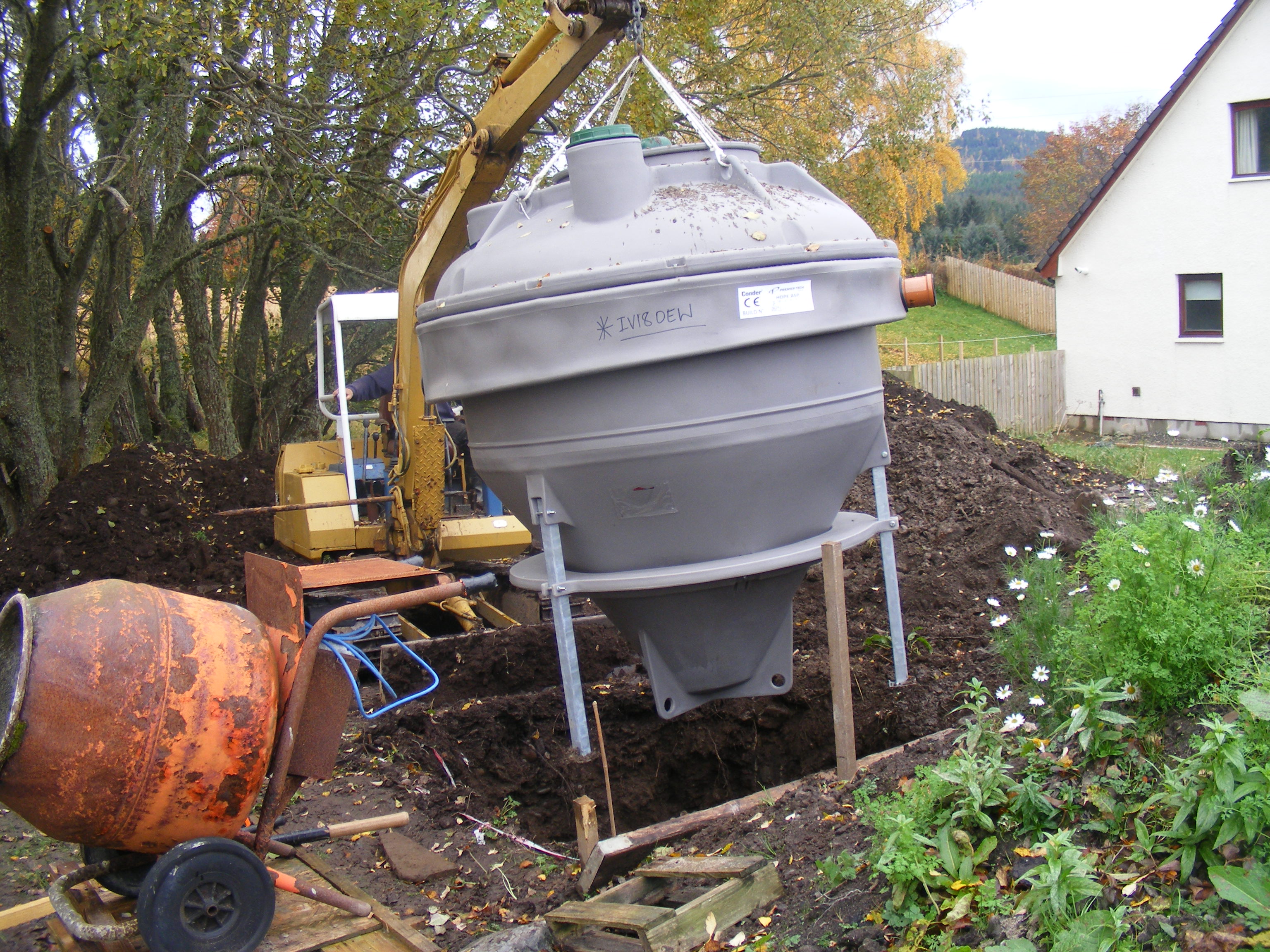
On the point about filling, you should fill the tank with water as you backfill the hole, keeping the water level in the tank level with the backfill. Our previous house we had bad advice from the installer and that tank is just backfilled with gravel. It is okay if you ONLY have it pumped out in the summer preferably after a long dry spell when the water table is low. It could end very badly if pumped out in the middle of winter. we made sure the buyers of the house were aware of that.
-
Boost function tripping electrics.
ProDave replied to Lmiln25's topic in Mechanical Ventilation with Heat Recovery (MVHR)
Yes I am wondering if there is some unintended link between different circuits. -
Boost function tripping electrics.
ProDave replied to Lmiln25's topic in Mechanical Ventilation with Heat Recovery (MVHR)
Does the kitchen boost do it's job if used on it's own and for that matter does the bathroom light switch boost the mvhr when used on it's own? and the fault is only when both are on at the same time? -
A few general points. I am not convinced 140mm of insulation in the floor is enough, I have 300mm in mine. You want a means to spread the heat from the pipes, not just bare pipes. So spreader plates or create a 25mm void to lay the pipes in and fill with biscuit mix sand / cement before the final floor goes on. Is the wood fibre wall insulation going inside or outside? You mention a 6m high space above the kitchen, how large is that area? I can see a lot of heat going up there.
-
I did the opposite, a wet mix so when poured it would flow down the small gap between the side of the tank and the edge of the hole. Each tank is different but mine was concreted to just above the ring that can be seen around the cone at the bottom of the tank.
-
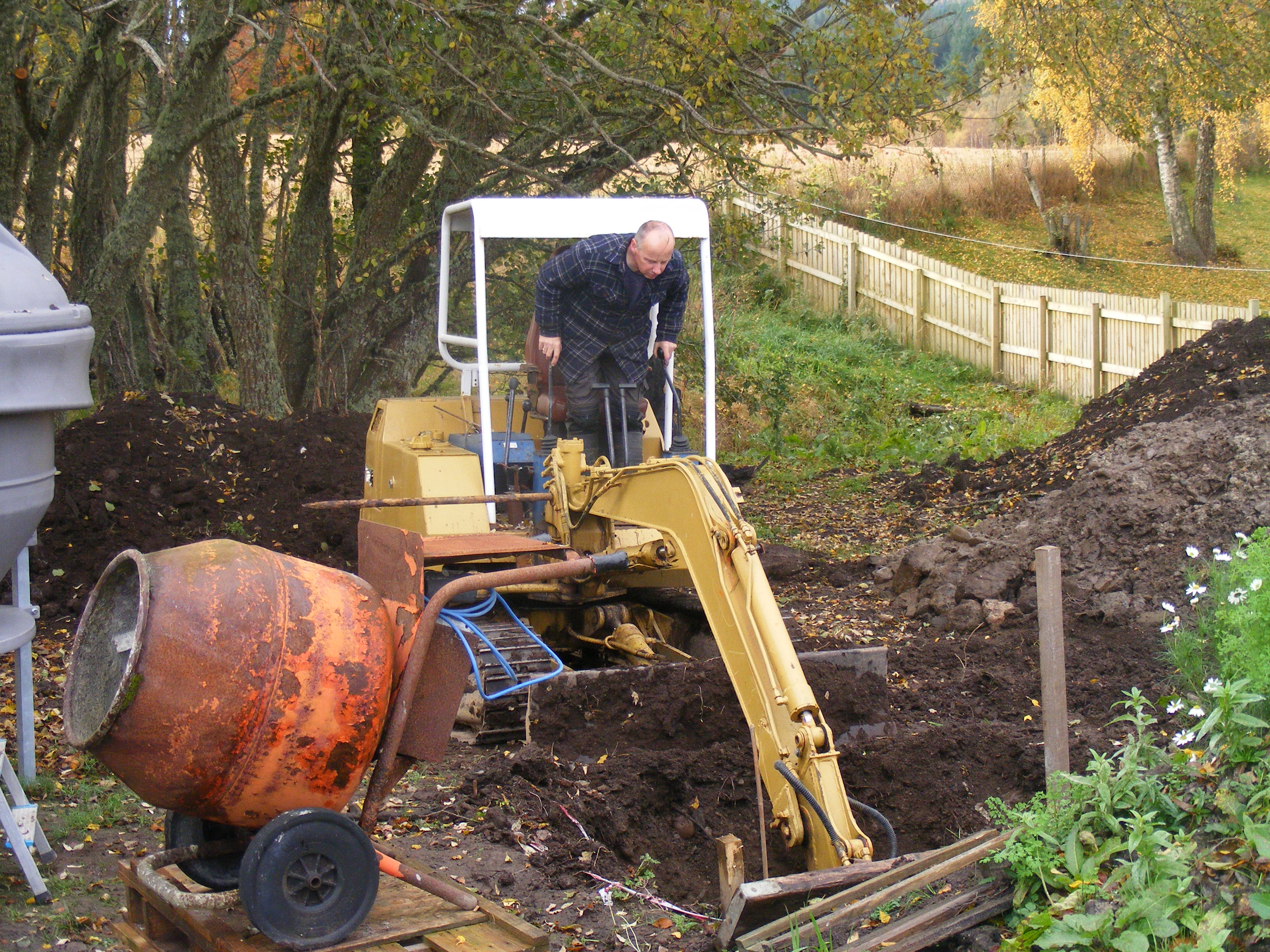
I did mine in 2 days myself. One day digging the hole and putting the tank in, then the rest of day 1 mixing barrowing and pouring concrete. Day 2 lots more mixing barrowing and pouring concrete. I had my own digger and was reasonably competent driving it so no extra cost for that. I had ordered a load of gravel and bags of cement and I had plenty of sand on site so I mixed my own concrete with my own mixer. The trick was to dig the smallest hole the STP would fit into so there was not so much concrete to mix and pour Disposal of spoil was not an issue. This was a building site pre landscaping, so the contents of this excavation were spread around before the top soil was spread back on the site to finish it off.
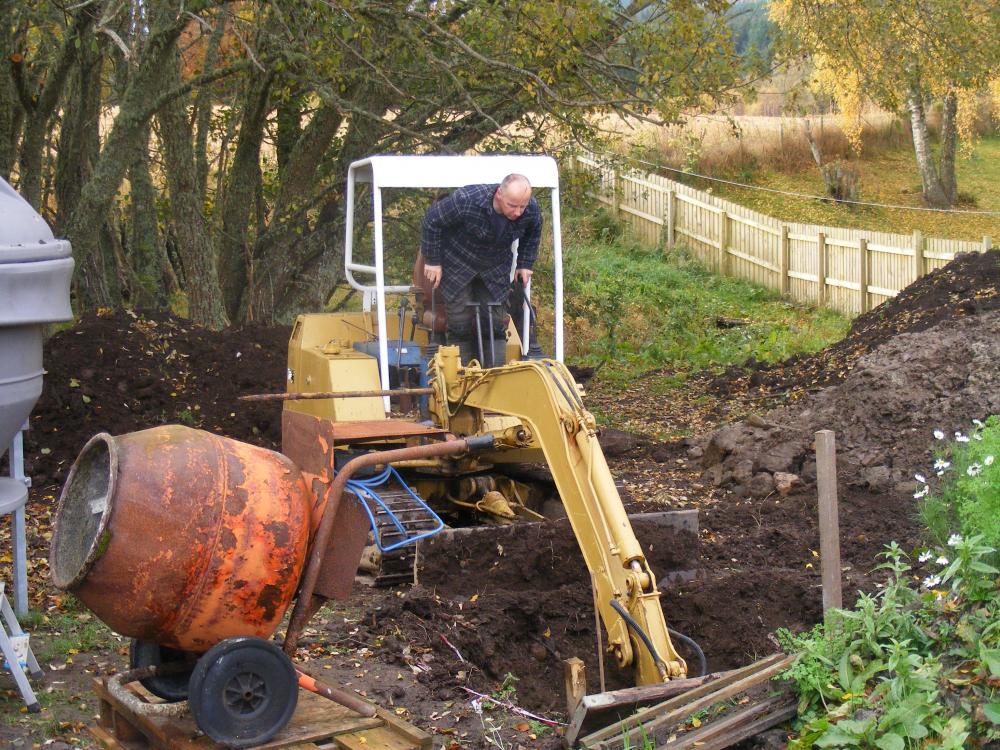
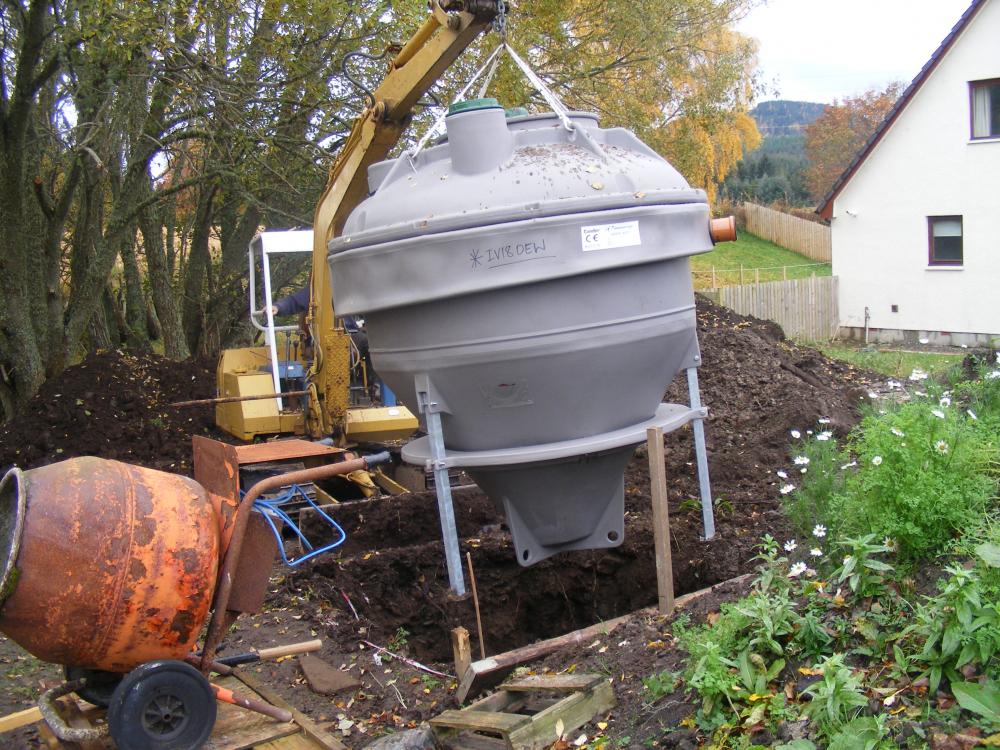
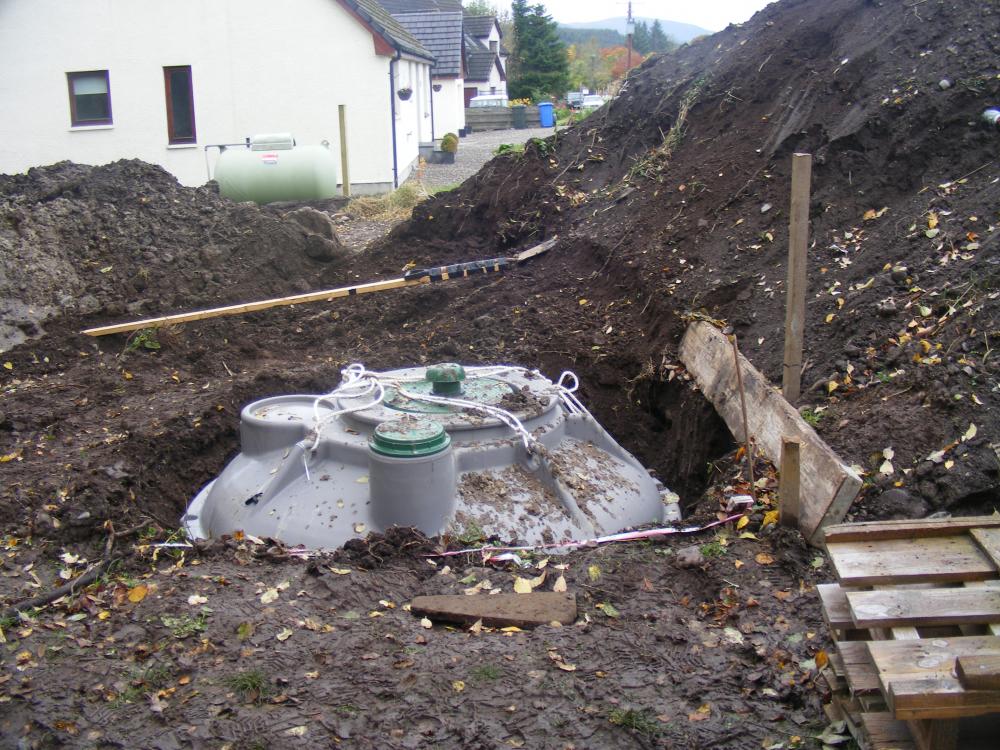
-
The 200mm was the specified "distance to combustible material" specified for the OP's stove by it's manufacturer. It is only 100mm for mine. And plastered and painted plasterboard really does remain very cool indeed behind my stove. I cannot imagine what would have to go wrong to ignite the plasterboard or the timber frame wall behind it.
-
Then EVERYTHING less than 200mm from the stove must be non combustible, hence the ventilated twin wall steel panels suggested. Have you bought the stove yet? If not choose a different one, mine only requires 100mm to combustibles at the rear.
-
But if your stove (mine) says 100mm to combustibles then plasterboard 140mm away is fine for example. Still waiting for @benben5555 to say if his wall is greater than his "distance to combustibles" away from the stove or not. THAT answer will determine how he needs the construct the wall.
-
If the stove is 200mm from the finished wall, then the wall covering e.g plasterboard will be all you need. you only need this heat shield if your finished wall is less than 200mm. Is it?
-
And I expect long after £millions have been wasted, the same will be found true of hydrolysing water to make hydrogen to transport and burn, when it is far better just to use the electricity.
-
Planning permission perils & pitfalls
ProDave replied to SilverShadow's topic in Planning Permission
Planners generally want the extension to be subservient to the original house, that usually means the front of the extension set back from the house. The best compromise I managed on a previous side extension was the front wall set back 100mm / 1 brick and retained a straight roof line (by larger eaves on the extension) -
I had that discussion with the planners. I wanted a static caravan to live in during the build but wanted to retain it as a garden outbuilding after the build. Planners wanted it there on temporary PP to be removed after occupying the house. When I pointed out to the planners on completion day, I could remove it from the site, then immediately replace it and it would be permitted development they removed the "must be removed" clause.
-
Integrated or Non Integrated, that is the question?
ProDave replied to Duncan62's topic in Air Source Heat Pumps (ASHP)
Are those parts really "integrated" as in built into the heat pump, or just supplied as a package and fitted in the normal places? -
you would need more than just one changeover switch. In the summer much of what you use could be supplied by off grid PV and battery, but in winter at times little more than the lighting could work from the solar and battery. A lot of appliances e.g almost anything with a time clock, computers etc won't like the brown out each time you change over.
-
Help to understand UHF needs and best operation and design
ProDave replied to Okeb's topic in Underfloor Heating
You need to be SURE of the block and beam make up. If it is NOT well insulated then 20mm of insulation with the UFH will NOT be any good. We can't form much of an opinion from the picture as the "blocks" are missing and all that is there is the beams over a presumably cold ventilated void. You need to solve that one before spending any more effort on this, it might not be viable without a LOT of work. You don't fit UFH for "warm feet" the floor temperature will only be a few degrees above room temperature, so barely enough to make a floor feel "warm" You fit it for even temperatures without the hot spots radiators inevitably give you, and not having radiators taking up walls space and limiting your furniture placement. -
So the summary of that is it does not happen often, and if it does freeze your house insurance will cover it. They don't cover the long power cut situation. Sorry I don't want to be having the "you know it gets cold why did you not put antifreeze in" argument with my house insurer. Not have the long period without heating while we argue. What's this antifreeze must not be harmful in case it leaks into the drinking water? NO different to any normal boiler that has some form of inhibitor. Is that also potable just in case?
-
I would like to hear of someone "testing" that. For instance here in the Highlands, -10 is not uncommon, a 2 day power cut so it can't even turn the pump on to circulate water. Would their heat exchanger survive that? or would they pay the warranty claim without question? And no good if this cover is only during a short warranty and there is no come back if if destroys say a 6 year old heat pump.
-
So if the pergola went from the outer edge of the patio and stopped just before the garage it would be treated as an outbuilding and PD rules would apply then? Max height 3M at highest point.
-
Tank in and nearly ready for the static
ProDave commented on flanagaj's blog entry in Contemporary Ball Ache
Are you SURE you are not prone to high water table at times? That would need to be concreted in here, and because of that I would (I did) dig the smallest hole it would just fit into. -
Boost function tripping electrics.
ProDave replied to Lmiln25's topic in Mechanical Ventilation with Heat Recovery (MVHR)
If you do that, please come back to tell us what he found.