ProDave
-
Posts
30684 -
Joined
-
Last visited
-
Days Won
424
Everything posted by ProDave
-
 Yes the drainage run from the hut to the septic tank will need to be inspected and verified by building control. It will need to meet current regulations and they might insist on a pressure test of the drain run. As part of our build, the spur of drain to the static caravan was tested and inspected by building control.
 -
Air Source Heat Pump - general question
ProDave replied to 0llie's topic in Air Source Heat Pumps (ASHP)
That sounds like the startup of an old freezer we keep as a standby and only gets used once in a while. At first start up the compressor appears to be locked and just sits there humming. The power trips off using a device called a klixon (sp?) .After several tries it starts. I assume the periods it runs for a few seconds stalled, the motor windings are heating things up until it frees up. -
Air Source Heat Pump - general question
ProDave replied to 0llie's topic in Air Source Heat Pumps (ASHP)
So is that related to HP size? Mine is a small one, only 5kW so is that why it has low coolant charge and does not have a sump heater? -
Air Source Heat Pump - general question
ProDave replied to 0llie's topic in Air Source Heat Pumps (ASHP)
There was a lot if info on the Ecodan standby power thread. Not all compressor types need a sump heater, scroll compressors were one type mentioned as not needing such a heater. My LG Therma V ASHP, I have installed an electricity meter (old dual dial E7 meter) that separately meters power used while heating DHW and while doing space heating. In the summer it perhaps does an hour a day heating DWH the rest of the time it is on standby doing nothing. That standby time is metered by the "space heating" dial on the electricity meter. It has only clocked up 1kWh on that dial in the whole of the summer. -
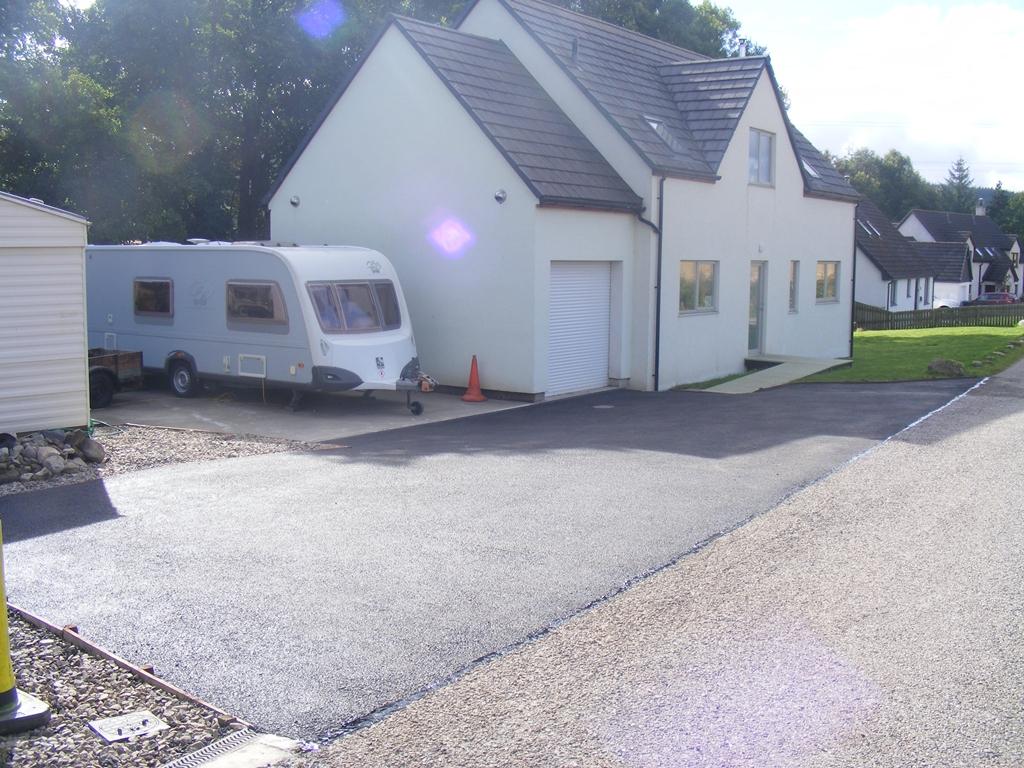
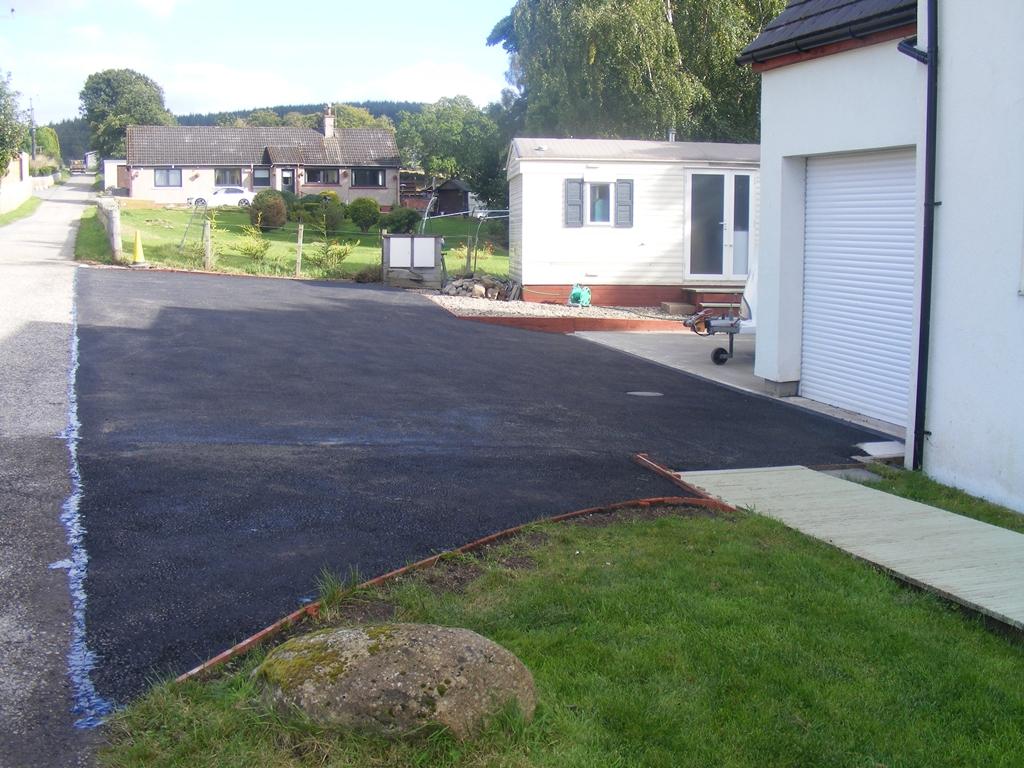
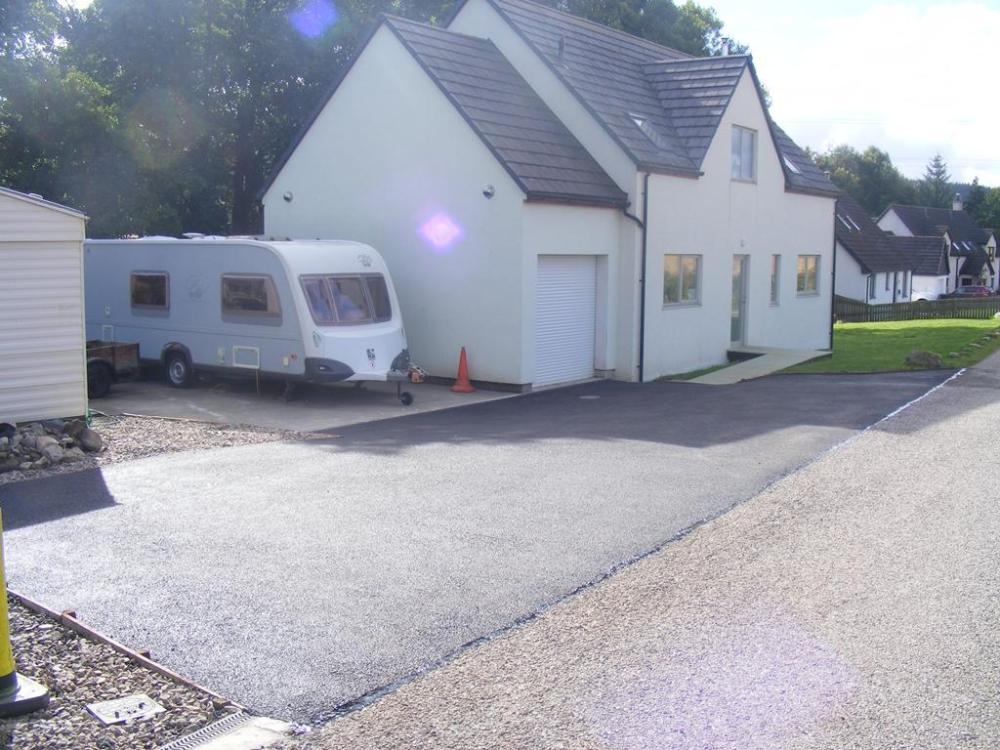
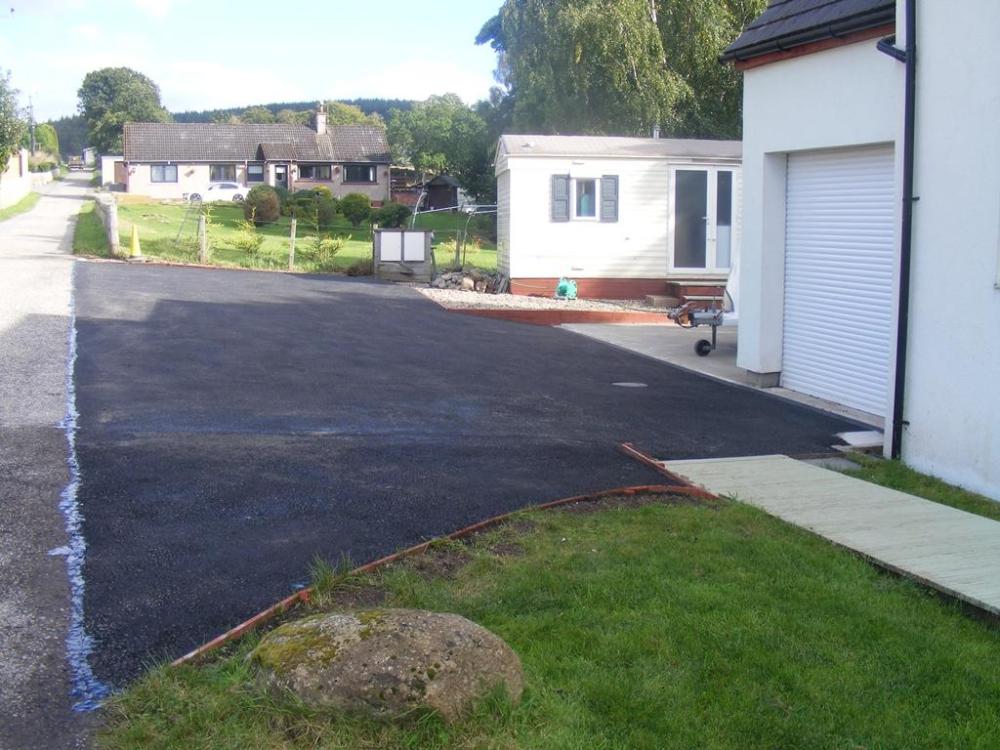
Well that took longer than expected. I had chosen a contractor and agreed to their price then waited for a slot in their schedule to come and do it. and I waited, and I waited. The last communication from them was a phone call last week to say we have not forgotten you but we still don't have a day to do this. At just this point SWMBO found another contractor we I had not heard of advertising on Facebook. I phoned him on Tuesday, he came and looked Tuesday evening and said he could to it on Thursday, and his price was the same as the other contractor. So I shook his hand. They arrived on Thursday and did most of it but they ran out of tar, so they came back today and finished. Very pleased with the job and glad to finally get the entrance to the house tidied up and looking smart for a change. I nice bunch of people to work with. They cover all of the Highlands so if anybody wants their details PM me.
-
Jerry-rig an MVHR unit - how?
ProDave replied to Dreadnaught's topic in Mechanical Ventilation with Heat Recovery (MVHR)
I would not bother. With just one of you in the house, just crack 2 windows on opposite sides open on their ventilation gap and that will give you all the fresh air you need. If time is limited, to it once and do it right when you get the time, rather than waste time bodging something temporary. -
You probably can't link an off the shelf PV diverter to an ASHP controlled immersion, at least not without a thorough understanding of how the ASHP and the PV diverter actually work and switch the immersion. In my case it is a home made PV diverter that uses a solid state relay to burst fire the immersion heater. The ASHP controls the immersion by switching on a contactor. Once you boil it down to that level, I just connected the contactor contact and the SSR contact in parallel. In fact I used the ASHP's immersion control box as a convenient metal box to mount my SSR so it now contains both and just a low level switching cable to my home made PV diverter. But I don't let my ASHP control the immersion heater anyway, that function is turned off. If you have an unvented cylinder supplied by treated mains water, then the wisdom of this forum said there is no need for a legionairs cycle so just turn that function off and connect your immersion to the Eddi.
-
My ASHP is timed to start heating DHW at 11AM. This is to stand a reasonable chance of there being a useful amount of PV generation by then and doing the bulk of the DHW heating then is one of the ways I maximise self use of the power from the PV panels. It then remains on until 10pm to catch people who have a late shower and get enough heat back into the tank for someone that wants a morning shower. * But your installer clearly does not understand how an ASHP works. "so that it just tops up (from say 35 to 50 degrees) occasionally" It does not work like that. Mine has a parameter you can set which sets the hysteresis. i.e. how much below the set temperature does the tank have to get before it starts re heating. 15 degrees would be an unusually high setting for this and could leave you with water that is not hot enough because it has not turned on yet. * I also heat the DHW with a PV diverter so any excess is going to the immersion heater. Typically the ASHP will heat the DHW to 48 degrees and on a sunny day it might end up over 60 degrees. Often that means the ASHP does not do any DHW heating in summer.
-
So it is quite likely to get planning permission but for some odd reason the owner has chosen not to apply for permission? I still maintain they must be selling it as a potential development site, for less than it would be worth with PP hence the overage clause. You could always make any offer you like on your terms, like this is how much I offer and the offer is conditional on the overage clause being removed.
-
But you said there was no planning history. So if they have not applied for planning permission it can only be advertised as a "potential plot" and would presumably be at a lower price than a plot with planning permission?
-
That is borderline. you are likely to get in the region of 10V drop, but as this is a supply cable not a load cable, that will be 10V rise. So if your supply measures at 240V that would push you up to 250V. If (as is common here) your actual supply voltage is 245V it would push you over the normal limit of 253V
-
So you are looking at a site without PP which is presumable "base priced" at less the plot value?
-
I set up a dual rate electricity meter that measures separately on it's 2 dials the electricity consumed by the ASHP when heating DHW and the electricity consumed when space heating.
-
That depends on the levels of insulation and air tightness. 150 square metre house, Highlands, 1400kWh consumed per year by my ASHP to heat the house.
-
Help, filling in form for power company
ProDave replied to CalvinHobbes's topic in Consumer Units, RCDs, MCBOs
Definitely. Get site power connected to a kiosk on the site boundary. you will need site power for the buld. Once that is in, it is your choice. Some of us chose to leave the power in a kiosk on the boundary as the permanent supply and run our ouwn cable from there to the house, others pay to have the power feed diverted into the house once built. -
Air Source Heat Pump - general question
ProDave replied to 0llie's topic in Air Source Heat Pumps (ASHP)
I think that would translate to: If you have not applied power and left it for 12 hours for the crankcase to heat up, then we won't be liable for a compressor fault if you demand it to start too soon. -
Lets start with the size of the existing SWA cable and length as accurate as you know it.
-
Only just realised that this wall is uninsulated
ProDave replied to Radian's topic in Heat Insulation
Attach it with long screws and you can buy big plastic screw heads made for the job to spread the load so they don't pull through. Another stunning lack of detail on a self build I wired, room in roof so dwarf walls at eaves height, cold eaves space behind. They were "insulated" with 2 layers of 50mm PUR badly cut to be a loose fit and than just propped there mostly with a gap between. I did point this out to the self builder but he did not do anything about it. -
I would insist your plumber fits the blending valve. Your radiator circuit will almost certainly want a higher temperature than the UFH and there is no way the ASHP even with it's tank can produce 2 feeds at the same time at different temperatures.
-
UVC in basement plant room but no drainage for overflow
ProDave replied to Thorfun's topic in Boilers & Hot Water Tanks
It astounds me how many people get this wrong. a house i just finished wiring, I noticed the plumber has piped the D2 pipe in 22mm, probably okay for the short runs, but it goes straight from the blow off valves down and outside, no tundish fitted. I will be interesting to see if BC notice this. -
The voltage drop may be a real problem. What size is this 100M cable? The problem is when an inverter is generating, it is seen by the inverter as voltage rise, and most will either shut off completely or limit their output if the voltage they see is too high. You would be better off with long runs of DC cable from the panels and the inverter much closer to the house. On the DC side it will be voltage drop from the panels and will only result in a small loss of power it won't cause issues with tripping inverters.
-
I understood it perfectly.
-
Air Source Heat Pump - general question
ProDave replied to 0llie's topic in Air Source Heat Pumps (ASHP)
Dies yours have high standby power consumption as well then? -
Only just realised that this wall is uninsulated
ProDave replied to Radian's topic in Heat Insulation
This is what we keep saying on this forum, it is attention to detail that makes a house good or bad. Clearly a lack of joined up thinking or care here. It is not like getting the detail right is going to cost much money but builders generally don't know or don't care about such details. It has long made me cringe when working in houses in the winter that you unscrew a switch or a socket and a blast of icy cold air comes out of the hole. Clearly the cavity and a lot of the house structure, such as partition walls and inter floor void in many cases is open to cold outside or loft air. -
Air Source Heat Pump - general question
ProDave replied to 0llie's topic in Air Source Heat Pumps (ASHP)
Be careful. There is a long thread about this with Ecodan units. Some use a sump heater, and the manufacturer said something like the sump heater should be turned on for a few hours before starting the unit. So your simple timer might end up doing harm if the cause of the high consumption is a sump heater.