

ProDave
-
Posts
30861 -
Joined
-
Last visited
-
Days Won
427
Everything posted by ProDave
-
That was a LONG time ago they were that cheap. Last time I looked the plots there would cost more than my entire build here including the land.
-
At a junction, or house driveway exit, you need visibility from a point 2.4 metres back from the road edge to the road surface a certain distance along (distance depends on speed limit of road) So work on the basis you need to leave 2.4 metres all round the garden for visibility. Would that give you enough enclosed garden? If you are doing this with hedges, you don't seek planning permission, you plant a hedge and wait as it grows to see if anyone complains. The planning law on fences is now open to so much interpretation. In the old days anything between the house and the road would need PP. Now a fence over 2M only needs planning if "adjacent" to the road which is very subjective. If I really wanted a fence, I would just put it where I wanted it, leaving a space between the fence and the road for visibility, and if you do get enforcement action, then it is not going to cost you much to move it back further. In line with the corner of your garage and parallel to the house wall would be a good starting point. Squaring it off like that would probably double the area of enclosed side garden. The fence would go from the corner of the garage to about where your sketch shows the hedge changing angle. I bet that is more than 2.4M at that point. and it would leave an area outside the fenced garden next to the drive that would be easy to turn into additional parking if you ever needed more parking (all the parking on the road suggests that would be a good idea) EDIT: The blue shows where I would put the fence.

-

What size digger do you wish you'd bought?
ProDave replied to janelondon's topic in Tools & Equipment
I had a 3t digger, it was just what came up locally at the time. I would have preferred bigger say 6t. The larger machines say 13t would have been too big for my plot. I had a few trees to take out and the 3t digger struggles to get the stumps out. If you have not done this before leave a good length of trunk on the tree and use the digger to push / pull it over after loosening the ground around it -
Interesting plumbing though, a waste "flange" set into the floor onto which you just lower the pan.
-
In view of who you are replying to, you might want to re phrase that..........
-
No. just no.
-
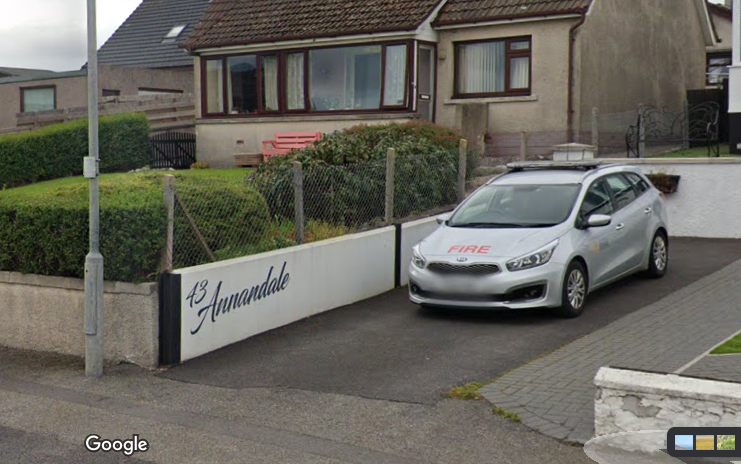
I rewired an old cottage a few years back that had subsidence issues. It was in danger of sliding down the hill. But that was not my point, there was also a similar height retaining wall between the cottage and next door, same situation next door was higher. The solution in this case was a new retaining wall was built on the land owned by the cottage but right up to the existing leaning wall. But the system they used was not what we conventionally know as a retainig wall, but a system where big piles were driven into the ground, and then the concrete sections making the wall dropped in behind the piles. Does anyone know of such a sysatem, it would seem ideal for this case, easy to install and would not take up much of @PXR5 garden. EDIT here is a picture from streetview of the wall I am refering to: That white wall with the house name painted on is the new retaining wall, see the steel piles driven into the ground and the concrete panels lifted in. Behind the new wall is the old failing retaining wall still in place, still with the neighbours planting and fence just where it was.
-
PV to hot water and heat storage controls
ProDave commented on Marvin's blog entry in ASHP, MVHR, PV and EV combo
But the controls don't need to be so complicated. Simple changeover relay that is energised by a tank thermostat to swap the PV diverter output to something else (the storage heater) if the tank reaches maximum temperature. But I wager there will be very few times this happens except in summer when you won't want it. -
No, been round all the settinga again and again and followed every guide I can find. It really looks like wifi calling is not enabled on the sim, except it works in wifes phone.
-
The point is, Sky say it is offered and say it is enabled on my sim, but of all the phones I have yet been able to try it in, only one works. I have taken the easy option and ordered a replacement sim. If that does not work I will have to phone them again.
-
PV to hot water and heat storage controls
ProDave commented on Marvin's blog entry in ASHP, MVHR, PV and EV combo
It seems a little over complicated. In winter you won't get more PV than the cylinder will store, and in summer when you might, the last thing you want to be doing is heating a storage heater. -
The problem I am having is really a symptom of another problem. We have always only had a weak mobile signal from O2 or Vodaphone. So for years we have used O2. No other provider has covered out house. It is was a usable signal throughout most of the house. It all started to go wrong last year. Twice the one mast serving our house went off, I reported the fault, and it was back in a week and everything worked. It went off again on 9th December. According to O2 is is now back on, but i get absolutely no signal at home, even if I go outside and walk up and down the road. I reported the fault again only to get another email 10 minutes later to say the fault is fixed. My concern is we only ever got 2G indoors and 3G outdoors. Most of the providers are planning to shut down their 2G and 3G services, though O2 have saif they will be the last to shut down 2G. So my fear is that's it, they have gone and shut down the 2G service from this mast and not boosted or improved the 4G signal from it. Of course you can't get to talk to anyone that actually knows what is going on to give you a proper technical description of what they have or have not done. So the quest to get wifi calling has gone from something that has just niggled me that is does not work, to much more important. With me retiring this year, I care less about customers not being able to contact me (though I expect there are some already that can't get hold of me) the landline (in itself a VOIP service) will do for calls and Whatsapp works for those that use it. BUT when you log into a lot of services they insist on sending an SMS verification code. That does not work now unless I take at least a mile walk over the brow of the hill (by which time the code has time expired) or drive up the road to get it. Pure nonsense. So I need to get wifi calling working in the easiest / cheapest way.
-
Here is what a hip iron looks like And this is where it goes, you attach it to the roof structure before the last two hip tiles go on. The bit that sticks up stops the hip tiles sliding down. Tell your roofer to trundle down to toolstation and buy them, https://www.toolstation.com/scroll-hip-iron/p33398 Read the Ladybird book of how to tile a hip, then come back and do the job properly.
-
Does anyone understand it, and why it has to be so complicated and difficult. My phone is an old Samsung A3. It used to belong to SWMBO but she bought a new one as she needed more memory. I currently have it on a Sky Mobile contract, which uses the O2 network. It won't do wifi calling. It should do, the option to turn wifi calling on is simply missing from the menu where everything tells me it should be. And searching says if the wifi calling option is not there it is because your provider does not support it. Sky mobile say they do and it is enabled. I have recently got another phone, a OnePlus 3. No idea who makes them. So I tried my SIM in that. Still no wifi calling option. I found some complicated instructions on a web search to turn on wifi calling, even of your provider does not support it. That gets me a little further, it now says "no mobile network found, connect to a wireless network to make a call" I assume when it says "wireless network" it means wifi? Well I AM connected to the home wifi. So another attempt failed. I then tried SWMBO's sim in my phone, wifi calling works on her phone, but her sim does not enable the wifi calling on my phone. While the cards were out, I tried my sim on her phone and blow my socks off, wifi calling works, so the sim does support it? I then found an old out of service plusnet sim, and tried that in my phone, and up pops the missing wifi calling option, even though that sim is long since out of service. So why does it have to be so complicated, wifi calling will only work with a certain combination of phone and SIM and no way pf predicting what will work until you try it, so no I am not going to go and buy another phone only to find I am out of luck again. Sky mobile are next to useless, all they can say is wifi calling is enables which must be true as it works is SWMBO's phone. So where do I go from here to get something you would have thought was simple, to actually work?
-
We need a picture of the very left hand end of that slipped tile to see what is there. e.g. is there a hip iron?
-
Just what 25Kg load do you want to hang from a ceiling? I would want at least 2 fixings into a joist. e.g. when designing the kitchen and knowing we would have an island cooker hood, the noggins and supports for it were built in before the plasterboard went on.
-
On off times remain on GMT, so they DON'T got forward an hour in summer.
-
It never rains but it pours
ProDave replied to jayc89's topic in General Self Build & DIY Discussion
You were lucky the ceiling stayed up. -
Exactly. One of the things that makes me angry about the green loby is they address us like we are naughty school children and we are still burning fossil fuel because we want to and are ignorant. If they would just give a little credit for the improvements already made, and say well done, keep it up, we are getting there, I am sure people would be more motivated.
-
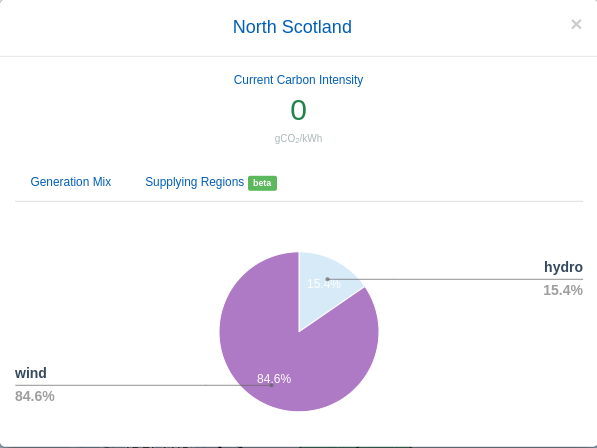
Ah that's okay then no carbon up here So it's okay to plug your EV in here to charge it. Oh except that will mean a little less green energy sent over the border and a little more FF burned down south.
-
I don't believe it would have been that much had we retained our own industry and built our own as we used to do. Now we have to buy in off the shelf designs and pay the foreign designers their dues.
-
Okay you will be using less fossil fuel if the fossil fuel burned to charge your car emits less CO2 than an equivalent ICE car does. But it seems an awful lot of people seem to think they plug there car in and it charges from a wind turbine and emits nothing. That is simply not true. Even people who charge from their own solar PV are "burning" fossil fuel. If they were not self using their PV it would be exported, thus reducing someone elses use of fossil fuel. It's like the people who sign up to a "green" electricity provider and smugly tell you they are not burning any fossil fuel.
-
The immediate issues from that chart, are with 9GW of solar (which is a daytime source) there needs to be about 4.5Gw of storage just to even that out and be some use at night. And only 9GW of nuclear, what a sorry state we they have let that industry get into It still proves my point, not much point just now buying an EV believing you are cutting use of fossil fuel. That will come later, but not yet. And Tidal could so easily be a very large number.
-
I have 3 bedrooms in out 150 square metre house. That is comfortable with decent sized rooms. 4 bedrooms in 130 square metres is probably not what most self builders really want.
-
So even on a low demand period, 9% is being generated by gas. Have we EVER yet reached 0% gas or coal? At the moment no fossil fuel is the aim, but we are not there yet, and the closer you get the harder it gets. This is why I say if you buy an EV and plug it in, then you WILL increase the amount of gas being burned. That is FACT. One day we might get there, but it will take a lot of energy storage to make that possible, and then I bet there will still need to be some fossil fuel backup. The first milestone we have to reach, is 100% non fossil generation some of the time. I don't think we are there yet.

