


willbish
-
Posts
741 -
Joined
-
Last visited
Everything posted by willbish
-

Do these estimates from howden seem off?
willbish replied to allanswork's topic in Kitchen Units & Worktops
What amount of discount is the max Howdens will give? I got it up to 45% on my recent kitchen quote (pre sale) after trying quite hard, just wondering how much is possible now that Sept is approaching -
Heat Pumps & Hydrogen Powered Boilers Book
willbish replied to Des Ingham's topic in Introduce Yourself
Any piece of tech or equipment has lifetime impacts to consider, I don't see anything to suggest that a heat pump has substantially greater lifetime impacts which counter their major benefit of running on (ever greener) electricity? I'm not sure low temp UFH has higher total impacts either. Conventional steel rads inevitably rust and go out of fashion requiring replacement. UFH pipes have the potential to work for a generation at least. Also many gas boilers use UFH as emitters. Still confused by this statement -
Heat Pumps & Hydrogen Powered Boilers Book
willbish replied to Des Ingham's topic in Introduce Yourself
Can you explain this? Is it because of the refrigerants used? -
Thanks for that I had been wondering. It's 5 to 10 seconds of hammer, unlikely to occur in the middle of the night but even then I doubt it will disturb. 63mm up and in to the inspection chamber which is just a couple of metres and then standard soil pipe down and away. Wouldn't like to open the I/C when the pump is running! 63mm MDPE is a beast to work with. Ended up capping and filling with boiling water to get it malleable enough to wrestle were I needed it to go.
-
I have mine just 4 metres from the back door. Not ideal but that's the best I could do. I've never notice any smell coming from it although it is ventilated much further away. Practically silent when pumping, however when the pump stops there is some water hammer that reverberates through the soil pipes into the house. I'm hoping this will improve when soil pipes are properly insulated and toilets and water traps in place.
-
Not yet in my selfbuild with ASHP but planning on getting an E7 meter. At the moment I'm living in a flat with E7 meter but we were unable to shift enough of our consumption to the off-peak hours to justify the expensive on-peak rate. This was easily fixed by switching to a regular tariff (same both day and night) with no need to change meter.
-
Not enough glue in 22mm Egger Chipboard installation?
willbish replied to Adsibob's topic in Floor Structures
Tape or additional glue isn't going to do anything. All you can do is check sufficient fixings have been used and add any that are missing. Three per joist per board so 21 total. Floortite screws and not nails ideally -
Define niche? I suspect what you consider niche (very well insulated and properly air tight) will, in time, become the norm for all new builds (even poor quality large developer builds). For which ASHP's are ideal. It's clear their prevalence is going to increase and become fully mainstream
-
Reducing the guesswork involved with a SunAmp
willbish replied to ToughButterCup's topic in Boilers & Hot Water Tanks
Installed mine this week. Piece of cake. Definitely a labour saving to be made over a cylinder which might be a consideration for you. -
Nudura vs Nudura Plus...
willbish replied to Mulberry View's topic in General Self Build & DIY Discussion
Sounds like you are at an important crossroad for your build. If you decide to chose a lower (or lowest) Uvalue ICF block you could be embarking down a road where you will be focusing on airtightness, thermal bridging & 3G windows. Sounds like your architect is up for it. ICF (poly) is inherently air tight so you've ticked that box and if you are going for an insulated raft, thermal bridges can easily be kept to a minimum. Last box to tick is excellent U-values. Then you'll have a property that will be especially easy to heat and cool (amount of glazing dependant!). On the other hand if you're not so bothered about designing out thermal bridges and air tightness then the standard Nudura block may be the best bet. I know someone with the fattest Nudura blocks on the market. Their heating system is pretty much non existent. Not even UFH, just a single electric heater in the main living space is apparently enough. This an extreme example, but the point is if you increase the insulation levels (and airtightness and thermal bridging) you can reduce the complexity and cost of a heating system. Personally I have an Isoquik insulated raft and Logix ICF which is 70mm inside and 203mm outside. Ive chosen wet UFH on the groundfloor for heating and cooling with an ASHP -
How to fit acoustic insulation to Posi joists
willbish replied to Hilldes's topic in Sound Insulation
I tried this initially and ended up with kinked pipe. If you create a loop in each section whilst feeding through the joists you won't have such tight bends. See how my pipe crosses itself. Go with this technique and it's a doddle ??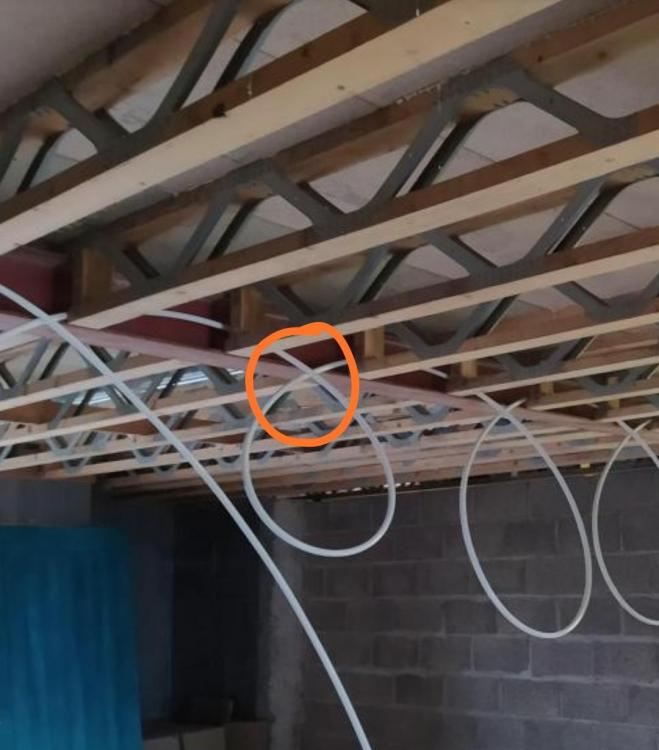
-
How to fit acoustic insulation to Posi joists
willbish replied to Hilldes's topic in Sound Insulation
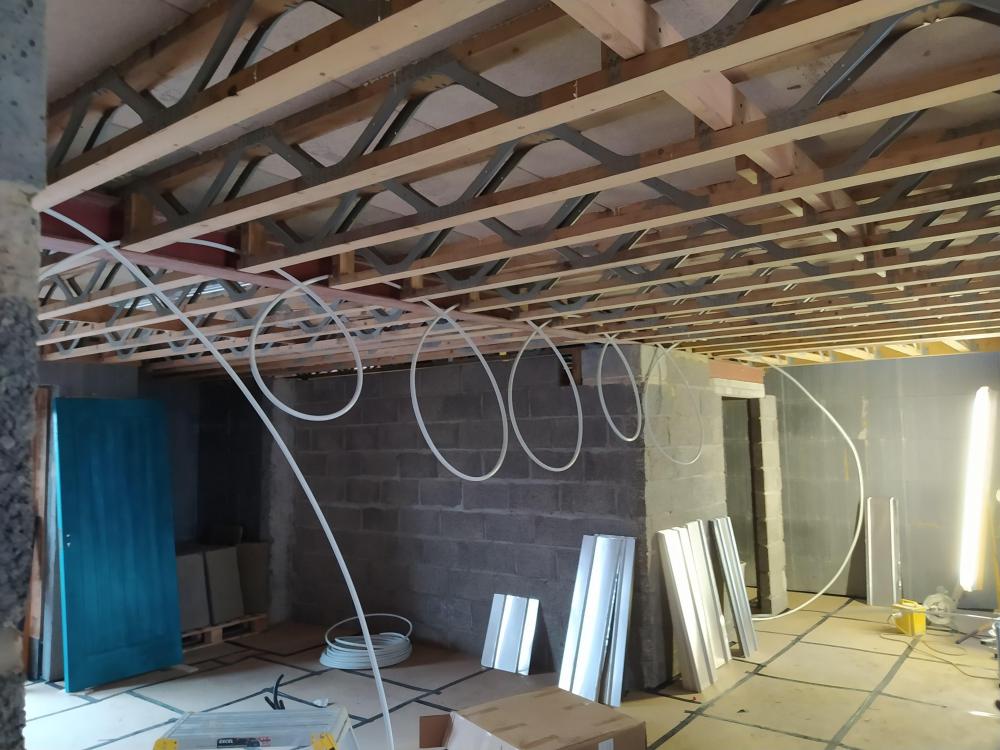
@Hilldes how did you get on attempting from below? It's certainly possible, I managed it with a little help. Trick seemed to be get the loops formed at the beginning and then enlarge each loop in turn. My joists are 400mm centres and I put a loop in alternate gaps.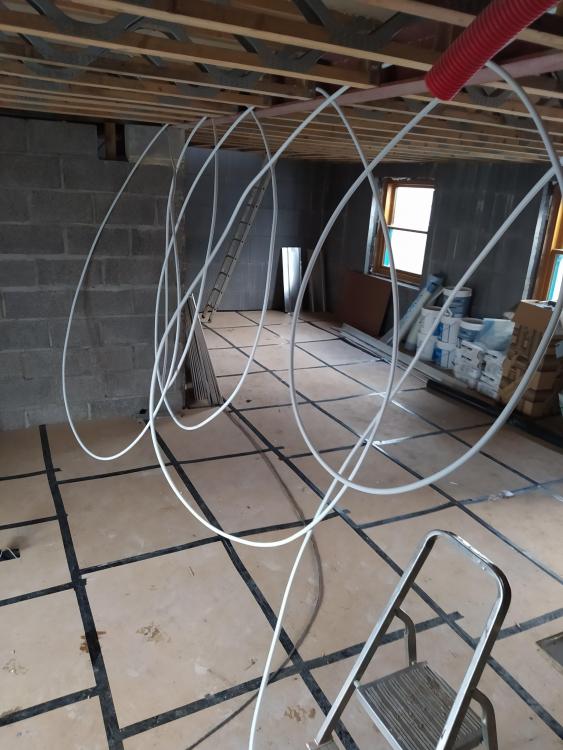
-
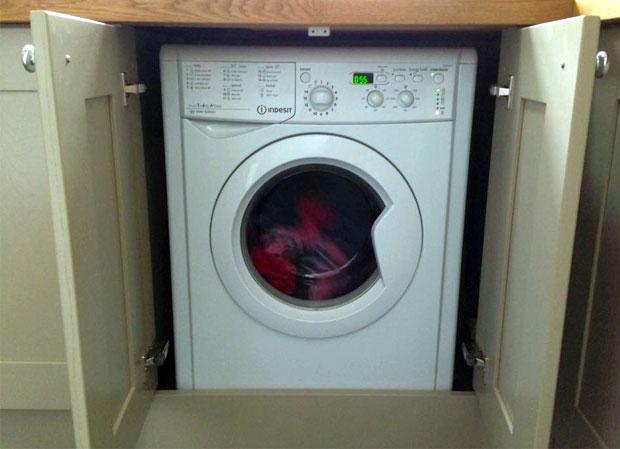
Every integrated washing machine I've had the displeasure of using eventually moves enough that the door ends up clattering on the adjacent unit when it's on full spin. That or the hinges drop. I'm considering a set up like this picture in the utility room. Any disadvantages to be aware of? Other than losing an extra 50mm each side
-
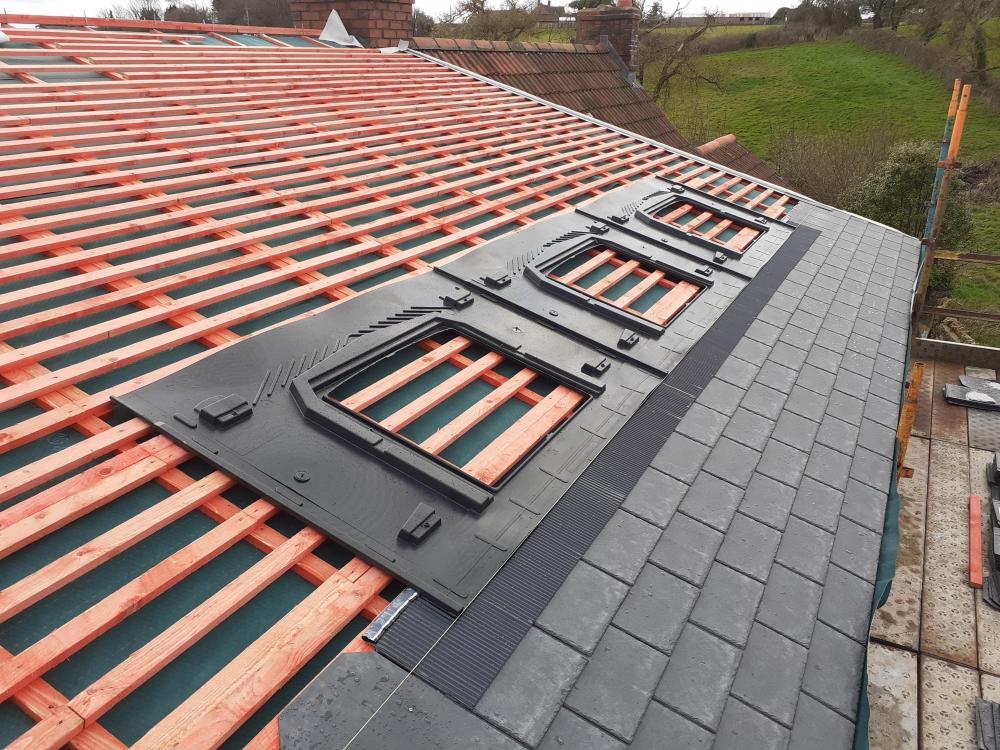
I'd say go for it. GSE could simplify their instructions a lot by saying just make sure there are battens placed for fixing the trays, battens for fixing the panels and couple extra at the bottom for the flashing.
-
Daikin Altherma AFVALVE1 Anti-freeze valve
willbish replied to willbish's topic in Air Source Heat Pumps (ASHP)
Not sure if there's anything complex Features in this install video -
Daikin Altherma AFVALVE1 Anti-freeze valve
willbish replied to willbish's topic in Air Source Heat Pumps (ASHP)
Not exactly sure, but I think its some kind of relief valve that opens a little if the outside temp drops. They are fitted on the external pipe work. -
Has anyone used these on their ASHP install? Saves all the playing about with glycol but at some cost
-
Looks like an adze finish, beautiful.
-
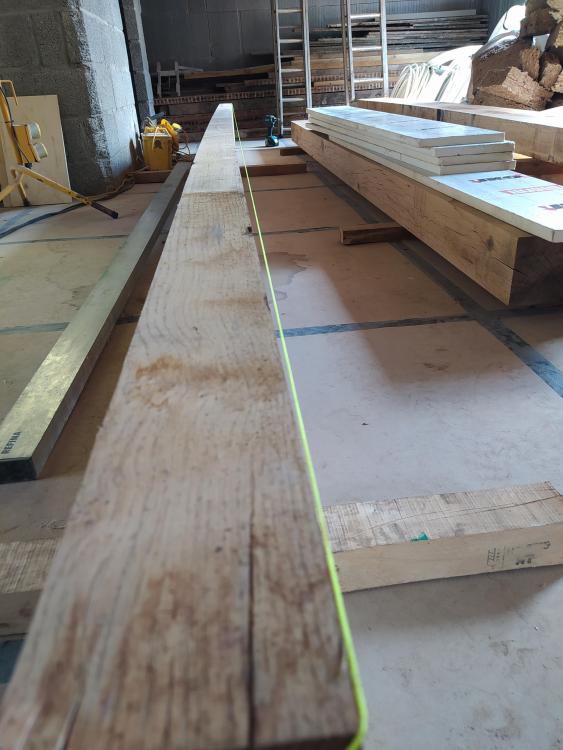
It's not taking any load. Will be supported each end as a cosmetic ceiling beam. I'll fit it with the bow up / ends lower
-
It's air dried constructional European. I've got 700mm to cut off one end which reduces the deflection a little but not as much as I was hoping as the bend is in the middle.
-
Just taken delivery of a few oak beams. 300mm x 100mm 5.0m length with 20mm banana. Is that acceptable?
-
Partitions: Timbers studs Vs Metal C studs
willbish replied to MortarThePoint's topic in General Construction Issues
Ditto. That was my reason for going all metal. 70mm track, 50mm staggered I studs. 15mm soundbloc both sides. Ply lined for landing cupboards and walk in wardrobes. -
Is a buffer vessel a requirement? I know it's not necessary for heating but is there something about different cooling that makes it essential? Or am I receiving duff info. I was planning on using my 300mm slab as the 'buffer' dumping heat overnight during off peak hours. In the summer months, when cooling, I appreciate there is the potential to cool the slab below dew point but I can't see that likely if just running for a few hours daily during peak PV production... And the thermostat is working. Does a fan coil complicate matters though? Flow rate range and temperature range of the fan coil unit appear suitable for running directly.
-
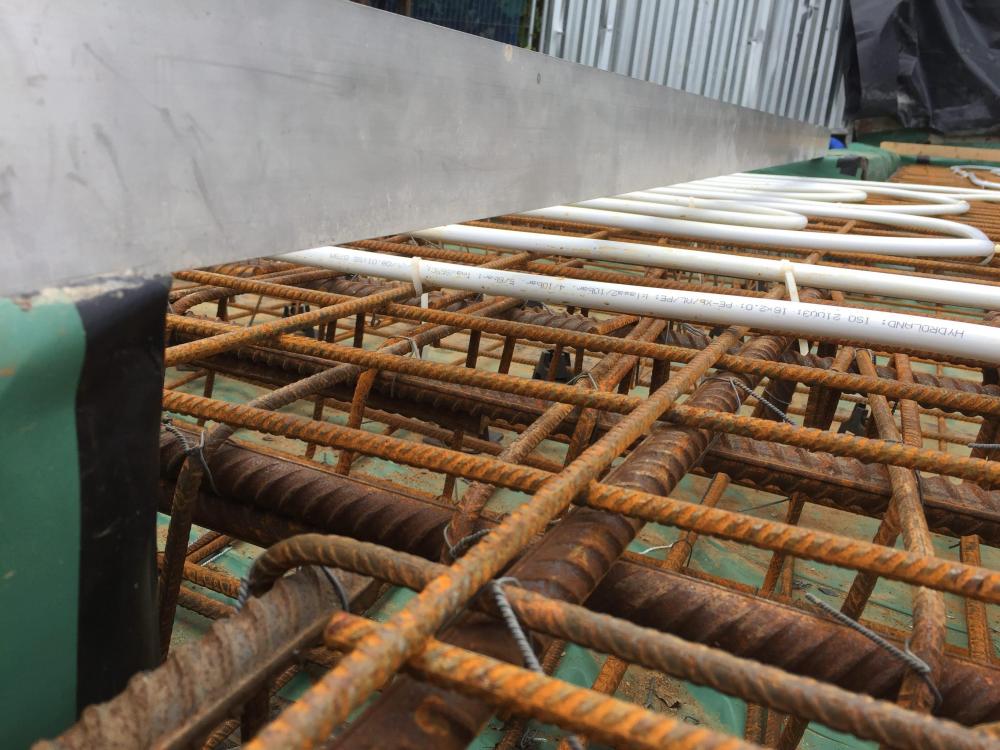
It's not just the heating but also the potential future cooling if connecting to ASHP. I was also tight for space when fitting the UFH pipes on top of the top layer of mesh but managed it. Might be worth measuring what height you have available now above the mesh. Perhaps using 12mm pipe might help...a tiny bit.
-
It's exactly what I did. Insulated raft foundation will be one heating zone, so no point piping the UFH loops to exactly match the rooms above.






