
Stones
-
Posts
3761 -
Joined
-
Last visited
-
Days Won
23
Everything posted by Stones
-
@Taff We have that very model. Some info from my blog about its performance:
-
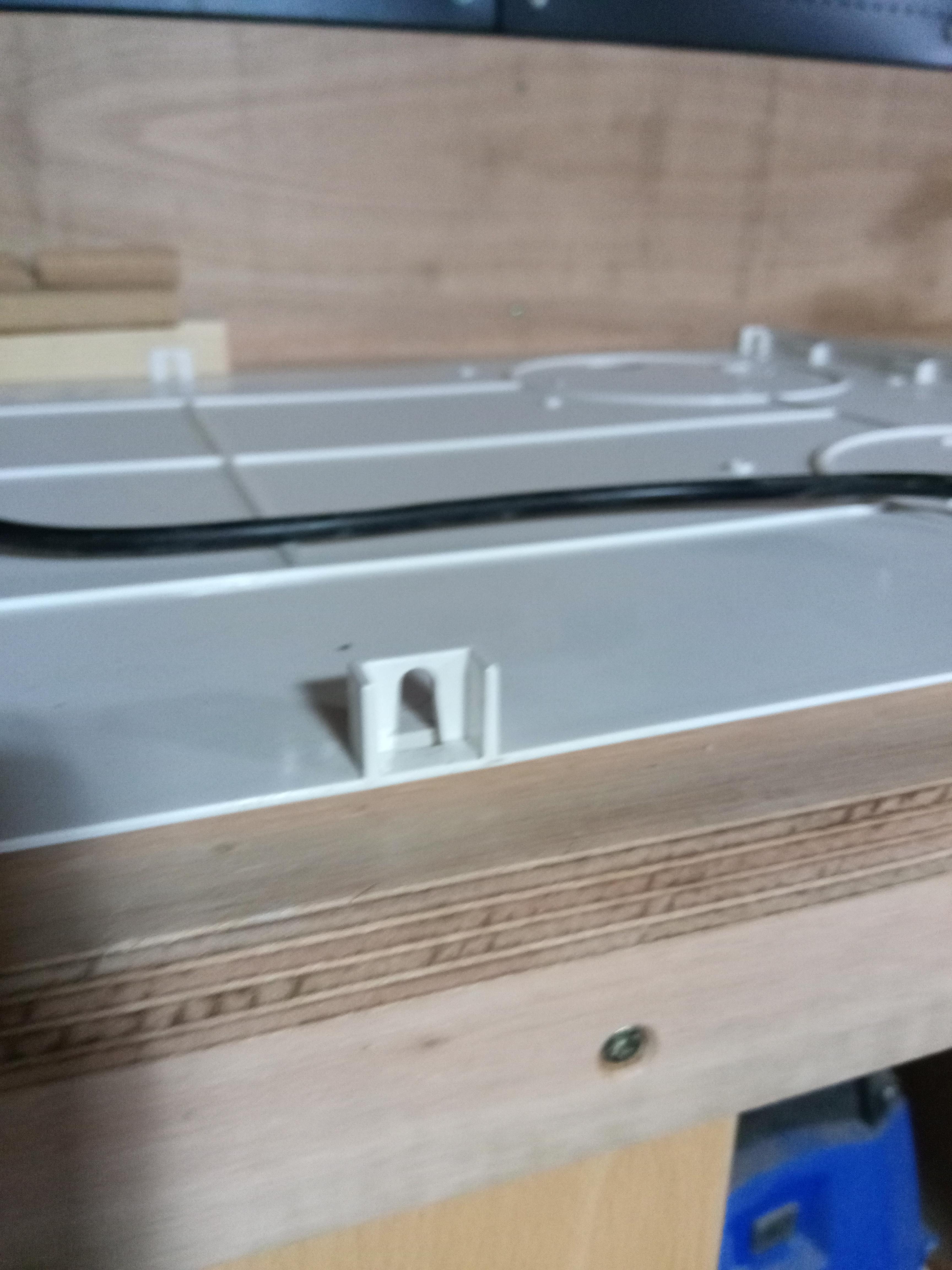
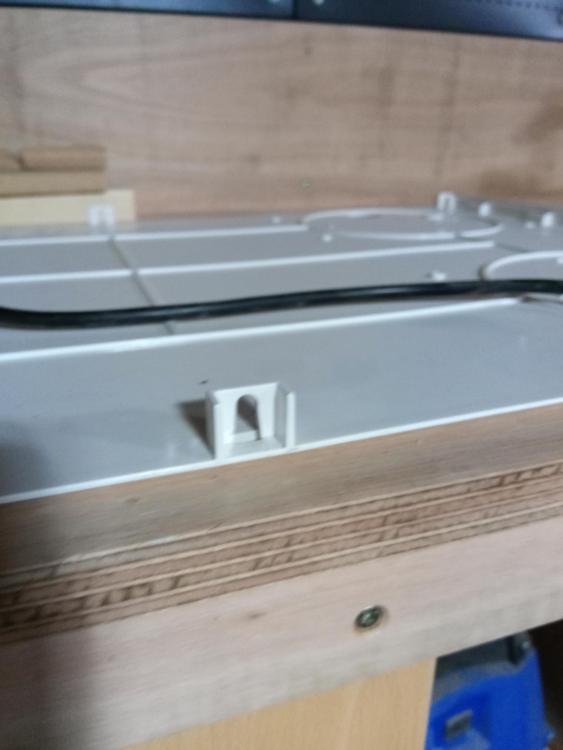
As referenced in another thread, I have a Vent Axia Sentinel Kinetic Plus MVHR unit. @Declan52 and I have both found the fixings used to secure the front and back covers to be next to useless, with each of us having broken fixing points. Chimney nuts slide over the the plastic fixing points pictured, with longish M3 bolts (with a really annoying 4 blade windmill head) then passing through the chimney nuts. Setting aside the bolt heads as an issue, the biggest problem is the movement in the chimney bolts and trying to properly seat the bolts in when refitting the front panel after servicing the unit. I would like to use a fixing nut that does not move/ is more robust. In my mind an adaptor with threaded 7mm outer diameter (to fit through the hole), threaded 3 or 4 mm internal diameter would be perfect as I could secure the adaptor in place on the fixing point with a nut on the blind side so the fixing doesn't move. Something like this: Other options seem to be: Jacknut Rivnut Small metal cavity fixing Rubber wellnut / rivnut Threaded insert held in place with nut on both sides Anyone have any other bright ideas?
-
 It's a few years since we installed 7.2 kWp of PV on our last house, and had to go through the G59 process. Initially, the DNO, having looked at the proposal, came back and said we will need to reinforce the grid, fit a relay at a cost of £000's. The PV installers went back to them with the spec of the larger G59 compliant inverter which had all the gubbins required within. DNO said fine, no need to reinforce or fit relays, and the install was basically the same as a 3.68kWp array- Panels to DC isolator to inverter to AC isolator to CU.
 -
The picture in my blog entry shows the basic set up. CU to AC isolator to inverter to DC isolator to PV panels. I also have a meter so I know what I'm generating (fitted between the AC isolator and inverter)
-
This is how I remotely fitted our PV:
-
A warm welcome. Looking forward to hearing more about your project.
-
Is this one reason there is a permanent UK housing crisis...
Stones replied to Bitpipe's topic in Housing Politics
Some very interesting points coming out in this thread, and of course some drift. Can I ask everyone to steer this back to the topic and focus the discussion on that please? -
@DOIGAN A few thoughts. Firstly, expectations. As discussed, the system does not and will not respond in the same way a gas boiler based system would. It works best running long and slow, and any changes to settings you make will take a couple of days for you to see a difference. My own view is that you should run it 24/7 - we have certainly found that works very well, or if for reasons of noise disturbance you want it off through the night, the other 16 hours of the day. It is perfectly possible to charge your UFH slab over a 7 hour period and let it release heat over the rest of the day without significant effect on overall temperature (see @TerryE blog), however in your case my inclination would be to go for the 16 hour option, with the unit being off at night. Cost wise I would ditch E10 at 16p/19p you are paying, get a standard meter fitted and go with the best variable rate which seems to be around the 12.5p per kWh mark - this in itself would represent a significant running cost saving. Also bear in mind that an ASHP brings down the cost of electric heating to the ballpark of gas based system, but is unlikely to be quite as cheap. I think one of the biggest problems is the location of the master controller / thermostat. Being situated in the cupboard with the DHW cylinder means that it is always going to register a higher air temperature reading than the main body of the house. This in effect means the ASHP is getting incorrect information and is basing flow temperatures and operating time based on the temperature in the cupboard, not the main house. Given there is a differntial between the two because of the DHW heat loss, it is I think reducing the amount of heat being delivered to the house, as the unit thinks it has achieved what has been asked of it. The first thing I would be looking to do therefore, would be to move the controller / master stat outwith the cupboard. In your case, that's only 600mm or so. If you were to power down the controller, remove the front plate and unscrew the controller from the wall, you should be able to determine how much slack there is in the control cable/if there is sufficient to relocate the controller without having to splice more wire in. Simply moving that controller to the outer wall of the cupboard would make a huge difference and allow the unit to work off more accurate and importantly consistent readings of internal household temperature. The current situation where you have to constantly alter the target temperature to try and force the unit to respond is a consequence of the poorly located controller/master thermostat. Having done that, and given the main issue is the living room not being warm enough, I would proceed as you are (using the room thermostats to keep certain of the UFH loops closed), to concentrate the supply of heat to key rooms. I think I would then be looking to methodically work through the different option settings to see what works best for your house / location. This would involve trying both fixed flow temperature options and the 4 weather dependant heating curve options (we use weather dependant function and it works really well), effectively, that would be trying 6 different settings (assuming you wanted to leave the unit off overnight for noise disturbance reasons) . In addition there would also be the option of experimenting with the temperature modulation function, although I think I would concentrate on the main functions first, and use the modulation option to tweak things once you have something that does the job the vast bulk of the time. We'll find the right setting, it'll just take a bit of time. Again as discussed, I think it would be informative if you could contact Daikin to find out how to enable the onboard energy metering so it shows both consumed energy and produced energy (so we can see if there is a problem with CoP)
-
@DOIGAN I'll cover my thoughts on the ASHP in the other thread. Two things I think we could do in respect of your MVHR. First install silencers in the main duct runs near the actual unit to reduce the noise to the supply and extract vents. You can get these off the shelf (e.g. https://www.bpcventilation.com/attenuator-silencer ), or make something yourself like this: Fitting smaller silencers at each supply valve is also an option. Second, you could fit a directional air valve in the living room so it pushes all the incoming air upwards / away from the sofa. Third, you have the option of fitting acoustic valves to all the supply vents to reduce noise levels (on top of the reduction you would achieve fitting sliencers) In addition I would suggest checking the duct runs to make sure they are either insulated or laid underneath the insulation layer in your loft. We run our MVHR at 35%, boost 55%. As discussed, I'm a great believer in the benefits of MVHR, both in terms of fresh air, eliminating condensation and heat recovery.
-
Not sure, our unit is in our (cold) loft, albeit housed in an insulation hut. I am considering moving it to the warm side of the house (cupboard space immediately below where currently located). In the longer term that would make maintenance easier so perhaps worth doing. Not sure whether this would have prevented the issue above. Thinking about it, we had biojelly grow in the drain of our EAHP (last house). That room was always 21C. I suspect therefore that the growth occurs as a result of temperature changes / differential between the condensate water temp and the air surrounding.
-
A previous MVHR unit I had was like that, hinged at the bottom, with two robust toggle / latch fixings at the top. Easy access inside and condensation collection was simply a tray at the bottom with outlet. Easy to see, clean and maintain. I've just emailed Vent Axia to see what they say, in particular for the best method to clean the drain outlet, and if they have replacement fixing arrangements to replace the woeful bolt and spire nut combination.
-
@Declan52 just shine a torch into the fan when you have the heat exchanger removed. You WILL know if you have a problem.
-
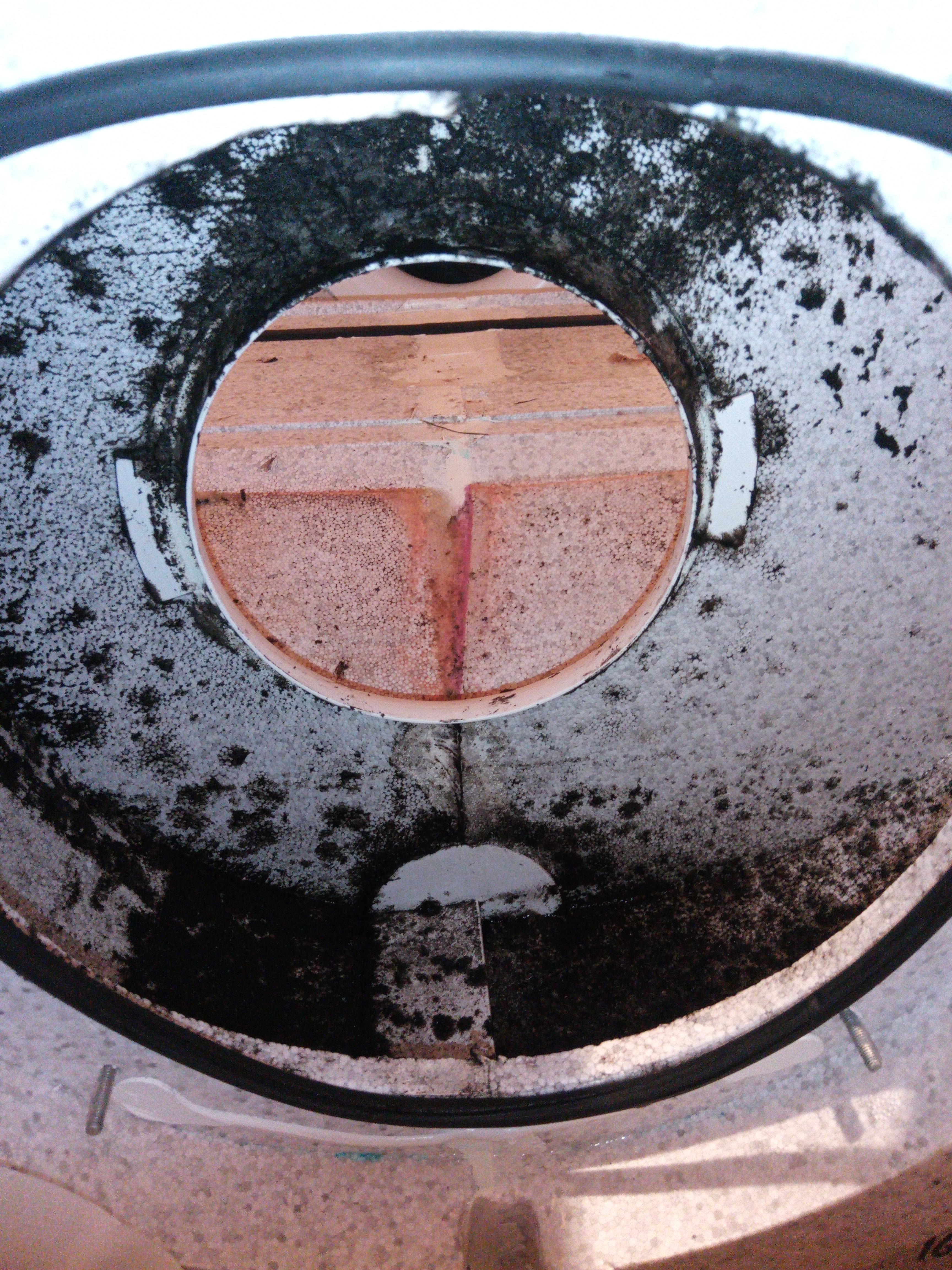
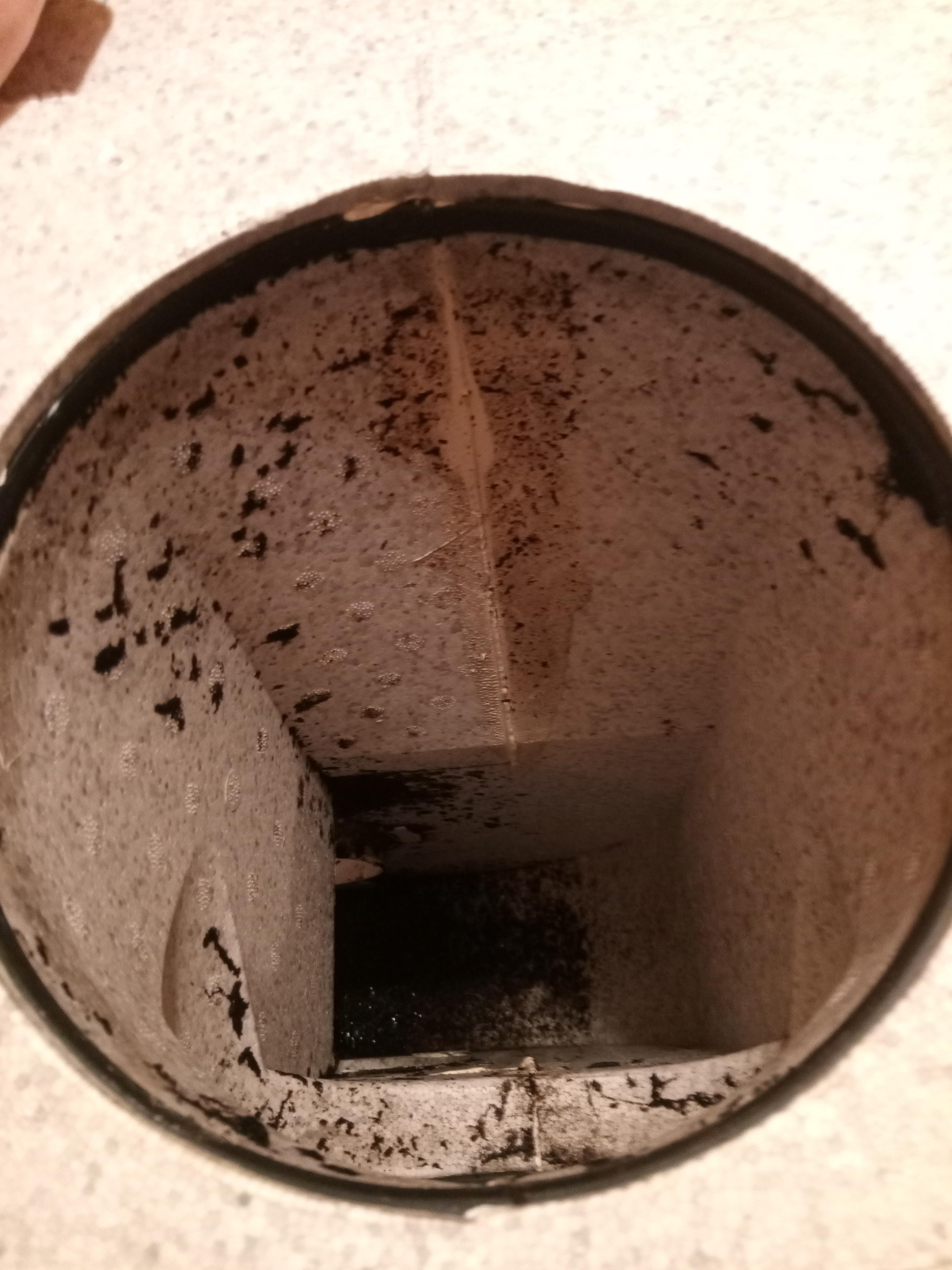
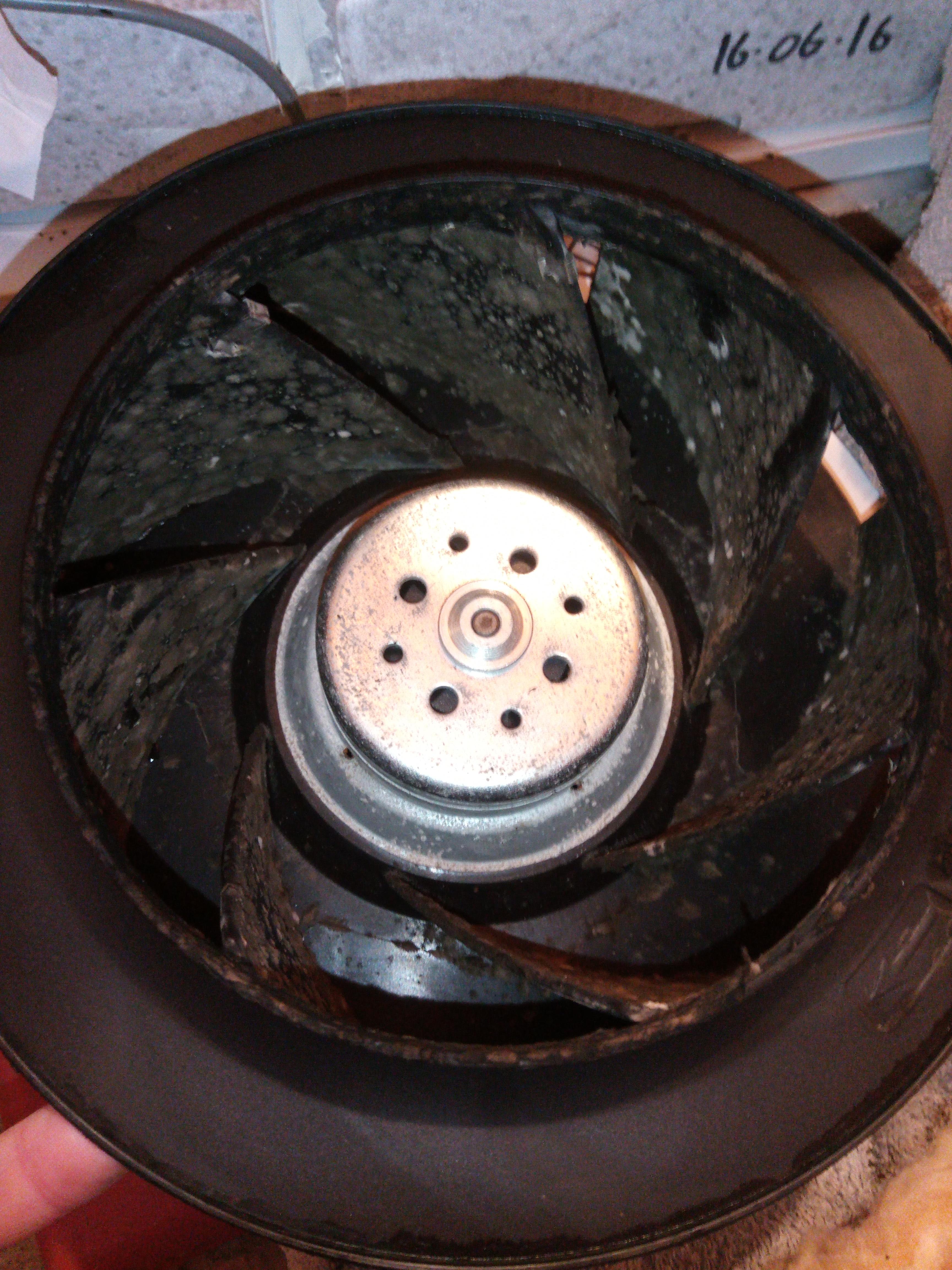
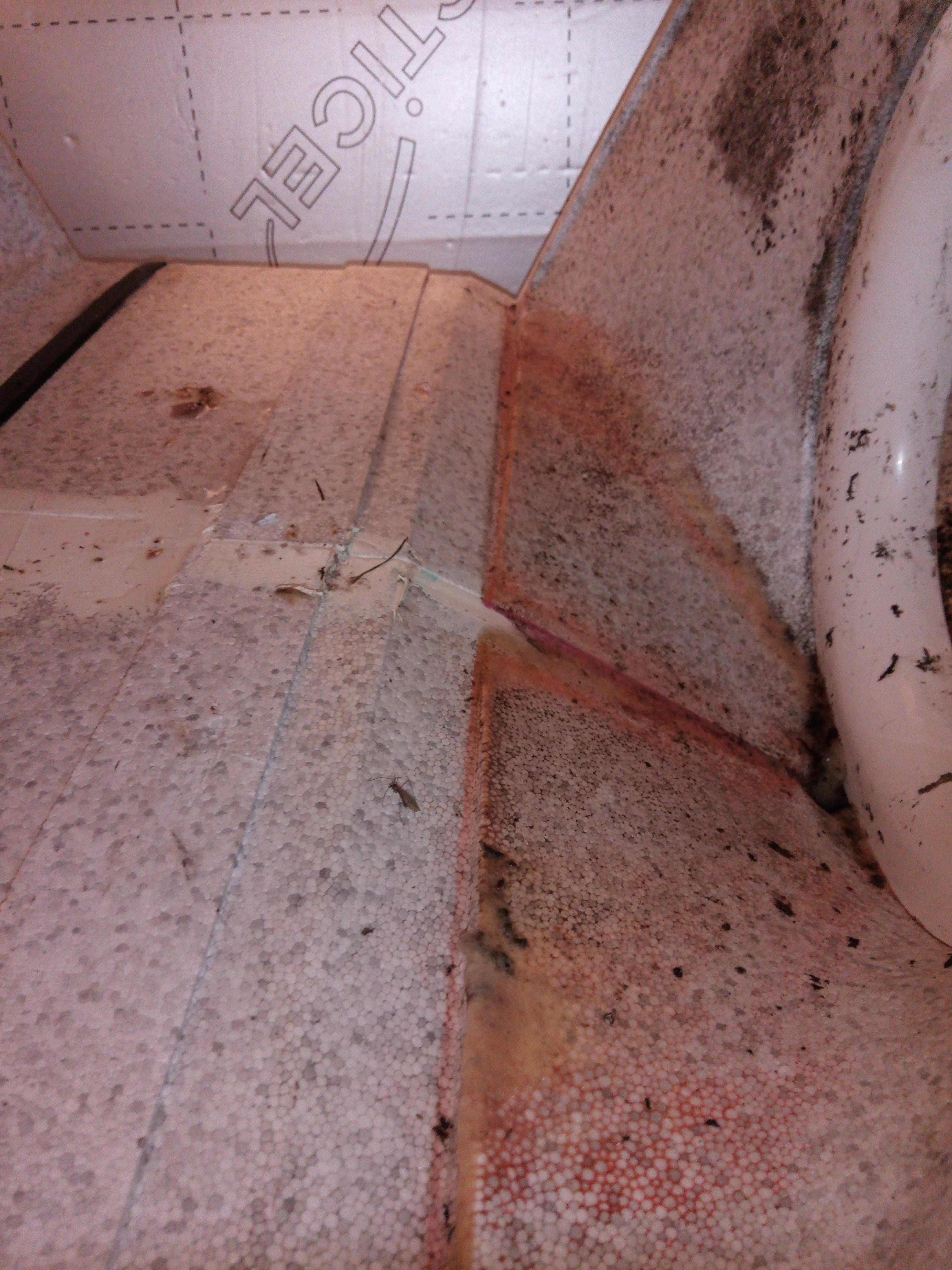
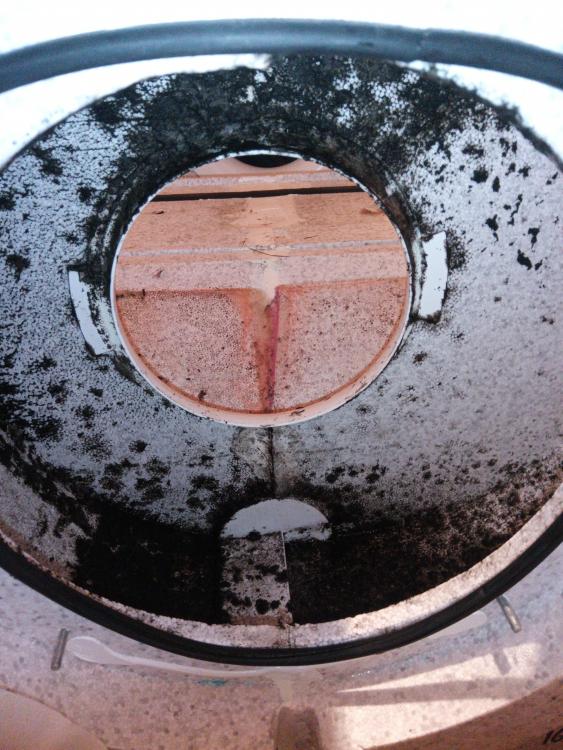
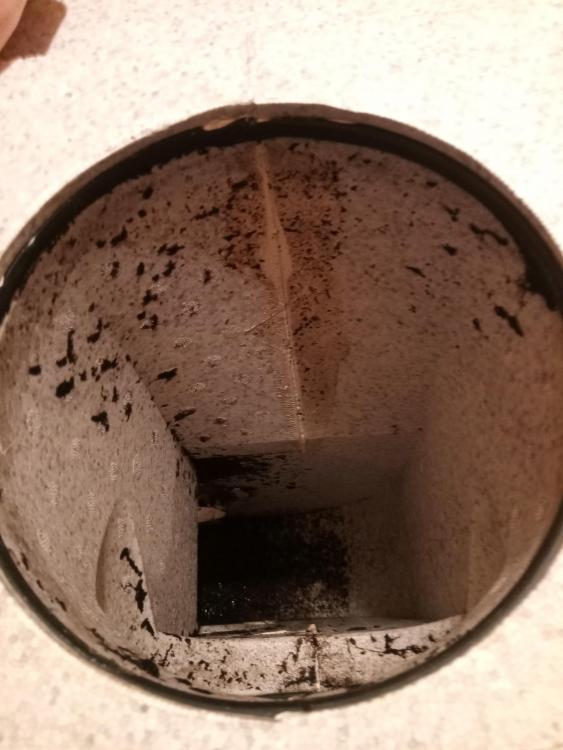
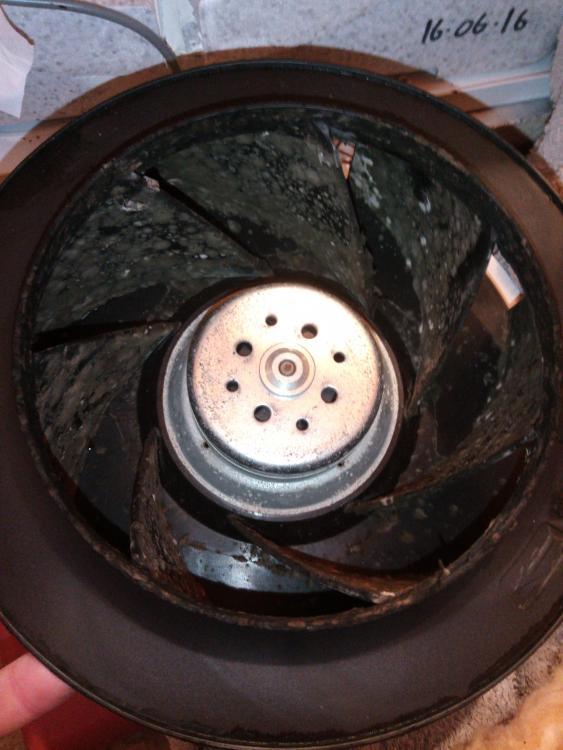
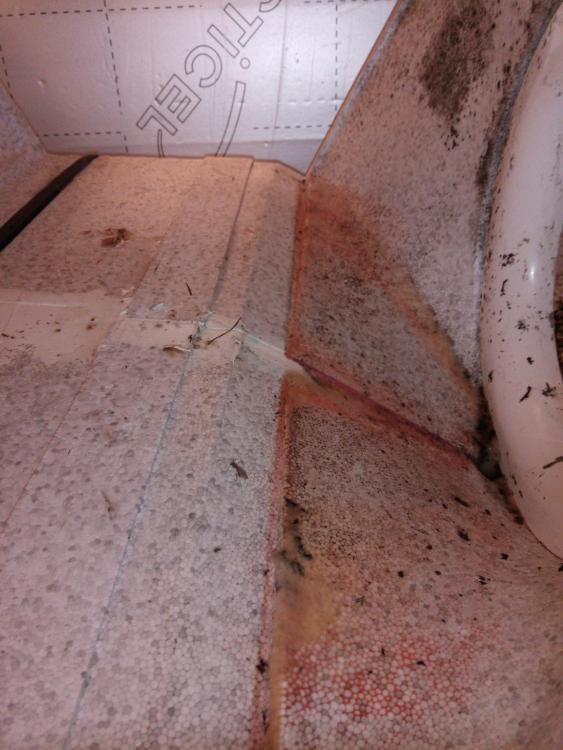
Bit of an update, 3 years in. I've been changing filters every 6 months and servicing the unit (core, fan blades, drain) every 12 months. Last night, some odd noises coming form the exhaust vents, which made me think a bearing had gone. So today's job was checking. And this is what I found... Thankfully all on the exhaust side after post the heat exchange core. The cause of all this was the condensate drain being blocked with mould and 'biojelly' (see last pic, the large black area). It would seem that in not draining away, water has overflowed or been pulled into the exhaust fan chamber where it has obviously coated the fan blades and walls of the chamber. No warning indicators or lights to suggest a problem of course. So, having found the problem, I had to take the whole unit apart, remove the top and sides (which slide and interlock with each other)to get to the back of the fan. Unbolt and remove fan to get into the chamber. Interestingly, this seems to be the only way you can properly clean the fan blades as you certainly can't do it from inside the main body of the unit. A lot of wipes used to remove the mould, then a generous application of bleach to kill the nasties and clean it up. Fan blades cleaned and all reassembled. Should be easy but took best part of the day, in large part due to the poor design of the unit. Screws and fixings (referenced earlier) used to secure body panels were a real pain, and I think I'm going to ditch them in favour of cam lock belts. Condensate drain not easy to clean through (must get a bottle brush). Best part of £1250 for one of these units and this is what happens. Never had this problem before, having had MVHR (different makes) in 5 previous houses. I am not a happy bunny right now.
-
In respect of your MVHR, we have a Vent Axia as well, and generally it seems to be performing at round 90% efficiency. I know you say its cold air coming from the supply vents. Have you measured the temperature of that incoming air (it will be below whatever the room temperature is and will feel cool, think of the effect of wind chill - feels colder than it is)
-
@DOIGAN - We live in a circa 170 sq m house with vaulted ceilings, built 3 years ago, using an Mitsubishi Ecodan ASHP to heat UFH and provide our DHW. Our system works flawlessly, keeping the house to 21C, 24/7 and we have never run out of DHW (300 litre cylinder heated to 50C by the ASHP). I have ours set on the auto (weather compensation) setting and had no issues, but equally could have used my own custom heating curve or set flow temperature. Our neighbour lives in slightly newer build, Valutherm kit, Daikin ASHP to UFH and DHW. House always toasty warm (they heat to 22C). Initially they had some temperature overshoot and higher than expected running costs which we sorted by changing the flow temperature offsets in the Daikin controller. In terms of your DHW, nothing wrong with topping off water heated by an ASHP using immersion, as heating water above about 40C is not what an ASHP does best, and results in a drop in Co-efficient of Performance. When I was planning our build I considered this route and costed it out based on using 300 litres of DHW a day. I found there was virtually no difference in cost using ASHP to 40C then topping off with immersion vs heating water direct to 50C with ASHP. I decided to keep it simple and just go with the ASHP. Happy to come and have a look and see if we can tweak the settings etc to get you on track. Drop me a PM if you want.
-
Hi @DOIGAN, welcome to the forum. Good to have someone else from Orkney here. Where are you located?
-
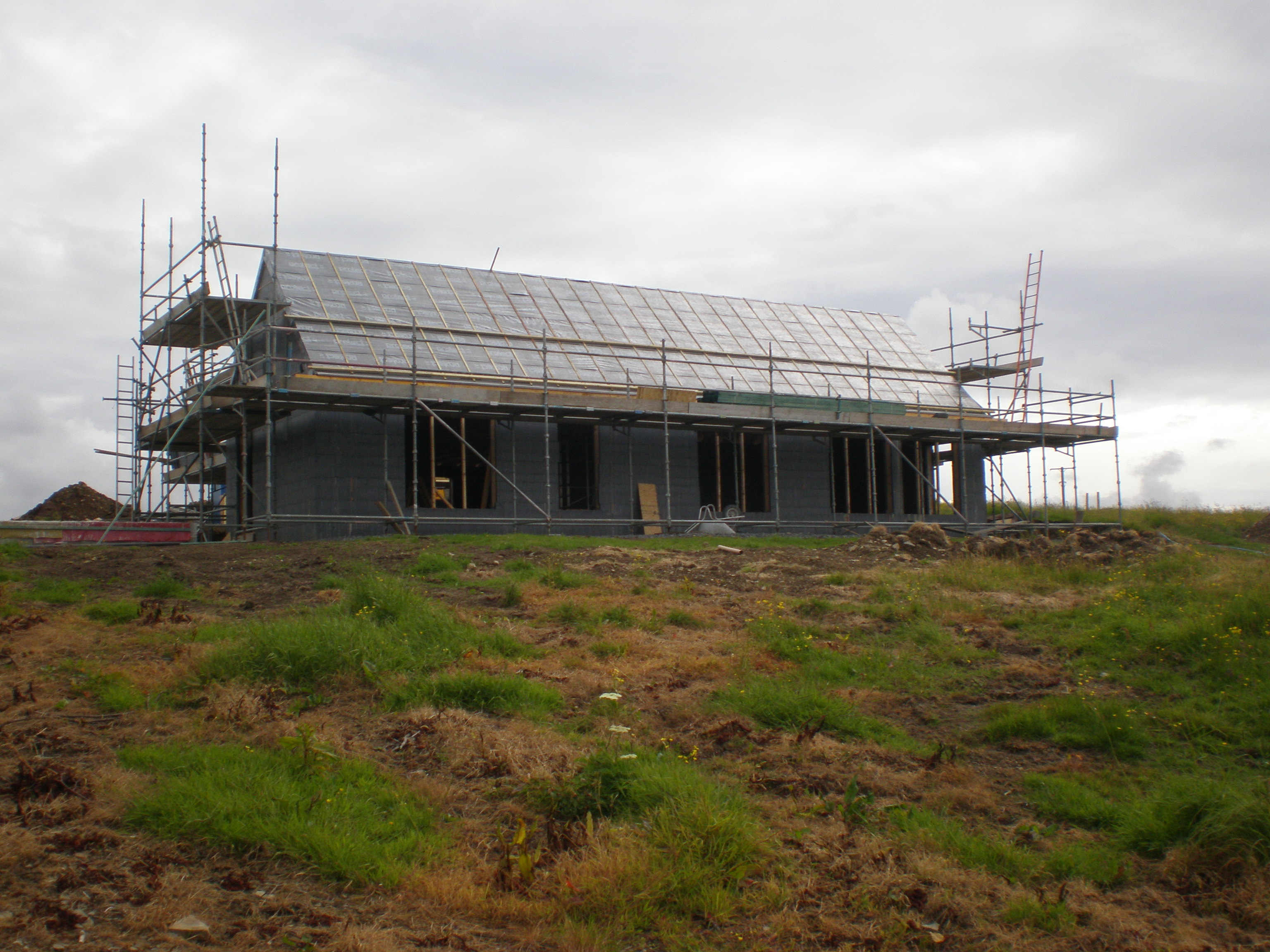
PIR (polyisocyanurate) insulation board OSB Oriented Strand Board (manufactured timber board)
-
Looking for advice: Log Cabin "Caravan" build Scotland
Stones replied to morkus's topic in Planning Permission
For some reason it does not appear to have been digitised, but it does exist. -
Looking for advice: Log Cabin "Caravan" build Scotland
Stones replied to morkus's topic in Planning Permission
It may well do, but Schedule 1 of The Town and Country Planning (General Permitted Development) (Scotland) Order 1992 / Schedule 2 of The Town and Country Planning (General Permitted Development) Order 1995 both refer to paragraphs 2 - 10 of the First Schedule of the Caravan Sites and Control of Development Act 1960, which details the permitted use of land as a caravan site where a caravan site licence is not required (to obtain a caravan site licence, you require planning permission). The specific order that I'm referring to has the effect of allowing up to 3 caravans on crofting grounds on terms far more generous than the Act normally allows. No PP required. The catch however, is that the caravans would have to be removed from the land after the 5 or 6 month period (I can't quite remember if it specifies dates between or number of months). On a related note, Scottish Government appears to be consulting on amending the definition of a caravan (increase the size): https://www.gov.scot/publications/business-regulatory-impact-assessment-caravan-sites-act-1968-amendment-definition-caravan-scotland-order-2019/ -
Looking for advice: Log Cabin "Caravan" build Scotland
Stones replied to morkus's topic in Planning Permission
Depending on what you are wanting to do, there is provision under an order made by a Scottish Minister by virtue of Schedule 1, Part 3 - holding of 5 acres of more, subsection 2 of the Caravan Sites and Control of Development Act 1960, that reduced the area of land required (from 5 down to 1) and crucially increased the amount of time caravans could be on land, (IIRC 5 or 6 months instead of 28 days) specifically for crofting land, the idea being to allow crofters an additional income stream. Unfortunately, the order isn't held online so you're reliant on the local planning office (or more likely the Planning Control Officer) having a dog eared copy to reference. I don't have a copy to hand but may be able to locate one next week.- 44 replies
-
- 3
-

-
- planning permission
- log cabin
- (and 5 more)
-
We opted for the lower power version ourselves when we ordered and seems to work fine. Interestingly, if we had opted for the next unit up, capable of dealing with a higher population load, the only difference was pump size (the physical tank itself was the same). I can only surmise that the opposite would therefore work as well - for a lower population load you would have a perfectly functioning system with a lower powered pump.
-
We had custom cills folded and painted as we needed to bridge 140mm of EWI. Managed to get them (folded and painted to match our windows) for around half the price of the Rationale ones. We simply offered the cill up into the groove on the underside of the window frame, then closely fitted the EWI underneath to support the cill, foaming what gap remained. Rock solid.
-
I think this is a very interesting idea, and given your proximity to the supplier (and the potential to negotiate a deal as they want to promote the product for housebuilding), worth serious consideration. Personally, I wouldn't be too worried by the thermal bridge issue of using strip foundations. Our house, (155sqm footprint) is built from ICF (280mm block, 150mm concrete core), the blocks sitting directly on the strip foundation without thermal break. The slab is cast onto insulation but is (in contrast to the detail above) thermally broken from the ICF wall, i.e. it 'floats'. Cost wise we heat to 21C 24/7 and we spend £200 a year on heating, which given our rather exposed location, is IMHO, a pretty good result. Something to think about if you go down this route: the cost of fixings and labour to fit insulation and timber strapping. ICF blocks generally have the benefit of plastic ties holding the two sides of insulation together to form the block, but they also perform another critical function - standardised fixing points into which fixings can be secured without having to drill hundreds if not thousands of holes into the concrete itself. You are going to have to mechanically fit a good depth of EWI, I assume some IWI, and then strap the walls inside to create a service void before you fit plasterboard. That's a lot fixings and a lot of drilling, time and money. Critical I think that you factor this in. If you have a look at my blog there is some info and pictures on some of the fixings used in our build.
-
Heads Up! Ordering from Germany.
Stones replied to ToughButterCup's topic in General Construction Issues
+1 I used Skybad for our sanitary ware and found them very helpful. -
Any recommendations for a dowel jig - primarily T and L butt joints, 45mm timber?