


Archer
-
Posts
158 -
Joined
-
Last visited
Everything posted by Archer
-
We had a thin coat silicone render on polystyrene though and it looks great. They are about 7mm thickness when complete so it may be that the weight of other render systems is not appropriate for direct render to ICF/Poly? Used a system from EWI Pro and it sounds similar to what you've been quoted. The basecoat went onto jablite graphite eps boards which have some texture and there was no roughing up required. Other than that the method was identical to what you've been quoted except there was a primer applied between the 2nd base cost and the top coat silicone render and we didn't need a spray on top. Price for ours in London was about /£60m2 for a small extension job 25m2, but no spray pump needed.
-
I'm a bit out of my depth on this one compared to some of the practical advice that you are getting from the usual hero's on this forum. One thing though, I would go back and edit / redact those drawings you posted up on the last page. They have your name and building site address which probably isn't great for security etc. Good luck getting sorted with the build.
-
Or one of the other sites, MyBuilder etc
-
We cut down a baby oak tree when we first moved into our house. Had big ideas that it would be made into a Newell post for our staircase out something else... Sat in the garden for 2 years before eventually being taken to the dump. Looked exactly the same as the day we cut it down, no sign of any rot or degredation
- 13 replies
-
- 1
-

-
- oak
- reclaimed oak
- (and 5 more)
-

Wall Insulation - Internal or External
Archer replied to canalsiderenovation's topic in Heat Insulation
Sounds like you've got it covered then and maybe the cheaper guy is the better pick. Once you've thought through the approach it might be worth asking them both to quote for EWI as well to see the difference in price. The tricky bit with IWI is ensuring insulation continuity and vapour sealing internally. That's all in the detailing and quite fiddly to do properly, especially between floors, and at joist-ends. Having said all that, I'm a hypocrite and insulated the northern external wall on my house internally finishing the insulation at floor level. No problems so far. -
Wall Insulation - Internal or External
Archer replied to canalsiderenovation's topic in Heat Insulation
Sorry, to be clear, the issue with the D&D installation method isn't to do with the thermal performance of the air gap itself. It's to do with airtightness, and in particular the risk of air getting in behind the insulation layer, particularly in retrofit situations where the wall may have gaps in blockwork or mortar. This article has a full explanation and some possible ways of preventing which include a parge coat to the wall prior to installation. https://www.designingbuildings.co.uk/wiki/Defects_in_dot_and_dab The air gap shown above in Nod's image is beneficial, but only if the wall behind and any penetrations through are air sealed. If using steel studs then something to mitigate cold bridging would be needed otherwise you'll lose something like 50% heat through the stud. If using timber then it's less of an issue but you can either batten over the insulation or have a double layer as Peter described. -
Wall Insulation - Internal or External
Archer replied to canalsiderenovation's topic in Heat Insulation
Comes down to who is the better builder ultimately which may be hard to judge. Are you confident that they are both competent and do good work? We got burned on our renovation by going for a smaller sole trader who turned out to be a cowboy. It was ridiculously stressful to sort out the mess. My view is coloured by this experience, but just reading the post, it looks like you're first builder seems to have a well thought out spec and seems to have priced to manage the job. May be that it's unnecessary expense and the other guy is good, but you're more likely to hit bad builders where the spec and pricing is left woolly and open. Sorry, you probably know all this already, but after the experience we had I feel the need to over-share! On the actual insulation proposals, Dot and dab for internal wall insulation is in theory less effective than battens because you get an air gap between wall and insulation. However this depends on the design and approach of each method. Also with retrofit IWI watch out for interstetial condensation, especially the floor joists which can get cold and attract moisture. As others have said, EWI much better if possible. -
Have you considered a thin-coat silicone render system? This may be the most expensive option but they are marketed as top of the range and especially flexible and resistant to cracking. We used EWI pro because they are based just down the road. The system uses two layers of fibre reinforced basecoat adhesive, with mesh embedded between the two coats. When dry this is then painted with a primer and then the final topcoat silicone render. I liked the system because we DIY installed EPS external wall insulation and the basecoat doubled up as adhesive. We then got a pro in to finish it off. So far it still looks pristine and water beads off so we can hose it down if needed. In total ours is around 8mm thick but you can vary this depending on the substrate and render aggregate size (ie. texture).
-
I wondered the same thing. In South Island, New Zealand where I worked for a year, timber piles were quite common so I wonder if that's what they used. Possibly with the ends coated or wrapped somehow
-
???
-
A programme that some people might have missed. We've just finished all 6 episodes on BBC catch up and it was thoroughly engaging. The show is about 6 couples competing to win a house in the wilderness of Alaska. The really interesting part though is the older couple that are giving up their home. It's incredible because the guy and his wife trekked into the Alaskan wild 30 years ago - 100 miles from a road supposedly - and then self- built a huge 3 storey log cabin out of the woods. They lived in a shack for the first 9 years until the house was livable, fending off bears and preparing 2000 tree logs by hand with no major plant equipment. They cleared an airstrip by hand from the forest. It's crazy, inspirational stuff and might give anyone having a tough build a bit of a lift.
-
Probably also worth saying that you can also build in a similar way with thin joint mortar and solid wall with EWI using 215mm depth aerated concrete blocks. It's probably significantly cheaper and should be easier to find contractors. If you go for conventional mortar then even more so. The advantage of thin joint mortar is supposedly increased airtightness and requires less skill in the install so DIYable. But you have to get the first course precise as jfb says. The clay blocks use a vertical groove instead of mortar on the vertical block end. Also you can supposedly get a wall U-Value of 0.2 using a single 425mm block with no insulation. This falls short of the Part L regs I think so you'd need EWI or insulated plasterboard.
-
Google search NBT Thermoplan and they have a system with BBA certs
-
You shouldn't have any issues with Building Control, clay blocks may not be common but they are recognised and large manufacturers (Wienerberger etc) have got fully accredited products and loads of technical information. The BRE have a house built from solid wall clay block at their innovation park in Watford. You can visit it if your interested (obviously not right now). Exeter City Council built a 26 home passivhaus development using this method - Chester Long Court. Link below. https://www.passivhaustrust.org.uk/news/detail/?nId=791
-
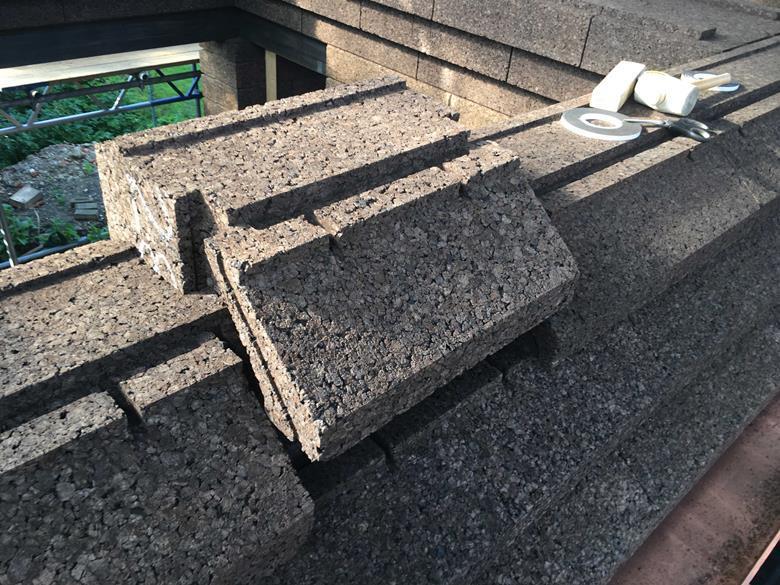
£6k for the cork used in the 13m2 garden room apparently, so yes
-
Not sure this is timber frame exactly, but as a bit of fun... Thought this was interesting - article on the Stirling nominated Cork House using load bearing cork blocks. There second article is from Building.com on the same topic and the 3rd link is a blog on a DIY garden room project using cork blocks by Studio Bark (who did the Grand Designs ply box house). Interesting idea - gets filed in my mind with hempcrete and strawbale construction - slightly wacky eco materials with useful properties... https://www.google.com/amp/s/amp.theguardian.com/artanddesign/2019/jul/28/cork-house-review-eton-stirling-prize-matthew-barnett-howland-dido-milne-oliver-wilton https://www.building.co.uk/technical-case-studies/specifier-expanded-cork-at-the-cork-house-eton/5104344.article https://studiobark.co.uk/buildings-can-be-made-of-solid-cork-we-built-this-to-prove-it/
-
Thanks Dreadnaught, I'd be interested in what they come back with if you get a response. We used a cementboard faced SIP system to build our extension and were originally considering a company called Quickbase Foundations to build off. They use screw piles with a structural SIP as the ground floor (ie. Blockwork or timber frame constructed directly on top of the panel floor. I got talked out of it by our builder in the end but wish I hadn't listened to him. It's a good system but seems to be suitable for 1 storey buildings only. That's why the OP Deck interests me - looks like a similar idea but more robust maybe. Good luck with whatever you go for!
-
I was about to post separately on this, but it might be worth exploring the OP Deck system, or something similar - https://www.cdi-icm.co.uk/system/op-deck/ Looks quite interesting as a solution, they don't include loadings, but it's essentially a cross between steel SIPs and ICF to create a suspended, insulated rib slab. They say it can free span 10m so could span from a precast concrete or steel ring beam. The depth is variable depending on insulation levels but a minimum of 254mm Avoids the need for a 50mm concrete oversite that you get with a timber ground floor and from the video it looks quite straightforward to DIY install once the supporting piles are in place. Because it's used for car parks and the like I'm assuming that you could build the timber walls straight off the slab to avoid cold bridging but would need to check with their technical dept / engineers. Has anyone else considered using this sort of hybrid suspended passive slab solution?
-
I did idly have the same idea as the OP as a way of reducing pallet waste. I think I was trying to break up a pallet at the time thinking "these are flipping strong...". The ValueTherm system used by Scotframe is a similar principle with factory injected, plant-based foam insulation between a timber frame. Although recycling them is a nice idea, I think it would be a nightmare to build with as they are not precision made and all slightly different shapes and sizes. Plus they wouldn't cut it structurally as a recycled product you couldn't reliably work out performance.
-
Is it that much? Sorry, I'm not a member and don't have access. I've always come across their Wood Information Sheets on Google when checking bits and pieces but only ever seen the freely available info which is always really good. My understanding is that a lot of the good timber frame suppliers are members so if you are friendly with one of them... probably a very long shot unless any forum readers are members.
-
TRADA produce loads of this type of information. You need to be a member to access it though. Link below - https://www.trada.co.uk/publications/wood-information-sheets/fasteners-for-structural-timber-nails-staples-screws-dowels-and-bolts/
-
Cross Laminated Timber and other Engineered Materials
Archer replied to puntloos's topic in Timber Frame
Apologies, I mean't embodied carbon -
Cross Laminated Timber and other Engineered Materials
Archer replied to puntloos's topic in Timber Frame
CLT is a fantastic product and is slowly gaining traction across larger developments as a sustainable alternative to mass RC concrete frame (or at least was until the Hackett Review). It's in larger buildings and blocks of flats where most of the advantages shine, because it performs in a similar way to concrete in many respects, whilst having the advantages of prefabrication and locking up significant embodied energy. So advantages against traditional timber frame include the ability to build much higher structures up to 12 stories or more, dimensional stability, better fire and acoustic performance. Also the ability to leave certain elements of the structure exposed for the design effect of exposed timber (eg. CLT stairs and walls etc). It's a dream for architects to work with. Definitely has draw backs as well as others have said above. Traditional timber frame is a more efficient way of building with better strength to weight ratio - so much cheaper to buy and transport materials. Getting suppliers for a single CLT house would be difficult or expensive I'd have thought. Timber frame can also be improved by using engineered timber, added mass, acoustic design etc and will still be much cheaper than CLT. Just on your point about acoustics, I wouldn't assume that bare CLT walls or floors will prevent sound transmission without lots of added layering either. You can look up standard details by googling it, but there were quite a few issues on early CLT residential blocks. Wood has less mass than concrete of the same thickness and so needs some help to prevent sound. Go for it if you like the material - send Buildhub some pictures of your finished house, it will be stunning! -
The Richmond House fire is interesting and concerning as well. This building.com article corrects one of the myths about the fire - the external cladding wasn't timber, it was "Fibre reinforced Portland cement cladding planking" of limited flammability. The article says that there was no evidence of vertical or horizontal fire stopping to the cavity, but that it was thought to comply with the letter of the regulations. I think I've also read (although I can't find the link now), that the insulation between the studs was mineral wool. https://www.building.co.uk/news/fire-brigade-drops-stay-put-advice-after-latest-homes-blaze/5101684.article It suggests to me that the fire started in one of the flats and spread out and up the cavity. Sprinklers may have helped to contain it (or may not have). My job is as a Development Manager for similar blocks of affordable housing and you wonder whether specifying Rockwool over mineral (glass) wool would have acted to prevent the spread of fire through the timber frame. Or specifying a fire resistant vapour barrier, breather membrane, or racking board But it all adds cost...
-
Eco-friendly(ish) concrete
Archer replied to eandg's topic in Environmental Materials & Construction Methods
A few companies that I've heard of but not used. Well, except for building a shed base from Hanson Regen mixed cement but that's not really comparable. I've seen up to 50% GGBS specified on larger projects but with a structural engineers input. According to Hanson you can substitute as much as 70%. They have a UK technical line. Sorry, can't help with costs. http://cenin.co.uk/ https://dbgholdings.com/cemfree/ https://www.hanson.co.uk/en/products/regen-ggbs https://www.wagner.com.au/main/what-we-do/earth-friendly-concrete/efc-home
