MrMagic
-
Posts
207 -
Joined
-
Last visited
-
Days Won
1
Everything posted by MrMagic
-
The Eddi manual is really comprehensive - https://myenergi.com/wp-content/uploads/2019/04/eddi_manual_v2.3_english.pdf AFAIK you can use the Eddi without the Harvi provided you can run the cabled CT clamp round your meter tails to monitor power in/out and for the Eddi to divert accordingly. If not, you can use the Harvi to wireless connect CT clamps to Eddi. You've then also got the 'hub' which is basically the internet gateway bit so you can use the app to control/fiddle/monitor your Eddi HTH. MM
-
Powerline WiFi options?
MrMagic replied to Jeremy Harris's topic in Networks, AV, Security & Automation
I generally use the following as a measure of success with WiFi - 1. Can the unit survive longer than a year powered on without leaking memory/crashing/requiring monthly reboots 2. Has the wife complained about being unable to get to Facebook/Instatwat/Tinder recently Between my own home and the various relations via "IT support" I've been through TP-Link, D-Link, Netgear, Draytek, BT.. even some Cisco small business stuff and they all seem to work "ok" but as you've found either drop out periodically or require a kick now and again. I've been running the Ubiquiti Unifi AP AC Lites for a while now and they're working well... so I think that's what I'm going to stick with/recommend for the time being. Another thing was to split out the functions, i.e. have a router without wireless/wireless disabled and then have wireless access points around the house thus if any part of it proves to be carp I can swap out a function rather than the whole shebang. Currently got 46 'devices' on the network so a bit more than your average household.. but that comes with being a geek. MM. -
1 x Vent Axia Lo Carbon Temp T on order! Will report back.
-
@SteamyTea Just me, myself and I.. garden office, i.e. office in my garden Heating is via heat pump (air con unit) Yeah I had wondered if it was g/CO2e but the spec sheet seems to imply it's a proper CO2 sensor (although hard to believe at a consumer price point). Spec - https://www.netatmo.com/en-gb/aircare/homecoach/specifications CO2 Meter: Ranges from: 0 to 5,000 ppm Accuracy: ± 50 ppm (from 0 to 1,000 ppm) or ± 5% (from 1,000 to 5,000 ppm) EDIT: Heres a teardown of the internals - doesn't look likes theres any noticeable marks/codes on the sensor - https://www.fictiv.com/blog/posts/netatmo-weather-station-teardown-part-2-indoor-module EDIT 2: Looks like it's a NDIR based sensor with variable results based on temperature. https://backend.orbit.dtu.dk/ws/portalfiles/portal/146097852/Untitled.pdf - Even allowing for +/- 600ppm, I've still got plenty of CO2 around it seems
-
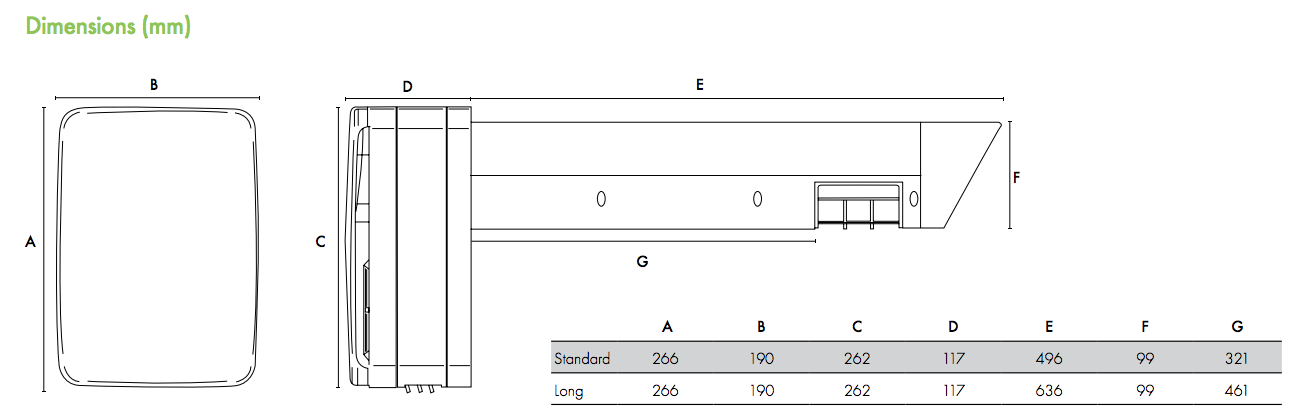
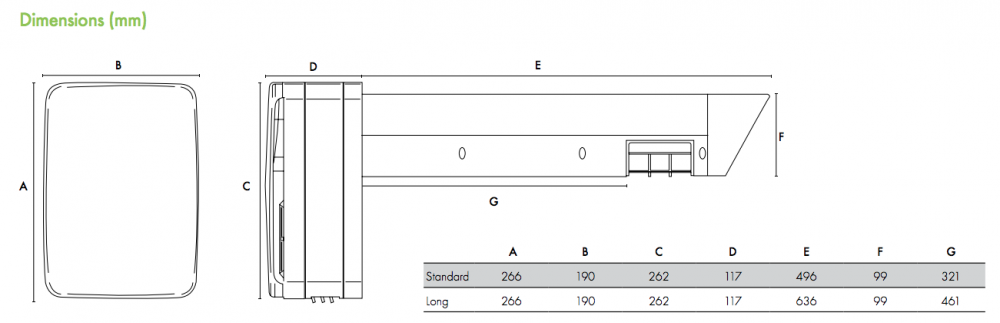
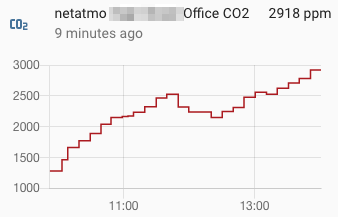
Thanks @Onoff - I had looked at these after seeing @DamonHD s good review. My only concern was that it'd look stupid with such a long vent hanging out the side as my wall make up is probably only 150mm. I guess it's either that or gas myself!... now up to nearly 3000ppm co2.. feeling pretty sluggish
-
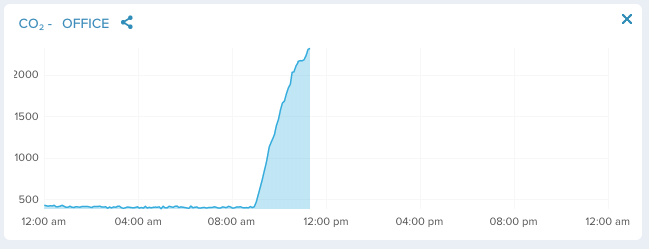
Hey all, As some might be aware a few years back I built a garden office/shed, insulated well and sealed it up as best as I could. Recently, when working in the office I had started to noticed feeling drowsey or 'foggy', sometimes headaches and certainly always in the afternoon (and this is without going to the pub for lunch!!) Anyway, I purchased a Netatmo weather station with indoor Co2 PPM monitor (was on offer), only turned it on this morning but already it's showing Co2 being much higher than I imagined.. Current peak is 2325ppm Co2. Now even allowing for the fact this is a consumer product so won't have the best of tolerances, it's still showing a level which I would consider 'high', and indeed various articles indicate a target of around 1000ppm or below would be best. Volume is approx 20m3. I'd like to do it in a controlled fashion and where possible keep some heat in the office but open to all and any options at the moment. Windows are fixed so can't 'just open the window' ? So - any thoughts on how I should go about ventilating this space?
-
Kudos to you @pocster for finding someone willing to work with you on the install, it seems like a sensible and pragmatic approach you've got going on there with photographic evidence and such. Pulling cables and doing back boxes is donkey work at the end of the day (no offence intended) so provided you're in agreement with the sparky theres no reason they can't be off earning elsewhere whilst you do the more manual work. (Usual disclaimers apply, if unsure seek professional assistance, know your limits, follow the regs, and please please don't forget grommets on metal back boxes!! etc blah blah)
-
Yep, IR is the test that'll show up the gremlins.. even little things like dragging a cable through or over something causing a nick in the insulation is enough to warrant further investigations (depending on the reading). Don't be tempted just to pull a cable through or over a joist, feed with one and guide/pull with the other.... I know this is common sense for most people but I've seen T&E back to bare copper when installed badly - rip and replace in some instances.
-
Typically first fix is just get the wires in and leave them normally untested. Then when you're counting down the weeks to move in you'll find a nail or screw through your cooker circuit or something and have to smash a big hole in the wall to get at it... ?
-
@vivienz - which inverter/charger did you get fitted in the end? Also looking at a LUX Power / Pylontech system at the moment...
-
@PeterW - what kind of flow rates would you get through a single 10" polyphosphate cart? I've been looking at the spec sheets but they all seem to omit flow rate. Essentially I have my main incomer split, one goes to feed the combi for DHW, the other provides the 'cold' feed to the rest of the house... I'd have to install (at least) one 10" filter on each feed... any ideas if that would inhibit the flow much? Simple (tightarse) moneysaving - £250+ on a pair of combimates or £50 on a couple of 10" filters and poly refils.
-
(smart?) things that should be in every room
MrMagic replied to puntloos's topic in New House & Self Build Design
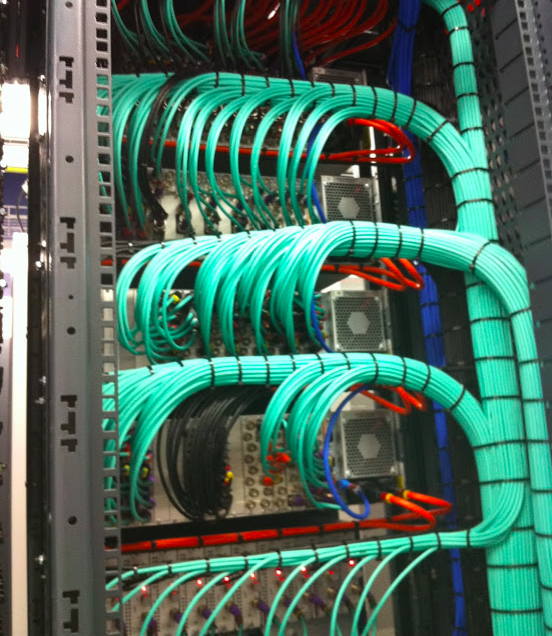
Posted this before I think but it's worth having a flick through the CEDIA guidelines on home wiring - http://www.cedia.org/files/file/smart-home-recommended-wiring-guidelines-eng-press.pdf - Even if it just gives you a little inspiration its worth a quick read. Re: cabling types - for 99% of residential installs I expect cat5e is really more than enough but if I was doing it today i'd look towards cat6a, 10Gbit/s* over 100m should do most people!! (Incidentally to achieve the full 'spec' of cat6a (and above) it has to be terminated properly and matched with the same category patch leads etc. It's not just a case of crimping on a RJ45 connector this time) Heres some cable p*rn from installs I've worked on to inspire -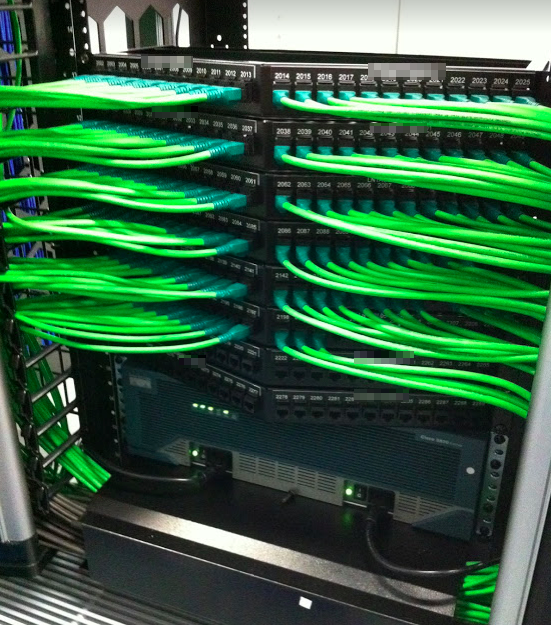
-
Solar DHW with UniQ and PV Diversion
MrMagic replied to DamonHD's topic in Boilers & Hot Water Tanks
Also watching this topic with interest - have been following it on DHDs main site for a while - similar situation, 'fabric first' completed as far as possible for the moment (but will continue slower), SAP gone from F32 to B81. As with a lot of people, relatively new combi, solar PV but no place to 'dump' the excess during the summer. Also looking to continue to push our carbon footprint down. From the SAP - Est DHW - 2,323 kWh/yr Est CH - 11,944 kWh/yr From the bills -12,760 kWh/yr gas input to the house Estimated split based on monthly readings, extrapolating from summer months etc - DHW - 2,857 kWh/yr CH - 9,903 kWh/yr Average DHW daily requirement of 7-8kWh, this seems within the spec of using a SA to either shift the load fully or a significant part of it. Solar exports exceed this during the 'solar' season and I'd also be half tempted to charge it on a TOU tariff like Octopus GO or Agile - certainly when Agile is at or below 3.75p/kWh it will be more cost effective to charge the Sunamp rather than burning gas (estimate based on gas of 3p/kWh at 75% efficiency = 3.75p target price for change over). Half tempted to ditch the lot and switch to a heat pump but best stick to more realistic aspirations for the moment!! Keep up the good work @DamonHD (..incidentally our paths have crossed before kind of..."where vision gets built") -
The most bonkers thing is that TP actually own Toolstation, so why the insane price differences god only knows... Gave up with builders merchants a long time ago, tend to use online 'brokers' or eBay if I can plan ahead, it all turns up on a TP/Jewsons/a-n-other lorry at the end of the day anyway! The only one I've been to recently was CCF for an obscure plastering product (Knauf Betokontakt) although even thats now in TS as 'blue grit'
-
Sorry had to get this one on to 'paper' - I know the maths has been done on here to death, but I still find it fascinating that even with it being -2degC out this morning my little A2A HP can pump out lovely warm 20+ degree air. I hope more people switch over to them (designed and installed properly of course), even A2A ones which are so simple and effective. MM.
-
WiFi Speakers Not Wired for Sound
MrMagic replied to Ferdinand's topic in General Self Build & DIY Discussion
+1 for Sonos - you can also control it locally, i.e. with no need for the 'cloud' meaning that should they ever go belly up (or your t'internet is down), you'll still be able to use the equipment. -
@SteamyTea - yes this is available as an API. They publish the rates a day in advance so you can schedule in any automations / predict / charge your 'stores' accordingly. If you don't want to program I believe they also have an integration with IFTTT. API documentation - https://developer.octopus.energy/docs/api/ Alternatively they have an E7 'like' tariff with 'GO', primarily aimed at EV drivers which gives you 4 hours of 5p leccy between 12.30 and 4.30am and then an approx 14p/kWh day rate
-
If you're on the Octopus Agile tariff you can take advantage of some of these lower wholesale rates - theres a great tool here that shows you the historical data - https://www.energy-stats.uk/octopus-agile-southern-england/ Unfortunately the 30min samples are not shown that far back but you can see the minimum price for 8/12/28 was -2.43p/kWh, 25/12/18 was 0p/kWh and more recently 11/10/19 was 0.36p/kWh so cheap leccy can be found if you can load shift. The flip side of this tariff being the 4pm - 7pm peak prices are high if you can't shift your usage out of this window. I think this is what appeals to me with some form of 'battery' storage to make use of the cheaper overnight rates and then utilise that energy throughout the day. Living in a terraced house my options for 1000L Akvaterm type stores are somewhat limited so need something simple - if someone can crack the combi replacement with another suitable box type conundrum then I will happily switch...
-
Indeed it's a shame that for anything to be 'sexy' these days it has to have a cloud attached... fingers crossed local APIs will be provided so it doesn't end up being dumb
-
Was randomly trawling t'internet and came across https://tepeo.com/ - linked via Octopus energy so seems to have some credibility. The website is a little devoid on detail but it seems to be using storage heater 'type' technology for energy storage, resistive heating for charging. Interesting claims around storing >40kWh of heat energy and with a higher energy density than PCM storage. I've dropped them an e-mail to find out more but would be interested to hear if anyone else has been in contact with them. MM.
-
Formula for calculating electricity requirement?
MrMagic replied to Digmixfill's topic in Ground Source Heat Pumps (GSHP)
http://www.mayfly.eu/ - top of page, right hand most link -
Charging points (rate of installation)
MrMagic replied to Temp's topic in General Self Build & DIY Discussion
Re: charging without off street parking - we’ve just switched to an EV and face this issue however I was pleasantly surprised to learn that in Hampshire at least I can (at my own risk and liability) run a cable over the pavement with protection to charge an EV See https://www.hants.gov.uk/transport/ev-charging-points/ev-charging-guidance I fully appreciate the issues this could cause for less able persons so try to do this for overnight charging only. If I need it during the day then I pay for a rapid or use a destination charger...so far it’s working out well. Lots of good comments on both both sides on this thread - I’m pro the environmental side of things but I also fear the infrastructure isn’t quite there yet, but it’s improving daily with Polar now introducing a proper contactless pay as you go approach like instavolt. I also agree that simply replacing cars isn’t going to be a magic fix, we need improvements across the whole transport sector and one bit in particular that I’m disappointed in is our current ban on e-scooters and other types of e-mobility. I was recently in Singapore (yes I flew for work, not very eco) and they have fully embraced e-mobility and no one was running each other over, very respectful usage, everyone zipping around nicely. Great for short journeys. Anyway, it’s a big problem and is going to take effort from everyone to change for the better -
Looks like the cost of these has dropped since I first looked at them. Not used Qubino before but I'd be tempted if I was doing it again. In the end I used normal Fibaro dimmers + a 3D printed DIN rail holder which actually now costs the same as the DIN Qubino! Just had a quick flick through the manuals - the only thing I could see is that it looks like the Fibaro can be switched to leading edge dimming rather than trailing edge which *may* make it more compatible however dimmable LEDs have moved on leaps and bounds so I don't expect you'll have any issues. The only change I had to make was to raise the lower dimming limit as when it was down <10% I got flicker from my LEDs
- 1 reply
-
- 1
-

-
Very common in India and Asia, even little desktop units. I expect a bit pricey in Blighty as generally our tap water is top notch (compared to elsewhere in the world). Although i I have to say the best tap water was in Reykjavik, lovely glacier water, perfectly chilled straight from the tap.
-
What ya building.
MrMagic replied to Russell griffiths's topic in General Self Build & DIY Discussion
This is exactly what they are doing near me with a reservoir conversion - although this one is a beautiful victorian brick arched one. https://planningpublicaccess.southdowns.gov.uk/online-applications/ - search for - SDNP/15/05626/FUL and click the three 'site plan' docs.