markc
-
Posts
3826 -
Joined
-
Last visited
-
Days Won
22
Everything posted by markc
-
 Hi mate, happy to share the list/quote/invoice. 2 post car lift, lathe, milling machine, welding plant etc. hobby workshop (evenings and weekends) so once batteries are charged I don’t expect any problems. But maybe long dark winter days so generator to add a bit if needed
 -
My man-cave will be off grid 3 phase. Nearest supply is not workable so I’m going with 3x10Kw victron inverters with 30Kw batteries with a small 3 phase generator for top up or emergency use. Energy Monkey have been really good to deal with. i think I can squeeze 34 panels on the roof so should work out ok.
-
Fix the drawer carcass to underside of the top.
-
Do you really need to remove it? Apart from being a cold bridge, if it’s in a kitchen area and behind cupboards then it’s not really hurting anything and in my opinion not worth the cost of removal. if the inner wall will be visible then you don’t have much choice and the cost is in excavation and working on a live gas main so several personell, lots of paperwork and a few hours to complete the job.
-
New roof tiles into dorma look like they're running out.
markc replied to Daza's topic in Roofing, Tiling & Slating
I reckon this is just an optical illusion as everything appears to be running parallel. -
Yes, backfill and compact with end of a post/log/big hamper etc. do it in layers to make compacting easier. If someone is assisting anyway, pull out the other one at the same time, easier to dig on your own than pull posts out
-
Bacteria boosters definitely improve a “damaged” septic, but looking after it is much better - minimal bleach, even that should be septic friendly. No fats etc. down the drain. That should/will reduce emptying but if it’s filling up with liquid there must be a blockage or restriction, or surface water is pouring in.
-
Man-Cave .. blokes need a safe space .. and “Toy” Box
markc replied to markc's topic in General Self Build & DIY Discussion
the single phase feeding 6 properties when the old barns etc were converted is already struggling, I would need batteries anyway so might as well go the whole hog. -
As above, if you don’t live on site, don’t leave anything with any value. Ram locks and chains etc. are soon removed with a thief’s best friend (battery angle grinder).
-
Best way to attach wooden sill to timber frame house build
markc replied to skeg0's topic in General Joinery
That board was destined to cup, if you look at the growth rings you can see it’s pretty much the bullseye in centre of the tree and will absorb moisture and expand much more than the outer rings. -
It looks like you won’t be able to use a compression fitting and the differing pipe sizes exclude a push fit or solvent weld. Unless anyone else has a suggestion I think you are only left with bonding your gold pipe inside the existing.
-
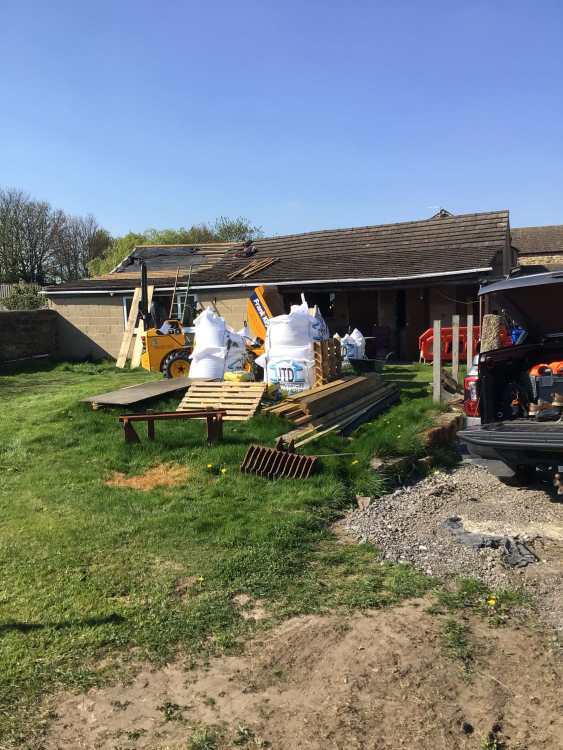
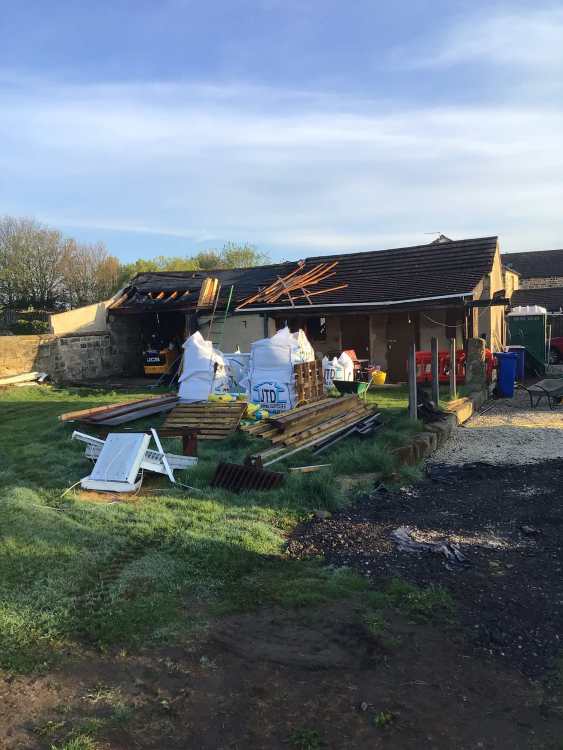
Finally got around to starting on the man-cave after almost a year living here. I really wanted to knock down and replace with a portal frame building but the planners are worried it would get converted into a bungalow even after I offered to have a covenant restricting its use to ancillary use. So it’s going to be a messy refurb/restoration. including a lot of stone wall rebuilding, some interesting steelwork to open up the interior, off-grid 3-phase power (local infrastructure would need an upgrade to be grid 3-phase even though it’s an old farm) with large batteries and a lot of PV, portal extension and timber cladding.
-
Yes and no, yes you need the joint to be weather / wind proof but that is better done further back. My window guy never mastics the underside of cills unless there is a big or uneven gap. They bed the cill into mastic (you can’t do that at the sides or top) so no visible sealant needed.
-
easiest fix is to sister each joist with the tops levelled as you require
- 10 replies
-
- 1
-

-
- floor joists
- loft conversion
- (and 10 more)
-
You can drill and fix to the lintel but as you say the straps are to prevent lift so the piers are the only available place, you could double strap on the centre pier for good measure
-
Private shared driveway being blocked by neighbour
markc replied to qamar's topic in Party Wall & Property Legal Issues
@qamar as you have already spoken to them (always the best approach) but still no joy, I would put a sign on the garage saying No Parking, access required 24/7 or at all times. hopefully they will be amenable but some do try to push their luck. -
Private shared driveway being blocked by neighbour
markc replied to qamar's topic in Party Wall & Property Legal Issues
Generally all residents have rights of access but not to block anyone in or out, as you have a garage you are entitled to access at any time. -
How to have enough precision when installing Herringbone flooring
markc replied to _Alex_'s topic in Wood & Laminate Flooring
As long as the pieces are roughly the same the pluses and minuses will average out over the floor and will never be seen -
Is it a metal C section or I section beam above the door? If so it will be cold and form condensation itself regardless of ventilation above the insulation. Do you know the make up of the roof? Hard to envisage what they have done
-
Hi and welcome. What are you thinking of pumping around the tube? I will be building a new man cave soon and been looking at GS heating and cooling but that’s using air drawn through a 100m long 100-150mm diameter tube. microbore tube doesn’t have a lot of surface area for heat transfer
-
Column ties… how are we doing them?
markc replied to joseywales's topic in RSJs, Lintels & Steelwork
If you have a UC or UB against an existing wall you can go drill through the web or flanges (dependant on orientation) and chemical anchor into the existing wall. Far easier to get the steelwork in place and lined/levelled before fixing. -
As above, B&B would be more work, more concrete, leave a gap underneath and still need screed/bedding for the pavers or stone etc. P.s. no need for any calcs etc. if you did want to use B@B
-
Good morning and welcome, loads of info to be found searching in BH threads and if you can’t find what you need - ask away, we all start somewhere and it sounds like you have made a great start.
-
+1 for ducting that way the cable can be put in or changed to suit your needs.
-
After paying? Damn auto correct lol