Carrerahill
-
Posts
2122 -
Joined
-
Last visited
-
Days Won
10
Everything posted by Carrerahill
-
So do I, but they look a bit "plant room"!
-
Those are the boys... Looks smart.
-
You know something, that is a bloody clever idea! Drat! I'd hate to mix it all up and find it goes off in 10minutes!
-
This is what I have heard, there is something in it to reduce risk of skin burns. I have used it out of date for decades.
-
Why don't you buy some of the uPVC cladding and stick it on? I did a work/sink area, just bought uPVC cladding stuff, £11 for a 4m length and it was about 300mm wide, in the situation, it looks really good, I just used plnety of battens so it felt solid. In your situation, you could just stick it on with grab adhesive and it would last you a year and probably cost buttons to do with little mess and faff.
-
Could you replace the freezer with another fridge (perhaps with freezer box) and have a freezer elsewhere? We have a fridge freezer in our kitchen which we would struggle with on its own but a chest freezer in the garage for bigger things, infrequently used things or bulk.
-
Good idea to buy the big stuff now?
Carrerahill replied to Andrew's topic in General Self Build & DIY Discussion
However, discussions with the manufacturer may solve this for you. All joking aside, if you were to take delivery, and leave it as it is delivered, and do a deal with them so show them for example a photo of it with a newspaper dated say 1st October this year, with all the wrapping still on it, sealed before you open it, then they may accept that the warranty runs from the day you open it. I know that sounds mad but I know someone who did that with computer equipment he bought in bulk. -
Is this existing render or masonry paint?
Carrerahill replied to canalsiderenovation's topic in Plastering & Rendering
It's going nowhere then, regardless of what it is, clean it well and render over. -
Is this existing render or masonry paint?
Carrerahill replied to canalsiderenovation's topic in Plastering & Rendering
Pretty much! -
Good idea to buy the big stuff now?
Carrerahill replied to Andrew's topic in General Self Build & DIY Discussion
There are many factors to consider, I don't think prices will go down, I suspect demand for many materials could be very high post lock-down which could see increased prices. Obviously you need it, the only thing I would check is warranty periods, if you have stuff sitting for say 6 months and it only had a 1 year warranty then could this be an issue. If you have good dry safe space and the money then I think I would probably buy things like the cylinder and windows and stuff that doesn't really "go wrong". I'd do the same for the other bits but look into warranty for the electrical stuff, make sure you still have a good period left. Another option is to see if people will sell you it now, deliver later... that too comes with potential problems though. -
Is this existing render or masonry paint?
Carrerahill replied to canalsiderenovation's topic in Plastering & Rendering
It almost looks like a cement wash has been painted onto it. Try chipping a little away. If it is paint and it is sound you can render over it. Google Blue Grit. The guy who rendered our extension was talking to me about it and he has been rendering over sound paint surfaces for decades. He used to make his own version of blue grit with a exterior grade PVA and sharp sand to apply over paint after a good jet-wash and dry. -
A cavity wall will always have moisture migration and transfer at ground level - trapping it isn't a good idea. This is the beauty of engineering, there are always solutions and options that can be used in isolation or in conjunction with each other to create ideal situations. I just use no fines as it lets the later transfer to the lowest point and then it weeps through the block/mortar joints - a concrete block wall is about as waterproof as a sieve! You would be amazed at just how much water will pass through a block/mortar joint. Lean mix is absolutely fine, no reason not to use it, I just personally used no fines on my personal builds as our civils guy always specs it. The thinking behind it is that is fills the cavity with a solid mass, but it allows water to drain particularly during wet season and helps to balance the moisture content out on both sides of a wall, very dry on one side and very wet on the other can cause its own set of issues.
-
My concerns would be over those founds, that is a big foundation and a mass of concrete, what is the original house on? I doubt anything close, you run the risk of differential movement as the house will likely move more easily than the huge mass of concrete, result can be seasonal ground movement but the extension will stay stationary. Ideally foundation should always be similar in design and construction to the existing (assuming the existing is built well and does it's job obviously!). Another issue with big founds is that you may then find it settles significantly due to the huge weight, and the house stays put. Foundations are a serious area of contention particularly with BCO's who are not structural engineers or even if they are, are not specifically well versed in concrete foundations etc. Totally ignore me if the above has all been carefully designed taking into consideration the existing and the ground make-up etc. I'd just use concrete block in and out. Lean mix is just lean on the cement concrete, and it is usually just sharp sand and no aggregate, it is to stop the walls before ground level from being pushed in essentially. I personally use a no fines concrete as that is permeable if the walls ever did flood. Looks OK to me, the flat roof is only 2400mm high? What height does that give you in the room?
-
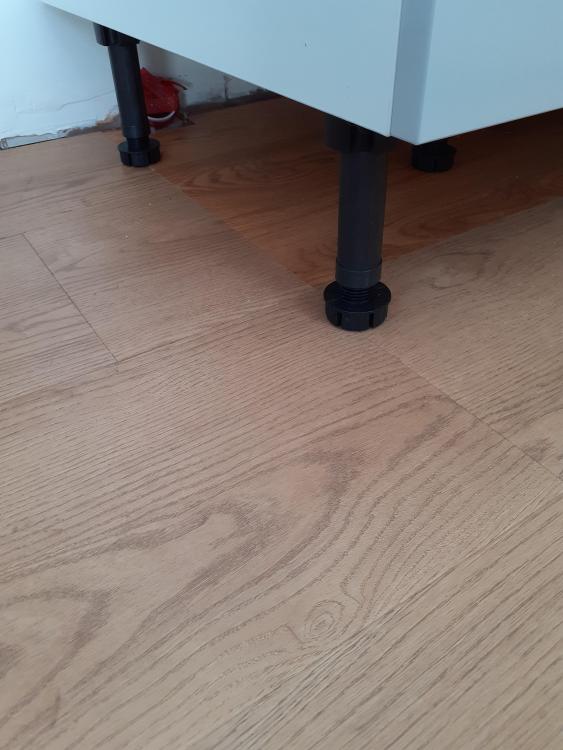
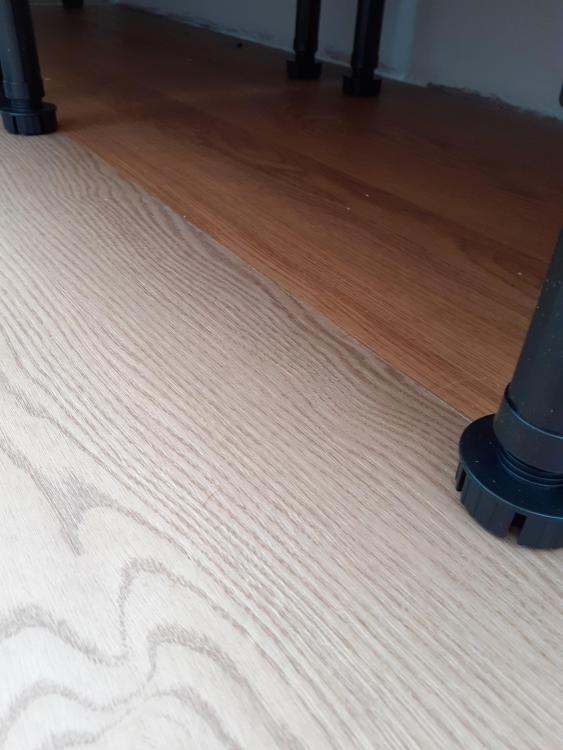
Yes correct, the pieces are made to very fine tolerances, when you push two pieces together the gap is very small, in essence there is no gap, just a joint line which if done well will be very tight. If you look at the above then you will note the herringbone layout abuts a border, so this will require good clean straight cuts. If you need to cut a plank/tile that abuts a border or something then you need to make a perfectly straight and square cut, I used a combination of a 6 inch speed square, a steel rule and a Stanley knife with a brand new blade. Where the joint is going to be on show, such as at a border, you then bevel the edge to factory edge finish (assuming your product has this) by literally shaving a tiny slither off the top edge of the wearing surface with a small, sharp plane. I didn't really need to do this as although I had cut edges of the Amtico abutting factory edges of the cheaper Vusta stuff I didn't care about the bevel, but I did do a couple just to try it. The joint is perfectly straight and tight (look at the top picture that shows an Amtico cut piece abutting a Vusta factory edge). I pinged a line down the middle of my kitchen and worked out my ideal layout to minimise waste, I then started from the middle of the room and laid 1 full piece, I then worked out how much I would need to cut off the last plank in that run and made that cut and started the second row with this off-cut (my cut line to the wall), I the worked out what size the last piece of the second row would be and made that cut and put that off-cut in as the third row. The result was 3 starter pieces down in a nice staggered arrangement. I then left that over night to set. The result was on day 2 I was able to crack on with the rest and really push the pieces together hard knowing that the first 3 pieces wouldn't move. If you have 2-3 pieces set up and you push the last piece in tight the whole lot will move slightly so you need to work to something solid to get tight joins. I could have fixed a square cornered batten to the floor and screwed that down and done one side of the room to that batten but I was in no hurry to hit it in one go. I wonder if the pro's use a batten or a couple of panel pins knocked in as "stops" for the first pieces.
-
I'd say for me as it going into a kitchen it was going to be Amtico or tiles, I went for Amtico as I felt confident, after research, DIYing it, I also have experience of living with Amtico flooring and thought it would be a good option as it is never as cold as tile and dropped glasses and plates stand a chance of survival, being able to do it DIY was a big factor too. Of course I know you can DIY tiles but I couldn't really be bothered with the hassle. I choose tradesmen very carefully and when it comes to letting them into my house the bar is raised even higher - I don't have any flooring contractors on my speed dial and the monkey I did phone for a quote put me off so badly that I didn't even try a second. My mind was made up right then and there that I was doing it myself. I opted for a fairly expensive Amtico product on the basis labour was free so I think in the end I got a better floor. Amtico installation difficultly is one of these myths spread by the installers themselves. If you really think about it, it is gluing bits of plastic to the floor! After 2 attempts I was even able to cut and bevel the edges for that clean lines you will see at the transition from Amtico to Vusta on the plank ends, this is the same skill required where doing Amtico with borders etc.
-
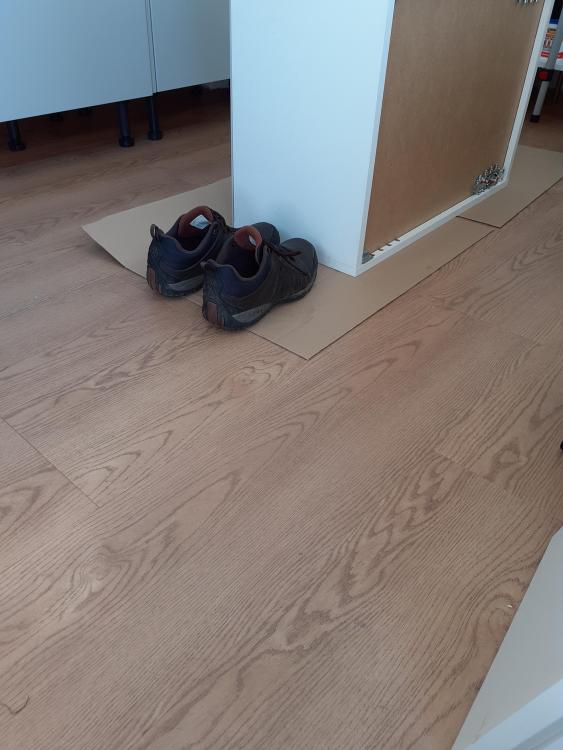
@SuperJohnG thanks for the reminder, sort of forgot about this post. Here are some photos, you can see where I went from the Amtico to the Vusta stuff for under cabinets, I am glad that I did it this way.
-
Planning requirement for 1.8M panelled fence?
Carrerahill replied to Topic63's topic in Introduce Yourself
How do the council even know about it? Are your neighbours on the other side and possibly beyond them happy with it? Is it a shared fence between you and neighbour? If so are they paying for 1/2 or are they at least being consulted? If so and everyone is happy then build it. I have a 2.2m fence behind my garage, neighbour and I wanted it, we built it. Council would only ever see this fence if they were behind my garage on in neighbours garden and even then they would have to notice it, take offence and do something about it. I think all to often people give planning the option to comment where frankly they can get knotted. I do no condone upsetting people, putting up buildings, sheds etc. decking or fences that are going to upset or cause issue but if all parties impacted agree and there is no issue I see no reason why planning would be involved. -
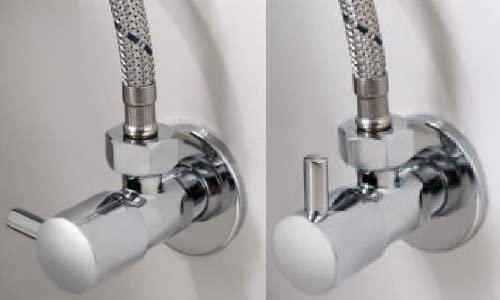
I watch an American plumbers YouTube channel, and the same as on the continent I see a lot of nice little wall mounted chome isolator taps that the flexi's come from and go into appliances, taps etc. Things like this: That is listed as a designer isolating valve, on Amazon, king of the cheap import tat (2 people have commented that they "exploded" and flooded properties - I could have told you that simply by the listing and the lack of decent info!), I am not filled with confidence, I want quality, Pegler, Hep, JG etc. at least WRAS approved stuff, I won't even buy the unbranded isolators from Screwfix, for the sake of a few £'s I want the recognised brands. I just feel that when mains water is involved you want to know it will stay in there, you wouldn't buy unbranded electrical kit so I think plumbing is the same. So, these sort of valves are not really done in the UK, we don't really go in for this look it seems which is a shame as I think it is a nice neat option and works well. So has anyone found good little isolators like this?
-
Connect a drain pipe into my house sewer pipe
Carrerahill replied to Jojo's topic in Waste & Sewerage
It will need to be designed, approved and inspected. You will need an inspection chamber as you cannot have a corner or T underground without access. It is all doable though. Assuming the connection is on your land, personally, if it was me, and I am not proposing you do this this, I am just telling you what I would do, is work it all out (I am in consultant engineering and have access to civil engineers and specifically a water engineer!) get a good design put together and implement it - I'd do it to the highest standards and photograph it all. I would then forget all about it and let it do its job. -
At the stage where I will be thinking about taps, I was just going to go for a bog standard kitchen tap, but a boiling (near boiling) water tap has been on my mind. I work from home, I drink a lot of tea and I cook a lot so I use a lot of boiling water I'd say. I have some questions if you could collectively answer that would be great. Running costs what are they really like? I assume if you go on holiday you switch it off, how long does it take to heat up the tank if you have switched it off? Does it require only a cold feed? If I wanted to run the tap warm to wash my hands does it generate it's own warm water? This would be good for us as our boiler is some distance away (although I will shorten the pipe runs when the ceiling comes down in the old kitchen) so instant warm water. Apart from Quooker are there other decent brands to consider? Zip seem to appear a lot in commercial spaces.
-
For my garage I just let the concrete boys float it with big blue, left it like that till the bleed water disappeared and I put a very fine broom finish on it with a 3' soft bristle broom, it was pitch black when I did this so I am glad I didn't attempt to float it or I would have been working by headlights! I am happy with it. I the float finished the edges at the door. How smooth do you want it and do you have a reason for it being smooth? A fine broom finish is pretty smooth really. You could always just let him float it with big blue then let the bleed water go then get out there on boards and hand trowel it smooth if that's what you want. The guy isn't going to care, he just wants to do the simple option, I can't see him taking offence that you want to take your floor to the next level.
-
I'd crack on as you are and at the end of the build when your snagging you can decide if you want covers made up. Looks good what you have done though! When you build something yourself, you suddenly discover that every daft little issue sticks in your mind, if you had paid someone to do it, you would probably not notice most of them. I get annoyed over such silly things, 6 months later I forget or don't even notice it anymore.
-
This idea is best if possibly the most expensive, but I like it as it will create a better drip edge over the cladding rather than down the cladding.
-
Wait, possible brainwave - what about you remove that piece you have photographed, rip it full length so it is only as wide as the top section, then you could run a piece of cladding edge pieces (or make something if need be) horizontally below the sill then run some verticals below it, make it look like a feature.
-
Could you for example put a slight bevel on the top edge along all the pieces so it looks right, and then a little grey silicon and some touch-up paint on it? Alternatively can you adjust anything to get the cladding closer into the wall?