


Gus Potter
-
Posts
2383 -
Joined
-
Last visited
-
Days Won
34
Everything posted by Gus Potter
-
@ETC I don't always agree but on this point good advice.
-
All the members of your design team have a responsibility. The big problem that a lot of them will have is that you are not paying one of them enough to coordinate it all. If this was happening you would not be asking these questions on BH. It's that simple!
-
Have you had an SE input yet? SE's can help smooth things out.. if you are willing to pay for a fair days work.
-
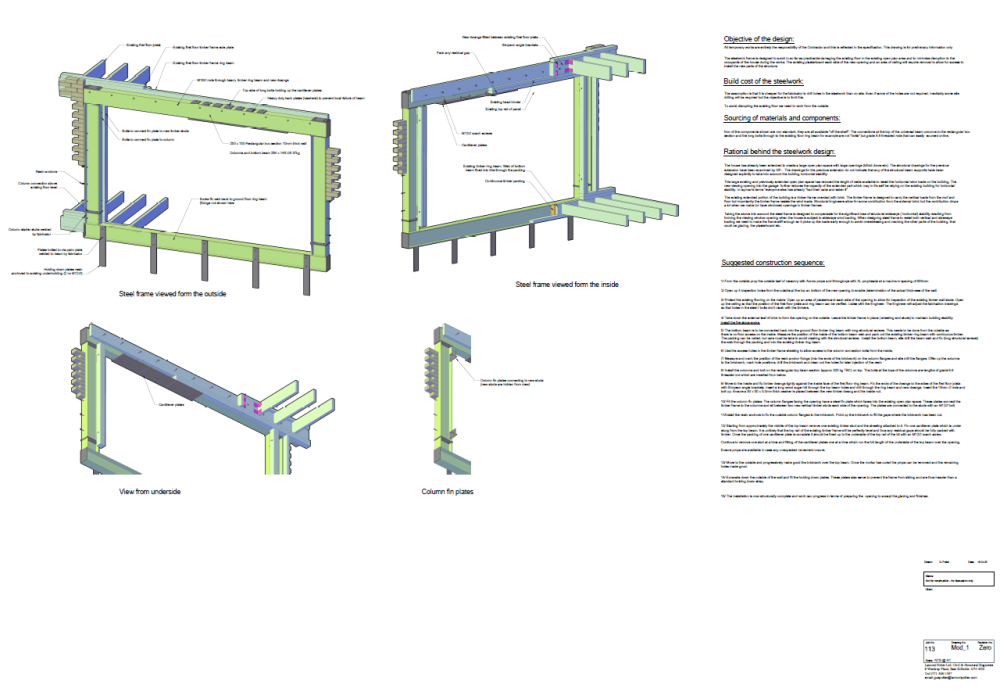
Hello all. To get the best out of things we often need to start talking to each other at the early stages of the design, lining up the contractors you think that you might want to pretty much invest your life savings in. You also need to concentrate the minds of Architect's, SE's and so on. I've attached a concept model that I made for making a hole in a house wall, and it has some chatty guidance notes, not contractural but friendly guiidance. But the text is the bit worth a real read. It's tailored for my Client as they have an eye for cost and buildability. This Client is very sucessful in the building trade but will not tolerate any bollocks. It's a tricky job in terms of buildability, programme and avoiding disruption to the house. There are big loads coming from above and sideways wind load. The text on the right is to let the Contractor see how they can build it, and also see that they have my support and that should let them sharpen their pencil. What you see is only part of a larger project but this bit is the bit that could cause a Contractor to add on 20 plus k.. I'm letting them know they are not alone, but in return I expect them to give the Client a competetive price.. I've done all the hard work! Yes, the Client has paid me a bit more but they will make more savings than what they paid me to figure this out! This drives down cost! What I'm deliberately doing here is to force collaboration from everyone involved in the design and execution, all for the benefit of the Client. Now many of you are doing builds. The fad is to split up the work packages.. to my mind unless you can coordinate all that your are going to pay for the inevitable gaps.. and pay dearly.. and that will come with grief. What you see also ties down the Contractor.. as if they later come back and moan about it.. I say well I suggested how you might do it! You don't have to do it my way but have a read of the text and pick out the bits that may help you phrase some questions when you are dealing with the "design team and builders" BH 3d METHOD STATEMENT Steel frame to main house A1.pdf
-
From experience you can go into an attic and think ok.. here is how I might get it to work. You are creating another floor that requires more onerous loading. Now I also know that we are all prone to looking at things with rose tinted glasses. I have learnt that when assessing the potential for attic convertion you need to make sure that when you change the loading and paths that all that can get transferred down to the foundations.. and at that point you find that you don't have wall continuity on the ground floor for example. The cost and potential disruption can rocket. Unless this property has a high value my gut feeling is that when the final design and costs come in it won't be worth it.. @Mubbashshir I think you will, at the end of the day get more bang for your buck by extending out the back if you can?
-
To quote myself... bad form I know! Ok. The first few times I tried it was with welding rods and found it worked. An agricultural contractor showed me how to do it. I was gob smacked! Yes it does not work all the time but in the absence of any other info it's worth a punt in my view as it costs nothing.
-
This is a fab observation... and demonstrates to me a knowledge of timber. To explain SE wise. You'll often see joists or a flitch beam (commonly two bits of timber with a steel plate between) fixed together with the nails / bolts towards the outside edges. If your new timber starts to cup it pulls the nails / bolts, sets up secondary stress and causes havoc as often one of the timbers will split along it's length rendering your hard work useless. When sistering joists we need to look at the end grain. You want to put the younger wood next to the old joist so when it cups the gap is in the centre and the top and bottom of the timbers remain in contact. @Nickfromwales is demonstrating good old school knowledge. Years ago a joinery apprenticeship used to be a lot longer and the kids got taught this stuff.
-
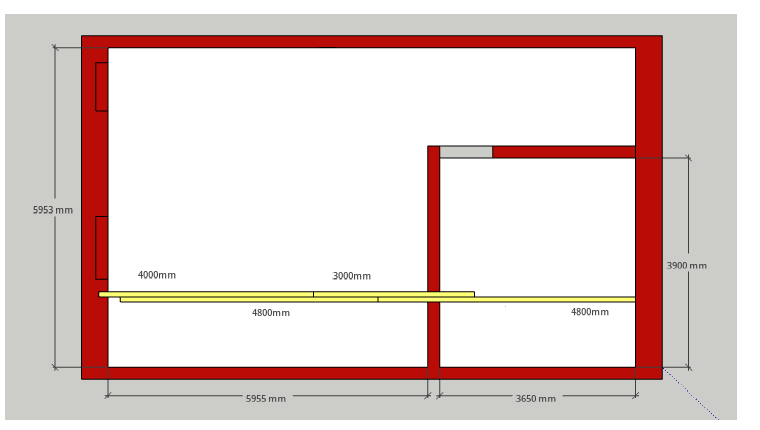
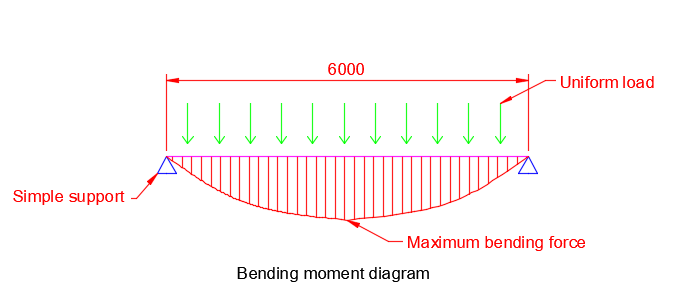
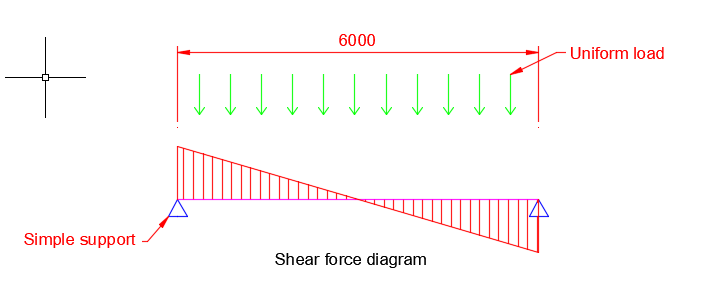
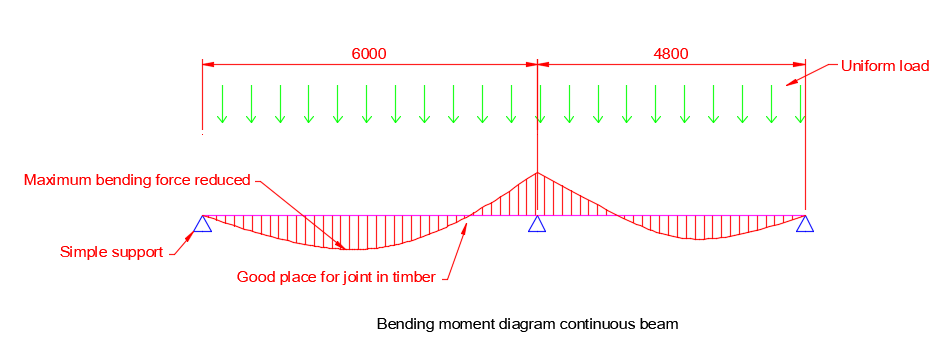
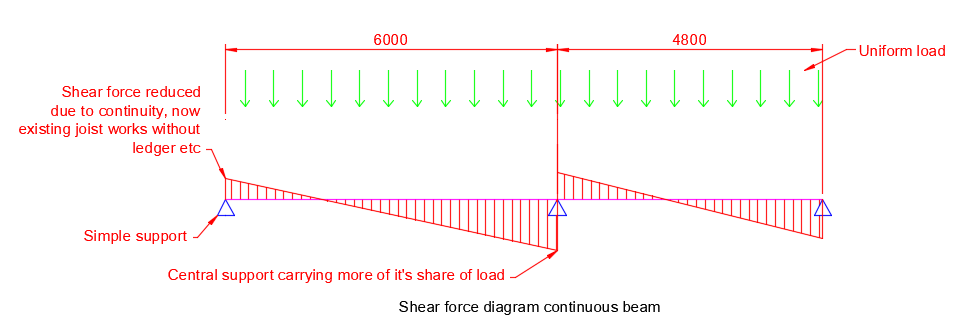
@Pappa and all.. hope this give you possible further insight into what your SE is up to. Attic conversion are an art with often some crafty engineeering. The following I hope gives a bit of an insight. The SE will have considered at least the following: 1/ It needs to be strong enough, the joists and connection not to break. Call this strength design. 2/ The deflections (the amount the floor bends by) need to be controlled. 3/ Head room.. increasing the thickness of the floor is often not possible. 4/ Disrupting the walls where the existing joist ends rest, you often want to avoid that as they tie the walls together. 5/ If I'm going to sister up joists in this way.. where is the best place to put the joints? usually where the bending force in the timber is least onerous or at least we can achieve the best balance between the bending and shearing forces in the timbers. 6/ How to I connect the joists to each other so the forces get transferred around the lap joints. @Pappa To start with lets assume the floor is uniformly loaded, no point loads from wall say. How much load might we be talking about? I'm going to simplify the factors of safety (ignore them and assume your SE loads are working loads) as they vary between the design codes. This is just a rough qualitative look at things and lets carry out a common sense check based on the info you have provide.. don't lay into your SE if you think something is wrong ask them to explain a bit.. which they will be able to do. But for the curious let's see if @Pappa numbers roughly look credible. Say the self weight (dead / permanant weight of the floor is 0.75 kN/m^2 ( about ~75kg) and we have what is called the live (imposed) load which is people, funiture etc. The design codes require us to use a value of 1.5 kN/m^2 (~150 kg/m^2) for a dwelling. Add the two values together gives us 0.75 + 1.5 = 2.25 kN/m^2. I've picked a ball park figure for the dead weight of you floor, could be less or more. Take the longest left span and pretend that here is just one beam spanning between the left wall and onto the middle wall in isolation.. this is what we call a simply supported beam. Taking a 1.0m wide strip of floor with a beam span of say 6.0m gives us a total load of 2.25 * 6.0 = 13.5 kN per metre width of floor and for a simply supported beam the load per metre run of ledger would be 13.5 / 2 = 6.75 kN/m.. but see below what @Pappa's SE says. The load I've just calculated is some 45% more (call that an over stress) than the SE's load, even if you have a lighter floor then on first glance there looks to be something wrong. The first obvious thing is.. can the floor be loaded with people over it's full span, is there a coomb? If so then the ledger load is going to reduce at the left wall end. Say the coomb extends in 2.0m from the left wall. You need to maybe to allow say 0.25 kN/m^2 for using that space as storage? I'll ignore that for now to keep the maths short. That will maybe knock off about 1.5 kN/m run ledger load. 6.75 - 1.5 = 5.25 kN/m run of ledger. still more than your SE's 4.58 kN/m For all I worked out this qualitative reduction of 1.5 kN/ metre run of ledger by saying we have 4.0m of floor that could be loaded by people towards the middle wall. Thus 4.0m x 1.5 kN/m^2 = 6.0 kN and that 6.0 kN acts as a point load 2.0 m in from the mid wall. Thus for a simply supported beam 2/3 of the load will be carried by the mid wall and 1/3 by the left wall. So 6.0*1 / 3 = 2.0 kN/m reduction and I've added a bit back in of 0.5 kN/m to account for you storing stuff in the coomb and that is how I arrived at the 1.5 kN/m reduction I used above. But the 5.25 kN/m per run of ledger is still an over stress! Here I think your SE is doing what you are paying for.. this is "crafty bit" and demonstrates engineering skill. To explain we need to look at some basics first. When designing beams etc we are primarliy interested in the bending force in the beam and the shearing forces. There is a lot of other stuff going on but let's just stick to these for now. Engineers use diagrams to repesent these forces. Below is what we call the bending moment diagram for a simply supported beam holding up a uniform load. And diagram below represents the shearing forces in the beam. @Pappa we want to know a bit about this, where your SE is showing the sistered joists stopping short of the left wall. But in this case the SE is lapping and joining the joists together so it's intuitive that we must be getting some transfer of forces between the left side and right side and here we can take advantage of this and while Nick below is correct about the weight not changing the way the weight influences the joist behavoir can change a lot, or enough to make things work. Let's now look at the doubled joists and how the bending and shear forces change even though the weight is not changing. You may have heard SE's talk about stiffness and how stiff things attract load. Here is an analogy, let your mind wander and wonder! Say we go to the gym (cough at my end) hold out a kettle ball at arms length. The ball causes a bending force at the shoulder and a downwards shearing force. Now you have a pal, also with a perfect body, that comes up behind you with super glue on their fore arm and sticks their arm to your humerus region thus some of the load will get transferred to their arm. This will stiffen you arm and some of the load will get transferred to your pal. We can take this analogy and put some diagrams to that as below as this is what looks to be happening in @Pappa's case. Now when you get a helping hand from the right wall side timbers you can see that on the main 6.0 m span the bending force is reduced. But also the shearing force at the left wall reduces. I've just sketched the diagrams so not perfect!. I've just done this roughly and for ease and have shown the floor fully loaded. But SE's will consider the left side full loaded with minimum load on the 4.0m span as this will give the maximum shear load on the left wall where the new sistered joists stop short and we need to check the remaining short part of the original joist. Now lets look at how much the floor will deflect. @Pappa's SE has sistered the joists over the longest span and will have calulated the deflection and checked it is ok. Where the joists stop short of the left wall will have little influence. In this post I've not looked at how you design the bolts and so on.. it is complicated! @Pappa. Hope this helps. My recommmendation is that you stick to your SE drawings and connection recommendation, don't go swapping things out without checking with your SE first.
-
Advice on how water heating
Gus Potter replied to flanagaj's topic in General Self Build & DIY Discussion
Thank's for the lesson, every day is a school day for me @Nickfromwales I looked at that and wanted to ask! I had my doubts.. but we live and learn. Thanks for sharing your knowledge Nick in terms that I can get my head around. Ta from me for a great explanation! -
OK @Nickfromwales let's not split hairs here. You recognise that we need to at least have some residual heating under the units.. that is so common sense! Folks. @Nickfromwales does this as a day job.. listen to what he says. I've also been dabbling in this UF malarky for 30+ years. I agree with Nick. Nick says ( i think in the spirit of the discussion).. essencially reduce by half the spacing under where you are confident your units are going to go. That is what In would do.. it is so simple! It stops damp problems and just acts as a bit of a stop gap, provides a bit of redundancy when in 10-15 years time the system stops working so well.
-
Advice on how water heating
Gus Potter replied to flanagaj's topic in General Self Build & DIY Discussion
@Nickfromwales Would your idea be equivalent to the traditional "Surrey Flange" The dip pipe concept.. it invites problems? -
And here you are demonstrating common sense! I know @nodyou have a vast amount of experience and I think we are of like mind. Ok.. I hear you maybe saying .. on the odd occasion I might concur with Gus. So long as you at least make it it bit future proof then spot on. OK folks: In my mind future proofing UFH is; no fancy controls, no apps and shite, basic plumbing components that your local plumber can buy off the shelf. I'm an SE (reinvented builder) and primarily we design with no bollocks! Things need to last! If you think about it.. UFH is just a large radiator on the floor. But by applying common sense you can heat different parts of it by having loops.. and then fine tune it where the cold comes in..and where the floor gets wet.. this is improtant to dry out the mats at the door so you don't stain your oak flooring say or soften the varnished / oil finish. In my own house.. it's a bit eclectic we have rugs and stuff on the floor, my wife is a bit of an interior designer.. it totally stuffs any loop cad things and the U.. value calcs. We have some furniture.. big sofas.. they trap the heat. Now when you take all that account any heat loss model is just an estimate. When I first started out on the UF malarky some 30+ years ago ( folks.. I've not always got it perfect by the way.. have learnt from my mistakes) we struggled to get it to emit enough heat as the U values of the walls, roof and glazing where much higher. But now the regs make UFH much more viable. But the same basic rules still apply. For all on BH that are thinking about UFH.. go for it..trust your common sense.. it does not cost that much more but.. the luxury is.. from my experience.. well worth it. Even my old Mum at 94 does not have to bring her slippers!
-
That is why I say on my drawings " or similar and appoved by me" It is because what you should be doing is going back to your designer and asking.. is it ok for me to use this.. but you probably wanted the cheepest price from your designer in the first place so they would not have included the time to keep yourself right and hold your hand. There is no free lunch here! Do you honestly expect the person on the sales counter of a builders merchant to ask what the load ratio is when they are selling you a Catnic Lintel for example at a bargin basement price? The load ratio is the difference between the load on the inside and the outside of a steel lintel. If the guy on the counter can tell you that he / she stands a good chance of getting a job in a design office.
-
To add a bit.. of a rant! My day job requires me to use some complex software. But if you put rubbish in you get rubbish out. With modern software you need to construst a model, could be an SE model or UFH model. I've learnt that in UFH design you can get a feel for how much heat you need to put in but most importantly you need to know where to apply the heat. A badly thought out UF design can be disappointing to say the least. I'm going to go back to some old sckool stuff to demonstrate a point. Say in the 1980's when folk were able to afford gas central heating. There were two basic schools of thought.. do you put the radiators under the windows.. where the cold comes in or do you put them at the entrances to the rooms where you are less likely to put furniture? Now the cheapest option was to keep the rads at the doors. But you set up big convection air currents in the room. The same applies to UFH. Think about where you need the heat. We often have big areas of glass and open plan spaces.. that is where you need the heat.. where the glass is, I reduce my UF pipe spacings in these locations. This is where part of the art comes in.. in fact it's just common sense. Say you have a door then you want the floor there to be hotter so it gets rid of any moisture that may be coming in from your shoes. It's design touches like this that make UF work well. Loop cad etc will get you so far but to get the best out of UF requires you to trust your common sense..
-
Philistine here.. Nod makes a good point. I've run my UF pipes under my island units. The cupboards are warm... keeps the pasta dry for example. I have a gap at the top of the plinth to let excessive heat out. Where I have my fridge and freezer I opened up the pipe spacing.. just to provide a bit of residual heat. I've been doing this for decades. UF is a pragmatic art.. the focus is on the art! What I do is have plenty loops, and short flow adjustable loops. Commercial companies will try and be smart and seek some cost advantage.. which is bonkers when you think that UF should at least last the lifetime of the house.
-
I does work. I've seen Farmers do this.. it's a developed skill that can give you a hint of where things might be.
-
When designing raft slabs and screeds I set a level and flatness tolerance so this should not happen. It can add to the initial price but at the end of the day someone has to do it. Remedial works always cost more than getting it right first time.
-
Welcome to BH by the way Deborah. That is glowing report. Agree. But there is always an inherant risk about buying from abroad. If things start to go wrong then there may not be a local resource you can call up to fix things on site in the heat of battle... like phone a friend. If you are on a tight programme then it's a balancing excercise.. do we go local or not.
-
You have my sympathy and I feel for you. All the best. Once you get it all sorted out, if you feel able, post about how you concluded as it would be helpfull to BH folk to read about your unfortunate experience.
-
Structural warranty company dilemma
Gus Potter replied to Amateur bob's topic in New House & Structural Warranties
Hello Bob. I was rooting for you and hoping you had got this sorted. For all this may be of interest as it lets you see under the bonnet in some respects. Here is how I might be able to chip in. My PI insurance allows me to act as a PD. Now you'll appreciate that I need to excercise reasonable skill and care.. a condition of my insurance. This might work for work for you? The objective as I see it would be for us to work together. 1/ I would review all the design information. I would then generate a list of items I think are key elements and areas of the design that pose a risk if they get changed on site. Could be structural, could be say weathering details etc. This is part of what a PD does. We check to see what changes have been made / proposed and if they impact on the building; either in terms of health and safety risk (during and post construction) or say Sturctural / Architectural deisgn risk. 2/ You would then provide me with evidence that the works to date have been carried out in strict accordance with the design. Now it needs to be real evidence.. not a whitewash as I can't then say I have excercised reasonable skill and care. 3/ Nine times out of ten I'll find a non complance. Now a non compliance is not a bad mark.. the design often eveloves on site and in the heat of battle. What we need to show is that any design changes are still ok. Say it is structural. The easy way is for me to phone up Harely Haddow (with you authorisation) , explain my involvement and have a chat with them. If it's say an Architectural detail or an insulation thing say then we will put our heads together to show that the design change is still ok. 4/ I would then write an evidence based report to say.. I have reviewed the design information and have concluded, based on the information that has been provided to me and after reasonable enquiry that the house has been constructed in compliance with the design. I would then say.. if the design has deviated.. he is what we have changed and here is the evidence / say calculations / drawing details to show that all is still ok. This lets Protek see we are being sensible. My fees: The big risk for me is that I'm coming late to this. It sounds innocuous, acting as a PD.. but it's not.. ProteK are laying off their the risk. They will no doubt ask for a copy of my PI insurance... which will probably be plenty enough to cover your house and they know they can make hay with that if something goes wrong later. As a ball park. Say it takes us four days to sort this out. My rough rate is £300.00 a day give or take. Site visits would be extra. Much will depend on the evidence you have at hand and how much time you are yourself are able to spend giving me the information I need and discussing how we progress this on the phone say. If you want to follow up then PM me. I'm away on holiday soon so may not be able to respond in depth intitially. On the other hand have you considered just writing off the Protek fee? If you are going to hang on to the house for a while then maybe just cut your losses? -
@Saul. So lets say they have made a complete bollocks of this and the houses need to come down. I have had a case like this. You need to discuss this with your legal team, hopefully your specialist Lawyer has already had this discussion with you? Explore the options that might be available to you compensation wise and how you costs and lost opprotrunity are going to be covered. Also plan for the builder going bust? It happens. Do you know how big they are, are there problems on other sites?
-
Starting a business helping Self-Builders, advice?
Gus Potter replied to LDNRennovation's topic in Surveyors & Architects
It can be done but it is a long journey. For me I was a local Scottish Borders Building contractor for the first 15- 20 years of my carear (I'm paraphrasing) have done a self build, like a real one.. doing 99% of the work myself. I reinvented myself at the age of 40 by going to Uni. I'm now an SE and Architectural designer with my own consultancy for about the last 6 - 7 years. But to get there I had to spend about 6 years training after uni.. to become competent and learn how this side of the design business work. How you set out a design brief.. how you get paid and when. How you build relationships to get repeat work from Clients who pay promptly.. which will pay the bills. On the face of it even now (6-7 years later) I don't earn what I could if I went to be a wage slave at an SE consultancy ( I don't get holiday or sick pay but they have you working 60 -70 hours a week once you get to director level). But my quality of life is much better. I have my bread and butter work locally that pays the bills.. extensions, loft conversions and knocking holes in walls. I do quite a few jobs in England.. but these are only the ones that interest me. I like raft slabs and converting agricultural buildings to homes for example. I have other sidelines.. I do some steel detailing for an Aberdeen fabricator and so on. I take on whacky renovations.. lime mortar and old stone. @LDNRennovation I think you can do it.. but to do so at the beginning you'll have to take on anything that crops up.. you'll probably earn less in the first five years but at the end of the day if you put your back into it it will be worth it. -
What will remove this paint?
Gus Potter replied to ennogs's topic in General Self Build & DIY Discussion
Often the case.. but will it be safe? -
What will remove this paint?
Gus Potter replied to ennogs's topic in General Self Build & DIY Discussion
It's a good idea and can work.. but always check with an SE before you do this as the effective depth and end restraint conditions of the trades can change massively and make things unsafe. -
Ha! Save your money folks. I'm balding, a bit deaf, glasses.. long list of latent defects. That said would still like to attend if possible, if not this time then maybe the next.



