


Gus Potter
-
Posts
2383 -
Joined
-
Last visited
-
Days Won
34
Everything posted by Gus Potter
-
Ok what I do is this. I issue a pdf drawing with a scale bar. I put a numerical dimension on the drawing. This means that you can check to see if the scale bar matches with the drawing dimension. That verifies the drawing dimensions no matter how you print it on paper or look at it in pdf format if you are working from home as planner. I suspect your planner is kicking the can down the road and that is why I put on my site plan a reference dimension that they can check the scale bar against to head them off at the pass. But I round off the dimension to 100mm.. so I'll say 6.1m approx. Now the main reason for the rounding.. it is to do with the legal site boundary. I need to be really careful not to establish the legal site boundary by default as I could expose my Client to a property boundary risk.
-
Raft foundations. How does the mesh work in a slab?
Gus Potter replied to Gus Potter's topic in Foundations
The quote from Ruskin for me sums it up. I know we are all woke these days.. but that bit about "lawful prey" ..scary.. but even more true in this day and age. That is why I love Build Hub as I think it serves the public interest. A big thanks from me to the folk that are running this site. -
Anyone recommend a fire engineer?
Gus Potter replied to Alan Ambrose's topic in New House & Self Build Design
Had a quick look at Grant's offering.. seems like someone that has their head screwed on the right way. No fancy website... just someone that says.. here is what I do and I know my stuff? Now as an SE that sounds like someone I can relate to and have a sensible conversation with. -
Hello all. For my sins I was briefly a director in a double glazing company in my early 20's. I'm now 60. I was a daft lad back then with lots to learn. . I think that comes out when you do a director search on me on companies house! So in that context.. I write the following.. as I'm a bit of a poacher come game keeper. I work with some good glazing providers. Now we know that BC et al are getting totally anal about this environmental stuff and they have no clue as to the cost off that. Three or so years ago I spent some 20k on getting some sliding doors., windows and a roof lantern in my own house. I did my own SE/ Architectural and U value calcs.. as it is my day job. Now I know these suppliers so we share information. The latest wheese is that gas filled units are good for 7 years and the frames for 10. "Rational have agreed to replace and supply an engineer but want me to pay for scaffolding etc" That seems like a good offer. Don't push your luck .. there is often no natural justice in the building game! Look at the other side of the coin.. say Rational engaged me to evalutate your build.. I might find enough evidence to suggest that your build may have contributed to the faIlure, so now you get nothing. Recommendation is to accept thier offer if you are of pragmatic mind. OR you can go full pelters.. but you'll need to have at least 10- 15 k in the bank for my fees to try and fight what looks like to me like a lost cause. I would not even take you on as a Client as I don't do ambulance chasing.
-
The (not so) secret diary of two self builders, one aged 62 and a half…
Gus Potter commented on G and J's blog entry in Da Bungalow
Plus one to that. -
ICF How much more expensive ?
Gus Potter replied to Dave Jones's topic in Insulated Concrete Formwork (ICF)
Hi all. As an SE.. ICF is just temporary formwork replaced by permenant insulation. There is nothing here (for me) that is complex / more difficult in terms of structural design. The concrete wall does not know if you have fitted the insulation before or after! You have Kore etc but the real money lies in local contractor cost. All ICF walls are fundamentally the same.. yes the method of tying the outer and inner leaves of insulation may differ as does how the ICF system locks together but in the grand scheme of things it's a moot point. Often what matters is where you are in the country and access to builders that are familiar with how you shutter and support the different ICF systems. It's just not economic for a Contractor to do the odd ICF job in parts of the country as you need to invest in kit that can be used more than once. This is a major issue when selecting the best and most cost effective method of construction. Often to get best bang for your buck you need to look at contractor availability. In some ways it is a post code lottery in terms of build cost. As a designer and advisor I have to let you know how your location can dramaticaly influence the build cost. I'm going to pick out @Nickfromwales here as he is a go ahead guy with decades of experience behind him. I've mentioned Nick here as he has spent a lot of time demonstrating on BH that he knows his stuff. If Nick can see enough of a turn and repeat business then the ICF cost will come down.. Nick is from Wales... maybe not London prices but enough for him to make a good living? -
Raft foundations. How does the mesh work in a slab?
Gus Potter replied to Gus Potter's topic in Foundations
This is so true. For all self builders. My advice is to take time to understand what the drawings say. Make sure that gets delivered otherwise.. I have this on my website from Ruskin. Please take some time to read, especially if you are doing a first extension or doing some DIY with a bit of help.. It is even more applicable in this day and age. There is hardly anything in the world that someone cannot make a little worse and sell a little cheaper, and the people who consider price alone are that person’s lawful prey. It’s unwise to pay too much, but it’s worse to pay too little. When you pay too much, you lose a little money — that is all. When you pay too little, you sometimes lose everything, because the thing you bought was incapable of doing the thing it was bought to do. The common law of business balance prohibits paying a little and getting a lot — it can’t be done. If you deal with the lowest bidder, it is well to add something for the risk you run, and if you do that you will have enough to pay for something better.” -
Hi all. Firstly, thanks for you all for taking the time to write about this. I know many of these posts take a lot of time to write. I'm digesting this post. In my day job I try and introduce folk to underfloor heating, ICF, insulating house extensions / attic convertions and anything that I think can deliver a project. Some of my ideas are off the back of what folk are innovating on Build Hub. I look at what you are doing on BH and say to myself..what a great source of knowledge.. how can I implement this in my SE and general design and then sign off on that under my professional indemnity insurance. There are many of you that are contributing to this discussion and I try and chip in where I can to return the favour. Thanks folks.
-
Anyone recommend a fire engineer?
Gus Potter replied to Alan Ambrose's topic in New House & Self Build Design
Interesting question. A few observations. Take a single story timber frame (TF) house more than 1.0m away from the boundary. Let's make it timber clad. As an overview we aim to achieve a number of things: 1/ We want the interior of the external, internal walls and ceilings not to encourage surface spread of flame or emit fumes, like old polystyrene tiles to take an extreme example This protects the occupants and provides time to make a safe exit. A good material to use here is plasterboard. 2/ We also want to protect the Fire Brigade in case they need to enter the house. In the first instance we want to have a look at the roof. Say that needs 30 minutes fire protection (pragmatically) but on a single story house this may not always apply. Assuming we are complying with the English regs approved document B (dwellings). Our first port of call is section 5: Load bearing elements of the structure. To summarise clauses 5.1 to 5.3 and the attaching notes; provided the roof does not contribute to the structural stability of the house we can go for potentially less than the 30 min.. but as I said, pragmatically, we need to ask.. can we get 30min out of the roof anyway at no extra cost? Now we need to look at the roof and determine if it is contributing to the structural stability of the house. Importantly ask (an example), is the roof say attached to a long slender steel transfer beam (or an eaves / ridge beam) that relies on the roof to prevent it buckling? If that beam requires 30 minutes protection then so does the roof.. as it is now part of the structure. Turning to the walls. The first thing to ask.. what are the walls doing structurally. Are they holding up the roof or not. On a standard TF they normally do and thus commonly need say 30 minutes protection when measured from the inside. But.. if the walls are holding up the end of a steel beam that requires a longer duration of fire protection then you need to consider how much of the wall needs extra protection.. often we get round this by default as beams have heavier and more fire resisting supports running in the walls down to something solid on the ground floor. However, just say the walls are infill panels between a structural frame that supports the roof and any transfer beams. The structural load path is.. snow / wind and roof access load acting on the roof.. onto a structural frame on a raft foundation slab say. Let's avoid a steel frame (takes ages to write about) and say we have a chunky oak framed building. Here the wall panels are non structural in terms of bearing vertical load. Just to qualify.. when we are considering structural loadings on a building in terms of fire we neglect wind load and reduce the live (imposed loading.. you having a party or a biggish fish tank say).. in other words we look at the probablility of the building being fully loaded coupled with a fire breaking out.. if we did not take a risk based appoach then the fire design would often drive the design unreasonably and cost exponentially upwards. Ok I picked a chunky oak frame as it's easier. Oak is a great material.. when a fire starts you get a slow char which insulates the timber under. If the oak frame is chunky it will hang in there a lot longer than your 30 minutes. Infill panels: Just say these are a space frame / SIPS kind of wall panel fixed between the columns of an oak frame. Heb Homes et all do space framed walls. I'm being all inclusive so let's lift the bonnet and have a look at these. @Kelvinknows a lot about this so have a look at his posts, also I've picked his brains and learnt loads from him so you won't be the first! Now as a point of reference we know that a standard TF wall.. say plasterboard on a 95 x 45 timber stud (provided it is not too high) with OSB on the outer face gives you round about 30 min protection. On the inside the key thing is to make sure the plaster board fixings have enough penetration into the timber. As a rule of thumb if the plaster board is 12.5mm thick we need 2*12.5 fixing penetration into the timber behind for structure = 25mm. That is not something I'm personally comfortable with so let's say 40mm fixing screw penetration.. about the thickness of an engineered joist flange. Now we are making sure the timber and plasterboard will hang in there as the fixing heats up. On the outside of the panel, timber clad. Here we need to look at the surface spread of flame and select our cladding accordingly. It might need some treatment. Up in Scotland we have a company called Russwood, have a look at their website as they are full of ideas. Last but not least there is the fire stopping. For all when we have a cavity in a wall we must stop flames and smoke having a free run. Cavities are basically a chimney and they are not "passive things". As soon as you introduce heat convection air currents build rapidly and they promote fire and smoke spread. They must be split up and isolated into small zones. Now when we have say external timber cladding the inside face of that may be a bit irregular. One solution is to use fire socks around all openings (windows and doors), at eaves level and split the wall panels lenght wise into separate zones. One company, I like to brouse their offerings on passive fire protection is Tenmat https://www.tenmat.com Now you may not need one, much depends on the attitude of BC. For me as a designer I always want to make sure that what I'm doing is safe. On a low rise single house like this, say well away from neighbours then it's ok to work your way through the basics to get a safe fire strategy. Make no mistake folks.. if this was a higher risk building then I would be much more forensic.. but the Client would need to cover my design fee. Hope this helps a bit. -
Bite the bullet and post as many drawings as you have and supporting info. Don't hold back. If you want the best advice from the members then don't make us guess as we get fed up guessing when actually we want ot help you solve this if we can. Give us all the info so we can help you properly. You'll be surprised (happly) how much help you get!
-
ICF How much more expensive ?
Gus Potter replied to Dave Jones's topic in Insulated Concrete Formwork (ICF)
Much will depend on wall panel sizes and your attitude to shrinkage. I suspect he maybe qualifed that statement. A masonry wall is more forgiving.. that is why we make the mortar weaker than the masonry units. I'm assuming many here making comment are using ICF above ground and not using it to keep ground water out. Fair enough if your wall panels have a good aspect ratio and are not too large, it needs a lot of careful thought. One of the biggies is not just what it looks like on paper / calcs but how you are going to execute the pours on site. Get this in the wrong order and your SE will not save your bacon! To put this another way. If you ask me for the leanest design.. I'll maybe be able to give you that.. but then I'll say here is what you need to do on site and in this order. Your Contractor will say.. hey I'm going to have to make extra visits. The reality is that folk on BH will cut corners and think the can have their cake and eat it.. you can until something goes wrong and then you are STUFFED! If you fail to follow my instructions then you are on you own. Ask me about the best and balanced risk way of building something and I'll support you to the hilt.. even if you get into a barny with your contractor. Personally I'm ok with ICF. It's a concrete wall with permenant shuttering that is insulating. The shutters need tied together with insulating ties. The shuttering needs bracing more than traditional ply shuttering. If below ground we need to do some waterproofing detail. -
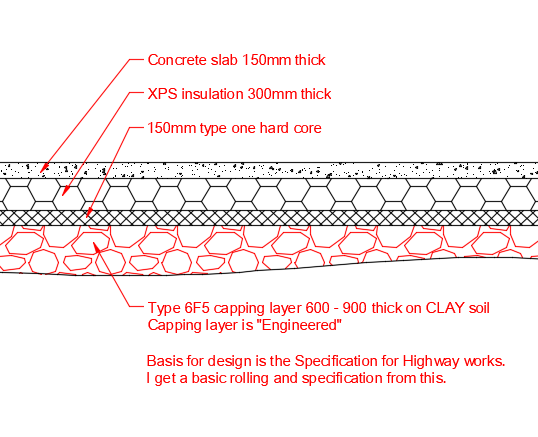
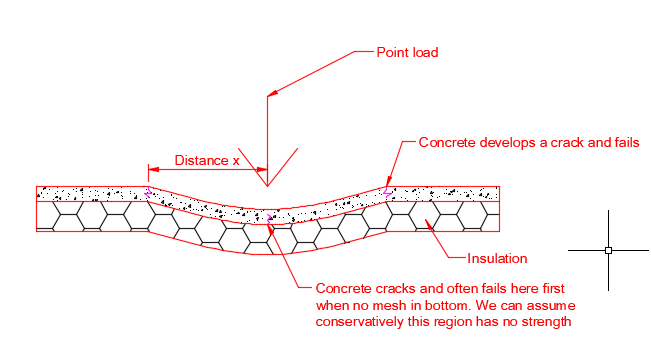
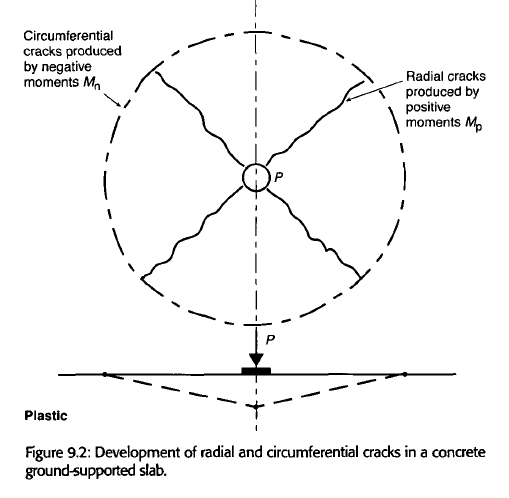
Hello all. A Client of mine asked me why I had only put reinforcing mesh in the top of the raft slab on XPS insulation and not in the bottom as they had seen many details where there was steel mesh in the bottom and top of the slab or just mesh in the bottom. One underlying reason for the good question was.."what kind of temporary construction load can I put on the slab? .. as I want to run a machine about on it" The following is a bit of an introduction to the theory on how you can place the reinforcing mesh (laymans terms).. the experience bit I'll leave mostly out for now. Please remember that all raft foundations need to be designed on a case by case basis. Also raft design (particularly on thick insulation) is a dark art in that we design them partly on theory, partly on experience and by adapting standard design guidance to suit the particular site and your (often self builder's) requirements.. Please note that non of this covers.. difficult ground, made ground, sloping sites and so on.. there are many types of raft foundations.. I'm just talking about mesh reinforcement here and assuming a fair wind (in terms of ground conditions) below the insulation layer. This design is a essentially a passive raft on XPS insulation on CLAY soil. I use capital letters her as when you look at any ground investigation report the dominant mater is captialised. The soil description is wriiten in order of priority. This particular raft has to take some point loads from a structural frame around the perimeter and a modest loading from the external walls that sit on the edge of the raft. This raft has an edge beam to carry the column loads to spread them about. Below is a rough drawing of the slab away from the edges, I've ommited the mesh, DMP etc for simplicity. In the case above there is a capping layer of 6F5 as the soil contains organic material, a bit of made ground and so on.. we kind of need to dig that out as if not we would have to have a much thickened and more heavily reinforced slab. We are aiming for economy in the round here. The capping layer is there essentially stop excessive settlement caused by say made ground and any organic material decomposing. Forgive the lack of brevity but the concrete slab does not know what it is resting on.. it just wants to know what is holding it up, how squashy it is and how strong it is. What we often like to do is to make sure that the type one and capping layer is stronger in terms of compression strength than the insulation and also settles less than the insulation. In other words the stuff below the insulation is less elastic. This lets us concentrate on how the insulation behaves. Ok lets look at a typical insulation, say an XPS. Now when you look up the manufacture's data tables the will often say our stuff is rated at 300Pa at 10% compression. Now 300 kPa is 30 tonnes a square metre! Now that is a great headline figure! But on a 300mm thickness of insulation that equates to 30mm of downwards movement.. just imagine what that is going to do to your doors and windows, drains, finishes etc. What we do is to say.. how much movement can we live with. Say we can live with 6.0mm of movement when the building is subject to it's full load. The sum to get a reasonable load bearing capacity of the insulation is: 300 * 6/30 = 60 kPa.. which still is a lot of bang for your buck if the loads are spread about evenly.. which often they are not. Anyway we now know if we put 60 kPa on the insulation how much it will squash down by and from that we can calculate its elasticity.. how squashy it is. On top of this insulation we put a concrete slab. Now plain unreinforced concrete has a small capacity to resist tension.. not a lot but it does do something if we have tension loads spread over a wide area.. it can hang in there! There is a design guide that is used by many of the big industry suppliers of software (TEDDS/ TEKLA for example) to the SE community is called TR34.. Concrete industrial ground floors. In this design guide is a brief mention of concrete slabs on insulation. What many folk like me and other designers / specialist Contractors do (the Americans pioneered this so I use their guides as well) is to take the basic equations and adapt them in a conservative way. To adapt the equations in principle is relatively simple. Below is a simple model of how an unreinforced slab fails away from the edges under a point load. One way of appraoching this is to assume that the first crack in the concrete happens in the bottom of the slab, now we are adapting conservatively the standard TR34 rules. But we need to know what distance "x" is. This is called the radius of relative stiffness. Simplistically the insulation under is pushing back up as hard as it can (remember it is elastic like a pencil rubber) and the concrete is bending down but it is less elastic than the insulation. We need to find the "balance point" where the insulation and the concrete have equal forces to maintain equilibrium. Like below and then we can calculate the tension in the concrete in the top of the slab where the circle is and check to see it is ok. You can see how the circle, the tension in the top of the slab, is relatively large and that is why we are allowed to take the tension properties of the concrete into account. Here is an important bit for many of the raft slabs you see on Build Hub. Steel mesh is often used for crack control. Say A142 mesh, but often there is just not enough mesh to turn the concrete slab into a fully qualifying reinforced slab. But intuitively we know it will be helping a bit wich add a bit of a safety net. In the round though. I've had a look at what folk are getting designed by their SE's on Build Hub, qualitatively. You can't take too much of a view as there is often no quality info. I've also had a look at the AFD ( Advanced Foundation technology) offering. Lots of it is good stuff with plenty detail. Hopefully the above will give you a bit of an insight into how they (AFT et al ) achieve their thin slabs. BUT.. Often in this passive raft or just any raft foundation design there is no free lunch! DO NOT make the mistake of trying to get you budget figures to work by shaving a slab down to 100 mm thick for example unless you are confident on the ground you are building on, know what kind of insulation you are going to use and you have no funny loads from the superstructure! These loads include uplift wind and point loadings. That's all for now folks.
-
And why not have a bit of fun. I mess about with my own house and as you, some of the stuff I apply to the day job or.. not if I learn the hard way!
-
Help ma boab John, some set up. Browsing though your spread sheet diagram there are some clever touches in there. The bit that interests me most is that box that I think is the plate heat exchange to keep the air pump separate from the gas boiler. I like your style and approach.. so + 1 from me and also I appreciate you sharing your diagrams.. I know that these don't get knocked up in five minutes. In a funny way we are both trying to achieve the same end.. which is the most cost effective way of heating a house with say UF via say ASHP and Gas.. or anything else.. where we may differ is that I look at the cost and in particular the maintenance cost of a system over say 50 years.. with my commercial / professional hat on. With my hobby hat on (being mucking about with this stuff for at least 30 years) I love it! I go for the simple stupid, affordable, hopefully mass market and you are exploring the forefront of control systems and innovation. Is there a middle way that folk on BH can marry together what you are doing with my hard headed approach? OK folks with my SE / raft design day job experience.. with underfloor heating hat chucked in... Over the years I've adapted my raft designs to take account how you introduce under floor heating pipes into ground floor slabs. It took me along time to figure this out but I'm confident as an SE I have most of the answers. I also feel capable of explaining how, in laymans terms, this heating malarky is not as complex as it needs to be. There are many ways to skin this cat SE wise.. but often the approach and one I take is to say.. how are you going to use what is often an open plan space. Do you want some rugs on the floor, do you have big areas of glass where we may want to close up the spacing of the UF pipes? What kind of controls do we need to suit your way of life.. are you out all day or work from home, young family, kids grow up and then I think about how I might want to lay out and form the slab below, can I as an SE have my cake and eat it? sometimes yes.. But always..make it simple stupid and future proof. For me what I've learnt over the last 30 years of doing this is that UF pipe layout and systems is it's much more to do with buildability, ongoing maintenance cost and preserving your asset. l the size of the house qualitatively, the number of floors and look to see where the cold air comes from and design for that. That gives me a "feel" for what would work. It is really is a craft rather than calculation.. the real craft is explaining to your Client how it works as a "craft" so the house performs the way they want.. the calculations are often there to convince BC!
-
That's ok I just hope you would turn me into a Noble Gas xxx.
-
Have a chat with your SE, hopefully folk on BH have given you some pointers about what to ask and a bit more insight. All the best.
-
Hi Mike. I'll respectfully bow out on your offer of comparing scars! I've done a few but I'm still very much in the learning stage as technology moves as fast as I learn. To explain: For all on BH. When I started out as a novice 30 years ago we were not really aware of air tightness, how you layer up insulation and fix it, had no access to modern software and so on. We just flew by the seat of our pants! We liked what the Scandinavians were doing and thought how do we do similar in the UK at a sensible price? As self builder we were just as hard up as many of you are now. Back then I was a builder in the Scottish Borders and often the only way folk could get a bigger house for an expanding family was to self build. Plots were still affordable for folk on a small income at that time. Back then plastic plumbing pipes were still relatively .. "modern" and a plastic barrier pipe (to prevent oxygen / gas transfer) was something we thought astronauts used to go to the toilet. What I've learnt over the years is that for a UF system to work well it has to be designed for the lifespan of the house. You can mince about as much as you like with the controls but you absolutely must future proof anything that is buried in the floors and make these parts easily accessible at the tails so you can flush the system and so on. You must always consider if and when you come to sell the house. You need to protect your asset so the UF and controls do not become a liability... think of some surveyor / valuer who has got out of bed the wrong way. I think Mike strikes a good balance here between my "in your face" comments and having a bit of fun with controls. @MikeSharp01 ta. By all means have fun with the controls, make an app if you want.. but treat them as bells and whistles you have fun / hobby with, like you buy a car that needs love and attention. The next owner of your house and valuer may not see it the same way as you do..
-
Happy to do so. I pick just one easy target below. I know a bit about how you design a UF system that is buildable, will last for 25 -50 years and how you maintain all of that so you hold the value of your asset. I've done UF sytems on my own houses so have real life experience. I'm not making this up, I have been there and worn the tee shirt. Here is a particular example for self builders. If anyone wants to have a punt at my approach then please pipe up so new folk on BH can see how we can deal with technology. But the same rule apply to say security ststems.. it's not just keepimg the software up to date its the hidden cost of updates that just add to the day to day cost of living. Young folk with families just can't afford this.. I just don't want to expose my young clients in particular to these hidden risks. OK For the cynics. @Nickfromwales I have spent 40 years building my reputation in the construction industry. Nick is out of the same mould as myself. There is a good living to be made by being honest and reliable. For all to provide a bit of context. I was a builder for the first 20 years of my carear, then did a self build that had underfloor heating, went to uni to become an SE.. after a few years I am now an SE/ come Architectural designer. I'm into Passive house stuff, raft slabs.. anything that make my design life interesting. I have said this on BH since the day I joined. I have been designing basic UF sytems when lots of folk on BH were still in short trousers. If any of you have designed a UF system 30 years ago then let me know. That is when I did my first one. Cut me a bit of slack folks and just listen to what I know from experience. You don't need to take my advice.. but you are all big boys and girls. Most folk on BH try to use automated controls, fancy loop systems, weather compensation and the like. I'll tell you folks.. it's mostly pish. If you want to have a go at automating a UF system then you need to have at least two proven designs on you own house under your belt, delivered properly before you try and even atempt this. Avoid anything that has complex controls: because your software will get outdated, then pipe sizes and flow valves etc stop performing after a few years. Try to sell the house and a surveyor will look at the hard facts and may actually say to their Client the heating system is a pup so lets take many thousands off the value. The boiler degrgates, the pumps. The Scandinavians have UF as ON and OFF! simple stupid. Folks this is tough love I'm giving you. I know you are keen to try and automate say your underfloor heating/ security and so on but as a old crusty bastard I just know that ten years down the line it could be a massive liability that will impact on the resal value of your property. It's like buying a modified car from a boy racer! As a designer who does a lot of stuff for young folk on a budget, wanting to improve the value of their property but extend and alter it a bit I think about this deeply. How can I make alterations to a property and maintain their asset value. Personally I don't run about designing stuff that is detrimental to my Client's interest. There is a balance to be struck here, by all means be innovative. I was designing insulated industrial concrete slabs long before MBC and Advance Foundation Technology and the like got on the self build band wagon. Now in the round it's a good thing if MBC and AFD et all are marketing this. Yes I've expounded that view since the days I joined BH. For all, also the folk that are just starting out say renovating a first flat. Try and learn as much as you can. Don't loose you shirt and enthusiasm, even a small profit is a gain.. sets you up for for the next project. I'm Gus and grumpy at times. To add bit. Yes we want to do a self build or extend but we also want to make money and if we can do that and have some fun in the process then.. goooood result!
-
That is a good starting point. Take it as what it is, your Architect has given you a first impression" on what might work. I do this as the day job. Post your GI results if you want a bit of free advice on foundations. I'm not the only one floating about here on BH that knows a bit about this stuff... you can take our different views into account and weigh them up. For all.. To get the best pro bono SE / Geotechnical advice post some drawings of what you want the foundations to support. Don't try and make us second guess or you will just get some generic answers, answers that are not logical or commonly folk saying .. I did this but with no supporting evidence on how it may apply to your site. Your post is good in that I think.. here is someone who has an open mind who is pragmatic. Your text is short, but states the facts.
-
Hob extraction under decking?
Gus Potter replied to Super_Paulie's topic in Kitchen & Household Appliances
Maybe but at that length of duct run BC may ask you for calculations that show that the length of duct delivers the required extraction rate. If you get asked to provide duct calculations you need to take into account not least the bends in the ducts. This can be problematic! One reason for the problem is that the extractor hood manufacturing folk don't give you the data to do the vent pipe calculations! So if you ask me to do them for you I'll charge you for the time it takes me to say get in touch with the Germans and translate all that info so that I might be able to do some calculations on and then.. into something BC can pass. Now if you take my rate at £50.00 an hour the sums don't stack up unless you really.. really want a down draft hood! Now the Germans ain't going to bend over backwards for some self one off builder in the UK.. If you don't believe me then just ask about. If you can forget the down draft extractors. There are often other more effective options. Post some drawing and folk will help you out. -
Hita Pappa. I can see you have put a lot of effort into this and there is lots of good ideas getting floated. Take all these and jot them down. It's time to pay some money and get an SE in.
-
Plant Room Distance from ASHP - 25m too far?
Gus Potter replied to SBMS's topic in Air Source Heat Pumps (ASHP)
For me I think of district heating.. common thing to do in plenty parts of the world. Main thing for me is keep it simple and stupid. You might need an extra automatic air vent here and there, other than that it should be fairly straight forward. Agree. But this works up to a point. Simplistically when the main circulating pump (sending the water to and from the house) is off the static water head is equal in the flow and return. For reference 1 bar = atmospheric pressure = 30 feet (~10 m) of a static water column. A good domestic Grundfos pump can pump a 6.0m head and if it gets a good start it might just create a negative below atmospheric pressure in the return pipe before it gets going and settles down. You kind of want to avoid this as it causes cavitation in the pump and that can shorten it's life span. Therefore any automatic air vents should be located on the feed (pressure side) if the upper floors are say 4 - 5 m above the ASHP. That's my qualitative assumption which assumes you don't have too many bends etc in the pipes.reality the best thing to do is give it your best shot and have a strategy.. if it does not work then have leave access to add in extra bits! -
Hiya @Iceverge and all on BH. This is the thing I love about this site. Ok you may not be an SE/ Architect etc as the day job but you are sharing your experience and you are clearly not daft. Make no mistake. My day job as an SE / designer.. I do day to day stuff, knocking holes in walls and putting in beams.. oh and raft slabs and all that puts bread on my table. I also learn loads here as there are plenty folk with innovative ideas and many with decades of construction experience. For me it's a two way street.. I try and explain some SE stuff here but in return I get a lot back from all the other members efforts. I've also ended up getting to know personally some members and that in it's self makes it worth while for me. Mind you my spelling and grammer has not improved despite many giving me a helping hand. BH folk are at the front end of the design curve as you are trying to make self building affordable and unique. Be proud of what you are aiming to achieve.
-
@Nickfromwales there are a few options.. but often the rub is getting an adequate bearing without a window lintel on the floor below throwing a spanner in the works. Honestly it's the bain of my life.. I come up with an attic concept design that can look great..you get a stair to fit and I feel quite clever.. I put my SE hat on and my bubble gets burst! At that span to shove the loads where they can be easily dealt with.. no posi joist or timber solution is going to be economic unless you can significantly increase the floor thickness. To increase the floor thickness you invite a pile of other problems. Yes, technically you can reduce a timber joist spacing to less than 300mm but it becomes unbuildable. I totally get how folk on BH are contributing their knowledge in terms of say posi or solid timber floor joist construction and then how you insulate and fire protect all of that.. but when it comes to attic conversions there are many other things like the founds, old wall stability that comes into play. You need to nut that out first before you get onto an insulation / thermal performance strategy. @Nickfromwales and all. Some of my bread an butter work as a designer ( SE and architectural designer) comes from builders that I work with locally. I kind of operate a "hot line" where they can say to their Clients, hey I'll give my tame SE / designer a call. To be clear folks I operate completely independantly and all the builders have to tender competetively for the job. I've spent many years proving my integrity so you have to be absolutely fair. But I want the folk I work with to do well as if they are getting on so am I. It's in my intrerest to make sure they do well. Now I say to my Cleints.. here is a list of builders I know who are trustworthy.. but I always insist they get quotes under their own steam from other builders as this protects me from any accusation of a conflict of interest and lets the the builders that I work with know that they can't walk their prices up on my jobs... as that would impact on my business. For all on BH always get an independant quote as a sense check. Now I can see how folk on BH are tending to go for a timber type solution.. but his may not be the best way forward. Often as a designer you do a few options.. you kind of know that some are not the best but this lets you say to a Client.. I looked at this, you are informing your Client and letting them make informed decisions. And that kind of sums it up on a self build or extension. It's your money and you just need someone who will say..here are your choices.. you decide and if you do that as a Contractor nine times out of ten you will win the job and make fair profit!
-
Interesting thread this and @saveasteading makes a great point offering up the cold formed steel joist option. They can be remarkably cost effective when you take into account the labour element. Good set of diagrams, well done. Having had a very quick glance at this I can see that the primary span that needs navigation is (5.995m) say 6.1 m over the centre of the supports. I assume there will be some Velux, maybe a dormer so you have some point loads here from trimmers. To go back a bit to let folk on BH know what may be going on the in the murky mind of an SE and what drives their design / risk decisions. I think.. ok it's a mid terrace as reference is made to a party wall. Do I know if there are alterations next door, can I get access? Probably not. Can I put any significant load onto the party wall. Any load I put on it is going to be off the centre of gravity of the wall (called an eccentric load) and that will cause a bending force in the party wall which could shave a lot of it's load bearing capacity and introduce a stability risk. As @saveasteading , @ETC et all have mentioned this is akin to taking down one side of a chimney breast on a party wall.. here reducing loads actually perversely often causes a problem in a brick wall. What if one of the neighbours has already been messing about and they have put a beam right where we want to put one? If so then we have a fire protection problem to add to the complexity and cost risk. A few folk have suggested ideas on trimming steels etc. But you need to be careful here before you implement this type of solution, you need to know where the heavy loads from main trimming beams go as you work your way down the building. Often at attic level it looks great, then you find the point loads are over an existing window lintel on the floor below! Now you end up chasing your tail and it all get out of hand / cost rises rapidly. I think you need to bite the bullet here and get an SE. BC will probably ask about the founds. But to make this more manageable in proving the existing founds will work you want to spread the loads as much as possible down through the load bearing walls. It an old house so you want to spread loads as eavenly as possible. I'm going to lead you down the route of considering cold formed steel joists here. Now cold formed steel joist design often entails some horrific calculations and unless you have (as an SE) a good knowledge of this and software / spreads sheets it's not your bag. For me this is in my comfort zone so it goes in my toolbox of attic / barn conversion tricks and design methods. Incedentally there are a few companies that use "extendable " cold formed (cf) joists as a solution. Essentially you sister the existing timbers with cf joists and avoid disrupting the noggings holding the ceilings below. If I was doing this I would check early that I can get a compliant stair in and headroom in the attic, see where the point loads are, say from roof trimmings. Look to see if I can increase the structural floor thickness (but then you may need that one extra step in the stair that mucks up everything!) and check the existing eaves detail to make sure I can get good support, ideally spreading the loads.. Depending on where you are in the country you have different arrangements of structural eaves detail and it is essential to get your head round this. Have a look on the internet on how a pole plate roof works and a 1/3 rafter / joist eaves works. Now many posters have suggested timber type solutions but attic conversion are tricky as it's the detail that is often the issue. I can see how many posters on BH are suggesting ideas but attic conversion are a different animal.. as not least they are conversions. Hope this helps a bit.

