


Gus Potter
-
Posts
2383 -
Joined
-
Last visited
-
Days Won
34
Everything posted by Gus Potter
-
Thank you for posting and asking questions. It keeps BH alive! In no particular order. True enough. We are both experienced in design, have much common ground. @saveasteading has more than a decade of design experience than I. But it's ok to sometimes disagree. You present / argue your case. You bring to bear specialist knowledge and sometimes that sways the case. Good designers learn every day, age is not a barrier, new materials are on the market so the choice of material is more varied. It's a great time to be a designer! But if we never disagreed that would be unheathy. Check the privacy regulations for your neighbours windows. Often you need to add 2.0m plan distance for every 1.0 m change in level. Just check even if to rule out as a consideration. I've attached a handy guide that is easy reading with lots of visuals that explain daylight and sunlight. Don't discard this on the basis that it is from a Scottish council.. the principles apply UK wide. Daylight and Sunlight guidance 17-06-21.pdf
-
This is a good point, I also think the house is a little unbalanced on elevation, too late to turn back now though. But for all and maybe @ETC can explain in more detail what "massing" means. To me the basic explanation is about the proportions of the building and over use of some material that lok "too massive.. i.e big!). The front elevation looks "top heavy" The roof and wall cladding dominates the lower ground floor. Architects and nearly all SE Engineers are not at communicating in lay persons terms! Take the rear south east elevation.. much more pleasing to the eye. Here the two floors of glazing demonstrate the upper and lower floors, the roof looks more balanced, doesn't dominate. Now I know @Gballam you may not see it the way I and @ETC see it. But think this through, you can do your own research on massing and proportion. The tough love is... we can see this as designers and are saying.. the front elevation could be better, imagine when you come to sell at some point and how that may impact on the offers you get. How could you fix it? Well look to see what you can change easily. The massing on the front elevation comes (partly) from the continuity of the first floor wall cladding vertical line with the roof cladding profile. That makes it "top heavy" Try and change that so it looks more like the rear elevation. Just experiment to see if I and @ETC have a valid point.
-
Your house and interior design looks stunning. I admire the skill and hard work you have put into this.
-
Nobody wants to touch my roof for solar and alternative location
Gus Potter replied to SimonD's topic in Photovoltaics (PV)
That radius of roof looks quite large. Draw a line of your predicted panel lengths, the gap between on the roof side you want. Do you think you can achieve a minimum gap of 100mm and a maximum gap of 300mm between the roof surface and the underside of the panels? This would make calculation easier and pretty much in line with the digest BRE 489 with some consideration to the blocking factor due to the diminishing gap and cross section area of the fixings. The quasi parapet at the top is an advantage. I would do a quick check on any snow drift but the parapet is not high so don't think it would prove significant. In any event snow drift is what we call an accidental load so the saftey factors are less onerous. I think the main challenge is to make sure the panels look ok Architecturally and that you get the flashing details robust.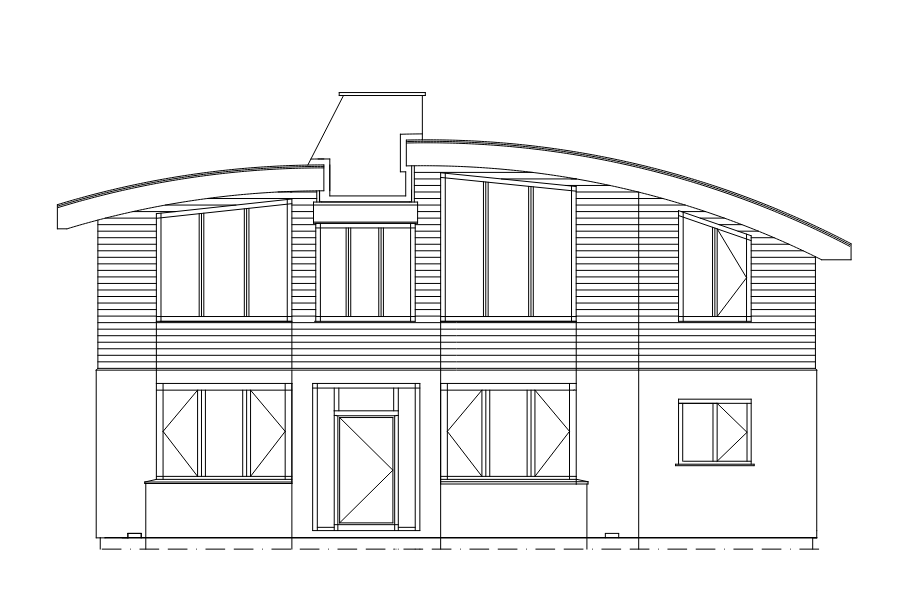
-
Nobody wants to touch my roof for solar and alternative location
Gus Potter replied to SimonD's topic in Photovoltaics (PV)
As a bit of encouragement. Hopefully you followed my last post. The wind loads I started with were based on the design life of the house, in design terms for wind this is 50 years. But PV panels only last say 25 years so there is an argument to be made, why don't we design and check the house structure against the 50 year wind loading (that is safe) but design the pv panels for their life expectancy of 25 years. The fixings would get designed on 50 years as we don't want the panels flying off the roof and hitting someone. Simple solution is often just to add more fixings in the vulnerable areas. This is all about the probability of us getting the highest wind load. As SE's we design based on the probability of wind occurring and balance that against the risk. For wind calculations we call this the probability of occurrence. Simplistically, if we look at a 25 year wind return period the basic wind load gets reduced and that can make the panel design fly. Don't through in the towel just yet due to your curved / barrel roof! -
Good for you getting to this stage, exciting. SE wise it does not look too complicated and costly. You'll need a stiff floor over the open plan area at the rear. Architecturally inside, this is a nuance. I can see what you are trying to achieve with the void over the front door which also lights the upper hall. I can also see how you are intending to be able to look all the way through the house from the moment you come in the front door. The potential pitfall here is that you have a small area of narrow corridor off the TV/ snug.. cloaks. Sometimes I design stuff like this to create a perspective view as you come in the front door. Here what you do is to widen the corridor as it progresses into the building. For this I would start with a sightline of about 5 -7 degrees, for large hallways with depth and volume the starting point is about 12 degrees. The intention is to trick the eye into thinking the corridor is shorter and to invite you further into the building. A tunnel effect is not inviting. Try experimenting with this at home just now. Mark out your corridor length and width and have a pretend walk through it. I would try first widening the hall at the TV / cloacks area by stepping the doors back, see how that feels. Ask your Architect about this trick. Later on if you start asking about SE design then it would help lots if you could put some gridlines on the drawings as it's much easier to refer to and line up the different floors for easy visualisation of the load paths. To this day I still can't fathom why Architects don't do this!
-
Cut a piece of ply / OSB3 to you ceiling shape, fix that using a combination of pink grip and screws to the existing walls and underside of the stair. That is your stiff diaphragm that holds everything at the wall head in place. Build the walls, could be MF or timber. Sheet with ply/ OSB 3.. that give you mutiple fixing points for hooks, TV etc.
-
For me the starting point is to look at the underlying structure. While I'm an SE and will design beams and slappings all day long, if you pay me it's not that great as it's your money. I think. What kind of opening are we making into the existing house. More load from the flat roof can = more money on structure you don't get any benefit from. Once you nut that out you can then look at the insulation levels you need. Roughly your glass area does not look too large once you take into account the area of existing openings you are building over, relates to the U value calculations. I would aim for the simple stupid. Modern PVC type roofings are much more forgiving than traditional felt roofs, there are a few pitfalls, but lets run with it for now. Given the shape of your extension the main run of joists and fall is likely boundary wall to glazing line. So concealed gutter above the glazing. Run that back as you have shown to the internal corner. I like green roofs, but they need looking after. Also, on warm roofs they are great for sound proofing. To resolve the issue of excess water collecting against the house introduce a water gate, so if the puddle gets more than 25mm deep the water will pour over the side of the building, you'll see that and know that there is a blockage. This is standard fare on industrial buildings with valley gutters. Your model is a good start. Add to it and put a 1.0 degree fall on the roof and see what it looks like. It does work but if the builder makes one mistake then you have a problem. Timber firrings are much more forgivable and can accomodate,up to a point late, design changes, could be a roof lantern in your case.
-
Nobody wants to touch my roof for solar and alternative location
Gus Potter replied to SimonD's topic in Photovoltaics (PV)
Good post. The following is a bit lengthy but hopefully it will give you some pointers and other BH members an insight into the structural design when fixing the panels to the roof. I've broken down the design into different elements and then recouple (kind of) at the end. Element 1: The PV panel itself. The general standard is that the panel should be able to with stand a static load of 2400 Pa for one hour. This is roughly 240 kg / square metre, then we apply a safety factor of 1.25 (called a material factor in eurocode design) so 2400 / 1.25 = 1920 Pa ~ 194 kg per square metre of panel. Glass has one at least funny feature in that (general) it is able to withstand a higher short duration load say one or a few seconds. The reason for this is partly due to crack propagation. Thus if your PV panel can withstand the one hour test it has a good chance of resisting a higher short duration load that you might associate with a 1 or 3 second gust of wind. In the UK there is the potential for the wind loading to exceed the panel strength. This is influenced by for example the wind direction, altitude, topography, shape of the roof, height of the roof, location of dormers and chimneys and importantly if the panels are close to the eaves, verges or ridge. Often neglected is snow drift loading or dumping of snow from a higher roof onto PV panels. Here the snow drift can often exceed the panel strength locally. Element 2: The fixings of the panel to the roof. Here we are interested in two things. As the fixings are perpendicular to the roof we can split the axial load in the leg of the fixings into two force components. One is perpendicular to the rafter, the other is parallel to the rafter. The latter force is the force that wants to cause the panel to slip down the roof. The former is required as it lets us check the underlying structure. Element 3: Calculation of the wind loading on PV panels so we can check items 1 and 2 above. Element 4: Check the main roof structure. Here we are looking at two things in the main. Are we adding load to the roof, probably not if the main roof is tiled, but check anyway. PV panels are increasingly light weight cf tiles so we need to check the structure for uplift and check to see for example that any masonry below still works for a reduced dead weight. Brickwork / blockwork often benefits from a bit of dead weight so we need to be careful when we don't have it. If you have say a cantilevered floor that may be relying on dead weight from above, remove that and you can find yourself in trouble. Motto is, think of the consequences of making a building lighter! Simon, I've assumed you have a barrel shaped roof. The SE starting point here is to calculate the dynamic wind pressure for your roof. This is standard stuff so won't go into this. You might find in the original calcs for your house a value for this that relates to your roof. The interesting bit is how you calculate the wind loading on each of the panels on a barrel shaped roof as the panels are flat and the roof is curved, thus the gap between the panels and roof will vary. Reference wise the SE may look to BRE digest 489, Wind loads on roof-based photovoltaic systems. Eurocode 4, BS EN 1991-1-4:2005+A1:2010 and the older Bristish Standard BS 6399 part 2 for initial guidance. But then you find that there is no specific guidance on fitting PV to a barrel / curved roof. Which goes a long way towards explaining why no one wants to run with it. But the guidance gives you a handle on things that you can then do some bespoke design on. Ok so we have calculated the basic wind speed. What we need to do next is to arrive at the local pressure coefficient for each panel and this is the bit where folk back off. The maths is roughly qs (basic wind speed units are Pascals which we convert to kN/m^2) * local nett pressure coefficient ( non dimensional unit). Example here for PV sitting 100 to 300 mm off the roof. Take a middle England wind load of 800 Pa / 1000 = 0.8 kN/ sq metre ( about 80 kg / m sq). Now a typical nett pressure coefficient in the middle of the roof might be around -0.6 to -1.3, take the worst... 0.8 * 1.3 = 1.04 kN/m^2, a lot less than the PV rating so looks ok. But move to Wales, parts of Scotland, maybe the Downs, close to the sea, add a bit of altitude, where the qs is 1.1 kN/m^2 plus and you have a PV panel close to the edge of the roof (nett coefficient of potentially 2.2, here the sum is 1.1 * 2.2 = 2.42 ( 2420 Pa) so we check the panel rating. This is something your normal PV installer should be familiar with and that provides values for the fixing design and underlying roof checks. The high loaded wind zones are away from the roof perimeter so you can see why PV installers want to keep clear of these areas. But PV on a curved roof will have a varying gap under. They way to approach this is to understand what the guidance means in the above references, distill that down so a lay person can understand. Here goes. I would treat this as a hybrid PV roof for wind design. Start with an even gap under the PV and couple that with the guidance for canopy roofs. Think of a hay shed. In the autumn is gets filled with hay, the farmer takes the hay from the front, the back is blocked, called the blockage factor. The varying gap under the PV panels on a barrel roof is like a blockage factor, add to that the cross section area of the PV panel fixing legs (more blokage) and you can arrive at a reasoned Engineering justification for your selection of the pressure coeffient. One you have that number everything else is pretty much standard design. There are a few extra checks as above and it may be that if you have your PV close to the roof edge or high wind local zones you need some extra fixings. Nah, give your SE a call, you might find they say, oh we do a lot of this so no problem! Point of note. Once the gap gets over ~ 300mm then the approach might need to change / nuanced. Here we would look to the guidance part in BRE 489 that talks about mounting PV on stands, more like a solar field. Thanks again for posting. -
Dormer Flat Cold Roof Ventilation
Gus Potter replied to shbrooks's topic in Lofts, Dormers & Loft Conversions
Good post and a good question. To clarify. I think your contractor is talking about a ventilator at the soffit, (the bit under the gutter) the dormer cheeks (the sides) will also have a vent at the bottom to ventilate the vertical cladding of the dormer. Designs like this are generally taken with a big pinch of salt these days. The main reason is that folk started to do big flat roofs using the same principle and these lead to big rot and condensation problems. Basically folk started taking the pish. But on a small dormer the old rules are still applicable. I've counted your tiles and at worst you have 9 x 330mm = ~3m roof that needs ventilated. The dormer "sticks"out the roof so it is going to "catch the wind" and that will promote cross ventilation provided you have good soffit vents. So your builder is not talking out their hat, but check that BC will run with this. Now the above will fly provided you are not installing an ensuite shower room in the dormer. -
This is good comment. Quite often I'll design using the British Standards and some of these are quite old. A good example here is when designing a steel portal frame to BS 5950. To comply with BC regs etc you can use older standards but must be aware where the Eurocodes are more strict and take this into account. To simplify, you can use old design codes provided you know where the modern codes have shown the deficiency in places. In this case @Alan Ambrose we are at the leading edge of design, so we must look to the latest guidance, take that into account and form a view. The DIN codes also apply to bolts / fixings and other things, often seen in the statutory CE compliance regs. To my mind the internal vapour barrier (plastic) is essential to stop moisture entering the roof structure in the first place Then, if we get condensation within the roof structure we want to vent that upwards and outwards. The question is, is the layer of ply on the top of the posi joists able to let seasonable condensation out. @Nickfromwales might be able to help here. My own view is to say, lets look at where we may get a high moisture content.. bathrooms / kitchens and do our MHVR to make sure we don't get elevated moisture where we may have vaulted roofs and the damp air stagnates. This is pragmatic design. In other words you remove the potential problem at source. @Alan Ambrose asks a good question. OSB and ply are not permeable when compared with traditional timber sarking with gaps between the boards. Good question. Am I missing something as well as Alan? Help!
-
Architects have messed up. Next steps?
Gus Potter replied to flanagaj's topic in General Self Build & DIY Discussion
Hiya. First thing is that we feel for you, it's a scunner and very stressful. We can see you are commited and enthusiastic, previous posts about your stair case etc. Key thing is not to allow this to grow arms and legs. What we are looking for is the Occam's razor solution. The simple solution. Most importantly, you need to identify all the issues before alerting the planners and your neighbours that you have "a potential issue". Keep this under your hat for now! I'll drop you an email. -
That's great news Jack. Your heating system is something that we should aim to achieve. But.. you are a switched on fellow with loads of life experience. My guess is that you controlled your design, built well and are thus reaping the rewards. Unfortunately the build market is full of chancers, designers included! I rest my case. Again I rest. John, I love your technical input, learn lots from you so thanks for that. It's ok to disagree. My main arguement is not about UFH in principle, or about your well presented and knowlegeable approach. My main point is to design in redundancy where pipes are buried in screed / concrete and recognise that your house, to maintain it's value, has to perform and not be a burden to maintain when you sell it on. For all BH folk. This is something you really need to face up to as surveyors can right down the value of your property. The more main stream UFH becomes.. and the more that the big developers cock it up, which they will, the more the light is going to shine on the self build UFH market. Now UFH, controls, home automation are a lively topic on BH. I like to see it as folk are innovating which is great, call it a bit of a hobby. But don't expect me as a designer who is responsible for my Client's money and have a Civic responsibility to the next person that will buy your house to not ask some nasty questions!
-
Environment Agency Discharge License
Gus Potter replied to Robert K's topic in General Self Build & DIY Discussion
They are actually doing you a favour. If you don't have a license to discharge then your house and plot could be worthless unless you have another alternative. -
This is not practicable achievable in my 30 years experience. The UK weather is very unpredictable. At times UFH just won't comply, so you open a window or a door! What we should be doing here is saying.. hey, UFH is not perfect, we will never make it perfect but here is how you can get the best out of it for minimal maintanace and running cost. I'll say this again and again, you can design on paper, balance your system and it will work for a few months and the game changes! It's fine if you have all the time in the world to play with your UFH system but lots of folk have families, kids and a day job! Ok interested, where do you live, what are you pipe centres, how much have your maintanence costs been over the last ten years
-
So I just picked this bit out of you post. If it's hard now imagine how folk are going to maintain this in 5 years time?
-
Ok, so put it another way, it looks good. 30 years ago I started experimenting with UFH. It looked good and my first system worked, it was fantastic, to have the luxury of warm floors, no radiators., freed up wall space. But it wasn't perfect when compared to what I know now! But hey ho, I built it with a basic mixer valve, an oil fired boiler and it was installed in a house that had U values much higher than what we are seeking to achieve in this day and age. So my philistine hat back on. What you bury in the floor must have redundancy, be over designed. At the back of my mind is that ASHP etc may be able to run on lower temperatures in the future, so the pipes in the floor you can't change, we need lots of redundancy in terms of flow capacity, and if the pipes get a bit clogged, but the plant above the floor can be changed. Think of UFH in terms of the cost of a car which need servicing and eventual replacement and that the pipes in the floor are your forever home. Design the pipes too tight and a home valuer will right the value of your property down! Surveyors are clocking this potential liability so don't say I'm not warning you! Think about maintenance costs! It's great to talk about the thoery if you don't have top pick up the bill in 3 - 5 years time when the parts start to get sticky and weep water! I'll say again.. is there anyone here on BH that is thinking about this.. or is it just me. OK I'm going to take my philistine hat off and put my toe in the wacky techy water! In the old days we had wall thermostats that worked on a bimetalic strip. The hysteresis was, a bit blunt, incedentally I used to rear Pheasants and built my own incubators, these needs tighter control. So now we have lots of more precise data. I work from home and if I use the oven the temperature graphs spike, if I leave the door open between the highly insulated part of the house and the old house the graph changes again. If the sun comes out as it did the other day for a short time the room temperature rise. I shit you not Sherlock, I don't have weather compensation as I can look at the weather forecast! So can anyone tell me how weather compensation copes with this and rugs on the floor? Also if you put 4 - 6 people in a room it heats up.. explain please! Also, say yoiu have a bath and the room gets hot, you open the doors and all that heat comes out. To my mind an ASHP or good UFH system should just look after it's self, not cost a lot to maintain. If you want to cool stuff then you have two basic choices. Open the windows and doors if the temperature outside is less. If more then you need to be able to cool floors, the furniture and beds quickly and that justiufy my appraoch to over designing the pipes under the floors. Come on teckies.. lets see your costs curve for long term maintanace performance, how you cool a floor fast..given the above.. sorry it's just me being practical. In an ideal world in the UK we don't want to spend money cooling a house. I'm also a big fan of passive stack ventilation, story for another day. The UK is an island, I grew up in Africa where the climate is different. The UK climate is something that we should enjoy and learn to live with. Here is my roughed out UF that I built just to keep the house warm while I was doing the work. It's gate valves from Screwfix, Youkshire fitting for the manifold, but the blender valve is expensive. I'm a bit behind with the work but this has been working ok for the last few years. I have a new gas condensing boiler installed roughly at the same time as my DIY manifold, Valliant. Just mid range. Anyway I know lots of folk are tacky. So if you are on a budget. Spend lots and build in redundancy into your pipes buried in the concrete. leave a bit of space so you can change the boiler, manifolds as technology advances. Have fun and remember when we meet in heaven I'm not a crusty in real life!
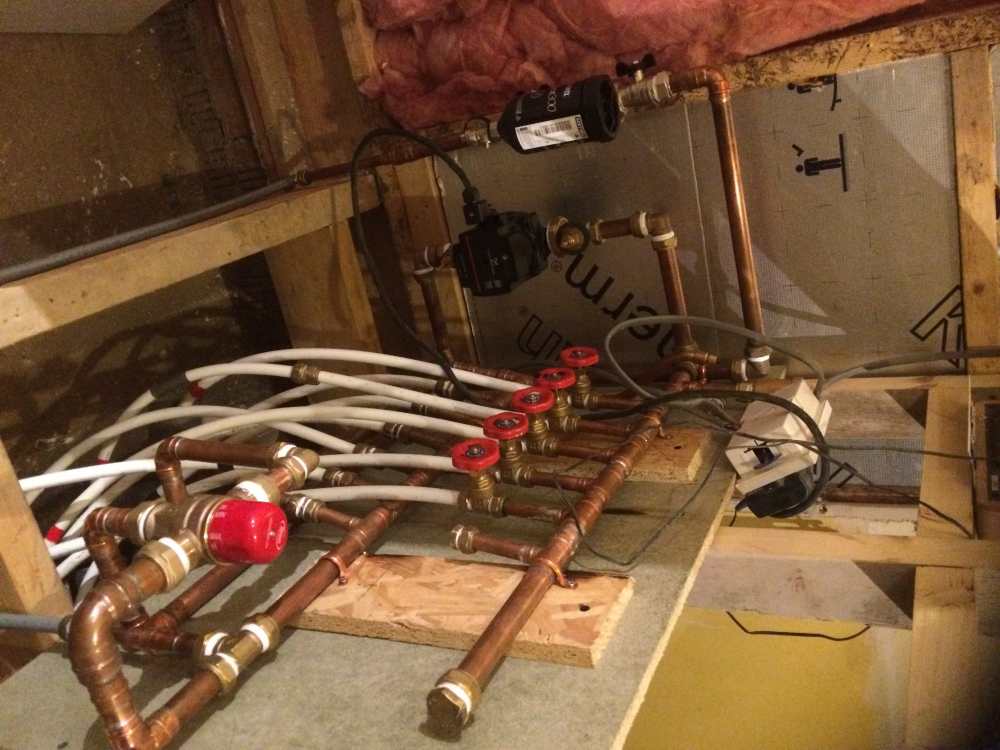
-
Architect won’t sign Completion Notice Form
Gus Potter replied to Oceanjules's topic in Building Regulations
Hiya. Your curiosity is a challenge! Will try my best to answer. The following is lengthy but I try and put forward the basics of my views. They don't apply to all so do your own research. Good to see you are doing a self build. The following is also a bit general. I don't want to identify my Clients for obvious reasons so need to be a bit vague at times. Hope the following helps build your confidence, gives you some pointers about the questions to ask. I'll start with a broad summary to pick up on my last post. Please excuse my spelling and grammer as I'm off duty so to speak. 1/ We had the 2015 CDM regulations. One element was that designers had to put in place a pre construction phase and construction phase plan. The intention was to help prevent designers designing stuff that could not be safely built and to stop Contractors putting safety to the back of the queue. Grenfell happened. Now some of the dirty laundry is coming out in the public wash, but there is a lot more to come! Basically this is leading to a recognition that many folk lost their moral compass (some never had one and some will never have, thus the need for more stringent regulation that also captures the self build market) and that designers were just designing in isolation, like the work packages many folk go for on BH. The game is changing and I can see that fabricators / manufactures's are recognising the new business world. This is driven mostly by commercial / competetive market raw boots on the ground stuff. The key here is that the additional regs are partly intended to stop folk designing in isolation and to stop Clients changing the design as they go after they have got their BC approvals. There are quite a few on BH and in general who get their Architect to do their bit, the SE to do their bit, get the approvals and then go off and do their own thing. So what you end up with is a potantially and unsafe structure. So what is an unsafe structure? Well we know it should not fall down, most say, well that is the SE's job! But a structure also has to last say at least 60 years. If the detailing is bad then water ingress / condensation can happen / drains can fail for example and that can lead to an unsafe structure. What is now happening is that BC are starting to say.. we are interpreting the new PD rules in terms of the BC regulations that cover water ingress / condensation etc, so we have skin in the game long term. They then point to the new PD regs and some BC may say, hey you need to appoint a PD! I'm now going to give two examples of a couple of jobs on my books. The first is a job in Scotland. The second is a job in England. We can compare and contrast. Scotland job Client 1 - Low rise self build in Scotland : Key BC points. 1/ In Scotland there is no private BC. The BC function rests with the local authority and the bible is the Scottish Building Standards. 2/ Contrary to popular belief you don't need an SER registered Engineer to get a building warrant in Scotland. I'm not a member of the SER scheme, some of my work is in England. It sometimes takes a little longer to get a warrant in Scotland if not a SER member, but often the warrant process is driven by water / sewage / other agencies chipping in and the BC officer going off sick or on holiday. Client 1 got someone to do their plans (not a Chartered Architect and not insured, a mate, at mates rates who did a good job). Got their SE design accepted and the warrant was issued. In other words in Scotland you can do your own plans, detailing and the Structural calculations yourself! But BC will look at all of this in detail. Their in house Engineer will check your SE calcs in the larger councils, the BC officer who is often a Chartered member of the CIOB will check the rest of the design. Funnily, when I submit SE calculations the smaller councils send my calculations to be checked by and external SER Engineer as they can't afford an Engineer of their own. 3/ Scottish BC did not stipulate a PD as a condition of the warrant. However. The Client had started the work and was seeking a back dated warranty from ProteK. ProteK initially insisted that the Client had a PD. What they roughly wanted,to start with, was someone who would sign their life away to say the everything was perfect and would be in the future. This has nothing to do with PD rules and everthing to do with limiting their liability. After clarification and some comment from my self asking what they were actually insuring, they gave in and removed the PD condition for an admin fee (from memory) of £150.00. Summary. Scottish BC in this case did not stiputlate that the Client appoint a PD. Thus we need to ask, why are English BC asking for this? England job Client 2: Low rise but with basement etc . More complex project. This Client has private BC. The Client is MSC qualified (a Masters in a science subject) with extensive life experience, widley read, atriculate, challenges designs and thoughtful. Their private BC has as I understand said that they can be PD. There you go! I'll summarise this nextish. The new PD requirements a rough summary: The way I see it is this. You have high risk buildings (HRB's), fire risk mostly is a hot topic. These could be blocks of flats / high rise, so you do need to have extra training to be a PD on these projects. But to be sensible to apply this to a large basement under a London house that could destabalise a multi story building next door. .. we need to think up as well as down. We could have a house close to landfill ( real potential for ground gas / chemical contamination ), hanging over the edge of a quarry. So the new PD regs also capture this kind of stuff. In this case a PD would be advisable. However they also are trying to stop folk going off and doing their own thing on site. There are many examples of folk on BH that have stepped off piste on advice from the Builder and later regret! The shit hits the fan, BC get involved and so on. The new PD regs are intended to capture this and are trying to stop folk avoiding responsibility, but also to encourage people to think holistically about the design, execution, long term seviceabilty and safety. This is the key! CDM, PD is about having enough knowledge and common sense to know when to seek professional advice. You are clearly saying you are in regular contact with your Architect, that's what PD's do! It seems to me that if you have got the where withall to write the way you do on BH then your not 14 years old! And it comes back to this. You are clearly not stupid! It might be worthwhile putting your Architect on a formal retaining fee, call it a watching brief. Confirm to BC that you are following the approved design religiously and that you are keeping photographic evidence. Define the procedure if you encounter the unexpected on site, how you will manage any changes on site. i.e.. you call the Architect / SE. At the end of the day your Architect and SE has an approved design. Your Contractor is responsible for the CDM 2015 safety and drawing compliance. Ask BC why they think you are not competant to recognise if you have changed the design! and, ask them to define the competancy requirements for a low risk building. Well maybe not in the first letter, just say how you are going to manage the PD and list the professionals you have retained. That may be enough to get you over this hurdle. But that said! you need to deliver what you say you are going to do! This is what I do from time to time on a self build. The Client is the PD but I hold their hand / provide advice, a friendly ear, sometimes tough love, for a fee of course. But at the end of the day the fee is not massive as I love seeing stuff I've designed, had a hand in getting built. -
It's good to get an update and some feedback, thanks for that. Structural depth difference 650 - 457 = 193mm. Pity it's not working here, can see you have a height restriction. A few questions, observations: 1/ Your beam will need an end rest at each end. I'm just checking, is your 8.4m the clear opening width? You'll want to insulate the reveals thus the structural opening will "grow" a bit. Can you get a beam delivered to your site at the length you need without splicing the beam, in other words is there an access / delivery to site issue. Check with your SE that the UB can be continuous. Any splices (depending on how the are designed) can potentially intrude downwards and that can thwart your glazing detail. Flush splices are expensive to fabricate. 2/ I don't know how much load there is on the beam but if single storey is there a way to reduce the roof load by say transferring part of it to an internal wall? 3/ For steel the devil is in the detail. How close to the sea are you? If less than 2.0 km LABC and NHBC can raise questions, your beam might need to be galvanised and the fixings more durable. Keep an eye out for that. The beauty of ICF is that you can change the grade of concrete and mostly the cover to the rebar if near the sea. If you are near the sea can you check your ICF designer SE has taken this into account? Sometimes folk miss this in the heat of battle, so just check your wall thickness and rebar cover. Post a couple of sketches if you wish and lots of folk on BH will help you with the detailing. What you are doing is not run of the mill, every day is a scoool day even if you have been doing it for decades, cut yourself some slack!
-
My error. Anything that is buried in the screed, concrete is permanent. Supposed to last the lifetime of the house. Anything that is above the floor can be changed as technology evolves. As in many things UFH is becoming more mass market, prices for controls, boilers, heat pumps are dropping relative to historic cost. If you think back to the 1970's a TV was a very expensive item relative to income. My point is. Over design the pipework that is in the floor as you can't change that, call that redundancy. There is debate about whether you should put UFH pipes under kitchen units. What if you later change the kitchen units / move the furniture about or change the flooring for a thicker timber or different materail? More loops means less resistance and that gives you the opportinuty to cool things more quickly if the sun suddenly comes out. It does of course work the other way if the temperature suddenly drops. I'm all for UFH, it's a great way of heating a house, so while at times I may seem overly critical it's often to make a practical point and encourage folk to think about what they want out of a design and, think 10 - 15 years ahead.
-
So you posted this 3 hours ago, hopefully I caught you in time. I might not have. but hey ho. Points: 1/ If you are designing your heating cooling system based on what is available above the floor, ASHP then I think you are making a big mistake. STOP NOW and make sure you build in redundancy into your fixed UFH pipes that are not maintainable. If you dought me go back and ask you designer if they will warranty what is going on under the floor and for how long. Ask, what if I come to sell the house, is that going to impact on the asset value. 2/ If your UFH pipes don't have the flexibilty to accomodate in the future a different ASHP then you are totally locked in. You will regret it. @SBMS In the meantime - has anyone managed to design and install this system to produce an FCU cooling loop at 10 degrees. To do this you need more loops. This also does my head in. You have a sofa, say big patio doors, the sofa insulates the floor but just inside the glass doors the floor gets hot! UFH design is a craft, but most is commonscence. What is not good sense is to take software output and think the computer knows best which far too many on BH are doing ! The software is a guide and that is it! Let common sense prevail. But at the big glass doors in the winter you have a thermal bridge so the floor gets cold here, drafts come down off the glass, I close up the loops here! Loop cad does not pick this up for example and many designers just bury their heads in the sand. In the summer the floor next to the glazing gets hot, so here you need to cool it most so the closer centres helps. What I'm trying to say is that you do your pipes under the floor with pragmatism and benefiting from the "no shite" advice I give you. That then opens up what is going on above the floor and gives you options for a system that will work for 50 years and not pelt the asset value of your house.
-
Wall out of plumb - how to line up new pocket door frame?
Gus Potter replied to finito's topic in Doors & Door Frames
Now the funny thing is that most old houses are off the plumb and 99% are not square. An example is that you could knock a hole in a old wall, put in double (French type) doors and fit the frame out of plumb. If you do that then the doors can "take on a life of their own" and shut themselves or open. But with sliding doors that won't happen. So think.. if they are out of plumb will that stop them from operating? If you fit them plumb then you'll have to marry in the plaster etc as you say. Have a look on the internet about how you heal and toe doors, a door fitting carpretery skill. It's ok if things are not plumb.. you just need to identify if it matters and try and avoid unessesary work. "Dry fit" the doors out of plumb, see if they work and look ok first. If not pack out and fix the plaster. -
Hi John. Good post, I may need to eat a bit of humble pie here but happy to do so as I'm not always right, I have an opinion, but if you ask ten designers you'll get ten different answers! Anyway as you say "it just gets on with it" and that is the key. OK you have weather compensation. Fine by me ( I do my own UF heating system), as it's a litle bit of "tech" which I'll be the first to admit is good fun to play with ( first slice of pie) but there are too many folk on BH that are using and desinging UFH using loop cad and stuff but none of that takes into account that you may put a rug on the floor or have a big sofa that sits close to the floor level! So while folk think I'm living in that dark ages, have an axe to grind, I don't, I'm just saying.. hey the UFH maths is often a lots of bollocks when it comes to building it and making it work for 50 years or more. The maths may work on day one but then it is all down hill as you need to get someone to install it! And, as this is the building trade that is a challenge! I can back this statement up with examples of how I have found UFH systems that are design by sales folk rather than Enginners. I can point to a hospital, domestic stuff.. I can argue my case so I'm open to anyone on BH that can turn round and say to me.. hey I have UFH and it's been in 30 years and it's working well and here is what it costs us to replace parts. You see.. I know as I have this data on a couple of jobs that I look after! What I do as a design engineer is to look at the maths, how things actually work in practice and make an enginneering judgment based partly on maths and partly on practical and long term experience. Now I do a few insulated "passive raft type designs as an SE " and a well designed and durable UFH system starts from the ground up. It's something that I plan for as an integrated design. Next is that folk are using a computer to produce nice pipe layout diagrams but not realising how often that won't get translated on site with the trades folk actually doing the work. Yes, if you want to stand over them all day, hold them to the contract.. but the reality is that this will lead to a falling out on site, it does on big strictly supervised contract but self builders don't have the money or expertise to pay for this level of supervision. @JohnMo "There are no fancy valves, only a 3 port diverter for DHW heating. In fact the system only consists of ASHP (with it's controller in the side of the ASHP), diverter valve, cylinder and UFH manifold. No additional pumps (other than one in ASHP) no mixers, no UFH manifold actuators, no fancy stuff at all." Ok second slice of pie for me. I missed you spelling that part out. It looks to me that your system comprises stuff you can buy from screwfix. That to my mind look like something simple, easy to maintain and long lasting. There will be some on BH that say.. hey it not totally efficient but over even an 8 peroid I bet you maintenance costs will be lower than lots of folk on BH that are trying to get UFH to do something that it is not suited to do. @JohnMo "Yes I live in Scotland, not many places get the -20 anymore, still get variable seasons in 24hrs." Don't bet on it John. My sister lives on Tiree and has two tandem ASHP to run a big house. The winter temperature is like you could grow palm trees.. the ASHP just run at their best speed, but that said, if there is a little shift on the Altantic sea currents.. it could be see a change, or if we get a wierd wind from Norway.. don't count your chickens just yet!
-
Bit of pragmatic advice for all. On a TF house or thatched house fit a smoke detector in the attic void. It costs little ( I have it in my own house) and can save the day. There is a tendency for folk to dry logs in or around a wood stove, if they catch light then then what? I deal with lots of building regs.. some are a bit general and not practcable applicable in cases.. or make common sense.. but some are really good and it is wise to follow the good ones.
-
No.. it was not. Please re read OP, anyway it's something I aware of as I do lots of TF design so am cautious. I'm also cautious that folk may change the stove so unless you have that written into your O & M manual for the house (which I bet you don't have!) explicitly then you are being irresponsible, some young couples may buy the house, change the stove and not be aware. The ONLY time that you can maybe reduce the clearance between a TF and the back of the stove is when it also heats the water so the back of it does not get above 100 Celcius. Good response from the fitter.


