IanR
-
Posts
1841 -
Joined
-
Days Won
6
Everything posted by IanR
-

Water connection for newbuild on a farm with existing water supply
IanR replied to Furnace's topic in General Plumbing
Not sure what "barrier pipe is". I know it has to be WRAS Approved. This is the MDPE pipe I went with: https://www.pipestock.com/mdpe/mdpe-pipe/mdpe-pipe-coils-blue You'll be needing to join the pipe I would think, so again, has to be a WRAS Approved joining method. We found someone with an "electro fusion coupling" gadget. Quick to do when you have the right kit. For OpenReach I used the free-issue 50mm grey duct. -
Water connection for newbuild on a farm with existing water supply
IanR replied to Furnace's topic in General Plumbing
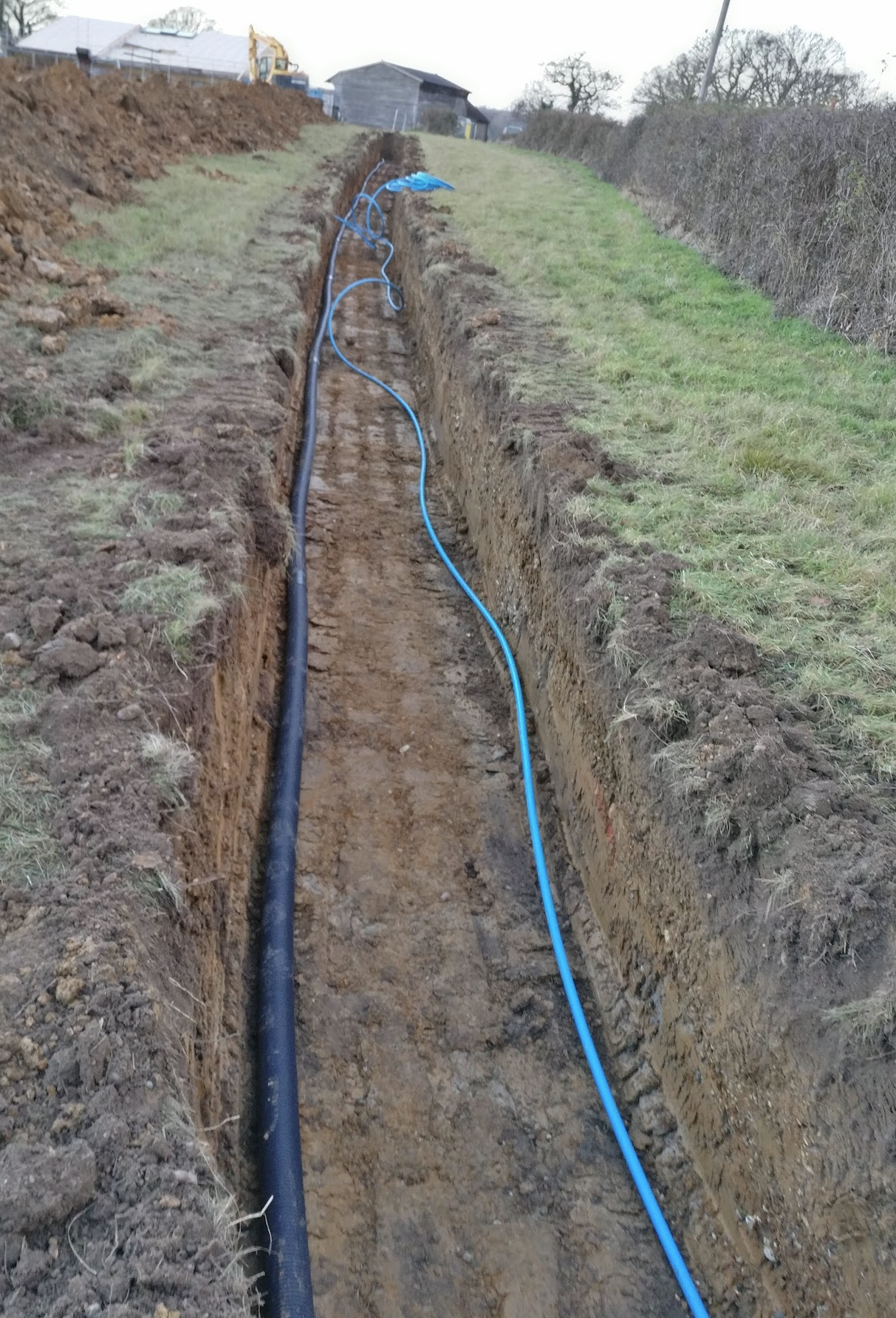
Just to add my experience. Water company (and Electricity) wanted 1200mm depth due to crossing a field that could potentially be "deep ploughed". No one could give me an explanation of what typical agricultural process would go anywhere near that deep, but they had a drawing and were sticking to it. I was told that up to 32mm water pipe could go in without requiring chlorination. My trench went in 900mm wide (iirc) x 1200 deep and I laid the ducting for the electrical connection one side and the water pipe the other. Water wanted to inspect it before it was filed, so after they gave the OK, I back filled to around 600 deep and then laid in the OpenReach duct and cable, plus another duct for my own data and power to the gate. The 100mm duct I used for power was really too small, it was a difficult pull for the 3 phase public supply cable (only drops to domestic supply at 25m from property). Next time I'll go with a 150mm duct. I also wished I'd left a pull chord in the BT duct, would have made retro-fitting FTTP (which has just been done) far simpler. In truth the trench took no time, although we did bring in a 13T machine for it. 150m was dug in a day.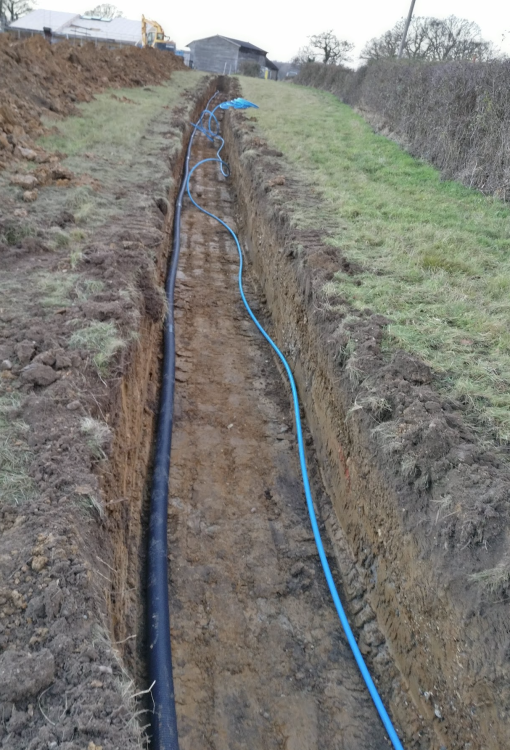
-
There's still a sub-base under the EPS. Typically 150mm - 200mm thick.
-
It is an insulated raft, that can sit on quite a low baring capacity, if you have a light structure, and there are versions that can go on very low capacity ground. Typically EPS200 or EPS300 is used under the beams. No, not at a premium, at least it doesn't need to be. Less dig, less concrete, EPS instead of PIR/PUR and no screed required. Materials are less than a strip foundation with slab/block&beam + insulation + screed. They are niche in the UK, so some companies are charging a premium for a package, but it doesn't need to be. I don't believe you are using the term "Raft" differently, you are just not accepting that a raft can be engineered down to 100mm thick + a ring beam when it's sitting on 300mm of EPS. It functions the same way as your Raft, ie. it transfers the entire loads from the structure into the ground. https://www.advancedfoundationtechnologylimited.co.uk/?utm_source=google&utm_medium=organic&utm_campaign=gmb-listing#
-
No, you misunderstand, it is the structural foundation and floor combined. It is a raft. Many on here have a similar construction from either AFT, Kore, MBC, et. al. You'll need to tell that to the Engineer that Designs them. Sounds completely over-engineered, but perhaps you have a very heavy super-structure. I'm pretty familiar with the cost of mine also, and had initially costed strip foundations and ground bearing slab + screed, before realising the performance benefits of an Insulated Raft. For me, an Insulated raft was cheaper.
-
Only needs as much concrete and steel as is required to take the load. My raft has a nominal thickness of 100mm with a single layer of mesh. The Integral perimeter ring beam is 300mm thick with some additional rebar and there's a couple of internal beams for load baring walls at 200mm thick.
-
If it's a like for like comparison an insulated raft should be cheaper. I don't know if they still do, but AFT will come and install with 1 guy, if you have two labourers to work with him. Your Groundworks would get to a flat site, with drainage runs dug, and sub-base layers down then AFT would come in and layout the EPS sheets and formers, DPM, UFH, Mesh and Rebar, then help with the pour and teh power-floating.
-
1. Insulated raft. 2. Nope, but wouldn't personally use SIP, especially with a light-weight rain screen. Green Oak structure? Looks lovely, but will continue to move for the next 10 years and kill any airtightness you achieve. 3. Not something that can be ball-parked, very much site and design specific. Insulated raft will likely reduce the dig and concrete. When comparing costs, include the slab/block & beam, insulation and screed costs, so that you are comparing apples with apples, and make sure you are comparing equal performance. ie. no point in comparing an Insulated raft with a 0.10 U value and zero cold bridging with a building regs strip foundation with Block & Beam. An insulated raft is pretty easy to install, but does need to have calcs to get it through Building Control. I went with Advanced Foundation Technology Ltd. and am happy to recommend.
-
I'm rural also, but got lucky that I have line of sight to a Three mast 1km away, so get a 70Mb/s - 90Mb/s Download, although it does need rebooting every so often as it will attach to a mast further away with lower speeds. At £14/month, unlimited DL I can't complain too much. I found the mast and who owned it on CellMapper. It's worth a look just in case there's one you don't know about. You do have to iterate through each provider to find what masts are local. www.cellmapper.net
-
Unfortunately 10Mb/s for less than £45/month is the statutory minimum service that has to be offered. That's your best hope for a "standard connection fee" connection, until OR upgrade the area to FTTP. You can have the FTTC connection ducted if you dig the trench, put in the free supply ducting and free supply cable, for OR to connect up. Once that's in place, when OR put FTTP along the poles, you'll then get FTTP connected through the same ducts for a standard connection charge. Just remember to leave a pull chord in eth duct for them to pull the fibre through when it arrives.
-
New build designs........ Comments please
IanR replied to GK22's topic in New House & Self Build Design
-
Not at all, you made a peculiar statement about passive houses being cold in extreme weather events and then expanded further on you feeling there is a need to balance passive house principles with how people live from day to day. I was actually just interested in why you'd have such an opinion. Trying to boil down your reply, it seems you want to be able to push up the heating in a house, at certain periods, above a typical ambient temp for reasons of comfort, but you feel "over-sizing" the heating system in a passive house, in order to do so, would lead to an inefficient heating system, but doing the same in a non-passive house wouldn't. Since the power required to heat the hot water if often higher than it takes to cover the space heating requirement in a passive house, even on the coldest of days, heating systems tend to be over-sized anyway. I believe the rest of the points you make are really related to the choices you make as a self-builder, rather than anything specific to a passive house. It's up to the self-builder to determine if those choices are good value for them.
-
New build designs........ Comments please
IanR replied to GK22's topic in New House & Self Build Design
I do like a double pitch roof, but for some reason on this it feels a little "unresolved". Huff Haus have made it their USP in the kit house world and I've tended to like their form, but they keep things a little simpler, with more balance and symmetry. It feels as if on yours everything is different, but without a good visual reason. I appreciate you've squeezed in access to a roof terrace under the central roof, but you can't read that from the primary elevation. For me, I'd slope the garage roof the other way, so that it is parallel with the central roof. If the two house roofs can't be at the same height then I'd look for the same height difference between each height change. -
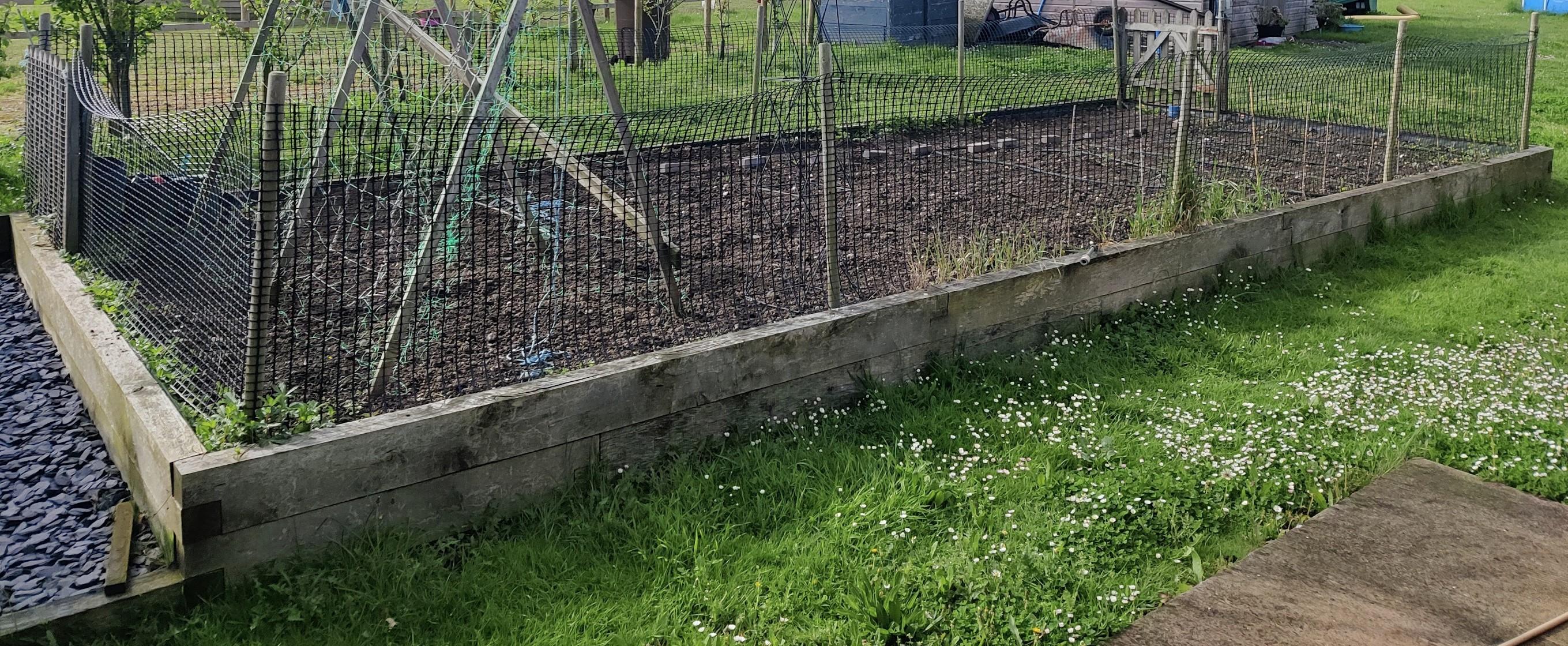
That Looks deceiving. What you can see is the over-site from the build. There's no concrete under the sleepers. The long edge closest to camera is just sitting on the over-site. The back edge of the veg patch had to be dug in a little to get it level as the garden slopes down a little towards the bottom of the photo. On the lower course of sleepers along the long side I did drill a few Ø10 holes vertically, and then hammered in some Ø8 rebar through the sleepers and into the ground.
-
Not really. There's lot's of different approaches and each has its positives and negatives. You just need to pick what works for you and your soil.
-
I'm a traditionalist. My veg plots get turned over twice a year with the winter turn including lots of compost etc. The one in the picture less so, but the other I have started was quite heavy soil and I've still got some way to go get it in good condition. Even then though, I'll still be turning them over every year.
-
I created a 10m x 4m veg patch with 2 rows of untreated oak sleepers (3m x 200 x 100), side on. Filled with earth that regularly gets rotovated, and no sign of movement after +5 years.
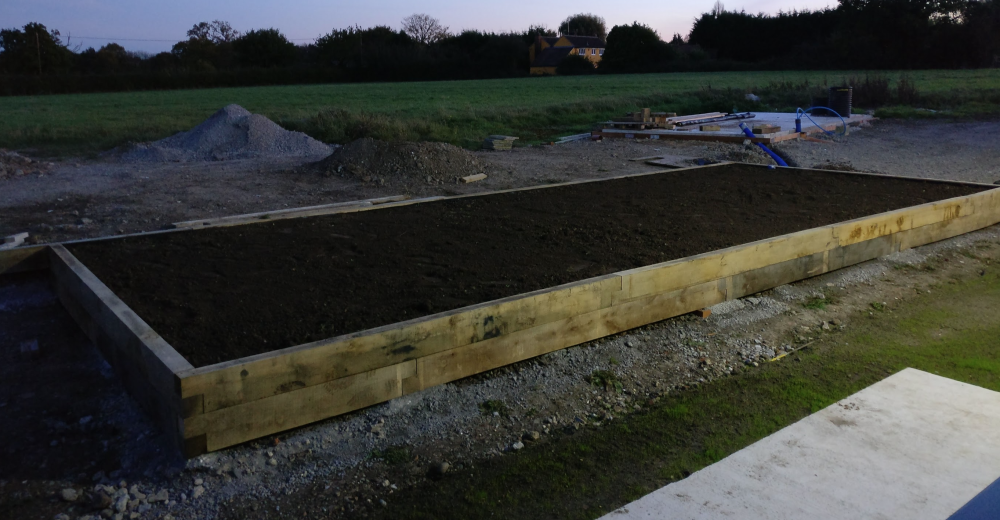
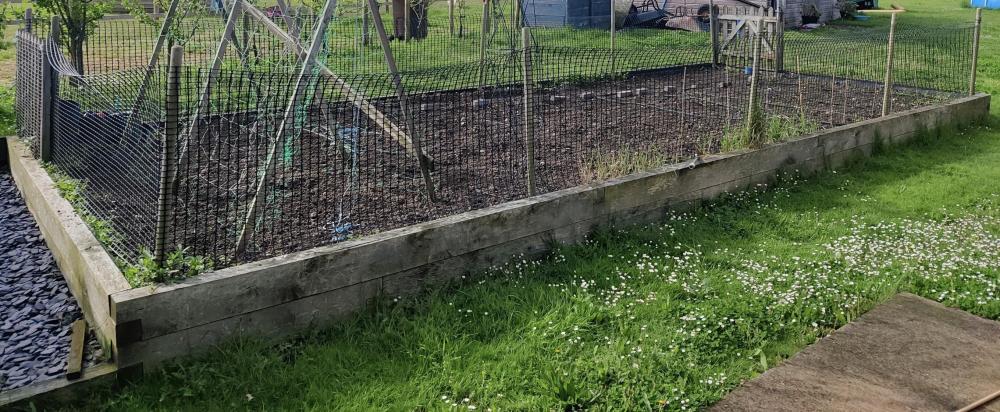
-
New build in SE - MCS engineer says 22 kWh ASHP required....
IanR replied to Navron's topic in Introduce Yourself
What infiltration (uncontrolled/natural ventilation) rate have you used in the calcs, and provided to the heat pump supplier. Jeremy's spreadsheet defaults infiltration to 0.6 ACH@50Pa, which is the Passivhaus target. If you've not provided the heat pump supplier a target infiltration rate they may be using the standard building regs rate of 8m³/m².h@50Pa (circa 6 - 7 ACH) Very roughly, if you just scraped building regs U Values and infiltration rate your annual space heating energy requirement shouldn't be more than 28,000kWh (based on an approximate 75kWh/m².a worst case) That's relatively low for a 30°C ΔT, coming in at around 20W/m² -
Insulated Concrete Slab Garden Office - Questions
IanR replied to Ticky's topic in Garages & Workshops
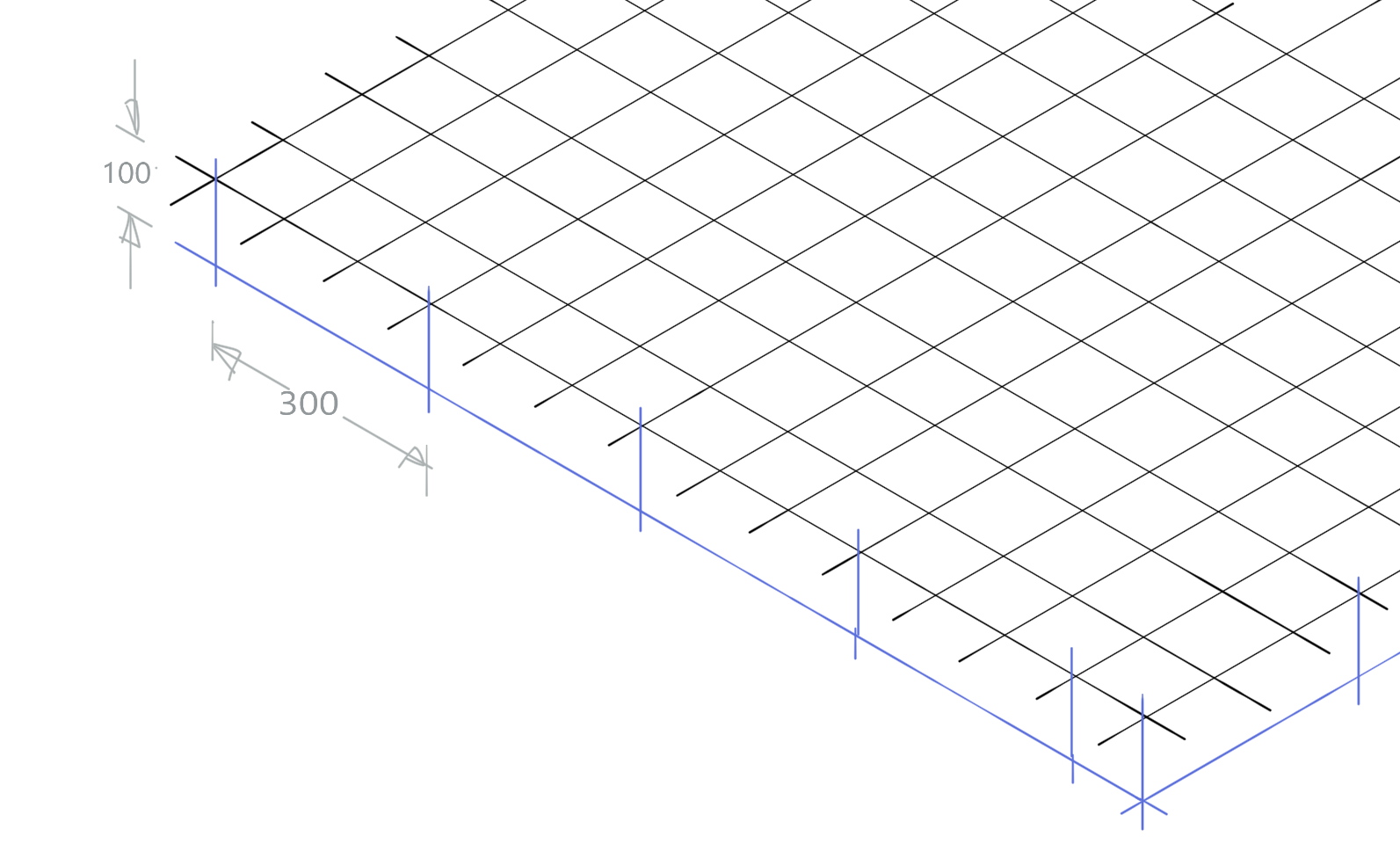
You are compacting the other layers to get rid of any voids, but pea shingle won't have any. If you did compact you'd push the pea shingle down into the Type 1 and then it would not do its job, which is to be free draining so that it clears any water to the French drain. It's not self levelling, so you are going to have to set yourself up some levels and then rake it to those levels. Yes, I believe you've understood my description. Hopefully this sketch doesn't make it worse. Black is mesh, blue is rebar: It's not just you, my first post in this thread, the third post of the thread started with: When I posted my original sketch. But, while we now have a view on the wall construction, we don't know the roof structure or finishes, it could be tile. In the future maybe there could be some PV. Maybe the floor finishes will be unforgiving to any movement, such as a ceramic or porcelain tile straight on to the slab. As part of an insulated slab (the title of the thread) the integrated ring beam is a very simple solution to de-risk the floor in my view. I believe we established it's an unheated floor, or at least I made that assumption in an earlier post. It would be nice to see more, but for an occasional use room with an unheated floor, I think what is shown is better than most.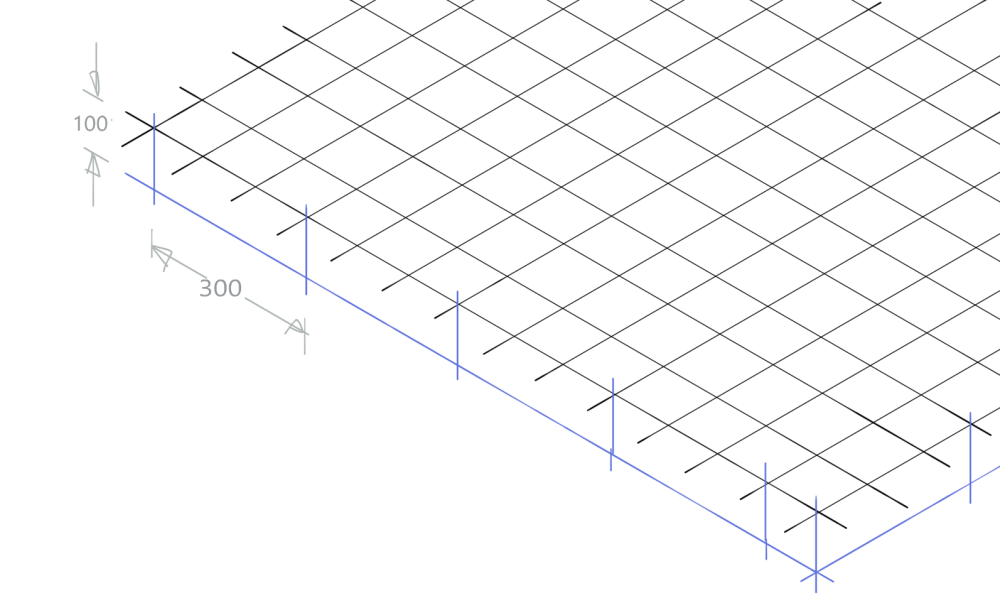
-
Insulated Concrete Slab Garden Office - Questions
IanR replied to Ticky's topic in Garages & Workshops
No need to compact the pea shingle, just rake it level. I'd say you don't need 150mm of hardcore, 100mm - 120mm is enough with the type 1 you have on top (save the dig). A142 mesh is fine for horizontal, but I'd use 6mm or 8mm rebar vertically in the ring beam at 300 centres, tied to the mesh, then a long horizontal rebar 25mm from the bottom of the ring beam tied to the verticals. You could pierce the DPM and push the verticals into the EPS, and stick some Duct tape around the holes you've made. It would help stabilise the rebar for the pour. -
What is it about Passivhaus principles that you feel run contrary to how people live day to day? and is that somehow related to your notion that that a PH home would be unable to maintain a comfortable temperature during a harsh weather event, such as "the beast from the east"? Passivhaus defines targets for energy efficiency but isn't prescriptive on the capacity of the heating system.
-
Not at 2017 prices, but it's gone up a fair bit now I understand. Equivalent to premium floor finishes, but not ridiculous. I paid £75/m², I believe now it's in the £100/m² to £120/m² range
-
100mm Reinforced Concrete floor with UFH, on 300mm EPS here. With a low flow temp of 30° the floor doesn't feel overly warm (except by a manifold), but certainly not cold. In the living areas I've got 4mm of poured resin directly on the RC slab and I'd describe it as comfortable. It's a nice surface to walk on in bare feet. In bedrooms I've got low tog underlay under carpet on the same RC slab and also find this comfortable and warm. No issues heating the rooms, but I have a low heat demand. In bathrooms I've got Porcelain tiles over the same RC slab with Ditra may. Floor feels slightly warmer than the poured resin, and dries really quick after a shower. Next house will have the same floor build up. If I've understood you correctly, I think you have the wrong idea about a house built to passive house principles. For me it doesn't matter what the temp is outside, the temp inside remains stable. There's only been a couple of occurrences in 5 years, when I've been experimenting with turning the heating off for long periods, that the internal temp has dipped below 20.5°C
-
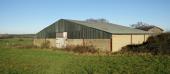
Is it a poultry shed? What's the plan for the last few metres either side, where the headroom is a little restricted?
-
Technically the track is nothing to do with the Class Q (at 500m long it couldn't have been included within the allowable curtilage), The Class Q finishes at the extent of the curtilage (equal or less than the area of the building being converted under the Class Q) It sounds like the "track" is established. ie. it's been there for some time and was previously agricultural use for access to the building that has now been converted under Class Q? Hopefully that's the case, otherwise you'll need to get planning permission for the track itself. Even farmers don't get permission for a new track under PD. If planning is approved for a new track, then the topping to that track is captured within the planning permission. Assuming this track has never had formal planning, but is permitted by its historic use as a track, then I wouldn't drastically change its appearance, or size (width) without asking the LPA via a Certificate of Lawful Development. It would be an expensive error if the LPA took a position that a change you make is "not in keeping". If it's a limestone track, how bout recreating it with a plastic grid system, on a prepared base. something like. https://www.sure-green.com/technical-area/technical-ground-reinforcement/technical-pp50-paver/pp50-design-guidelines-gravel.html