JohnMo
-
Posts
13292 -
Joined
-
Last visited
-
Days Won
200
Everything posted by JohnMo
-
 I use one of these in one of my MVHR units https://ebay.io/m/evTvz0. Site in a simple junction box and sensor goes in the air distribution box on the return side. My MVHR is all based on zero volt signals. Brink etc all seem to be based around an expensive ecosystem.
 -
Insurance is stupid, our small ford van cost twice as much to insure as our 530hp Alfa Romeo. Both do about 6000 mile between them a year.
-
Step back what controls do you REALLY need. From experience almost nothing. A manual boost over ride in kitchen and outside bathrooms, although the only we ever use is the kitchen, once in a blue moon. Your unit should have in built humidity sensors anyway. CO2 don't waste your money, humidity does the job. Timers for different modes don't waste you time or money. Reporting and recording data, why bother, it dies what it does. Switch on forget (except filter cleans or changes). Out Titon HRV uses volt free boost switches, so simple and cheap
-
Hot water return in Hep2O? is this really a problem?
JohnMo replied to Great_scot_selfbuild's topic in General Plumbing
Sort off. But you don't have cold water. It is fine and dandy for washing hands/face. Which is all you are doing most the time. We are pumping 20m and it's just fine. Room sensors are another way but more stuff to buy and wire in. Pump with integrated timer and thermostat easy and they are fit for purpose. As you say shower or bath who cares, by the time you have removed your clothes etc it is ready to dive in to - recirculation or not, assuming you aren't using 22mm pipe that is. -
Hot water return in Hep2O? is this really a problem?
JohnMo replied to Great_scot_selfbuild's topic in General Plumbing
Are you actually going to run continuously - I don't and wouldn't if I were either. Get a pump with a timer and thermostat and set a time or various time windows. The pump will run until the thermostat senses the return water at its set point pump then switched off. As the water cools the thermostat triggers the pump to start again. -
Having an old house last time, the damage caused by ivy can be very bad. I would avoid. It grows very quickly and will be up the wall in no time, and then in the loft if you don't actively manage. I wouldn't bother. But it's up to you.
-
More nonsense. The petrol car is made how does scrapping it make any sense. Typical CO2 emissions for a petrol car are 230g per mile, so 7000km is 1000 kg. It takes 5 to 10 tonnes to produce an electric car, so already the electric car needs to exist 5 to 10 years to get pay back compared to an existing petrol car. But that doesn't include grid CO2 to charge vehicle etc.which would extend CO2 payback also Typical car average life before being scrapped is 17 years, except Ford's and Vauxhall which is sooner. So may make sense to scrap petrols at between around 10 years, but not a new car or 2 year old one. But scrap all diesels cars tomorrow would be my view. But would need to be a voluntary scrappage system to encourage participation.
-
Ours are roof battens also. Cheap, long lengths, pressure treated readily available.
-
Anyone gone down the max self consumption route?
JohnMo replied to Alan Ambrose's topic in Photovoltaics (PV)
Really depends on export limit - for us zero point fully optimise i could generate 11kW now, but can't export that much, so no point. Most of the time would get very serious clipping. Angle also makes a huge difference, vertical are rubbish in summer compared to 37 to 45 degs, but still produce well enough. The same vertical panels produce well in winter, although day is shorter. Winter running an ASHP and solar are very different things. ASHP will use way more than your winter production will ever cover. Your real energy bills come in the winter, PV export is very low. So size your battery to eliminate almost all normal or peak rate usage so you only use low rate, would be my advise. Your CoP is generally worse at night because it's colder outside. I would size you heat pump correctly. I have now had an oversized and correctly sized heat pump, I dumped the oversized one because general perform and CoP wasn't anywhere near as good as it could be. A well insulated house at 7 degs needs vert little heat, a correct sized heat pump will run long and slow giving excellent performance and oversized one will cycle killing CoP in real life. On your cold days you correctly sized heat pump will mostly run all day. -
Trouble with most windows you mostly get what you pay for. Argon filled double glazing is argon filled glazing, the frame design is the difference between a a good window and a poor one. So when comparing look at the Uw that is the U value of the whole window, not just the glazing (Ug). Also make sure the installer is filling the void around the window, ideally with an airtight foam. Lots fits window and just cover the void circumventing a decent U value.
-
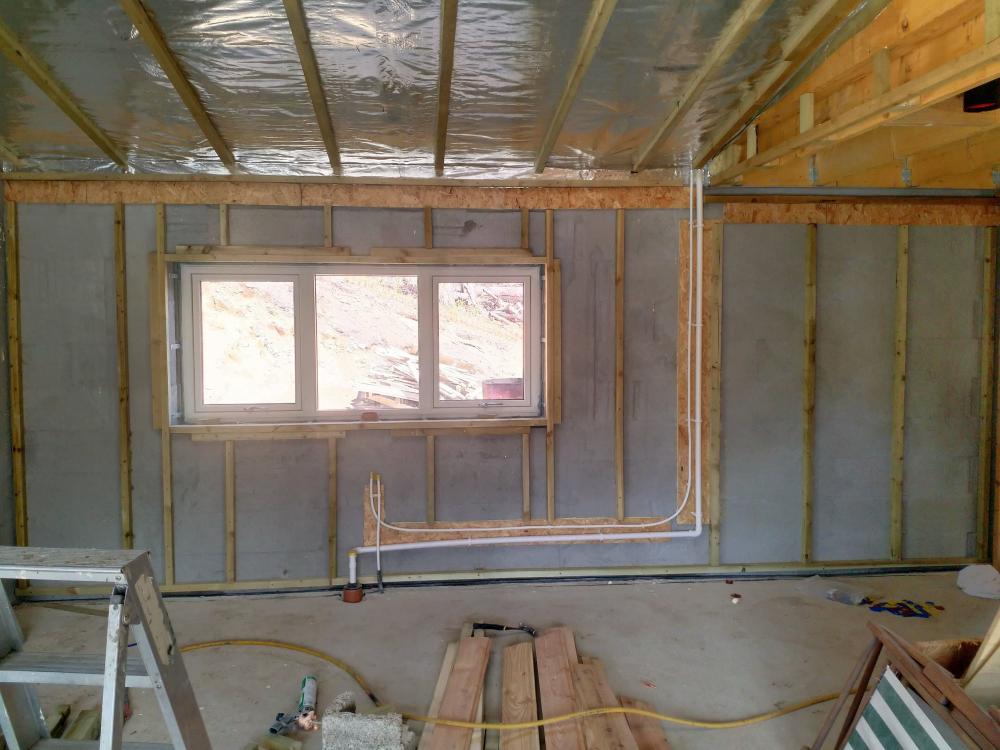
Although ours is woodcrete ICF we did 50mm battens and added a osb giving plate to top of wall for wiring. 50mm is good for any plumbing you run up or down the wall. Zero carving out the polystyrene in your case.
-
If your drawing say 2 off 8x2 I agree with @Oz07 do that, no need to over think it. By the time the 2 pieces are all joined together and fixed in place they aren't going anywhere.
-
Builder V structural engineer who is responsible?
JohnMo replied to PSC88's topic in Surveyors & Architects
That's just looks like a planning drawings not a construction drawings. Should detail all the materials and dimensions to enable building it -
Go back to the builder - tell him the issue. Or is this a self build? Could be a small leak from water pipes also.
-
I have a double check at inlet to property, same to outside tap and the combined valve at cylinder. That's it.
-
Almost as quick to DIY than actually speak to installers. Our first array was me fitting all the trays, the electrician wired it up the roofer did the slates around the trays etc. and all the flashing details. Panels to buy are around £100 each tray £70 plus flashing. So 10 panels (4.65kW) around £2k plus inverter/battery. Yes get a battery then run your whole house in cheap rate.
-
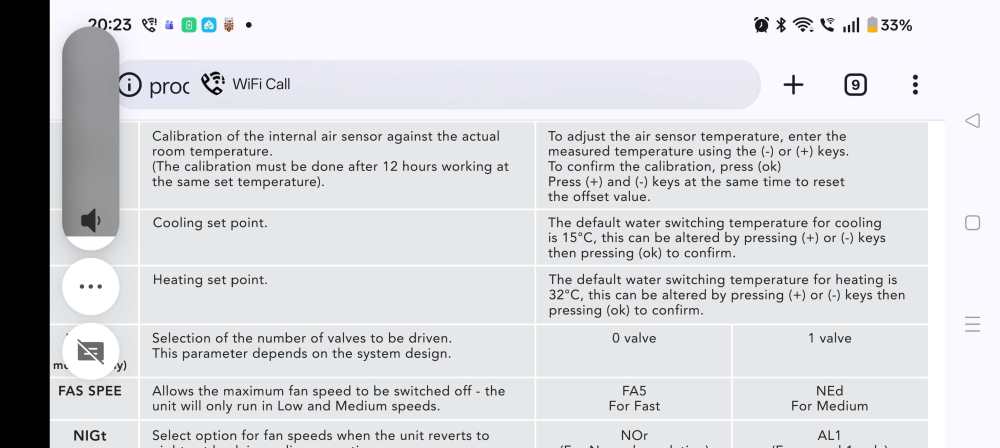
No, the 30 Deg figure is adjustable you can also run fan in manual so it runs 24/7 if you want. Our flow temp in heating is about 28 at most. So mine comes on about 24 for heating and about 18 for cooling
-
Anyone gone down the max self consumption route?
JohnMo replied to Alan Ambrose's topic in Photovoltaics (PV)
You need to make sure you stay inside the max voltage and amp limits of the inverter. We have a 3.6kW inverter with 6.5kW of panels. But these are also vertical and we are NE Scotland, so output is capped somewhat anyway. The science of PV is peak power is only momentary or short lived, nearly all the time the panels run in a derated state, sun angle, sun heat, cloud etc all affect the panel performance. -
Get the manual downloaded, many have adjustable temps for cooling and heating. Don't ask read the installer manual. We have a Myson iVector MkII, it allows for adjustment of the flow temp to start stop the fan. You can manually put fan on a fixed speed but then you don't get a modulating output.
-
But would say big grant, but you pay big admin fees to get grant and installer adds a premium - or it's a rip-off You pay 2x standing charge, been there son went direct heat pump. Solar is great in summer a d rubbish in winter 0 That's why you do full heat loss calculations, so you know they can. I just heat our DHW via immersion, that leaves the heat pump to do what it wants to keep house warm. Current only pay 10p per kWh off peak, by the time you factor in all the inefficiency of gas it not far off the same price in real terms, maybe cheaper if you factored in standing charge in the summer months.
-
Builder V structural engineer who is responsible?
JohnMo replied to PSC88's topic in Surveyors & Architects
If you haven't paid for construction drawings you will not get them. It's more normal for the architect to do them, again you pay extra. -
Welcome. Sorry I'm the polar opposite, had some home automation and basically stripped it all out, preferring simple light switches etc. use home assistant only to monitor stuff now, but generally it controls nothing that matters.
-
What do your plans actually say about roof angle? Big difference between 12 degs and pretty much flat. Our 12 degs roof is 2.5 block work one side of the building and closer to 3.5 to 4m at the other (staggered wall).
-
1026 kWh are you sure, that is correct - I have 9-11kW (added another 1840W just recently) of panels and 7kW of inverter in NE Scotland, so far this year at nearly 4000kWh. Plus most my panels are vertical, so optimised for winter production not summer.
-
Yep, volts is key here, low volts mean big amps and big cables. So if your battery is 48v dig deep in the pocket, it won't be cheap. Have battery and inverter close.