


JohnMo
-
Posts
13292 -
Joined
-
Last visited
-
Days Won
200
Everything posted by JohnMo
-

Passiv house costs.
JohnMo replied to Oz07's topic in Energy Efficient & Sustainable Design Concepts
But have you gone back to designer and asked what is the minimum spec you need and still comply with what heat loss loss that applies - it's not black and white. The door by definition is protected and in a different environment to an external door. Nothing in a Passivhaus has to be Passivhaus certified just perform to a defined standard (which is variable dependant on form factor and many others). If you can only get a £7k door that is a stupid way to build a house (and doubt that is true). -
That works, but save some money and just use Thermolites. They are in a nice dry area, so will.work well.
-
Your white blocks make a nice cold bridge. Just replace with thermolite or similar and it's gone.
-
Is with without hearing aids😀
-
They must have thought you had 5MW heat pump not a 5kW one. F'ing numpties
-
PIR sensor for secondary circulation
JohnMo replied to Workerbee's topic in Boilers & Hot Water Tanks
22mm will take an age and half to get warm water - run in 15mm. Add a secondary return if you want, at 15mm (assuming UVC) by the time your undressed you will have hot water anyway. We are 20m and have no issue and have the water pressure, we have a set dynamic water pressure of 2 bar. We have a hot secondary return system, but switched off a while ago as a trial and no-one (well the wife) hasn't noticed, may pop it back on for winter. -
Passiv house costs.
JohnMo replied to Oz07's topic in Energy Efficient & Sustainable Design Concepts
Self build pays for that each time, as they are generally one offs. A developer should only pay once for multiple houses. -
Undertaking refurbishment of our new dream house
JohnMo replied to PedanticBuilder's topic in Introduce Yourself
Welcome to build hub, threads very often find a tangential direction -
Should be this order, stop cock, then immediately after a double check valve. Then you can tee to hard and soft water routes Hard water add isolation valve, drain cock, tee to house drinking water (no check needed), outside tapp needs a double check - but outside tap, you have a tee and a drain, the drain will not do anything the tap doesn't do already when you open it, so delete the drain and make tee and elbow. Use Tectite push fit for elbows or solder. Garage if it also connects to hose pipe etc, you need a double-check, if it's going to say a washing machine it doesn't need a check valve. Drinking is that just going to the kitchen?
-
Ours is a separate box really noisy so buried the bottom part in soil - way less noise - most the noise is vibration induced.
-
None of our outlets have check valves. If your hot water source is an unvented cylinder (or combi boiler) all your water (hot and cold) is wholesome. So my assumption is an UVC or combi - vented you may need checks valves everywhere you can get mixed hot and cold water
-
Must be either a large puddle or your heat pump is massive. Ideally the water will not be dead water so will.have an inlet and outlet moving energy about.
-
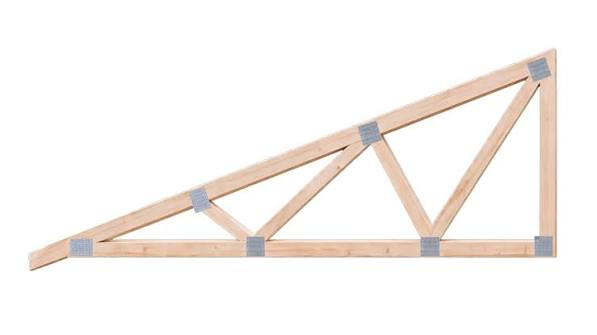
So you don't have a flat roof. You could have made life easier doing the walls flat at the top and then a single angle truss, made to suit you low angle, so no steel or glulam needed
-
Prep for wooden laminate on screed
JohnMo replied to saveasteading's topic in Wood & Laminate Flooring
We did a couple of mm over 3m or so,as target and then the installer applied loads of glue, so nothing has moved anyway. All feels flat under foot. -
Not really sure that is actually an issue as it just a closed length of pipe pinned down. You are not extracting water, just about making sure the person at the other end has a slight clue about what your talking about. Would be good in Scotland where ambient is fair bit lower than England, as you generally looking at positive temperatures all winter in water. However - Not really sure from a cost perspective it make great sense anymore as a water source heat pump costs as much or more that a half decent ASHP and you don't need to buy a mile or two of pipe and pin it down in the water source - loads of faff and expense.
-
Patio looks to above the damp course level. Your next issue will be damp internal walls etc. it is more normal to have the ground level 150mm below this, so your patio is way too high.
-
I just used a 25mm to 22mm stop cock. Been installed 6 years - no issues at all.
-
Do you have to have a flat roof? If not simple roof rafters at a low angle, then you most likely need zero steel or glulam. You just trying hard to make it more complicated and expensive than it needs to be
-
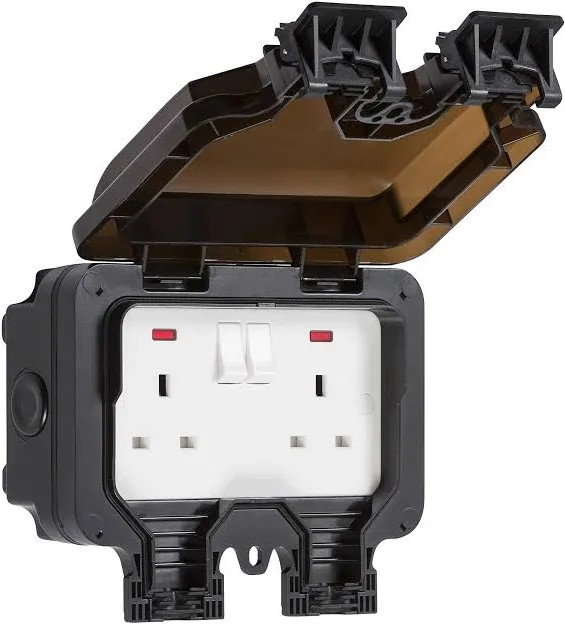
Just do external waterproof surface mounted. If your not doing waterproof how are you keeping the water out?
-
Exactly - makes good new headlines - but more sh!te in, sh!te out news broadcasting
-
Insulation layer for shorter time constant?
JohnMo replied to Alan Ambrose's topic in Underfloor Heating
Was typing similar. Well insulated house, floor temp is very often only a couple of degrees above room temperature so as room increases floor heat out put reduces. Once room temperature is above floor temp, the excess heat starts to be absorbed by floor also. -
Simple truth BP, Shell etc have huge overheads and cannot make aging assets pay, so once production starts to dip they sell. Been like that for decades in the North sea. So no suprise BP are selling.
-
Insulation layer for shorter time constant?
JohnMo replied to Alan Ambrose's topic in Underfloor Heating
If want a short time constant for some reason, you could use Jaga Strada fan radiators, so you can cool also. Cheaper than fan coils, and designed to provide above dew point cooling. Also way smaller than radiators. Seems a strange design choice to do 150mm concrete then another 100mm screed on top. -
That's me told - I'll ask for your opinion first next time.
-
Make the rafter long enough to have PV panels in landscape and do the roof in solar panels - if east,south or west facing? No tiles to faff with. Choose the panels well and you could get 6 panels on the there.




