


JohnMo
-
Posts
13292 -
Joined
-
Last visited
-
Days Won
200
Everything posted by JohnMo
-
I went to town on mine, but when I installed the windows they weren't very airtight so all was good. Make a judgment on letting air in, you will need a fan.
-
+1. Unless you have gone to town on airtightness it will leak enough to keep a dMEV fan running on min speed happy. Get a Greenwood CV2 or 3 they are silent and draw almost no power.
-
Most manufacturers have statements saying you must fit a given strainer size to keep your warranty.
-
 Why do you need to lower humidity? Isn't that what your MVHR does anyway? On UFH in cooling mode keep flow temps at a reasonable level, as once you go below around 14 you can start to make condensation. Start at 16 and keep an eye on your manifold for any misting up. Slowly work down, but wouldn't go below 14.
 -
@Jeremy Harris
-
See you are located in London, we bought our plot with full planning permission for just under £100k, and it's 2 acres, with views of a loch. In London you pay more than that for somewhere park your car. Our labour cost are well below half what you would pay also.
-
Ecodan r32 keeps flipping into immersion mode.
JohnMo replied to MorganP's topic in Air Source Heat Pumps (ASHP)
So with the immersion enabled for heating (CH) it will be looking for a time to reach target flow temperature, this likely to be adjustable setting within the controller. If a lot of zones call for heat and your screed is cool, the time limit is possibly exceeded to get to target flow temperature. The heat pump controller says I need assistance the heat loss is bigger than I can cope with or the heat pump is broken turn on immersion. This mode is likely to remain the whole time you are calling for heat it should reset when heat is satisfied. A lot of the issue maybe as a result of how you operate the system, having lots of room thermostats are these all timed to go on and off a different periods during the day, or just set to a fixed target all day every day and acting as room limiters? BUT - You need to clarify clearly is the 20 degs room temperature or cylinder temperature? Because to me it's not clear? -
Appliance water supply connection height
JohnMo replied to MortarThePoint's topic in General Plumbing
Found exactly the same with a heat pump dryer. In the end we stacked the washer and dryer and just ran the utility work surface up to the space for the washer and dryer. Worked out much better. -
Insulation layer for shorter time constant?
JohnMo replied to Alan Ambrose's topic in Underfloor Heating
So for heating system think of red box similar to to high temp radiators, orange similar to fan coils, green thin screed or low temp radiators, thick screed is like blue. Your build method also has a big influence on time to heat - a build that is light, wood frame filled with PIR insulation will change temperature quite rapidly similar to the blue box. An old stone building with directly plastered walls will be slow to heat up no matter what your heat source. Add external insulation it will still be just as slow, add internal insulation it starts to act like a lightweight building. The ideal heating system and heat source will make the most of the building characteristics. But generally with a heat pump low and slow is the best approach, no matter what the building. Don't let the building fabric cool to much between heat sessions or constantly blip heat heat in. Lightweight buildings respond well to weather compensation as internal and external temperature changes occur quite quickly. The heavier the building the more likely there will be a phase difference in temperature changes, inside responding more slowly than outside.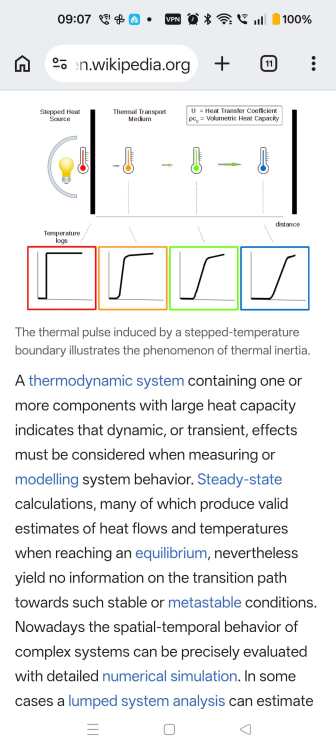
-
Appliance water supply connection height
JohnMo replied to MortarThePoint's topic in General Plumbing
There is generally zero room left behind the appliance to have an electric or water connection behind it. Run to the cupboard next to it. Water height - doesn't matter as long as your hose will reach. Electric we plug into a dumb socket in the cupboard and have a ready/easy to reach wall isolation switch on the wall. Waste connection also do in the next cupboard. -
It should do cooling out the box. Your first stage would be getting UFH in cooling mode. For that we need to understand a little more about your heating system. Single zone run from Panasonic controller, or multi zones with thermostats, mixer/pump on UFH manifold or none?
-
If you have a heat pump already can you not use it for cooling? Instead of new A2A just add some fan coils and use the UFH in cooling mode?
-
New self build design, heat and architect
JohnMo replied to Jack757's topic in New House & Self Build Design
DIY'ed all the key points of the design. Didn't really ask for much help from so called experts -
New self build design, heat and architect
JohnMo replied to Jack757's topic in New House & Self Build Design
We go through icf wall, so pre installed plastic ducts before the concrete pour. You have the two ducts with an 50mm or so gap between them. No issues with SAP, like the Titon units as they are UK manufacturer and the you can actually talk technical to a person on the same wave length. Buying cheap I had a speed signal issue on one of the motors, parts arrived the next day to fix with instructions. Great service. Being Scotland we do a sap at design and completion. I had all the routes of ducts all designed in during design and I actually bought the 2x MVHR units at the design stage, prior to getting the as designed sap. So no issues. -
He did, think he mentioned the insulation was so well packed it came out as a plug. Why not just one multi split? Remember if its just for cooling you need planning permission, if it's for heating and can also do cooling you do not.
-
New self build design, heat and architect
JohnMo replied to Jack757's topic in New House & Self Build Design
A ran for a year at minimum speed and never saw any mixing going on by monitoring temperature. Out flow is rejected horizontally outwards, inwards flow comes from below and the sides, so out flow has a hard job making it's way back in.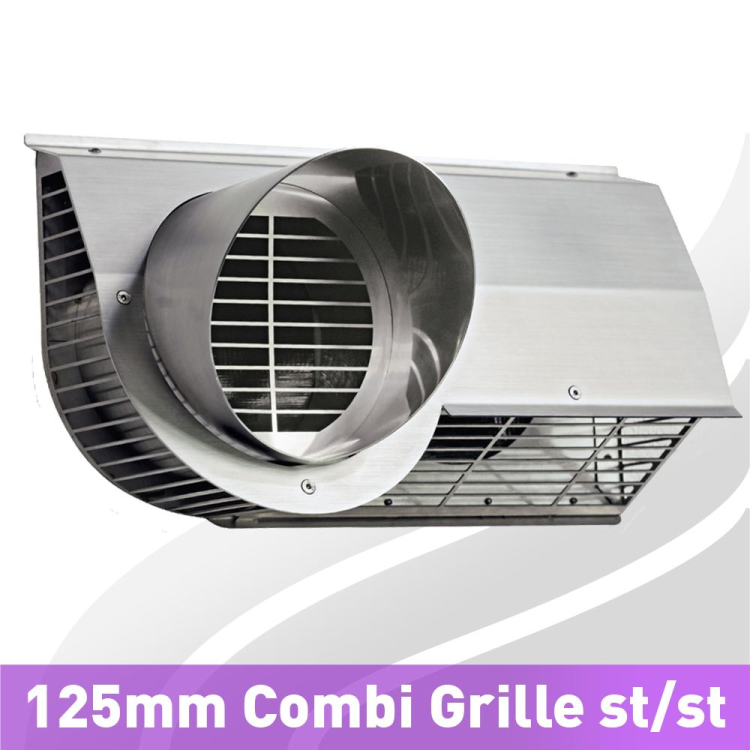
-
New self build design, heat and architect
JohnMo replied to Jack757's topic in New House & Self Build Design
You can get from 125mm to 200mm so should cover all domestic properties. https://www.paulheatrecovery.co.uk/product-category/mvhr-ducting/terminals-external/ Two MVHR units was just simple. Our house is 25m long and to save too many long duct runs I picked up two Titon units from eBay for peanuts. I also used coanda supply nozzles to reduce and simply duct runs/length and used 90mm duct to make double runs limited. -
Have you priced up Frametherm 32?
-
@Novice what is you normal heat system - ASHP?
-
When inside is hotter than outside. That is the only time.
-
Then for the same u value use a decent high density mineral wool batts.
-
New self build design, heat and architect
JohnMo replied to Jack757's topic in New House & Self Build Design
Not required if you use a combined/directional inlet outlet. One of our two MVHR units is in the middle of the house, the two ducts effectively go in void above built-in wardrobes to the outside wall. Our manifolds are in the same void. But it only feeds two bedrooms and extracts from two bathrooms. -
Ecodan r32 keeps flipping into immersion mode.
JohnMo replied to MorganP's topic in Air Source Heat Pumps (ASHP)
So if DHW and it's only getting to 20 degs good chance it is a time related issue. Also check your diverter valve is moving from heating to hot water production. So dig out all the DHW settings -
Insulation layer for shorter time constant?
JohnMo replied to Alan Ambrose's topic in Underfloor Heating
Really makes zero difference, it's the floor surface temperature that's important. Surface temperature is defined by heat loss of the property and how many W/m2 it needs to generate. A well insulated house will have a floor temp only slightly above room temperature, so solar gain effectively switches off floor output as soon a room temp is equal to floor temperature. Once room temp is above floor temp floor will actively remove room heat. Some advantage and disadvantages of thick screeds Good Agonist to heating period, use floor as a buffer for cheap heat. Will retain and give back to the house over many hours. Very gentle heat, you don't notice the heating on or off. Use very low flow temp over many hours, great to reduce running costs. Bad Takes an age to heat up if you allow to cool too much. Different approach to heating than normal. Thin screed, is more like a low temperature radiator system. Still takes a while to heat house but not as long as thick screed. Cannot store heat for later release. Asking for opinion will yield a possible or negative reaction depending on the experience of the person answering. If you want a thin screed vote with your feet and do it -
All depends on depth of water, I was near £5k all in.




