


JohnMo
-
Posts
13296 -
Joined
-
Last visited
-
Days Won
200
Everything posted by JohnMo
-
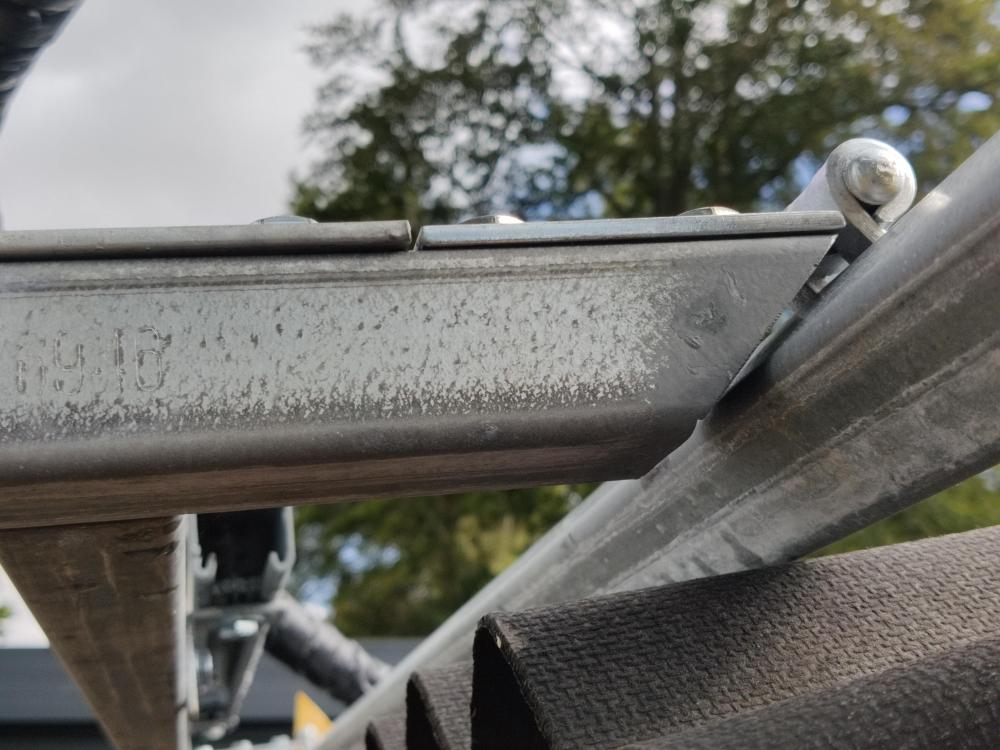
Close up of the hinge point
-
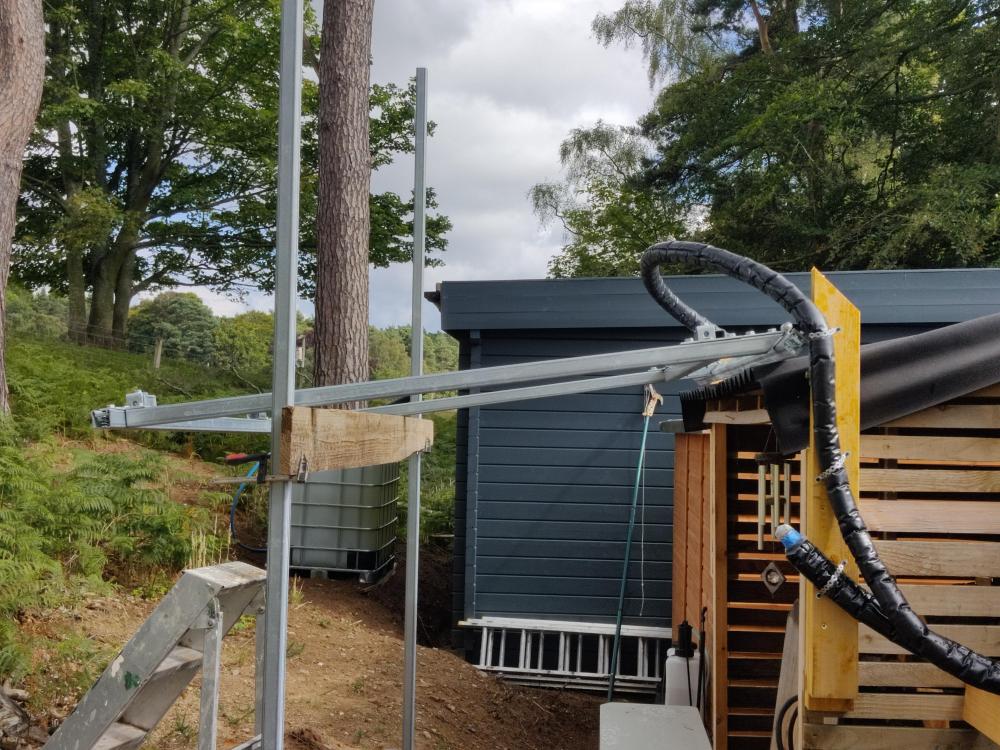
Little more progress, now have the support frame hinged and in a lowered position to aid install of the panel. Panel is circa 35kg. Just need a second pair of hands.
-

UFH with flow problem - how can I confirm flow rates
JohnMo replied to DeanAlan's topic in Underfloor Heating
Bet it's air. -
Gas boiler lobby obstructing heatpumps
JohnMo replied to Beelbeebub's topic in Air Source Heat Pumps (ASHP)
Are are better drip feeding the heat to match the heat loss, for one the thermal store will be depleted much slower, best will in the world a big store will take a while to reheat, worst case is you have a hot house and no DHW. If you go for a thermal store, charge the store direct not via a coil. For DHW you can get them with tank in tank, with big DHW coils and external or internal PHE. -
Gas boiler lobby obstructing heatpumps
JohnMo replied to Beelbeebub's topic in Air Source Heat Pumps (ASHP)
Have attached a PDF instruction manual for a WC controller (I use their solar thermal controller) It has lots of different schemes at the back of the manual. They are based in Germany, but ship to UK. They have a shop on eBay. Clima500 (1).pdf -
Gas boiler lobby obstructing heatpumps
JohnMo replied to Beelbeebub's topic in Air Source Heat Pumps (ASHP)
You can add that to a thermal store, the WC controls the discharge from the thermal store via a mixing valve, or if you had UFH it does it direct on the manifold. -
UFH with flow problem - how can I confirm flow rates
JohnMo replied to DeanAlan's topic in Underfloor Heating
If you flow meter are not reading correctly it could be one or two reasons. System is full of rubbish, flow meters will be black and or very dirty. Shouldn't be the issue really But most likely you have air in the system. The system when running should be near silent, if makes he old noise you need to bleed. -
Question do you need a plant room at all. Also lots of doors going on MVHR wall mount in room identified as plant room or even in the utility. I mounted mine on a stud wall on two sheets of 18mm ply. No noise in adjacent bedrooms. Rest of the room as storage. So just relabel as store or cupboard. If you are having UFH put the manifold in the same room as the MVHR takes up no space, could be under the MVHR unit. DHW cylinder in utility next to ASHP. Located 3 way valve there also. I would check the clearances are ok for the current ASHP position also, looks to be stuck in a corner. No heating required in the utility it gets heated by the cylinder.
-
I am using a BWT combi care cartridge. Scale deposits have all but vanished. I am only treating the water that is heated, but it can be used for the whole house also. £70 plus £35 per year for a cartridge. The blurb BWT’s Combi Care polyphosphate dosing system works by introducing a very small amount of food grade polyphosphate into the water feed, sequestering the calcium in the water, helping to prevent the formation of scale. BWT’s Combi Care is suitable for the whole house or single appliance protection, for example a central heating boiler, with an easy to change cartridge that has a 12-month life. Easy to install with zero maintenance, this product provides positive results and ultimate flexibility. Easy to Install Offers protection from limescale and corrosion Easy change cartridge 12 month cartridge life Can be used in soft water areas as a corrosion inhibitor WRAS approved Single appliance or whole house protectionle
-
Gas boiler lobby obstructing heatpumps
JohnMo replied to Beelbeebub's topic in Air Source Heat Pumps (ASHP)
That's a scheme from old when heat pumps were just on or off at a fixed temperature. My heat pump has such a setting for charging a thermal store. It basically running DHW mode all the time, knowing the thermal store provides heating loads also. In that mode the CoP isn't as bad as you think, as the heating of the cylinder starts as low as possibly and it just manages flow and return dT and slowly creeps up in temperature until thermostat is made or it hits 60. So a lot of the heating cycle is spent in the 40s. -
Gas boiler lobby obstructing heatpumps
JohnMo replied to Beelbeebub's topic in Air Source Heat Pumps (ASHP)
Trouble with accepting a CoP of 2.5 could be running cost compared to gas especially with the new prices gas 7.5p and electric 30p per kWh. A well installed gas boiler can achieve 100% + efficiency. You may be better with DHW heating accept the limitation of the normal cylinder, let it heat to around 40 with the heat pump, finish of heating with the immersion to about 50 or as low a figure as you can get away with. CoP of 3ish for the heat pump. 1kWh at CoP 2.5 is 12.5p, so heating bill will 40% higher than with gas, not many volunteers I would assume. Even a good heat pump install achieving a SCoP of 4 will be on parity price wise with gas. -
On a cost basis alone everything needs to be taken into consideration. Having installed gas boiler run for a year or so and then installed an ASHP, mostly for its cooling ability; but also it should be cheaper to run - winter will let me know that answer. I only spent just over £2k to buy ASHP, all equipment and full install. If I known this in 2020 I would have gone straight to ASHP. ASHP can and should be a very simple install especially with UFH.
-
Should that be "without"
-
That is exactly how I did our build. Plus if the recommended person was too busy, I asked them if they could recommend someone. Had no issues at all.
-
I'm not really looking for an auto switch, as already have a manual switch, and the generator has to also be started manually anyway. More interested in finding a recommendation for an AC coupled inverter charger and/or battery.
-
Gas boiler lobby obstructing heatpumps
JohnMo replied to Beelbeebub's topic in Air Source Heat Pumps (ASHP)
MCS have basically made a heat pump unaffordable for most people. Only the well off really get the grant, as who really can justify spending £15k on a boiler system, when you can get a gas boiler for £1500. Most the population think you need to go through the grant scheme. So why would your normal plumber be asked for a heat pump. Others on here have DIY installed for boiler money, but that is not the normal person. -
Gas boiler lobby obstructing heatpumps
JohnMo replied to Beelbeebub's topic in Air Source Heat Pumps (ASHP)
MCS is delaying heat pump roll out itself. Wouldn't worry about anyone else. -
4G router? That's all we use in our house, with an unlimited data SIM card.
-
Land prices vary hugely. Location, views, plot size, are services there already, how long it's been on the market, does have outline planning or not. Really wouldn't do a self build based on value when just completed. A well done self build will be way better than anything you can get on the open market - if it isn't don't bother, buy ready built.
-
Just fill in the background loads really, so I don't have to rush and put the generator on. So basically keep the ventilation, sewage treatment tank and borehole pump live. So couple of kW should be fine. Did think it would be a nice thing to have, but probably not practical. I do have generator change over switch, so when generator is on the mains is isolated.
-
5-9kWh
-
Looking to possibly add a battery but looking at charger inverters. Looking for recommendations for an AC coupled in Inverter charger, FYI the battery will be in the 5-9kW range. Must haves 1. AC coupled, not directly connected to existing PV. 2. Must work with existing PV inverters (X2) one Growatt, the other Solis. Not interested in getting hybrid inverters. 3. Must work in a power cut (have had two power cuts this week, one for 4 hours the other for 2 hours) 4. A nice to have would be in a power cut, the existing PV inverters think there's still mains and keep producing.
-
Do you have to pay three standing charges?
-
Or go on somewhere like 12volt planet or most automotive electric wholesale places, you can buy ready split.
-
dMVHR suppliers list (not complete)
JohnMo replied to HughF's topic in Mechanical Ventilation with Heat Recovery (MVHR)
At least their passive in operation and if the internal humidity is low they will close.



