


JohnMo
-
Posts
13296 -
Joined
-
Last visited
-
Days Won
200
Everything posted by JohnMo
-
 1 no 2, main living space and wet rooms, bedrooms no, UFH in bedrooms is rubbish, you can't turn it off when you go to bed, it's heating all day when you don't need it. You may not need heating in bedrooms, if above a heated area. 3 IR heaters will be expensive to run - don't do it. You need to get a different price for installing UFH. Or DIY. We got our completion cert 4 months ago, original heating was gas, have since installed ASHP, mostly to make use of the cooling in summer. But even without E7 type tariff we think the ASHP will be cheaper to run than gas.
 -
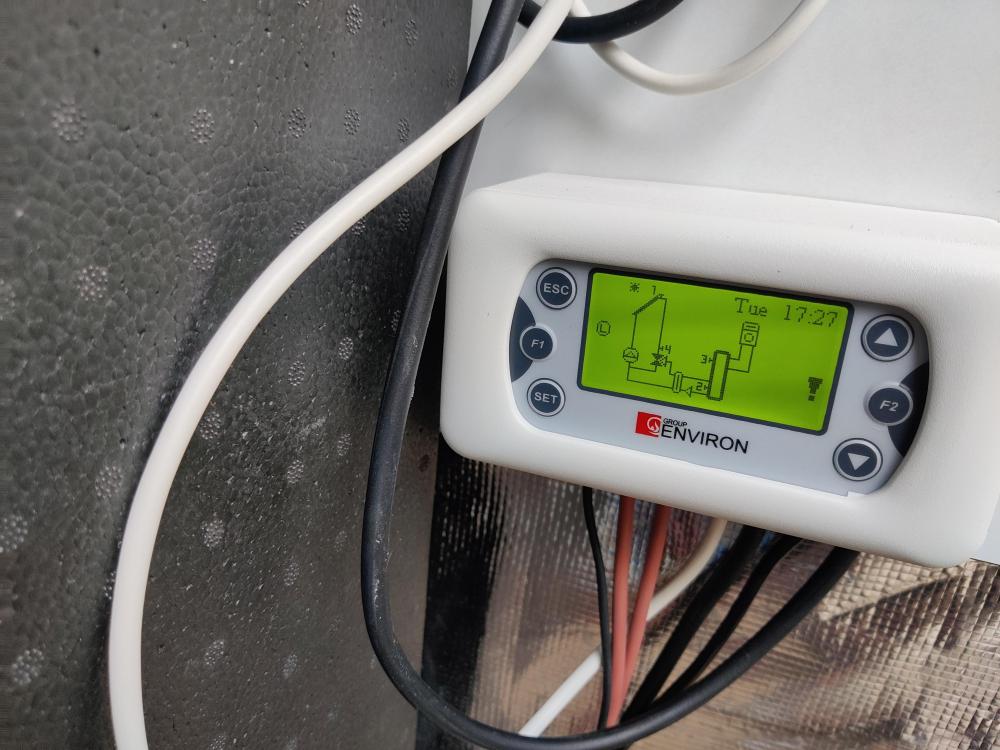
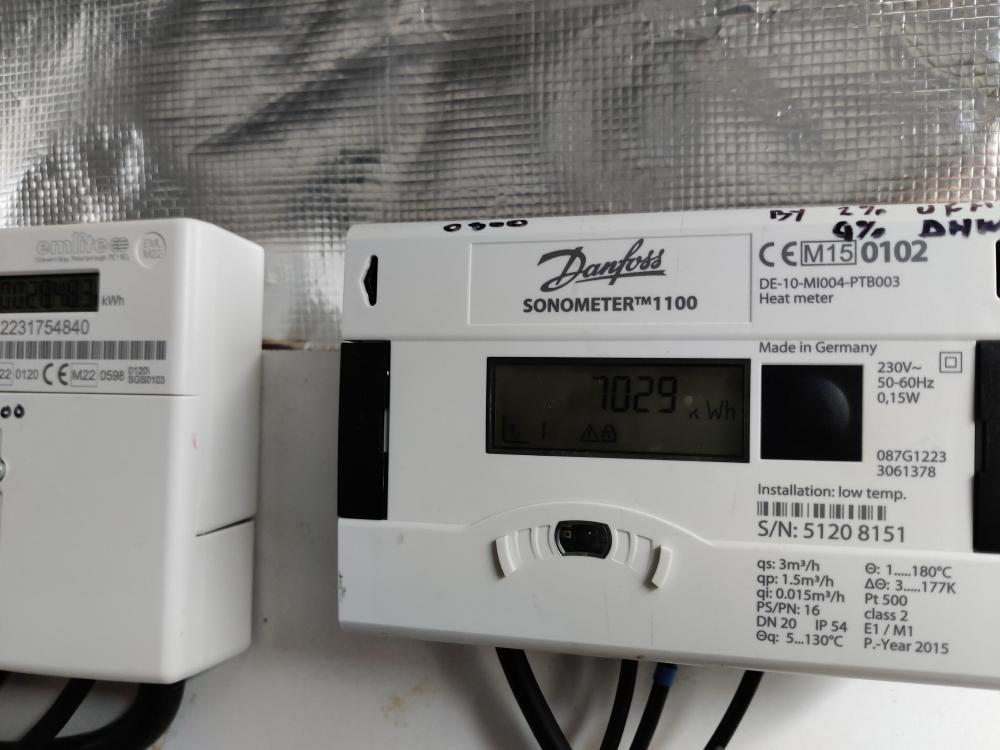
Solar controller now installed. Still wires to tidy up. The control scheme has a PHE and two pumps, one each side of the PHE. To monitor heat given out by the thermal system, I will reconfigure the heat meter I had previously installed in the heating system. Will install in the pipe from the PHE to close coupled tee. I have glycol in the system and the heat meter will over read by circa 2%, which I can live with.
-
Thanks everyone, @S2D2 came through first, so have used that code.
-
Anyone wanting to do an octopus referral, please PM me Thanks
-
The flow rates look massive, these should/need to be trimmed back.

-
So something like this? How do I log the data? 2 Pack DS18B20 Temperature Sensor Module Kit with Waterproof Stainless Steel Probe, TO-92 for Arduino and Raspberry Pi https://amzn.eu/d/dVa0n1F
-
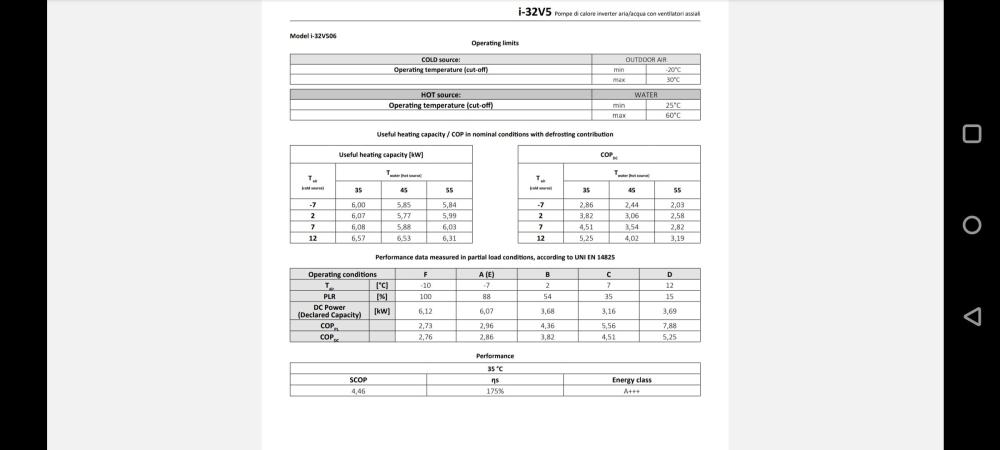
My ASHP basically runs a constant dT, this is controlled by varying the circulation pump speed. Not really had much time running in heating mode except a bit of commissioning, but cooling dT is 5.4 degs, from what I remember heating was similar. Which is fine for the UFH, will just fiddle with the compensation curve to get the room temps correct. While I was looking I found this, looks like it brings down the load fact as outside temp increases, kW output only drops by 40%.
-
Good question. No idea. Any suggestions? Needs to be simple. I do know in quite good detail the gas usage to heat the house from the last two heating seasons.
-
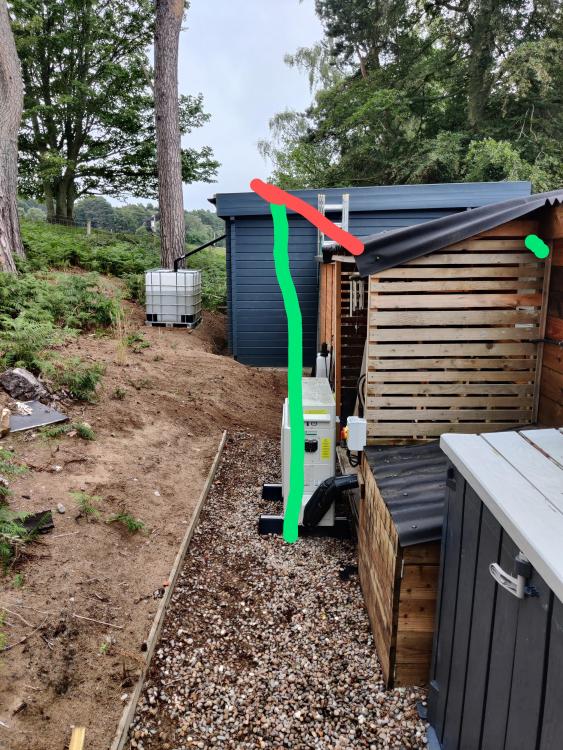
Solar panel will become a roof above my ASHP to keep the worst of the weather off it. The green dots are where the pipes will go through the wall to the drain back unit
-
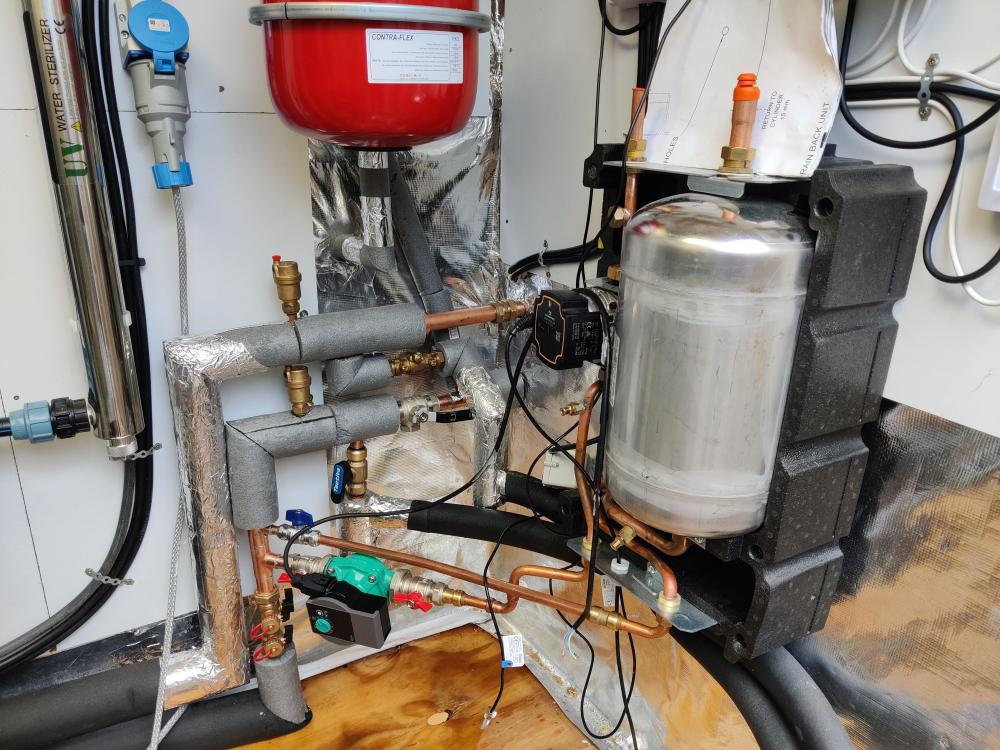
Good to play. Bought everything a 2 years or so ago, paid about £700 for 2mx1m panel, drain back unit, hoses, and controller. Will spend another £2-300 to plumb up and make a frame for the panel. Plumbed the drain back unit into the heating circuit today. Just got to finish the pipe insulation
-
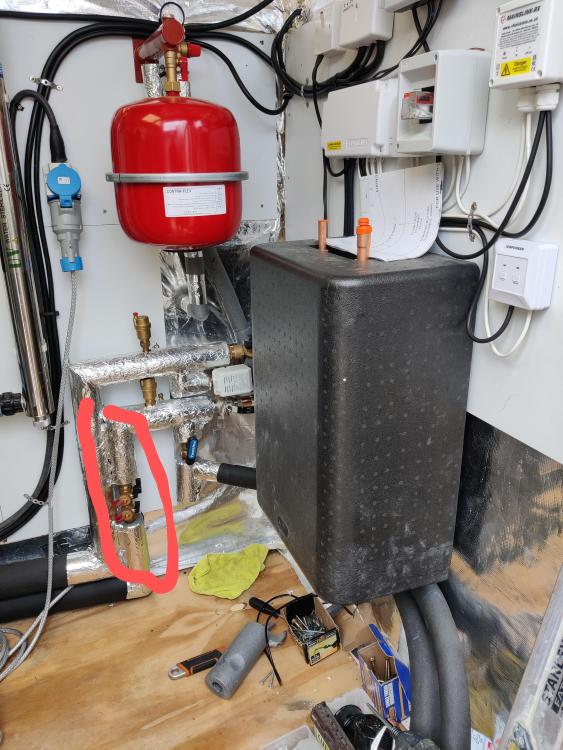
Started to get things together. Will be using a CCT in the return pipe. Will use the solar controller, so it thinks the flow and return pipes are the top and bottom of a cylinder and set the temperature and hysterisis as required. Have mounted the drain back unit (black box), the pipes at the top connect to the solar panel and there are pipes at the bottom that will connect to the CCT. CCT will be located in the pipe section highlighted in red. Still need to figure out how to make the system to work during DHW heating and UFH heating, but be off in cooling mode - maybe some relay logic.🤔
-
The problem isn't at or worse conditions than the design point, its if heat is needed in the shoulder seasons with you only need 15-25% of the design heat load. The oversized heat pump just can't modulate low enough. So you need a buffer to compensate and unless really big, they are designed (or not really designed) and you get a hit in CoP due to the mixing of the flow and return or a flow mismatch across the heat pump and heating circuit side. If your spending a bucket of cash on a heat pump, get one that can cool also, otherwise you are missing a trick. ASHP plus solar equals a cool house in summer with next to zero running costs.
-
Think they should have a rubber or fibre sealing washer. Pretty sure mine did.
-
16 mm or 20 mm MLCP for combined bath/shower fill?
JohnMo replied to markocosic's topic in General Plumbing
You don't need any bigger than 16mm. The bigger the pipe the more volume of hot water you need flow through before you get hot out the end you want it. -
Just set up the weather compensation curve and balance the loops - job done. You don't need anything complex. If well insulated, floor temp is circa 1 to 3 (OAT dependant) hotter than room target temp, if the sun comes out heats the room the floor reduces or stops giving off heat. There is no need for floor sensors etc, one thermostat per floor (operating as a limit stop instead of a controller, if you feel the need, or just one wireless thermostat, so you fine tune the position in the house. The same method can be used for 24/7 WC or batch heating in the cheap hours of E7 (if you have it) or during the daytime when some solar may be available. Just modify the WC curve to run 5 to 10 deg hotter, so it just the same amount of heat to the floor in 6 to 7 hours instead of 24.
-
Don't bother to try using load compensation with UFH, been there and tried, just makes the temperature of the room yoyo. Ok for radiators only.
-
There is another one on balancing pumps across a low loss header and how if you get the sizing/flow rates wrong, it decreases CoP also. If you go no actuators - really think if you need a low loss header? Or just plumb it in as a two port volumiser/buffer on the return leg of the heating system. Or if you need for warranty purposes install a 3 port valve so you can bypass around it. Set the logic so it also switches of the secondary pump also. A Simple switch power on, starts pump powers valve to route flow through LLH. Power off bypass LLH.
-
Me neither. My last iteration of my heating system had 3 pump, boiler, buffer and UFH, all ran most of the time during the heating season, £128 to run at today's electric price for 180 days. With the heat pump I have one (although DHW still has three, but it only runs one hour per day) so heating season pumping costs are £45 including DHW.
-
For £60, why would you not install for long term piece of mind. I stayed with glycol also, not doubting antifreeze valves, but would rather not have the issue of recharging pressure if they do work. Or more importantly me away and the wife having to recharge - nightmare!
-
A passivhaus has a max heating demand of 10W/m2, so that makes your house circa 800m2?
-
To finish thread off. Inverter located around 52m from array. 4 core 6mm2 armoured cable used to transmit DC power to inverter. DC isolator located next to the array and DC isolator also on inverter. AC voltage at inverter is around 145 to 146 volt. If I had located the inverter at the array and run the cable in AC, the resulting voltage drop may have resulted in over voltage issues.
-
dMVHR or trickle vents
JohnMo replied to HughF's topic in Mechanical Ventilation with Heat Recovery (MVHR)
I would stay with your base plan 3G and humidity controlled trickle vent(s) -
Great I see you soon
-
Sure, if you come round I'll buy you a pint or two. It's only about 10 to 12 hour drive.
-
dMVHR or trickle vents
JohnMo replied to HughF's topic in Mechanical Ventilation with Heat Recovery (MVHR)
Is that £3k for trickle vents - why so expensive? If that's the case do what the builder says








