


JohnMo
-
Posts
13296 -
Joined
-
Last visited
-
Days Won
200
Everything posted by JohnMo
-

dMVHR suppliers list (not complete)
JohnMo replied to HughF's topic in Mechanical Ventilation with Heat Recovery (MVHR)
I believe they can be ducted they have a 24v version also. I got mine from eBay for £55. -
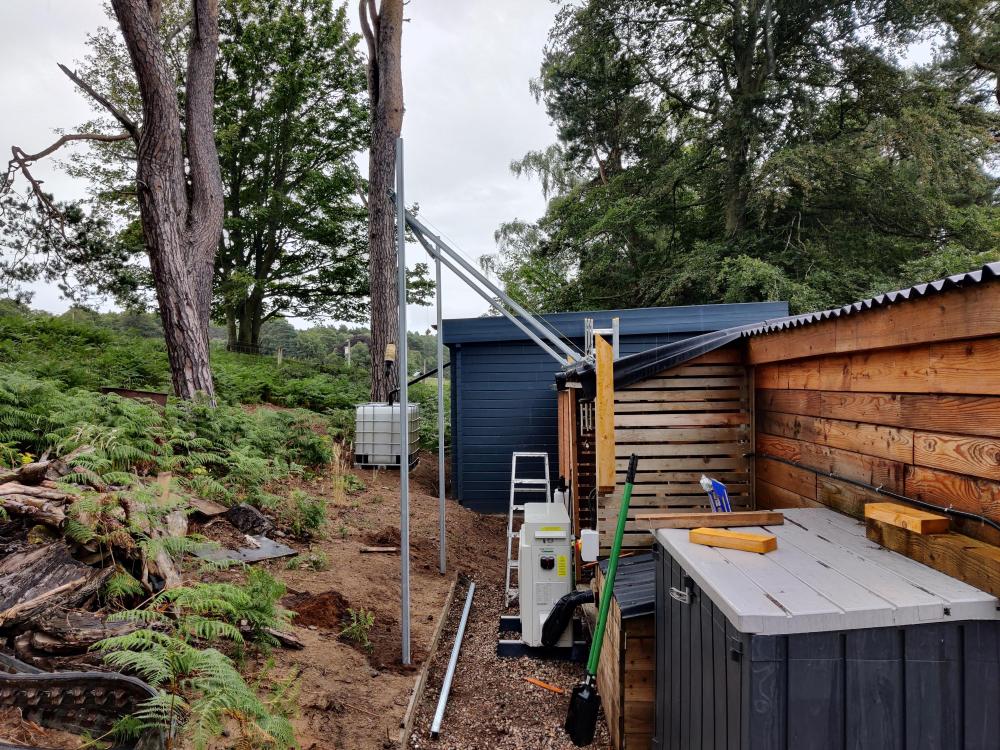
Bit more progress today, support frame assembled, need to trim the ends off at top. Panel to mounted at 45 degs in landscape. All the frame materials cost £132, including panel mounts. Just got to figure out how to get the panel in place.
-
dMVHR suppliers list (not complete)
JohnMo replied to HughF's topic in Mechanical Ventilation with Heat Recovery (MVHR)
For the house, we use Titon HRV units X2. For our garden room dMEV I used Greenwood CV2GIP. -
dMVHR suppliers list (not complete)
JohnMo replied to HughF's topic in Mechanical Ventilation with Heat Recovery (MVHR)
The Prana were on the top my shortlist for our build. But the cost got too expensive as I need too many for a new build. -
dMVHR suppliers list (not complete)
JohnMo replied to HughF's topic in Mechanical Ventilation with Heat Recovery (MVHR)
I would analysis the noise, I bought a dMEV fan said it was super quite, but had to replace it. The one I bought next was 20 dBa quieter. Basically you have to take the cover off to see if it's running. -
Why would you bother with tiles under the PV. A GSE Roof integrated tray is about £35. It's going to cost you more to tile, even DIY. Plus doing a half arsed tile install is just daft. And possibly make the house unsellable. GSE tray are easy to install, I installed 18m2 in morning on my own. Not sure where you get the idea you'll get 30% more yield from with panels not roof integrated. Someone is spinning you a line, if that's the case.
-
Exactly, plus there will be just about zero expert in the winter, because generation is rubbish.
-
Why not put in a shed outside. That's where my borehole equipment is. Just a simple insulated shed, doesn't need to be big. I have a simple dimplex tube heater in there. We have not had any freezing issues and we get down to -9 in winter.
-
Weatherboard rather than brick, effect on U values
JohnMo replied to Post and beam's topic in Building Materials
That sounds expensive to gain 0.01 u value, additional foundation to carry the blockwork, the blocks and labour to build. -
Spelling auto correct and me not reading, after I typed. Stepmom should read "step on"
-
Horizontal cylinder in the loft, good idea?
JohnMo replied to Post and beam's topic in Boilers & Hot Water Tanks
If you have insulation in the floor of the loft, everything above will be equal to outside temperature. Sorry can't help further. Our cylinder is in our loft/plant room, but the roof above is insulated so it's part of the thermal envelope. -
Bath mat? Our underfloor cooling runs in the bathrooms also. We just have a bath mat, Stepmom to when we get out of the shower.
-
Weatherboard rather than brick, effect on U values
JohnMo replied to Post and beam's topic in Building Materials
You need a ventilation space behind, which is mostly there to allow water to escape. If you fill the gap with insulation you will be asking for trouble. Adding extra battens internal and insulation between? -
Horizontal cylinder in the loft, good idea?
JohnMo replied to Post and beam's topic in Boilers & Hot Water Tanks
If loft is in a cold roof space, heat loss will need to be considered. All pipes extremely well insulated and also consider additional insulation for the cylinder. -
The vessel is basically an accumulator, which is a cylinder with a bladder inside. One side of the bladder is water filled the other is pressurised air. The pump fills the cylinder to a pre defined pressure - expanding the bladder. When you open the tap, the pump does not run, instead the bladder pushes the water out of the cylinder - the bladder deflated as the water is used. When the pressure drops to a pre defined point the pump starts and re pressurises the cylinder. You are just filling a big bucket for use later. You are not using any more water than normal. It exactly the same as my borehole water.
-
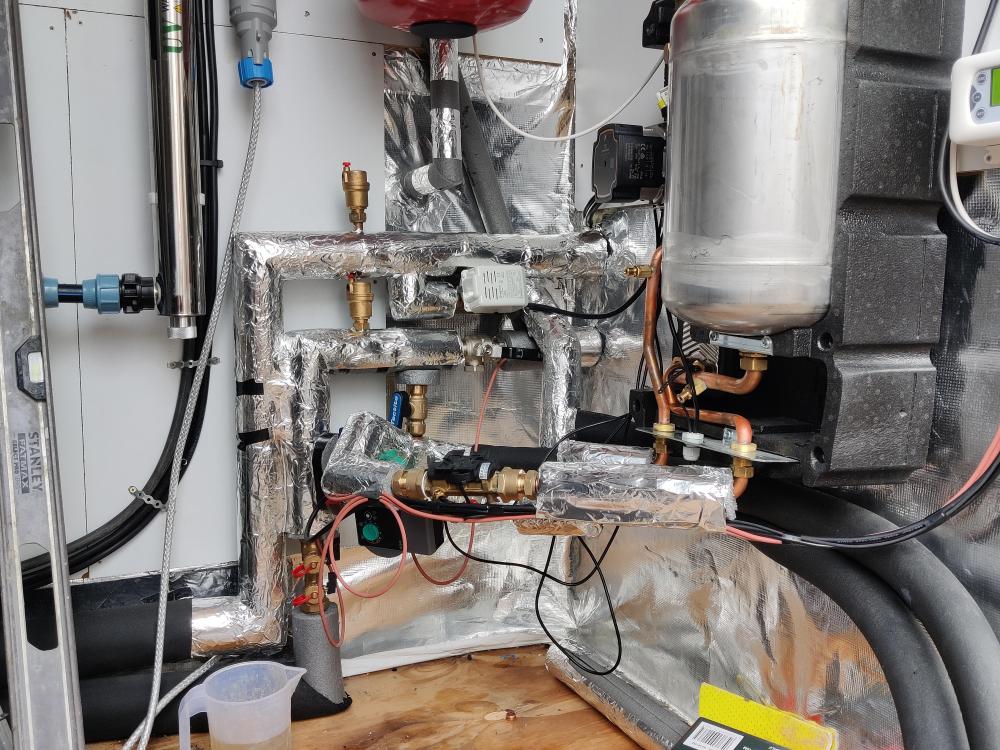
Heat meter installed today, circulation pump run to get all air out of the system. Heat meter unit contains the flow meter and a hot water stream temperature probe, so is installed after the PHE. The cool water probe is installed downstream of the pump and upstream of the PHE. Solar controller has the cylinder bottom probe in the heating return line upstream of the close coupled tee. The top of cylinder probe is installed approx 0.5m after the close coupled tee. Need to get my head around the controller settings. Job for later. Had a play with pump flow rates. UFH flow is approx 1m3/h. Solar thermal pump can delivery the same flow though the close couple tee. But will have a proper test when solar panel is coupled up. Unistrut is being delivered tomorrow 3x 6m lengths of 41x41, £96 delivered. So a very good price. Will be moving to the framing next to hold the panel up.
-
You may be stuck doing DIY
-
We are single storey and have wet UFH in bathrooms and electric towel rails. The combination works well for us. Bedrooms we have ufh and it's rubbish. Been debating electric panel heater, but opening the doors works well enough to even the temperatures out. I would provision for a panel heater then wait for the first winter before buying anything to connect in. We have big overhangs over our windows, but it's the westerly sun just goes under the overhang leading to overheating. So look at this aspect also.
-
Only way to find out is to get a quote in your area.
-
I get a good view of a loch and trees, from anywhere in the room.
-
Your favourite cheap gloves for painting (and for gardening)?
JohnMo replied to Adsibob's topic in Tools & Equipment
For gardening and building work, I use the red and black gloves from Screwfix they are thin but grippy last quite well. Painting and car stuff, black gecko nitrile gloves, they are embossed and quite grippy also. My wife uses them for washing up also. -
You are correct My glass wall leaks heat at a rate 7 to 8 time worse than the wall next to it. Yes they are triple glazed. Glazing alone accounts for over 1/3 of total heat loss. We need to heat and cool because of it, good job I have solar and now a heat pump. But we built the house for the views. Without those, I would not have bothered building.
-
So depends on what level they are comparing efficiency against and I see that is suitably vague. Size will decrease, but I doubt the price per watt will. Early adopters will pay. I got mine from Facebook market place 12x 285W poly crystalline at 20p a watt - 2 years usage. 1.7 X 1m, have mounted vertically for winter output rather than summer. Inverter came from Gumtree again years old £150.
-
Efficiency just means a difference in area, more efficient smaller area required. You will pay a premium price to save a few cm. Why bother. Prices will not drop by any degree. It's just another iteration of PV, amorphous, poly crystalline are all things that have occurred previously no real change in costing. To bring a user name up (so they get notified) - type @ and then start typing the user name and select from the coloured list of names that is auto generated.
-
DIY or MCS? DIY Min system is a PV panel - £135, DC cable £60, couple of isolation switches £70, inverter? Mounting system? MCS add a few thousand to the DIY price, you won't be far off.




