
JohnMo
-
Posts
12468 -
Joined
-
Last visited
-
Days Won
179
Everything posted by JohnMo
-

Gas boiler lobby obstructing heatpumps
JohnMo replied to Beelbeebub's topic in Air Source Heat Pumps (ASHP)
Just had a look at the heat pump guide by MCS. And found this (third option was for a combined system). 5.2. Heat Pump System Type Options • Space Heating Only The heat pump provides heat only to heat the space. Domestic hot water for sanitary purposes (if required) is provided by a separate system which may or may not be another heat pump. • Domestic Hot Water Only This heat pump is dedicated to heat up domestic hot water. Any space heating requirement is supplied by alternative means. This can be a popular solution on large projects such as multi residential apartments when services are centralised e.g. heat network systems. So using this available configuration may be away around not changing your existing cylinder. Say you heat on E7 and don't want to change - ask them to add a 3 way valve (and wiring) just in case you change your cylinder at a later date. Get your MCS ticket, get a plumber in and pipe up the cylinder how you want. -
Gas boiler lobby obstructing heatpumps
JohnMo replied to Beelbeebub's topic in Air Source Heat Pumps (ASHP)
The controller always had it. Although it looks like an S or Y plan it's actually X plan, because they run to different flow temps, CH can be WC and DHW has up to 60 deg. A small Grant ASHP can be bought for around £2k, has its own controller, comes with flex hoses. Grant add a seperate interface to replicate S plan and a timer for DHW. All of which is added to make it feel like an oil or gas boiler install. Grant corporate have the MCS certificate, they do the design, any Grant certified boiler installer can then install, unit commissioning is done by Grant corporate I believe. -
Gas boiler lobby obstructing heatpumps
JohnMo replied to Beelbeebub's topic in Air Source Heat Pumps (ASHP)
Vaillant alone are making 500,000 air to water heat pumps and they are not a global major player. Air to water monobloc adds a plate heat exchanger and if you are lucky a circulation pump. No need for for the indoor unit that come with air 2 air. I paid £1300 for 6kW. It was on eBay from a dealer, they wouldn't be selling at a loss. -
Cheap way to prevent boiler cycling
JohnMo replied to Crunchynut's topic in Boilers & Hot Water Tanks
You wind the TRV out the way set to max temp. Then bring the flow temp down so the coolest room is the temp you want, then use the lock shield valve to trim the flow across the radiator to get each room close to where you want. Then set the TRV a degree or so higher than target room temp. All stats have built in hysterisis, the issue is most the hysterisis to just to big so you get wild temperature swings. All the other magic fixes are just magic, not real. -
Gas boiler lobby obstructing heatpumps
JohnMo replied to Beelbeebub's topic in Air Source Heat Pumps (ASHP)
How many units do you think these factories produce, it's not a cottage industry. They make them in the thousands of million per year to go worldwide, not just the UK. You can wire any house to miss out the meter is you were that way inclined. I dare some do, but not many. Just don't subsidise then is the other option, just have a correct market rate for electric. In Scotland we are 95%+ renewables already, yet electric price is tagged to gas price, why? Wind doesn't cost more because of gas price fluctuations. -
1, you are doing UFH do you need an UFH pump and mixer? This could be deleted and use the circulation pump in the ASHP. Unless you intend to make lots of zones and install a buffer. Is she ok with guests walking through the utility to get to the toilet? Would it be better swooping WC and store around, so toilet access is from the hall.
-
Gas boiler lobby obstructing heatpumps
JohnMo replied to Beelbeebub's topic in Air Source Heat Pumps (ASHP)
Just dump the subsidy of £5k, (it really only applies to the rich, as they are the only ones that can justify spend £10k+ on a boiler), let the market place find the correct price, same as it did with PV and price seemed to fall overnight. A smart meter supply on the heat pump, regulated at a different price structure to normal use electric. Done. Open the market to none MCS installs, using the MCS noise tool, without the thy shall be MCS qualified etc. This is submitted through building control. Or allow the installer to do a 5 min online course on how to do the noise sheet. And then a simple online course on why it's important to have low flow temps with a heat pump. If they don't want to do the course, they cannot install or have to be inspected by building control similar to G3 certs. -
If your really concerned just stick a TMV on the cylinder outlet, same as all thermal stores have.
-
Gas boiler lobby obstructing heatpumps
JohnMo replied to Beelbeebub's topic in Air Source Heat Pumps (ASHP)
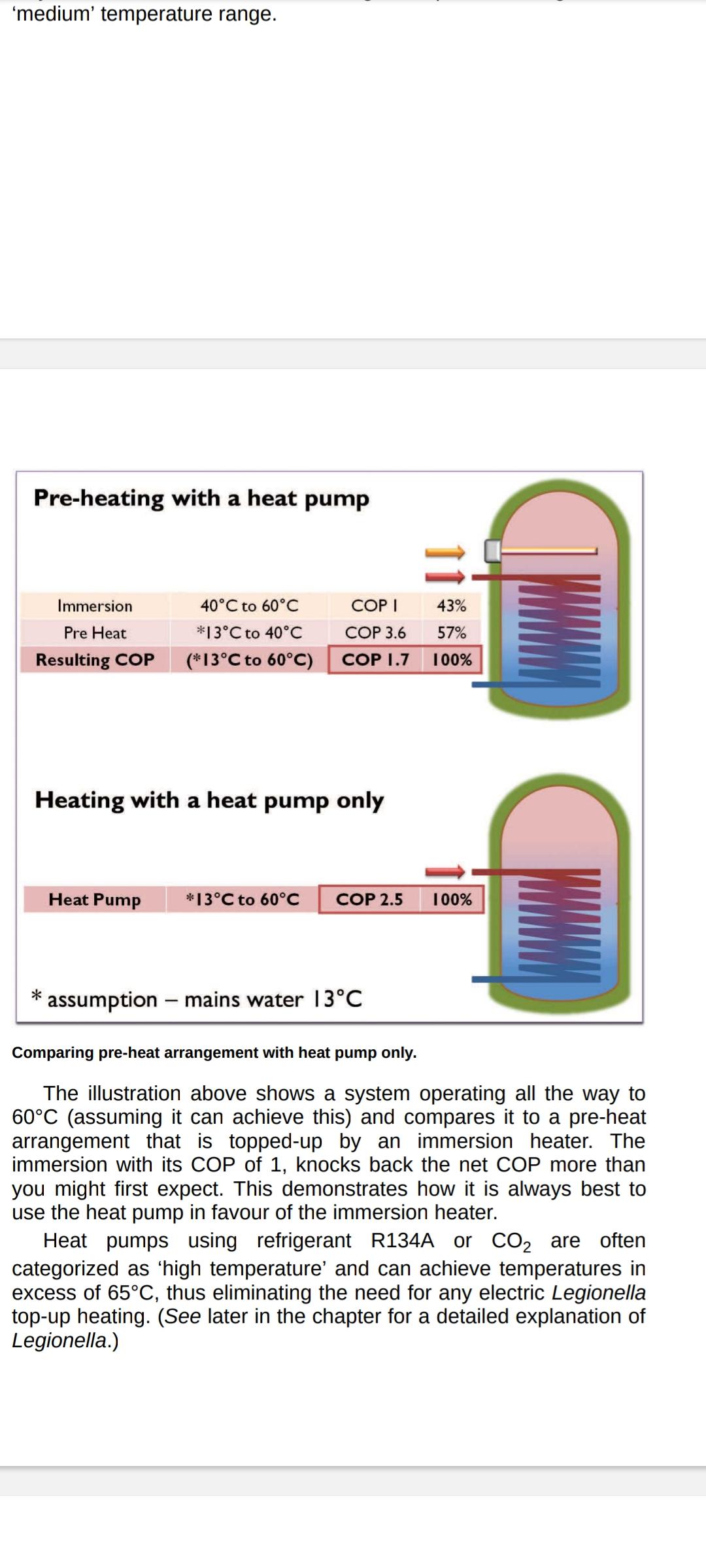
Attached is an illustration of heating cylinder to 60, if you don't need to heat to 60, the CoP will be better. Take from - HEAT PUMPS FOR THE HOME Second Edition John Cantor
-
Cheap way to prevent boiler cycling
JohnMo replied to Crunchynut's topic in Boilers & Hot Water Tanks
Turn down flow temp open all your TRV's, then balance rads. Don't zone your system to death. The bigger the open flow system the less likely short cycling is. -
Gas boiler lobby obstructing heatpumps
JohnMo replied to Beelbeebub's topic in Air Source Heat Pumps (ASHP)
Still don't understand why you would bother. Run a normal heat pump so your tank temp ends up at 35-40, finish it with the immersion, your overall CoP will still be around 2.5. Basically run ASHP until it trips on high temp, find the temp of cylinder on its thermostat, wind back a degree or 2. Then the ASHP will not be locked onto a never ending heating cycle. Set up some simple logic to kick the immersion into life, heat to your ideal temp, job done. If your flow and return piping gives to much pressure drop, add a pump into the return line, set pump speed just high enough to overcome system resistance, wire so that it switches on off with the 3 way valve. -
Gas boiler lobby obstructing heatpumps
JohnMo replied to Beelbeebub's topic in Air Source Heat Pumps (ASHP)
Really you are running your system too hot. The last thing you want with a heat pump is to gag the flow rate, running like that equals rubbish CoP, comprising flow rate and too higher flow temp and may need a buffer to compensate with the effect of worse CoP. @Lofty718 is talking sense, managing a heat pump system with TRV's isn't. -
Yes, I was moved over in 4 days, still going through the change over process but am on Octopus, while the full transfer takes place which will take about 6 weeks.
-
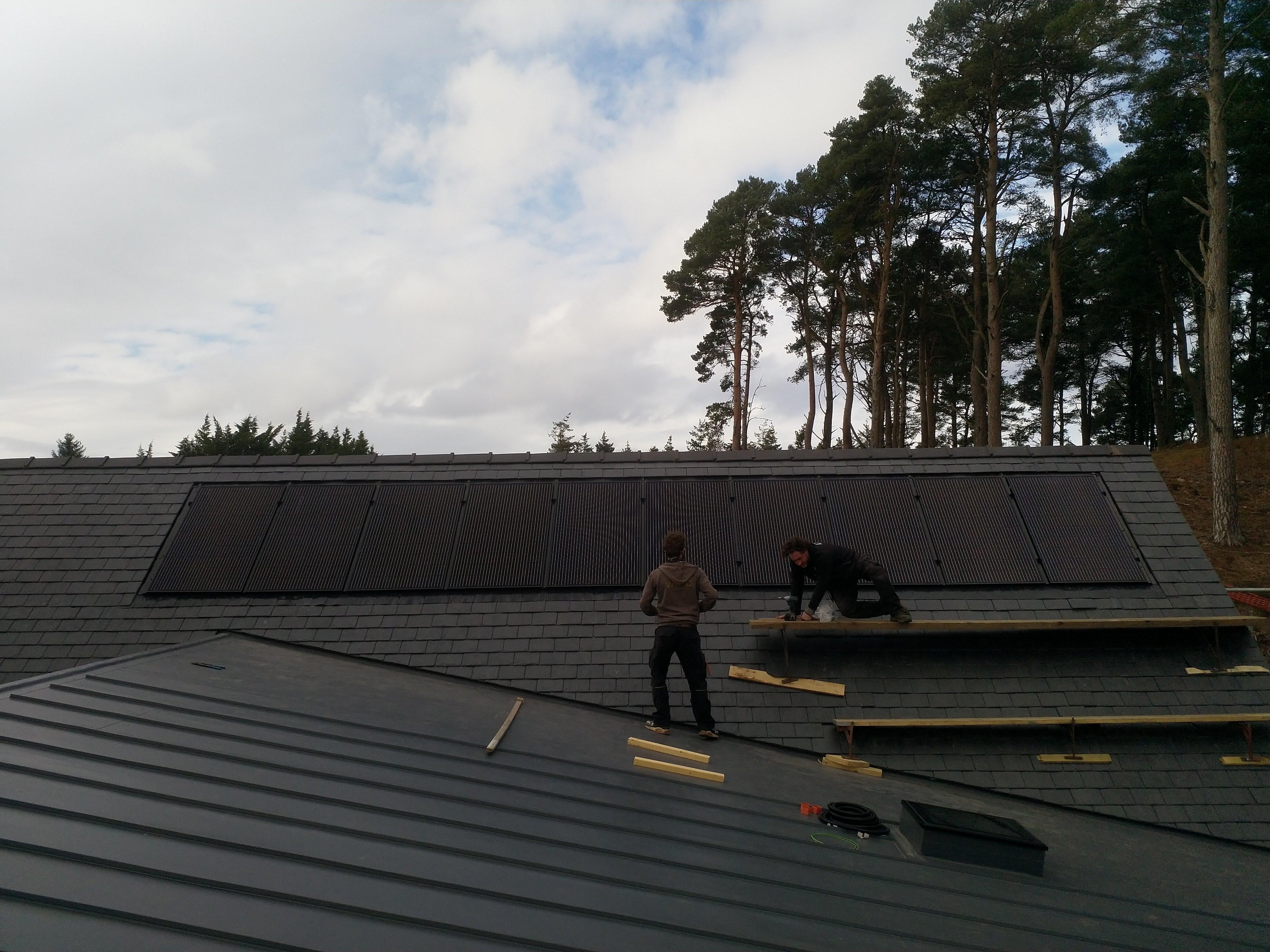
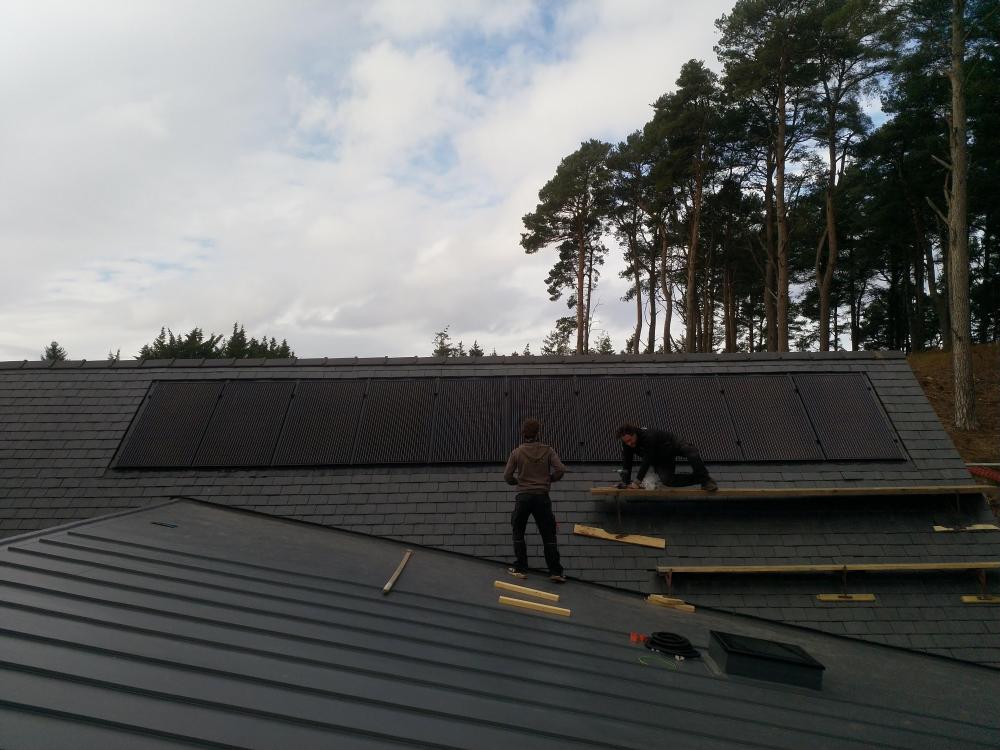
Panel to panel and then to ground. If you zoom in enough you can just see the earth between the panel at the top
-
75mm or 100mm Kingsland Thermafloor TF70 PIR insulation board
JohnMo replied to Alex Carr's topic in Heat Insulation
Min 150mm ideally 200mm. 75mm will have way to much downward heat loss. Making UFH a costly mistake. Pay once, not every month you have the heating on. -
I used 6mm2 earth from each panel
-
Gas boiler lobby obstructing heatpumps
JohnMo replied to Beelbeebub's topic in Air Source Heat Pumps (ASHP)
Now we are just getting complex for no need, balancing a system isn't rocket science, TRV's have no place except as a limit stop for room temp, so if your target is 20 set them at 22-23. If the system is balanced correctly the TRV's does nothing. In fact a non adjustable one would be even better then a home owner couldn't mess up the smooth running of the system. Flow rate is the important thing, the radiator or UFH loop delta T and flow temp from heat pump adjustments made to suit the min flow required by the HP. -
Heat geek did a video where the explored all the clearance required for air flow, ended up completely boxed in covered in blankets and it still performed well. Concluded you can almost do what you want with outside unit, as long as internal plumbing design was right, you will stil get good performance. I don't think there is any permitted development rights for Aircon or a unit that provides cooling. Not that anyone would know. They would assume it's a heat pump.
-
Matching decking and cladding OR using decking as cladding?
JohnMo replied to phatboy's topic in General Construction Issues
I really wouldn't do the same on deck and wall as the contrast looks way better. I wanted to go the same route as you, but the wife said no and she was right. The other thing with composite is the expansion and contraction is a lot more than wood, not clear how you would account for that and still look good on the walls. It's also pretty heavy. You can nail the wood in place you can't the composite.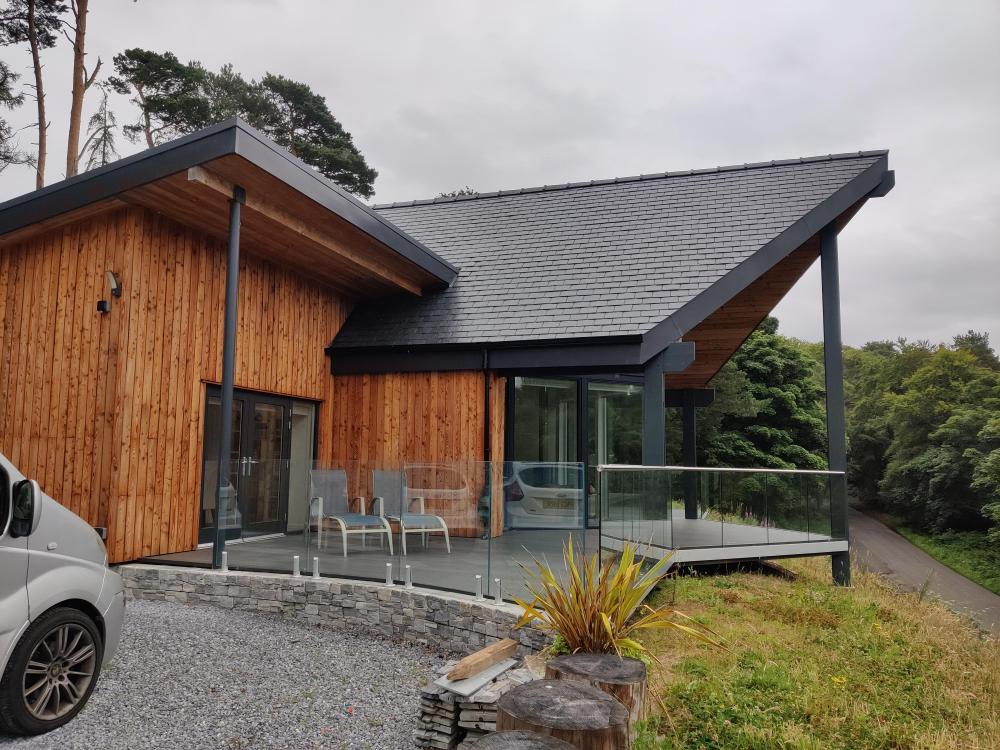
-
Small ASHPs / Units primarily for DHW
JohnMo replied to Conor's topic in Air Source Heat Pumps (ASHP)
We put a stove in, we don't use it often, and does take a while to get used to using in well insulated house. One big log or a couple of smaller ones on min air sees us with enough heat for the night. We got a soap stone stove to slow the heat release, which it does. The stove is rated at 4 or 5kW but I think the lowest output is around 1 to 2kW. We use so little wood and it burns so well that the ash bucket got emptied once last winter. -
Gas boiler lobby obstructing heatpumps
JohnMo replied to Beelbeebub's topic in Air Source Heat Pumps (ASHP)
They don't - the inside unit is just same bits as a monobloc, the cylinder still has a water coil in it, so it has two levels of heat transfer not one that am speaking about. Don't really see any advantage of a water split system. Just use a monobloc, keep all the noise and bits outside in a single box, then you only need a 3 way valve inside to connect to cylinder and heating. My heating system is as simple as it gets, monobloc ASHP, a 3 way valve, UFH manifold (no pump or mixer, no actuators or wiring centre), single house thermostat to give stop, start permissive to heat pump and act as overheat protection. No internal controllers, everything on the outside unit, set to run WC. Once commissioned out of the user eye sight, so would have little or no messing about changing setting. Anything important hides behind an installer password. I have a small thermal store hooked up for DHW, but that gets a little complex as I heat via a PHE for heating the cylinder, and have a return booster pump, due to less than ideal pipe sizes and lengths. So pretty much replicates a retrofit of using what you have. -
Gas boiler lobby obstructing heatpumps
JohnMo replied to Beelbeebub's topic in Air Source Heat Pumps (ASHP)
Use original cylinder, use primaries after a good clean, connect to top and bottom of the cylinder. Use pump inside indoor unit to circulate through top and bottom connections of the cylinder and the PHE. Cap existing cylinder coil off. No diverter valve external of the indoor unit. Common refrigerant two PHEs the diverter valve inside indoor unit moves refrigerant to one or the other PHE (DHW or CH). -
Gas boiler lobby obstructing heatpumps
JohnMo replied to Beelbeebub's topic in Air Source Heat Pumps (ASHP)
If you are doing a split system, you may as well bring refrigerant inside also. Have PHE in the box with refrigerant one side and drinking water the other, do away with the cylinder coil. Looked at the refrigerant temps the other day and the hot side was 75 degs. That's R32 not propane. Existing setup adds inefficiency, refrigerant to PHE, to heating water, to a coil in a tank of drinking water. So indoor unit has two PHE inside the indoor box and two pumps, and a 3 way diverter for refrigerant. Call for DHW heating, bronze DHW pump starts heats cylinder water directly. When satisfied, 3 way diverter swings to CH DHW pump stops CH starts. -
Gas boiler lobby obstructing heatpumps
JohnMo replied to Beelbeebub's topic in Air Source Heat Pumps (ASHP)
Trouble is MCS rules would still apply, even if they changed them, you would still need to go through that or similar scheme to qualify. My heat pump doesn't have a heat meter or record electric used or heat generated, I do have an external electric meter dedicated to the heat pump. Just give a discounted electric rate for those kWh. -
Gas boiler lobby obstructing heatpumps
JohnMo replied to Beelbeebub's topic in Air Source Heat Pumps (ASHP)
Not really by any stretch of the imagination is it. Closest relationship would be a fridge.