


JohnMo
-
Posts
13299 -
Joined
-
Last visited
-
Days Won
200
Everything posted by JohnMo
-
Or we concentrate on tidal and offshore wind. One offshore wind farm came on line today which can provide Scotland with electric for 2/3 of all homes. The next big one to come online is 4x that size.
-
This has existed for at least a decade and pretty much standard for a decent gas boiler - load compensation. Rubbish for UFH but should be great for radiators. It's pretty simple, you just plot the curve using the heat loss calculations you have already done, with different delta between inside and outside. If you have radiators load compensation does the rest.
-
Not sure, then everyone will just select that settings and complain even more that the running costs are high.
-

Heatmiser Controls - over zoned!
JohnMo replied to Andeh's topic in General Self Build & DIY Discussion
We have a bungalow also, and we had each room zoned when I first got everything up and running. Timed everything to come on off as I wanted. Until I got the first month's heating bill. The following year which was colder outside we used 1/3 of the gas, the house was warmer. Was on gas heating then. So now not much of a fan for zones. Now have a single thermostat/timer, this starts and stops the our heat pump, we have no actuators on the manifold, no pump or mixer on the manifold and no wiring centre. -
Rules of thumb are generally pants, and the radiator suppliers not much better, as they are just built on rules of thumb also. As mentioned above there is a spreadsheet on here. Before I used the one here I did my own long hand calcs, both gave similar outcomes.
-
Really depends on your house heat load. At Passivhaus flow rates from the MVHR, this kind of heat supply is limited to 10W/m2 of the property (statement from Passivhaus is any more than that the air smells burnt). Also they have a quite high water flow temperature, so not that good for CoP if using a heat pump, in fact not suitable for a heat pump as the Paul page has a water flow temp of 70 or 75 going in.
- 1 reply
-
- 1
-

-
ASHP / Octopus Cozy - any experiences?
JohnMo replied to Paene Finitur's topic in Other Heating Systems
You will be amazed at standby losses add up. Our TV, set top box when in standby mode are using 17W, so multiply by 24hrs and 7 days, gets you to 3kWh. If you have the same in a 3 bedrooms and the lounge, that 12kWh just on that. If your DHW isn't set correctly your immersion could be kicking on for an hour a day, that another 21kWh for the week etc..1 -
Open your towel rad RTVs to fully open so if there is a call for heat those circuits are open as well. (Assuming they don't have zone valves) If that isn't enough. You need to take one or two of the actuators off the manifold. This will open those loops, all the time. It will not call for heat, but if there is a call for from its thermostat or any other it will open. They are a couple of easy to do cheap fixes to see how it goes. Or just set a couple of thermostat so several room come on. Best solution get rid of some zoning and have a couple of big zones
-
If you have zones in every room and the towels rads with RTVs then your boiler will not be able to modulate down far enough to satisfy a couple of floor loops. You need more of the system open to keep the boiler happy.
-
ASHP / Octopus Cozy - any experiences?
JohnMo replied to Paene Finitur's topic in Other Heating Systems
@joth was quoting for heating only, you need to compare apples with apples. I take it you're is total electric usage. Your 151kWh in summer is your house usage and DHW which is 21kWh per day, which is high. But is high normal(ish) house. Our average electric last your without a heat pump was 13kWh. Have since been around the house understood where the energy was going and fix it, that what you need to do also. -
If you are only trying to heat a single room your heat source may be going into self preservation mode and just switching itself on and off as it isn't able to get rid of the heat it generates quickly enough. Known as short cycling. Issue could be you don't have a radiator always open or don't have system min flow valve, or...? More info required, heat source etc
-
Had my initial settings on the heat pump too high and house way too hot
-
Just a different operating regime, I am just commissioning mine on heating, it's been doing cooling over the summer - gas and open fires don't do that. Have underfloor heating, it operates the same gas or heat pump. DHW you just store more at a lower temperature, so no issue.
-
Best model acoustic insulation for studs and joists?
JohnMo replied to ashthekid's topic in Sound Insulation
Rockwool Flexi slabs, stiff with one edge soft to fill any gaps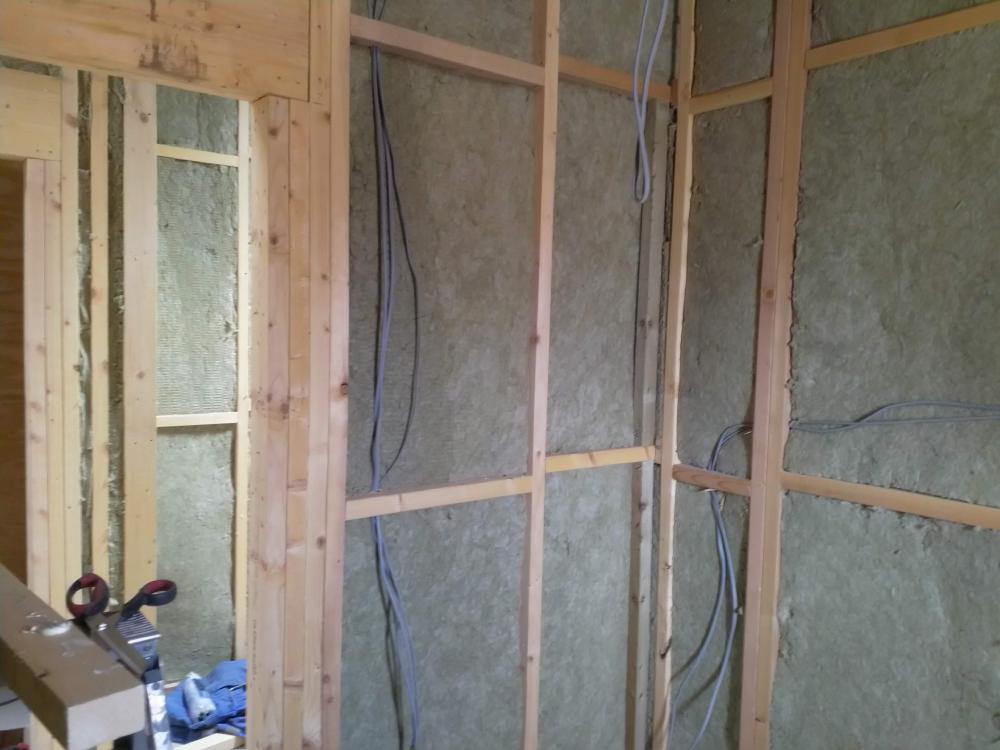
-
Best model acoustic insulation for studs and joists?
JohnMo replied to ashthekid's topic in Sound Insulation
Prices vary from supplier to supplier daily, you are best to shop around. Rockwool Flexi is pretty good also. I sealed all my gaps by stuffing off cuts of rockwool into them. We have 100mm studs, 70mm rockwool, no gaps, 12.5mm plasterboard either side, taped (not plastered), decent doors, with 10mm under cut, and you hear nothing going on in the house. The only exception to that is around our lounge has structural walls 200mm thick they have 2x 70mm rockwool in them. Lots of overthinking going on. -
ASHP / Octopus Cozy - any experiences?
JohnMo replied to Paene Finitur's topic in Other Heating Systems
First thing to do, is check to see if the different thermostats are switching the heating zone on/off during the day or night. Systematically go around each area and note down if none, some or all are switching on/off. Do this when it's different temperatures outside, this will also tell you if your WC curve is correct. Write it all down so you make sense of it later. Installers will set everything too high and let your thermostats sort it it out, great for a gas boiler, but rubbish for a heat pump. The switching on/off would indicate the flow temp is too high, lowering flow temp has a big impact on running cost. Second, you need to have a small setback overnight, about 2 degrees. This will again save you money. The timing for the radiators will be easy enough, about an hour before you go to bed and a hour before you get up. The underfloor heating, will have an offset, due to the storage heater effect, so that maybe turned down and started up 4 to 6 hours offset from your radiators. Analysis first - adjust second -
Not even certain a sunamp even works with a heat pump, they say they do, but the heat pump specific one requires a minimum flow temp of 65? Not really sure they would be much use.
-
Routers also great for slots etc. Most wood working tools seem to fine also.
-
Fabric and ventilation heat loss calculator
JohnMo replied to Jeremy Harris's topic in Heat Insulation
Area in contact with the ground is the area. Air changes an hour, in you sap report in the ventilation section there there is a part named "Infiltration rate" use that or 0.5 which ever the higher. And reduce MVHR efficiency to 0.- 204 replies
-
- 1
-

-
- heat loss
- ventilation
- (and 4 more)
-
I too went to Scottish water, they wanted me go through loads of work, ended up having a borehole and my own pump. It was way cheaper. Water Diviner came, after about 10 mins said where to drill and how deep. Was spot on. Water charge in our area is £445 a year, so no need to pay that either.
-
Several ways to connect a buffer. The normal 4 port, so BOTH supply and return pipes connected and the flow AND return go through the buffer. Piped this way you have hydraulic sepereration and you need a pump either side of the buffer. The other way is a two port, where EITHER the flow OR return pass through the buffer. This can be either / or flow or return pipes not both. There is no hydraulic sepereration so only pump is required. The other question is do you need a buffer?
-
Wet underfloor heating advice for extension and existing area
JohnMo replied to dave2612's topic in Underfloor Heating
Heat pump of various kinds are on here, including A2A. https://www.eurovent-certification.com/en/ I stated looking into it, see attached MoreDetailPerformance2.xlsx -
If you have no trickle vents and no mechanical ventilation and you do not have mould issues, you are obviously getting ventilation from somewhere so you have to assume a reasonable house leakage rate. So I would say the lowest figure would be something like 0.5 - 1.0.
-
It could be you just have the humidity level set too low. What is your humidity level set at?
-
This where as a client you need to inform yourself of building design and what you want from it from the aesthetics, but also the building energy performance. For me the self build journey isn't about turning up at the architect door and a few weeks later having a design and then blindly getting someone to build it for you. It's more about working with the architect to get the design and performance you want (even if outside the architect comfort zone), if you need to say no this is how we will do it, then do it. We are the client and as long as conforms or is better than the regs all is good. Our architect has basically copied our design and building the same for himself a few on the west coast of Scotland, he had only done building standards builds prior to me demanding lots of changes and upgrades.

